← Fintech Leaders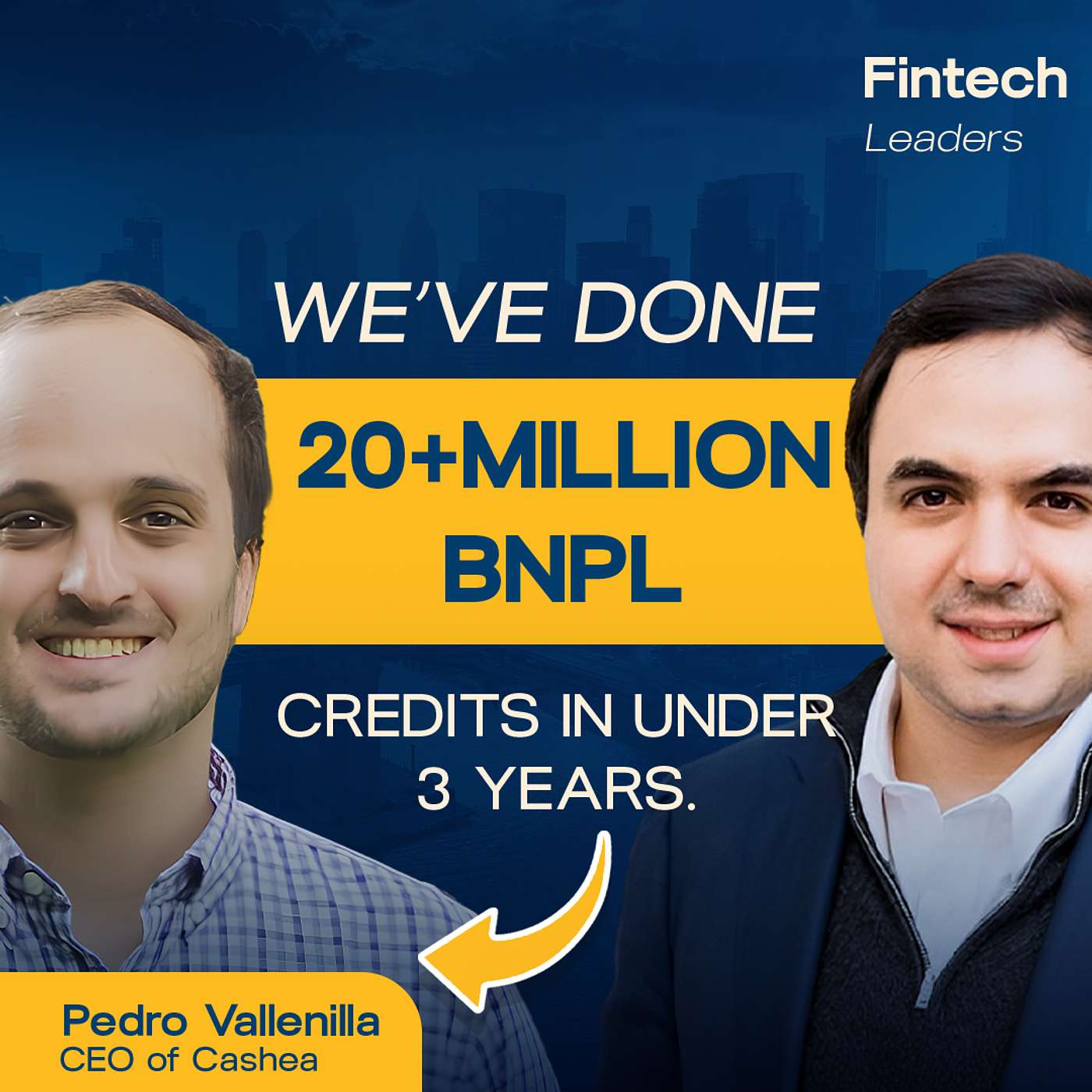
Loading summary
Transcript59 lines
- [00:00]
Miguel Armaza
120 million run rate this month is just crazy for a company that's less than four years old.
- [00:09]
Pedro Vallenilla
We said to them, are you willing to do the loan yourself? And we will buy back when the first installment goes bad.
- [00:18]
Miguel Armaza
Welcome to Fintech Leaders where we explore the stories behind today's most innovative financial technology companies. Coming to you from New York City. Hi, I'm Miguel Armaza, co founder of Gilgamesh Ventures, a fund that backs early stage fintech entrepreneurs. If you enjoy this conversation, I invite you to deliver a view on Apple, Spotify or YouTube. In this episode I interview Pedro Vallenilla, CEO and co founder of Cachea, who built Venezuela's largest fintech in a country where consumer credit had completely disappeared.
- [00:50]
Pedro Vallenilla
I would never have thought that we would be the ones who rebuilt consumer credit or brought credit back to the masses. In our country.
- [00:58]
Miguel Armaza
They've raised just 2.1 million in equity and the company has crossed revenue run rate of over $120 million.
- [01:08]
Pedro Vallenilla
While staying profitable, we have become the biggest buy now, pay later in buy now, pay later credits per second in Latin America doing plus more than one buy now credit per second.
- [01:20]
Miguel Armaza
I just looked it up. There are 86,400 seconds in a day. So you're doing a lot of volume.
- [01:28]
Cache has achieved what many thought impossible, rebuilding trust in a market where everyone else abandoned it.
- [01:36]
Pedro Vallenilla
35% of adult population have cache in their pockets and it's been a thrill to relaunch consumer credit in my country.
- [01:44]
Miguel Armaza
This is a story of resilience, ingenuity and building something extraordinary with very few resources. I'm confident this conversation will inspire entrepreneurs everywhere who are building against the odds.
- [02:03]
Pedro, welcome to Fintech Leaders Bienvenido. How's it going today, Miguel, thank you.
- [02:11]
Pedro Vallenilla
For having me, a big follower. It's a pleasure just to be here with you and, and your work in the podcast in Gilgamesh. It's impressive. So thank you for inviting me.
- [02:23]
Miguel Armaza
Pero, thank you. And I think this is gonna be one of the most interesting episodes for listeners out there. And for me, before you tell us about the whole story of Cashea, which we will get into, I hear that when you first launch in 2022, there were two weeks of crickets, like two weeks where no one showed up. Let's start there.
- [02:52]
Pedro Vallenilla
Yeah, 100%. Imagine, Miguel, a country without credit whatsoever. A country where credit says to exist and now comes Casha and offers buy now later interest free. And this is the first time Venezuelans get reacquainted with credit. And I believe that this will be from the get go a smashing hit. That hey credit in a country where it does, it does not exist at 0% interest. This is a no brainer. And I thought that merchants and users would flock to the app, would flock to use this as fast as possible. But definitely the first two weeks were very difficult. Our go to market, the way we communicated, the way we put forward our value proposition was not understood. And it's famously known and I have this conversation before is one of my mentors in that moment in time tells me, pero, how are you doing? I can imagine that everybody wants to take a piss of these. Everybody wants to download the app, everybody wants to work with Kashia. It's like, no, no, it's been two weeks of there's no, there's little, little downloads, no transactions whatsoever. This is not working. And what was not working was we got our go to market wrong. And he basically tells me, quit whatever you're doing right now and give me a call. And basically what we understood was we were trying to gather or bring clients from online to, to go offline and did not, did not understand that clients were doing their transactions offline and that we needed to meet them where they are. That for us to build trust, we needed to understand how consumers were buying. And building trust in the point of sale was the way, the way to go. Month one, we just, after we changed the strategy, we did $10,000. Month two, we did 25. Month three, we did 450,000. But yeah, Rocky start.
- [05:02]
Miguel Armaza
In a way. You got, you were in a fortunate position that there was no traction at all. Because had there been a little bit of traction, you maybe would have said like, oh, this is the right way, but I'm not tuning it correctly and you would have wasted more time.
- [05:22]
Pedro Vallenilla
Yeah, if we could have had some traction, basically I would have tinkered it, tinker with it a bit more. But getting no traction whatsoever became one of the biggest building blocks on rebuilding trust. Was that a, we need to understand how people buy, where do we want to meet them and how do we build trust. And it's being very present in the point of sale and our ambassadors that are our team that is in the store helping merchants and customers get acquainted with Cachea has been a strategy that was launched after that and it's been working ever since. And as of today, almost 200 strong across 25 cities in Venezuela.
- [06:09]
Miguel Armaza
So tell us a bit of the backstory. You are building what has now become the biggest FinTech in Venezuela. One of the biggest financial institutions in the country in just, you know, less than four years, three plus. Why, why tackle this problem in the first place? Most people would say, you know, would run away from even the idea of doing this.
- [06:34]
Pedro Vallenilla
Yeah, let's go, let's go a bit back. For me, cashier has been the result of the different things I've done in my life. I first ventured when I was 20 years old. I had the opportunity to build two Esquanton tu Esquantone was the group on copycat of Venezuela that became the biggest company that the Internet company that has ever that had been built to that moment in time in Venezuela grew that to million coupons sold. It was a very early hit that after that was that brought me a lot of failures followed that, that brought me back to earth. And startup number two, wasn't that so successful and startup number three as well. And in startup number four I pivoted to, fell in love with data and built a company that was a business analytics that expanded through a country meta and I decided to expand that company and move to Santiago, Chile. And while I was there I decided to pivot to full service restaurants. And when I got to Chile one of the things that I always thought was whoa. It's amazing how access to credit changes the ball game. It levels the playing field. And when I left Venezuela or credit comes to credit in every ways was non existent. And I said if ever I go back to Venezuela I will go if credit starts to exist again. I would never have thought that we would be the ones who rebuilt consumer credit or brought credit back to the masses in our country. But as I was building that company in Santiago Chile that company burst into flames when Covid hit because we had focus primarily and pivoted to full service restaurants. We were trying to build the biggest unify the biggest on tap salesforce in the world waiters. And in that moment of time, Miguel married, two kids, debt start racking up and credit cards start calling me. And this struggling entrepreneur. I've been an entrepreneur for all my life and I told my wife this, this is the moment where I need to find a job. This madness has to stop. I need to. I need to find a job. I need to. There's no way I can continue to be an entrepreneur and continue trying to find my way because this I brought ruin to my family. And when I was being collected through credit cards, the only job that I was offered was credit cards credit card collection company called Collectia. So I was being collected in the morning and being interviewing with that same company in the afternoon to run collections with them. And in that moment of time I thought, this is the. Yeah, I don't know if God is punishing me, but definitely there's a sign that I need to take this job. And I fell in love with consumer credit. I fell in love when credit fails and I told my wife that I would never venture again. But at the end, the backstory is that I love consumer Internet, love data, and then fell in love with consumer credit. And when I was in colectia, one of my early investors calls me out and tells me, pero, if you ever want to venture again, I'll be your first check. And that's the thing you'd never tell an entrepreneur. Fast forward to today. Yes, cache has become this fintech that moves over 3% of Venezuela's GDP. We have become the biggest buy now, pay later in buy now, pay later credits per second in Latin America doing plus more than one buy now pay later credit per second. 35% of adult population have cashier in their pockets. And it's been a thrill to relaunch consumer credit in my country. But I've been privileged to do so to date. And yeah, wake every day pinching myself saying I'm so blessed to have this opportunity to build in my country.
- [10:45]
Miguel Armaza
I just looked it up, there are 86,400 seconds in a day. So you're doing a lot of volume. But Pedro, how do you build this in a vacuum, right? I mean, most of your users, most of your customers do not have a credit history. And if they do now, it's because you created it for, for them. How do you approach that? How do you underwrite a loan in that vacuum where there's, there's no data?
- [11:21]
Pedro Vallenilla
Let's go and see and understand, for example, binopilator credits companies like Tabby in the Middle east, where the overall population are not overextended in credit, that they're having their first approach to credit. And that's the blank canvas we had in Venezuela. So basically credit stopped to exist. What we tried to do at the first is how do we underwrite and try to reduce fraud and through transaction build that credit history. And there was two things that were, that we were trying to maximize for is how can we build a product that is the last thing as Venezuelan that you will ever not pay. What is the last thing you will pay? It's cache for me, it's priority number one. And the only way that we could build that was building an amazing network. How can we Build the biggest network, closed loop network that Venezuelans will nourish and take care of. And that was our first because when I, when I was in colectia I saw the correlation between the quality of credit product and delinquencies so what we understood was if we're able to build an amazing product with the most amazing merchants with the most amazing offer this will be something that will be considered an asset and Venezuelans will take care of it. And the second part was how to reduce fraud in that first payment default. And if we could work through that we could start building a credit model that right now has best in class. By now performing those below 2% and less than $1 for every $100 in GMB are lost because of non performings but it was let's build an amazing network, let's try to reduce fraud and let's generate value for Venezuelans and let's become a product that becomes their top of wallet, their default way how they buy things and their biggest asset for them to take care of it. And, and that's what we have built.
- [13:29]
Miguel Armaza
Non performing loans below 2% obviously is world class. Was it different at the beginning? Were your NPLs very high at the beginning?
- [13:39]
Pedro Vallenilla
It was, it was that network at first fraud. That network at first wasn't as strong as it is today. Today we stand in 5,000 strong merchants almost 16,000 locations, 26 cities but at first this was available only in one shopping mall in one city. So you can imagine how little value was proposed from Kashia at that moment in time. So our non performings were above 6, 7%. Okay, still very good but not nothing compared to what it is today. And that has brought down by trying to maximize and reduce fraud but at the end trying to maximize the value of our network and yes it didn't start it as it is today and it has gone down drastically as we continue to generate value to your users.
- [14:35]
Miguel Armaza
Klarna has been in the news for especially I mean they're trying to IPO at some point maybe they will. The most recent headlines were rising mpls. What do you think they're doing right? What do you think they're. They could be doing better.
- [14:52]
Pedro Vallenilla
They're.
- [14:52]
Miguel Armaza
They're just doing wrong.
- [14:53]
Pedro Vallenilla
What a great question. What we understand and in credit as you try to become the default way that top of wallet, that default payment. Yeah your default payment choice for. For you to make your purchases that credit card of choice. I believe where when you see markets that are potentially overextended you see markets where they have become in many cases that second, third, fourth option. It's difficult to control. And what we understood is Klarna and Affirm have built an amazing product in amazing economies. But Binopulators, I believe pure plays are in countries where credit is non existent, when credit is not overextended in users. And if you do become that credit card of choice, that type of wallet, that value differs. And when you see companies, for example, you see a firm doing $18 billion market cap and Garner trying to IPO at the same value. But then you see companies like Caspi from Kazakhstan who are focused in a country where so many so little know, but they have generated so much value that their market cap is on par on companies like Klarna and Affirm. So I do believe this products, this companies like Tavi as well in the Middle east mena it's where you launch and how you become on top of wallet. And definitely credit overextended is a problem and that's a challenge that Klarna has to continue to win that type of ball and to win that race against so many other players. But yeah, there's so much we can learn from them.
- [16:48]
Miguel Armaza
I love that you mentioned Caspi, the CEO Mihail was my guest on the podcast. And interestingly, they started with credit cards, realized that that was not going to work and they switched to bnpl and the users, the customers in Kazakhstan obviously prefer that. I hear a lot of parallels with you, Pedro. To get to the stage where you are today, you have to build trust. Is Venezuela a high trust society or a low trust society? And how did that affect your strategy?
- [17:32]
Pedro Vallenilla
When we launched, the naysayer said Venezuelan is a low trust society. Venezuelans will not pay. Venezuelans will take advantage out of this and will not understand how to use it. I run collections for Collectia and we did billions of dollars in consumer credit across Latam. And now I proudly say that Venezuelans are one of the best payers and the most responsible in Latin America. Okay. And once you build trust, once you build a brand that people fall in love with, that has become potentially the first opportunity Venezuelans have access, had access to credit. Or in so many. Yeah. Or the first opportunity in so many years. What many thought initially that was a lack of trust society to society that would take advantage of this in a poor way. What we have trust through numbers and we have done over $20 million, 20 million monopoly credits by now, going north of 21 million in less than three years. And what numbers show is that Venezuelan when trust is Created trust is given back. And I can say with numbers and not with empirical facts that this is reality, that Venezuelans are a trustworthy, responsible society. That when value is created, trust is given back.
- [19:09]
Miguel Armaza
How do you keep it all together? One of the biggest, biggest challenges for a very fast growing company that's going through hyper growth like yours is making sure that the wheels don't fall off. Right. Tell us a bit of how you structured the company internally. You know, I'm sure it hasn't been easy, but it has to be one of the most important things you think about.
- [19:38]
Pedro Vallenilla
And as this podcast goes live and we will be doing north of 3 billion in run rate, almost 120 million run rate. This is the first month that we go north of $10 million in revenue. And as we built this company and we continue to push forward, the only way for us to build a structure is to build an amazing team and Venezuelans. Almost 7.5 million Venezuelans, Miguel, have left Venezuela because of what has happened Venezuela, me including myself included. And in a way it's sad to understand that this has happened, that we have to flee our country because what has happened in Venezuela. But in the other hand, it's a blessing. It's the opportunity of Venezuelans to have been exposed across Latam and across the world on how do companies like this operate. And what we have brought is how can we bring that top talent that love Venezuela, those Venezuelans that have worked in unicorns, that have studied in top schools, that have had exposure to this across the town and across the world for us to rebuild Venezuela and is building an amazing team, bringing great operators and at the end is generating the structure through knowledge and through building through an amazing team. That's the only way for us to do it. Hey, we've got so many things to figure out. So we continue to struggle every day. We're 700 strong team and it's difficult to operate a company that has grown as fast as Kashi has grown. But we definitely prioritize on bringing top talent and trying to try to repatriate in a way the biggest, the best talent that Venezuela has in a way that thrown out and we're trying to bring them back home. And that's the way we're trying to make it work. And not only Venezuelans, but we can proudly say that we have over 10 nationalities working in cache. Cache only now only operates in Venezuela, but we have brought top talent not only from Venezuelans, but from Latin Americans and Europeans that are working tirelessly to bring back Consumer credit and financial services to Venezuela.
- [22:19]
Miguel Armaza
How many people in the company?
- [22:22]
Pedro Vallenilla
700.
- [22:22]
Miguel Armaza
700. And I'm curious, how many do you direct reports do you have?
- [22:27]
Pedro Vallenilla
As of today, six.
- [22:29]
Miguel Armaza
Okay, so. So it's yeah, pretty, pretty lean. You, you believe in like delegating a lot and that's why you, you bring top talent 100%.
- [22:41]
Pedro Vallenilla
If you bring up top talent and you will micromanage, then there's no way for us to grow as fast as we're trying to grow. So we're trying to go north. As of today, 3% of GDP. Venezuela's GDP goes through cashier. We expect that to be north of 6 to 6.5% before year's end. And as we try to build, we need to generate that culture of accountability and ownership and to build a team that will own this parts of the business. And that's what we're trying to maximize. Our management team is how to bring top talent to try tracked up to and tell the story. Primarily the reason why we're here is telling the story to. There's so many. The story has to be told. There's an opportunity to rebuild the country and this is the way we help to do that. And Cachia is. Yeah, it's a story that we want to try to bring back Venezuelans and bring back Latin America to look into Venezuela because we do believe it's one of the most greenest fields and it's a country that it's definitely continues to have its problems. There's so much that we need to figure out. But we do expect that Venezuela will be the most interesting bet in Latam in the next 10 to 20 to 50 years. So yeah, we're dulling down and building locally.
- [24:07]
Miguel Armaza
You mentioned at the beginning of our conversation that you worked with with the regulator to figure out the right structure and make sure they were comfortable, share a little bit of that process because we all know how important regulation can be, especially in nascent markets. My favorite example is the central bank in Brazil. It's not the only one, but it's one I know intimately well. What was your process?
- [24:38]
Pedro Vallenilla
Without a doubt, there's so much we can learn about the central bank in Brazil and how they have structure and how they have favored innovation. And Venezuela definitely we're very far from. But we understood that there was a law around fintech and that we needed to ask permission. And the first time we got rejected. The second time we got rejected, we got rejected a total of four times and we almost run out of money. Just trying to explain Our concept. So I have worked on previously trying to build the documentation, working with Colectia on potentially how to expose this opportunity and why it could be helpful for the Venezuelan population. But at first it was horrible for us to explain and for us to successfully do it, to do so. But regulation at the end, what really we need to really try to understand is why is it in place and how can we understand the worries of the regulator and try to build around and not try to go over it. And. And for us was the only way for us to relaunch consumer credit in Venezuela was to ask for permission. And if permission wasn't going to be granted, there was no way that we were going to launch the company. And you need to have investors that understand that, they understand that potentially we will ask for permission and permission will not be granted and they have to be okay with that. And in a way that's what I'm so sad. Our investors early on understood the challenges. We had conversations, we almost died in that process. But at the end we understood what the regulators wanted from us potentially and how can we build our product and work alongside with regulators, not against them, and try to understand why are their top priorities, what they're worried about and how you could potentially build. And that was our approach to it. And after almost a year, we successfully got granted permission for us to launch cache into the Venezuelan market.
- [26:55]
Miguel Armaza
One thing I find also very interesting is your credit structure. How do you structure your credit facilities? Was that maybe you tell us more about that. I won't spoil it.
- [27:07]
Pedro Vallenilla
Yeah, Cashier is a pure buying operator play on a consumer standpoint. Okay. At the end, if you go through Klorna, if you go through afterpay, potentially Kweski Plazo addi your experience as a user, I'll be the same, but for the merchants, different. Imagine 2022, things changed the venture capital world and the venture landscape. And Miguel, imagine me potentially pitching Gilgamesh from 2022 and say Miguel, I do believe relaunching consumer credit in Venezuela is a great opportunity. You would have rolled your eyes and said, pero, it's amazing to meet. Yeah, that's potentially. Yeah, let's meet in a year from now or maybe two years from now. But there's no way I'm gonna be pursuing a fintech in Venezuela. And I believe none investment whatsoever in 2022. So we had to be very creative. And what we did was we worked with merchants because we said to them, are you willing to do the loan yourself? And we will buy Back when one, when the first installment goes bad, if any installment goes bad. What we have seen is that 96% are paid in time. So we're only buying that 4% back from merchants and we reduce that and we have built it's more as a software, a fintech, as a service and credit insurance product different from other binoculators that they do not only need equity but they need debt to fund their loans. So working closely with the merchants we have been able to offer this product and this has helped us be very cash efficient and grow as fast as we have grown. Because if not, if not we have we would have to continue to put facilities in place for us to fund our growth. And by working alongside with the merchant we have been able to do this in a very cash efficient and cash light way.
- [29:04]
Miguel Armaza
So let me see if I understand you're fully aligned with the merchant because although they are putting the facility, the money for the facility you are underwriting and you are taking the loss risk.
- [29:22]
Pedro Vallenilla
Correct.
- [29:24]
Miguel Armaza
So you're both fully aligned.
- [29:26]
Pedro Vallenilla
Correct. And if I go to example, for example Miguel goes to Caracas, downloads Cachea, gets pre approved for a line of credit, a credit of $200 goes to a Nike store and buys a pair of shoes of 90 bucks. He will pay a down payment of 45 and then continues to start paying installments every 14 days directly to Nike. If by Nike installment number two, Miguel's defaults on the payment, we'll buy back the entirety of the loan, we'll pay back the merchant and Miguel will try to reconnect with Miguel for him to get back to the platform. So basically that's our way that the way we have pursued this or structured this to help merchants offer this to their users that benefit of increasing sales, maximizing their, their, their retention and their conversion. Their conversions. But on the other hand without the risk as we bear the risk and buy back the loans that go bad.
- [30:31]
Miguel Armaza
Yeah it's a no brainer for the merchant.
- [30:34]
Pedro Vallenilla
At first it was nuts as much but yeah the way you sell it now. Yeah you can imagine first people yeah rolled their I say not going to work. I don't want to be the first one who to do the who does it and today we can thankfully say we have over 15,000 merchants on wait list waiting to be on boarded and but at first yeah crickets hundreds of merchants that said no, that said no way that there's no way I'm going to work with you guys. There's no way that this is going to work. And we're not going to be put our inventory at risk. Risk. And, and we have proven time and time again that this works and works at scale.
- [31:17]
Miguel Armaza
So let's say you, you achieve your goal and by the end of the year you are approaching 6,7% of Venezuelan transactional volume. Right. What's next? You keep expanding the npl? Do you expand to other products? We all know, you know bank banking runs a full gamut of products. Do you go elsewhere?
- [31:41]
Pedro Vallenilla
Right?
- [31:41]
Miguel Armaza
I mean it's a big world out there. What do you do next?
- [31:45]
Pedro Vallenilla
We double down. We want to become the most impactful and the most impactful financial services company in our country. And there's so much to be built around that. And as you explained, there's so many things that can be built on top of that. And what we have, what we want to do is first we have not only become the biggest financial institution in our country but the most beloved one. And how do we continue to become, to, to. To stay becoming that stay the most beloved and how we continue build products that do not bridge that gap of trust but continue to build layers of trust and to build products that generate value for Venezuelans. And there's so many things that I would like you to continue to be tuned that will be launching in the coming months, in the coming years as we try to reframe or reintroduce the way Venezuelans access to financial services. And there's so much to be built. But our ambition is to become the most impactful and the biggest company that has ever been built in our country. But that will not only impact millions of Venezuelans but impact millions of undershirts Latin Americans. We do believe there's opportunity to build a multibillion dollar revenue company locally. But we do believe that there's several countries in Latam that have been as Venezuelan underlooked and we want to continue to build there and first win and win big locally and then impact other countries in that time as well.
- [33:30]
Miguel Armaza
I'm curious, what are the most common items in terms of products that people.
- [33:37]
Pedro Vallenilla
Are transacting as of today? What we see is as Cachea has bring this Linea Cotigiana. This was a product that was launched less than a year from now. Cache has become the way you organize your finance. Okay. So cashier is not a product that you use every 90 days. Okay. Potentially when you compare it against klarna or firm it becomes a product that you use on your everyday purchases. Okay. And it's not only on installment basis, it's potentially as well and Painful. Okay. So as you become this, as we try to strive to become the stop of wallet and the way the default way how Venezuelans pay for things, we see groceries, we see pharmacy, we can we start to see transactions that are more aligned on your monthly. On your monthly budget against what we historically saw that was cashier was used to buy a cell phone, buy a pair of shoes or. Or buy my kids sunglasses for them to go back to school. So we have seen a shift the way we have built product and how we position ourselves going forward. And as we start to be more of a monthly active and become more in every transaction for Venezuelans we have seen a shift from the eventual to the most common and monthly purchases you as a human being do on your monthly budget.
- [35:10]
Miguel Armaza
And going back to company building. Are there any leaders, entrepreneurs that you admire that you're kind of learn from and want to model cashier after.
- [35:28]
Pedro Vallenilla
It's difficult to be a Latin American and not shed a tear. When we saw Galperin stepping down two days ago. Marcos has been one of the most impactful human beings in I believe in Latin America. Regardless. So what Marcos has built and how has he has inspired a whole generation. There's much, there's so much we can learn about him. But as well from at the end, David Bellis from Lubank. It's difficult not to see and not to try to follow and try to understand those footsteps and what they have built. And it's difficult not to name those leaders. But there are so many leaders across the world that have inspired us and are the gold standards and we strive to become 100% a small percentage of what they have built and potentially, who knows, maybe as big as them in one moment in time. But yeah, one day at a time.
- [36:40]
Miguel Armaza
Pedro, this is truly just fascinating what you're doing, what you've done. I think we're all rooting for you. You've already built something massive. I mean 120, 20 million run rate this month is just crazy for a company that's less than four years old. So congrats to you. But I know it's just the beginning. I'm really excited. I'm sad that I didn't meet you in 2022. Although you're right that the conversation would have been challenging. But I'm a fan and I hear such great things from from all our common friends. I'm glad we finally did this.
- [37:25]
Pedro Vallenilla
Miguel, thank you for inviting me. There's so much to be built. We need to keep our head down. We need to continue building and it was a pleasure to meet to have this conversation. Big follower, a big fan of what you guys are doing in Gilgamesh and the podcast. So thank you for having me and hope to be the first of many.
- [37:47]
Miguel Armaza
Thank you.
- [37:47]
Pedro Vallenilla
Pedro Un Habra.
- [37:50]
Miguel Armaza
Thanks for tuning in. I hope you enjoyed this amazing episode with Pedro from Cachea. If you want more interviews, make sure to subscribe, follow and leave a review on Apple, Spotify, YouTube or wherever you get your shows. It helps and means a lot. And if you have any suggestions or thoughts about the show, just drop me a line on Twitter or LinkedIn. Signing off till next week, I'm your host, Miguel Almasa.