← Fintech Leaders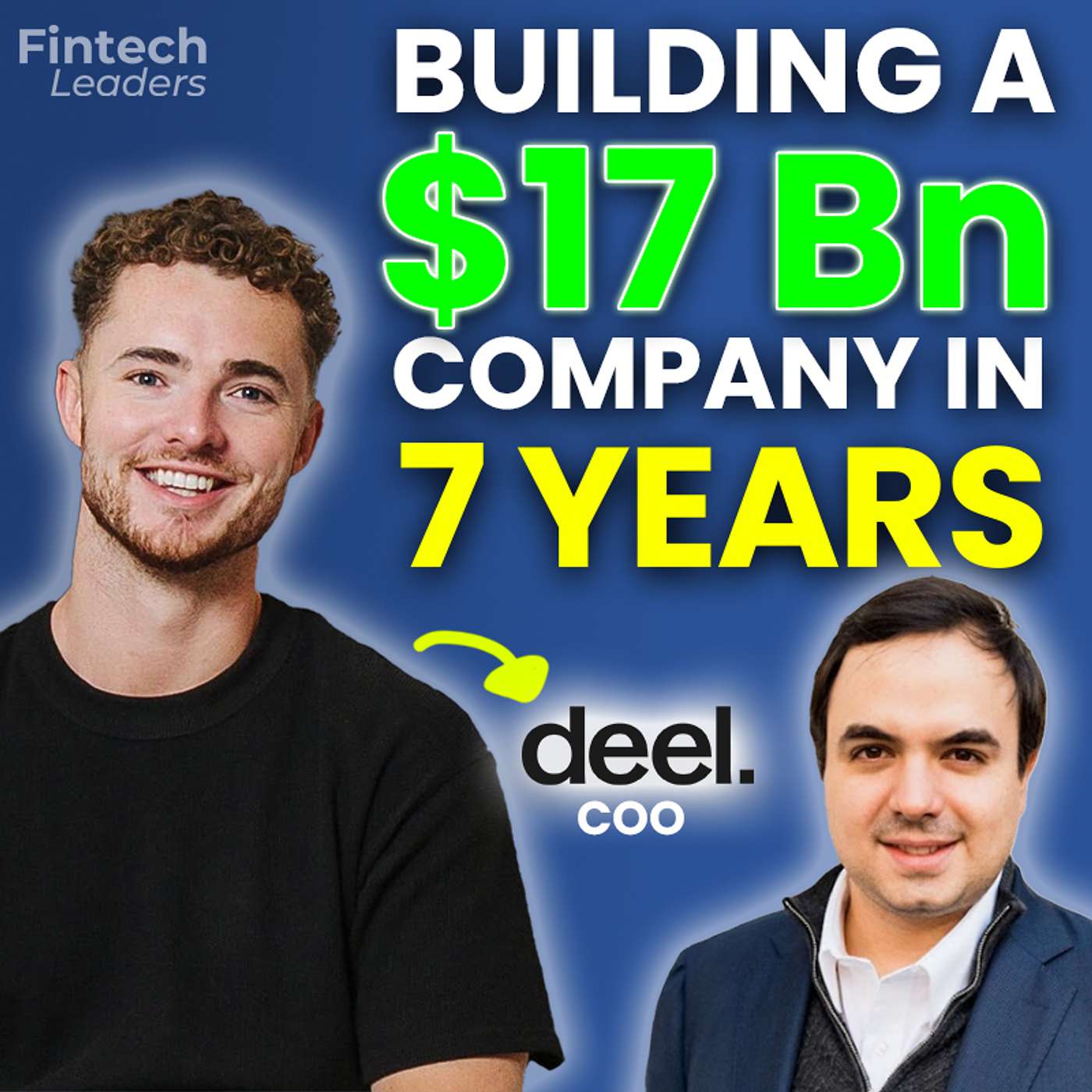
Loading summary
Transcript88 lines
- [00:00]
A
You can never please everyone and sometimes the really difficult decisions, they just need to be dumbed down to a really easy decision. For example, there were certain areas of the business that nobody really wanted to touch and they were a little bit scared of it or it was a really complicated problem and they were kind of referred to them as ghosts. We said, you know what, let's build a team of people that are going to bust the ghosts. Hence Ghostbusters. There are kind of five things that I care about. Number one, always put your people first. Number two, simple decisions where necessary. Number three, don't try and please everybod. Number four, have a playbook, but be ready to adapt it.
- [00:35]
B
And number five, welcome to FinTech Leaders. I'm Miguel Almasa and I'm fascinated by the company's reshaping financial services, which is why I co founded Gilgamesh Ventures, a fintech fund where we have backed almost 50 fintech companies worldwide. And over the last five years, I've recorded over 350 conversations with the top leaders in fintech to extract how they think, what they've learned, and insights that can be helpful to builders in fintech. In this episode, I sit down with returning guest Ben Westgarth, COO of Deal, the company that's redefining how businesses hire and pay talent anywhere in the world. Deal has grown into one of the most valuable private tech companies on the planet. And in 2025 they crossed over a billion dollars in revenue and achieved a $17 billion valuation and paid out over 22 billion in payroll globally. Dan oversees an organization of 3,300 people across more than 100 countries. And before Deal, he had a legendary early round as an operator at Revolut. In this episode we discuss how Dio built their elite problem solving team called the Ghostbusters, why they have killed one on ones, how they've integrated over 10 acquisitions, and the massive bet that they're making on building their own payroll processing engines worldwide. Dan, thanks for joining. Welcome to FinTech Leaders. I'm very excited to get this recorded again after almost three and a half years or so. One thing I definitely want to talk about is I've heard you are world class at focusing and committing on execution and I heard this from our very good friend in common, Adi Goel from Sardine, of course, who worked with you at Revolut. So then how do you stay focused?
- [02:44]
A
Well, first of all, thanks for having me on the podcast and thanks to Adi for the compliment. I think operators have an unlimited list of problems that they could be Working on. So quantifying those problems, ordering them by impact is really the key to staying focused and executing, executing quickly.
- [03:08]
B
And then when it comes to not just you, but your team, how do you get everyone rowing in the same direction?
- [03:16]
A
The understanding behind the why we're doing something is really important. I think if people don't understand why we've made a decision or why we're doing something, they're not truly bought in and truly motivated and they'll, they'll work hard regardless. But when they understand exactly why we're doing something and the value that's going to deliver for the business, that's when things start to work really fluidly and you kind of have that eureka moment and everything just works and falls into place.
- [03:43]
B
Yeah, and I guess that's a, that's one of the main reasons why business leaders, founders, they have to be reminding the vision and communicating the why to their team, to the company, on and on and on. Essentially forever, right?
- [03:58]
A
Yeah, totally, totally. I think it's not just, it's not just top down against the overarching goal or the North Star of the business. It's actually in the details of the problem. So I don't know, maybe we're changing a certain product or we're changing a certain process, but actually like understanding the downstream impact and how that gets to the North Star, how that gets to the final goal of the business, that's the part that's important.
- [04:19]
B
Then another thing I hear you are very good about, and I've seen this firsthand, is your ability to simplify complex problems or complex concepts and communicate them in a very simplified way. But that gets the message across. How do you think about doing this?
- [04:41]
A
Most complexity is just noise, legacy assumptions, opinions, edge cases, or sometimes fear of actually making a decision. I found that managers often make complexity because they're just scared of solving the problem. So we tend to reduce things to its kind of core truth or first principles and then communicate it. Simply write down the problem statement and it's simple form and then you can align people around the problem, you can get to mental clarity and then you can go in and solve it.
- [05:15]
B
Then let's talk about your expansion strategy because Deel has just expanded almost like no other company over the last several years. I mean the company is six to seven years old and you've gone from a mono product company to a 10 product institution. So maybe share a bit the journey on product expansion, sales, customer segments, brand expansion. Right. What have been some key inflection points?
- [05:52]
A
Well, I think they're all separate vectors and let me start about, start on product. We started out as a single product business and I remember moving from single product to two products was terrifying. We were very, very scared and worried about that. We started out as a contractor invoicing platform and then we moved into an employer of record and since then we now offer more than 10 different products. A geography standpoint, we've always been global. We were global from the get go. So businesses from anywhere around the world could use our product to be contractors anywhere around the world. And I think that was really helpful. It meant that our regulatory stack was almost optimized from the get go. And similarly the tech stack was optimized from the get go. So we had simple things such as onboarding and we had all of those countries on the dropdown list. We had all of the different entity types. The backend architecture was aligned to that. So it made launching those subsequent products and scaling pretty easy. From that perspective, I think where it gets more complicated and I think this is often overlooked or looked at too much is the go to market perspective. So I think those that look at it too much, they really obsess about go to market and then they go single country, single product, really deep and they, they try really hard to get product market fit and then sometimes it doesn't work and they need to pivot or whatever else. For us, we went very, very broad with that one product into two, serving these different customers around the world and different segments, different size customers, SMBs through to enterprise. That was really challenging and still is really challenging. And if you think about today, we're now multi product, multi geography, multi segment and even multi sector. So the way that we onboard all of those customers is really, really challenging. And I think that's part of the barrier to building $100 billion company. Like actually figuring all of that out is what's kind of the barrier to that. Finally, brand. I think brand will be a big part of what we do over the next few years. You've probably seen our partnership with Arsenal. Are we going to be doing all of their kind of HR and payroll? So I'm really excited about that. But adapting the social media strategy, adapting the marketing strategy to align with everything else. How can we speak to customers in different geographies, how can we speak to those different segments in different industries? I think that's really, really exciting. And also another, another barrier that we need to break down and unlock to that huge opportunity.
- [08:28]
B
A couple of questions around this topic. When you launch a new product, how do you make sure you have product market fit for that product.
- [08:38]
A
Yeah, so we typically launch products that customers want. So our thesis is if one or two customers want it, then there are hundreds of customers, maybe thousands of customers that want it. And then we will iterate upon the product until it kind of fits the market more widely. So that's actually how we went from single to dual product. And we had customers that said, okay, we love using you for contractor payments. Can you build an employer of record for us? It was one customer that persuaded us to do this because the ARR on the table was pretty large. And we were like, actually, okay, we'll do it. Fast forward five years. It's one of our biggest products at the business.
- [09:14]
B
How do you structure company leadership with regards to all of these dimensions? Right, you have a head for every country, a GM for every product. Maybe. There's many ways to structure it.
- [09:30]
A
First thing to think about is separating front office and middle and back. So front office is sales. They're a separate organization. In there we have regional leaders, country leaders, segment leaders, sometimes even industry leaders. I'll give a couple of examples. In Europe, Europe, we have Benelux, we have the DAC region, we have Nordics, et cetera. Within those regions, we'll then have different team leaders for different segments. And that model is kind of replicated around the world. Of course there are some nuances in different geographies, but generally speaking it's consistent. Then we go into back and middle office. This is where it gets really interesting. So the core business, which is payroll, that's run by myself and Alex, we're kind of the general managers of the core business. And that core business moves billions of dollars around the world and it's representing most of our revenue. After that we have a series or a range of adjacent businesses. IT leasing to immigration to expert services, whatever else it might be. Over each of these businesses we have a general manager. And the general manager is essentially the CEO of that line. They're responsible for making strategy decisions for the architecture for the go to market, everything you'd expect the GM to do. What's really important is to think about what's below the gm. So we have a traditional matrix structure. We have a head of product, we have a head of ops, we have a marketing person, we have a legal person, et cetera, et cetera. And that's a typical matrix structure. So each GM has that function available to them, but the function is reporting into a functional vp.
- [11:06]
B
One of the most interesting topics I certainly want to hear from you is this team of Ghostbusters that I guess you and Alex co lead or you lead maybe you tell me a little bit about that. Who are the Ghostbusters?
- [11:22]
A
Yeah, the Ghostbusters are effectively a team of chief of staff type profiles. We never liked the title chief of staff. We found it to be rather corporate. So the story behind the Ghostbusters is as follows. There were certain areas of the business or of operation that nobody really wanted to touch and they were a little bit scared of it or it was a really complicated problem and they were kind of referred to them as ghosts. And we said, you know what, let's build a team of people that are going to bust the ghosts. Hence Ghostbusters. They're a team of five or six people who report into me and they focus on problems that they are able to solve almost independently. They're typically cross funct problems. They're typically particular problems and they do a really good job.
- [12:07]
B
What kind of profile do these people have to have? Are they mostly mercenaries or can you have a missionary in that role?
- [12:16]
A
Yeah, you know I would be, I would tend to sway towards classifying them as mercenaries but I can't because at the end of the day they're very mission orientated and that will get through the cross functional conversation. That's kind of how we cut through, cut through those cross functional challenges. If they were straight missionaries they would just go in and kind of upset everybody. But I think generally the team likes working with the Ghostbusters because they know that that gnarly problem is going to be solved.
- [12:47]
B
Right. Because they're going after what that particular let's say product team doesn't want to deal with.
- [12:55]
A
Yeah, I mean people are, people candidly are asking for the Ghostbusters. I'd even go as far as saying as begging for the Ghostbusters like please, please, please can you assign me a Ghostbuster for this, this project? I'll give you a really pointed example of what Ghostbusters solve. So we had a sales, sales commission problem a couple of years ago. The sales commission process was essentially running on Google Sheets and we would have somebody from Revops who would download different data from Salesforce and then different data from the deal application and triage this across Google Sheets and then use Google Sheets to use formulas to calculate sales commissions and then pass on the payroll. It was a really horrible process. What's really horrible about it is the people involved or adjacent to the problem didn't know how to solve it. And the solution to the problem was hire More people. And it was actually hire more RevOps people. I'm not sure if you know much about RevOps, but RevOps is a very challenging topic to hire for. The people are often difficult to get hold of. They have long notice periods, they're rather expensive. And that just created lead time and more political complexity. So we were like, okay, no, let's bring in a Ghostbuster to solve this problem. Within 10 days we built a working MVP. And within three weeks that working MVP was fully productized and deployed to the application. And the Google sheet was deprecated, it was shut down. So we went from this really horrible process that nobody really wanted to touch, and the only solution on the table was to hire two or three people, which would probably cost the company hundreds of thousands of dollars, maybe even half a million dollars. And no, we brought in a Ghostbuster and a Ghostbuster solved that end to end within a number of weeks.
- [14:27]
B
So if now there's a pool from teams to work with the Ghostbusters team, how do you pick? I imagine there's a big pipeline, right? It's a big company, lots of problems. How do you pick? Where do they focus on it?
- [14:43]
A
Always back to quantification by impact. So Ghostbusters to a certain extent are autonomous. They will even do the quantification of problems theirself and they will come to me and say, hey, this is a huge impact problem. It'll take three or four weeks to solve it. Can I go do it? And we'll be like, yeah, sure, got it.
- [14:58]
B
And so is it impact on revenue or is it going to be impact operationally on operational cost? Like, what kind of impact are you looking at?
- [15:08]
A
I mean, it's all of the above. I'd also include as a major theme customer demands, particularly on the enterprise side. If an enterprise customer wants us to do something in a certain way, we need to ensure that it's done to a really high standard. And we probably need to remove or work with some legacy infrastructure. So building an onboarding process for an enterprise customer or a billing process for an enterprise customer, these are good examples of Ghostbuster projects.
- [15:34]
B
I know something that is definitely important to you is your approach to performance management.
- [15:43]
A
Right.
- [15:44]
B
And especially as a fully remote distributed company. I think you're. I've heard you talk about this before. Your intentionality and how do you approach performance management is definitely something that should be highlighted. Maybe tell us a bit about it.
- [16:02]
A
We put a lot of emphasis on the process and systems and we're not able to walk through the office and walk by everyone's desk and see what's up. Which is quite a nice unbiased to have. I'd say that our problem was a little bit unique in the sense that we're the largest remote first company in the world. So we needed to build out tools that worked for us. There was no kind of off the shelf software that would do what we wanted. So within Deal Engage, which is a deal product, we've built a goals system. And goals are essentially KPIs and these KPIs are mostly automated. So let's say that I'm a salesperson and I have a revenue target. The performance of that KPI automatically queries our database every day. So the person holding that KPI is able to log into the tool and they're able to see how they're tracking towards that goal. And it kind of looks like a stock ticker. Hopefully it's a bull market and it's going up and it's in the green. And building out that habit and that mechanism of checking KPIs daily across the organization is really powerful.
- [17:19]
B
I was just going to say it's almost like a hedge fund trader mentality. You can actually measure your performance daily. So does that mean that everyone, no matter the role, not just sales, they have to have quantifiable KPIs?
- [17:39]
A
Yeah, exactly.
- [17:40]
B
You have to be able to measure everything.
- [17:42]
A
Yeah, yeah, that's the vision. Of course there are some exceptions. In addition to those quantified KPIs, we also look at the other side. We look at qualitative data too. So we rate everyone against our core values at the end of each quarter.
- [17:59]
B
Can you tell us about some of these tools? How did you build this internal tool where you can actually measure everything?
- [18:06]
A
We wanted to build out a goal system to measure the performance. If I think of Deal five or six years ago, that was done off of a Google sheet. And then we used some third party software, some of the leading names and we weren't quite happy with download the details on how they were working. So we decided to build out our own Software. And the V1 you set a goal and each quarter managers would log into the software and update the goal. At the end of the quarter. We would then do an assessment based on the performance against the goal and the rating against our core principles. And it just felt like a very clunky, time consuming and quite disjointed process. So we said, okay, can we put a query behind each goal and can we ensure that that query is querying against our database. I'll give you another example. The revenue one is really, really easy. Let me give you a more abstract one. Let's say you're working in customer support and each customer support agent has a score which is a combination of how quickly they reply, the customer satisfaction and a few other factors. So every customer support agent has a score. That score is not only displayed in the goal system, but it's also used for performance compensation. So those two things are directly linked. And that also creates a really nice experience for our operations team because they're not having to wait for the end of a periodic process. They're able to see their performance daily and then get paid out quickly at the end of the performance cycle.
- [19:25]
B
Are there any tools and maybe the answer is no, but are there any tools that you've built internally for yourself that then you've productized?
- [19:36]
A
Yeah, yeah. So so many actually. And there were, there are a number that we haven't, we haven't productized and exposed externally yet. But I would want to really proud of our Wikipedia, our Treasury management system and even our internal ticketing system. We call it Workbench and that's an area where all operational tickets come to you and then assign that SLA is tracked and escalations are possible too.
- [20:01]
B
So help us paint the picture. You mentioned there are 10 products that deal offers today. What are the top? Let's start with the top three and just help us, let's talk a bit about the scale of the company because at this point you're one of the largest tech companies in our industry, not just in fintech, but tech widely. What are the products driving this growth?
- [20:26]
A
Well, it really starts with payroll. And payroll can mean many different things. It can mean paying contractors, it can mean paying employees, it can mean paying employees of record where we legally employ the people. This is kind of the headline and I think of the different subtypes of payroll that's going to be your top three after this. It's anything surrounding hr. So we have a HR information system, we have an IT leasing product, we have an immigration as a service product and many, many others. The way that we've organized ourselves internally is we have general managers sitting over all of those smaller adjacent businesses which are now scaling. So for example, I have somebody called Christine who is the general manager of Deal Immigration and she has a mandate to scale that business to over a billion dollars in revenue in the next five years. Which is, which is going to be amazing. You know, if you think about those 10 or so adjacent businesses we have the opportunity for each of them as a standalone is a huge opportunity or has a huge opportunity. If you think about coupling them with the deal customer base and the deal payroll it just maximizes and amplifies that opportunity.
- [21:32]
B
Maybe share the story of the benefits business that what I think is very personal to you.
- [21:40]
A
Yeah, I mean the benefits, the benefit business is an interesting one. You know I speaking with a founder recently, you know who's doing he was doing really great things, got product market fit like on the series A stage and scaling and I almost felt bad telling him the story but I told him that we'd launched the benefits business and that benefits business were already doing more than $100 million in ARR and I think that's really testament to the amplification that the deal customer base and the deal payroll platform has for these adjacent businesses going forward.
- [22:11]
B
What other adjacent products do you think that deal could go into? Because I mean if you're serving enterprises around their payroll, HR needs, there's a lot more that companies need.
- [22:26]
A
I think the list is very long but CFO back office is a really interesting topic. Consumer fintech is a really interesting topic. I think for the time being we're going to stay focused on what we've got but the opportunity is certainly there.
- [22:39]
B
So is it as simple as thinking, you know how this deal become a hundred billion dollar company? Is it as simple as a we have 10 products each one of them could become a billion dollar revenue product. What was something I've noticed in 2025 is how investors and operators beyond fintech have realized that oh fintech is going to create multiple hundred billion dollar companies, 100 plus. So I think to me that's exciting. I can definitely see the trajectory of how deals could become one. Is that part of your vision?
- [23:20]
A
I think it's certainly part of it but it's not our only bets. Enterprise is really interesting. We're selling into enterprise right now, we're onboarding enterprise right now. But the opportunity is bigger than I think we even realize at this moment. After this also broadening into, into more segments. I mentioned at the start or other sectors I mentioned at the start that we're, we're multi sector but how do we go really deep in some of those sectors? There are some areas that have very challenging HR and payroll circumstances and really providing an excellent service. There is something that's also really interesting in sectors like oil and gas, temporary workers, on site workers. Things like this are getting really, really exciting for us.
- [24:05]
B
So Dan, not long Ago, I was talking to you and you mentioned that you had an upcoming trip because you were traveling to help integrate a company that Deal had just acquired. Deal has acquired. I think it's about 10 companies over the last six years. I might be getting the exact number wrong, but the point is that Deal has been more acquisitive than not. And you've actually personally led some of those integrations. Right. Maybe share a bit about the acquisition strategy and then we'll talk about the integrations.
- [24:43]
A
Yeah, I think certainly done more than 10 acquisitions to date. All of the integrations have been led by my team. Our strategy has a few different prongs. You know, this isn't all of them, but I'll give you some of the kind of overarching ones. I think one has been to acquire product expertise. These are typically smaller businesses where we've acquihired and the founders have come on and they've been the general manager for that product within deal or perhaps the head of product have really accelerated our progress in certain areas. After this. We've had some acquisitions that have helped us with infrastructure. Maybe it's regulatory infrastructure, maybe it's technology. And then finally on the revenue side, like can we actually buy some revenue at a decent price, integrate it, improve the margin, and then also accelerate the vision into a certain sector or a certain geography. They're the typical pillars of a strategy.
- [25:36]
B
How do you succeed at integrations? That's arguably the hardest part of M and A.
- [25:40]
A
No integration is the same, that's for sure. Every single one is bespoke. And we put together the playbook and revised it a hundred times. But I found that you need to flex it every single time. You can never please everyone. And sometimes the really difficult decisions, really hard decisions, they just need to be dumbed down to a really easy decision. For example, you're trying to figure out where to put a person or a team of people. If you're in finance, you live in finance. It's as simple as that. It doesn't really matter what your specialization is or the history is. What I'm trying to say here is that there are a lot of opinions and unnecessary complexity on exactly where someone should live or how they should be compensated or who they should report to. And often you just need to tune out all of the noise and make the decision in a very basic, almost dumb, sterile way. And that has been really, really helpful. In summary, there are kind of five things that I care about. Number one, always put your. Your people first. Number two, smart decisions. Where Possible, simple decisions where necessary. Number three, don't try and please everybody. Number four, have a playbook, but be ready to adapt it. And number five, make the hard calls quickly.
- [26:55]
B
You know, I'm not trying to please everybody. I think that this is crucial for especially to move quickly. Right. How do you, how do you decide who to please?
- [27:06]
A
Think about the objective. So depending on the theme that the acquisition aligns with, are you. Are you buying the business from a revenue and business perspective, or are you buying regulatory infrastructure or are you buying product expertise? I would optimize for that. So let's take the first example. You're buying the business, you're buying the revenue. Well, you need to optimize for the customers. What's going to keep the customers the happiest, what's going to keep the retention the highest?
- [27:31]
B
Then we've talked about a different number of teams that report up to you. First of all, how big is your organization? And then how does your typical day look like? I imagine maybe there isn't a typical day, but take us through a day.
- [27:48]
A
In the life of Dan's deal is around 7,000 people. Just over my organization is 3,300 people. We're in more than 100 countries these days. It's the mixture of run the business operators and change the business ops and strategy managers. My day starts pretty early. I'm definitely an early bird. The first thing that I do is probably check my. Check my Whoop on my WhatsApp. I like to know. I like to know my sleep score and my metrics and then I check my WhatsApp to see if anything urgent has come up through the night. I typically take it, I take it pretty easily in the morning for the first, like 20 or 30 minutes, I think go into a pretty standard routine of email and then slack. And I think that's a really important ritual not only to respond to everything and keep it moving, but also look out for unexpected items that are coming your way and write those down and start to orientate your day around that. And then after this, it's pretty regular. I'd say a mixture of functional leadership, customer relationship building or maintenance, and then actually building stuff. You know, a deal, the C suite are very much involved in building. And I think that speaks volumes to our apolitical organization. There's not an amount of politics at deal and that means that we can keep things moving quickly and keep building things.
- [29:11]
B
When do you have time to work out? Because I know you're a big exercise guy.
- [29:16]
A
Yeah, I do something active every Day, usually the morning. Another thing I'll highlight is we, we don't like me meetings a deal. We think, we think meetings should only happen when necessary. And I, I persuade my direct not to do one on ones because people sit on topics until the one on one and that just delays things. You know, if there's a burning topic, send their slack message now or call the person now in the moment, don't sit on it. You might be waiting seven days or six days for the next one on one. And that shocks people a little bit because some people, they need the one on one for the, the structure and it's something that we don't like to do. Structure yourself with your notes, keep yourself organized and one on ones are good, especially when there are deep things to talk about. But on transactional level, just do the thing now and keep it moving.
- [30:07]
B
Yeah, that's something I've noticed about you is you are very good about sending messages that are maybe not too long but also not too short, but really encapsulates what could have been a meeting in a different set of circumstances. You turn it into a message and you get the job done. That sounds like that is a crucial part of the documenting. Being very good at note taking and then summarizing what you want to come across is your day. Just a lot of writing and a lot of summarizing what, what you're trying to accomplish.
- [30:47]
A
I think, I think a lot of the value that I add is strategy in what we should do and why we should do it. So people have the understanding of why this matters to the business. Maybe we're making a change, maybe we're building a product a certain way. Maybe we're going to deal or handle a customer a certain way. I think that's a lot of the value that, that I add and then that combined with, with the urgency, I'm very impatient, as are the other leaders at the company. Displaying that impatience somewhat shamelessly I think is really, really important. You know, demand, demand updates, keep the energy, the energy rate high. But yeah, I'm not doing a ton of writing. I think I write in short form. If I need to explain something deeply, I'll often record a video note and send it to people. They can listen back to the video note I'm talking about. Then they can, they can copy the transcript and paste it into their AI of choice and have it summarized. So that's, that's the kind of deal way of doing things.
- [31:42]
B
Yeah. And then they can turn it into a PowerPoint if they want it through AI as well.
- [31:47]
A
Yeah. Also on the flip side, that doesn't work every single time. Right. You know, if I send a video note to somebody, they might not understand what I'm on about and they might come back with some questions like no, no, you've, you've, you've missed the mark here or I haven't explained it properly and then that's when I call this required. You know, maybe then we'll get on the phone and it'll be an ad hoc phone call or it'll be a structured team meeting on the calendar and that's when you'll really talk through things and ensure that everyone is aligned around what we're going to do and understands the why. I think that's really important. Otherwise you have people that are working somewhat blindly and then they don't do the best work because they don't understand it. They're not. The heart isn't truly in it. I think understanding is really, really important.
- [32:25]
B
Then I want to talk about a few rapid fire questions that I think we're going to be interesting to, to hear your, your philosophy around some of this in 60 seconds or less.
- [32:40]
A
Right.
- [32:41]
B
What's something that you believed early in your career that you no longer believe?
- [32:47]
A
I believe that careers are or should be linear. I never wanted to have a career because I'm an entrepreneur deep down and I wanted to have a career because I thought the progression was always linear. But now I actually believe in the tech industry and other industries that careers aren't linear, especially in startups.
- [33:03]
B
What's a company metric that you obsess about and you watch very closely and why headcount?
- [33:11]
A
Which I think you weren't expecting me to say.
- [33:14]
B
Why?
- [33:15]
A
Because more headcount generally means inefficiency, controlling that, being aware of that, understanding that is just. It's my job basically my job is to keep the business efficient and moving quickly. If headcount gets out of control and gets too large, then the business will be compromised.
- [33:35]
B
Where do you think headcount would be a deal if we hadn't had the last three years of AI?
- [33:40]
A
It would be larger for sure. I don't know, but it would definitely be large.
- [33:46]
B
What's contrarian opinions that you hold about the future of work or future of tech?
- [33:52]
A
I know how contrarian it is, but yeah, I did. The future of work is a global borderless world where anyone is able to access or be accessed through a job market. I still don't think we're there yet. I speak to people from different countries who just seem so foreign to them to work for a US company or a European company. But that infrastructure exists for every customer that uses deal. But that isn't common knowledge yet. I think if you really deep down, dig down deep into it, people don't really believe that. So it's contrarian.
- [34:28]
B
Yeah, I mean listen, a lot of companies have had a strong return to work from the office. So it is contrarian I think to many, but I think it's quite cool. The company that helps people work remotely is the largest remote only company. Yeah, you guys definitely are walking the talk.
- [34:56]
A
For what it's worth, I don't think what I've said is tied exclusively to remote work. I think that it's easier than ever for customers or other businesses to have offices or satellite offices in any country in the world. And that's what I'm really speaking about. Some of the employees will of course be remote, but others will be working from satellite offices or maybe on a hybrid basis.
- [35:17]
B
What's one bet a deal that you are making now but most people won't understand for a few years.
- [35:27]
A
Building out our own payroll processing engines. The way that I can explain this to people that follow fintech is very similar to card processing. If you look at the fintechs that have really innovated on the card side, they've built out their own processing capabilities and with that you can do so many cool things with the card and with the transactional experience and the exact same thing as proof of payroll. And we're making a huge investment into building out those processing engines right now in just about every major country in the world. And that will put us in full control of the payroll experience.
- [36:00]
B
Sounds like a big project. Huge, huge project. So then what's a book that you either have gifted often or you often recommend and obviously you enjoyed.
- [36:15]
A
It? Is going to be who A Method for hiring which is by Jeff Smart and Randy Street, I think. Yeah. Basically a book on how to. How to hire effectively at scale.
- [36:28]
B
You know, I didn't know that was going to be your answer. I ordered it not long ago because another guest recommended it. I believe it was Renell Assert the founder of Bill.com Really?
- [36:39]
A
Okay. Yeah. There are some really, really simple tips and tricks in interview interview question interview process.
- [36:46]
B
Name a founder, CEO or just leader that you deeply admire and why has.
- [36:54]
A
To be my former former boss and CEO Nikolai Stravonsky from Revolut. I really admire and continue to admire his way of thinking about problems.
- [37:06]
B
Dan, this has been amazing. Before we go, maybe Just an open question. What, what are you excited about going forward? You know, you, you have, I know, some exciting years ahead. Some, some exciting plans of everything you're building. Maybe share kind of what, what gives you optimism because I know you're a very optimistic person. What are you excited about?
- [37:28]
A
It's a really nerdy answer to the question, but I'm really excited about internal tools, a deal. I think internal tools give the team superpowers and that filters down into customer experience. With stronger internal tools, we're able to run the business more efficiently. We're able to serve customers better. I think that combined of the other things that we've talked about today in terms of broadening segments, multi product acquisitions, but internal tools are what really give the team superpowers. So that's probably what I'm most excited about.
- [37:59]
B
You know what I'm saying about. I think some of those internal tools might become productized and become huge businesses in and of themselves.
- [38:08]
A
I hope so. I hope so. Good.
- [38:10]
B
Well, Dan, thanks for doing this. I always learn a lot talking to you and you know, looking forward to our next hangout in person.
- [38:20]
A
Yeah, man, me too. Me too.
- [38:22]
B
Thanks for tuning in. I hope you enjoyed this great episode with Dan Westgarth from Deal. If you want more interviews, make sure to subscribe, follow and leave a review on Apple, Spotify, YouTube or wherever you get your shows. It helps and truly means a lot. And if you have any suggestions or thoughts about the show, just drop me a line on LinkedIn or over email. Signing off till next week, I'm your host, Miguel Armasa.