← Fintech Leaders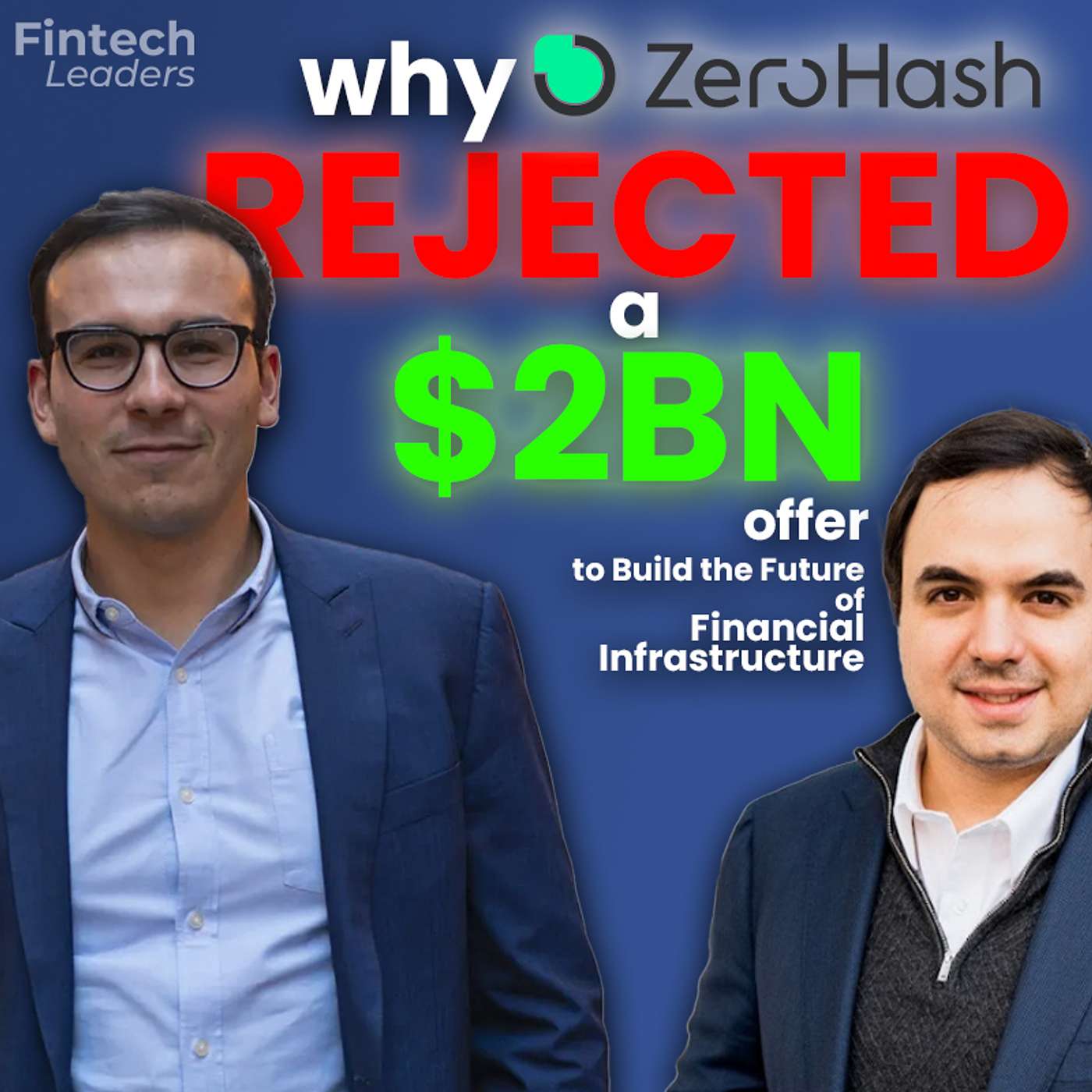
Fintech Leaders
Why Zero Hash Rejected a $2Bn Offer to Build the Future of Financial Infrastructure - Edward Woodford, CEO
00:37:22
Loading summary
Transcript91 lines
- [00:00]
Edward Woodford
We came close to having to close up the business. For example, when Covid happened, people don't forget there was a six week period during COVID where the world almost stopped. Right? We had this investor try and effectively do an aggressive takeover by putting the term sheet on us and effectively saying, look, we'll get another portfolio company to buy you. The attraction of a business like this, an infrastructure business, is that we have B2B costs, but we have B2C margins. Stablecoins are growing massively. That's why people are so excited about it, because despite it being a largely unusable technology, people are using it. So as we solve usability and reduce friction even further and create connectivity around the world, it's going to explode. In terms of usability, our chief business officer sometimes says no business is better than bad business. And I think it's actually true.
- [00:42]
Miguel Almasa
Welcome to Fintech Leaders.
- [00:44]
Podcast Host
I'm Miguel Almasa and I'm fascinated by.
- [00:46]
Miguel Almasa
The company's reshaping financial services which is.
- [00:49]
Podcast Host
Why I co founded Gilgamesh Ventures, a fintech fund where we have backed almost.
- [00:55]
Miguel Almasa
50 fintech companies worldwide.
- [00:57]
Podcast Host
And over the last five years I've.
- [00:59]
Miguel Almasa
I've recorded over 350 conversations with the top leaders in fintech to extract how.
- [01:06]
Podcast Host
They think, what they've learned and insights.
- [01:09]
Miguel Almasa
That can be helpful to builders in fintech.
- [01:12]
Podcast Host
My guest today is Edward Woodford, founder and CEO of ZeroHash, one of the most notable and important infrastructure companies in blockchain and crypto that is also one of the least visible ones for the consumer. ZeroHash Powers Financial infrastructure and works with companies like Stripe, Franklin Templeton and Interactive Brokers. They've raised hundreds of millions of dollars from great investors and most notably they recently rejected a 2 billion dollar MA offer from MasterCard, something that very few founders and companies would dare to do. I think it's going to be a fascinating conversation where you will learn a lot about the future of financial services as it intertwines with blockchain and crypto.
- [02:02]
Miguel Almasa
Thanks for joining.
- [02:03]
Edward Woodford
Yeah, thank you.
- [02:04]
Miguel Almasa
Met you a couple years ago, have always wanted to host you and I think this is the right time because you just rejected $2 billion. I don't know anyone who's done that. I don't know if you can talk about it, but maybe just tell us a little bit about.
- [02:21]
Edward Woodford
Yeah, I mean, look, maybe I can talk at high levels. I mean we put out a public statement and you know, my view is that, you know, I've been doing this since 2017 and I am a really true believer in blockchain technology and what it can do. I just fundamentally believe that what we can do in the next two plus years would dwarf what we've done in the last eight years. And as a founder in a new space, you know, we've been waiting for the dominoes to fall and, and it just feels that every domino is accelerating. And as we sat back at the end, you know, in the middle of Q4, we were on a record, we had a record year, we had a record quarter. And it's, you know, you take us back and you're like, why am I doing this? And it's not cheesy, it's like, I actually believe it. And. Right. We've actually shown that we believe it, that one, we believe we can be significantly bigger. Two, I believe that as an independent business, we can have materially more impact. And that's the quadrant that you make a decision by. Right?
- [03:16]
Miguel Almasa
Yeah.
- [03:16]
Edward Woodford
So, yeah, look, it's, it's an interesting, it's an interesting one, but it's something that is actually a very easy decision. I'm excited by the future and sometimes when you go into like a process like an acquisition, it can be really, really tiring and the energy to say, look, we're actually going to take bigger swing and try and accelerate the momentum we have, you know, it's like it's revitalizing. Right. It's like you fall, almost fall back in love with the business.
- [03:43]
Miguel Almasa
Takes massive balls, man.
- [03:46]
Edward Woodford
Yeah, look, apart from like the emotional side of it, there are like practical, you can't just go off emotion. Right. Like just the practical realities. One, we've been doing this for a long time, so I do think that there are options now around secondaries and there are great options for your team if you want to do that. So one, you can reward your team materially and the structures to do that. Secondly, the macro has shifted the interest institutionally. The ability, ability to go public. We were talking, you know, just before we started around companies going public, that's opened up as well. So, you know, take away the emotion, take away our thesis, there are practical ways to, one, make sure your team get rewarded. And two, as you look towards the future, an exit path that looks even more exciting. Right.
- [04:27]
Miguel Almasa
Is there also an element of what else would you do? Because I, I think a lot of us have heard the story of Facebook rejecting a billion dollar acquisition offer, maybe from Yahoo or Google. I don't know. The rationale for Mark Zuckerberg was what else would I be doing if I take all that money, great. But he would just build Facebook again.
- [04:53]
Edward Woodford
Yeah.
- [04:53]
Miguel Almasa
Right. So for you, is there an element of that?
- [04:57]
Edward Woodford
Yeah, I mean, I really honestly try not to associate my complete identity with the business.
- [05:02]
Miguel Almasa
Okay.
- [05:02]
Edward Woodford
And I think that's partly come from, you know, over the journey, especially in this space that we've been in, we came close to having to close up the business. For example, when Covid happened, people don't forget, there was a six week period during COVID where the world almost stopped. Right. And we had this investor try and effectively do an aggressive takeover by putting the term sheet on us and effectively saying, look, we'll, we'll, we'll get another portfolio company to buy you. You know, stories like that. And so you have to almost separate yourself and identity, otherwise it will completely destroy you. Look, do I lose sleep over the business? Do you worry about the business? Am I as healthy as I could be without, like. No, but you can't have your complete identity tied up in it. And I think that's partly because in some ways I've almost grieved the business three or four times. And so you have to have like a degree of separation, you know, look, and also, do I want to spend time with people that just associate with me with the business and our success? You know, that's not who I want to spend time with socially either. So look, you have to create a little bit of distance between, I think, yourself and the business in order to have a healthy balance. There is certainly an element, right. Like, I love building. I really believe in the space and I really think we're at this massive inflection point. So what else is more exciting right now? With my skillset, with my knowledge, yeah, there's probably very few other options. But. But, you know, one of the pieces of advice I got from my dad when we were talking about different options and pieces is don't be completely wedded to the idea, right? Like, you can do other things if you want. So I questioned and said, do I think one, this is the best outcome for my team? Do I believe it's the best outcome for me? Do I believe that we could have more impact? And the answer was no. But I wouldn't say it's like that's the only thing I can do in life. And I think partly it's because of the experiences that we've had that have kind of created that degree of separation was have to take off a different hat and almost be kind of removed from your emotions sometimes.
- [07:00]
Miguel Almasa
So speaking of your identity, maybe tell us a Bit about your background. Yeah, you obviously your accent reveals you. You're from London but you lived in the US for a couple decades. Close to.
- [07:11]
Edward Woodford
Yeah, not, not quite. Well, decade and a half, I suppose so, yeah. I mean, like I grew up in the uk, half Spanish, half English, see, but not, not, not, not, not to a level where I can talk about crypto, like in the sense that, you know, my mom only speaks to me in Spanish but, you know, she's fascinated by crypto. But I don't know if I'm crypto conversant, if that's a, if that's something that you can put on your LinkedIn. Yeah. Moved here when I was 20, 21, came to grad school and yeah, I've just stayed just. It's a, it's a great place to build businesses and yeah, the reason I came honestly was I got rejected from Oxford and I always say this was best, that was the best thing for me because it kind of gave me this itch to get a pedigree university on my, on my resume. And so for me that was mit.
- [08:00]
Miguel Almasa
Was your British father devastating when you got rejected from Oxford? I know someone whose father cried when they didn't make it to Oxford.
- [08:11]
Edward Woodford
This is a very, I think I cried. My parents definitely didn't cry. My dad actually didn't go to university. It's honestly was the best thing for me. It gave me a chip on my shoulder, you know, I was, I was. Got everything good at school and it teaches you like there's randomness to life and that was a really, really good lesson as an 18 year old. And you know, I went to a great place, made a lot of great friends, had a great education. So like, I can't complain, but when you're sat there as an 18 year old, it is downbeat, right? That's your gold, that's your North Star. So yeah, honestly, I just came to the US because I wanted that kind of pedigree and you know, I'd probably watch Love actually too many times and came and then stayed.
- [08:53]
Miguel Almasa
When did you get interested in kind of the future of financial technology or just in future of finance?
- [08:59]
Edward Woodford
Yeah, so when I was at mit, there was a professor there called Kristen Catalini who really was at the forefront of, you know, bitcoin at mit, they did a thing where they gave bitcoin out to every undergraduate student, for example, and so I actually did a class with him which really got me interested in bitcoin. Actually, funny enough, the year before me, it was Alex from Deal who was the year before me. So this class has done a, done a great job of spitting out entrepreneurs. And I, you know, I always say if you, if you go to a place like MIT and you don't reconsider what you want to do, you haven't really done it right. If you say, hey, I want to be a consultant afterwards, and then you still say, yep, I 100% want to be a consultant. Have you really taken advantage of all the options you want? There's nothing wrong being a consultant. There's nothing wrong with saying you want to be a consultant, but just assessing what you want to do. So for me, it kind of broadened my horizons of wow, this is, there's this technology and wow, you can start a business and people give you probably more credibility than you're due. And founded another business before that, but it got into. It was actually, it was a financial services company again. But I bought my first bitcoin at the MIT bookstore and it just came from this class and just kind of gave me a desire to build and kind of get that. You know, I mentioned that excitement again, that kind of core excitement when you start a business that is an addictive. An addictive feeling. Yeah.
- [10:21]
Miguel Almasa
And the idea of Zero Hash, was it exactly the same at the beginning from what it is today? How did it evolve?
- [10:30]
Edward Woodford
No. So Zero Hash was founded in 2017 and really, you know, bitcoin was super, super early and we were trying to build effectively an exchange for, for. For institutions and then very quickly realized that customers were coming to us and said, hey, we don't, we don't want your exchange piece. We want everything behind the scenes. Right. The infrastructure as a service. And, you know, it started basically just bitcoin and eth. But that technology has now evolved into stable coins. And now actually stablecoins is the majority of our business. It's evolved into tokenization, which really could be anything. Right. We were talking about companies going public and different things. Tokenized infrastructure, I think is going to be rewire the way that values move globally. So the business has evolved massively, but we actually started effectively as a B2C business and then we shifted into a B2 B2C business, which is often a common trend for B2 B2C businesses. Yes.
- [11:23]
Miguel Almasa
And a very common story for fintech. You know, you want to solve a consumer problem. To do it, you build internal infrastructure and then you realize that infrastructure is way more valuable than what you're trying.
- [11:39]
Edward Woodford
To sell to consumer 100. And sometimes I say this and it's Great in hindsight, when you can say that you, you had this clear vision, but the attraction of a business like this, an infrastructure business, is that for us we have B2B costs, but we have B2C kind of margins. So it's a very attractive business from that perspective. Secondly, you know, just reassessing what our thesis was, our view was that this was going to be a technology that would be fundamentally disruptive to the way that value, values transfer and value can mean anything. Effectively. Value is transferred. And yes, of course there will be these companies, zero to one that are creative disruptors. You know, you've seen the rise of Coinbase, for example, a creative disruptor. But if our, but our thesis that this is technology going to be a rewiring, then aren't we better placed helping businesses move into the space. Right. And help them evolve? And that really was just the evolution of our, of, of our thesis and kind of how we, how we develop the business.
- [12:33]
Miguel Almasa
So you have some pretty large customers. I believe Stripe is one of those. Maybe share a little bit of the flavor. But more specifically, out of all your products, which ones are the best sellers today? Your top one, two or three?
- [12:47]
Edward Woodford
Yeah. So really we break down the business in terms of three core business business lines. So the first is what we call trade. And this is effectively what we provide crypto to partners such as Interactive Brokers and Morgan Stanley that want to embed crypto to their customers. And we see a massive convergence here of crypto companies offering traditional financial services products, traditional financial services companies offering crypto. So we act as that gateway to large established banks and financial services companies to offer crypto in the US or globally. Globally. So, for example, Interactive Brokers, you know, large $120 billion plus publicly listed company, they were actually one of our earliest backers. And the reason I think in hindsight that they invested was actually they made their money. They made their mark on the world with the electronification of markets. And they kind of saw how if you take advantage of technological shifts, you can go from what was relatively small company into obviously a massive company. So, you know, we're working with a number of banks that we haven't yet disclosed, but groups like Morgan Stanley offering crypto to their customers. The second big bucket is what we call transact, which is effectively the movement of stablecoins. And here we work with groups like Stripe, like you mentioned, we work with groups like Gusto for account payouts and we do account funding with stablecoins. And we can talk more about stablecoins there. And Then finally is tokenization where we work with groups like BlackRock and Franklin Templeton providing tokenization infrastructure. The core of all of that is this is technology. People want access to it and whether that transfer value be a real world asset, whether it be Ethereum or USDC on Ethereum, at the end of the day it's just movement of value. But obviously you productize in different ways. So you know, we have a crisscross of section of customers of startups all the way to globally systemically important banks and really everything in between.
- [14:34]
Miguel Almasa
Out of all those three, maybe let's talk a bit more about tokenization. In my opinion, that's the least understood by the public and we might see we might be at the beginning of a wave of just a massive amount of tokenization of equities or other financial assets. I think most people do not understand this.
- [14:55]
Edward Woodford
Just give us tokenization 101 stablecoins are effectively tokenized dollars. I think maybe just some thoughts on tokenization. So effectively tokenization is a mechanism, a ledger of ownership that is decentralized and effectively can remove intermediaries. That is valuable for a number of reasons, but it's not the silver bullet for every use case. So often when people talk about tokenization they talk in binary terms. Something is tokenized, it can never be untokenized. Everything is tokenized, everything in the world is tokenized or nothing is tokenized. That's not the way that we view the world. So maybe bringing it down to dollars because at the end of the day I think people understand dollars pretty well because they use dollars every single single day in my mind. For example, tokenized dollar is an incredible way to move value. But that dollar can also become untokenized when that dollar is at rest. For example, for most people in the United States it makes sense for them to hold actually dollars, not tokenized forms of dollars, right? And that's partly because of the regulation in the US a stable coin, 7% of that has to be backed by short term treasuries. You're not allowed to do interest, at least not currently. It's not FDIC insured. So I like to draw this distinction that tokenization typically adds value when the money is in motion. It also creates this global connectivity layer, right? As in anybody with a smartphone can access this technology. In the same way that I always like to use this example, for example like SMS and other mechanisms when when it really exploded was when it created like this, this distribution to anyone in the world and also when you created interoperability. So people don't realize this when, when text messages started, you could only text people on Verizon. If you were on Verizon, what really allowed that to explode was you. When you had kind of the ability to be interoperable across MacQuest. I could send a text message from Verizon to T Mobile. The same thing's happening with tokenization right now. It is this very fragmented technology. Some people are building on Ethereum, some people are building on Solana, some people building on Canton. The connective tissue is now starting to form. And that's what I don't think people truly understand is that when you make this technology which has immense value and you connect it all, that's where you have the unlock. Also fundamentally, for most people in the world, for example, tokenized dollars have largely been an unusable technology. Right. They're pretty complex to use, yet they've been very, very important to a lot of people in the world. So what does that say? There's huge value, there's huge value about global instant real time movement value to pretty much anyone with an iPhone or with a phone generally. That's incredibly powerful. So our big focus now is basically solving usability. So we put out a report recently, what we call the momentum report around stablecoins. Stable coins are growing massively. That's why people are so excited about it, because despite it being a largely unusable technology, people are using it. So as we solve usability and reduce friction even further and create connectivity around the world, it's going to explode in terms of usability. So it's really the global network of networks. It's kind of the way that I think about tokenization.
- [17:57]
Miguel Almasa
I think it's hard to dispute that stablecoins have strengthened the US dollar internationally. Will it be the same with tokenized equities? They would strengthen the US dollar equity market because now someone in South America, Africa or wherever will be much easily be able to access the capital markets through tokenized equities.
- [18:24]
Edward Woodford
Yeah, I mean tokenization and this infrastructure blockchain is really a global rail, which one increases access and increases velocity. And access and velocity is what grows gdp. So fundamentally, I think it's good for everyone. I think it's also, yeah, of course it's good for the U.S. economy. I think maybe just bringing it down to something that people might really appreciate is for example, payroll. Right. Talking about global movement, what does it matter? Like what does speed matter? Why does velocity matter? Right. I think people, people like to say that speed matters, but why does it really matter? So bringing it back to a use case that I think again, everybody understands payments for payroll. So effectively I get paid every two weeks. The way to think about that is I'm effectively actually providing my company with a loan. Now I'm fortunate, I don't have to worry about that, but I'm effectively providing a loan to my company. 70% of Americans can't afford a thousand dollar shock to their system, Their card breaks down. I think on a global scale, the amount of people that getting paid and not providing effectively alone matters. So I think you can get rid of, if you increase velocity, speed and price and reduce price, you can pay people more quickly. And that matters to a lot of people. So that's why speed, global infrastructure, as the world becomes more interconnected, the ability to move value more quickly, more cheaply to anyone, anywhere really matters. And that's bringing it home to a use case that we all understand, which is being paid by our company effectively.
- [19:50]
Miguel Almasa
Let's talk a bit about building. So you've been going at it for almost nine years at this point. What's an early decision you made that you are actually proud of that has had positive ripple effects when it comes to the infrastructure of the company, the way you guys do things.
- [20:09]
Edward Woodford
Yeah, I think it's probably a lot of the core team. So we have this concept at the company of a founding team. This founding team is the people that were there with me from the start. Often founders get the kudos, but really the founding team have been there since day one and founding team, you know, many of them are, you know, some of them in the C suite, some of them are mid level, some of them don't manage anyone right, they're an ic, but they've set a culture, they've set a tone. And that's why we call, you know, that's why we created the concept of a founding team that wherever they are in the company, they drive and instill the value of a founder, which is constantly pushing to be better. So I think a lot of the culture has been set by those people that came in early and that's been incredibly powerful. Especially, you know, as the company gets bigger. You travel a lot, you're not as engaged in every single part of the business. But to have these people that really set the tone, set the culture, set the demands, you know, up, down and across the business, that's been something that's really helped us. Look, we made a lot of mistakes across, across, across the last, you know, eight, nine years. But that's something that I Think I look back with. With some. With, you know, a good amount of pride.
- [21:17]
Miguel Almasa
Years ago, I interviewed Enrique Dubagrass.
- [21:20]
Edward Woodford
Yeah.
- [21:21]
Miguel Almasa
Founder of Brex, and he talked about this, but he said more important than the early hires is the early leadership hires because they have more agency in setting the culture. So that was a good decision. How did you connect with these people? Like, so those were early decisions. Right. But you could have also gotten it wrong.
- [21:41]
Edward Woodford
Yeah.
- [21:42]
Miguel Almasa
And bringing the wrong people. But sounds like in many cases, you actually brought the right people. Why was that? Like, did you draw on your existing network? Did you rely on an agency and friends?
- [21:54]
Edward Woodford
Like, maybe just to be clear, the founding team member isn't the first, for example, six people that we hired at the company. It was probably the first 50 people in the company, and six of them are founding team members. Right. So I think it's an element of a degree of healthy chan making mistakes along the way. But then the people that really, really are there with you, especially as a founder, sometimes you think that, you know, the tough things aren't. Aren't. Aren't known by your team. People know, you know, the story I gave you of effectively having a week's worth of Runway. The team knew they could have gone somewhere else. But I think it's really that desire to build something big and kind of lean on each other is. It obviously was a lot easier in that world. It was a Covid and pre Covid world. We were all together. We're now a remote first company. So it is harder, frankly, to build that connective tissue. And that's why we do try to be really, really intentional around sharing information, making sure that we at least get together globally every 12 to 18 months to try and create that connective tissue. But look, we got lucky on it and we tested it. And once you realize that these people are great and like, building towards what you want to build, really, really invest in those people and kind of set in setting the culture from there. But these just be clear, these weren't the first six magical hires, and those are the six founded team members. No, no, no. It's, you know, a good amount of churn from there and saying, like, we made the concept of founding team member probably about five, six years into the journey.
- [23:25]
Miguel Almasa
Yeah, I see.
- [23:26]
Edward Woodford
So it wasn't the immediate.
- [23:28]
Miguel Almasa
So flipping the question around, people and talent aside.
- [23:32]
Edward Woodford
Yeah.
- [23:32]
Miguel Almasa
What's a decision that turned out to be the wrong one that you learned from early in your days that now you. You look back on?
- [23:43]
Edward Woodford
Yeah, I mean, I think probably there were one or two investors that weren't interesting, good investors. The best advice I got was from a mentor of mine who, who actually was the person that stepped in when we had a week's worth of Runway and did a deal over the weekend, effectively a gentleman called Tom Sosnoff, who founded multiple businesses and actually really helped us get to where we are. He really helped me unpack the psychology of investors. These investors were vying for us to effectively sell the business at like, a 50 million, $75 million valuation.
- [24:18]
Miguel Almasa
How many years into the, maybe three or four.
- [24:21]
Edward Woodford
This was after the, after the tough time. They came in and they said, okay, let's, we've kind of survived. Let's kind of get out. And, you know, every investor says, I want to, you know, I want a 20x, I want a 30x. That's kind of, that. They can't say that they don't want that. And he said, look, I'll buy your equity tomorrow at that price. And from that point on, it was like a very different piece. But the agitation, the stress that that can cause is very, very different. You know, I, I, I sometimes envy the stories that, you know, I've listened a lot to. Eric at Ramp, for example, talk about some of these early investors that were just incredible. I think we certainly had some absolute standout investors, but there was a balance of not so good investors that can be very, very counterproductive, and that's hard. But you learn the lesson. You say, look, if you don't want to be here, I'll find you an exit. And that was a lesson I learned, which was, if you, if you don't like, there's, you're not tied in forever. Right. This isn't a trap. You can, we can help you find a secondary. We'll help you facilitate a secondary. The company will buy back your equity. And kind of saying to people, look, if you don't, like, invest, it's easy to kind of moan from the sidelines. It's either be quiet, right, and help or get off. Those are the two options. Yes, there is. No, it's not about not taking feedback. It's about just negative agitation. And that can be sometimes incredibly damaging.
- [25:44]
Miguel Almasa
How should founders, because our audience is definitely a lot of founders. How should founders think about this when they're raising their initial rounds of capital to hopefully avoid those kind of investors?
- [25:59]
Edward Woodford
Yeah, look, it's, it's, it's, it's really hard to get to know people, especially when you're trying to raise money. I, you know, at the start Definitely wasn't easy for us to raise money. We're in a very different place now. Right. You, you have optionality. We probably didn't have that many options. You can do reference calls, you can do other pieces. Really at the end of the day it's, it's, it's really hard to figure out. I mean you have to make sure you have the protections in place. What I would say is look at investors that are more focused on displaying influence versus power. And influence is very different to power. And I think once you display power, you actually lose influence. And that was the one or two things that I've learned with investors as well is if they had power and then they try to use it, then they frankly lost influence with me. Right. So, but if you have investors that are really focused on influence, that tends to be the better investor that's looking for a multi generation relationship because they understand that if you use that power, it's very, very hard to come back from that. Right. But influence, hey, you've done this wrong. This, this isn't how it should be done. That's great. Right. So it really talk to them about how do they, how do they interact with their founders? Ask them, you know, you really test the relationship when it gets hard and how have they kind of deployed that? Is it softer influence or the harder power? I think that's, that's an important, an important delineation that I've seen with interactions with, with many, many different investors over the years. But that's also the power of tokenization. Right. If you create more liquidity, your investor doesn't want to be on the cap table. Get them out. You can, you can, you know, you can create a more, you can create a market that is easier for illiquid liquid assets. Right. When you're earlier stage, it's harder to kind of have that model. So you know, that's the beauty of for example, blockchain coming back to the point. Yeah.
- [27:48]
Miguel Almasa
And going back to talking about building. When you are building infrastructure, right. Like there's choices, what do you want to leave to your customers?
- [28:00]
Edward Woodford
Build.
- [28:00]
Miguel Almasa
And what do you want to build? How did you figure that out with your team? And I still. You still do as you expand into new products.
- [28:08]
Edward Woodford
Yeah. I think with infrastructure as a service, sometimes you can fall into the trap of effectively being a dev shop for your clients and that, that, that, that completely strangles you or you know, maybe a softer term as you get bear hugged by the investor, especially the big, big customers. What I've learned with SaaS infrastructure, it's often very hard to know exactly who's going to make you money. Your projections are typically wrong. I think we are much better now of having a very clear vision of exactly what we, we want to build, what we think makes sense. You've obviously got to be ultra responsive to customers and features. And look, if, if somebody wants an API field and that means a lot to them and it, you know, it takes an engineer half a day. Let's, let's do that. But like, you know, that shouldn't be 100% of how your roadmap is mapped, you know, roughly, you know, roughly. Now we basically allocate about 20% of the roadmap to being highly responsive, highly reactive to customers, showing that kind of investment and creating stickiness. That is the great thing of being autoresponsive to customers is that they become stickier and stickier and stickier, but also being clear of the roadmap that you want to build and not fall into the trap of being effectively an outsourced dev shop.
- [29:17]
Miguel Almasa
How about pricing your product? What did you learn? Because with infrastructure, you know, there's no, it's not, not always easy.
- [29:26]
Edward Woodford
Yeah, probably one of the best decisions we made was our pricing decision. And I remember a lot of debate about it. With infrastructure typically, and if you look at public companies with infrastructure Typically, about 80% of the revenue will come from 20% of customers. So you've really got to make sure that you share in the upside of your customers. So the way that we price is that we have a monthly minimum and then we basically have a usage component based on the volume that's sent through the system. If you create, if you'd create like an all you can eat model, you know, you just wouldn't share in the upside. And so you'd have a very, very, you know, very, very fermented customer base. It also creates good alignment. Right. If you, if you share on the upside with customers, that, that, that makes a lot of sense. So that would be one thing is in infrastructure you've really got to try it. Whether it be number of API calls or something, you've got to share in that model. I think that's probably the key, the key piece, the second is we try to really focus on value, not price. We are not the cheapest, we will never be the cheapest, and we haven't been the cheapest. What we focus on is value. One, I think you want customers that really appreciate the value that you provide. And if you sell to those businesses, they're stickier, there'll always be somebody. It's very easy competition. If you just go cheaper, somebody can always be cheaper than you. But making sure that you really understand what is your value proposition and by not being the cheapest, it force you to actually sell to customers that understand your value proposition a lot stronger. You know, our chief business officer sometimes says, no business is better than bad business. And I think it's actually true. You've got to make sure that you invest in the right relationships, especially with an infrastructure like ours where we're a regulated business. Right. We've got to make sure that you're working with people that you want to work with. We've always been very clear on those points.
- [31:09]
Miguel Almasa
How often are you rejecting customers because you think they're not ready to work with you?
- [31:15]
Edward Woodford
Yeah, I probably frame it as not rejection, but kind of, you know, there's a, there's softer framings that you can do. Look, I always say, look, we don't let price come in the way of a customer that we want, but it's probably quite regularly now where we, where we feel that the customer isn't right for what we're trying to build, that that's okay. So it's, it's. I wouldn't have an exact number, but I think we're, we're willing to turn down business not just for pricing. No, not just for pricing. Whether there's a, you know, when, when, when you're a regulated business like us, we're not just a techno technology infrastructure business. We're ultimately regulated business. And for us, we're trying to build this business for, you know, multiple generations. We're trying to have true impact and have, and, and where we know that we can have impact is on customers that care about doing the right thing, built on strong infrastructure, not just price. And that's kind of the way that we, that we think and have, frankly, always have always thought, since we kind of helped define this. No, no one was doing crypto or stable coins as a service. No one was doing tokenization as a service. So as we really thought about, as we've expanded our product suite is making sure that you do have that upside and you're invested in the right partners. So that's the key.
- [32:25]
Miguel Almasa
When it comes to defensibility, how do you think about it?
- [32:28]
Edward Woodford
Trust for us is our biggest defensibility. And trust can mean a lot of things. It can mean, do you have the right regulatory structure, do you have the right cybersecurity posture? But for trust that that is the biggest barrier to entry. And I think that's kind of shifted. I think sometimes people think that our business is focused around regulatory barriers. Yes, we're super regulated around the world. You know, those things can move pretty quickly. Right. In the US an OCC charter is definitely possible for more and more businesses. But really what we're focused on is trust, especially an emerging asset class like this, an emerging technology like this. Our goal is to ensure that there's not a zero sum trade off for our partners between trust and innovation. And we, you know, everyone expects a startup to be innovative and help them on that side, but really making sure that you can be trusted, especially when you're selling to financial institutions. Right. A lot of decisions are made through a risk lens, a CYA lens, really making sure that our proposition around trust is absolutely our critical moat.
- [33:23]
Miguel Almasa
Before we run out of time, I want to go into kind of quick, rapid fire set of questions.
- [33:29]
Edward Woodford
Yeah.
- [33:30]
Miguel Almasa
What's a company metric that you watch obsessively and why?
- [33:33]
Edward Woodford
Honestly, revenue. That, that, that is maybe an odd number to say, but for us it's, it's revenue gives us strength. I mean I, I track it literally every day.
- [33:40]
Miguel Almasa
Can you share maybe some stats around it?
- [33:44]
Edward Woodford
Yeah, I mean look, our revenue, we've grown revenue year on year over the last three years. But I just, you know, our business, transactional business. So literally you can track how much you're making in real time. And that's something that I look at. One other metric that I'm building actually right now is I don't think Churn is all equal. Right. So I basically have created this with the team. Effectively a metric based basically if you look at churn, there's always going to be churn in the company, but weighting that by how that employee is doing from a performance perspective. So if somebody churns, that is a high performer, that should weight more towards your number. Most people say, well, what's your churn? It's 5% if I, you know, 10%, whatever the number is. But I want to weight it based on that strength of that person.
- [34:28]
Miguel Almasa
What's a book you often gift or you often recommend?
- [34:33]
Edward Woodford
Yeah, maybe I actually just wrote a book, Stablecoins for Babies. So that is probably, that's the book that I give away to pretty much everyone that has a kid that I know was expecting a kid. And it's been a great, it's been a great thing. Like there's nothing better than having your kid pick up your own book. It's just amazing.
- [34:49]
Miguel Almasa
And we're on the age where our friends are having kids.
- [34:51]
Edward Woodford
Exactly. It's a great way to connect with people as well.
- [34:54]
Miguel Almasa
What's a leader? Who's a leader you admire and what have you tried to steal from them or mimic?
- [35:01]
Edward Woodford
Probably, you know, I mentioned Tom Soznos, right? Just probably. The thing that I've tried to learn is, you know, I think he, he was founder mode before founder mode, but even became a term I remember he would reply to customer information, customer requests, customer questions, and just forward them to me at like 9pm on a Sunday and, you know, expect me to reply. And, you know, this is a person that's built multi billion dollar businesses way bigger than we were. It's like, wow, okay, that, that intensity kind of sets a tone. That sets a tone, Right.
- [35:31]
Miguel Almasa
What's one habit that has materially improved your effectiveness as a leader?
- [35:36]
Edward Woodford
I massage every week. Gives me space to think. It's very, very hard to actively think these days. Constantly, you know, your phone's always next to you, even on a run. You've got your phone on you, you've got an Apple watch on you massage here. You literally can't be on your phone. So helps me process things much more quickly.
- [35:54]
Miguel Almasa
If you weren't building zerohash, is there any problem that you're also obsessed about these days?
- [36:01]
Edward Woodford
Pretty healthy, right? If you think about just global health, I think it's something that affects every single person in the world, right. So that's, you know, for me, it's about most amount of surface area globally that you can touch. I think finance, everybody has money, everybody gets paid. Everybody also worries about their health.
- [36:18]
Miguel Almasa
And final question, if things work out for ZeroHash within the next five years, where are you going to be?
- [36:25]
Edward Woodford
We want to intersect with, you know, billions of people globally and we want to touch, you know, provide infrastructure to those people. So really we want to have surface area of 20 to 50% of the globe's world's global population is intersecting on our rails in some capacity. And I truly, truly believe that that will be the case.
- [36:46]
Miguel Almasa
Amazing. Well, I'm glad we recorded this on one of the coldest days in New York City in decades. So thank you for doing this and again, hats off to you for rejecting a $2 billion acquisition. Thank you. Thanks for tuning in. I hope you enjoyed this great episode with Edward from zerohash.
- [37:09]
Podcast Host
If you want more episodes, make sure to subscribe and leave a review on Apple, Spotify or YouTube.
- [37:16]
Miguel Almasa
And if you have any suggestions or.
- [37:17]
Podcast Host
Thoughts about the show, just drop me a line on LinkedIn or send me an email. Thanks and I'll see you in the next one.