← Footballguys Fantasy Football Show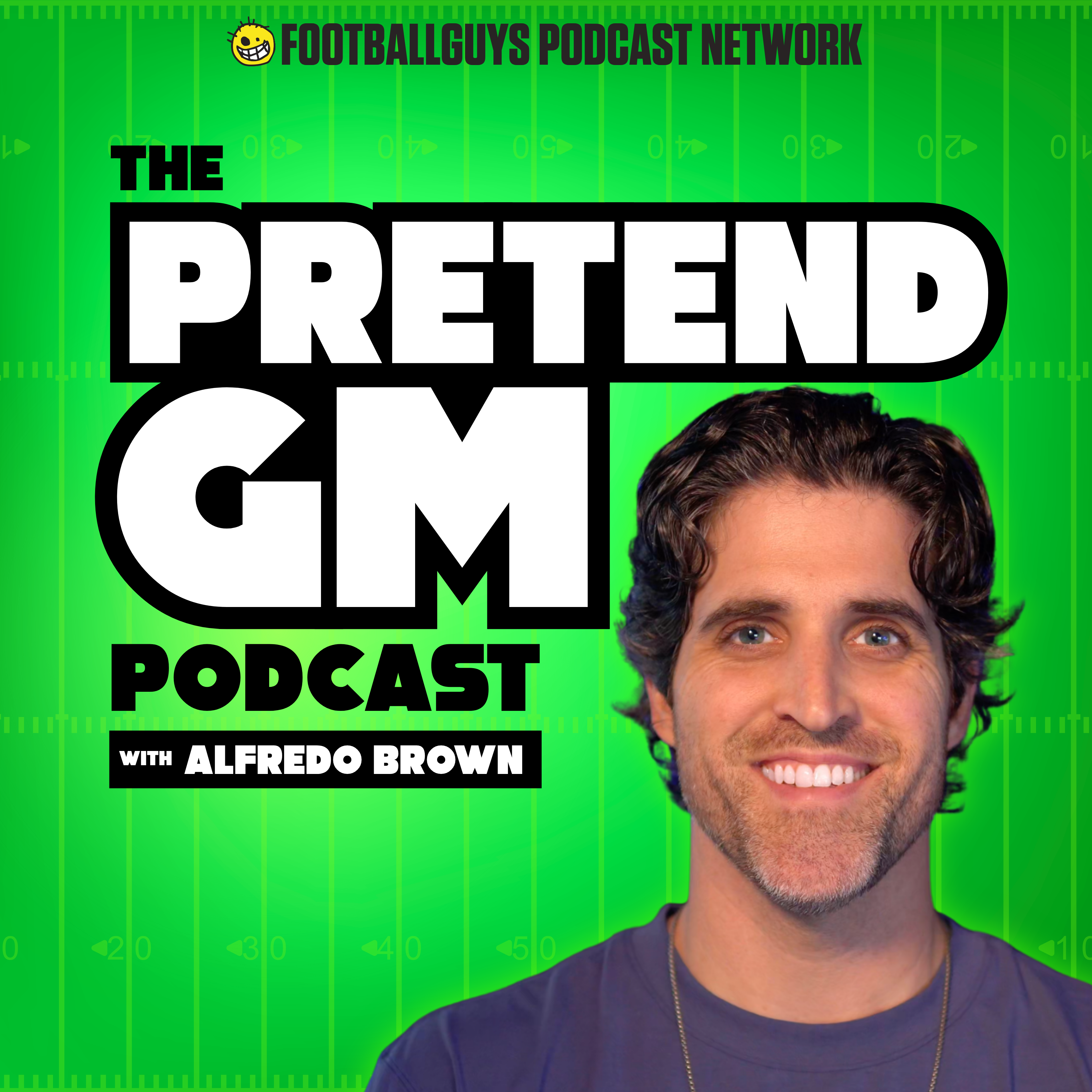
Footballguys Fantasy Football Show
How Tera Roberts Uses Data to Take Smart Risks in Fantasy Football | The Pretend GM Podcast
00:41:02
On this episode of The Pretend GM, I was joined by Tera Roberts to discuss her unique perspective on fantasy football and how she went from fan to analyst with such great success. #fantasyfootball #fantasyfootballpodcast Subscribe to the Podcast: - A...
Loading summary
Transcript71 lines
- [00:00]
A
This episode is brought to you by Progressive Insurance. Do you ever think about switching insurance companies to see if you could save some cash? Progressive makes it easy to see if you could save when you bundle your home and auto policies. Try it@progressive.com Progressive Casualty Insurance Company and affiliates. Potential savings will vary. Not available in all states.
- [00:20]
B
Morning Zoe. Got donuts.
- [00:22]
A
Jeff Bridges, why are you still living above our garage?
- [00:25]
B
Well, I dig the mattress and I want to be in a T mobile commercial like you. T teach me so Bella oh no.
- [00:33]
A
I'm not really prepared. I couldn't possibly at T Mobile get the new iPhone 17 Pro on them. It's designed to be the most powerful iPhone yet and has the ultimate pro camera system.
- [00:43]
B
Wow, impressive. Let me try. T Mobile is the best place to get iPhone 17 Pro because they've got the best network.
- [00:51]
C
Nice.
- [00:51]
A
Jeffrey, you heard them.
- [00:53]
B
T Mobile is the best place to get the new iPhone 17 Pro on us with eligible traded in any condition. So what are we having for launch?
- [01:01]
A
Dude, work here is done.
- [01:04]
B
The 24 month bill credit on experience beyond for well qualified customers plus tax and $35 device connection charge credits ended balance due if you pay off earlier. Cancel Finance Agreement. IPhone 17 Pro 256 gigs $199.99 A new line minimum 100 plus a month plan with auto pay plus taxes and fees required. Best mobile network in the US based on analysis by Oaklove Speed Test Intelligence Data 182025 Visit t mobile.com on today's episode of the Pretend GM, I got to sit down with Tara Roberts and talk to her about her unique perspective of how she analyzes fantasy football. She's had the opportunity to work at so many different great companies throughout this industry and, and along the way, at each of those stops, she's gotten to learn something from all of the biggest and brightest names from the fantasy football industry. Here's my conversation with Tara Roberts, who, just like you and me, is a pretend gm. Well, thank you for, for coming on here today. I'm, I'm really excited to talk to you. I mean there's. The whole point of this podcast has been to try to bridge the gap between people playing fantasy football and, and then people like us who are lucky enough to even just make a single dollar from talking about it or writing about it. And like once, once, you know, I can't even say this joke for you because you're already cool and you have your own place. But like I always say, like once we all move out of our mom's Basement. Like, we're really going to get things going. Yeah. And, you know, you're such a great guest to have on because you have. You have such a unique perspective on this. Like, not a lot of people, most people have worked at maybe one or two places or never even get the opportunities that you've gotten. You're so impressive. I can imagine doing all these different things has maybe changed the way that you view fantasy football. The way you think about it, the way you analyze, the way you draft everything that you do on a daily basis with this game. If you can rewind back to the first time you jumped into a fantasy league and you're like, what's fantasy football? And everything that you fell in love with, then what's the biggest difference between that version of Terra versus how you look at the game now?
- [02:58]
C
I was playing as a fan back then, and I have no shame in admitting that. You know, it was just all funs and players, just everything it was in. And I'm a Packers fan, so, you know, I would overdraft Aaron Rodgers and I would pair him with Eddie Lacy. You know, just pure, stupid, reckless, abandoned. No logical sense whatsoever because. And there's nothing wrong with, like, honoring.
- [03:19]
B
How'd that work out for you?
- [03:21]
C
It didn't, you know, be surprised. Like, I don't know why an Aaron Rodgers, Eddie Lacy combination just. It didn't work out, you know, didn't.
- [03:29]
B
Work out great for the packers either. No.
- [03:30]
C
Yeah. No, not at all. There's nothing wrong with, like, leaning into your fandom. That's fun. You know, we want fantasy football to be fun, and it's better when you care about your players and your team. You just have to be smart about it. Like, you know, hey, when. When Jordan Love was about to start, I was very much so pro. Jordan Love and, you know, based it around, hey, you know, these are the reasons xyz. And it made logical sense to me if. If I didn't believe in. In him, I probably wouldn't have pushed it so badly. Like, you know, there's. There's limits to what you. To what you got to do. You can care about your fandom, but at the same time, you want to approach it in a logical way and not throw ADP caution to the wind and drafting your favorite quarterback in the first round.
- [04:22]
B
Yeah, I think there's something that's always gonna get our biases. Like, we. We have our fandoms, even without the fandom. We have just that players that we tend to, like, yes, I know sometimes, like, I will Maybe rank a player higher or draft a player higher because I'm like, but he's good, he's good at football. And you need that context. Like, that player might be really good, but the situation still kind of sucks. And you need to, you know, understand that. Especially going through all this, have you found that there is one strategy or approach that you always just keep coming back to, no matter what format you're playing? So just a tried and true method of playing this game.
- [05:00]
C
Yeah, I would say there's probably two things. The big strategy or approach that I, I lean into and I tend not to abandon is hero rb. The zero. I don't judge people that go zero rb, but I, I love a nice, clean, clear RB one to headline my team. And I've also been accused and it's, it's also sometimes can be very specific because I have been accused of being heavy PPR favoritism. So sometimes people don't like those. Get mad when you're like the, the PPR running backs that are, they're cheating. They're like, oh, you know, that Austin Eckler. And my, my favorites are always. I'm, I'm looking for the, the PPR. God, I want the past catching run. I don't, I, I don't, I don't mind a, I'm drafted Jonathan Taylor and I like him this year, but it doesn't make me super excited. I love to see the running backs just patching the cat or casting the patches and just running amok and just, you know, getting eight receptions. It brings me joy. I, I do, I, I love it. So that's, that's what I always go back to.
- [06:13]
B
I love the way you said it. You know, it's like I'm a big proponent of here. RB. Just no offense to the people that enjoy 03. It's not for me. It's almost like you were talking about like how people enjoy their steaks cooked. Like, ah, yeah. No offense to you, just not for me. Exactly. So I, I, I assume that going through, you know, your career, you've met so many brilliant analysts throughout your time and you've experienced so many different facets of this game. You mentioned you've done DFS and Dynasty and so many different parts of it. What's been the biggest influence on how you approach fantasy football? Has it been a person or a time in your career? Maybe something you've come across?
- [06:52]
C
I think, I wouldn't say a specific person, although there are definitely specific people who, I love their style. I don't want to say that I copy their style, but it influences me in terms of, you know, ideas and different ways to approach things. But I think kind of the biggest thing that has influenced me is more so the people in the, in the audience, the, the consumers. I remember the first person telling me like, you know, hey, you, you help me win my lady. Or hey, I like this video series that you do. I watch it every single time. I think kind of the like people directly saying, because, you know, you know, there are views on stuff, you know, people are watching stuff. But to think that people are consistently coming back or seeking or like you specifically or appreciate the advice you give, that's been the biggest influence on me. Because when you're, when you're writing stuff, I feel like sometimes, sometimes it's a tough balance because you want to, as a creator, you want to create things that are interesting and going to grab attention because you, you have to do that. I mean, it's, it's, you know, I do a lot of stuff on TikTok and you know, one of the easiest ways to get views is to, and I, I don't do this and probably why I don't, you know, have as many views as I would love. Hot takes are the easiest way. Big, bold hot takes, they drive the views. But I think a lot of times sometimes, you know, you lose touch of the fact that there, there are real people that are trying, that they're trying to win their one week and they don't need the hot takes, they need the very straightforward information. So one of the things that has influenced me the most is that my audience and a lot of people I listen to, I want to deliver very straightforward information and avoid the hot takes that are going to generate clicks. I just want to deliver simple, accurate information that is very consumable to help people, people win. And I think that's probably why I tend to lean towards enjoying, like you were saying, videos and short videos and live Q and A direct questions from people, short ways to get them information that is not overly complicated or, and I can be long winded. That's not to say I don't sit there and talk on a podcast for an hour, because I do. I'll sit there. This is the, I want to do it for an hour by myself. But it's, it's still the same approach of delivering information in a way that is meant to truly help people. So when I'm creating content, the goal is specific to the consumer.
- [09:45]
B
Yeah, I think that's, it's so having the consumer, the audience be such an impact on how you do things. It can be a good and a bad thing. Like, right. Like sometimes they're going to let you know like, hey, this rate, this saved my league. There's other times they're going to let you know like, hey, you were wrong, idiot. And like they're going to get into your comments and do know, like sometimes it can get tough to remain authentic and remain genuine with your, your opinions on things because sometimes you ask yourself like, is this going to get more clicks? Would this maybe be better? And then like I love that you're saying you don't really lean into that too much and that's, that's, that's such a great way to approach this game level headed. Right. And I know that when you're doing this content you're trying to connect with the audience, you're trying to connect with these fantasy players. And I think no matter what us and fantasy players, they will have their biases. They'll have, you know, things that they do that will kind of just be the common mistakes. What are some of the biggest mistakes that you see fantasy players making year after year?
- [10:49]
C
I think kind of when we were, we might have touched on it a little bit early. But take lock is one that I think happens a lot to everybody. Players and situations change, you don't have to be locked into. Like sometimes you'll see someone comment, well, you didn't like this person last year. Yeah, that, that will, that will change. Situations change and I may like them this year. I, and I think we see it a lot with rookies in particular, guys that you like before the draft. You love them, you're passionate, they were fantastic in college. You truly believe that this guy is going to hit. And then we get to the draft and they don't get the draft capital that you think they should deserve. You're like, well that's, that's crazy. Or you think, well this team got a steal, but then they're buried in a, in a bad depth chart or a bad situation here, but you're convinced that they are truly a diamond in the rough. And we ignore the fact that the NFL thought less in not even that they thought less because there's late round values and I love that for sure. But when you see a guy go from this could be a first round pick to drafted in the fourth round, sometimes we kind of got to let go off our biases on that one and say if someone dropped, there might be a reason. I think that's how we end up over drafting players a lot. Like, you know, you swear up and down that a Blake Corum is just going to. He's stealing that job from Kyron Williams because. Because of what you believed before the draft that he was deserving of falling into a spot where he would be the RB1. So you want him to be the RB1 or preseason takes of like a Zamir White is going to steal Josh Jacobs job only for him to go on to have an insane career year. We get locked into these things and kind of ignore what teams are telling us. So I would say that's probably one of the biggest mistakes that I see people making year after year.
- [12:47]
B
Yeah, I see it all the time. And it's not even just with the rookies. I think there's sort of, I hate to use this word because it's way too profound for fantasy football, but there is sort of like an infection that we get where it's like, if I play best ball, I'm gonna let that best ball brain bleed over into the way I play. Redraft or Dynasty A. We're really excited about this rookie draft, man, we're letting that bleed over into how we approach redraft, you know, like so, so much of that happens. Instead of compartmentalizing, we get these preconceived notions. And I know this happens a lot with injuries in particular where for like, for example, you know, we're filming this here in July of, of 2025. Last year, Kenneth Walker missed important weeks during the fantasy playoffs. So people hold those biases against them. Last year, Christian McCaffrey, he struggled with the, you know, the Achilles injury. People will hold on to that forever and ever and make this a thing year after year. I'm never going to draft that player again because they ruined those two weeks for me or I draft them early and they got hurt. Right?
- [13:53]
C
Yeah.
- [13:54]
B
When you're making roster decisions, whether it's drafting starting, stuff like that, do you actively try to avoid the injury prone or quote injury prone players, or do you want to try to capitalize on maybe some of their lower draft costs? Like how do you approach injury history? Injury?
- [14:10]
C
I try to be optimistic and I think sometimes it's situational. As long as there's an appropriate discount on a player, I'm okay with taking the risk. And then I think you also have to assess what is actually an injury prone player versus somebody who we might have overreacted. I remember someone who I defended so much was Keenan Allen. He had this weird perception that he was just he's so injury prone. He's so injury prone. And when you actually look back at it and you say he's not. He's not injury prone, there's just like, you can have, like, one or two things that happen, and all of a sudden, if you miss a couple of games in the wrong spot, people feel a little weird about it.
- [14:54]
B
You know what that was for Keenan Allen? It was that one game where he, like, goes up to the camp, start me tonight, and then just nothing happens.
- [15:03]
C
Which I loved, because that made me love him even more because I like, even if he was wrong, started. Yeah, I like that he acknowledged us. I like, I like it when players, like, acknowledge us, good or bad or anything. I mean, even Josh Jacobs like his disdain for fantasy, but he acknowledges us. It's funny. Like, he's. I don't care about your fantasy team. That's why I think it's funny. I think it's funny when they acknowledge that we exist if we're not just some random blip on the side. So, yeah, that was actually one of my favorite moments. And I did definitely start him because I was always. I just had always. Just a ton of Keenan Allen shares. That was my boy still holding up faith that he'll, you know, sign somewhere.
- [15:46]
B
But.
- [15:47]
C
But, yeah, that is. That's exactly like that. But then you get to like a guy like J.K. dobbins, and you look at that and you say, yeah, this is somebody who flat out has a clear pattern with injury, and you hate that for him, but you have to take it into account. And if you get to the chance where he's actually healthy and you get a massive discount, that is when I will lean in and say, okay, I'm okay with this. Like last year, J.K. dobbins, when he. It was before free agency that he was, you know, saying, okay, I'm healthy, I'm back and whatnot. And I was doing pre draft best ball, and I was just. I was just clicking J.K. dobbins at the end of every single draft because I'm like, he's gonna land so somewhere, man, I just. I feel it in my gut if we can get some good value on this. And it worked out. It worked out and having good value and gave us, my God, even came back from an injury. So that was cool. Showed us that he can, you know, come back mid season, it won't be catastrophic, but if the. The discount is there and appropriate, I don't mind taking chances on guys that are talented and high, high reward. If if they are able to actually make it through a season.
- [17:03]
B
Yeah. I mean, there's always going to be a calculated risk with. With drafting any player, but especially ones that have had an injury history. And I guess sometimes you just have to figure out, like, is. Is the. I can't think of a better terminology here. Is juice worth the squeeze? Right. Like, is the value really there for me? And this. If someone's listening to this later on in the future, like, right now, there's probably going to be a lot of discourse back about how we treated Christian McCaffrey this year, where I remember this. Earlier in the off season, I was telling myself, you know what? I don't want any part of it. Like, I just. I don't want to waste a draft pick early in round one or round two, whatever it ends up being. And now the more I think about it, I'm just like, well, then why am I playing fantasy football if you're not willing to take some risks, you know, like, Christian McCaffrey could absolutely once again be the RB one, and I can get him at the end of the first round or early second round. Like, that's great. So, yeah, there's. There's definitely always gonna be some risk and some value that comes to it. But I think the tough thing here is trying to balance drafting upside versus safety or, you know, consistency. I think there's. There's a little bit of a fallacy of consistency in fantasy football.
- [18:09]
C
Yes.
- [18:09]
B
Like, how do you. How do you try to balance that when you're. When you're picking players for your roster or even setting a starting lineup going, you know, upside versus safety?
- [18:20]
C
I think when we're looking at consistency, we got to separate it into two separate buckets. There is year over year consistency, like a A.J. brown kind of consistency. Right. Where we know that is he. Is he gonna get the Overall wide receiver 1 Just Jamar Chase numbers? No, but there is value in the fact that we know that we are going to get XYZ out of him, and that is great, and that makes him worthy of his draft spot. And then there is inseason consistency. I say this with my Clemson stuff in the background. My boy T. Higgins, he struggles with the inseason consistency. The overall numbers are going to look solid, but sometimes the experience along the way, it's not as fun as what it looks like at the end of the season. You look at that and say, okay, yeah, yeah, I'm wide receiver 18. That was cool. But the peaks and valleys are not maybe the most enjoyable fantasy Experience. Experience. So I think when I'm looking at upside versus consistency, I always lean towards upside and. And sometimes the league affects that as well. I like to be very flexible in my draft strategy and adjust based on the league. Sometimes a good consistent team can get you the win. Especially like maybe you're looking at a home league. Right. And you are the best player in your home league and you can take all the risks you want, but actually being the most consistent drafter and making the most log choices is probably going to get you just the easiest path to a victory. And then there are other times where you have to actively try to aim for upside. Like in the. I just. Or we're middle of Scott Fishbowl and the first four players that I took off the board were purely high upside players. Like, these are guys that can truly be the number one overall at their position and. And I might not take that same strategy in another league. So I try to tend to be a little bit flexible about how I'm balancing it versus, you know, different league types and best ball and redrack and dynasty and tournaments and whatnot. But I definitely lean more towards the upside in that I try to avoid players that tend to be inconsistent in season. Unless we're talking basketball. That's. That's the way that I tend to lean.
- [20:47]
B
Yeah. I'm glad that you mentioned looking at the league and. Right. And that can be everything from the scoring setting to league size to roster size to if it's a tournament like Scott Fishbowl like you're mentioning there, I think that when there's a larger roster, you know, like more. More starting spots, you can afford to. To actually go a little bit more with the risk and the upside because it's just more lottery scratchers there. Whereas if you're going up against someone and it's like six starting spots, like, well, you. And you're projected to win. Let's just keep it safe. Right. Like. And that will happen. I think people will, you know, will. They tend to overthink things sometimes. Right. And I think especially one of the places where we overthink it is picking up players off the waiver wire. Where, you know, we might look at a guy who had one crazy outlier week and we're like, let me throw all my fab on this player. Or we do the other thing. Or it's like, nope, I'm going to hoard all this Fab is free agent auction budget is, you know, like, I'm going to hold on to all of this for the end of the season when I may get to the playoffs and I can go and get that player that's going to help me win. And you never make it there. So what's your process like evaluating waiver wire pickups? Because I know you do a great job with your wave wire content, especially deep league stuff and looking at some of maybe the lesser known waiver wire players that are out there. How do you, how do you enter that process where you're looking at picking up some of these guys and maybe letting go of some underperforming players that you draft?
- [22:18]
C
For me, it's always risk versus reward. When I do waiver wire content, I make sure that I make it clear if someone is a long term AD or if it's just somebody that's going to get you by in a pinch. So that way you can assess like, hey, this is, this is a home run hitter. This is a guy that you need to just, I mean, am I going to say dump all your fab. But I will tell you, hey, to get him, you got to, you got to let it all go because everyone is going to be trying to get him. And if you want it, you got to go out and get it. But you have to assess the type of player that it is that you're adding. And once you know the type of player that you're adding, then you can assess if it's worth dropping certain players. Because what is the risk of losing a player? Am I dropping a player that has league winning upside around the corner potentially? Or am I dropping a player that is just a con, like a consistent. I, you know, I can turn to him and he can get me 10 fantasy points and a pinch and I know I'm okay with that. Like, let's say like last year I was a very big, very big into Chase Brown and you, you had to invest in him. That ADP wasn't coming cheap, it wasn't super expensive, but it was not coming cheap because, you know, I guess people like me pumped it up and said, you know, it's going to be Chase Brown. But you drafted him and if you were looking week one, week two, the, the result was obviously abysmal and it was looking like, oh, you know, Zach Moss, you know, Chase Brown, bus, whatever. But you have to look at why you drafted Chase Brown and remember you didn't, we didn't go into it expecting that he was going to be the starter. You didn't expect to get week one results. So why are you going to fault him for not Getting week one results. You expected him to earn his role, show what he can do because that was his essentially he got a little bit of like a tiny, tiny bit of play his rookie year but had dealt with a ton of injuries and wasn't acted for a whole bunch of games was on the pup. So it was essentially year one and this was a situation where it was going to be a committee. We knew that, we knew that Zach Moss was the more experienced back in and you were expecting that this was something where he was going to have to get on the field, show what he can do and just flat out outperform over Zach Moss or potentially wait for an injury to happen and whatnot. So you look at that and you're looking at guys that you want to add on Weaver wire. I would never advise you in that situation to drop Chase Brown because that is someone whose potential and what you drafted him knowingly was not going to hit immediately. So you can't let go. You have to kind of assess those situations with players and whether or not you're drafting him. I, I like to tell this story a lot. There was Almond Ross St. Brown's rookie year. I, I held on to him as long as I could and the knowledge and the logic behind it was is that this guy is not going to produce, he's not going to. But you hold on. We're holding on because at some point this man is going to have league winning upsides. Just got to hold on. And I held on, man. I held on as long as humanly possible until I got to a bi week snafu and there was just no physical way. If I had held on to him, I was going to have to like go without a starter. It was like a bad situation. So I dropped him and I was like, I'll circle back around and I'll pick him back up. It's going to be okay. And let me just get through this by a week. It was my family league. My brother of all people, the audacity. That's why you can't talk to your family. No, I'm just kidding.
- [26:03]
B
Aaron Rodgers agrees. Yes. Yeah, exactly.
- [26:07]
C
My brother scooped him up and of course we meet in the championship and he's got Almond Ross St. Brown.
- [26:12]
A
You buy a pair of socks, that's two socks. You buy a pair of bomba socks, that's four socks. Because one purchased is one donated. Socks are the number one most requested clothes clothing item in homeless shelters. So when you buy a pair of super comfortable bombas socks, you're also Donating a pair. Bombus customers have powered over 150 million donations. So Bombas would like to thank you 150 million times. But we only have, like, 30 seconds. Go to bombas.com and use code audio for 20 off your first purchase. That's B O-M-S.com and use code audio at checkout.
- [26:42]
C
And who. Who you stay him with? Almond, Russian brown. And I do it. I knew it. There was one of those situations where there. I knew that I had to hold on to him, and I just couldn't. But that's. That's the. That's fantasy football. These. You. You've got to. When you're making these ads and drops, you have to be aware if you're dropping a player, know why you were holding on to him in the first place. Just try to evaluate it that way, man.
- [27:12]
B
Yeah, that's. I'm sure everyone. That. That's something I think that makes fantasy football so relatable is whether you've been doing this for years or you just started. Like, everyone has had that moment where you just instantly regret something and. Or even, like you said, it almost feels like it's out of your control a little bit. I know that one of the times where we all try to feel like we're very much in control, almost to a fault, is when we're saying, okay, I need to go make a trade. I need to go get a player for my team. And I think everyone has a different process. And I know that the toughest person to deal with is the one that believes they are just constantly the smartest in the room. Right. That is. That is a tough way to try to negotiate a trade for your team. How do you typically find a trade in your league that's worth pursuing? You know, like just even looking for a player. What's the psychology that goes to. Even just speaking with that other manager in your league? What's that process like?
- [28:09]
C
So I. I have learned for me personally, and this may vary from, you know, individual to individual, if I go chasing a specific player, I will overpay. And I have had to curb myself from doing that, and that everyone in.
- [28:25]
B
Terrorist leagues, she will write it down.
- [28:28]
C
Okay, yeah, if I'm chasing a play, if I'm passionate and I'm chasing, I will overpay. And over time, I have learned I need to try not to chase players. So what I tend to do is look for. Look for what needs am I looking for, rather than a specific player. So I look at my team and say, you know, Maybe a mid season and say, okay, I, I, I feel like I need to reinforce my running back. Like, like I can see foresee that this could be an issue heading into the playoffs. So I need to probably take care of that right now. And so rather than going and saying, okay, this is the running back that I want, I go and I look at everybody's team, which is like a, you know, tedious process, but I go and look at everybody's team and I say, okay, you know, who has a running Mac that can fill the needs that I want, that I like and what kind of need do they have as well and if it matches up, because I like for both of us to win because you know, I don't, I don't enjoy and I say I haven't taken advantage, but I tend not to try to because it makes me feel a little bit bad. I want to have a situation where the trade benefits both of us. So I try to lean that direction. Look for this is what suits us both because then we can both make logical, cost effective decisions where neither one of us is just getting into a bad situation. That also makes the league fun. Right. Because then you can trust, you can trust that I'm not going to, going to try and get over on you. Right. And so we can, we can have a great relationship and where we feel like there's a, there's openness that will work out for the both of us.
- [30:12]
B
That's, I'm so glad you said that. That's something that has been kind of the common thread amongst everyone that I've asked this question to is let's just do something that actually works. You know, there is no winning a trade. It's, it's how you win a trade is just by creating a successful relationship with someone else in your league week.
- [30:29]
C
Right.
- [30:29]
B
Where, where they can say, yeah, I'll do this again with you. My, I think my favorite times where I've done a trade is when someone said this was so easy and seamless. Thank you for making this easy. And I was like, great, I can't wait to talk to you again next time we need to make a trade.
- [30:44]
C
Exactly.
- [30:45]
B
Another person who's just like, you know, like a dynasty, like we'll throw in another fifth round pick. Yeah. And, and then that'll, that'll be the sweetener. You know, it's like that's, that's not enjoyable. Like nobody wants to haggle. Like that's not what we're doing.
- [30:57]
C
Exactly.
- [30:59]
B
I know that like as we, especially for like redraft leagues. You get towards the end of the season and this is when I think there are more start sit decisions that come up than, than ever really. Especially when you're leading into the playoffs those, the most crucial weeks and you will have people saying, okay, I have this guy that I drafted early, he's one of my quote studs, but he's been underperforming. I just picked up this other wide receiver or this handcuff running back that should have a big week, has a good matchup. How do you go about giving that advice or even taking that own advice like deciding to start the quote stud who's been on your roster that you put the high draft capital into versus this person that you picked up off waivers. They had the good matchup. You're not quite sure how they're going to do.
- [31:49]
C
I'm very much a start your studs kind of person. I, I, I don't like to advise people to sit them. It's got to be a Patrick Surtan level matchup for me to contemplate sitting a, a stud player. So yeah, it's very straightforward for me. It's start your studs. Unless, unless you're in that one matchup where it's like, man, he is, he shut down everybody.
- [32:13]
B
Yeah, yeah. It's funny JJ Zachary since like one of the things that he finds that most people overrate is matchups. And while yes there is, obviously there's value to it but sometimes we do it so much to the point where you mentioned a player earlier like Zemir White or say, yeah, well Zemir White's going up against the 32nd ranked fresh defense this week. He's going to pop off and he still gives you the eight points and you're just like, ah, well, probably overrated. That match up a little bit. All of us have been there where we've started a player that we shouldn't have or drafted a player we shouldn't have. You know, I think what, what kind of defines you, especially as a fantasy football analyst, someone who has to do this year in, year out, is living with those mistakes and how you fix them going forward, what you learn from them. What's that process like for you? Figuring out why you missed and how it might shape a future analysis for you?
- [33:06]
C
I mean I, I have an easy scapegoat position of that. I, like I was saying earlier, since things were never really hot takes for me, they're backed up by stats and analytics. 9 times out of 10 the process was right. The outcome just didn't align with it. So I'm not going to feel too bad about that now. I do hate, like, when I watch Games on Sunday, nine times out of 10, I'm not thinking about my fantasy teams as much as like, oh man, I said his name 20 times. Oh, I like, I don't, I don't like that. But it's. When it comes to that, for me, it's really stats, you know, situations and offensive fit. Overall, when I get to the end of the season, if there's a player that I wildly miss on, I like to. This is where like fantasy tools come in. I like to try and look at the stats and deeper stats and try and figure out and analyze why did it go sideways? Why did it not go the way that I expected?
- [34:06]
B
Do you have a favorite stat or, you know, data point that you like to reference?
- [34:12]
C
When, when looking at this, the thing that I always turn to the most, and this is weird and it just. Overall, with players I like to look at where especially particularly receivers, I like to look at alignments. That's something that I lean towards first and try and find anomalies. Like, I was looking at Christian Kirk the other day trying to justify why the, why the struggle it towards the end there in Jacksonville and I was like, okay, well, you know, because on, on the surface you could say, okay, there was, you know, his. There were occasions where a snap count would dip and whatnot. So you're trying to like line it up and look at when. Okay, so when was Gabe Davis injured? When was this? When was that? When. Then try and look at the alignments. And was it. Was it that he had to move over, you know, play a different role or something and, and then to be with him, there was no rhyme or reason. But there's. That's what I like to look into to try and see if there's some kind of justification for why something went sideways.
- [35:14]
B
Yeah, usage is always a thing to, to go back to. And I know you're. You're the only person that has said that here. It's just you can't really score fantasy points if you're not out there on the field. And then we don't know how you're getting used. It's. It's the big context equal. I think a lot of people will do what's been dubbed the box score scouting where you'd be like, well, he only caught two passes. It's like, yeah, but he was out there for 90% of PRout, got targeted 10 times. It's just A fluke. You know, we can go back to this player again next week. So I mean we, we talk about a lot of different things that have affected the way you look at fantasy football and a lot about your philosophy and how you do this. And you have plenty of great lessons in there for an audience member. But if you could give the audience member one piece of advice to improve their fantasy game, let's say it is. Tara Roberts golden rule. The thing that I'm going to put on the thumbnail, what would it be?
- [36:10]
C
That's simple. Just be open to changing your perspective. I mean we've talked about it like multiple and that's why it's the, it's my golden rule. I think I mentioned it like three times. Don't get take lock. It's a real thing. Be open to changing your perspective on players on a year to year basis. Not a hypocrite. You're adjusting with how situations are changing.
- [36:33]
B
I love that, I love that. There's a man now. Now all the guests are starting to blur together but it was one of the guests mentioned, you know, like being able, I think it was Sigma Bloom actually our first guest that I had on here is, you know, accepting a new reality. Right. It's like new information comes in but because it doesn't match what you want, you're instantly like no, that's, that's, that's not it.
- [36:55]
C
Yeah.
- [36:56]
B
Speaking of new reality, there is a future of fantasy football that is here in many ways. We have endless tools, endless amounts of data, all kinds of new analysis. AI has become a hot button issue. Whether it has been for writing data, you know, in app tools, a lot of questions around how it's used. I'm still self admittedly very mixed on it. I think there are many good uses for it. There are many uses that just scare the life out of me. I, I think there can be some good uses for it with consumers. What are, what's your, what are your thoughts on AI, how it's being used for consumers, how it's being used for analysis.
- [37:41]
C
So I, I'm an avid AI user in general in, you know, a non football capacity. I've worked with AI a lot and I understand what the tools are, how to actually use them and how to get the best information out of them. A lot of testing with AI and when it comes to AI and fantasy football or football in general, there is one thing I want to caution people when it comes to AI, if you're using it as a consumer, AI does not do a Good job with football statistics. And that's a timing issue because you have to remember that we're using current information, and AI most accurately pulls historical information. And because that's what it's been trained on, it's been trained on past information rather than, like, if you. They're. Sometimes it doesn't understand the year that it's on, and you have to force it to understand something, and that can make it very tricky. So it tends to kind of struggle when it comes. And in football statistics or so so deep that I think it just makes it confusing in general. You can confuse AI, so you have to be very cautious with that. I like to use AI for logic things. Like, if you were to ask AI, like, what's the commonalities between guys that win, have won rookie of the year for the past 10 years, like for a betting purpose, AI would give you an accurate assessment of, hey, you know, it's these positions they were on, these types of teams. They did this, they did that. And those are things that you can trust because that would be like factual information. The stats are hard. There are companies that use football stats in AI tools, like for predictive analytics. And that's a different thing, in my opinion, because they're feeding data in and using AI with the data that they're feeding in. But when you're asking AI to give you data and statistics, that's where you get into trouble. So, like, historical data, trends and logic, those kind of things make sense. Like, maybe you play DFS and you would like AI to, you know, give you an overview of the best strategies for DFS or something like that as a consumer. Like, that makes logical sense. They can explain and break down things in a way that would make sense for you. But you should probably not turn to AI in week three and say, give me a DFS lineup. That would not be a good idea for you to do.
- [40:19]
B
Right?
- [40:20]
C
Right.
- [40:22]
B
Yeah, I believe it was. I keep referencing him, but Sig. Sigmund Bloom was the first guest we had on here, and he said AI can kind of just be your intern that does the work you don't want to do, you know, organizing the spreadsheets for you and just doing a bunch of stuff that's going to save you time. It's. I think it's when it starts to replace people is when we are having issues. And I'm just begging people, like, watch any. Just one movie, like watch anything that has sentient, you know, beings like that. No, no.
- [40:52]
C
Yeah.
- [40:54]
B
Okay. So, Tara, I, like, I have to say And I'm not just blowing smoke. You have given so much good to to this show, to the fantasy community. We've gotten to meet each other a couple times and it's just been a pleasure to talk with you every single time. I feel like I learned a little bit more today sitting here in this podcast. I became a better fantasy player. I think the audience did as well. Please let everybody know where they can find your work and what you're up to.
- [41:22]
C
You can file. First of all, the best place to find me is on social media at its terratime. Its T e R a t I M E. Anything that I do will be through there. There will be changes coming in this season. So excited. Okay. No, it's exciting. Gonna have a lot more opportunities to do a lot more. I like doing as much variety as humanly possible. I'm an avid DFS player and the opportunity to put out DFS content is something that brings me a lot of joy. So we're gonna be a very holistically well rounded football season with fantasy football and DFS and betting. So it's going to be a little bit of everything and lots of it coming out here. So a heavy focus on content creation this season. This will probably be my season with the most content that's going to be come out. So yeah, stay tuned for it.
- [42:18]
B
There you go, audience. You wanted more Tara. You get more Tara this year and doing all kinds of different things. Well, Tara, thank you so much for joining me here today. And as, as always, I just want to thank everybody for watching or listening all the way through. This show does not happen without you guys and we don't have jobs in this fantasy industry without you guys. So as always, thank you so much for myself, Tara. I'll see you next time. Adios. AI agents are everywhere, automating tasks and making decisions at machine speed. But agents make mistakes. Just one rogue agent can do big damage before you even notice. Rubrik Agent Cloud is the only platform that helps you monitor agents, set guardrails and rewind mistakes so you can unleash agents, not risk. Accelerate your AI transformation@rubrik.com that's R U.
- [43:19]
C
R.
- [43:21]
A
This episode is brought to you by Progressive Insurance. Do you ever think about switching insurance companies to see if you could save some cash? Progressive makes it easy to see if you could save when you bundle your home and auto policies. Try it@progressive.com Progressive Casualty Insurance Company and affiliates. Potential savings will vary. Not available in all states.