← For Good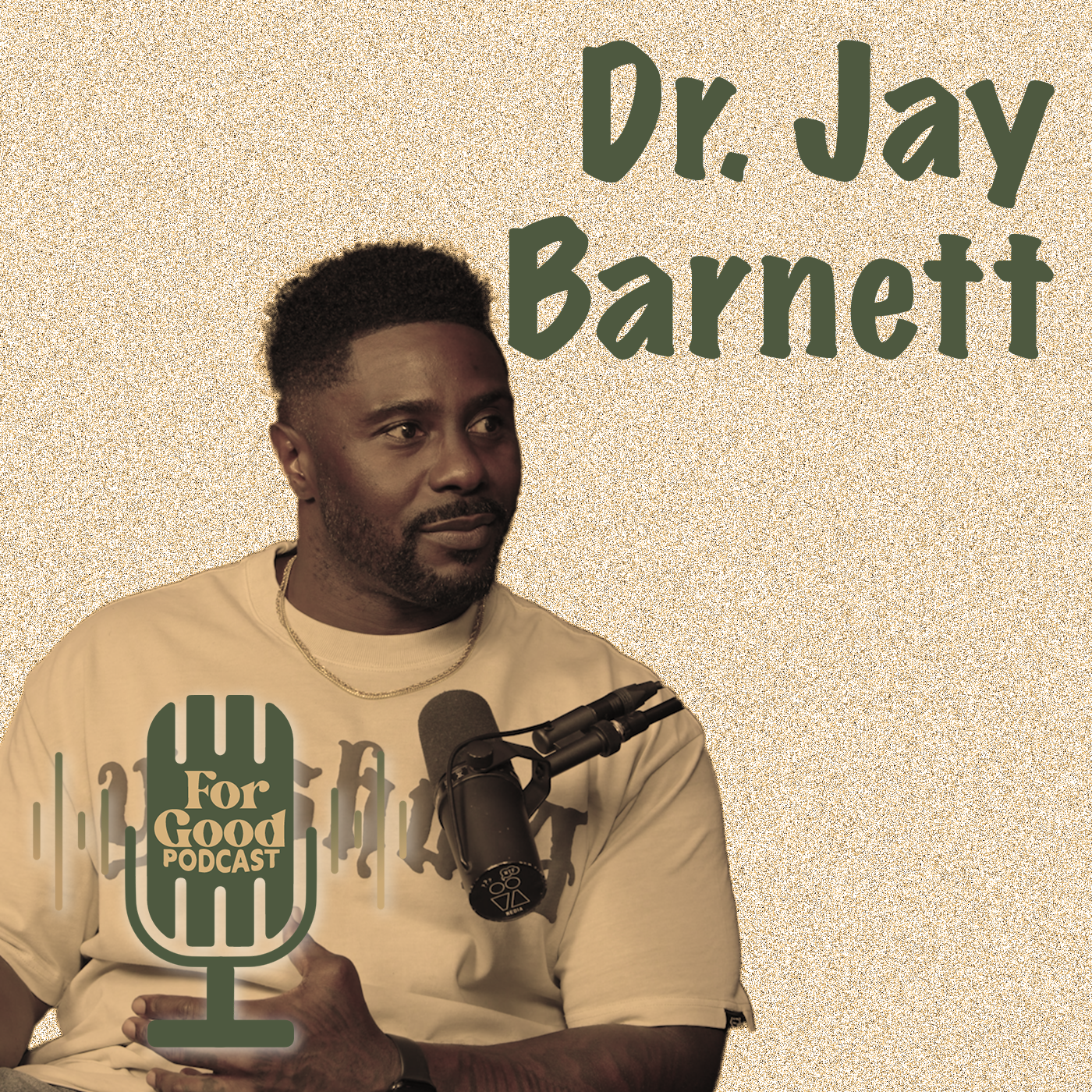
For Good
Becoming Peace: Dr. Jay Barnett on Healing, Burnout, and Emotional Stability
00:59:11
Dr. Jay Barnett is a former NFL player turned mental health therapist, author, and speaker—on a mission to help Black men and communities heal. After a three-year, 36-city Just Heal Bro tour that reached over 18,000 men, Jay found himself burnt out...
Loading summary
Transcript327 lines
- [00:00]
Dr. Jay Barnett
This episode is brought to you by Progressive Insurance. Do you ever think about switching insurance companies to see if you could save some cash? Progressive makes it easy to see if you could save when you bundle your home and auto policies. Try it@progressive.com Progressive Casualty Insurance Company and affiliates. Potential savings will vary. Not available in all states. I often tell men, especially when I'm working with couples, is that most women, they want financial stability and all those different things, but the security is really in the emotional stability of the household.
- [00:34]
Jojo Simmons
Yes.
- [00:35]
Dr. Jay Barnett
Because if that's stable for her, she'll give you what you need. And when she gives you what you need, you have what you need to provide, to give to her.
- [00:44]
Jojo Simmons
That's how you get a successful relationship is when everybody feels served and everybody feels seen and everybody feels heard. I never want my wife to look down the line at 60 and say, I wonder what I could have been without him. I want her to look down on say, look what I became with him.
- [00:58]
Dr. Jay Barnett
I'm having you pause because that has to be a clip.
- [01:01]
Jojo Simmons
Yeah, that's a clip. We know that's a clip. This isn't just a vision.
- [01:04]
Dr. Jay Barnett
Yeah.
- [01:05]
Jojo Simmons
This is what it is. This is what it's supposed to be.
- [01:08]
Dr. Jay Barnett
Yeah.
- [01:08]
Jojo Simmons
This is God showing me. Yes, that is what it is. This is not just something I put in your mind that you think is your imagination. No, this is what is going to happen.
- [01:17]
Dr. Jay Barnett
Yeah, man.
- [01:17]
Jojo Simmons
If you see it through.
- [01:18]
Dr. Jay Barnett
The stress brought me back to my current battle. Right. Which was suicide. I wasn't giving back to me and part of not giving back to me, I didn't even understand what I needed because I was being called on so much. You were giving so much because so many times, man, when you are a healer or when you are a giver, when you are a server, we're so focused on what goes out and we don't think about your output has to equal to your input. Foreign.
- [01:52]
Jojo Simmons
What'S good, everybody? It's your guy, Jojo Simmons. And welcome to the 4Good podcast where we focus on the good, never the bad, where we're measuring on what we do and not what we have. And today's guest truly embodies that. Dr. Jay Barnett is a former NFL player turned mental health therapist, author and speaker dedicated to helping black men and communities healing. He recently wrapped a three year 36 speaking tour where he poured into 18,000 men about mental health and healing. It was deeply fulfilling work and it nearly broke him. Today he's sharing what he learned about nervous system regulation, morning routines and why the Night before might be just as important as how you start your day. What's up, my brother?
- [02:35]
Dr. Jay Barnett
Man, Brother.
- [02:36]
Jojo Simmons
Thank you for being. Thank you for coming on.
- [02:38]
Dr. Jay Barnett
I was going to do that.
- [02:39]
Jojo Simmons
You know, before we get into questions, I know we did something really fun online where, you know, you were in your home and I was in. I was in my area. We were able to really patch some stuff together. You had your camera guy, I had my camera guy. And we were able to put together some real impactful content, I think. Right. Especially being that we weren't in the same room. No, I thought it did really well on numbers.
- [02:59]
Dr. Jay Barnett
Yeah, it did really well, man. Yeah, they're really well happy for us.
- [03:02]
Jojo Simmons
To sit in person this time. And no matter the numbers, I know the impact will always be as high.
- [03:08]
Dr. Jay Barnett
It's always about impact. I tell people, man, I'm not. I don't really care too much about influence. It's about impact.
- [03:15]
Jojo Simmons
Here we go.
- [03:17]
Dr. Jay Barnett
Some. Some influence isn't always positive. And so. And I love what you're doing, focusing on the good, because in today's society, man, we have a. A lot of focus on what is going wrong. And I love that your platform is. Is talking about what is going right. So I love it, brother.
- [03:33]
Jojo Simmons
Ah, thank you. I really appreciate that. Before you make me tear up, let's get into the discussion. Let's start with the Just heal Bro Tour. Three years, 36 cities, 18,000 men, which is crazy.
- [03:45]
Dr. Jay Barnett
Yeah.
- [03:45]
Jojo Simmons
How did this massive undertaking begin? And what was it like to watch men open up in ways they've never had before, man?
- [03:55]
Dr. Jay Barnett
A lot of what I do, man, is all really is under the direction of God, man. I can't talk about my work and not clue God, because when I wrote the book Just Heal, Bro, I began writing it after the George Floyd incident, and it just dropped in my spirit, like, just healed, bro. And I wrote it down. And it was about a year later when I started to write the book. I went to Panama for like three weeks because I wanted to get quiet. I love to get quiet, man, so I can hear, and not just hear myself, but also hear the voice of God. And I started pinning this book, man. And about halfway through finishing it, I get a call from my manager that worked with me at the time that we had the tour. And she says, hey, you know, what are you working on? I want to see, you know, if there's some. Some synergy there where we can work together. And I said, I'm working on a book titled Just Heal, Bro. And she says, what do you want to do with it? I said, I envision a tour with men. And she said, okay, what are these men doing? I said, these men are coming into this space and they have an opportunity to open up. They have an opportunity to not only hear my story, but to hear other voices to share. And I said, what this is going to do is allow men to feel seen, and then it's going to allow them to be heard. Because in the tour, we will have a mic on each side of the room, and men could come up at any time that they had a question and they were allowed to interrupt. Our programming with. Which doesn't happen for most men, is we're so programmed that we don't think about having our programs interrupted because there is an issue. And because we have been socialized to keep going, a lot of us, our programs are failing and we don't know it.
- [05:48]
Jojo Simmons
Wow.
- [05:48]
Dr. Jay Barnett
And this tour allow for men to stop their programming. Right, right. Like you think about when there's an interruption. Like, I grew up in the south or, you know, I'm a 80s baby, so I remember times that we would be watching TV and. And you had hear that loud sound. This is an interruption of the programming. This is a tornado watch, or, you know, such and such is under, you know, some type of surveillance. And then when they were done, it says, back to your normal programming.
- [06:16]
Jojo Simmons
Yeah.
- [06:18]
Dr. Jay Barnett
How many men are not given the space to have their programming interrupted?
- [06:24]
Jojo Simmons
Wow.
- [06:24]
Dr. Jay Barnett
And the message is they have to return back to the normal programming because they haven't been the space and they haven't been giving the. The. The attention. Because in order to feel heard, there has to be a tentative space given. Meaning that if you're holding space, I also hold your attention. Not just, okay, I'm sitting here letting you talk. No, I'm a tentative in this moment where I am allowing you to feel, but I am feeling with you. And that's what the Jesse approach.
- [06:59]
Jojo Simmons
And that felt great. Probably seeing all those men, like, feel heard, feel seen by you, by. By the others in the room, brother. And to feel relatable, man.
- [07:08]
Dr. Jay Barnett
Bro, in. I saw visions of myself years ago standing before men. And I remember one city, I think we had had like, we'd had like a. A turnout of about 500 men. And as I was standing on stage, I took a pause and I told the brothers, man, I saw this years ago. And oftentimes when God show you things, he gives you glimpses. And if you are willing to trust his process, you not only get to see the glimpse, but you get to live in it. And I got a chance to live in those moments where I got to see not only myself, but to see these men. Because I didn't just write just Heal, bro, for men. I wrote it for Jay. Because as I was healing men, I was still healing. As I was helping men find their little boy, I was still connecting to my little boy. So the work was so profound and it was so introspective, even in my own life, man, that I'm so humbled by it, man, that it went down in history as the first mental health event, a tour for men. So it's been humbling, man, to just even think. Like, I was on tour for three years, pouring into men.
- [08:31]
Jojo Simmons
And I want to put. You said something special that I think in any world people should. Should understand is that you said you saw a glimpse of what you actually got to live. Right. You was able to. You saw the vision.
- [08:44]
Dr. Jay Barnett
Yes.
- [08:44]
Jojo Simmons
And then the vision played out for you.
- [08:46]
Dr. Jay Barnett
Yes.
- [08:47]
Jojo Simmons
That, to me, was you seeing it through.
- [08:49]
Dr. Jay Barnett
At that part.
- [08:50]
Jojo Simmons
You saw it through.
- [08:51]
Dr. Jay Barnett
Yes, sir.
- [08:52]
Jojo Simmons
And knew this is. This isn't just a vision.
- [08:55]
Dr. Jay Barnett
Yeah.
- [08:55]
Jojo Simmons
This is what it is. This is what it's supposed to be.
- [08:58]
Dr. Jay Barnett
Yeah.
- [08:58]
Jojo Simmons
This is God showing me.
- [09:00]
Dr. Jay Barnett
Yes.
- [09:01]
Jojo Simmons
That is what it is. This is not just something I put in your mind that you think is your imagination. No, this is what is going to happen.
- [09:07]
Dr. Jay Barnett
Yeah, man.
- [09:08]
Jojo Simmons
If you see it through.
- [09:09]
Dr. Jay Barnett
Yeah, man. And you know, it was powerful because, you know, when. When you hear about the story of Joseph, right? It took him 30 years before he got to the kingdom. You hear about the story of David. It took him about 15 years. You hear about story of Moses, right? It took him about 40 years. And then you hear about Jesus, right? It. It took him 30 years, right? I mean, you know those years. I mean, 33 years. But it was also a prophecy being fulfilled as he was working through it. And to really think that with his ministry that he was able to impact the lives just through his obedience. And my obedience, as you just said, was seeing it through because I didn't understand why I was going to school to get my masters to become a therapist.
- [09:54]
Jojo Simmons
You seeing it through?
- [09:55]
Dr. Jay Barnett
I was just seeing it through. I didn't understand why I needed to go back to get my doctorate in healthcare because I was also understanding not only the work that I did from a micro level, singular, or just from peer to peer or from person to person. God also wanted me to be in these spaces to impact systems, because I now understood micro. I could now impact from a macro level. And Then understanding why I needed the credentials, because I didn't just want you to have relatability. I want you to have credibility.
- [10:27]
Jojo Simmons
It goes back to what you were saying. You. The things you didn't understand were reprogramming you for what your vision was.
- [10:35]
Dr. Jay Barnett
Yeah.
- [10:36]
Jojo Simmons
Right. So I want to talk about, you know, obviously, the tour. Great. And you talked about the men feeling attended to, and you were giving them this attention. You were hearing everybody. But I hear that you hit a wall, right?
- [10:50]
Dr. Jay Barnett
Yeah.
- [10:51]
Jojo Simmons
And you said when it ended, you didn't care if you ever got on another stage again.
- [10:54]
Dr. Jay Barnett
Man.
- [10:55]
Jojo Simmons
Can you walk us through that breaking point? And what did the burnout actually feel like in your body? Like, how did that feel?
- [11:00]
Dr. Jay Barnett
So what it felt like, man, it felt as if I was wearing a weighted suit that I could not take off.
- [11:08]
Jojo Simmons
Wow.
- [11:09]
Dr. Jay Barnett
And not because I was trying to be Superman and I was trying to show up as a savior, but I wasn't taking enough time in between from what I was ingesting. Because our program would last three hours, then we would get off stage, and then men are wanting to talk. And I would look up sometimes, and I got about a line about 15 to 20 brothers that are wanting their moment because now they're open. Then I would go home, and I didn't have the best. A recovery plan.
- [11:43]
Jojo Simmons
Yeah.
- [11:44]
Dr. Jay Barnett
You know, I was dating at the time, and I'm navigating this space because I don't know what I need. And sometimes you don't know what you need until you get it.
- [11:54]
Jojo Simmons
Yes.
- [11:54]
Dr. Jay Barnett
But if you're with somebody that doesn't really know either and not really connected mentally, spiritually, and emotionally, and just being physically there, it could be very difficult. And so. And not to blame the person, but I was also navigating these new terrains because every city was different. Some regions, I dealt heavily with men who battle suicide. Some regions I dealt heavily with men who just wanted to be heard. So each region required a part of me that I had to work through. And by the time that I was kind of like, all right, I can breathe, it was time to go back on the road. And so after three years, man, my body started to fail me. I developed vertigo. And I talk a lot about this, and me and my primary care physician talked about this on my pod, about my. I'm 43, and how my health was failing and I wasn't getting sick, but I wasn't performing at an optimum level. And let's be honest, you know, for every man after the age of 35, your test levels start to drop. Mine's not only. Not only just drop, bro, they pretty much vanish. And I was still working out, still moving around, but nothing was. My body wasn't changing nothing, bro. And I started to be depressed and not understanding that the depression was coming from low test levels. Because your testosterone is just not your sexual libido. It's your will.
- [13:28]
Jojo Simmons
Yeah.
- [13:29]
Dr. Jay Barnett
It's your grit. It's your. You know what I'm saying? So, bro, I go in and I'm one of them brothers who believe in going to the doctor.
- [13:37]
Jojo Simmons
Yeah.
- [13:37]
Dr. Jay Barnett
Get everything checked.
- [13:38]
Jojo Simmons
Yeah. For sure.
- [13:39]
Dr. Jay Barnett
Get all your blood work. Get all your.
- [13:41]
Jojo Simmons
I do all my yearly stuff.
- [13:42]
Dr. Jay Barnett
You know what I'm saying?
- [13:42]
Jojo Simmons
You're supposed to.
- [13:43]
Dr. Jay Barnett
And so. And just because we're supposed to doesn't mean a lot of brothers do.
- [13:48]
Jojo Simmons
I, you know, I wasn't always the brother that did, but I, you know, when you know better, you do better.
- [13:52]
Dr. Jay Barnett
Exactly. And my knowing better was like, something ain't right in my body, bro. My test levels was 235.
- [14:01]
Jojo Simmons
Wow.
- [14:03]
Dr. Jay Barnett
And if you know anything about your body, your test level should be anything. It should be in between 800 to 1200.
- [14:09]
Jojo Simmons
Wow.
- [14:10]
Dr. Jay Barnett
Nothing was shaking, bro. And. And it took me changing my diet. It took me. And. And this is. And I'm sharing this for the first time publicly. I checked myself into institution.
- [14:21]
Jojo Simmons
Wow.
- [14:23]
Dr. Jay Barnett
For like eight days. And went to San Diego and. And checked myself in and. Because the stress brought me back to my current battle. Right. Which was suicide.
- [14:35]
Jojo Simmons
Wow. And you needed to protect your energy.
- [14:38]
Dr. Jay Barnett
Because I needed to protect my energy. I had to end the relationship of getting to know somebody because I wasn't giving back to me. And part of not giving back to me, I didn't even understand what I needed because I was being called on so much.
- [14:56]
Jojo Simmons
You were giving so much. I.
- [14:58]
Dr. Jay Barnett
And I had to learn to turn my poor. Inward.
- [15:02]
Jojo Simmons
Yeah.
- [15:03]
Dr. Jay Barnett
Because so many times, man, when you are a healer or when you are a giver, when you are a server, when you are a planter or a sower, we're so focused on what goes out and we don't think about. Your output has to measure or. I mean, equal to your input.
- [15:23]
Jojo Simmons
Yes. Wow.
- [15:24]
Dr. Jay Barnett
And what would you. What do you put in yourself, man? And so my doctor changed my diet. I got on and I'm again, I'm a transparent brother. I'm open book. I got on some natural test boosters, man. Because I wanted to get my test. Oh, you're not on steroids or anything. Exactly. And then two.
- [15:45]
Jojo Simmons
You need it. Right.
- [15:47]
Dr. Jay Barnett
And then two, I don't want to be on the TRT shots.
- [15:49]
Jojo Simmons
You're not, you're not the 25 year old TRT.
- [15:52]
Dr. Jay Barnett
Exactly.
- [15:53]
Jojo Simmons
They don't need that.
- [15:54]
Dr. Jay Barnett
Yeah, exactly. And so I did my homework. I'm grateful for my trainer and I gotta, you know, shout out him to coach Brennish, man. He's a brother in his mid-40s. And I did try TRT the shots and my body wasn't responding. And I met him, he said, brother, get off of that. And so him and my PCP was working together and then he was like, this is what I need you to take. And he's in his 40s and he says, bro, this is what I want you to do. And we're going to change your diet. This is what's going to work for you as a black man in your early 40s. And my primary care physician, Dr. Jill, they were so connected. She's like, no, I love this. And let's take a holistic approach because once you start these other sort of synthetic things, you can't stop them.
- [16:46]
Jojo Simmons
Right.
- [16:47]
Dr. Jay Barnett
And so there's a way that we can do things naturally. That way you're not losing. And, you know, and I'm happy to say I'm a 43 year old black man with a head full of hair, skin glowing and all those things because I believe in caring for myself. So that's also part of the community that we need as black men.
- [17:04]
Jojo Simmons
Yeah.
- [17:04]
Dr. Jay Barnett
Is having a physician that care about you not just as a patient, but as a person.
- [17:11]
Jojo Simmons
Yeah. Yes.
- [17:12]
Dr. Jay Barnett
Having a trainer, a nutritionist says, hey, you might have, could you, you, you could have, you could have ate whatever you want in your 20s and 30s because your body was burning up. But good, brother, you can't consume all these carbs in your 40s. So, man, I had to deconstruct everything because, let's be honest, nobody talks about their 40s. I've never heard brothers talk about aging.
- [17:40]
Jojo Simmons
Right.
- [17:41]
Dr. Jay Barnett
I've heard brothers talk about, as they age, who they were.
- [17:45]
Jojo Simmons
Right.
- [17:45]
Dr. Jay Barnett
But not who they are.
- [17:47]
Jojo Simmons
Right.
- [17:47]
Dr. Jay Barnett
So we don't hear the stories. And I wasn't a brother that, that was ready to give up in my 40s. I'm like, I'm just getting started.
- [17:54]
Jojo Simmons
Yeah, yeah, yeah, yeah.
- [17:55]
Dr. Jay Barnett
So I want to figure out how to do it and how to do it well.
- [17:59]
Jojo Simmons
Right, right. I love that, you know, So I guess you would say that was, you know, this next question. It was going to be, how do you protect your, how did you protect your energy? Because, you know, you Speak about the line of 15 to 20 men after the three hours, right? And you just truly never knew if somebody was on the ledge of just.
- [18:16]
Dr. Jay Barnett
And.
- [18:17]
Jojo Simmons
And you wanted to make sure that you weren't. You were there to make sure that they didn't jump off that ledge, man. So how did you protect. Is that a way that you protect your energy? When you finally said, I have to take a break and go figure all.
- [18:28]
Dr. Jay Barnett
This stuff out, bro, I had to, because I'm gonna be honest. I never forget there was a brother standing in line, and when he came up, he just cried. Wow.
- [18:42]
Jojo Simmons
He needed it.
- [18:43]
Dr. Jay Barnett
And he just hugged me, and he says, man, I was hoping I got to talk to you, man. And I just held him, and he stood back. He says, bro, before I came here, man, tonight, somebody sent your flyer. And he said, bro, I've been planning my suicide, man. And he says, bro, I'm just so tired. I'm so worn down. He said, I feel like I have nothing else to give. And he said, coming here tonight, man, it gave me that spark to feel like I can go on. And he said, I don't know what that looks like, but he says, bro, hearing your testimony, hearing your story, and to see the way you poured into us tonight, man, thank you. And feeling that and hearing that, man, I said, this is why I have to stay over, and I have to be open to take it on. And it was interesting that when I look back that I did the same thing and not any way comparing myself to Jesus, but what I'm saying is that Jesus ministry really was like three years, right? From 30 to 33. And I'm thinking about his ministry in those three years and how impactful it was. And I'm thinking about what we were able to do in those three years and reaching 18,000 men and not even realizing who those 18,000 men are connected to. And to say that in that short amount of time that it was okay and time for me to walk away from it. Because as long as I was on the tour, I didn't feel like I could step away and not talk to all of these brothers.
- [20:29]
Jojo Simmons
You had to.
- [20:30]
Dr. Jay Barnett
I had to.
- [20:31]
Jojo Simmons
It was your calling.
- [20:31]
Dr. Jay Barnett
It was my calling. Cause I didn't know who was on the ledge. I didn't know who was on that last. You know what I'm saying? And that man's story, in some way kind of, you know, really affirm and confirm what I knew. And what I understood is that if I don't give this brother the attention, maybe he feels not seen and when I ended the tour, man, I knew that it was time to end it and to focus on me.
- [21:03]
Jojo Simmons
I love that. Because, first of all, it speaks to your character. You're not gonna leave until everybody feels seen, everybody feels heard. And even though it may take from your social meter, your mental meter, you wouldn't. You made sure you showed up, but then you also knew it's time for me to take a step back. Three years has been great, but I need to pour into me. And that doesn't mean that doesn't make you selfish. It just. It helps you pour into others when you can pour into yourself. Right?
- [21:33]
Dr. Jay Barnett
Yes.
- [21:34]
Jojo Simmons
Like, it's the same with me. I'm, you know, doing this podcast and talking these mental health conversations and being an advocate for mental health. I love doing it. But there's moments where I do need to step away. Say, like, you know, my team books me all week, and I'm like, hey, I. I'm prioritizing me time. Yeah, prioritizing. Prioritizing. Family time. And I'm prioritizing what helps me choose happiness every day.
- [21:59]
Dr. Jay Barnett
Right, Exactly.
- [22:00]
Jojo Simmons
And sometimes when you do take on so much and you do want to be there for everybody, you forget about yourself. So I make sure that me personally, when I'm. Before I step into these rooms, like, my wife and my son are here with me at the hotel, and I just wanted happiness. I wanted it to be happy before I left. Right. Because those are the things that helped me prioritize me. And okay, they're good. I'm good. Now I can go out and pour into others because I've been poured into and I'm good and I'm satisfied and I'm happy. And now I can pour that happiness in other people. But like you said, though, you gotta make sure there's a balance, because you can be giving everybody all your joy and taking joy from yourself at the same time.
- [22:42]
Dr. Jay Barnett
Yeah. And I love that you're doing that, Joe, because I think what that does is it sets a precedent to what you are going to stabilize. And I think we have a lot of men that are building things that are not sustainable. And when you build things that can't sustain without you, I have to question how you're building it.
- [23:05]
Jojo Simmons
Right.
- [23:07]
Dr. Jay Barnett
You know what I mean?
- [23:07]
Jojo Simmons
The foundation.
- [23:08]
Dr. Jay Barnett
And the foundation and the foundation. Like, we can look at a beautiful building, and you can look at the sidings, you can look at the framing, but no matter how beautiful this building is, the quality of that building is determined by the foundation.
- [23:24]
Jojo Simmons
Yes.
- [23:25]
Dr. Jay Barnett
So the family looks Good from the outside. But how strong is that family on the inside? And what you're doing is you're building a strong foundation that says. And it's not about, you know, because. Because you're married. And I'm saying this in the context that we often hear the term happy wife, happy life. And I'm not even talking about just a happy spouse or happy house, because that's how people have been reframing, but it's understanding that as a father and not just as a leader, but as the priest, who's the covering, as the promoter, who's pushing, the prophet, who's. Who's the seer, where do you see the family going? The protector, Making sure everyone is good. The provider is making sure everyone has what they need. You're saying that as I am carrying these titles and these responsibilities, I want to make sure that I am in a happy place.
- [24:18]
Jojo Simmons
Yes.
- [24:18]
Dr. Jay Barnett
Because when I'm at a happy place, everybody else, the foundation is stable. And the foundation is not just happy, but they're secure.
- [24:27]
Jojo Simmons
Yes, it's secure. And my wife knows that. She's like, okay, take your time. I love at this point, it's like. And. And she respectfully gets her time, too. Everybody.
- [24:38]
Dr. Jay Barnett
Absolutely that. Yo, but you're setting the example.
- [24:40]
Jojo Simmons
Yeah.
- [24:41]
Dr. Jay Barnett
You know what I mean? And because I. I often tell men, especially when I'm working with couples, is that most women, they want financial stability and all those different things, but the security is really in the emotional stability.
- [24:59]
Jojo Simmons
Yes.
- [24:59]
Dr. Jay Barnett
Of the household.
- [25:00]
Jojo Simmons
Yes.
- [25:01]
Dr. Jay Barnett
Because if that's stable for her, she'll give you what you need. And when she gives you what you need, you have what you need to provide, to give to her.
- [25:11]
Jojo Simmons
It's a. It's. This is what I'm trying to teach people. It's a teamwork thing, bro. It's like you porn to me. I pour into you, we pour into each other, and then we pour into the kids.
- [25:20]
Dr. Jay Barnett
And we pour into the kids. And then what we get from the kids is a reflection of who we are.
- [25:27]
Jojo Simmons
So it's funny, I told my wife this the other day. I said, what we put into the house is what comes out of the house.
- [25:34]
Dr. Jay Barnett
Absolutely.
- [25:34]
Jojo Simmons
So I'm very intentional on what's in our refrigerator. I'm very intentional on what my kids see. Dad and mom go to the gym every day. Yes.
- [25:42]
Dr. Jay Barnett
Yes.
- [25:43]
Jojo Simmons
You want a snack? You're probably gonna see fruits and veggies. Yeah. There's gonna be chips. There's gonna be cookies here and there. But I'm big on being me. Being the provider, me being the man, me being the. I don't want to call myself the captain, but, you know, many would say the provider is the captain. It is on the man that provides and runs his house to put the proper things in place in his home for it to be a successful home, in my opinion, like how you just said, it is, like, the foundation. So, like, it's up to the father to make sure or the man to make sure the whole house is happy. And I'm not saying. But he needs to be happy, right?
- [26:19]
Dr. Jay Barnett
Absolutely.
- [26:20]
Jojo Simmons
But he sets that foundation of like, all right, cool. I'm eating healthy. You're eating healthy?
- [26:24]
Dr. Jay Barnett
Yes.
- [26:25]
Jojo Simmons
I'm being athletic. You're being athletic because what you put in the house is what comes out.
- [26:30]
Dr. Jay Barnett
Of the house, man. Listen, bro, you're in my field now, man, because I love to talk about families and I love to talk about how we build families to not. Because when I was in private practice, I saw so many good men and good women that they were good individually, but they didn't know how to be good together. They didn't know how to be good collectively. They didn't know how to be good as a unit. And I say this, man.
- [27:02]
Jojo Simmons
It's true, though. A lot of people are good, but not good together.
- [27:05]
Dr. Jay Barnett
Not good together, man. And it takes. Not just sacrifice, but it takes a level of consciousness and then a level of sagaciousness. Right. Meaning a level of discernment.
- [27:16]
Jojo Simmons
Yes.
- [27:17]
Dr. Jay Barnett
Because I can be very altruistic, meaning that I can be very benevolent. I can be this person who are doing things out of. Out in the community. But if I don't come home and I don't give that to home, what good is the work that I do out in the community? Right. You know what I'm saying? And. And. And I think we. We become such a individualistic, driven society about me, me, me. And. And I say this, man, I'm not married, but I can't wait for the day that I am a coverer, because not only will I be a coverer, I will always. I would also be receiving. Covering.
- [27:52]
Jojo Simmons
Yes, yes.
- [27:53]
Dr. Jay Barnett
Because that thing works in tandem, you know what I'm saying? It works as a unified and collective and cohesive, you know what I'm saying? Element to. As she. And I can tell you that hurt me because I didn't have that. I couldn't come home to that.
- [28:12]
Jojo Simmons
Right.
- [28:12]
Dr. Jay Barnett
And. And I'm. I hear that, bro. I am praying to God that I find her this year because I know how valuable it is to have the right partner, the right woman, the right voice, the right ear. Because when you get that as a man, you find home.
- [28:31]
Jojo Simmons
Right.
- [28:32]
Dr. Jay Barnett
And when you find home, you catapult to wherever God has called you to be and you're able to help her. You know what I'm saying? Go fulfill whatever God has called her to do.
- [28:43]
Jojo Simmons
You got to always build.
- [28:45]
Dr. Jay Barnett
So when I come across your videos, brother, I smile like a big brother. Like, man, I'm so proud of this young brother, man.
- [28:50]
Jojo Simmons
Yeah.
- [28:51]
Dr. Jay Barnett
Because, bro, you. You're doing it the right way.
- [28:54]
Jojo Simmons
Yeah. You know, I mean, I really appreciate that. And then that's just kind of the vibe I'm trying to push to all these, These youngins out here. Like, once you find that, like the word provider is. I don't like using that because I may provide funding or money or whatever, but the woman's also provider too. Right. She provides to you what you need to do to make sure that you provide back to her, to make sure that the family is provided for. Right, Exactly. Two providers.
- [29:20]
Dr. Jay Barnett
It's two.
- [29:21]
Jojo Simmons
No matter where the money.
- [29:23]
Dr. Jay Barnett
Absolutely. And then also, you know, it's bifurcated. Right. Meaning it's two part that the provider also provides provision.
- [29:31]
Jojo Simmons
Yes.
- [29:32]
Dr. Jay Barnett
And the provision is how do I provide not just financially, but how do I provide the support psychologically?
- [29:41]
Jojo Simmons
There you go.
- [29:42]
Dr. Jay Barnett
Meaning I'm able to provide the confidence that is needed for her to become. For my kids to become.
- [29:49]
Jojo Simmons
Yes.
- [29:50]
Dr. Jay Barnett
That's provision.
- [29:51]
Jojo Simmons
Right.
- [29:51]
Dr. Jay Barnett
You know what I'm saying? And I think we've gotten so caught up in this, this, this. This diluted perspective that is money. And again, because when you tap into your purpose, you're going, money is so easy to make.
- [30:04]
Jojo Simmons
You're going something so deep. And I'm going to touch on this because I know we have to go through quite. But I love that you're bringing this up. It's very true, man. It's like money is. Money is the least of. Of. Of the situation. Right. It's. It's about. It's about. I say this. For years, men have felt like women were supposed to do something and men were supposed to do this thing. Men are supposed to go hunt, AKA go get the money and do. And women are supposed to. And I will tell you, I've learned over the past few years and being married that your wife's your significant other. Their dreams matter too. And you cannot forget that. And that's what I had to learn. I had to teach myself that. Some days you get so caught up in, okay, yo, you got the Kids, Okay, I got the. I'm running around, I'm flying around. I'm doing it, and then I'm. And then I had to stop and think. She was once a young girl that had dreams and aspirations and wants to do things right. And it's not okay to sit there and make your wife just a stay at home mother. That may be what she wants to do, but if you have to find out, like me, my wife, she knows, like, I support everything she's ever there. You want to go sewing, I get you a sewing kit. You want to do this whatever dream you have, I don't ever want you to think your husband was like, don't do that. Because you. Because we have kids. Let's split it up. You got to go handle your business. Like she. Content creates. Go handle that. I'll take. I got the kids. I do whatever you need to do to make it work. Like, even recently, like, my wife, she dropped almost 50 pounds. Wow. She's been watching me in the gym, you know, do my thing. And really, you know, and. And I think that's helped her, like, really want to catch up. But it's not just that to me, it's. I was able to say, how do I adjust my schedule to make sure that you're able to go to the gym when you need to go to the gym?
- [31:53]
Dr. Jay Barnett
Come on. Come on. Good, brother. Come on. Good.
- [31:55]
Jojo Simmons
It ain't just about me.
- [31:56]
Dr. Jay Barnett
Come on.
- [31:57]
Jojo Simmons
Because I could easily be like, well, I have a schedule already, and it's not fair that you want to, because that would be my first thought. It's like, that's not fair. How am I. But then I said, no, that's not fair for me, for her, that she wants to now pour into herself and she wants to now work on her body and her mental. And it'll be so wrong for me to put her in a depressive state while I'm in a great state.
- [32:15]
Dr. Jay Barnett
Come on.
- [32:16]
Jojo Simmons
That's not okay.
- [32:16]
Dr. Jay Barnett
Come on.
- [32:17]
Jojo Simmons
You know what I mean.
- [32:17]
Dr. Jay Barnett
You talking.
- [32:18]
Jojo Simmons
I just. You got. You got me there.
- [32:21]
Dr. Jay Barnett
Listen, Danica, I know you doing the production, but let my good brother, for the good of this podcast, let us go off script for a second. Let us go off script because we cooking right now.
- [32:30]
Jojo Simmons
Yeah, we cooking.
- [32:31]
Dr. Jay Barnett
So. And I'm going to tell you why I like that, brother. Because my mother gifted. My father is still pastoring, but when my parents was married, my mother was an evangelist, anointed, powerful. And bro, I'm talking about dynamic. I used to watch my mom preach. People talk about my wisdom and my. Everything that I have comes from her. My father has the wisdom and the charisma, and he's anointed as well. But my mom is a different story. My father never pushed her. He never got behind her. And I often think about where she could have been had he got behind her. And for that reason, Joe, when I'm looking for a wife and a partner, the first thing I want to know is, who do you want to become? What is God placed in you? What's in front of you? What can I get behind? And the challenging part about that sometimes is that I've met good people that don't know.
- [33:49]
Jojo Simmons
Right.
- [33:50]
Dr. Jay Barnett
I've met good people who are just shocked because it's like, why? Because you have all this going on. I said that who I am, that's gonna take care of yourself.
- [33:57]
Jojo Simmons
Yeah, right, Right. That's gonna be.
- [33:59]
Dr. Jay Barnett
And this is why I love what you did for your wife, because you now gave her permission. My father, man. And I'm thinking about this because I'm watching my mom in her 60s, and. And I'm watching her look for purpose and for a reason to kind of like, keep going because she's aging. And I told my sisters, I said, man, y' all remember. Y' all remember when we used to watch Mama? And, man, we all, man, I mean. I mean, my mama. And just to see her now, and she. She. She still has the wisdom and. But you don't see the fire. Like, I asked her to come on a podcast, and I'm just like, man, she's. I don't know. I don't want people judging me. And I remember a bold woman, which is where I. My boldness from. From her. And I just think about, man, how many women feel who are so powerful and so they. They're. They're so talented and so gifted that are married to men who are not allowing them to operate or not seeing them and not seeing them and not hearing them.
- [35:09]
Jojo Simmons
You have to invest into your wife.
- [35:10]
Dr. Jay Barnett
And then the investment is.
- [35:11]
Jojo Simmons
It's not just always money money.
- [35:14]
Dr. Jay Barnett
Sometimes when I look at. For my mother pov, the investment was just there. Do it.
- [35:19]
Jojo Simmons
Yeah, do it. And support me doing it.
- [35:21]
Dr. Jay Barnett
Do it. Because I'm thinking about, man, who my mom could have been had my father.
- [35:28]
Jojo Simmons
It said, do it.
- [35:29]
Dr. Jay Barnett
And I remember very vividly my mom preaching once. And, man, the church was on fire.
- [35:35]
Jojo Simmons
I believe it.
- [35:36]
Dr. Jay Barnett
And my dad just kind of, like, sat there and I'm just like. And at the time, I'm a kid, but I've always was very precocious. I was. I was before my time because I'm just like. That don't look right.
- [35:47]
Jojo Simmons
Right.
- [35:48]
Dr. Jay Barnett
So for that reason, I can't wait. And I just told my. My. I just told cj, my producer man, my good brother. I said, bro, I cannot wait for the day that I'm sitting in the audience or whatever my wife chooses to do, whether that's business, whether that's speaking and to be a teammate. And said, tell her, baby, I got your videos, I got your bag, I got the books, I got the clothes, I got the flowers, or whatever. Whatever it is, need. Because here is the thing. When you understand who you are as a true man of God, you understand that you came to serve.
- [36:22]
Jojo Simmons
Yeah.
- [36:23]
Dr. Jay Barnett
And not to be served, but in serving her.
- [36:27]
Jojo Simmons
Yeah. Yeah.
- [36:28]
Dr. Jay Barnett
She's able to feel secure enough to.
- [36:31]
Jojo Simmons
There you go.
- [36:32]
Dr. Jay Barnett
To serve.
- [36:33]
Jojo Simmons
That's how you get a happy relationship.
- [36:34]
Dr. Jay Barnett
That's a bar, cj.
- [36:36]
Jojo Simmons
That's like. That's how you get. But that's how you get a happy relationship. You know what I mean? That's how you get a successful relationship is when everybody feels served and everybody feels seen and everybody feels heard. I never want my wife to look down the line at 60 and say, I wonder what I could have been without him. I want her to look down the line and say, look what I became with him. That's what I want.
- [36:55]
Dr. Jay Barnett
Pause. Listen what you just said. For the men that will watch this.
- [37:00]
Jojo Simmons
He'S say that I want my wife to never look down the line years later and say, I wonder what I could have been without him. I want her to look and say, look what I became with him.
- [37:11]
Dr. Jay Barnett
Pause. I'm having you pause because that has to be a clip.
- [37:16]
Jojo Simmons
Yeah, that's a clip. We know that's a clip. That's a clip. But let me get back into these questions. We went off, but that's not even going off. That was a beautiful.
- [37:26]
Dr. Jay Barnett
No, that was a. That was a organic moment that needed to happen.
- [37:29]
Jojo Simmons
Now I want to talk about you.
- [37:30]
Dr. Jay Barnett
Call.
- [37:31]
Jojo Simmons
You know your year of rest. Right. You sleep with your phone in the kitchen. Now, your therapist told you that even if you're not using it, your brain knows it's there. How does our environment literally hijack our ability to rest?
- [37:45]
Dr. Jay Barnett
Our environment hijacked our ability to rest because there is this element of anxiousness that we may be missing something. And particularly for folks who can't detach from their phones. And sleeping with my phone in the bedroom has not only allowed me to detach but it's also allowed my brain to rest. Yeah, we. We are a generation of people that are sleeping, but we're not resting well. Our minds are still going, our bodies are still going. And when your mind and bodies are still going, you're not able to consciously recover, which is why we have so many people that are addicted to sleep aids. So many people that got to take something to go to sleep. And here's what happened. When you got to take something to go to sleep, you got to take something to get up. So we have become a very addictive culture that needs something for everything. And what I have learned, like my place, man. I love my place, man. It overlooks the water, man. It's so beautiful, man. People come over. I don't have people over often, but my family, when they come over, the first thing they do when they walk in the house, they just talk about how much peace is in there. And I said, your environment will become who you are. Just like an animal. You get a dog, that dog is going to adapt, whatever your personality is. And when I had before, I gave my dog to one of my best friends, he said, man, this dog is so chill. I said, because the dog took on my personality. When I come out of what I do, I want to walk into respite. I want to walk into a place where it provides the life back into me, which is why I love flowers, and I have to have flowers in my home. Because if you can't be replenished in your home, where would you be replenished at? I don't want to be replenished in a strip club. I don't want to be replenished through alcohol. I don't want to have to roll up and smoke. And nothing against, you know, people who smoke, like, none of those things, but for me, I want my place, my environment, my home, my space to feel and to give me what I need. Because we have become such a culture that tries to manufacture peace. And what I did is took the time to build the peace and develop that peace in me. So I have to go here, because this is the preacher boy in me. What I love about when Jesus says to the disciples, get in the boat and go to the other side. He already declared where they were going. So what that tells me is that in the context of where they were going, no matter what was happening, they was going to what, the other side. And knowing that they were going to the other side, because he'd already declared that he grabbed the pillow. And this is me saying he Grabbed the pillow because the scripture said he. He laid down and went to sleep. He didn't think about the circumstance. He didn't think about the factors. He did not think about the environment. He said, we're going to the other side, so I'm going to rest. So the storm comes, and the disciples are afraid and all of this, everything. And they tell Jesus, you know, like, hey, man, you worried we're going to drown out here? We're going to die. He wakes up and he says, peace, be still. Here is how I conceptualize that what he spoke is what he was at peace. At peace.
- [41:24]
Jojo Simmons
Still.
- [41:25]
Dr. Jay Barnett
Still. And the disciples, man, oh, God, I love this, man. I love talking Bible and psychology and all these different things. And the disciples said, what manner of man is this that even the wind and the sea obeyed him? And it wasn't that they just obeyed him. It was that what he declared and said is what he was. So what I had to learn is I hear brother said, be my peace. Stop asking somebody to be your peace and become that.
- [41:52]
Jojo Simmons
Yes, yes.
- [41:53]
Dr. Jay Barnett
So when you walk into my home or when you're around me, you feel that peace? Because I took the time to. Not only to talk about being in peace, I began to become peace and become that development of sitting still, because you have to develop the things that we want. And when I became peace, I realized that stillness is what we have to be.
- [42:19]
Jojo Simmons
Yeah.
- [42:19]
Dr. Jay Barnett
So when people around me, it's not abnormal for somebody to say, man, I just get peace when I'm around you, man. I just feel. And that is what my therapist allowed me to discover when I stopped the tour. Because as long as you in motion.
- [42:36]
Jojo Simmons
You can't be still.
- [42:37]
Dr. Jay Barnett
You can't be still.
- [42:39]
Jojo Simmons
You can't be at peace.
- [42:40]
Dr. Jay Barnett
And to really get a full picture, to get an understanding of the full picture, sometimes you got to come out of the frame to see the full picture. And to come out of the frame means you got to remove yourself. And remove myself was ending the tour so I can get out of motion and be still and see.
- [43:00]
Jojo Simmons
I love that.
- [43:00]
Dr. Jay Barnett
Wow.
- [43:02]
Jojo Simmons
So what else do you do the night before to prepare for this stillness besides putting your phone in the kitchen? Is there any other steps you take for anybody out there? It's like, how do I really rest? How do I prepare myself for that rest?
- [43:14]
Dr. Jay Barnett
Man, you know, when you think about somebody who's a. I have a few friends that are chef, and a really good chef understands the value of prep. How do you prep?
- [43:27]
Jojo Simmons
That's true. It's true.
- [43:28]
Dr. Jay Barnett
Like, it's all in the prep. And how I prepare is prep. I prep my way into the bedroom, right? Because when I walk in my bedroom, I say to myself, whatever I haven't done, whatever I haven't taken care of, whatever things that have not been closed out, whatever things are still open, they don't come in my bedroom because I gotta rest. I gotta shut my mind off. The enemy is not taking men out because we can't and we're incapable. He's taken us out because we're exhausted here. If this becomes exhausted, you become overwhelmed, you become over anxious, you become tired, you lose your will to fight. And when you lose your will to fight, you become hopeless. And there's nothing more dangerous than a man who doesn't have any hope. So my preparation is that I begin to not only shut down my mind, I begin to shut down the space. How I shut down the space is everything has to just ease. I don't just go to bed, I ease into the room. I'll light candles and I got a playlist, man. And it's just. And then I walk in my bedroom, I have an ocean sound that plays all throughout the day. So sometimes I'm working from home and I gotta go in the bedroom. I just hear that, that ocean sound, man. And it's a reminder that, hey, whatever's going on, when you step in here, even if it's just a brief second to grab something.
- [45:06]
Jojo Simmons
Peace.
- [45:06]
Dr. Jay Barnett
Peace.
- [45:07]
Jojo Simmons
I wish I should teach my kids that. I'd hear those water sounds and three minutes later I'd say, dad, I'm hungry. But no, but I love that you have created peace in every space for you to become peace, right?
- [45:21]
Dr. Jay Barnett
Yes. Yes.
- [45:21]
Jojo Simmons
I think that's important. And I think that's why a lot of people do feel peaceful around you, because you have become peace. You didn't find peace. You've became the peace.
- [45:29]
Dr. Jay Barnett
Come on, Come on.
- [45:30]
Jojo Simmons
Which is important. Which I think a lot of people understand that and what you said, something super important is you can't be at peace if you're in motion. Right? Like, relax for a minute, sit down, adjust. Like, I think I do want to try putting my phone in the kitchen. Maybe my wife and I would try that. But. But similar at night, after like 9, 10, phone's on silent, it's going flips upside down. I'm not looking at it.
- [45:55]
Dr. Jay Barnett
Yep.
- [45:55]
Jojo Simmons
And my wife and I are either watching a movie together or we're talking about something or, you know, whatever, it's something else. Because I think it's very important to Shut that off. Right?
- [46:05]
Dr. Jay Barnett
Yeah, exactly. Because the world doesn't stop, right? So since the world doesn't stop, we have to learn how to find our own pace in it.
- [46:14]
Jojo Simmons
You gotta learn. It reminds me of sports where, like, the best players are the ones that find their pace, and that's when they're in the best, like, bag is like, I always, like. I listen to NBA and it's like, oh, he's controlling the game. He's controlling the pace of the game. And that's why he can get to his spot. He can do what he wants. Because he's learned how to control the pace.
- [46:31]
Dr. Jay Barnett
Yes.
- [46:31]
Jojo Simmons
So you got to control the pace, man.
- [46:33]
Dr. Jay Barnett
Which is what my new book is about, man.
- [46:35]
Jojo Simmons
We will get into that. But you talk about delaying, turning on the switch. Most people wake up and immediately grab their phone.
- [46:43]
Dr. Jay Barnett
Yeah.
- [46:43]
Jojo Simmons
What happens in your nervous system when you do that versus when you ease into the day?
- [46:47]
Dr. Jay Barnett
When you ease into the day, man, you doesn't allow your nervous system to be hyperactive. Right. And we live in a world where we're overly stimulated. Yeah, overly stimulated. Like, when I come to New York, I have to prepare myself because there's so much.
- [47:02]
Jojo Simmons
It's an overly stimulating city.
- [47:03]
Dr. Jay Barnett
It's an overly stimulating city. And so. And if you're somebody who is in a sort of zone of pace and flow, this can kind of run your nervous system into a very uncomfortable space. And I think allowing your day or your body to ease into something, man, it allows you to not only have control, but allows you to find the controls. So it's almost like if you were balancing the sound of something, you would have to balance the. Balance the control buttons. Right. And the control buttons is. Okay. How do I adjust the settings?
- [47:41]
Jojo Simmons
Yeah.
- [47:42]
Dr. Jay Barnett
And adjusting the settings looks different for everyone. How I would adjust the settings is that I can't wake up to a lot of noise. Like, it has to be kind of still. So even when my nieces and nephews stay over, like, everyone knows how I get up, right. I gotta. I gotta get up before everybody. And I have to get up before everybody because I know that's the quietest time of the day.
- [48:05]
Jojo Simmons
Me too.
- [48:06]
Dr. Jay Barnett
And when I get up, it allows me to already start in stillness. So when they wake up and it gets to moving, I'm already in a flow to sort of embrace whatever they, you know, because it's just. They're kids, so they're gonna wake up asking for food. They gonna wake up everything.
- [48:23]
Jojo Simmons
My wife wants me to go to the supermarket.
- [48:25]
Dr. Jay Barnett
It's a. Yeah.
- [48:25]
Jojo Simmons
I'm gonna. You know, I love. I love that. And for a guy like me, who still. I deal with it, and I'm sure the world does. Although I'll ignore my phone at night, I do wake up first thing. I'm so on the move. It's right on the phone. It's either the Instagram, the email, the text message, somebody contacted me, or I'm trying to figure out a deal. I'm one of those guys. I feel like I truly never switch off. So I want you to. For a guy like me and guys like me. Can you walk us through your actual morning routine? I hear you sit in a chair by the window, 30 minutes. I got some information on you with soft lighting. What's happening during that time, Jay? And how do you figure out this connection between your morning pace and your entire day's emotional state, man?
- [49:11]
Dr. Jay Barnett
So I have a chair that sits by the window. I love windows. And there's a little lamp that this sort of. It's like a lamp you could set a candle under. And you don't have to turn the candle on, but the heat of the lamp will cause the aroma of the candle to sort of, you know, saturate the room. And I turn that light on, man, and it's just enough light to wake you up and not a light to just be like, get up, right? Because waking up and getting up is two different things, right? I think there's a process of waking up, right? Getting up can be so abrupt and. And. And so, like, you know, intense. And as I'm sitting in that chair, man, I love to just thank God. And I take a deep breath, man, because I want to feel the air in my lungs. And I'll just. How I'm sitting here, I'll sit down and I'll go, right, man, thank you, Jesus, for another day.
- [50:09]
Jojo Simmons
Yeah.
- [50:10]
Dr. Jay Barnett
And I'll just sit there, man. I'll sit there. I'll just think. I think a lot about. I reflect a lot on my childhood, and I love to think about how far I've come. I love that, you know, you hear the old folks said, you know, if it had not been for God on our side, where would we be? And I'm often thinking, like, it was him who has brought me thus far. And the morning is for gratitude, right? Is. I'm not asking. I'm appreciating. I'm thinking.
- [50:42]
Jojo Simmons
I never ask.
- [50:44]
Dr. Jay Barnett
I'm expressing the graciousness that he bestows on us, man. Because what I love, man, is that even when we're not faithful. He's yet faithful. And I love to sit in that man because he doesn't have to. That's what people don't realize. He doesn't have to because again, to understand my testimony is why I have to sit still. I'm a two time suicide survivor. I this amount of stories of people that reach out to me that my son took his life, my husband took his life, my daughter took their life. So I'm constantly hearing about stories of people who succeeded and my gratitude is always like thank you.
- [51:26]
Jojo Simmons
My daughter can tell you our nightly prayer verbatim. And I love the things you said. Two of what you said are in our prayer is we thank God for another day with a fresh breath of air in our lungs and we thank him for everything he's given to us. Not only the things that we want, but the things that we need. Although the things that we want, you'll give to us when you deem fit. I always say that to God because I know that we'll always receive whatever we want, but I know that he's given us what we needed. And that's the most appreciative state I can ever be in in life is like I can get upset with many things and say, oh, I don't have this. And I. But then I can I turn around and say, well, my kids are good, they're healthy, they got a bed, we've got food, we've got a roof. I'm taking care of mine. So like in the same sense as you, my morning routine is like, it's like that. I wake up with gratitude. I wake up with appreciativeness. I wake up before everybody. Because you are right, I think most men figured that out, that when everybody sleep, it is the best time for us to program ourselves to prepare for. Dad, am I hungry. Dad, I need this. Babe, can you run to the store? Da da da. My wife sometimes sits there and was like, how are you up so early? Because this is when I can give you the best. Me, I can go in my little man cave and I like to turn on a little music every now and then, some calm music. Or I've took on meditating. I've took on like listening to the sounds of the ocean and kind of just letting my mind just shut off for a minute. Not thinking about what bill needs to be paid. Not thinking about what, what my schedule is for the day. Not thinking about what meetings I have, but sitting in stillness.
- [53:00]
Dr. Jay Barnett
Yep.
- [53:01]
Jojo Simmons
And being peace.
- [53:02]
Dr. Jay Barnett
Yes.
- [53:03]
Jojo Simmons
So I love that your morning routine. Routine is Almost like mine.
- [53:06]
Dr. Jay Barnett
Yeah.
- [53:06]
Jojo Simmons
Except I might grab my phone occasionally. Yeah.
- [53:09]
Dr. Jay Barnett
And then after that, man, you know, it's the phone, right? It's. It's the. Like the same.
- [53:12]
Jojo Simmons
And it's our livelihood. Right. Yeah.
- [53:14]
Dr. Jay Barnett
It's the emails and, you know, all of those things. Yeah.
- [53:16]
Jojo Simmons
So, Jay, you use a special light that mimics the sun, especially in the winter.
- [53:21]
Dr. Jay Barnett
Yeah, yeah.
- [53:21]
Jojo Simmons
You connected vitamin D deficiency to being more impulsive and reactionary. Break down that science for us. How does light literally affect our decision making?
- [53:30]
Dr. Jay Barnett
Well, because when you are a vitamin D deficient, what it does is, man, it lowers the brain activity. And then when you're not getting the sunlight right, and you are staying inside more, that also raises our cortisol levels, which is why people tend to gain more weight in the winter. Right. Because the sun also revitalize you. This, the vitamin D also gives you the energy. Right. Because you see people that are happy in their spring and they're happy in the summer because you're out and you're doing things. And the less sunlight you have, the more your body releases a cortisol hormone. Wow. And when that is released, right, you find yourself not having a lot of dopamine. Right. You're not having a lot of oxytocin. And then two people are more isolated, which is where you get your serotonin. Right. When you have that connectivity from people that you're connected to. And this is why, why the winner, especially people are not married, man. Which is why everybody in September talking about, right, you know, you know who you cuffing. And you know what I'm saying, it's cuffing season. Because to go through those seasons, man, alone, man, is a detriment not only to your physical but even psychological. So I have a light, man, that sort of mimics the sun, particularly in winter months. Right. We don't have as much sunlight. And I live in Dallas. And so last year, man, for some reason we had a lot of sun. But I've lived in Atlanta and, you know, I play ball in some cold states. And so that whole sort of depression and, you know, going through, my brain just froze. But going through sad, seasonal affective disorder. That seasonal depression, that's a real thing. And it's not a real thing just because. But you're vitamin D deficient.
- [55:24]
Jojo Simmons
My wife brought it up to me one day.
- [55:26]
Dr. Jay Barnett
Yeah.
- [55:26]
Jojo Simmons
Said I feel more depressive or sad in the winter months.
- [55:30]
Dr. Jay Barnett
Yeah.
- [55:31]
Jojo Simmons
And I feel an assumption. She's like, maybe it's the weather. And then it makes sense. You're getting less of the vibe.
- [55:36]
Dr. Jay Barnett
And that's the, the, that's the name of it. S.A.D. seasonal Affective Disorder.
- [55:41]
Jojo Simmons
Wow.
- [55:42]
Dr. Jay Barnett
And so, yeah, it's a real thing, man. And, and I. Not often, man, like when I work with clients that live in, that live in the Midwest or live in the east eastern states, man, I tell them, man, you know, get this light. And then if you don't have a light, try as much as you possibly can. Get some type of daylight because right. The days are shorter in the winter. So it's so important and vital, man, to us to understand our bodies. And I understand like in the fall, bro, like I, I'm outside all the time in the fall because I already know what's gonna happen in the winter.
- [56:16]
Jojo Simmons
Yeah.
- [56:17]
Dr. Jay Barnett
You know what I mean? So the days are shorter and you know, the sun is going down like at 4:30 here on the East coast, like 5:30, you know, in, in other states, man. And bro, to look at the time and it be pitch black outside. And it's 6:15 suppressing.
- [56:35]
Jojo Simmons
Yeah, it is, it is depressing. Yeah.
- [56:37]
Dr. Jay Barnett
And so you like, dang, it's dark outside. So you start eating, you watching some tv, you look up, you don't watch the show. It's like, dang, it's just 7:30. So it's like, yo, let's grab a pizza, you know what I mean? And you look up, you know what I'm saying? By January, man, you put on about 30 pounds. And then you get to the spring and you don't feel confident enough to be outside because you don't put on a lot of weight. So that drives you into a deeper depression. And then summer's around the corner and you'll look up, man, two years ago by. And you put on £60.
- [57:13]
Jojo Simmons
Wow. It's true though. Exactly how that cycle.
- [57:18]
Dr. Jay Barnett
Yeah.
- [57:19]
Jojo Simmons
So, man, we, we touched on a lot today. So as we wrap up, for someone who's listening and wants to completely revamp how they start their day, what's the first change you recommend? And what would you say to someone who thinks morning stillness is a luxury they can't afford? Single parents, people working multiple jobs, caregivers.
- [57:38]
Dr. Jay Barnett
Not sitting still is also the crisis that you won't be able to afford either.
- [57:45]
Jojo Simmons
Wow. That's the way you close it out. I don't think he needs to explain nothing like say that one more time, please.
- [57:52]
Dr. Jay Barnett
Not sitting still would be the crisis that you can't afford either.
- [57:55]
Jojo Simmons
So you can definitely afford to sit still. Absolutely. Because you won't be able to keep on doing what you're doing if you don't sit still, you know?
- [58:02]
Dr. Jay Barnett
No. And it is the. Here's the thing, man. It is a misnomer to think that you can live this life and not have a structure around your wellness. So the. Miss it. It is a misnomer to think that you're going to have drive all the time. And if you don't have the structure or the infrastructure in place on how to give yourself the cure, what you need, you won't make it.
- [58:31]
Jojo Simmons
Yeah, yeah.
- [58:32]
Dr. Jay Barnett
We have people burning out, people opting out of life because they feel like, man, I don't have enough. And here's the truth of the matter. The world is not going to slow down ever. This is why we have to give ourselves the things that we need for us.
- [58:53]
Jojo Simmons
To control the pace.
- [58:54]
Dr. Jay Barnett
To control the pace.
- [58:56]
Jojo Simmons
I think the overview of this is sit still.
- [59:01]
Dr. Jay Barnett
Yeah.
- [59:02]
Jojo Simmons
Become peace.
- [59:03]
Dr. Jay Barnett
Yeah.
- [59:03]
Jojo Simmons
And control the pace of your life.
- [59:05]
Dr. Jay Barnett
Control the pace, man.
- [59:06]
Jojo Simmons
Thank you, everybody. This your guy, Jojo Simmons, my brother, Dr. J. Barnett. I appreciate you coming out and getting deep with me as we, as we always do. Tune in next episode to the 4 Good podcast where we focus on the good, never the bad, where we're measuring on what we do and not what we have. Till next time. Peace.
- [59:30]
Libsyn Ads
Marketing is hard, but I'll tell you a little secret. It doesn't have to be. Let me point something out. You're listening to a podcast right now and it's great. You love the host. You seek it out and download it. You listen to it while driving, working out, cooking, even going to the bathroom. Podcasts are a pretty close companion. And this is a podcast ad. Did I get your attention? You can reach great listeners like yourself with podcast advertising from Libsyn Ads. Choose from hundreds of top podcasts offering host endorsements or run a pre produced ad like this one across thousands of shows. To reach your target audience in their favorite podcasts with Libsyn ads, go to Libsynads.com that's L I B S Y N ads.com today.