← For Good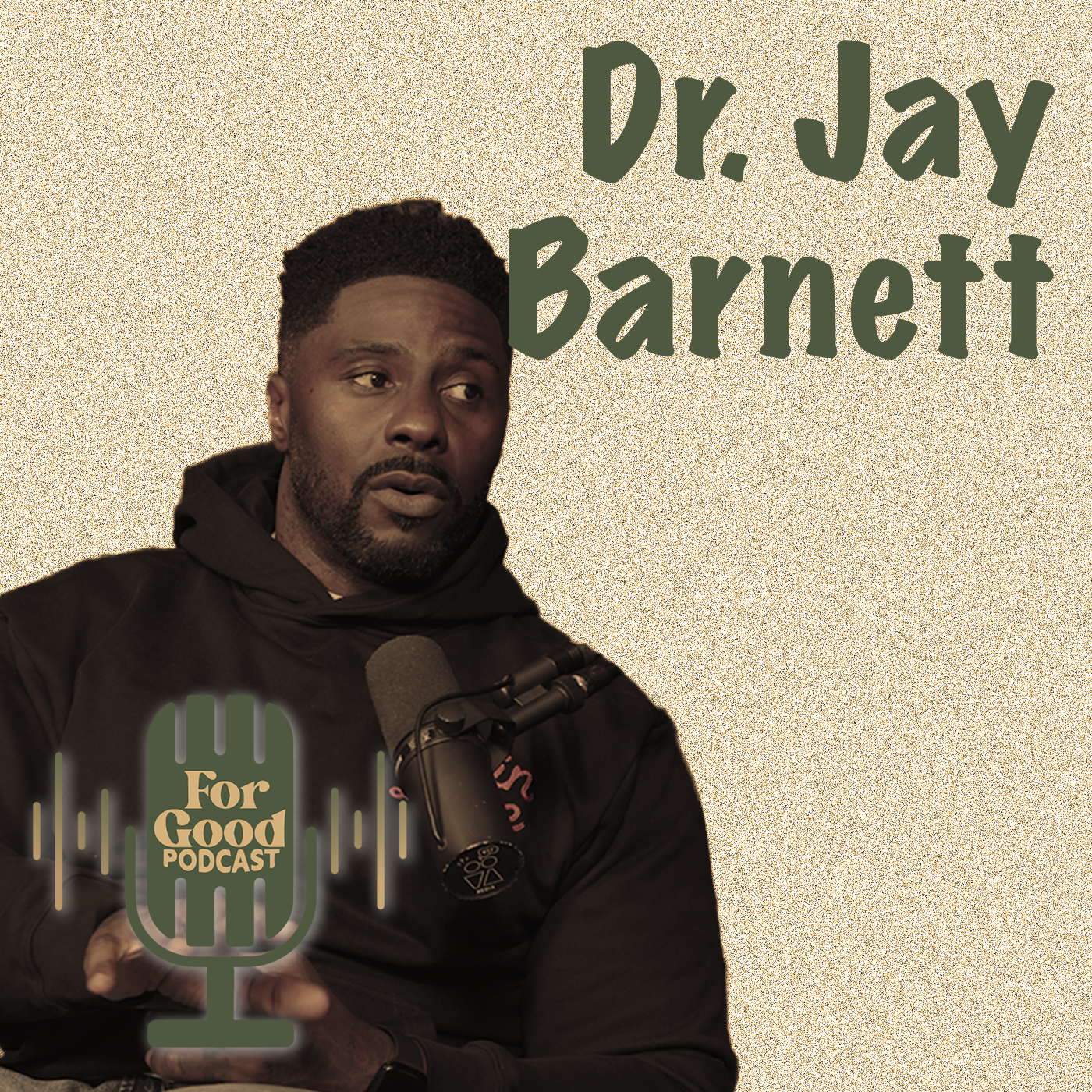
For Good
Dr. Jay Barnett on Trauma, Love & Letting Go
00:41:25
Dr. Jay Barnett's story could have ended tragically twice. The former NFL player survived two suicide attempts, left an abusive home at 16, and found healing through an unexpected white family who showed him what unconditional love looked like. Now a...
Loading summary
Transcript210 lines
- [00:00]
A
This episode is brought to you by Progressive Insurance.
- [00:03]
B
Do you ever think about switching insurance companies to see if you could save some cash?
- [00:08]
A
Progressive makes it easy to see if.
- [00:10]
B
You could save when you bundle your home and auto policies.
- [00:13]
A
Try it@progressive.com Progressive Casualty Insurance Company and affiliates.
- [00:17]
B
Potential savings will vary. Not available in all states.
- [00:20]
A
If you're going to move away from your story, the first thing you have to do is accept that it happened. And accepting that it happened doesn't mean that you're taking it on as a narrative. But accepting that love also began to help me in some way developing the thought that I was worthy of receiving love.
- [00:42]
B
Where I'm currently at, I am satisfied. I am not in my past. In my past, if I am there, I am not satisfied. I am happy. But I am satisfied in this current moment. Because that moment, that doesn't define these moments.
- [00:54]
A
If I can't love you for just being you always think that you have to do something, put on a show to get love.
- [01:02]
B
I just love you because you're you.
- [01:04]
A
Exactly. And so now that's why the dating pool is screwed up. Because you have people feeling like either I gotta perform a sexual act or I gotta take you to dinner, I gotta take you on a trip, I.
- [01:14]
B
Gotta set amount of money and I.
- [01:15]
A
Gotta have to certain amount. I gotta do something to get to be loved. To be loved. I'm slowly getting through survivor's guilt because I'm also looking at the life that I'm leading now. But there's an appreciation for the story because now I have changed the narrative to help others reshape their lives and not have to experience what I went through. And when you understand, because I am a speaker and because, you know, I was, was developed and trained by some of the best, is you understand that you have to bring the lesson down to the level of the student. And in that moment, I become a storyteller of my own story that I am not just giving me. I am giving the story for the listeners.
- [02:10]
B
What's up, everybody? It's your guy, JoJo Simmons. And we are back to the For Good podcast, where we focus on the good, never the bad, where we're measured on what we do and not what we have. Today we're back with Dr. Jay Barnett, a former NFL player turned mental health therapist, author and speaker dedicated to helping black men and communities heal. He knows what it's like to carry weight that isn't yours. From surviving suicide attempts to leaving an abusive home at 16, he's learned that healing isn't about forgetting the past. It's about changing your relationship with it. His upcoming book focuses on exhaustion and healing, but today we're diving into how to stop being held hostage by what happened to you, everybody? Dr. Jay Barnett.
- [02:54]
A
He's back, man. Jojo, what's up? Good, brother. We back.
- [02:57]
B
I appreciate you coming back. I was able to get two episodes out of you because, you know, like, you. Like you said, my producer shout out to Danica Dallas was hawking you down, man.
- [03:06]
A
Danica tricked me.
- [03:07]
B
Yeah. And we. We ended up getting two. Thank God.
- [03:10]
A
No, absolutely.
- [03:10]
B
Thank God. Like I said, from. From the work we've done before on Instagram, it showed the impact was there. So I think it was important for us to get a little extra.
- [03:18]
A
Yeah.
- [03:20]
B
So let's start it up, man. I don't mean to hold you. I know you got things going on. You say you left home at 16, right?
- [03:26]
A
Yeah.
- [03:27]
B
Because of an abusive stepfather and live with a white family.
- [03:30]
A
Yeah.
- [03:30]
B
Interesting. I didn't know this.
- [03:32]
A
Yeah.
- [03:32]
B
That's a massive disruption at a formative age.
- [03:35]
A
Yeah.
- [03:35]
B
How do you process something like that without letting it define every relationship that comes after?
- [03:40]
A
Well, you know, to kind of, you know, provide some context to that story for those who, you know, haven't heard it. So my. My stepfather was. Was physically abusive, man. And Andrew Marr, which was a close friend of mine, he played football. And we just got to talking one day, and, you know, he was like, jay, man, you know, just like, how's home? Like, he was. He was very interested in just kind of, like, what my home life was. And I didn't know why, like, this is big old white guy, like, man, why you want to be all in my business? And I think that he could see that something was wrong and that something was going on because, man, I was snapped on a football field like, every day I was in a fight with somebody.
- [04:25]
B
Wow.
- [04:26]
A
And so Andrew invited me over to his house one day, man, for steaks, because his dad with cook steaks, Woody, who recently passed last month, and I went over and met his family, and we got to talking, and we became closer, and I started opening up more and kind of share some things, like what was going on at home. And they kind of invited me over to come, and I would tell my mom, like, hey, I'm gonna stay over here. And eventually, kind of staying over there became permanent, because me and my stepfather, we were never going to see eye to eye, and I was never gonna find it in my heart to resolve the things that he had done and the things he had said. So I just was like, yo, I'm gonna be over here. And what the Marr family gave me, Joe, was something that I had never experienced.
- [05:22]
B
And.
- [05:23]
A
Cause my parents had divorced at 13. We moved to Texas, and my mom remarried. And of course, after she remarried, this guy was like, physically abusive toward me. So when I was hanging out with the Mars and. And staying at their house, Woody, as I said, who just recently passed, God rest his soul, man. And I'll tell this really brief story. One of the brothers, they had four boys, and one of the sons had reached out to me. He says, hey, man, dad, you know, he wants to see you, you know, and he says, you know, and I was, you know, doing an owner road or something, and I kept in touch with them throughout the years. He said, man, send a video. And so I sent a video and just thanking them for pouring into me and caring for me. And they bought me my first car.
- [06:11]
B
Wow.
- [06:11]
A
You know, before I went to college, they took me on all of my recruiting trips, man, they really poured into me. And they just saw a little boy at the time that needed to be loved. That's what I needed.
- [06:22]
B
Yeah.
- [06:23]
A
And I sent the video to Adam, which is one of the sons, and I get a phone call last month. And Adam, when he called me, I was like, your voice sounds different. What's going on? And he says, man, dad just passed, and this is what blessed me. He said, dad, watch your video over and over before he transitioned. And he said, tell my boy Jay, man, I'm so proud of him, man.
- [06:52]
B
That must felt good for you.
- [06:57]
A
So when you ask me, you know, what that gave me. And even on his dying bed, he was still thinking about me because they took me in as a son. And Woody was the first man that hugged me. And I'm just being honest. My father wasn't a hugger. And Woody was about 6, 7, and I mean, man. And all of his boys was tall and big and man. And he would always say, hey. And at first I was just like, man, why is this dude hugging not hugging me right? And he said, no, buddy, we hug in this house. And for the first time, I had felt the warmth of acceptance. And when I felt that, man, it did something for me as a little boy, which is where I began to understand how affection was necessary for us as boys, particularly in our development stage. And if you're going to move away from your story, the first thing you have to do is accept that it happened. And accepting that it happened doesn't mean that you're taking it on as a narrative, because that's usually what people do. This happened to me. So now this narrative become the driver in how they live. But accepting that love also began to help me in some way, developing the thought that I was worthy of receiving love. And it took a long time to understand what his family gave me and the necessity that boys need to be hugged. Because I look at all of his sons, they were so confident, so confident. And their mother, the same. And their mother, Shirley, they were poor. These people poured into me, man, at a time that my life could have.
- [08:51]
B
Went any which way, any way.
- [08:54]
A
And so, man, that for me, was really pivotal moment in my life for that family to take me in. Because I had seven uncles. Nobody reached out to me, nobody checked on me, nobody thought about me. When the divorce happened, right? They often looked at my sisters and like, hey, you gotta be the man of the house. You have to, you know what I mean, take over in this space. And no one thought about the little boy who needed to be held, who needed to be hugged and to be cared for in a way, because the divorce didn't only impact my sisters, it also impact me because I lost the blueprint. Because how do you become what you don't see?
- [09:39]
B
You done got too deep already. Because. And I don't mean to touch too much on my personal life, but in a sense, I've felt the same way for a while. And I'm saying this to really big up my second mother, my stepmother, Justine. When my parents got divorced, I might have been three or four. I didn't really have a blueprint to look at, but I'm so appreciative that my father found a woman that poured love into me like I was her own. From the moment I saw her, she said, come sit on my lap. She gave me hugs. She still contacts me like I'm her son. And I have a great relationship with my mother. I love my mother. She's my girl, right? But I think in the divorce, the translation got lost of JoJo, the baby. My mother had to go figure it out. She's no longer with this big star anymore, and she's gotta go hustle, and she's gotta make sure she provides. And I think there was moments she did forget to give me those hugs and those kisses and those loves. Not that she didn't want to. Not that she doesn't love me. I never would ever think my mother doesn't love me. But the woman that did step in and do that was my second Mother that just wanted to be with my father. Right. And just saw a boy like you said, that probably needed those hugs because he was forgotten amongst that divorce. He has older sisters. But things had to keep moving. Life had to keep going.
- [11:06]
A
Right.
- [11:06]
B
And I never got to deal with the grief of that because I'm a kid. Right. And I don't know, the blueprint is. I don't know which way to go. So I love that you said that. And it brought me to. Because I thought about, I've been thinking about that for so long. I was like, man, like I'm so appreciative that my dad found the perfect man.
- [11:23]
A
Yeah.
- [11:23]
B
To fill in the role when my mother was like, when I'm not at my mom's house and I'm at his house, there's a motherly figure that's making me feel seen and making me feel heard. And I think that was very important for my formative years of confidence. Because you say like a child, a boy especially needs love from father and mother to feel confident. You know, so it was that.
- [11:45]
A
And when you look at, when you look at. And I, you know, I've had. And because my brain is, is, is wasn't prepared to have this conversation and I'm, I'm, I'm preference in this because I don't have the exact study and exact research to give the name of the study which talk about boys needing the emotional attention and hugs. Because people, it just, you know, I had to deal with saying something and people like, oh, cited. And they're like. And again, in this moment I can cite it, but in this moment I wasn't prepared to go there. But I will say this. Boys not having that is the reason you have men who are emotionally disconnected.
- [12:25]
B
Yeah.
- [12:26]
A
So in the context of saying that boys need more hugs than girls, not saying that boys need more love than girls. But for that reason, when you are under developed in an area, you don't have the ability to act or engage in that area. So now you have a generation of men who cannot emotionally connect. Because if you're not hugged as a little boy, you don't understand emotional connection. You don't understand what affection is. And I'm not talking about sex, I'm talking about touch where you feel supported, touch where you feel seen, touch where you feel love, feel hug. So you have a woman who's trying to love a man and because you didn't get that, you feel uncomfortable.
- [13:16]
B
I'm not going to lie, it's what I've dealt with. Hugs Used to feel very awkward to me.
- [13:21]
A
You should feel hugged from my wife.
- [13:23]
B
From my daughter, from. And my wife used to be like, you have to accept this love. And I'm like, I don't. I started thinking, I was like, maybe I just didn't get hugged enough as a child.
- [13:32]
A
And I didn't.
- [13:33]
B
You know what I mean? Like. And I don't knock anybody for it. Yeah, everybody has what they went through, and, you know, we're all learning, we're all growing. We're all, you know. But I'm like, maybe I just didn't receive this. Cause it doesn't feel normal. Especially when you're trying to hold me for long.
- [13:47]
A
It doesn't feel normal. Exactly. And like, when. When Mr. Marv would hug me and, you know, it's this big old white man, like, I'm like, yo, dude, what are you doing?
- [13:55]
B
Right?
- [13:55]
A
You know what I'm saying? And he would always say, hey, Budd, you know we love you. Right? And I'm like. And then that was difficult because I'm saying to myself, why do you love me? I didn't do anything.
- [14:04]
B
Right.
- [14:05]
A
But we need that. Because if I can't love you for just being. You'll always think that you have to do something, put on a show to get love.
- [14:15]
B
I just love you because you're you.
- [14:16]
A
Exactly. And so now that's why the dating pool is screwed up. Because you have people feeling like, either I got to perform a sexual act or I got to take you to dinner. I got to take you on a trip. I got to have the certain amount. I got to do something to get loved, to be loved.
- [14:31]
B
Wow. Wow. Wow. That was. Woo. All right, we're gonna jump out of that, because I know we have limited time on this episode, but. And I don't mean to jump too deep, but you survived two suicide attempts without going into details. How do you carry that experience without becoming the lens through which you see everything else?
- [14:58]
A
I never forget those two incidents. One happened at 23, and the other one happened at 31.
- [15:10]
B
Almost 10 years apart.
- [15:12]
A
Yeah. And I never forget those moments because they were pivotal moments where I did not want to be here and for the reasons that I didn't know who I was. Number one, I didn't know who I was even supposed to be. All I knew is to put on a helmet and perform again. As we was talking about, all I knew is that if I wanted to be valued, if I wanted to be appreciated, you better be doing something.
- [15:48]
B
Yeah.
- [15:48]
A
And you better be doing it well. That's all I knew.
- [15:51]
B
That's all I knew.
- [15:53]
A
And I carry those moments with me because there are moments where I not only felt God, but I heard him. And I think the second one, I heard him even more because that was a game changer for me. Because if I'm being honest, that was the one that I thought that would really take me out and really do it. And because I was living with my godmother, I didn't shoot myself because I didn't want her to find a mess.
- [16:23]
B
Remember this story? That's how I first met you, by the way.
- [16:25]
A
Yeah.
- [16:25]
B
So inspiring.
- [16:26]
A
You know, I didn't want her to find a mess, man. I wanted to be respectful to her home. She doesn't have kids, and so she's, you know, took me as a son. And the humility that I live and operate in and function in and move with is always attached to those moments because I'll never forget them.
- [16:49]
B
Keeps you humble.
- [16:51]
A
I remember the pain that I felt, and I remember wanting to rid myself of the pain and wanting to be so disassociated from the pain that I was willing to end my life. Because in some way, we are trying to end the pain. But you end your life by ending both the pain and your existence. So for me, I take those everywhere with me. And I think about the days that people walk past me and looked at my smile and looked at my build and thought, oh, man, he's fine. And I think about days that I wanted to talk, but there was no one to talk to. I wanted to be open, but every space was closed. I wanted to share, but I didn't feel like my story and what I felt would be accepted and that I would be judged. Because you're a football player, you supposed to be hard, you know, you. You know, you, you, you, you this nigga. You know what I'm saying? Like, you, you, you don't.
- [18:08]
B
You know, this is what you do.
- [18:10]
A
Yeah. This ain't like, soft, like, what are you talking about? You hurting.
- [18:13]
B
Yeah. Right.
- [18:13]
A
You know what I mean? And so those two moments, man, they were life changing. And I struggled for years with survivor's guilt. And I would hear stories of people, man, that actually did it, and you're here, did it. And I'm thinking about, I'm here. And then this story, this ministry, this purpose has emerged from it. And I'm slowly getting through survivor's guilt because I'm also looking at the life that I'm leading now. But there's an appreciation for the story because now I have changed the narrative to help others reshape their lives and not have to experience what I went through. Because I think about my mother and what she went through and having to live through that experience and like knowing that you have a son hurting and you can't help him.
- [19:20]
B
So you've told your story multiple times on the Just Heal Bro tour, you know?
- [19:24]
A
Yeah.
- [19:25]
B
How do you share that trauma in a way that heals others without re traumatizing yourself?
- [19:31]
A
Well, you know, as I said in the other episode, each region is different. And I say region because there is a energy that really serves every state. Believe it or not, if you go to Memphis, when my tour was in Memphis, the energy there is a very homicidal energy. It's a lot of violence. When we were in. I can't think of the city, we was in the Midwest somewhere, there was some energy that was really heavy in suicide. And when we were in the Bahamas and we had to tour, the energy there was and sort of the temperature and we always gauge the temperature and what is the environment like men there just didn't feel adequate. So each time that I share my story, I have to share it in a way that connects to whatever is happening within that region. And so there's parts of the story that I share that I really focus on to get to the men. And some places doesn't warrant many details of it. Some places will pull out how I plan to die. Some would just warrant just what was I thinking?
- [20:56]
B
So how were you able to touch on that without re traumatizing yourself about it?
- [21:00]
A
So how I'm able to touch on that is that I have to step out of it. And so it becomes like an out of body experience where I have to step out of me to tell the story as a narrator for the listener. And when you understand, because I am a speaker and because, you know, I was developed and trained by some of the best, is you understand that you have to bring the lesson down to the level of the student, to the lesson of the leader. I mean, to the listener. And in that moment I become a storyteller of my own story that I am not just giving me, I am given the story for the listener. So when I'm given the story, I'm there. But I'm not exactly as a narrator.
- [21:46]
B
Not in the story.
- [21:46]
A
And I'm not in the story.
- [21:47]
B
You're speaking of a man. It's an inspiring story.
- [21:50]
A
Exactly.
- [21:50]
B
But you're not putting yourself.
- [21:51]
A
Exactly. And so I'm not putting myself in there because that can be re traumatizing for many people. But years of healing allowed me to separate the two and to be able to share it and not feel impacted by. And there are a few times that I've shared very, very gruesome details that needed it because I needed to hit.
- [22:16]
B
Home, needed people to.
- [22:17]
A
I needed to drive.
- [22:19]
B
Some people are at that point where they're acting it out in there. They're there. Right, exactly. You need to be able to relate and let know, like even in the planning moments, it's not over.
- [22:29]
A
Exactly. Like I remember sharing one exclusively about the first time I cut my wrist. And the details, I was just taking a knife and just was, you know. And sure enough, a brother said, man, that is what he was doing. And. Cause I would start off with he needed that. And sometimes you have to paint the picture. So the listener, even in storytelling, when people are reading the book so the reader don't see the author, they see themselves in the story.
- [23:02]
B
Yes, yes, exactly.
- [23:04]
A
Yeah.
- [23:05]
B
So I want to talk about this. There. This, this story you did share about a 76 year old white man, right?
- [23:10]
A
Yeah, yeah.
- [23:11]
B
Cried about something that happened with him and his Black teammate in 1950.
- [23:15]
A
Yes.
- [23:16]
B
He's been carrying that for 70 plus years. Can you tell us about that? And what does it look like to finally release something you've held onto for decades?
- [23:24]
A
Man, it was, I was in New Hampshire. Yeah, this is New Hampshire because I think. Was it Connecticut and then is it New Hampshire that's above Connecticut?
- [23:34]
B
Yeah, I think. Yeah, yeah, yeah, yeah, yeah, yeah. So Connecticut's first, I'm sure.
- [23:38]
A
Yeah. So I flew, flew into Boston and I think is Connecticut. New Hampshire is one of those. But it was a very white audience that I was speaking to. And I was just talking about how white or black, gay or straight, mental health is a part of all of our lives. Mental health is the psychological, you know, aspects of our makeup. Right. It's your social, it's your functionality, your physical. And then it's all of those three elements. Right. And how you do life. And when I broke that down, and then I broke down some constructs that could keep a person from actually managing their mental health. It's usually because things have happened and they don't feel like they have control of them. And I was talking about the black experience in front of a white audience. But also how I brought it back around. Is that how I had seen white kids commit suicide and black kids, what were the difference?
- [24:49]
B
Nothing.
- [24:50]
A
Nothing. Pain. And so when I talked about how pain was this neutral feel that all of us at some point will play on. And if you're not careful, pain wins, right? So painted this story, man. And this white guy comes up to me afterward, man. And he said, his eyes are watering, man. And he's just like, man, I thank you. And he said, I needed to be here tonight. And I said, oh, man, I'm glad that you came. And he said, my wife died recently. And he said, I just feel so alone. And, man, that thing began to shatter me. And you can just tell that he's ready to go, because it's like this is his lifelong partner that's gone. And then he says, but I'm thinking also about a friend of mine who I played college ball with that was a black guy that when we played in a city, he couldn't come in the dressing room with us, and he had to get dressed outside. And he said, we won a national championship back then. And he said, every year, all of the teammates have come back, you know, to sort of commemorate their victory and all of this. But he said, I'm going to call the guy John. He says, john has never come back. And he says, as you broke down, the pain of suffering and the trauma and all those different things. He said, I couldn't help but think the trauma that he had to endure while being able to be celebrated as a team, but not able to be.
- [26:27]
B
Celebrated with the team.
- [26:28]
A
Exactly. And he said. And he began to break down, he said, what pain that has caused him throughout his life. And he says, thank you. And he said, I'm going to try to find him. And he says, I've been carrying that. And he said, I should have said something. And he said, you helped me to release that. And I think when we're able to release things, we're able to free ourselves from the guilt, whether it was something you caused or something that was caused by someone else. Because even when we have endured or injustices have been occurred, we look for logic. Yeah, why did that happen to me? Why did they do that to me? Why did they make. You know what I mean?
- [27:17]
B
Always why.
- [27:17]
A
It's always why.
- [27:18]
B
It goes to why.
- [27:19]
A
And I think for him to acknowledge it, even though John didn't hear it, I think in some way that allows him. And again, you know, we can't change what has happened, but it allows him to free himself from that burden. Because it's one thing to grieve the loss of your wife. It's another thing to grieve the loss of a teammate or to have grief through something that you can't even speak to anymore, Right?
- [27:49]
B
Yes. Wow. That's. It's true. And that's why he broke down. You know, he came to you talking about his wife and ended up leaving thinking about his teammate, which is crazy.
- [28:00]
A
Yo.
- [28:01]
B
So there's a difference between learning from your past and being trapped by it. Now that we're speaking about the past.
- [28:07]
A
Yeah.
- [28:07]
B
How do you know when you've crossed that line from healthy processing into rumination? And how do people learn to put down weight that maybe was never theirs in the first place? Is almost kind of what we were talking about.
- [28:17]
A
Yeah. And I think, you know that you have transition out of it when you're able to step in it, and it doesn't have the same impact or you don't. Your body doesn't have the same response.
- [28:31]
B
Right.
- [28:32]
A
I used to. Could not talk about my father and to talk about the things I experienced without getting mad and getting angry and breaking down, like, for real. And I knew I was able. Or I knew I was free when I was able to step back into the past and not feel in bondage in my present. And most people, they have not been able to move beyond the past because they have not resolved what the past has done to them. And you have to heal from what it did to your thinking, what it did to your belief system, even what it did to your body. Because sometimes there are things that can happen, man, that can impact your body, that it changes the way you walk, it changes the way you talk, it changes the way you feel. And there has to be this process of not just unpacking, but deconstructing meaning. I got to break down these thoughts. I got to break down these barriers. What's keeping me from grabbing hold to my future? Because if I can't grab hold to my future, that tells me that even in my present, I'm still in prison.
- [29:49]
B
Yeah.
- [29:51]
A
And you know that you're free when you can step back into that thing, and it doesn't have the same influence.
- [29:57]
B
Yes, yes, yes.
- [29:59]
A
You know, and that's how you know that you're able to separate the two. And then that allows you to not carry the. The residue. It doesn't allow you to carry the weight of it. And now you're able to carry the story.
- [30:18]
B
Yeah.
- [30:19]
A
But not the weight of the story.
- [30:20]
B
Oh, that's deep. Because, you know, me being a public figure for such a long time, reality tv, you know, basically a child on tv, a lot of my past did define what my present was.
- [30:33]
A
We talked about that for a Long time.
- [30:35]
B
And when I was able to finally let that go and let it just become, like you said, my story and not who I actually am, it became more inspiring to myself than it became a hindering to me. Before my past would hinder me, I would walk in rooms and think. People were thinking things, and I would think they were whispering and saying, oh, they're talking about something that happened to me 10 years ago. When the reality is they're only thinking about it. If you're thinking about it.
- [31:02]
A
Yes.
- [31:03]
B
Because when you deconstruct yourself and you break yourself down and you say, that is not who I am. That is only my story to who I became.
- [31:13]
A
Yes.
- [31:13]
B
Is when it's all. It's a whole different ball. Wake up and be like, oh, oh, you can't tell me something done. That will bother me.
- [31:20]
A
Come on.
- [31:21]
B
Because I'm not bothered by it.
- [31:23]
A
You're free.
- [31:24]
B
I'm free from that. Bothersome.
- [31:26]
A
Yeah.
- [31:26]
B
And you couldn't bother. I'm where I'm currently at. I am satisfied.
- [31:30]
A
Come on.
- [31:30]
B
I am not in my past. In my past, if I am there, I am not satisfied. I am happy.
- [31:35]
A
Yeah.
- [31:35]
B
But I am satisfied in this current moment. Because that moment, it doesn't define these moments.
- [31:40]
A
Come on.
- [31:40]
B
You know what I mean?
- [31:41]
A
That moment don't define these moments. No, that's a bar, man.
- [31:44]
B
It doesn't. So you said, just because I'm carrying it, it doesn't mean it's not heavy. And I love that.
- [31:50]
A
Oh, man.
- [31:51]
B
How do people around you, friends, family, colleagues, better recognize when someone is struggling, even when they seem to have it all together? Because I know you said, you look at you as a football player, you think, oh, he's got these muscles. He's got a good career, he looks good. He's got beautiful smile. All this. He's got it all together, but you were breaking down. How do you. How do you. How do you tell when somebody, even if they're not showing it, is maybe not really going through? You know, it's struggling a little bit.
- [32:19]
A
You know, I think, for one, is we have to get better at. My father used to say something when I was a kid. He's always, bam. He'll give attention to details. And I didn't understand that at the time. Right. And he would always say, pay attention. Pay attention, Jay, pay attention. And he stayed on me about paying attention. And I think what it has done for me now is to give attention to even the people that matter to me, not matters the most. Because that seems that you are kind of singling people out, meaning, like, you matter, but they matter, but you don't matter as much.
- [32:56]
B
Right, right, right, right.
- [32:57]
A
You don't matter as much.
- [32:57]
B
Right.
- [32:58]
A
But people that matter to you is I begin to look and give attention to how they behave, what they're saying, and more importantly, their cadence. Our cadence gives off everything.
- [33:11]
B
Yes, it does.
- [33:13]
A
I can tell when someone's cadence has changed. No different than you can tell when someone's energy has changed towards you. Right. You hear this in marriage, like, something is off. And I think too many times we'll have the awareness that something is off, but we don't take it a step further. To have the conversation of what could be off and how you acknowledge or identify somebody that may look like they're doing well is create the space to have a conversation around what it could be and allow them to feel safe enough to say, man, man, look, like I'm gonna lose the business.
- [33:58]
B
Create the space is important, man. I never feel comfortable talking to everybody. I only feel vulnerable when I feel comfortable. I only feel vulnerable when I feel safe.
- [34:08]
A
Come on.
- [34:09]
B
Only feel vulnerable in, like, conversations, like, with you and I. Some things I've said on here, I probably should never. Maybe I wouldn't have, but I felt safe in this space to say, J, man, like, I didn't get hugged enough. Right.
- [34:21]
A
Like, yeah, yeah.
- [34:22]
B
And I want it to be known that not saying, my mother is not, like, I love her too, but I. Because I felt safe. And I think it's important to not look for the problems in somebody or ask, are they okay? Just give them a safe space. That starts with just giving everybody a safe space.
- [34:38]
A
And safe also starts with you.
- [34:41]
B
Right.
- [34:41]
A
The reason you feel safe with me is because I'm a safe with myself.
- [34:44]
B
Yeah.
- [34:45]
A
And vice versa.
- [34:46]
B
I love that.
- [34:47]
A
Because you will pull things out of me that other people can't pull. But, you know, C.J. tells me this all the time with my show, and when we're talking, and he was like, brother, you get out of people what you have put in yourself. You're getting out of me what you put in me. Because I've watched your show, and some people don't give what I'm giving because I tell people, you can only get the depths of me if you pull it out of me, because you got depth in you.
- [35:12]
B
Wow.
- [35:14]
A
So that's why when we link up, we get what we get.
- [35:18]
B
Yeah.
- [35:18]
A
From each other.
- [35:19]
B
Yeah. That's deep.
- [35:20]
A
And I tell people, you don't get safe because somebody says, oh, this is a safe space. If you say that to me, I know it's not safe space. No, it's like somebody.
- [35:27]
B
A safe space is something you feel. It's not something you say.
- [35:30]
A
Come on.
- [35:30]
B
You know what I mean? It's. Come on. It's something you feel. It's like, I don't have to tell you. This is safe.
- [35:34]
A
Exactly.
- [35:35]
B
Feel safe.
- [35:35]
A
You feel safe? Yeah.
- [35:37]
B
We're about to. We're coming to an end. I know. We're wrapping up. So for someone who is listening, who needs to let go of something, how do they start? What is the first step? Is it therapy? Is it forgiveness? Is it time? What actually works, Jay? And I mean, you may not have the real definitive answer, but what do you feel like works for somebody that needs to let go of their past?
- [35:57]
A
I think, and I'll say this because there's many different modalities of healing, right? I mean, you have the somatics and you have the body work, breath work, sound baths, Reiki therapy, counseling, you know, medication. All is so many different pathways to healing. But I think what's important is writing down or asking yourself, what is the thing that is holding you back? Because until you can identify with the.
- [36:34]
B
Thing, you'll never know.
- [36:35]
A
You don't know how to begin to process how you begin. One of the things is that I believe God didn't allow me to really make it in football because of the reason that I wanted to. I wanted to prove to my dad that I could become something that he couldn't. The reasons that I wanted, it wasn't good.
- [36:53]
B
God said, that's not why I made you talented in this.
- [36:57]
A
And I remember one day in prayer, bro, God saying to me, is that I'm going to take you places football could have never taken. Mm, I remember that. Like we talking, I heard it clearly. I'm gonna take you places football couldn't take me. But you've got to forgive him. And that was hard because forgiving him meant to me at that time, I've given him a free pass, and God was sharing to me. And I'm saying this because maybe what's holding you back is the very thing that you don't want to let go of.
- [37:33]
B
You know what, Jay? You know what, Jay? You know what? Cause you just took it out of my mind. My next thought was, I remember for so long, and I remember hearing this from God, too, because I hear from him, and I remember him saying, let go of what you want and take what I have for you, because it is way greater what you want, what you Think you want. You are minimizing what I have for you.
- [37:53]
A
Come on.
- [37:53]
B
I have something so much bigger for you or so much bigger than what you are chasing. But you're chasing the wrong thing and you're going to end up not getting anything. So be still. I remember hearing this, like, going to sleep, and I just remember, like, what am I doing? He was like, you're chasing the wrong things. Let go of what you think you want and let me show you what you're supposed to have.
- [38:15]
A
Come on.
- [38:16]
B
That's. And then when. And when God said that things started flipping for me, I started, you know, I'm back on tv, I'm doing this, I'm doing that. Oh, wow.
- [38:23]
A
Because. And I end with this, you started surrendering.
- [38:27]
B
Yes.
- [38:28]
A
You have to. And if you're going to move forward on your healing journey, whatever you start with, you have to surrender to the process. And the surrender to the process is allowing yourself, because that's a process. To allow is to allow yourself to begin letting go of the story that has been attached to you.
- [38:47]
B
So, as we close out, I do want you to talk about your book you're working on. I see you're working on a book about pace.
- [38:53]
A
Yes.
- [38:53]
B
And keeping your nervous system from being overactive. How does letting go of the past connect to your ability to be present and move at a sustainable speed?
- [39:02]
A
You know, the book, I'm excited about it, man. Doing it with Penguin Safe house, man. And I'm excited about this pace. Thank you, brother. And again, this didn't come to me until I stopped and slow down. And if we're going to allow our bodies to be truly be recalibrated, we're going to have to find pace, and we're going to have to become intentional about having a conscious state of rest, not sleep, which is unconscious, but consciously resting where we are allowing not only just our bodies to be at rest, but our minds. And even if it's just for the moments that we're needing to be replenished, to be restored, to be recalibrated. When you think about that prefix, right, to be re, to re is to be renewed, to do again. That's what if I'm going to redo something, I am doing it again. You have to allow yourself to become an individual who would exercise this habit of resetting re learning. You know what I mean? And so that pace, pursuing pace, man, is a book, man. I'm excited about it because I want people to pursue pace, pursue flow, pursue rest. Yeah, bro, we're so tired Right now, as a people.
- [40:32]
B
Yeah, we are. As a country, as a world, as a.
- [40:35]
A
Just, bro, it's like, I mean, you. You talk to people, man. People are not even there. As you hear the lights on, but no one's home.
- [40:43]
B
Yeah.
- [40:43]
A
So.
- [40:44]
B
Wow.
- [40:45]
A
Yeah.
- [40:45]
B
Thank you. Dr. J. Barnett, please look out for book that is coming out. I'm gonna. I'm gonna be getting one. I'll be having a signed copy and one that isn't signed that I'll read. But thank you so much, brother, for coming out, man. Every time we link up, it's, oh, brother, I'm such a special impact. Want to always give you your flowers for everything you've done. Your. Your story. Super inspiring. What you're doing for everybody else. Super inspiring. What you're doing for yourself is the most inspiring. So I want you to keep on doing it, man. I want you to know that you have a corner of people like myself that are watching you and that are. That are proud of you, but are inspired by you in the same, brother. So thank you.
- [41:23]
A
Absolutely. Thank you, brother.
- [41:25]
B
Thank you, everybody. It's your guy, JoJo Simmons. And this is the fourth good podcast where we focus on the good, never the bad. Where we're measured on what we do, not what we have. And we are checking out. Until next time, peace and keep being for good. Support for this podcast and the following message comes from America's Navy. The Navy offers new graduates hands on training and experience in careers like computer science, aviation and medicine, plus education and sign on bonuses. Parents help your grads start their career today@navy.com.