← For Good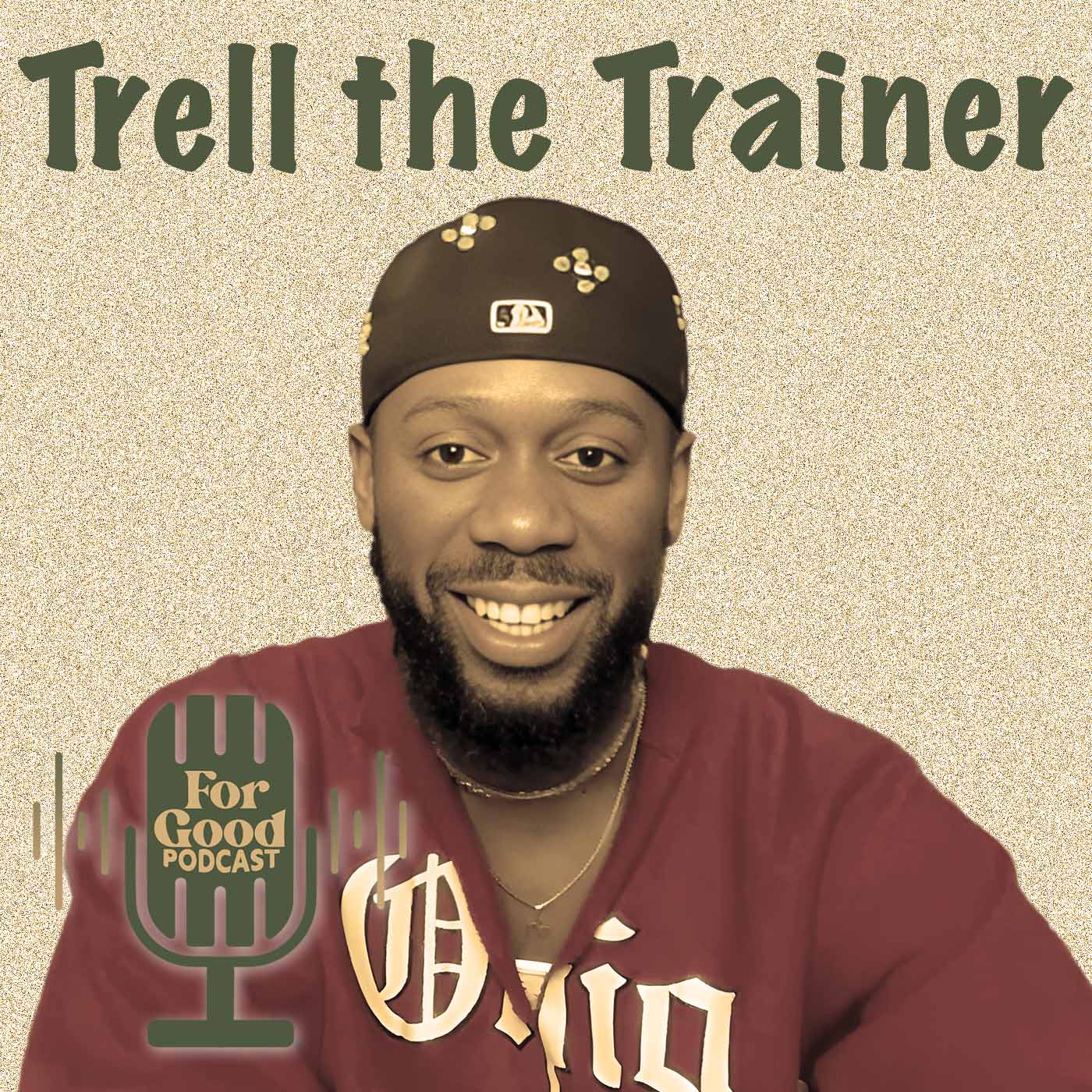
For Good
From Prison to 6 Figures: Trell the Trainer on Mindset & Entrepreneurship
01:09:49
At just 20 years old, Dontrell “Trell the Trainer” Britton was leading 30 to 40 of the toughest men in prison through intense yard workouts. Surrounded by lifers and hardened criminals, he learned that self-mastery is the only way out, whether...
Loading summary
Transcript119 lines
- [00:00]
A
You got 40 grown ass tough men serving 40 years, eight years listening to a 20 year old kid. That's insane. When you come home from prison, it's like a badge of honor. And now as an adult, that shit is backwards. 60 year old white man who's a psychologist might say the same thing I'm saying. But like, I would look at that and be like, you don't know what the hell I've been through. If I say, damn, now I'm angry, I respond angrily. But if I'm able to sit down and say I didn't feel angry, I felt humiliated, I respond now as a humiliated person. The Elon's and the rich man wear the shit we wear. We might got on Wranglers. Our culture is so caught up on like, I gotta have the next Louis Vuitton, I gotta have the Yeezys. Reality is you can't afford it. Start a Roth IRA investment account asap. Compound interest, just bills. And these are the type of things we were never taugh.
- [01:04]
B
Yo, yo, yo, what's up everybody? Welcome to the 4Good podcast where we focus on the good, never the bad, where we're measuring on what we do and not what we have. Today I'm excited to sit down with my guy, Trell Britton, AKA Trell the Trainer. This man has turned his struggles into strength and his past into purpose. After serving time in federal prison, Trell, you rebuilt, you know, your life from ground up, using fitness, discipline and entrepreneurship as your foundation. You can practice so many through, you know, your raw storytelling, your commitment to empowering others, from checking on your friend's mental health to creating healthier food options with your vegan truck now turned the restaurant, as I'm seeing, everything you do is about making an impact. I appreciate you coming out. First of all, I wanted to make sure I gave you all your flowers and let you understand that we do see what you're doing for the community. Thank you for being here, bro.
- [01:52]
A
I appreciate it, man. That's a crazy intro, man. I feel honored to even be here. So, man, thank you for having me.
- [01:59]
B
Of course, of course. Thank you for, for being on and you know, I think you are the type of person that embodies what this podcast is really about. It's about, you know, giving back to the community. It's about, you know, mental health. It's about, you know, just discipline and personal growth and inspiring stories. And I think your story is one, you know, that a lot of young men need to hear and a lot of young men need to kind of, you know, take notice to that. You know, there's other options and there's other things to do out here, and there's. There's. There's other ways. So let's get into some questions, man.
- [02:32]
A
You know, man, let's do it, man. I'm here to talk about anything. Let's. Let's run it. Hopefully we can inspire somebody to tell their story or get some shit done, you know?
- [02:43]
B
So let's talk about the impact of survival mode and breaking the cycle. Now, can I talk to you a little bit about how you grew up and when you first realized that you were in survival mode?
- [02:54]
A
So I don't know, man. I call it. And I hate to call it this, but I call it typical black man story, man. I grew up single mom. My dad was in prison up until I was about 4 or 5 years old. And I think my earliest memories is just like, you know, figuring out life and how to get dressed for school. My mom already left out for work, and I'm basically figuring out just, like, small things on my own. And I don't think it really hit me that, like, not having my dad around and, like, growing up with a single mom until I was about, I want to say, maybe like, 10 or 12 when I was able to really start processing thoughts and feelings and seeing other kids with their parents and dads, and I'm just like, damn, like, you know, my dad and me and my mom would start having those conversations. And what I realized is that I hate to call it normal, but, like, it was very common in my group of friends, my circle. Like, all of us didn't have a dad around. They were either the dad or in prison. And that's basically, like, how we grew up. And so I think I first went to, like, a juvenile detention at 13, like, stealing cars, carrying guns, selling drugs. Just growing up in that, like, very impoverished neighborhood. Neighborhood, just like me and all my friends. And again, that was common, but I always misconstrue common as normal. And so, like, I thought that was normal, but, like, when I got older and went to, like, federal prison, I realized, like, there's a different world, you know, and that wasn't normal. And so my dad got murdered when I was 15. My dad was like, sadly, my dad was like, a bank robber, a robber, jack boy, whatever. Most people want to consider it. And my mom was a drug dealer. And so, like, that's what I was a product of, both of those two. And so you can only imagine what that's like. And so I Was either selling drugs or I was out here robbing people. And so I remember going to prison at about 13 again for, like, stealing the car or something. Got out, and that was like, my first badge of honor. I remember, like, yeah, all right. Like, I'm in this now, and, you know, when you come home from prison, it's some. Again, it's like a badge of honor. You get, like, rewarded. You get, like, hey, like, you made it. Like, you. You finally. And now as an adult, I'm just thinking, like, that is so. That is backwards. Like, that is dumb. But, yeah, that's like, my first. First few memories. And then, like, I said, he was murdered when I was 15 or 16, and I think that's when it really hit for me, because I. I felt at that age that now I had to step up and provide for not just like, my mom, but my entire family. His side of the family, they kind of, like, banking on me now. They, like, he was the only man in the family. So, like, you almost got step up and take his place. He was the only child. I mean, the only, like, male. And so, like, my grandma looked at me like, him. And so, like, all of the things he used to do, she wanted me to do, like, bring her groceries and do all this shit. And then my mom, now I'm 16. I'm like, damn, I can see her struggling, and I'm like, I would feel less of a man if I didn't, like, step up, right? So that's how I got to, like, selling drugs. And that's when I kind of knew I was like, all right, like, I'm really out here at 16 years old trying to figure this shit out. Wow. That's, like, my first recollection of it.
- [06:33]
B
So you would say that, you know, your former survival mode was coming from wanting to provide and to keep everything rocking for your family. So I totally get that, man. Now, you spoke about prison a little bit, and. And, you know, we've done our research on you, and I've seen that you've talked a lot, you know, about PTSD from the FBI raid and solitary confinement. How does that still show up in your daily life, the ptsd?
- [07:00]
A
It's crazy that you even said that, bro, because.
- [07:04]
B
I told you, research, man. And we really love. You know.
- [07:10]
A
For real. Somebody asked me this recently, and, like, one thing that. It happened to me this morning, man, and somebody asked me. They was like, yo, like, what are some of your triggers from, like, prison? And I've never been asked that question. Like, what's Something that, in today's society, that triggers you. That makes you, like, have that PTSD from prison. And I experienced it this morning, and this. I've been out seven years. So, like, to think about that is like, damn. Like, this. We really need therapy. Like, you really gotta see this shit through. Cause it. But, like, for me, I don't know what it is. When I'm in my bedroom and I'm asleep, if I hear a loud noise in, like, my living room or by my door area, like, I just wake up. And I'd be having to, like, remind myself to, like, all right, breathe. Like, you not in jail, bro. Like, you good. Like, right? Hey, bro. But, like, it's like a scary. I want to say, like, 12 seconds. And so, again, I grew up in an environment in the household where, like, PTSD or, like. Like panic attacks or, like, anxiety. That wasn't something real to us. That was like, boy, shut the hell up. What you mean? You. You got. You got anxiety? Like, damn. And so this morning when it happened, I was like, damn. Like, I really felt like, you know, my heart was racing my body. Like, I felt chemicals in my body being released that I'm just like, damn. And I'm reminding myself to just like, all right, charges. Relax. Just breathe. And I remember just breathing for, like, 10 seconds. I'm like, yo, this not normal. And so it's small like, that. That affects, like, daily, you know?
- [08:48]
B
Yeah.
- [08:49]
A
So that's why it's so many, bro. If I can go on, it's a list of shit. But, like, that's like. And it's crazy that you even said that, because I. I had to do that this morning when I woke up. I don't know why it don't happen every morning. I would say maybe once every two weeks, but it happens.
- [09:04]
B
But that's. That's crazy.
- [09:07]
A
That's the thing, because what happened when I first went to prison? I was staying with my aunt at the time. Well, it's a group of us. So, anyhow, I remember I was dating a young lady. I'm 18. She may be, like, 23, 24. She in college. And I was head over heels for this lady. She was the most beautiful woman I've ever had in my entire life. I'm like, hey, I'm gonna do whatever I need to do to, like, be with this woman. And this was the first time I've ever been given an ultimatum. So she shut me down. She was just like, hey, like, I rock with you. You cool. You doing your little thing. But, like, that's not my life. If you want to be with me, going to have to figure out how to make this legit. Like, you don't have to go get some. And I was like, damn. But I respected it. And I was just so geeked to, like, be with this woman. And I was like, all right, here's what we do. If you help me get a job, I'll do it. I'll stop selling drugs. And so, like, I want to say for, like, two weeks straight, we did a resume. We started applying for jobs, and I had landed a job at Comcast. I was supposed to start on a Monday. It was my first day. And that same morning, the FBI came bust down my door, like, and this module. I hadn't sold drugs three months prior. I had stopped because I wanted to be with this lady. So, like, for the last two, three months, I hadn't sold a drug. I hadn't committed a crime. I literally was just trying to, like, figure it out.
- [10:30]
B
But still caught up to you.
- [10:32]
A
That's not how the FBI work. Yeah, I was under investigation that whole year prior. And so it was like, I don't care. Like, you coming with us? Wow. So, like, that's. That's where that came from. And I remember. I mean, I was sleeping on the couch at the time, and I just hear a big boom. I heard a boom. And so, like, my first thought, growing up in the streets, I'm like, damn, somebody trying to rob us. And I remember I used to keep, like, my little pistol in my closet. And so when I heard the boom, my first thought was to get up and run to the closet to, like, try and get the pistol. But I remember my homeboy had to. I gave it to him the day before because he was going into, like, a neighborhood who. Who we weren't necessarily cool with. And so at that moment, panic set in. And I just remember hearing FBI. And when I heard FBI, like, my whole body kind just shut down. Because now. Now I'm terrified. Like, this ain't the jack, boy. This FBI. Like, this some big shit. And I remember just going back on the couch, and I just laid there. I was like, all right, whatever happens, about to happen. And the door came busting down, and then they came in. It was a lady. It was probably like, 12, 13 officers rushed in my apartment. If it's the lady coming last, she had on, like, this trench coat. It's almost like a movie scene, legit. She coming with a trench coat. She had a clipboard. And I remember she had all of Us, like, me, my aunt, cousins, all of us, like, tied up on the. On the couch. We just like. And so this whole time, mind you, I hadn't sold a drug or committed a crime three months prior to. So my cousin, we're around the same age. We both grew up in the street. So I'm looking at him, I'm like, man, like, whisper. I'm like, yo, what the hell you do? Like, he like, I ain't do nothing. So we both looking like, man, what, Somebody did something because they here, right? And then I remember she had the clipboard. She scared my aunt? Nope. She scared boyfriend? Nope. She scanned my cousin, she looked at me, looked back, and she was like, we got him. Like, I was like, what the. Like, what did I do? So, yeah, that's how that day happened. It was a lot, but I remember it, like, vividly.
- [12:40]
B
Wow, that's. That's a. That's a crazy story, just how that happened.
- [12:44]
A
And.
- [12:45]
B
And now I can see why the PTSD of hearing that loud noise bothers you, because that's kind of how it happened to you, right? That's. That's when. When it all kind of kind of unfolded. So. Yeah, man, that. That. That's insane, man. You know, I wanna. I wanna. I wanna finish talking about one last thing in survival mode, and I. I'd love to hear your point to black men. Really? What are the biggest mental traps you believe that keep black men stuck in survival mode? Well.
- [13:14]
A
Well, one that I know I. I had to face was that, like, I gotta be like, gangster. I gotta be tough. I gotta be like that for the birds. That shit gonna land you two places. They used to say this all the time, and I was so young and naive, and I thought I was above the law. I thought I was the toughest. That gonna land you in a casket or it's gonna land you in prison. I've seen it. I want to say, out of the 15 childhood friends that I grew up with, it's probably four of us that's, like, left. That's not in prison or that's not dead. So that goes to show that the numbers don't even. That don't add up. So, like, this idea that, like, we got to be like. Or live this rap life and be tough and like that for the birds, I think that keeps us stuck, especially in the impoverished communities we've been conditioned to. And I get it. You know, I get it. I've. I've experienced it. But this mindset, they're like, oh, we suffer in silence. Sure. But there's going to become a point, bro. They're like, you're not gonna be able to keep using that as an excuse. Where we say like, oh man, black man. And I'm an advocate for it. Don't get me wrong. Like I'm with it. I get it. I listen, bro. I've lived it. I, I preach it, I teach it, I've studied it. But at some point this, we suffer in solid is getting old. Like if suffering and silence is, is increasing these suicidal rates, something has to change. And so now I'm encouraging like, I'm like, hey, this not working. Maybe you need to suffer out loud.
- [14:48]
B
Yeah.
- [14:48]
A
And that's going to take a level of vulnerability. And I get that that's not some easy, it's easier said than done. But I tell my like, hey, the last time you've suffered in silence, my boy, I almost lost you. I need you to speak up. You got to speak up. We got to be able to express how we feel. It's meant to me. It's manly to hold space. It's manly to embrace how you feel. That's manly to me. That's macho.
- [15:13]
B
Yeah.
- [15:14]
A
You know?
- [15:14]
B
Yeah.
- [15:14]
A
It's easy to, to be tough and not express how you feel to nobody in your life. That's easy to do. And I encourage all my, especially my homies around me. I'm like, hey, like how you feeling? They like, oh, I'm good. Nah. What's on your mind? Tell me your mental, emotional, physical. Give me a scale of 1 through 10. And I want them to get used to being able to like have these conversations like in a healthy manner.
- [15:38]
B
Yeah.
- [15:38]
A
So like, I think that's one of the biggest ones that face our society is just like, oh man, we suffer in silence. We have four years, no doubt. But that ain't working. So something has to change.
- [15:50]
B
I agree. You know, I think especially with black men, not only do we suffer in silence, but I love what you said in the beginning is that everybody has to be tough. Everybody has to fit into this kind of pre made culture that we think we're supposed to look like, but nobody wants to truly look within and be themselves. And I think when people do look within it and are themselves is when they truly find happiness. Right. Is when you truly say, well, I don't, you know, there's nothing wrong with me. It doesn't mean that I'm not tough when I need to be, but I don't need to be tough all the time. You know what I mean? So I think there's a constant battle with all black kids, whether they come from money or don't come from money, where it's like, I need to fit in. I need to have this certain bravado to me. I need to have this certain toughness for me to fit into my culture. You know what I mean? And I think that that doesn't happen in most cultures, but it happens a lot in the black culture, where it's like, you need to prove yourself in some type of gangster setting to be respected. You know what I mean?
- [16:46]
A
Everybody won't be tough.
- [16:48]
B
Right? Right.
- [16:49]
A
Like, that's your head. Come on, bro. Then when I went to prison, like, I'm gonna be honest. That's where the tough guys at. That's what a guy serving 60, 70 years of life that don't have a. They don't care about, like, Right. Make you tough until you run into some real tough people, you know, that's the same thing I say when somebody be like, oh, I'm emotionally intelligent. Yeah. Until you meet another emotionally intelligent person, then it's like, oh, like, I ain't as emotionally intelligent as I thought. It's the same thing, right? So.
- [17:21]
B
So you were just talking about vulnerability and mental health, and I wanted to jump right into that subject because obviously, you know what? Your mental health check ins is one of the main reasons that I really started following you and really getting engaged with what you got going on, because I felt it was so important. So, you know, you talk about checking in on your friends, asking, how's your mental. Why is that so important to you?
- [17:43]
A
Again, I think it speaks to my point of the. The we suffering in silence thing. And I think for me, one day, you know, I. I go through shit like that ain't perfect. Like, just because I. I know enough about it and I talk about it. I go through shit. I. And so I think I was just having a rough day, and I was like, damn, you know, like, I want to talk about this. And so I went out. I remember I just went out. I went to a place where I feel safe and comfortable. Growing up, I used to hike and shit. Like, that's what they, like the programs used to get us to do. Like, all right, let's get all the kids from the hood out the hood. Let's go hiking. Let's go. And so I've always been connected to nature, lakes, cabins. Like, that's my. That's my place where I'm just like, ah, I feel like a kid again. Like, I feel free and So I was like, you know what, maybe I'll go to this lake and maybe I'll have a conversation out loud with myself and like, I'm gonna record this because now I'm doing content. I'm like, somebody else could probably use this conversation that I, I have with myself. And so I just remember going out there and like. Because it seems if you look at the video, it's like I'm talking to like, you. Well, essentially I'll be talking to myself. And I tell people that all the time. Like, like I'm really talking to myself. And I know I'm not the only person that's feeling this, like, you know what I'm saying? And like, that is kind of my initiative to like heal out loud. And not necessarily heal, but to, to, to like express how I'm feeling openly, openly and like vulnerably, you know, And I think that's like the first step. Like, sure, you, you feel these emotions and that's only one part of emotional intelligence. Because now you have to be able to not only feel and express, communicate this.
- [19:33]
B
Yeah.
- [19:34]
A
To everybody in your life in a safe way, safe manner.
- [19:38]
B
I agree. You know, I, I've done a lot of motivational talks myself and quotes and a lot of people like, oh, that helps me so much. I'm like, little do you know, I'm talking to myself. Every time I do these, it's me talking to myself. And I think those are the most powerful thought leaders are the ones that are truly talking from experience and talking to themselves. Because, you know, all of this stuff is relatable. You know, we all are different people, we come from different walks of life, but we all go through the same things, you know, mentally and we all kind of go through this emotions. So I think even doing that is, is amazing that you just one day decided, you know, I'm doing content anyway. Let me talk to myself. Put it out there and you see how much of an impact that it created because people need that type of stuff. You know what I mean? So.
- [20:20]
A
And I think. No, no, I love that I was gonna say. And two, what, what I think helps is that like, I'm also open and vulnerable about my story and what I come from. And so unlike no shade, but the 60 year old white man who's a psychologist, you know, might say the same thing I'm saying, you know, but like, I would look at that and be like, you don't know what the hell I've been through. You ain't been through what I've been through. So like I think people can be like, damn, like I know bro, like I was there when bro got out of prison or I know bro from prison, like, and this shit like real like, you know what I'm saying? And so I think that helps that relatability.
- [20:59]
B
Yeah, you said people reach out to you with their struggles. How do you balance open others while also protecting your own mental health?
- [21:09]
A
That's a great question. And, and I can't say honestly that I've quite figured it out. All of this whole social media stuff is still new for me. I've been doing it a few years but like before I was doing like prison cleaning videos and, and I, I kind of just got into the, the mental, emotional, well being like stage of social media. And so like oftentimes I'm a pretty happy person. Like I'm a pretty stoic, positive person. But I, I found myself being like, you know, sad a lot of the times. Not sad because I'm a sad person. But like with the work that I do, I get, I get, I want to say 15 to 20 DMS emails per day of young men who are dying, for lack of better word because they never hear like words of encouragement, you know. And so like I'll get a 16 year old kid that's just like like damn bro, like this video saved my life. Like I thought about taking my life. And so for me, like I'm, I'm honored to like be that person that you feel comfortable coming to or that sparked the change for you not to do that. But there's also a side of me that's like, damn, like I, I carry that with me, you know what I'm saying? When you're getting those type of messages every day I'm like, Damn, like at 16 years old this young man wanted for whatever reason to take his life. And so I carry those, I carry that with me like daily. And so sometimes like my life is pretty good, like I'm good but like my fulfillment is in like essentially lifting a load from society. And I'm realizing that sometimes that load that I'm lifting is often an emotional or like mental load from like another like young kid. And it's a lot heavier than I expected and be, you know what I'm saying? But yeah, hell yeah, we figured that out. Like imagine seeing every day 16 year old kids and 22 year old men. That's like, man, I lost my job, my mom died, I, I don't know what to do. I'm just like, damn, like what, what the hell can I say.
- [23:29]
B
Man?
- [23:29]
A
So, like, I'm still trying to figure that out. I'm still figuring it out, bro.
- [23:34]
B
So, you know, as you still figure it out for the men who struggle to ask for help or open up, what advice would you give?
- [23:42]
A
I think the first. First. First step, and it's super cliche, but it's to allow yourself to. To feel whatever it is that you're feeling. I think we've been conditioned to not feel. And one of the only emotions that we understand and know is anger. And it's, like, young. There are so many different feelings on the feeling wheel. If you look at a feeling wheel is there's so many different. But the only one that we know and resort to is anger. Because at some point, if you allowed us to keep just palano, you're gonna explode. And I get it. And so I would suggest sitting down for short therapy, but sometimes sitting down with yourself and start identifying properly the emotions that you experience and you feel. Look at a feeling chart. So if something happened to you today, go on that feeling chart and say, damn, this made me feel this way. Because what happens, and I learned this in therapy, is that the. The word that you use as a feeling is how you respond to a situation, if that makes sense. So, like, let's say somebody or a homeboy stepped on my shoe or, like, cursed at me or called me on my name in front of women. If I say, damn, now, I'm angry, I respond angrily, right? But if I'm able to sit down and say, I didn't feel angry, like, I don't make me angry. I felt humiliated, I respond now as a humiliated person or, like, you know, and you. You respond how you like. It's directly correlated to the feeling word that you, like, give yourself. And so I would encourage you to, like, you know, sit down sometimes and process that feeling instead of just resorting to anger. And immediately, that's been, like, pivotal for me, like, really identifying what an emotion.
- [25:41]
B
I love that feeling process. Important for your mental health, man.
- [25:47]
A
Sure, man. And then you can navigate it more effectively. Like, you know what I'm saying? Like, how do you. If you don't, you got a gps if you don't, if you only know one. One destination, like, you're. That's the only thing you're gonna go to. But if you like, oh, I can go this way, this way, this way. This route takes me 12 minutes, but I get to see the trees, the flowers. This route takes me eight minutes. Maybe I can stop and grab lunch. This route, you know what I'm saying? You, you can see the options and then you can now make a decision what, whatever that decision looked like for.
- [26:19]
B
You, you know, instead of making an impulse decision, you, you know, sit down, what route you want to take. I love that.
- [26:26]
A
Yeah. Because if you only know one route, you're not telling that to take that one route.
- [26:30]
B
You're going to take the crash route.
- [26:31]
A
You don't know nothing about these other two routes because you've never explored them.
- [26:35]
B
Right.
- [26:36]
A
I love that same thing.
- [26:38]
B
Let's talk about fitness. I know you, you love fitness. You're in the gym a lot, you're a trainer as well, you know, I know that's one of the main things that, that you've done and you do from what, from my understanding, you started leading workouts in prison. When did fitness become more than just something to do and turn into a mental reset for you.
- [27:00]
A
In prison? So a lot of people don't know. I don't speak on it often, but when the FBI raided my, my crib, my grandmother, she was 78, 79, she had a heart attack. She passed away two weeks later. And so like that's that, that, that type of sit with you. And so like I, I had to sit in prison knowing that like essentially my actions in FBI busted out my door, scared the, out of my grandmother who had a heart attack and pass. And you live with that. And so some days I, I, I just started walking, I started doing push ups just to like cope with what, what I was dealing with. And I want to say when I got shipped out because you know you start at jail, I got shipped out to prison once I got my, my sentence and I just kept at it because one thing about me is like when I do something, I do it, I'm all in and ain't no I'm all in. And so I was just getting it in every day. And I remember it was just like a young dude that I knew from, I, I didn't know him from the streets but I knew him through mutual friends. Came out one day, I was like, hey, like I don't know what workout you on, but like everything I can work out with you. Like man, for sure, like let's get it. Months later I had a prison yard of 30, 40 men like following my lead every day. And to the average brain, that, that might not sound like nothing, but if you think about, you got 40 grown ass, stubborn, tough men serving 40 years, 8 years, 12 years listening to a 20 year old kid like that's insane. It's hard to, it's hard to even communicate to dudes in prison. It's very.
- [28:44]
B
Just like communicating dudes outside of prison, in prison is as a large feat, I would say.
- [28:52]
A
Yeah, like these the toughest dudes in the world. Like these dudes been in here longer than I've been alive. These dudes 50. He been there since he was 17. Like for him to be humble enough to listen and follow my lead because he trusts my work, like that was monumental. And I never see it. I never seen that. I didn't. I never processed that aspect of it. I just felt like yo, we having fun. Like we're not fighting and stabbing each other like this some positive shit like let's do this. And my old head came up to me one day and he was like youngin. He was like young. And you, you got something. And I was like, huh? He was like man, you got something for you to be 19 years old able to leave 40 grown ass men in prison, you have, you have something. And I was like damn. And I thought about it one day and I was like damn, I'm grateful for that. And so as my time got closer and closer to release, I think I was like 12 months out. He was like, hey, you know, maybe should, you know, try to the personal trainer thing again. Where I come come from and grew up, that wasn't a thing. I never knew a personal trainer. I didn't know that to be cool. Like I've never heard of it. Personal training, how they make money. Like, like you train people, teach people to get in shape. Like you get paid. I'm like real, I'm like, like I can fuck with that. Like, you know what I'm saying? And so then he, he essentially he encouraged me to even take that route. And so when I got out, I bartended for I want to say two, three weeks and I was like, ah, yeah, this definitely not for me. And so that's when I took out the personal training thing and that kind of like took off for me. That's how I got my initial start in social media. The whole trotter trainer came about. So that's how I got to start on it.
- [30:32]
B
Dope fitness. So speaking about that, can you let me know how fitness helped you build structure, discipline and patience not just physically, but in business, in life?
- [30:43]
A
Yeah, for sure. I just think it one, one thing that I often speak on when it comes to men and masculinity is confidence. A lot of men lack confidence. Confidence comes from evidence and what I mean by evidence is that confidence is built on self belief. What you believe about yourself, self belief is built on promises you keep with yourself. And so imagine signing an agreement with yourself and you continuously break it. Of course you won't have confidence. You get what I'm saying? But I know something as simple as exercising and making my bed every morning, I have committed, I have signed an agreement with myself that I will do these things every single day. We'll work out. I don't necessarily go to the gym every day, but I'll go for a walk, I'll do something. You know, I made an agreement with myself, I signed it and I commit to that. And that just helps me every day no matter what. I do know that like, all right, today is going. You've. You've accomplished one thing today. You've accomplished two things. And the more that you're able to, like, habit stock you, you essentially, it improves your, your, your trust with yourself. You get what I'm saying? Because like, how the hell is somebody else in this world gonna trust you? You can't even trust yourself, you know? And so like, my bed is my first accomplishment of the day. It ain't about making no bed. A 8 year old can make a bed, you know what I'm saying? Not process what that means. But for me, making my bed is my first accomplishment that inspires me to now say, all right, what else can I accomplish today? Yeah, and so it's just small shit, just keeping small promises to yourself and, and building on that.
- [32:37]
B
Yeah, I agree. I'm heavy on the gym. I go every day and I think it's important just because like you said, it's something that I do it in the morning because it makes me feel accomplished. And then it gives me that same question, okay, what else can I accomplish today? Whether it's in business, whether it's as a dad, as a husb, as anything. Now I feel strong enough and confident, right, to go throughout the day and keep accomplishing things because I already accomplished something that's so hard in the morning, right? A lot of people don't do it. A lot of people don't stay true to the grind. And another thing I love about fitness is you actually see the results when you put in the work. And that I apply to life, right? I look at that in life, like every day. You have to be consistent with doing something if you have a goal to reach, right? Like, I want to be stronger, I want a bigger chest, I want abs, I want this, you know, you have to Constantly wake up every day and kind of go hard for that goal. Eat the right way, work out the right way, make sure you're showing up. And I apply that to life too. It's like, okay, I want my company to kind of be the biggest thing in the world. I need to show up every day, I need to work on it every day. I need to figure out where my weekend so I can get stronger there in the company, or where I need to fix or how I need to do different things. It's the same thing in the gym. So I think that fitness, like you said, it just, it applies to life of just accomplishing something and feeling accomplished.
- [33:56]
A
Like you'll, you'll grow to realize that like when it comes to emotional, physical, mental, it's almost like you can't have, you can't have one without the other. No, like, like it's like a, it's like a, it's like a triangle. Like it can't even work out if one is lacking. Like one is gonna be all one, you know, and not that all have to be perfect, but they all should be in alignment. You know what I'm saying? Like, they all should kind of have an alignment to them. And so like sure, you make money and you got a happy girlfriend, but like you're obese and you're, you're battling your health, like that can't be great. How can you be the best possible husband or dad if you're not even right with self, you know what I'm saying? So I always tell men to prioritize your health. That should be your number one priority. And I tell it to a woman that comes in to my life, hey, look, my health, my mission. You'll probably be third or fourth on my list. If you can accept that, we can work out. But if my health and my, my, my purpose are not in align, there's no way I could be a great person.
- [35:08]
B
Can't be great for them. If you're not great for yourself. No way, you know, way, no way.
- [35:13]
A
You shouldn't even want that.
- [35:14]
B
For me, talking about applying it to business in life. I want to talk about your businesses a little bit and the business shift that you've been on. You know, you talked about shifting from fast money to long term investments. What was the hardest part of that shift for you?
- [35:32]
A
Getting the money. And I say getting the money, I mean getting the legal money, you know, because. Excuse me, there's also, there's also a shift that happens when you reach a set, certain level of financial Stability, and I speak on this one often, is that I don't think money is everything. Not at all. I think there's a way to have a balanced life where money just is enough to keep you, like, alive. Food, Shelter and all of those things, you don't need a lot. But I think that once you heal your financial traumas, right, and you don't have to wake up every day in a survival mode, you can then focus on other areas in your life. But if you never heal the money traumas, they gonna kick your ass every day. And you, you still don't have time to focus on the real shit, the anxiety, the family's issues. But if I'm able to solve my money trauma now, when I wake up, I'm like, okay, maybe I can spend more time, like, building that bond back with my mom that was lost in childhood that we never talked about because she was always working. I went to prison. I got out. Now I had to start working. We never discussed these things. You know, you get to focus on real issues. But if the money problems are whooping your ass every day, there's no way you're gonna be able to get out here and focus, you know, on, like, real life. Your anxiety, like your relationships, your childhood traumas, heal those money traumas. And so that's where that kind of came from, I think, reaching a certain level of like, all right, not super rich, but like, I think for the next six months to a year, whatever that looks like, I don't have to worry about bread, you know, so now I got. I can focus on some other aspects of my life. And that's. I think it's a super important, like, stage in a man's life is like, when he finally reaches that. That level. Right?
- [37:48]
B
You speak about a lot, about living within your means too. And in not trying to keep up with the Joneses, I've seen a lot on your post and that's how you were able to kind of build some financial stability and be able to invest. Do you want to talk about that a little bit? For young men that are like, well, how do I do that? How do I have a long term investment? How do I save? How do I not just go spend the money? And it's just dwindling away because it's in a checking account or a savings account, or it's just in my pocket, you know, what would you say to the young man right now that has, let's say, 10 grand, right, and wants to know what to do with it, where he can let's say a year later, two years later, it looks like something to him. What would you say to that guy?
- [38:32]
A
Well, back to your point, my first off break would be to find a way to minimize your life experience expenses. So, like, figure out if you got 10 grand. I legit try. Don't say, oh, I can't do that. Try. Try to live off that three grand. Let's say. Let's say 10 grand is. Let's say you got the ticket. Try to live on that three grand and put that 7,000 somewhere that it's just gone. Like, it's there if you absolutely need it. But figure out how to live on that three grand, whether that's deleting Uber. I didn't have Uber. And door. I didn't have none of this when I first got. I ain't had none of this. Not because I didn't want it, but I'm just like, young. That calls that I'm not there. Figure out a way to limit Ubers. Figure out a way to not doordash literally dating. Figure out a way to, like, date. Very inexpensive dating costs. Dating calls. If you only got five, ten grand, in my opinion, you shouldn't even be dating right now. You ain't got it. Women are expensive, and I don't blame them. You know what I'm saying? Sure, there are some women that will help you, and. But it's not a woman's job to rescue you from poverty. You shouldn't even want that as a man. Like, you know what I'm saying? And so, like, figure out a way to not. Like, I didn't date for years, I wore the same. To this day, I wear the same clothes. I'll buy some thrift. I rock this for three years. Like, you know what I'm saying? I don't have a. I don't have a problem pride issue. Like, I'm cool, bro. Like, I know what I got going on. Like, you know what I'm saying? And then it's like, you look at the. The Elons and the rich. Where's the we wear, right? You might miss them, right? Got on Wranglers like, you know, and like, don't. It don't matter. And our culture is so caught up on, like, I gotta have the next Louis Vuitton. I gotta have the Yeezys. I gotta have. Reality is you can't afford it, you know what I'm saying? So, like, live below your means, right? Start a Roth IRA or investment account at asap. Like I would tomorrow. Maybe you don't got the money to put in there today. Start it today. Because once you start it, it'll open your brain to see the possibility of what could be of that. And maybe you put $50 in that. That $50 in 10 years might be 17,000. You get what I'm saying? Like, maybe because compound interest, just bills, and these are the type of things we were never taught. You know what I'm saying? And like, it's not. No, get rich. I can't tell you how to get rich quick. I can't. I can't give you that unless you.
- [41:24]
B
Want to do something.
- [41:27]
A
This is the story of the tortoise and the hare, right? When it comes to financial success, you got to learn how to be the tortoise, bro. That's it. Let the bunny rip and run, do his thing. That you stay the course, you know what I'm saying? Once you understand that, I think it just opens your mind up for like, again, what's possible for you.
- [41:46]
B
I agree. You know, I think it's important for people to understand that just because they have the money doesn't mean they can afford it. You know what I mean?
- [41:52]
A
Sure. And two, like now I look at, I look at money as essentially time and again. I know that's cliche, but let's say I want to buy something, this thing costs me five grand or a thousand. Let's say a thousand. It cost me a thousand dollars. I sit back, especially if I'm working a 9 to 5, I sit back and say, wait, it cost me a grand. A thousand dollars. How much time did it cost me to make that thousand dollars? Let's say you're making $40 an hour. You get what I'm saying? Most people not even making that. So $40 an hour to get to a thousand. I don't know. That shit might cost you 25 hours of your life. Is this thing worth 25 hours of your life? If you feel it is, okay, cool, buy it. But you'll be surprised. You'll be like, ah, this ain't worth 25 hours of my life. Like, you don't get a lot of hours, bro. And so, like, if it is, yeah, I would. But start looking at your money as your time, essentially. Like, that's very important.
- [42:57]
B
That's a dope way to put it.
- [42:58]
A
And then that's cheaper than way to put it.
- [43:01]
B
So I want to talk about Blizzy's, a plant based food spot you got. First of all, I'm vegetarian, so next time I'm in D.C. i will be stopping by. I always see you posted, and I'm like, dang. So I got to try it. I know that you look like you eat good food, so I'm like, I know it's got to be good, but how does this tie into your big issue, a place like this?
- [43:26]
A
So it originally started again. I had. I was training, I've been on tour, Pusha T, Raw Wave shot, Glizzy. And so, like, I traveled a lot. And one thing that always stood out in other areas was just like, food. Like, LA got so many vegan, vegetarian options. And I'm just like, damn, you know, it's not a lot back home. And so at the time, I was training Shock Lizzy, who's like, arguably one of the biggest rappers in our area. And so I brought him the idea of maybe we open up like a Glizzy. Glizzies is like what D.C. is known for. Hot dogs, sausages. And we figure out a way to, like, when celebrities or people come into dc, essentially you gotta stop by Glizzy's. Like, Glizzies is like. It's like PC. But some time passed. I ended up taking my little 40 or $50,000 and I bought a food truck. And then I had my homeboy at the time who had just like, was doing his plumbing thing. He was doing like, electrician plumbing. And he was like, man, I got a little bit of bread. Like, I'm trying to, like, you know, not work as much, invest. And so I took like, a little bit of his bread. And so we went and bought the food truck, got all our paperwork, and that was like, kind of like how it started. And I always had this, like, I always had this inclination or just like this, this desire, this. This feeling to give back to where I come from, which was like, ex felon prison, that whole lifestyle at risk youth. And so I always wanted to all of my companies figure out a way that, like, helps that community. And so essentially what we do is my entire staff is composed of ex felons and, like, at risk youth. And for me, sure, it's a. It's a big risk, sure. But, like, who better to deal with that than me? Like, I know this. Like, I know this like the back of my hand. Where most employers are probably afraid to deal with that type of, like, employee. I'm not. I grew up around this, and for me, it's like giving them a second chance at life because oftentimes we get put on the bottom of the totem pole when it comes to hiring because we've made a mistake in life, it could be one mistake that you've made, and I don't think that makes your life worthless. And so, like with all of my companies, we focus on hiring returning citizens and just giving them a second chance at life. So that, for me, is the bigger vision.
- [46:01]
B
Commend you for that, man. Super dope. To give opportunity and to give back to, you know, the people that relate to you and the people that you understand. So I think even that I didn't know that that's what, you know, that who you hired. And I think that even makes it even more special and can't wait to come and support it. What's the biggest lesson you've learned as an entrepreneur that people don't really talk about?
- [46:22]
A
The biggest lesson is that it's hard to manage people, you know, because, like, sure, you got the product, sure you got the branding, you got the marketing. People are very. What's the word I'm looking for? Unpredictable. And so the hardest part of entrepreneurship, especially in a restaurant setting, is learning to manage people because people want to be lazy, people want to call out, people want to leave early. And so, like, learning how to manage people is. It's pretty stressful, you know what I'm saying? And until you figure out a way to manage that and then put a system in place, because I think a successful business has a system, you know, And I teach that with my employees because oftentimes they'll complain and say like, oh, well, when you post and when you hear we make money, we make a lot of money. And I'm like, sure, that's fine. That's cool. But I challenge y' all to. To think, okay, how do we make money if trail wasn't here? Because if you only make money when I'm there, we don't have a successful business because now we can't expand because I can't be at each location, it just then possible. And so I often challenge them to figure out ways to market or connect with people. I think all I do is like, people, you know, they love my energy. When I see people walk past the restaurant, I'm like, hey, what's up? How you doing? I might not know. You might not even be shopping at my store. But I'm like, hey, what's up? How you feeling, man? Good. Good to see you, man. Well, I ain't trying to sell you nothing. I generally just ask. I'm genuinely just giving energy, you know what I'm saying? And you'd be surprised that the next Time they come out, they're like, oh, what's up? How you doing? Like, I want to check out your food. And so, like, that's the hardest part, man. And being able to say, like, I'm gonna do this on the days that I don't feel like doing it, because there's a lot of days where I'm just like, man over the. But if you can figure out a way to get up and do it every single day, sometimes with nothing in return. And you'll learn that if money is the only motivator, oftentimes it doesn't work. You need to be motivated. Motivated by something bigger than money. You know, like, for me, that's his purpose, is knowing that these. If this business fails, I got five ex felons who risk going back to prison, risk having to check in with APO and say, all right, I lost my job. So for me, as that's more important than money. I got five lives on my hands, and so that's what keeps me going.
- [49:10]
B
Yeah. Yeah, man. Purpose is definitely what has to keep pushing you. It can't only be money. Money can be made off purpose. Passion and consistency, that can't be the thing that you chase. All right, I wanna. I wanna jump into. To dating relationships and building with the right person. I know you speak on that a lot as well. And, you know, from what I see, you're a ladies man, Trell. The ladies love you, so they'll probably love this subject. You said you only date with purpose. What does that mean to you?
- [49:44]
A
I think we've. We've. We've been conditioned. I hate to blame it on rap. I don't know what. What it is, but we've been conditioned to, like, get money, like, and glamorize that. Like, you're incentivized by the amount of women you can get or, like, how many women you slept with is, like, your status. But as I've gotten older, as I've gotten more mature, I've realized that my power is in walking in that same room and knowing that, like, I ain't sleep with none of them. I could, but I haven't. Like, knowing that you can get any chick in this room and none of them can say, like, oh, girl, like, I slept with him. Like, that's. That's a flex to me. If I walked in that room at five of them, like, oh, I was at his crib. I slept with him. I did xyz. It's like, you ain't. You ain't special. But if I Can walk in there. And I'm like, she been at my beer, huh?
- [50:49]
B
I said, there's nothing exclusive to you.
- [50:50]
A
If you can walk, you can walk in that room. Yeah, if I can walk in that room. Like, she been in my DM for two months. She tried to talk to me. I saw her out and I ain't touched none of them. That's power to me. You know what I mean? And so also again, when I spoke about alignment, all of these things align. And I think one thing a lot of us young men fear is commitment. Because we think or fear. And, and I'm only speaking, like, out loudly, like, this is inconclusive. I'm learning as I'm speaking on, I'm really figuring it out. But I think we fear that committing or a commitment would jeopardize or get in the way of us, our hustle or our money. And I just, I, I, I would question that because I think that the right woman, the right relationship one will hold you accountable. I think accountability is one of the main traits that you can have as a man, as a masculine man, is to be accountable for something you have now have the obligation to be faithful and loyal. These all built. This is fulfillment. There's no greater fulfillment than the fulfillment of finding a lifelong partner. I don't give a what that is like to have a partner that you say, you know what? I've given so much to to build this and to have kids with this woman. That's a flex, bro. You know, it's not about having sex with all the women. Like, anybody can do that, bro. Like, straight up, anybody can. Go ahead. Can't anybody sit here and say, like, yo, I've been with my wife for X amount of years. I never cheated, I never, like, whatever the case might be, you know what I'm saying? And so like, we gotta change our mindset on commitment. I think we're afraid of commitment oftentimes because in my case, I've never seen it. I've never seen my mom be with no shade to my mom. But one man, my dad. There was another guy, There was another guy, like, and so, like, we've never seen it. And I was conditioned that this is how this go. You know, I've never seen happy marriage. Anytime I talk to my uncles or cousins who are married, it's like, man, younger, don't get married younger. Like, and so when you, you start believe that, like, you start you getting fed so much negativity around commitment and, and marriage and family that, like, it's scary. You know, so, like, I would challenge people to. Yeah, try. Like, try. It could be different for you.
- [53:25]
B
Right? So, yeah. So you talk about, you know, having the right partner. Can you tell me what you think the biggest mistake men make in choosing a partner?
- [53:35]
A
Yeah, I think oftentimes, and I can speak because I'm a man, but, like, one thing, I think the mistake is we. And I hate to say it, but we. We. We lie. We go into, like, boyfriend mode. We think this woman is so attractive and everything that we initially, in the beginning, we say and do and be everything we think that this woman wants us to be, to seem like the point. The perfect boyfriend. Right? And what happens two things is almost manipulation, but, like, one is not sustainable because if that's not genuinely authentically who you are, you can't maintain that. Like, it's impossible to maintain that. And so the real you then becomes exposed. And what was the second? My second part was like, oh, your true personality never gets to show, like, you never get to show, like, who you truly are and heart at court. And this lady might really appreciate and love and respect you for who you are as opposed to being this, like, perfect boyfriend. And so what happens is you end up doing that, and then you go through the honeymoon phase. As soon as the happy honeymoon phase is over. And, like, the real you and the real her has to be exposed because they will be exposed, you jump back into another relationship. And so you. You're constantly chasing the honeymoon phase because you never learned how to deal with conflict in a relationship, because they say the best and longest relationship happens after you reach stage three. And I forget exactly what those stages are, but I think it's like honeymoon phase. And the second phase was categorized as, like, all right, you both kind of sit. And now you start to accept each other for who they are. And then that third phase is accepting your partner for who they are.
- [55:32]
B
And.
- [55:33]
A
And, like, you start to accept each other, and then you're able to move past that. I forget the last. I'm not like, a relationship, and I'm.
- [55:42]
B
Mad and like to say I've been through a few phases with my wife. You know, we've been together 15 years, married five years, and, you know, nobody's perfect. But, you know, I'd like to say that we're at those points where, you know, we know each other, we know who each other are, and. And no matter what it is, whether it's trauma, whether it's. Whether it's the good things and the bad things, we're willing to Accept those things and work on those things with each other. Because the stage that matters is the love, Right? The thing that matters is the built. The thing you've built, right? Like you said, you built this with this woman. You have kids. You, you've, you've, you've built. It's like building a house. You've built this house for so long. Why knock down a house that you've built for so long that you worked on for so long that you worked on and makes it look so great on the interior, on the exterior, everywhere. And that' kind of how I look at. It's like, yeah, we can have our arguments, we can go through what we go through, but we still building this house. And we're not going to knock this house down for nothing because it's a strong foundation under it all. You know what I mean?
- [56:42]
A
100%. And we, y' all know, man, we've chased this honeymoon phase. We think based on social media and like books and movies, that love is always glamorous and happy. And I love you. Kissy kissy. Every day. And the reality is that's.
- [56:58]
B
Yes.
- [56:58]
A
That's not, it's not, it's really not. You're gonna go through them phases and it's really, it's not about finding the perfect person. I think there's this stigma around, like, oh, the perfect person will find you. Hey, bro, if that's what you waiting on, bro, good luck. You find you somebody that has similar values and, and mindset and lifestyle as you, and you find somebody that you want to make it work with and you make it work. That's it. Like, it ain't there no perfect person? Because if there was a perfect person, I would question if it's like, if God had preordained perfect person for me, I don't know if that I even like it. I don't know that it would be fulfillment in that because it's like it was already hand selected for me. So the beauty of love is that it's a choice. Like, I get to choose this person every single day. Like, I, I want to be with you. I choose you. I want all of your flaws. I choose you. And if you take that out by having the perfect partner that's paired with you, I don't even know if it's worth, you know? Yeah.
- [58:03]
B
Now let me know again, I'm single.
- [58:08]
A
I've been single like two years. So, like, I'm still.
- [58:11]
B
Yeah. So, you know, I love to hear what you think. How does having the right woman or the wrong one affect a man's success and mental health.
- [58:18]
A
I saw a quote the other day, and I was like, wow. It sums it up. It's not complicated. They said choosing the wrong partner would be the biggest life mistake you'd ever make. Or choosing the right partner will be the. I believe that because you got to spend your life with this person. Like, right. The. Every day. Like, it's like, every day. It's like, it's a. It's a commitment of, like, essentially every day man. And. And, like, the right woman would, like, give life to you. I think women are. And I speak on this all the time because I hate this whole gender war online. Like, I hate it. I ain't with it. I. I don't want to compete with a woman. I don't want to be a woman. I. I can never be a woman. Like, you know, I can't speak for a woman. So when they, like, oh, give the ladies advice. I love to. But, like, I'm not a woman. I only speak from a man's perspective as a man, again, your moral obligations to yourself and to God is to protect and provide.
- [59:18]
B
And.
- [59:21]
A
I think if you're able to find a way, nobody's perfect to do that efficiently or effectively. The right woman multiplies whatever that is she takes, and she helps you to multiply, whatever that is.
- [59:36]
B
Yeah.
- [59:36]
A
And the wrong woman will do the complete opposite. She'll drain you. And I've been in. I've been in that before, where the wrong woman, where you. You constantly give, give, give, and she just feels better and better about herself. And, you know, you can't really control other people's actions and what they got going on. You can only be yourself.
- [59:54]
B
Yeah.
- [59:54]
A
So, like, I. I think that's. That's pivotal. And, like, take. Take your time. People start dating somebody and get married in, like, a year. I don't get it. But, like, I'm, like, young. I didn't see any people be somebody completely different for a year. Like, I need a date. I need to see how you handle conflict first. We've never had an argument. It's been four months. What you mean you won't be my girlfriend? We never even had our first argument. I don't know how you handle disagreement. What if I. I don't know how you handle a death in the family. Like, I want to see them last.
- [60:27]
B
I need to see it all.
- [60:28]
A
I want to see the bad. Yeah, I want to see the bad. I want to see how you respond to the bad. Because it's easy to be good when going good. But, like, how do you respond to X, Y and Z? And so, like, that's deep. Take your time, man. Yeah, take your time. Not too much time. Don't let that be your excuse to avoid commitment. That's not what I'm saying. But like, take your time. Find that person. Take your time, Study that person. Same way you got your best friend. You've known your best friends how many years? They ain't happen over overnight. Y' all ain't become best friends in two days. It took you some time. Y' all went through shit, you know.
- [61:01]
B
Yeah, it take your time. So.
- [61:03]
A
Yeah.
- [61:04]
B
I love how you always speak about a man not having enough money to date or when. When it's right to date. What's one piece of advice you would give to a man about dating while building their future? Get very hard trying to do both. You know, you want to date, but you also got goals and plans, but you also don't want to wait too long when you can't get a woman. You know what I mean? In that right state, you know, it's very. It's a very hard balance for men is what I'm seeing. And a lot of my friends as well, you know what I mean? It's very hard for them to focus on building their future but also wanting to find the right person to date.
- [61:37]
A
Yeah, I would say for sure. Like I spoke on earlier, before being in a relationship, I think there's a base level of emotionally mental, physical, financial stability that every man needs. Like, try to live on your own at least once in your lifetime, you know, have a base level of income and sustainability. It don't have to be a ton of money, but a base level so that you're able to provide. Because women, for history of time and again, I don't think there's nothing wrong with it. Women, when you look at the history of dating, women date across and up. The reason that they date across and up is because in a relationship and sex, they oftentimes risk a lot more in sex than men do. They risk pregnancy, they risk all type of shit. And so a woman's mindset, and sometimes she might not even know it, but she ultimately wants to date and mate with a man that, let's say she does get pregnant, that can provide for a family. And so when men are like, oh, she trying to date for money, it's like, I mean, yeah, because like, she risk the next nine months to a year and then even beyond because she still has to raise that child. So ultimately a woman will want a guy that's able to like provide. And so base level of financial stability I think is a must. Living on your own at least once.
- [63:08]
B
He's also got to understand that he's got to be ready to date no matter, you know, you can't rush the process, but you got to be ready to date. And I think that's the most important thing. You got to have your together. You know, a lot of men going through without their together and then you know, it's just creates just not a good relationship, you know, for either party. So being ready I think is important. I think even on the women's side too is being ready to date as well. And understanding what you're bringing to the table and what you're not bringing to the table on both sides can really help both people understand, you know, what they're dealing with when they walk into it. You know what I mean?
- [63:42]
A
Hell yeah, for sure. So that's the last thing you want to do, is drag, drag a woman down like that.
- [63:48]
B
Nope, you don't want to do that. You don't want to waste your time. I'm heavy on that. I, you know, I had a famous quote that was basically like take people serious that are taking life serious, right? Like if you got a good woman, I've, I said this before, if you got a good woman and you're not taking it serious, you should just get out her way and let another man take it serious and let another man flourish and let another man pour into her, you know, let another man help her grow. And that goes the same for women. If you're with a good dude and you just not ready for that, you want to still be going out and hanging with your friends and not build that future with that man. Leave that man alone. Let him go find a woman that.
- [64:20]
A
Let him go ready for that, you.
- [64:21]
B
Know what I mean? Let him go. So as we wrap it up, you know, I know you have a lot of self care practices, daily habits, books you read. For someone that's watching this, what's one small but powerful change they can make right now?
- [64:40]
A
The advice I would give to like a 18 year old will probably be different from advice I would give to like a 30 year old. But I think is finding out a way to in your, in your life, adopt maximal responsibility, right? What that means is find a way to lift the load in society, you know, and, and the reason being is that like again, happiness is fleeting. If, if, if, if, like how society is teaching us like, yeah, you need to be happy. Happy. Happiness isn't my goal. I don't wake up every day trying to figure out how I need to be happy. I figure out a way to, to get closer to fulfillment. What, what, what was something I can do today that will make me feel fulfilled in life. And oftentimes that is lifting a load in, in this society, whether that's paying my mom's mortgage, whether that's helping the lady carry her groceries down the street, whether that's pulling over for a stranger, giving them a jump. I'm not saying do anything you're not comfortable with, but if every day you can find a way, especially in your purpose, but find a way to, to lift a load or adopt some type of responsibility, you, you'll find, you'll find the meaning that sustains you in life.
- [66:02]
B
Love that. I love that, man.
- [66:03]
A
I mean, that's what I find, man. That's my, my, my fulfillment and my, my purpose and my, it comes from just giving back to others, like sharing my story so that a 16 year old kid doesn't have to go to prison. So a 16 year old kid can be like, you know what, maybe I'll start making TikTok videos. I don't need to sell drugs or play ball or rap. There's other ways, you know, Fulfillment. Yeah, man, I think that'll, that'll help so many young men because they feel, essentially they feel worthless. They feel a lack of self worth. And I always tell young men that like you're, like, you mean something to this world. You know, like this world is a much better place with you in it. And I think it's your duty, however, to find that, that meaning that sustains you so that you're able to continue to give back to society.
- [67:05]
B
And so, oh yeah, man. And that's why conversations like this, but you and I are important is for those young, young men and those, you know, even older men that kind of watch this, pay attention to it, get inspired, get motivated, hear what we're talking about. Because this may seem like common sense to us, but there's so many people out there that don't have the resources, the knowledge, the sense to hear what we're talking about. Because most knowledge comes off of experience and a lot of people just haven't experienced enough to kind of understand some of these things that we speak about. So that's why I appreciate you coming on a podcast like this and talking to me and being able to kind of inspire others and let other people know that like there's all different type of options out here, you know what I mean? So, you know, I really appreciate you coming by, my brother. You know what I mean? I don't want to take up too much more.
- [67:51]
A
I appreciate it. I appreciate you for what you doing, bro. I don't know if you get your flowers, bro. Like, I was telling my story this. I was telling our shorty this the other day. I'm like, nah, like, like, yo, we used to watch this dude as a kid. We watched him grow up on the screen. Like, I used to be at the crib. Like, damn. Like, you know what I'm saying? Like, that ain't. That ain't minor. And so to see even you having. And I don't know what you've been through, but I'm sure you've been through something to growing up as a kid on tv, your whole life being exposed to, like, where you are now like that. I can't, you know, I can't fathom what that is even like. And so, like, to. To do that and then to come back and have four good podcasts and giving other people the opportunity to share their story and what they've been through. I think, bro, that's. That's like a blessing and I'm grateful and I appreciate you, bro.
- [68:45]
B
Thank you. Thank you so much. You're right, man. You know, I've been through a lot in my life, and that's. I felt like you talk about purpose a lot, and I felt like this podcast is my purpose and other things I'm doing is my purpose. It's like you said, giving back. I'm all about giving back. I was raised fortunate, you know, and, you know, I've been through some things, but I feel like I have so many life experiences to offer people, and I have so many different things to tell people that can kind of view them the right way and. And kind of let them know that there are other options and. And that there's other things going on out here. So I really appreciate you giving me my flowers, my brother. Like, that's.
- [69:18]
A
That's always, bro. I want you to have them while you're here, man. I want you to have them while you here. You feel me, bro?
- [69:27]
B
I want to thank everybody for tuning in to the 4 Good podcast today with my guy Trell, the trainer. This is the 4 Good podcast podcast where we focus on the good, never the bad. We were measured on what we do and not what we have. He's signing out. Thank you, guys. Much love. Peace.
- [69:42]
A
Let's go my guy. See you soon, bro.