← For Good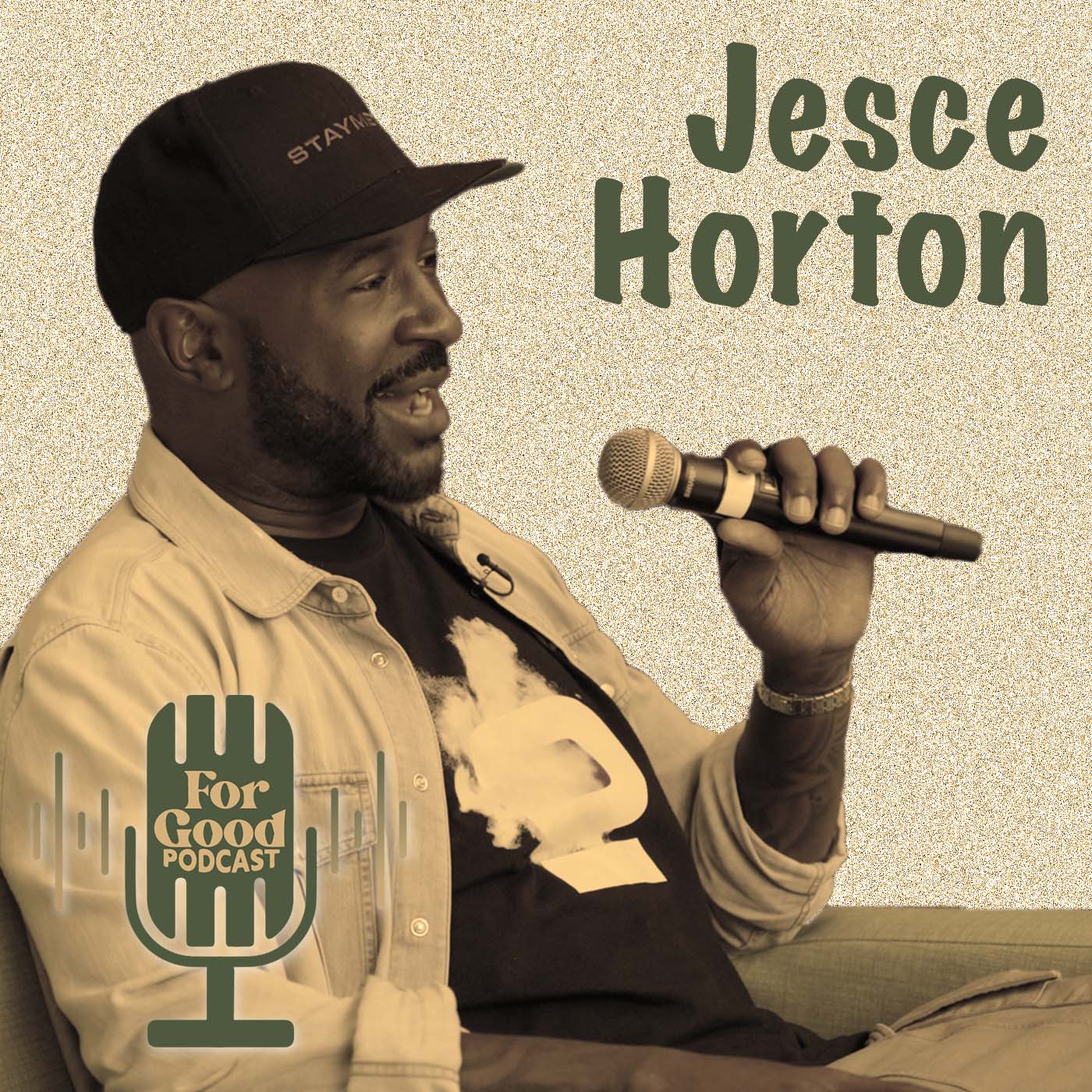
For Good
Jesce Horton: The Cannabis CEO Breaking Barriers w/ Carmelo Anthony
00:37:51
Jesce Horton’s story proves that setbacks can be the setup for something greater. He lost a scholarship and corporate job opportunities because of cannabis. But instead of being defeated, he accepted rejection as redirection and found a career...
Loading summary
Transcript72 lines
- [00:00]
Jesse Horton
This episode is brought to you by Progressive Insurance. Do you ever think about switching insurance companies to see if you could save some cash? Progressive makes it easy to see if you could save when you bundle your home and auto policies. Try it@progressive.com Progressive Casualty Insurance Company and affiliates. Potential savings will vary. Not available in all states. My mom would see me from across the room with my eyes red. I would get arrested. All those things. Every external experience with cannabis was bad, but every internal experience was good.
- [00:30]
JoJo Simmons
Internally, we knew what were feeling and what it was actually helping us for. And we were kind of almost diagnosing ourselves at a point. You face multiple cannabis charges in college that ultimately cost you your scholarship. Then you bounce back with a big job from General Electric only to fail the drug test. Can you take us through that moment and how it felt to have your career plans fall apart because of cannabis?
- [00:50]
Jesse Horton
Oh, my gosh. When I first started growing in my basement, you know what? I would come to conferences and it would be me and one other black.
- [00:57]
JoJo Simmons
Person to see Black Cannabis Week and all these entrepreneurs and everybody involved and people that actually showed up is actually a super big deal. What's up everybody? And welcome to the For Good podcast where we focus on the good and never the bad, where we're measured on what we do and not what we have. And today's guest truly embodies that. Jesse Horton is an industrial engineer turned cannabis cultivator, the co founder and CEO of Loud, an award winning cannabis brand out of Portland, Oregon. But he's more than just a successful entrepreneur. Jesse co founded two powerful nonprofits, the New Leaf Project and the Minority Cannabis Business Association. He has two recent collaborations with NBA legend Carmelo Anthony, Stay Mello and Grand National, a new cannabis agency aimed at creating substantial economic opportunities and ensuring sustainable growth for communities most affected by cannabis prohibition. Jesse is truly for good. Please help me welcome everybody. Jesse Horton. How you doing? Before I get into these questions, I always like to ask, how are you doing today, man?
- [02:06]
Jesse Horton
It's amazing, man. I'm doing really well. I remember when I first started growing in my basement, you know, and I would come to conferences and it would be me and one other black person, you know, at any cannabis conference. And now we got beautiful conferences like this, you know, great platforms like this podcast. I'm doing great.
- [02:25]
JoJo Simmons
Thank you. I appreciate that. I feel it was fitting to come here. And like you said, I feel the same way. Like when I first kind of got into the cannabis space on my end, and I said this before, I went to a lot of events that were based around the plant, and there weren't a lot of people that looked like me there. There were a few people, but there weren't a lot of people in power in the position to really do what they need to do. So to see Black Cannabis week and all these entrepreneurs and everybody involved and people that actually showed up is actually a super big deal. And I think we should all pat ourselves on the back for being here and supporting it and really understanding that every year this will get bigger and bigger and bigger. All right, you ready? Time to get into it.
- [03:06]
Jesse Horton
I'm ready.
- [03:07]
JoJo Simmons
All right, so you've shared that the first time you smoked weed in high school, you had that this is it moment. Like, the plant just clicked with your body. Can you tell us what that experience was like and how it shaped your relationship with cannabis from that moment on?
- [03:22]
Jesse Horton
Wow. I don't know where you saw that, but that's true.
- [03:24]
JoJo Simmons
Oh, my. People do the right research.
- [03:27]
Jesse Horton
That's true. I remember I probably spent, like, the whole year. Friday came out that year, right?
- [03:33]
JoJo Simmons
Movie Friday.
- [03:34]
Jesse Horton
Yeah, the Movie Friday.
- [03:35]
JoJo Simmons
How fitting.
- [03:35]
Jesse Horton
Yeah, exactly. I don't want to make people think you see a movie that's going to make you want to smoke. But, yeah, that's exactly what. Like, I saw the movie and I'm like, wow, that looks really cool. Like, I want to try that one day, you know? And after school, finally got ahold of some, and a few of my friends smoked, and I'm like, okay, yeah, that's. That's it. That's it.
- [03:55]
JoJo Simmons
So after that first experience, you faced some serious consequences from your parents, especially with your mom, who you've described as having a reefer madness mindset. But your dad, who. Who served seven years during the war on drugs and then upon reentry to society, worked his way up from a janitor to a vp. How did that dynamic, having one parent who was against it and another one who had been through the system but still consumed, shape your relationship with the plant and how you viewed its role in your life?
- [04:23]
Jesse Horton
Wow. Yeah. You know, and it's funny because my mom and my dad were just hitting me up, like, last week, you know, wanting some weed, you know? And I swear, like, my dad's like, hey, did you send it? You send it. Got it.
- [04:34]
JoJo Simmons
Like, oh, have times have changed, right?
- [04:36]
Jesse Horton
Yeah, right? And I'm like, yeah, I got you, man. Relax. I got you. Don't worry. But, you know, it was crazy because, you know, at that time, essentially, you're just thinking, no matter how good you Feel about weed. Like, my. My grades started improving. You know, I had ADHD as well. We talked about. As we were discussing before, and I had horrible math grades, right. And now I was smoking. I was able to just sit down and relax and figure out those problems. So you still. You feel good about it internally, but then every external experience is bad. You know what I mean? Like, you're. My mom would see me from across the room with my eyes red. You know, that's why I still use eye drops now, you know, because I'm always knowing about that. But she would say something. My dad would say that he smelled it. He'd go, drug test me. You know, you can't, of course, at school, you can't get caught with it. I would get arrested, all those things. Every external experience with cannabis was bad, but every internal experience was good, you know, And I think that was a. A really interesting kind of, like, conflict that you're risking a lot in order to have an experience with this plant. And you continue powering through that all the way up until legalization now, and you still kind of go outside and you're looking around, but you don't have as much to worry about as you used to. So, yeah, that was really interesting, kind of having to power through that and knowing internally that something you were doing was right, even though the other people thought it was wrong.
- [06:02]
JoJo Simmons
That's deep that you said that, because it's true. Everything external connected to the plant until maybe recently, and still a little bit was demonized. Right. But internally, we knew what we were feeling and what it was actually helping us for. And we were kind of almost diagnosing ourselves at a point where it's like you said you knew you had ADHD and it helped you sit down and focus. That was kind of. My same relationship with cannabis, too, is like I intentionally found out that it helps me sleep at night and it helps me slow all my, you know, all my ideas and all those words that are in my head because I'm constantly thinking right. So it really helped me focus. And like. Like, you sit down, focus on the task at hand. So it's dope that you said that, because I feel the same way. So even though you got in trouble for smoking, you said cannabis actually made you more productive in high school, like you just said, especially with your subjects like math. How did that shift happen for you, and did it change the way you approach school?
- [06:55]
Jesse Horton
It absolutely changed the way I approach school. Wow. I don't want to seem like the typical stoner up here. But I'm amongst my stoner friends, so I think y' all might understand, like, everything's a little better on weed, you know what I mean? And I felt like that was studying. You know, me and my boys, we sit around, we roll up, and we would sit down and study engineering, you know, math, physics, whatever it may be. You know, cannabis became a regular part of education for me, you know what I mean? And I'm actually teaching cannabis right now at a college, Medgar Evers in Brooklyn. So, you know, even though I was getting arrested for cannabis, still, as I'm studying, trying to do well at school, I lost my scholarship when I got arrested.
- [07:37]
JoJo Simmons
So we gonna get into that. So don't get too deep into that.
- [07:40]
Jesse Horton
We gonna get into that, ruin the rest of that. But, you know, again, like, we just found a way to incorporate cannabis regardless of what anyone else thought. We knew what was good for us and what was working. So, yeah, cannabis is a regular part of my life in that aspect as well.
- [07:59]
JoJo Simmons
It's interesting you brought up the scholarship thing, because it's actually part of my next question. So I was going to say, you face multiple cannabis charges in college that ultimately cost you your scholarship. Then you bounce back with a big job from General Electric only to fail the drug test. Can you take us through that moment and how it felt to have your career plans fall apart because of cannabis?
- [08:22]
Jesse Horton
Oh, my gosh. I don't even want to go into that moment. So I already knew I was smoking. I knew I had to take a urine test, right? So I stopped smoking for a month. You know, like, we all do whatever, no problem. And I got selected for the one job where you had to take a hair test, right? So I started Googling. You know, we started figuring out, how do you pass this? Shampoos. None of that shit works, right? It's not going to work. So all I needed was more time. So I told the lady, hey, I'm actually a male model and I shave my whole body, so I'm not gonna be able to take a hair test, you know? So I'm trying to get more and more time. Eventually it came back negative, or, excuse me, positive for cannabis. They rescinded the offer. And I probably spent the next two weeks of my life, like, skipping classes, just in my room, just depressed, you know, feeling like I had again, cannabis had cost me another opportunity, right? You know, cannabis had ruined, you know, the trajectory that I was going in life. So, yeah, that was a really tough circumstance. But ultimately, it led me to a better company. It led me to Europe, spent more time in Amsterdam. So it continued to lead me in the path that I was supposed to go. It was tough, dope.
- [09:42]
JoJo Simmons
That's a real story right there. And I could tell it still bothers you to this day that that that happened. So you mentioned that after these setbacks, you felt driven to prove people wrong about cannabis users. Why did you feel that pressure? And how did you go about challenging the stereotypes about people who consume cannabis?
- [09:59]
Jesse Horton
Damn, that's a great question, man. Why did I continue to push the envelope? Yeah, I think a part of me, I think no matter what, when somebody tells me, no, you want to push back against that, you know what I mean? And I think at that time in my life, I'm 20 something, just graduating college. I'm a lot more confident about what I know in life, you know, And I feel like I can push back a little better than just listening to older people telling me it's not. It's bad, right? I was able to understand what was good for me, and I think that's as it relates to religion, as it relates to cannabis, as it relates to a lot of aspects in life. I was starting to form my own opinions. And when I went to Germany, you know, I was working with the engineering company in Germany. Every. Every weekend, everybody's going all across the country, all across the world, all across Europe. And I would tell them, I'm actually, I'm gonna be studying, right? I would tell them, I'm studying, but every week I'm going to Amsterdam, you know what I mean? I'm getting on the train and I'm going to Amsterdam. And I'm experiencing a completely different world than what we experience, right? It's like every outward expression of cannabis was not negative, you know what I mean? You're at a coffee shop and you're chilling. You're experiencing all of Europe.
- [11:17]
JoJo Simmons
It's like an actual coffee shop, right? It's not like a demonized dispensary or like a street, you know what I mean? Like one of those smoke sessions. It's like a real coffee shop. You can order food and everything.
- [11:30]
Jesse Horton
Exactly. I mean, you order off the menu food, you order your weed, you know, you can smoke outside. You walking down this beautiful street, beautiful canal, and you see people consuming cannabis without worrying about people getting arrested. Right? And that. That, to me seemed like it was more like things should have been, you know what I mean? And I hadn't come to the west coast yet, and it kind of was like that on the West Coast. At that time, but I was still in the east and the South. So that was my first experience with cannabis not being demonized. And I just. I felt like life should be a little bit more like that. So as I got back to the U.S. that's when I really started pushing.
- [12:08]
JoJo Simmons
So you land in Portland, Oregon, where you ultimately ditched your engineering job and started growing cannabis in your basement. What led you to take the leap of faith? And how did your background in engineering shape your approach to cultivation?
- [12:22]
Jesse Horton
Yeah, that's great, man. So, yeah, I landed in Portland. You know, they said I can come back to the U.S. and that was, at the time, in the West Coast. It was like the medical cannabis revolution, really. You know, you could go into a dispensary, and even though it was much different than Amsterdam, it was all blacked out. You couldn't see inside. You had to have your car. It was real shady. But once you got in there, it was like Amsterdam in a sense, right? You got all this different weed. And something that was different than Amsterdam is you had clones, right? You had the plants in there, and you can grab those plants and you can take them home and you can grow those plants. And to me, like, that was. I couldn't believe it. You know what I mean? I spent so much time looking at High Times magazines and looking at the weed that was in those magazines, and then looking at the weed that we were smoking and being like, this is a lot different. You know what I mean? Like, what I'm seeing here is not what I'm smoking on a daily. And, like, what's the difference? You know? How do you get this from. From this. So I was like, let me try to grab that clone. And I took it home and I grabbed two clones. Jack Herrera, black cherry cheesecake. I put him in the same pot.
- [13:34]
JoJo Simmons
Some throwbacks, some classics.
- [13:35]
Jesse Horton
Exactly. I put them in the same pot. And I was just learning. I would go into grow shops and learning about what I needed to feed them. Just really immersing myself in it all the way. And. And I was getting so good at that. I was getting bad at my engineering job. You know, I was a salesperson. So instead of making sales calls, selling automation and robotics and things like that, I would. I would just be in my basement, you know, Like, I would pro shop. Exactly. And I'm like, I need to quit this shit because they're gonna fire me soon. You know what I mean? Like, I don't want to get fired. So, you know, it was kind of more a necessity that I had to get out of that, because I didn't love it. And I was looking for something that I love, bro. Like a quick, quick story. I want everybody to hear, to hear this. When I was in. I was in Europe, right? And I was at like the height of my career. I was the youngest person I was at headquarters. I was doing my thing, you know, I'm sitting in Munich. I got a, you know, a high rise. As high as it gets in Munich. But I'm looking at the rooftops of Munich every day, just at the peak of my career. And I was unhappy as hell, man, you know what I mean? I'm going in at. At 9:30. I'm leaving at 3:30. You know, they don't care because I'm, you know, at that level. But I was not putting in work. And I'm like, man, what if I was actually doing something that I cared about? You know what I mean? Like, what would be the difference in me being able to unlock who I am if I was doing something that I cared about versus something I don't? Because I'm successful as hell doing something that I don't give a shit about? I don't care anything about this, you know? So I prayed when I was in Munich. I read the Alchemist, and if you haven't read the Alchemist, please read that book. And I kind of prayed. I'm like. I'm asking God to help me to find something that I love. Because I know once I love what I'm doing, I'm not just going to be helping myself because I was helping myself and I'm great.
- [15:29]
JoJo Simmons
That's deep.
- [15:30]
Jesse Horton
You know what I mean?
- [15:30]
JoJo Simmons
Helping more than just yourself, you feel me?
- [15:32]
Jesse Horton
Right? It's more. It's like to get in my peak. That's the thing I'm most afraid of is like, it's not about dying, anything like that. It's like not reaching my. My peak, you know? I mean, not taking advantage of everything. I have this. This idea that when I. When I do reach the gates, whatever it is, like, God's gonna be there with a blunt, you know what I mean? And he gonna be like, right? He gonna be like, yo, so I gave you this, you know, I mean, I gave you these parrots. I dropped you in America at this time in the world, you know? I mean, I gave you all these gifts. So you know what I mean? What you do with that? You know what I mean? I'm gonna hit that blunt and I'm either gonna be making excuses, you know what I mean? Or I'll be like, yo, okay, let me hit that shit. I did this, I did this, I did that. You know what I mean? I'm really gonna be able to smoke versus me making excuses, you know what I mean? So I pray for that. I'm like, let me reach my peak. And I know it's not about what I can do for myself, it's about what I can do for other people. And that's when I hit my peak. So that's when I got dropped in Portland.
- [16:31]
JoJo Simmons
That's amazing. That's deep. And that's just a testament to saying that every day you can either wake up and make an excuse or wake up and make it happen. Those are the two different things in life. It's either you make an excuse or you make it happen. And just because you wake up and things ain't coming right away doesn't mean it won't happen. But it will never happen if you're making excuses and not making movement, you.
- [16:51]
Jesse Horton
Know what I mean?
- [16:53]
JoJo Simmons
So you co founded and let me know if I'm saying this right. Panacea, Panacea Valley Gardens with a strong focus on energy efficiency. How did your skills as an engineer influence the way you built that business? And why was sustainability such a big part of your vision?
- [17:10]
Jesse Horton
Yeah, that's great, man. So I was lucky to come from the engineering world to come into cannabis, especially industrial engineering, because that's really what it's all about, you know, like efficiency and movement, you know what I mean? Understanding a process, sticking to it, not cutting any corners, taking advantage of technology, you know what I mean? To help you to be better, you know? So I'm taking all that knowledge. I had a plc, a programmable logic controller, a smart relay.
- [17:37]
JoJo Simmons
Thank you for letting us know what PLC was, because I don't think I wouldn't have knew what it was.
- [17:40]
Jesse Horton
Yeah. So, yeah. So a programmable logic controller is just something that you control to tell a machine to do something. Right. If this is the condition, then do that. If that is the condition and this is the condition, then do this. So you're taking this piece of equipment, a small computer, and you're programming it to take in like, you know, sensors and temperature, humidity. Right. All those things were kind of happening. It's pretty common now, but it wasn't very common then. Back then, you just have one piece of equipment that sense your temperature and would change the temperature. One piece of equipment that sense humidity. Right. It was all separate, it wasn't talking. And that was a lot of what we were doing as Siemens at that time was taking that type of equipment in industry and like bringing it in to be smarter and be more efficient. So I had that piece of equipment in my, in my trunk at the time. I quit Siemens. Like I said, I turned in my resignation less than a year after I got there. I quit on 12 months because I turned in my resignation at like nine months, early as hell, like three months before I was going to quit because I knew I couldn't quit. I have to give them my signing bonus back. So I'm like, I gotta do this full year and I'm not gonna quit until this year is over. But here you go. But I had that piece of equipment and I just took it into my basement and started programming all that different equipment that I had. So that was my entry into growing, right? It's kind of being able to take advantage of new technology and make it make, you know, make it, make the facility and make it, make the space better. So I kind of took that out of cultivation, out of my basement, where even in my basement I had water cooled lights where you would, instead of putting in ac, you would cool the water and then you will run cool water through the lights and blow air over the water. And by blowing air that, that exchange of cool like is like 40% more efficient than just trying to cool the air. So that was something I was just implementing that was, it was actually available.
- [19:35]
JoJo Simmons
Take notes, everyone.
- [19:36]
Jesse Horton
Take notes.
- [19:36]
JoJo Simmons
Take notes.
- [19:37]
Jesse Horton
Giving out free games, water cooled lights. But you fuck with that, you fuck with that.
- [19:43]
JoJo Simmons
Yeah, yeah, there you go.
- [19:44]
Jesse Horton
The icebox air exchanger, they might still have anybody whose basement growing right now. Like you said, take note. That icebox heat exchanger, I think it might still be online. Anyways, so I was taking that type of technology and implementing it in the grow room and then, you know, that just, that's kind of how I made a name for myself at the early part of the industry. It's like, you know, doing things differently and of course being a black man in the grow room as well, but not just being another grower, but adding something. So that definitely helped me to make a name for myself in the industry as I got going dope.
- [20:16]
JoJo Simmons
So at what point did you realize your mission wasn't just about personal success, but about giving back and helping others, especially those affected by the war on drugs.
- [20:26]
Jesse Horton
Wow. Yeah, so I, I realized that, so I realized that at that prayer in Munich, right when I'm like, you know, help me to find something I'm doing. So I knew at that point, but I still hadn't found it, you know, I had no idea I was lost. So when I got to Portland and I started growing and I'm realizing, wow, this is so liberating for me. And then I'm also realizing, I think I had a meeting where I'm handing off, I'm buying one of those icebox heat exchangers from some guy in Washington and he was, you know, giving me these, you know, heat exchangers where I can run my water through them and blow air over the lights. And I'm like, yeah, so what do you do in the industry? And it's like guys like pulling up. It had to be like the equivalent of a Pinto. You always hear when we were going up, like a Pinto car. I don't know what he was driving, but that's just in my mind what he was probably wasn't a Pinto, but it was just some crazy beat up car. And I'm like, what do you do in the cannabis industry? He's like, oh yeah, I got three dispensaries. And I'm like, wow, like, and that Pinto. Yeah, you know what I mean? I wasn't even so much thinking about. To me, in my mind, I think that's what we think about right now, is that in order to be in the industry, you gotta have a million dollars, you know what I mean? Right. And in order to be in it, you gotta be somebody special, you gotta be somebody who knows the politicians, you gotta be somebody who does this, that and the third. So we're like, there's no way that we can. I can grow in my basement, but I can't actually get into the business, you know what I mean? There's no way I can do that. And I meet this guy and he's like, you know, no, I got three dispensaries. And I'm like, wow, at that point, point I'm like, wow. I actually can maybe, you know what I mean? Because there was no black people in the industry, right? So it wasn't like I could meet anybody like me that I knew. But I met this guy and in my mind he didn't seem to be very impressive, but he had three dispensaries, you know what I mean? So at that point I'm like, wow, it can be a business. And you know, at that point, probably around the same, within the same three months after that, I started with a few other people, Tiffany and, and Ace. And you know, my old partner Jennifer started Minority Cannabis Business Association. And you know, at that point, even before I had a dispensary. I didn't have really anything. We had applied for a dispensary, but we started that organization kind of in our basement together, putting together, like, the foundation of what it should be, what should it be about, who should be involved, you know, what are the difficulties that we're actually experiencing and, you know, what are the three pillars? You know, what are the actual things that we should be focused on? The three pillars of social justice, right, of getting us people out of prison. The other pillar of economic empowerment, of actually having businesses. And the third pillar was medical, like the ability to use cannabis as medicine to help with the things that affect our community the most. Cancer, mental health, diabetes. Like the top five that affect black people more than any others. I think that's what it is. Cancer, diabetes, heart conditions, mental health. And there's another. All of them can be helped and can be reversed in some cases by the use of cannabis. So our third pillar was the medical focus, essentially, and that was when we decided to start the company. So, I mean, essentially when I realized that this was a real business opportunity and it took me a few months to kind of dive into it and understand what was out there, we started mcba.
- [23:53]
JoJo Simmons
That's dope. It's really dope. So you basically started with wanting to help, you know what I mean? Like your. Your main thing was, yeah, I want to get into cannabis, but I also want to make sure that I reach back out to the people that need it and I'm speaking up for the people that need to be heard. That's dope.
- [24:07]
Jesse Horton
Because that's not. Because I'm not reaching my peak unless I do.
- [24:10]
JoJo Simmons
But, you know, unless you're doing everything in the space that you want to.
- [24:13]
Jesse Horton
Enter, everything, I gotta be doing something that is focus on that mission, right? Otherwise I'm not. I'm not doing what I can do.
- [24:21]
JoJo Simmons
That's the same way I felt when I entered cannabis. Like, I could have easily closed a deal with any company like yours, put my face on a bag, sell a bag, JoJo Simmons, OG or whatever, right? But I wasn't interested in doing that. I wasn't interested in the quick grab cash grab, right, like most artists and celebrities were when cannabis first was legalized in all these states, right? I was like, how do I come at it in a way where I'm not just looking like, I just want to smoke some weed and make some money, but I want to show up to these places that I can lend my voice, lend my platform and show people that There are people right now in jail for what we're enjoying every day on an everyday basis, Chilling. Right now, we're all at this convention together, and there are people still in jail fighting to be out because of this plan. So I thought it was important for me, especially being black, understanding that black people were most affected by the war on drugs, for me to always say, hey, like, it's more than just legalizing the weed. We need to make sure that these people come home. So that's why, you know, a lot of people know it. Some people don't know that I'm an ambassador on the Last Prisoner Project because I show up, you know, and I want to make sure that these people are being heard. You know what I mean?
- [25:31]
Jesse Horton
Free my weed, man. Where's Crystal at? Yeah, that's right. Free my weed, man.
- [25:37]
JoJo Simmons
So you've been heavily involved in restorative justice efforts from expunging cannabis offenses to co founding the Minority Cannabis Business association. Like we were just talking about. When did you decide that this kind of advocacy was just as important as running your business and what keeps you motivated to continue this work? Even though I felt like you gave it to us all right there, you can give us something quick.
- [25:56]
Jesse Horton
Yeah, I mean, cannabis. I mean, I think for me, at least, and I think for most people, it's got to be like this duality, you know what I mean? Like, you're not maximizing one without the other. You're not gonna make as much money as you can make unless you're helping the people. Cause the people are the cannabis consumers. We're a very tribal community. We're gatekeepers, you know what I mean? Like, you talking shit about us for the last 20, 30, 50, 100 years, but now all of a sudden, what we're doing is cool, you know what I mean? And now you want to be involved. So people take offense to that, I think, in a lot of ways. So I think companies, everyone has to understand that you're not gonna make as much money as you can make unless you're kind of for the people and for that cause and for that culture. And, you know, you're never really gonna be for that culture unless you're making money, unless you can do things that help to organize things like this. This isn't. This didn't come just by them doing a lot of hard work. This didn't come just by, you know, them having good connections. This came by having money. You know what I mean? You had to have the money to rent out the space. You had to have the money to invest in the marketing. You had to have the money to do all the things that we're doing. So you're never going to be able to do things like this unless you're out there taking advantage of this growth in the industry. So it's got to be a duality in this industry or you're leaving a lot on the table.
- [27:16]
JoJo Simmons
Real talking. And as you say that, I wanted to shout out Brandy and Sharon for really doing what they do and putting this together. Brandy is a super close friend and she really cares about the cannabis community and she's been doing events since I met her and really showing up and doing the work. So make sure when y' all see her, if y' all see her today to give us some love for putting this together. And a lot of this stuff is free, you know, so, like, just know that like he said, it's not free for her to do it, but it's free for you to show up. So definitely shout out to her. Now let's talk about my favorite NBA player. Well, one of them of all time, collaborating with Carmelo Anthony. Carmelo Anthony decided to collaborate with you to launch his brand Stay Mellow. He is a basketball legend, but he is also known as a true connoisseur who respects Portland's cannabis culture. Can you talk about how this collaboration came together and why was it important for you to. For Melo to launch with a black owned company like Loud?
- [28:14]
Jesse Horton
Yeah, man. Shout out to Melo, man. You know, one time, man, I think.
- [28:18]
JoJo Simmons
Shout out to Mello for sure.
- [28:19]
Jesse Horton
Shout out to Melo for sure, man. I think for a number of reasons, some that people here don't really know, man. I think everything that Melo has done, it was such an organic connection with us because he's been doing this work, you know what I mean? Like the. Through the wine company that he founded through, you know, through a black entrepreneur, through a lot of the other entrepreneurial ventures that he has have all been focused on helping, you know, helping the community. Right? He's building, you know, basketball courts out there. He's doing a lot of nonprofit work that maybe we don't see because, you know, we just see kind of the surface things. Or maybe we see his dope podcast and we haven't watched every episode or talked about or listened to all the cool things that he's saying. So I give a shout out to him because our connection, I think, is very organic in that we come from this different angles but with the same mission, you know what I mean? Melo is a cannabis consumer, right? He's just like me, just like us, right? He. He loves quality. He loves, you know, the diversity of cannabis, the potential of the cannabis industry to uplift our community, you know, so when he got in Portland, you know, we connected definitely through the love of cannabis and through the idea of different strains. But the way that we started to talk about forming a business together in grand national, or the way that he came to me to start Stay Mellow instead of going to many other companies that he could have gone to, just like you, was because of the focus on uplifting our community and creating opportunities for all of us in the cannabis industry. That is the essence of Stay Mellow Cannabis. That is the essence of grand national, the company that we started together. So, you know, I think that is essentially the basis of the foundation of the companies is how can we develop, how can we have dope products, dope cannabis, making sure that we're elevating the industry through quality, but how can we do that in a concerted effort? So how do we choose the people that we work with, the operators that are producing these products, do they align with our values, you know, as we're out there? For example? I'll give you a great example. Mello came back and launched Stay mellow cannabis on 420 of this year. And instead of going out, there were so many companies that wanted to have that brand. But he chose to start shine a spotlight on two companies, specifically two dispensaries, one black owned dispensary and one Native American owned dispensary.
- [30:54]
JoJo Simmons
Clap it up for that for sure.
- [30:56]
Jesse Horton
Clap it up for sure.
- [30:57]
JoJo Simmons
That's important for us to be holding each other down, not holding each other down, holding each other up in this cannabis community because sometimes we don't always get people to hold us up. So when we're in it together is when, you know, it really helps. So when I saw you guys did announce that and he put it out on his Instagram, and I was like, man, whatever they're doing aligns with everything that I believe in when it comes to cannabis quality, but also looking out for the people, you know what I mean? And I think those are the two most important things when you do enter cannabis is quality control. Knowing what you're putting out and you're putting out good stuff for people to really enjoy. But then you're also showing up to events like this and other events to really do the work. So I really love how you and Melo got together. And he did pick a black Owned company to work with because that's super important. So it's safe to say that Melo got some loud coming out from loud out some gas.
- [31:44]
Jesse Horton
Yeah, man. That's why he chose Oregon, you know what I mean? Oregon is the quality capital, I think, of the country, of the world. So he wanted us to prove our ground in Oregon and take it out to other places. New York, hopefully Philly soon.
- [31:57]
JoJo Simmons
Dope. Now, you spoke about Grand National a little bit. So collaborating with Carmelo Anthony on Grand national, how did you envision the agency supporting not just celebrities but also cannabis operators with limited resources? And what specific challenges does grand national aim to address for these operators?
- [32:15]
Jesse Horton
Yeah, we gotta, you know, we have a major problem in the cannabis industry. I think a problem from a couple different angles. A problem from black owned businesses and businesses from our community, but businesses from the culture, businesses from legacy market that, you know, risked it all, you know, in the states where they are, Oregon, California, Colorado, Washington, Nevada, wherever it is, and essentially have built dope brands in those spaces, but aren't in a position to go and do it all again, put in more millions into going into these other states. Right? You got New York, you got Jersey, you got Massachusetts, you got Maryland. All these states are growing, but they're not reflective of the true cannabis culture, the true cannabis industry. This diversity of people who own businesses, this diversity of people who are in the retail facilities, the diversity of the people who are producing the products, the diversity of the brands that you see in the spaces, you know what I mean? You're seeing the same MSO brand. I don't have a problem with MSOs, but I guess that's a term that I guess is almost like a cookie cutter term where you're seeing these. The companies that have the money to produce the brands don't always have the ability to produce the brands that connect with you. And I, you know, for sure, right. And the brands don't always have the resources to get into these other states to grow with the scale of the cannabis industry. So Grand National I think is kind of plugging right in there into the middle to solve those problems, to work with brands from the community, to work with brands from influencers and celebrities like Carmelo, like Ben from Ben and Jerry's, like other companies who want to get into the market but want to do so authentically and they want to do so in ways that are meaningful. So we're plugging with those brands and we're plugging them in with operators that need to have dope brands to Be able to differentiate in these markets that are growing so quickly. So that's kind of what grand national does. And that, you know, our first representation of that is stay mellow and loud and bringing that to some of these other dope states that. That. That need, I think, representation, like us.
- [34:34]
JoJo Simmons
No, I agree. I think that when we walk into the dispensaries, we want to see brands that we represent, brands that represent us, brands that we connect to, you know, keep it real with you. These legacy operators, like they call them, we'd like to see them in stores because those were the guys who were calling up before it was all legal. And now they want to get into the, you know, into the space. And we like to see them in stores because we want to keep supporting them, because we were supporting them when they weren't legally doing it right. So we want to see them legally do it so we can support them in those dispensaries as well. Like, I'd like to see the guys that I was going to for that good stuff in the dispensaries, you know, getting that stuff out there. And. Because those are the people that care about the quality of the weed, and they care about what they're giving us because they've always cared about it, because they are the culture, you know what I mean? And like you said, no problem with the MSOs, but they don't truly understand that this is a culture and this is a community of people that fight for each other and support each other. So I think what you're doing is very important. So as we get into the rear, the end of the podcast, I always like to ask this last question to all my guests. For anybody out there that's dealing with any mental health issues or dealing with mental health, can you tell us how you deal with your mental health and how do you approach every day? Do you meditate? Do you do anything for your mental health? I'm pretty sure there's plenty of people that would love to know, what does Jesse Horton do for his mental health?
- [35:52]
Jesse Horton
I could probably take some tips, to be honest. I need to watch the podcast to get all the tips from everybody else who says what they do. I always say the life of a cannabis cultivator is a tortured life, in a sense. You know, it's cannabis cultivators, and anybody out there who's a grower knows growers. They're tortured souls, in a sense. And that, you know, you're dealing with this plant that is a living being on its own, and it's growing each and every day and you might have a win and a harvest and this strain, right? But you know there's a harvest coming right after it that could easily be the worst that you ever had, no matter if the one you had just then was the best. So it's this level of like just being even keeled and not letting anything get you too high or anything too low. And I think you layer on top of that being a cannabis business owner on top of being a cultivator. And that in itself for any of the cannabis business owners knows that that is just difficult with all the changing regulations, with all the different things that are happening with the state of the market, it's tough. So I would say cannabis is without a doubt my number one go to with managing mental health cannabis. You know, those talks with God, talks with the universe. I haven't quite been able to find a great therapist, but eventually I will. And yeah, I'm still figuring out though, brother. I'm still figuring out.
- [37:23]
JoJo Simmons
I think we are we all still figuring out. None of us truly have the answer, but it's what we do for ourselves to really keep us going and motivated every day. So I appreciate you being transparent and saying, hey, this is what I do. But yeah, I'm looking for a therapist and I totally support therapist. I'm looking for one too. And I think a lot of people have like, they demonize therapists at a time too. They think that something's wrong with them, right, if they need a therapist. But sometimes you really just need somebody to talk to. You know what I mean? But I appreciate you, Jesse. And once again, everybody, this is the For Good podcast where we focus on the good and never the bad. We were measured on what we do and not what we have. Thank you again to Jesse Horton. Everybody, please clap up. Thank you all for signing out. Peace. Marketing is hard, but I'll tell you a little secret. It doesn't have to be. Let me point something out. You're listening to a podcast right now and it's great. You love the host, you seek it out and download it. You listen to it while driving, working out, cooking, even going to the bathroom. Podcasts are a pretty close companion. And this is a podcast ad. Did I get your attention? You can reach great listeners like yourself with podcast advertising from Libsyn Ads. Choose from hundreds of top podcasts offering host endorsements or run a pre produced ad like this one across thousands of shows. To reach your target audience in their favorite podcasts with Libsyn Ads, go to libsyn ads.com that's L I B S Y N ads.com today. Hi, I'm Chris Gethard, and I'm very excited to tell you about Beautiful Anonymous, a podcast where I talk to random people on the phone. I tweet out a phone number. Thousands of people try to call you talk to one of them. They stay anonymous. I can't hang up. That's all the rules. I never know what's going to happen. We get serious ones. I've talked with meth dealers on their way to prison. I've talked to people who survived mass shootings. Crazy, funny ones. I talked to a guy with a goose slap, somebody who dresses up as a pirate on the weekends. I never know what's going to happen. It's a great show. Subscribe today. Beautiful Anonymous.