← For Good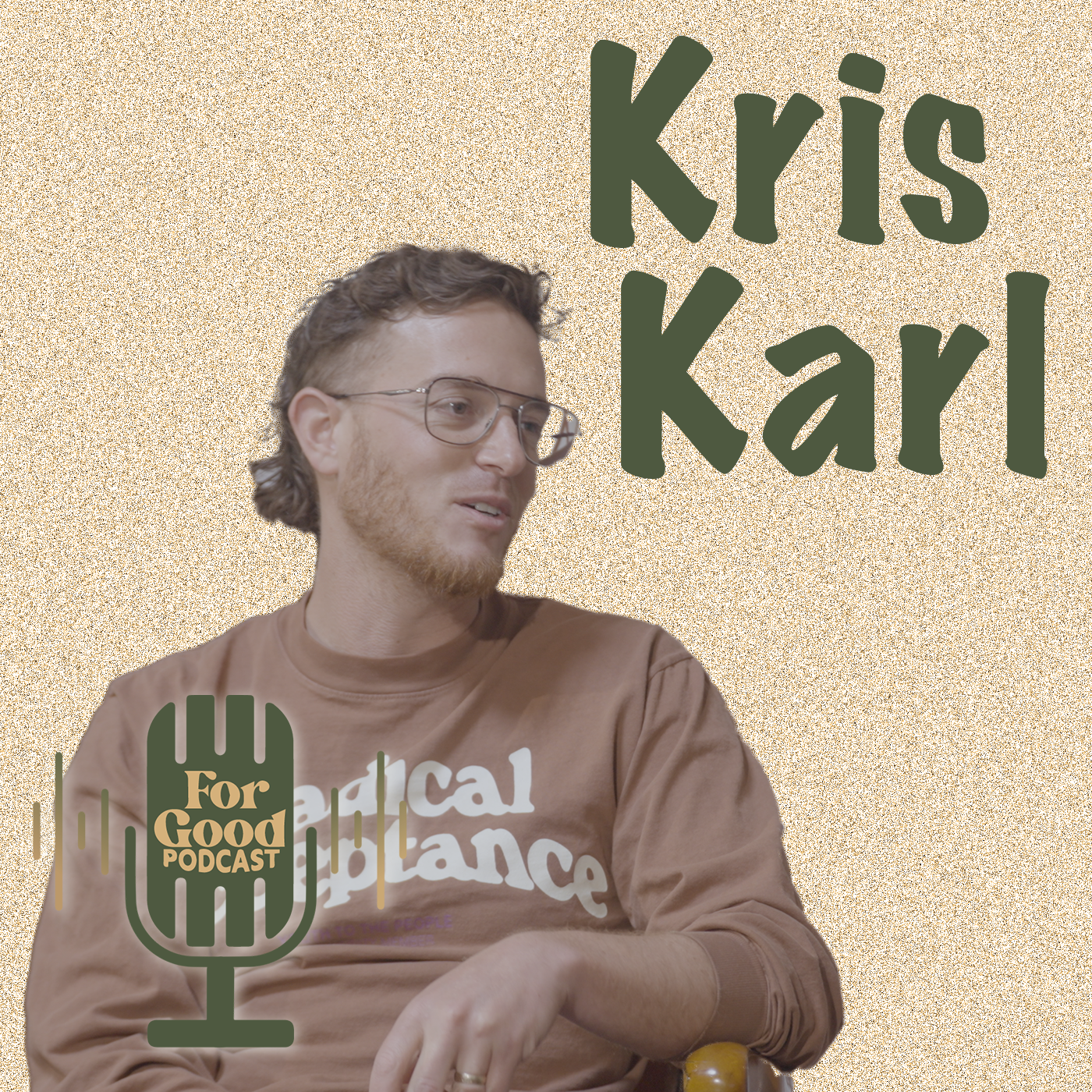
For Good
Why We Built a Creative Studio on a Farm: 3isFor Sustainability
00:32:42
Joseph "JoJo" Simmons and Kris Karl return for another episode of the For Good Podcast from the Yurrrrt, the farm headquarters of their creative studio 3isFor, for a deep dive into sustainability, impact, and building a regenerative business. Kris...
Loading summary
Transcript89 lines
- [00:00]
Zoe Saldana
Hi, Zoe Saldana. Welcome to T Mobile. Here's your new iPhone 16 Pro on us.
- [00:04]
Jojo Simmons
Thanks. And here's my old phone to trade in.
- [00:07]
Zoe Saldana
You don't need to trade in. When you switch to T Mobile, we'll give you a new iPhone 16 Pro. Plus we'll help you pay off your old phone. Up to 800 bucks and you still get to keep it.
- [00:15]
Jojo Simmons
There's always a trade in.
- [00:17]
Zoe Saldana
Not right now. @ T Mobile.
- [00:18]
Jojo Simmons
I feel like I have to give you something in return for karma.
- [00:20]
Zoe Saldana
That's okay.
- [00:21]
Jojo Simmons
I don't really have much in my purse. Oh, let's see. Hand sanitizer. It's lavender.
- [00:26]
Zoe Saldana
I'm good.
- [00:27]
Chris
Seriously.
- [00:28]
Jojo Simmons
Let me check this pocket. Oh, mints.
- [00:30]
Zoe Saldana
Really, I'm fine.
- [00:31]
Jojo Simmons
Oh, I have raisins. I'm a mom. Wait, wait one sec. I've got cupcakes in the car.
- [00:35]
Chris
It's our best iPhone offer ever. Switch to T Mobile. Get a new iPhone 16 Pro with Apple intelligence on us. No trade in needed. We'll even pay off your Phone up to 800 bucks with 24 monthly bill credits. New line, $100 plus a month on experience beyond finance agreement. $999.99 and qualifying. Ported for well qualified plus tax and $10 connection charge pay off via virtual prepaid card. Allow 15 days credits end in balance due if you pay off early or cancel.
- [01:00]
Jojo Simmons
When the Moore family ditched cable Internet and switched to Zigly fiber, they got so much more. Mr. Moore got more upload speed for next level gaming and live streaming to the masses with reliable service. Mrs. Moore is no longer her family's IT guru, leaving her more time to stream games into overtime.
- [01:15]
Brad
Let's go.
- [01:16]
Jojo Simmons
And young Mason Moore got more done quickly uploading HD product demos and video conferencing without freesight.
- [01:22]
Brad
The numbers look good, Brad. You're on mute.
- [01:24]
Jojo Simmons
Switch from cable Internet to Zibli fiber and get more of what you love for $65 less per month than cable@ziplyfiber.com.
- [01:31]
Dave
It'S not just saying, hey, we're giving back. It's not just saying, hey, we're a part of this. It's saying, hey, look. Look what we're doing. Look how we're giving back. Not in a bragging way, but in an inspirational way. A way to inspire others to do the same. Right? A way to show others this is possible.
- [01:45]
Brad
Storytelling allows brands to build customer loyalty through get, you know, creating content around the work that they're doing, which really is one of the greatest things you can ask for as A brand, right. It's customers who believe not just in your product, but actually believe in the heart and ethos of the company.
- [02:06]
Dave
This podcast is about literally mentally uplifting the people. It doesn't matter your color, it doesn't matter where you come from. It matters about how you feel inside. And this is what the For Good podcast is about. It's about feeling good for good. Ask yourself in the mirror when you get a chance, what is truly valuable to me, and I think you'll find who you truly are.
- [02:26]
Brad
Look at that long lens. I'd rather have sometimes even a tower that's half the height. But when I look out beyond, there's somebody 10ft from me instead of 10 miles away.
- [02:39]
Dave
Right, right. Whenever we showed up in a giving manner, it always came back tenfold in a getting manner. And like I said earlier, I don't think you should ever expect to get when you give. But it's always shown that when we've showed up in the right rooms, the right rooms invited us in to pay us for our services, it was like, oh, we like what these guys are aligned with. We like how these guys move with intention. Not only do I want to give you my money, I'm more than happy to give you whatever you ask for because I know that I'm working with a well intentioned company that's making sure my content or my service or whatever that I'm providing to my consumers getting put out there in a way that's intentional and authentic. What's good, everybody? It's your guy, Jojo Simmons. And this is the 4 Good podcast where we focus on the good, never the bad, where we're measured on what we do and not what we have. And yes, we are back in the year with my brother Chris. What's going on, brother?
- [03:38]
Brad
How you doing, my man?
- [03:39]
Dave
I'm good. I'm happy that this is our second official episode in the year. And you know, from the feedback from the last episode in New York, a lot of people enjoy the aesthetics of the yurt and they enjoyed our interview. So happy to be back here talking to you. I really want people to understand that, you know, they will see the yurt a lot more sprinkled throughout the seasons because this is a way for us to teach people or show people the behind the scenes of what we do at three is four and what we do for for good and all the things that we believe in. One of the most important things for us in one of our most important core values is community. Right. And helping people and I think that it's important for the consumer to know how intentioned, well intentioned we are when it comes to the community and well intentioned we are when it comes to sustainability in all parts of our business and in our lives. So I wanted to kind of talk about, you know, our membership with 1% for the planet and what is 1% for the planet as we kind of jump into letting the world know what we do, you know, over here.
- [04:44]
Brad
Yeah, 1% for the planet is a organization, non profit organization and really a movement that brings together like minded brands who are committing at least 1% of their profits to the environment. And 1% was kind of born out of the Patagonia universe. So obviously Patagonia is involved, but there are thousands of brands, really incredible stuff. Everything from clean canteen, get your water bottles and know that, you know, they're supporting the environment to OXO kitchen gadgets, all that kind of stuff. There are beverage brands, there are clothing brands, all really great stuff and something that allows you to make a positive choice when you go in the store. So yeah, for us it's a great ability for us to have a give back component embedded in. We take it beyond just our 1% for the planet and we want to give back to the people and oftentimes what we refer to as the plant as well around cannabis. So we have other giving, but with 1%, we're really excited that that's, you know, part of it as a regenerative farmer, you know, on the other side of life, that's where it's at.
- [06:13]
Dave
Yeah, I agree. And you know, can you talk to the people why it's important that we became members of 1%?
- [06:22]
Brad
Yeah, I think that storytelling around the impact of the dollars that we're giving back or the work that we're doing on that side that other brands are doing, the organization overall is doing, you.
- [06:39]
Dave
Know, everything we do, we want to make sure that it matters. And when you came to me and Dave, Dave and I, you said, you know, there's this 1% for the planet organization that I want you guys to check out. I really think we need to, you know, join it, make sure that we're doing our part. And I was able to go to the summit and it was an amazing time. I was able to meet a lot of those brands you spoke about, OXXO and Klean Kanteen and all these other great companies that are part of 1% and it really opened up a whole new world for me that I'd love to spread to the consumer. The Listener that there are brands out there that care where their money is going, but not just where their money is going, but where their intention is going. And I think that's why it was so important for us, in my opinion, to join it is that we're now part of this group of people that know that we're trying to do good. We're taking the proper steps to be amongst the right people and be in the right rooms where we can find the opportunities to do good.
- [07:45]
Brad
Yeah.
- [07:45]
Dave
A lot of the times people like, well, how do I do good? And how do I find an opportunity to do good? And 1%, I feel, put us in that room to say, oh, well, you guys are doing this in the liquor world, and you guys are doing this in the clothing world, and we're doing this in the storytelling world. How do we all come together and give back in a sense? Right. And how do we storytell for you guys and give back, in a sense? So that's why I thought it was so important for us for 1% is because there's so many different brands. But storytelling, I feel, ties into that world so well, because so many great things are happening in the world and not enough footage or not enough content or not enough receipts for people to see it. And not every company wants to give you receipts. Like, we're doing this out of goodness of our heart. But I think it's important to tell those stories that aren't being told in the community. You know what I mean?
- [08:34]
Brad
Absolutely. I think it's also an opportunity for brands to utilize dollars they'd be spending on marketing other CSR initiatives, all that to not only highlight the impact of the work they're doing in collaboration with these organizations, but also to raise more awareness and get more dollars to those organizations, more support to them. Because otherwise, you might not know about a particular environmental organization or a particular community organization. Now, this brand you're supporting is highlighting their work with them. All of a sudden, you may want to give your personal dollars, you may support what they got going on even more.
- [09:19]
Dave
So how would you say that an organization like that and sustainability ties into a corporate responsibility? Right. And storytelling, what we do. How does it all culminate into one thing?
- [09:32]
Brad
You know, I think there's a part of it that, for me, it's being human. Like, I feel like it's. It should just be that way, but where it's not and looking, I guess, looking beyond that, it's a place for brands to build customer loyalty, for brands to put their money where their Mouth is connect with the community. And rain on the roof is always, always throwing us off. Sorry, everybody.
- [10:07]
Dave
I love what you were saying, though. You were saying that it's a way for brands to connect with the community. And what else were you saying? Connect with the community.
- [10:14]
Brad
Yeah. And so basically, I think storytelling allows brands to build customer loyalty through creating content around the work that they're doing and the give back that they're doing, which really is one of the greatest things you can ask for as a brand is customers who believe not just in your product, not just in your great branding and all that stuff, but actually believe in the heart and ethos of the company. And I think that's more and more important now today too, where even the biggest brands, right, Patagonia, Oxo, right. They are needing to show their face and have a human piece interacting with the customer. Because people want to know who's behind this. Right. What is that story? And so whether you're talking about founders or leadership or whatever, these brands are getting out there and it's a great way to build community.
- [11:20]
Dave
Yeah. How would you say sustainability and storytelling tie in together, like for brands.
- [11:26]
Brad
So for brands, I think it's in a desire to give back or, you know, an initiative to do. So. You, you can only do that if your customer sees value in that.
- [11:49]
Dave
Yes.
- [11:49]
Brad
Right. Like, yes, you can just say, we're going to take X percent of our revenue and we're going to give that back. And some brands have the margin to do that. Right. But to do that or grow that, to continue to do that long term, to make sure you can do that when the market dips, when this changes, when whatever, it has to be baked into the model, it has to be a part of the value proposition you're providing your customer. So it's, hey, by purchasing our products, whether it's sneakers or microphones, right, Food even, you know, you are also creating that impact and allowing that, that builds that loyalty.
- [12:29]
Dave
So no, what you said was perfectly, it's customer loyalty building, right? It's, it's not just saying, hey, we're giving back. It's not just saying, hey, we're a part of this. It's saying, hey, look, look what we're doing. Look how we're giving back. Not in a bragging way, but in an inspirational way. A way to inspire others to do the same, right? A way to show others this is possible. A way to show others we're making a shit ton of money, but we're giving back a shit ton of money as well, and everybody's still happy over here, Right? That's sustainability to me. That's making sure that everybody is good in the long run. Right. Making sure that not just you're prospering and growing, but, but your consumer is prospering and growing with you. As your company grows, they grow as they continue to purchase whatever that you're selling to them.
- [13:10]
Brad
Absolutely. And you're uplifting the communities that you're selling products to or services to or whatever. And then those communities are able to support you even more and expand from there. I think that really is key to all of it. Community is the key. And if you are part of community, right. And care about your community, these things just become part of how you.
- [13:39]
Dave
It becomes easy, it becomes a part of your life. You know, it becomes like a no brainer for you and your company and your employees to be like, well, of course. Why, why wouldn't we do this? Right, Right.
- [13:48]
Brad
And, and I think you said it best too. It's not about, hey, look at me, we're doing good. Right. It's about we're doing good. And particularly in today's world where while it's not entirely unique, it's not, it's. It's a minority of folks that are really taking it that way on the corporate level.
- [14:10]
Dave
Yep.
- [14:11]
Brad
And I think it sets an example and a tone for the rest of the world too. Like, hey, you can be successful and you can also uplift your community.
- [14:19]
Dave
Right.
- [14:19]
Brad
You can be successful and you can also give back. And you know, yeah, you may not be able to have the highest pile of dirt to sit on top of, but you can really, really have a great company with staying power and still make the world a better place.
- [14:40]
Dave
I love how you said you could still be successful but still give back. Because you segued perfectly into my Give Back segment where I wanted to talk about how, how hard it is to balance making money, but also giving back. You want to speak on that a little bit?
- [14:59]
Brad
Yeah, you know, just like I was saying, you know, a couple minutes ago, community feeds itself.
- [15:10]
Dave
Right.
- [15:11]
Brad
And community is key. I think when you are doing business in this way and you're giving back and you're supporting people's values, what people, you know, their communities, what they really care about. We wind up in a position where those folks then are loyal. Right. They want to be a part of what we're doing, they want to join and you know, for a good podcast, the kind of four good products we've talked about coming out with down the line are all things where it's an opportunity to kind of join a community.
- [15:49]
Dave
Yep.
- [15:50]
Brad
Right?
- [15:50]
Dave
Yep.
- [15:50]
Brad
Join a community of folks that want their choices to be for good. Yeah.
- [15:56]
Dave
Yeah.
- [15:56]
Brad
You wake up in the morning, what are you for? I'm for good, regardless of my mood otherwise, regardless of any of that. And that's going to make you take those more intentional choices. And that's what we invite all of you here to do with us.
- [16:10]
Dave
Right.
- [16:10]
Brad
Is like, be a part of this.
- [16:12]
Dave
Yeah. This is. This is deeper than just the name For Good. When we came up with the name, it was because we literally were talking about things to do for good. Right. So it wasn't just like a play on words of oh. We literally knew that this is what we wanted to do and that we wanted to give back in a good way and that we wanted it to be for good and for good in a kind of a way, like, forever. You know what I mean? And I love what you said is we are inviting of you to be a part of this community, all of you, to feel good about who you're supporting, what you're supporting, what you're doing, how you're speaking, how you're thinking. This podcast is about literally mentally uplifting the people. It doesn't matter your color, it doesn't matter where you come from. It matters about how you feel inside. And this is what the For Good podcast is about. It's about feeling good for good. You know what I mean? So I just want all the listeners to know that when I'm speaking to any high celebrity or I'm speaking to my brother or I'm speaking to anybody else, I'm speaking to people that are intentionally here because they are part of a community where they want to keep exuding good, they want to keep putting out good, and they want it to be contagious to the world. And I want it to always feel contagious through the screen and through the speakers, for people that after they hear these podcast interviews with us, that they walk away with feeling better and feeling like they want to do better for themselves and the universe and their neighbor and the people around them. And it just makes them feel like they want to do good. And that's why I say this is the podcast where it doesn't matter how much money you have in your pocket. It only matters about what you're doing for yourself and others. That's what this podcast is about. I don't care how much money you made this year. We all need to make money. But what did you do that Was good this year. What did you do that you did without an intention of getting anything back, but solely off giving, not on, I'm gonna get something back for giving, but I'm giving just to give because it makes my soul feel good, you know, So I just had to give that little spiel as you spoke because that's just, you know, I love that you said we're inviting people into this community cause that's what this community is truly about.
- [18:11]
Brad
Absolutely, absolutely. And I think the cool thing about that is it often may be cool and tragic at the same time, right? But like often people think about those in one lane, right? Like I can put money in the collection plate at church every Sunday, I can make the donations to charities I believe in, or I can choose a career path that is, you know, community minded or whatever. Often they feel like that all has to come with trade offs or that it's, it's just one part of their life. In these modern times, every choice we make, what entertainment we're watching, what influencers and social media following, what music, what we're wearing, what we're wearing, what we're eating, you know, the tools that we're using, it all gives us an opportunity to make a choice that does bring back community that can be for good. And so I think for us it's cool. Like we want to highlight those 1% brands, we want to highlight others in the community that are doing things for good. And sometimes for good means they're just supporting the mental health of their employees, of their team members, whatever. Other times they are directly giving back to a cause, whatever that might be. And so I think that's just a cool way. I don't know if I got lost on you.
- [19:38]
Dave
Nailed it. And what you said that was important to me was you have a chance to make a choice. Everybody has a chance to make a choice. Are you happy with your choices? Every day you gotta ask yourself that. If you're happy with your choices, then you're happy with yourself and that's cool with me. But if you're happy with your choices of doing good, then that's super cool with me. You know what I mean? But no, you made it. You made a very bold statement saying you just have to make a choice. You know, we speak a lot about charity and us giving back and how that's important to 3 is for as a company and a brand, for companies out there that are like, well, how do you balance making money but also giving back in a capacity that matters, like how do we Balance that to the people that are listening.
- [20:22]
Brad
You know, it's not easy, right? And I think it's easier for the consumer. Like we talked about earlier, you know, I think for companies that want to do it, the biggest piece is finding clients and partners who share your values and are aligned on that. Right? You have a client that appreciates or comes to you because, hey, you know, it means something to us that when we're spending our money, there's some positive impact. I think along with that, the storytelling behind that is an incredible opportunity for brands to build loyalty with customers that care. So we talk about the consumer making those choices. How do we make it make sense? We're able to provide a value proposition to our clients as three is four in a creative studio capacity. But as well, if it's a podcast or something, provide our listeners, our customers, our audience with some value. You come listen to the podcast, you're going to learn something and you're going to feel good about it. You work with us, we're going to provide an opportunity for you to tell the story of. We're selecting partners who give back to the planet. We're selecting partners who do this and where those brands also are directly involved in corporate social responsibility or any kind of give back, we can help them tell that story in a really authentic way that benefits those they're trying to help will also invite their customers into that experience.
- [22:14]
Dave
I gotta agree, I would have to say what our experience with three is, four is. And I'm not gonna say this is gonna happen for everybody. But what we found out was whenever we showed up in a giving manner, it always came back tenfold in a getting manner. And like I said earlier, I don't think you should ever expect to get when you give. But it's always shown that when we've showed up in the right rooms, the right rooms invited us in to pay us for our services, it was like, oh, we like what these guys are aligned with. We like how these guys move with intention. Not only do I want to give you my money, I'm more than happy to give you whatever you ask for. Because I know that I'm working with a well intentioned company that's making sure my content or my service or whatever that I'm providing to my consumers getting put out there in a way that's intentional and authentic and not just a way of like, okay, you know, you know, we're gonna send you an invoice, we're get the job done. It's more like we want to get in the hood of your brand and be like, where's your heart and soul? Let us find your heart and soul. Bring that in front of your consumer to let them know this is who you are. So I've always found out in ways that when we've showed up in a charitable way, it's always came back in a business way in some type of capacity for us. So I thought that that was really cool about 3 is for is. Obviously we always think about revenue, we always think about profit. But when we started thinking about more of how can we show up and be a difference maker is when our whole brand and our whole company changed and it was different for us, you know, So I thought that was very important for people to know as well as sometimes when you just move with a well intentioned plan, it all works out, you know, it all works out. What would you like to see change in business when it comes to sustainability? You know what I mean? Like me personally, I'd just like to see more people more well intentioned with their dollars and more well intentioned with whatever they're selling.
- [24:03]
Brad
Absolutely. I think there's a lot, right. I think there's a lot of different things I'd like to see change. I think the biggest one for me is seeing companies be more mindful of the you can compete, you can provide a better product than the brand next to you. Right. That doesn't mean you have to exploit, doesn't mean you have to cut corners, doesn't mean any of that. And so I think if every company were to make just one decision, right. That was a little bit more minded in the impact it has on their consumer, not just in the consumption or use of their product or service. Right? Okay. Yeah. This is a slightly more sustainable bar of soap that you can get. That's great and it's better for you and the environment. Wonderful. But the next step becomes okay, and is it also benefiting the overall lifestyle or overall conditions of my consumers where they are. Right. And am I meeting my consumer in a place where it aligns with their values? So I think one of the things that we've really enjoyed doing for clients and that I believe in from a storytelling perspective is not just telling an authentic story, but when you're doing it for brands, connecting an authentic desire of that brand to connect with their community, but not just in corporate language, but in the language of that audience. Right. Of that consumer. Let's get there and actually be authentic to the community we're speaking to, to the things that mean the Most to that community instead of what is just gonna sell us the most products. And I think if companies start to frame things like that, it could be an avalanche of good.
- [26:13]
Dave
It helps them more in the long term. Right. Instead of the short term. They're always thinking about their bottom line. But I think long term is what all companies want to think about as the future. Right. So speaking of long term, though, why do you think that's so important in business and in life to have a long term plan? You know what I mean?
- [26:32]
Brad
You know, I think if you don't have a long term plan, you can be flying blind and what's good today might not be good tomorrow. Right. We've seen that throughout history. We see that now in some cases. Yeah. You know, driving really fast might get me there sooner, which is great right now.
- [27:00]
Dave
Right.
- [27:00]
Brad
But it's not great when I get back in that car and there's no gasoline left or when, you know, I had 10 times the environmental impact, as if I drove more efficiently to get.
- [27:10]
Dave
Yep.
- [27:11]
Brad
Kind of a silly little example, but.
- [27:13]
Dave
Yeah, but it ties into life too, right? Not just business. Like, how would you say that also ties into life and not in the key to success for life and business. So I think you explained it well in business. But how does long term, just long term thinking, how is that a key to success in life?
- [27:29]
Brad
You know, I think allows us to back the lens out on immediate comfort or, you know, immediate wants.
- [27:43]
Dave
Yeah.
- [27:44]
Brad
And look at, you know, what do we really want? And I think more than anything, when you do that, it forces you to think about what you value the most. Well, gee, I'd really like those new sneakers. But I actually, it means way more to me to have that extra money to go take my wife and kids out on a really great experience where we get to bond and connect.
- [28:12]
Dave
Oh, I love that.
- [28:15]
Brad
An extra four hours a week because I'm not chasing the extra dollars. That's a little different. But that's sustainability too. Right? That's thinking about life, sustainability, looking for those long term things. And so I think it's that when you're thinking long term, you have to think about how do I maximize the likelihood of the things I value most being the biggest part of my life or, you know, benefiting the world the most. And I think it also then as a parent. Right. I want to make sure that the opportunities or the resources, be it a tree or a community center, are there for my kids as they were for me, or even more so. Right. That those things continue. You and so, yeah.
- [29:11]
Dave
Wow. I think I'm gonna, I'm going to overview this episode with what you. What you just said is important to me is what do you truly value? What is valuable to you? What is valuable to you? And I asked the listener, what is valuable to you is, is it a new pair of sneakers? Is it a new watch, is it a new car? Or is it time with your family? Or is it making sure at the end of the day you're giving back in a way that makes you feel good? Right. Ask yourself in the mirror when you get a chance, what is truly valuable to me? And I think you'll find who you truly are, you know?
- [29:48]
Brad
Absolutely. Absolutely. And I think it then makes some of those other decisions easier. It makes that decision of, okay, I want the sneakers, but I want to know that a hundred years from now, my great grandchildren are able to sit in a beautiful park with trees and all of the birds that I hear chirping outside. Right now, I'm not gonna buy the sneakers just because they look cool. I'm gonna go buy the sneakers that satisfy both those things, right? That maybe, okay, I got a cool pair of sneakers, but they're made out of algae foam and therefore they're, you know, better for the environment or they're manufactured domestically, so they're not being shipped across the world having that impact. I think it gives us an opportunity to find that. And in some cases you're just going to say, I don't want the sneakers, Right? But I think, I think it does. It brings, it brings those values together, allows you to make those choices. And, you know, for me, tying that back then to business. You're right. We're kind of getting towards the end of this one wrapping. When we look at the business side of that, we want to be a business for profit. Business by nature is for profit, right? And even nonprofit entities, they're generating funds in order to do good. So in however, they're raising those funds. Same as a for profit business. Making money like that pursuit fuels the other thing.
- [31:26]
Dave
Yes.
- [31:28]
Brad
And that's all good and well, but I think particularly in the for profit case, you could stack up all of the, all of the shells in the world and have your big old pile of shells, right? But if you're sitting on top of a pile and everything around you no longer exists, or everything around you, you know, the environment's dying, the communities aren't there, what is it all one or two of you on these towers. Right, but that's not, that's not what we Want.
- [31:59]
Dave
Right.
- [32:00]
Brad
That's. That's not where it should be. And so I think looking at it that way, it's like, look at that long lens. I'd rather have sometimes even a tower that's half the height. But when I look out beyond, there's somebody 10ft from me instead of 10 miles away. Right, right. I don't know if got too metaphorical.
- [32:20]
Dave
No, you got. You got. You perfectly, perfectly summed up. What this episode was about was about helping others. Not just helping yourself, but make sure you're helping others and being aware of. Of what's out there that you can do and being aware of your choices. Right. I think this episode is being aware of what's valuable to you, but being aware of what your choices are and that your choices can be easy to be made. It's all about what you deem to be valuable. Right. Obviously, we gotta head out of the yurt. This was an amazing episode, man. I feel like you're warming up to me, man. Episode three was good, but this one felt like you really starting.
- [32:59]
Brad
And it might be the new chairs.
- [33:00]
Dave
Yeah, it could be the new chairs. Definitely want to remind everybody that the next episode will be my family. My uncle, I call him my uncle. Some people call him the white Russell Simmons. Steve LaBelle, he started his hip hop career kind of with my pops. He's Bone Thugs in Harmony, Scott Storage. Like, he's. He's everywhere. He's done made moves with everybody. Obviously one of the people that helped find Nipsey Hussle and get him going. So rest in peace. And Nipsey Hustle as well. Steve Lobel will be my next episode. Make sure you check it out. He talks about, you know, everything. He talks about a couple regrets he has. He talks about, you know, sacrifices that he's made to be in the position that he's in. So I don't think anybody's going to want to miss that episode. It's a really great episode. Shout out to my uncle Steve for sitting down with me. Once again, shout out to my brother Chris for inviting us inside the what? The yurt. So we can sit down and talk. All things business and sustainability. Thank you once again, Chris. This is the 4 Good podcast where we focus on the good, never the bad. Where we're measured on what we do, not what we have. We are checking out from the yurt. Peace.
- [34:12]
Libsyn Ads
Marketing is hard, but I'll tell you a little secret. It doesn't have to be. Let me point something out. You're listening to a podcast, right? Now and it's great. You love the host. You seek it out and download it. You listen to it while driving, working out, cooking, even going to the bathroom. Podcasts are a pretty close companion. And this is a podcast ad. Did I get your attention? You can reach great listeners like yourself with podcast advertising or from Libsyn Ads. Choose from hundreds of top podcasts offering host endorsements or run a pre produced ad like this one across thousands of shows. To reach your target audience and their favorite podcasts with Libsyn Ads, go to libsynads. Com. That's L, I B S Y N Ads. Com. Today.