← Founder's Story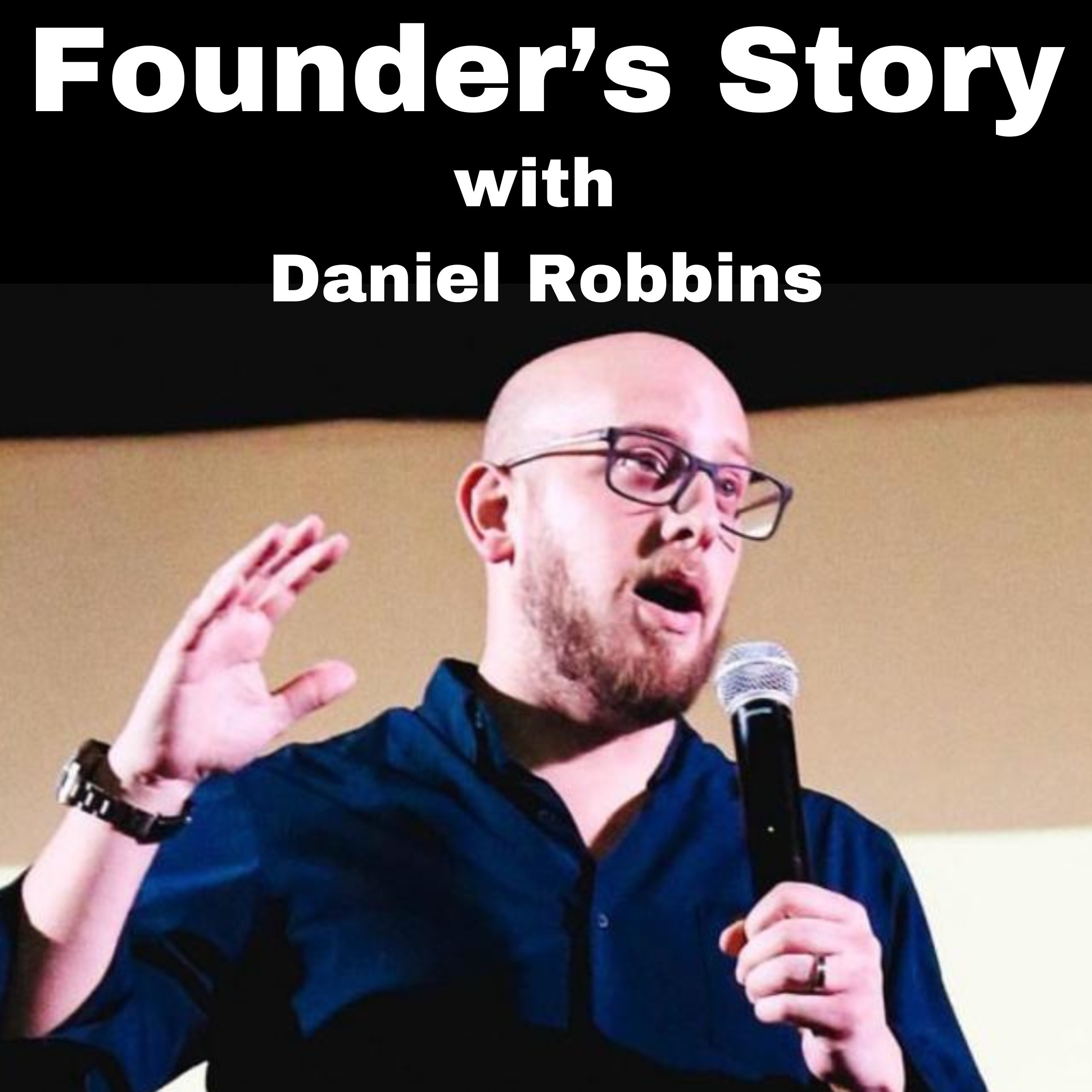
Founder's Story
Dr. Ethan Kross: The Hidden Cost of Your Emotions - Why Controlling Them Might Be Hurting You | S2 Ep. 176
00:27:45
Loading summary
Transcript38 lines
- [00:00]
Verizon Advertiser
Your old or broken phone can let you down. But at Verizon, trade in any old phone from our top Brands and get iPhone 16 Pro with Apple Intelligence with a new line on MyPlan and iPad and Apple Watch Series 10. After all, you don't want your old phone to die on you when you're lost.
- [00:16]
Dr. Ethan Cross
Perfect.
- [00:16]
Verizon Advertiser
Or for your broken phone to glitch at the worst possible time.
- [00:20]
Dr. Ethan Cross
Hey, can I get your number?
- [00:21]
Verizon Advertiser
Oh, trade in your old phone for a brand new iPhone 16 Pro, iPad and Apple Watch. Visit verizon.com today. Additional terms apply Service plan required for Apple Watch and iPad Foreign.
- [00:36]
Daniel
Welcome back to Founder Story. Today we have Dr. Ethan Cross and Dr. Ethan Cross, I had the pleasure to listen to your three hour conversation that you had last year with an another incredible person and a bunch of other the podcasts and shows that you've been on is something that I really love is you are one of the world's leading experts on emotion regulation and you have a new book that is coming out called Shift, which will dive in. You're in San Diego for a book launch. I mean, there's so many things that are going on, but what you do is something that I personally struggle with. And that's why I was really excited to have you on the show today. But before we we go into those things, I think it'd be good for the audience to understand exactly why did you write this book and why did you feel that you needed to write it now?
- [01:31]
Dr. Ethan Cross
Well, thanks for having me on, Daniel. And let me just clarify from the outset when you said you struggle with the topic of Shift and so the subtitle is managing your emotions so they don't manage you. I want to just have you rest assured that you are not the only human being that has this affliction. To the contrary, all of us struggle to manage our emotions at times rather than being managed by them. And this has been true as I talk about in the book of our species, likely since we've been roaming, we've first been roaming the planet in our present form. So this is a universal and that's the big reason why I chose to write this book. So the longer Backstory is about 4 years ago I published my first book. It was called Chatter Voice in Our Head, why it matters and how to harness it. And it was about what you do when you get stuck in a negative thought loop, like you're worrying or ruminating about something. I'm guessing that is not something that ever afflicts you, Danny. And it was a Really, I had a really powerful experience going on book tour for that book and sharing the science behind how to manage that kind of experience. So I'm, I'm a scientist and I care deeply about not only generating solutions to help people manage these internal problems that we all face at times, but also sharing that knowledge in very easy to digest ways so we can benefit from it. So I'm on book tour and I'm talking about chatter to folks. And after I finish my presentations, people come up to me and they say, thank you, this is awesome. But what about A, B, C, D, E, F and G about my emotional life? And it felt, and I tell this story in the book, it felt like I had just given a presentation on how to combat diabetes. But people had questions about heart disease, inflammation, osteoporosis and all these other things. And so what it really motivated me to do was work on this book that could, could also be titled welcome to your emotional life. You know, why do we feel and how to feel better. Like my, my goal here was to explain to folks what emotions are, why do we have them and when they act up in all sorts of different ways. And we're really good at getting work up by our emotions in all sorts of ways. What does science have to say about the tools you can use to rein those emotions in, to shift them? And by shift I mean turn the intensity of our emotions up or down if we want, lengthen or shorten the amount of time we spend experiencing a particular emotion if we want, even switching from one emotion to another one altogether. And, and that's the story that brings me here with you today.
- [04:33]
Daniel
I would like to understand how to shift. I know you had talked about people listen to music and the power of music. I know there's different techniques and ways, but I can't help it. And my wife gets on me all the time about this. When I have this negative emotion, this thought emotion, I don't know if they're two and the same or one of the same. I just can't stop thinking about it. And I like, well, will just continue for, for minutes on end talking about it and then it drains her energy. So I, I just don't know how do I shift from there? How do I, what do I do in those moments?
- [05:08]
Dr. Ethan Cross
There we go. All right, now, now we're getting into it for real. So, okay, so lots of things to unpack there. So number one, there are no one size fits all solutions when it comes to shifting. And I cannot tell you how often I encounter people who ask questions that suggest that that's what they've heard before. I am often asked, hey, what's the one thing you can do to shift your emotions? I cannot give you one thing. And no scientist can tell every person to do one thing that's going to work for them across the board. We know from lots of research that shifting, or what you might think of as being mentally fit, like really being able to, to skillfully manage your emotions, it actually resembles physical fitness quite a bit. Now I'm looking at you on the screen, you look like a pretty fit guy. What do you do to exercise? Let me ask. I tend to do high intensity interval training. And, you know, I, I also like to, to hike in the arboretum nearby. My wife does pilates and, and spins. All three of us do slightly different things. And I raise this, this observation because if you look at my network, at the folks in my network who like to stay fit and exercise, they all have the same goal, to be physically fit. But they're getting there through different routes that work uniquely well for them. The same is true for shifting and emotional fitness. Different tools and different combinations of tools work for different people. And the real challenge we face a learn about what the tools are. Like you go to the gym. Step one, you need to figure out how to do the damn exercises right? So what are the machines? How do they work? It's not hard to figure it out. And then you start trying them out in different combinations. That is the shifting challenge that awaits us all. Now, to get a little bit more concrete, though, with respect to your question, you get activated. What can you do? So let me just walk you through a few things you might consider. Some of the lowest hanging fruit for shifting our emotions deals with harnessing our senses. Our senses, I think, are often overlooked when it comes to shifting. We take them for granted. So I'll give you an example of music scientists. Ask this question to participants. Almost 100% say they listen to music because they like the way it makes them feel. Right? It is a fundamentally emotional activity. It is an emotion regulator. It is a shifter. Yet we've done studies where we asked people in different experiments, hey, think back to the last time you were angry, anxious, or sad. What'd you do to manage your feelings? Only 10 to 30% of participants report using music as a tool to push their emotions around. Despite it being omnipresent, it is all over the place, and it gives us a rapid kick in the butt in the desired direction. Technical term for shifting our emotions. So that's just one example. Music can be strategically harnessed. Until I knew about this work, I didn't use music in my own life to shift me. But now, now, because I know how this works, if I find myself getting kind of angry or anxious at something, I've got a playlist that I activate that pushes my emotion. Sometimes it brings me down, it calms me down, sometimes it amplifies me and makes me feel good. So I'm strategically using that sense. One other example of a sense is scent. So I was recently overseas and I had the experience of having to walk through a duty free store. Sure, you've had this experience, right? I no longer call it a duty free store. I now call it an emotion regulation emporium. You know why? Because you're surrounded by, by perfumes and colognes. Why do we spray ourselves with these substances? To affect the way we feel about ourselves and to influence the way other people feel about us. If you ever bump by a smelly person on the street, you know, it elicits an emotional reaction. So senses probably the easiest thing to do to quickly shift your emotions. Now that's not going to solve your greatest problems, but it has the potential of shifting you into a different state of mind to then allow you to engage other shifters to do so. Now, you asked one question about thinking and feeling. I think, right. Did you ask me that question about the difference? I want to just very quickly address that I'm going to throw back to you. We often hear that there's a difference between thinking and feeling. Like it's almost like there's a seesaw in your brain. And when you're feeling, the thinking part of you goes down. And when you are thinking, you know, it's, it's the opposite. And our goal is to turn thinking up and feeling down. Right? Not true. I'm gonna repeat, not true. Thinking and feeling are inherently intertwined. And knowing that gives you an edge for how to harness your ability to think to change the way you feel. So Daniel, if I asked, Let me see. Have you ever thought about something that could happen in the future? You ever thought about something that happened to you in the past that was like a major victory, that every time you think about it, it just like fills you with pride and satisfaction? Thinking just induced an emotional response. You just thought your way into a positive and a negative emotional response. Let's go to like what we might think of as feeling. You ever approach a situation and instantly find that your stomach is churning, you got to go to the bathroom really fast and that sensation automatically leads you to hyper focus on the task at hand. What's, you know, the task in front of you, is that fair to say? That situation on you? That's a, that's an experience of feeling. I have this subjective experience in my body and it's grabbing my thoughts and focusing it on something important. So thinking and feeling go together. And again, knowing that gives you an edge because now we can change the way we think to change the way we feel and vice versa.
- [11:48]
Daniel
You got me thinking about, you know, you meet someone and they're like, well, I'm, I'm just inherently pessimistic or optimistic. Or I'll be like, yeah, I'm negative because I'm a realist. I wonder, how do you feel about that? I mean, are people really that different? I mean, is that a bad way of doing it? You think that when we say we are, that we're kind of stuck in those, those emotions or feelings and we can't, we can't shift to something else because we say we are that versus just, you know, being maybe more positive about it.
- [12:20]
Dr. Ethan Cross
Well, I think there's room in the world for the optimists and the pessimists as long as the way you are thinking and feeling is in sync with, with your goals for how you want to think, feel and behave. So when I talk about emotion management or self control, and I use those terms synonymously, it's all about the ability to align your thoughts, feelings and behaviors with your goals. So some people are. Have a goal to be in a slightly more negative space than others. And if that serves you well, who am I to tell you were to be on that spectrum? I'm a proponent of the idea that all emotions, even the quote unquote bad ones, are functional. They are useful when they're experienced in the right proportions. So I value the fact that I experience anxiety at times. It alerts me to important things that I have to do and gets me to hunker down and work on the task at hand. Anger can also be really helpful for me at times when I experience anger, when there's some violation of my understanding of how things should be and I can fix the situation. Anger is a really useful response for motivating me to approach that situation and make sure it doesn't happen again. Like when I see my kids ride their bike without their helmet, I get a little angry and I convey it to them and they then register that and they don't do it again. Now, to be clear, for everyone who's Listening, when I say a little angry, I'm not breaking things, making holes in the wall, hitting. That's an out of proportion response and that's not good. And you know the terrain of shifting. The whole point of this book is to say, number one, if you experience negative emotions at times or even if you spend more time in them, like your example gestured towards, there's nothing wrong with you. To the contrary, there's everything right with you. We are designed, we evolved to experience the range of emotions for a reason. They can help us, but they often are triggered out of proportion. Too intense, not intense enough, too long, not long enough. And if you want to get out of them, if you want to rein them in in those states, there is a variety, a variety of shifters of tools you could use to do that. And so sensory experiences are just one example. But you can shift your attention, you can shift your perspective, you can harness your relationships with other people to push around how you're feeling. You can modify your physical spaces, you can switch cultures. Like that's the toolbox. And it doesn't have to be intimidating. And, and you know, the point of the book was to really share those tools with stories for folks so they, so they could begin to familiarizers, familiarize themselves with those tools a little early here on the east, east coast, but maybe not as early as it is for you.
- [15:31]
Jeff
Thank you for that.
- [15:31]
Daniel
I mean, it got me thinking so much. I'm, I'm trying to like, I need to like take this in. I need to, I didn't get to read the entire book yet, so I need to finish the book so I can really get through it. But what are, what are some. I think a lot of people are in this mindset game now, right? They're like mindset coaches or something about mindset. They're not scientists, doctors, you know, they haven't been studying this. They might be regurgitating information. And I'm curious on what you see as some maybe common myths.
- [16:01]
Dr. Ethan Cross
I love talking about myths. Let's talk about myths. So we talked about one myth already that you know, some emotions that are bad and you should strive to live a life free of negative emotions, if that's your goal. It's a tough one because A, not possible to achieve it, like not possible to not experience negative emotions, and B, not desirable. Like it's good for you to experience negative emotions, emotions in the right proportions. You know what's really been interesting, Daniel, about, in talking about this book with, with people. So I've been in my own World with my small team, my editors, working on this book for years now. But now you get to share it with folks in the world. And there's always a little apprehension it's a negative emotion, right. About what the response will be like. And one of the most powerful responses has been to this idea that negative emotions can be good for you in the right proportions. The response people have had to that is they find it liberated. And that is true for me too, because what it means is when I experience a little bit of anxiety or anger or I'm a little sad, I'm not getting upset at myself that there's something wrong with me, like, which is just compounding if I'm. Oh man, I'm not always being positive. I ride that emotion and I use it to, to live a better life. And, and that's something we all do. So that's one myth that, that all of you know, all emotions should be good ones. Another myth is that there are one size fits all solutions. There are not. I will repeat, there are not. We, we actually find that people often use combinations of tools when they're trying to manage their emotions. A lot. Like, you go to the gym, I don't know about you, but I don't just curl biceps for an hour. I would look ridiculous if I did that right. I look like Popeye and it wouldn't be good for me. So I do a lot of things. I blend different tool strat exercises. We do that with emotion regulation too. Let's do a myth about difficulty. We often hear that emotion regulation has to be. It's hard to manage our emotions. It's like roll up our sleeves and get in there. Really process it. Now, there are dozens of tools. Some of the tools that I talk about are more effortful. Nothing wrong with that. They do take more time and energy. And they're empirically supported, they're science backed. There's a time and place for them. But what we know about all human beings is we are a lazy species. And what I mean by that is, when given the choice, we are always going to try to, by default, conserve our energy and resources because we never know when we'll need it for an important thing. What that means is that if you have a choice between using a tool that's easy to use or hard, you're going to be much more likely to choose the easy tool. And there are lots of easy tools. We talked about one. It's easy to fire up a playlist, to push your emotions around or whiff a certain scent or even touch someone. That sounds a little creepy. But what I mean by that is to engage in what I call in the book affectionate but not creepy touch. So someone you care about, a hug, even a fist bump at work, like, these are all shifters. There are other easy things you can do. I talk about, for example, mental time travel. This is technical terms we call temporal distancing, but it's mental time travel. What you're doing here is you're breaking another myth. This myth that you should always be in the moment. No, no, no. You can get out of the moment to your benefit. So if I'm struggling with a problem, right? Oh, my God, it feels so big. How am I going to get through this? How am I going to feel about this next week or next year or five years from now? That is a super simple shift, and it is an effective and a powerful one, because what it does is it activates this idea that you have experienced throughout your life. Daniel, if we had to put a number on the emotional experiences you've had over the course of your life, what do you think? Fair to say like millions, maybe a billion. Right. And fair to say this, too. We've never spoken before. I'm going to go out on a limb and guess that you have. Most the overwhelming majority of your emotional experiences have taken the following form. You've encountered something in the world or thought about something that triggered you. The emotion went up, and then as time went on, it eventually faded. Different emotions may have taken longer or shorter amounts of time to fade, but they all kind of follow that trajectory. Is that fair to say? We lose sight of that when we are struggling with a big emotion? Because you zoom in on the awfulness. Right. And that just keeps it alive. When you jump into your time travel machine and it is as simple as saying, how am I going to feel about this next, next week, next month, next year? It automatically activates this idea that you really believe, because you've lived it, that this is temporary. It will eventually pass. And that turns the volume down on our emotions. That's an easy shift into the future. I'm going to give you one more and I'll throw it back. You can also shift by going back in time. I talk in the book about my grandparents who, you know, we're living an idyllic life in. In Poland, around the time of World War II and the early 40s, the Nazis invaded and slaughtered their family. And they then endured tragedies of the sort that I, to this day, have a hard time wrapping my head around. When I'm struggling with some real problems, I jump into that time travel machine. I go back to 1943, I get out in the Polish frozen Polish woods with my bubby and papa, and I spend some time chilling with them. And not a whole lot of time. It's very cold and it's a little bit of a downer. And you know what it does for me? It allows me to broaden my perspective because I go back in time, I hang out with them, and then I come back and I think about the problems I'm dealing with now and wow, does that have a way of really framing the significance of that? So anyone can do this. You don't need to have Holocaust surviving grandparents to do that. Mental shift into the past. Think about times where you've experienced adversity that was bigger or people you know or peoples you know have endured fates that were harder to manage. Powerful way to shift you. So that was a long winded way of addressing this question of this myth that emotion regulation always is hard. It doesn't always have to be. And if you were, if you're, if you were paying attention, I also busted another myth there that you should always strive to be in the moment. We can time travel in our minds, and if you know how to do it, you can harness that capacity to actually help you shift.
- [22:57]
Jeff
I love learning a few words before traveling. It's opened up doors to new friends and unforgettable experiences. All thanks to Rosetta Stone. This isn't just any language tool. It's the leading program on desktop and mobile, immersing you naturally in your chosen language with an intuitive design. You learn like you learned your first language through real conversations without endless memorization. One standout feature is the true accent speech recognition. It's like having a personal language coach in your pocket, refining your accent and boosting your confidence. Whether you're gearing up for a dream job, a trip abroad, or simply personal growth, Rosetta Stone's 30 years of expertise and 25 languages ensures you are in great company. Don't wait. Unlock your language learning potential now. Founder story listeners can grab Rosetta Stone's lifetime membership for 50% off. That's unlimited access to 25 language courses for life. Visit rosetta stone.com backslash today to get started and claim your 50% off today. Don't miss out. Go to rosetta stone.com Backslash today and start learning today. You realize you needed to hire someone yesterday. How do you find quality candidates?
- [24:09]
Daniel
Fast use Indeed.
- [24:11]
Jeff
Because when it comes to Hiring Indeed.
- [24:13]
Daniel
Is all you need.
- [24:14]
Jeff
Sponsored jobs stand out and bring you 45% more applicants, according to Indeed data. One thing I love about Indeed is how it frees up my time. No subscriptions or contracts, only pay for results in the last minute. 23 hires were made on Indeed. There's no need to wait any longer. Speed up.
- [24:32]
Daniel
You're hiring right now with Indeed and.
- [24:34]
Jeff
Listeners of this show will get a $75 sponsored job. Credit Reddit to get your jobs more.
- [24:39]
Daniel
Visibility@Inn Indeed.com founders story just go to.
- [24:44]
Jeff
Indeed.Com founders story right now and support our show by saying you heard about Indeed on this podcast. Indeed.com founders story terms and conditions apply. Hiring Indeed is all you need. Between juggling client meetings, managing your website and keeping up with everyday tasks, who has time to stress about website security? With Kinsta they take care of the technical stuff so you can focus on what you do best. Kinsta provides managed hosting for WordPress, offering lightning fast load times, top tier security and unmatched Human only customer support. Whether you're a business owner web developer running a digital agency, Kinsta gives you complete peace of mind by keeping your site online, secure and performing at its best. They even have a user friendly dashboard called Mykinsta that simplifies the site management with tools for cache control, debugging, redirects and CDN setup. And thanks to their unlimited free expert led migrations, you won't experience any downtime when switching to Kinsta. Plus their 247365 human only support is available in multiple languages to help with any inquiries, no matter how complex. Ready to experience Kinsta's hosting for yourself? Get your first month free when you sign up@kinsta.com today. It's the perfect opportunity to see why Kinsta is trusted by thousands of businesses worldwide to power their website. Visit K I N S T a.
- [26:16]
Daniel
Dot com to get this limited time.
- [26:18]
Jeff
Offer for new customers on select plans. Don't miss out. Get started for free today.
- [26:25]
Daniel
I need to take that now I'm going to work that muscle. This is my gym is going to be working on this and and being in those moments. Those are great myths as well as you know strategies that you can do in that moment. Now I know I have a last question for you but I just wanted to make sure that we did talk about you're going to be at Warwick's on February. Yeah Warwicks on February 10th in La Hoya Book signing with your new book.
- [26:54]
Dr. Ethan Cross
Yes please please come. This is meant to be an interactive discussion of shift There'll be plenty of books there. We could. We're going to do a signing and there may be some special guests. We're working on recruiting to join me. That will be a lot of fun. Expert shifters, we'll leave it at that. But, but please do come. I would love to see you there and, and just come. Come with any questions you have about emotions, why we have them, how we can push them around for ourselves, for our, our. Those we care about, our kids, our loved ones, our colleagues, and, and we'll have a great time.
- [27:32]
Daniel
Jeff, one final question, and I make sure everyone goes February 10th, Warwick's in LA Jolla. I'm going to tell everyone my final question is this. Totally shifting topics. What I've noticed the last few years, doctors, scientists, professors are the new rock stars. Every podcast that I see that gets a lot of traction on social media, if it's not like a comedian, it's a doctor, scientist, or professor, I find that very interesting because I think, you know, five, 10 years ago, it was like the opposite. I'd go and I'd, I'd listen to, on social, you know, a professor talking, and nobody was. Was listening or paying attention. And this happened to me. And now I feel like you are the rock star. Like, how do you feel about that.
- [28:22]
Jeff
And what are your thoughts?
- [28:23]
Daniel
And by the way, I also asked this because my dad is a retired professor, and I told him, I'm like, dad, now is the time when you should have been a professor. Like, now you're really cool. So how do you feel about that?
- [28:36]
Dr. Ethan Cross
My instant feeling is. Is wrapped up with some thoughts about how I, I wish I wasn't doing this interview from the road and had my daughters here, hearing you say that, that would buy me some cred because I assure you, I am not a rock star at home. What I feel about that is I certainly don't feel like a rock star. In fact, I was asked recently if there was anything I could do aside from what would the dream job be. It would be, you know, singing, singing the mic. Don't stop believing in front of a huge stage. Talk about that in the book a little bit. I, I think it's great that audiences are becoming more discerning and if I haven't done a pulse like you on where, you know, the proportion of podcast interviews that get the most hits or anything like that. But on the one hand, I think it's important if you care about topics like the one we are talking about and a range of others, like be guided by the science Science isn't going to give us the perfect solutions for handling all of the issues that we're struggling with. But I do genuinely believe it's going to give us the best guide of being successful in solving those problems, the best chance. Because what science does is it gives us just tools for evaluating whether our intuitions about the world are accurate or not. So we're just getting up there and we're talking about things and we have some evidence to back up what we're saying. And so on the one hand, I think it's great that people are interested in that kind of information. On the other hand, I think there has been a shift where there's a, there's an increasing push to, for scientists to learn how to communicate more clearly. I think that's a really important thing. You know, I've always been motivated myself to be able to talk really plainly about ideas as jargon free as you can. There's a thesaurus of giant words that we can use to make ourselves sound really smart. And, and I don't think we need to do that. We should be caring about communicating. There's enormous complexity that has gone into every single finding I described during this interview. But you don't need to know about that complexity to apply these ideas to your life. You just have to know what the ideas are. And I think increasingly scientists recognize that that fact.
- [30:59]
Daniel
Dr. Ethan Cross, author of Shift February 10th in La Jolla Warwick's I hope everyone goes, I know the things that you've talked, you've talked about today, your book, it's going to shift my life. It's really at a time when I needed it. This conversation is really at a time when I needed it maybe more than ever in my life. So I hope, I hope those that are in the same boat or anyone who wants to learn or understand, wants to be better, they get this book. But Dr. Ethan Cross, this has been a pleasure and honor and thank you so much for joining us today on Founder Story.
- [31:33]
Dr. Ethan Cross
Well, thanks so much for having me, Daniel. And I hope to see you at the, I hope to see everyone at the event. I hope to see you too.
- [31:44]
Verizon Advertiser
Your old or broken phone can let you down. But at Verizon, trade in any old phone from our top brands and get iPhone 16 Pro with Apple Intelligence with a new line on my plan and iPad and Apple Watch series, series 10. After all, you don't want your old phone to die on you when you're lost.
- [31:59]
Dr. Ethan Cross
Perfect.
- [32:00]
Verizon Advertiser
Or for your broken phone to glitch at the worst possible time.
- [32:04]
Dr. Ethan Cross
Hey, can I get your number?
- [32:06]
Verizon Advertiser
Trade in your old phone for a brand new iPhone 16 Pro, iPad and Apple watch. Visit verizon. Com today. Additional terms apply. Service plan required for Apple watch and iPad.