← Founder's Story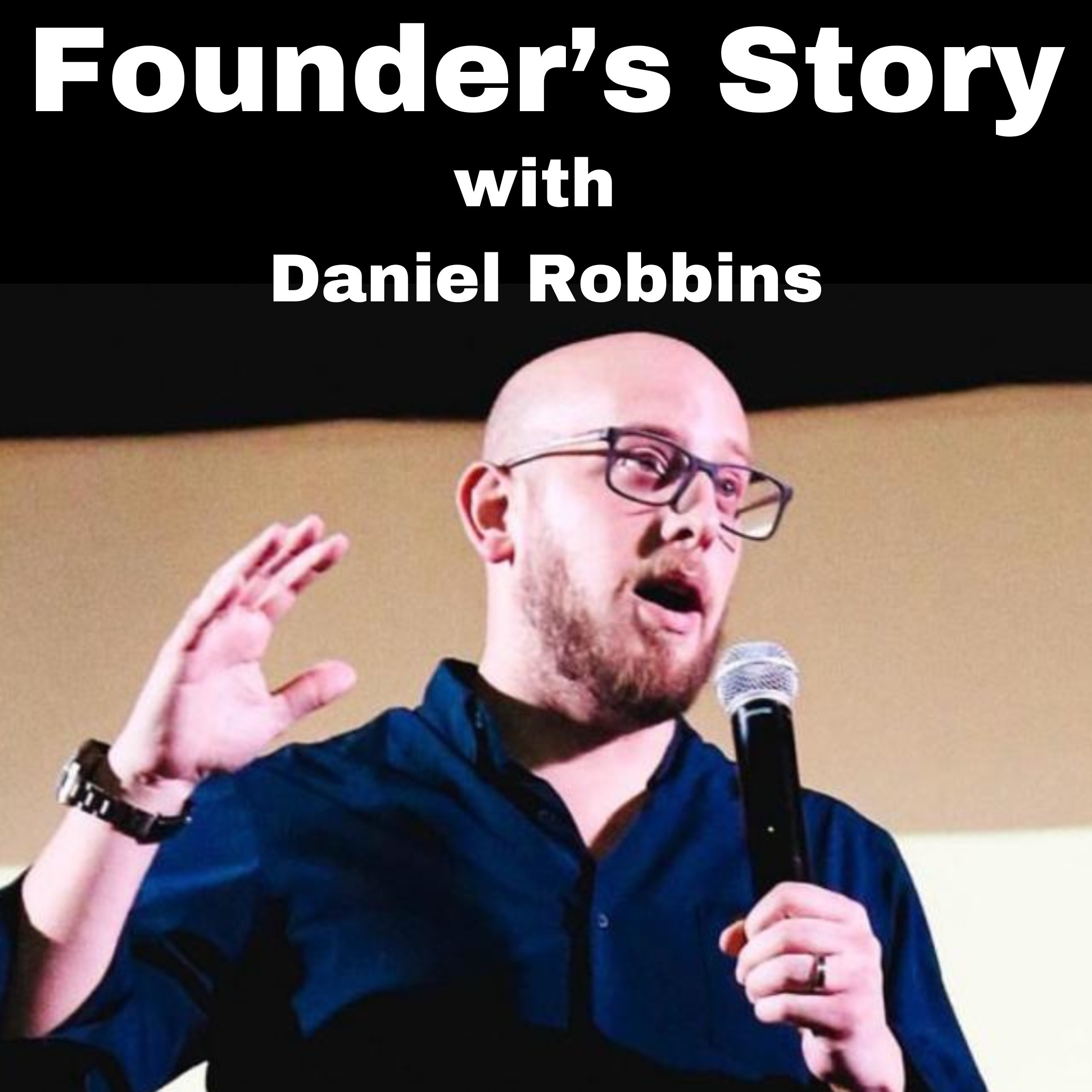
Founder's Story
Luck or Genius? How Kasim Aslam Turned Failures into a $10M Payday, Plus His Thoughts on AI's Impact on Humanity | S2 Ep. 150
00:24:34
Loading summary
Transcript28 lines
- [00:00]
Indeed Advertiser
People are driven by the search for better, but when it comes to hiring, the best way to search for a candidate isn't to search at all. Don't search Match with Indeed. The hiring process can be slow and overwhelming. Simplify hiring with Indeed. Indeed is your matching and hiring platform with over 350 million global monthly visitors, according to Indeed Data, and a matching engine that helps you find quality candidates fast. Ditch the busy work. Use Indeed for scheduling, screening and messaging so you can connect with candidates faster. Join more than 3.5 million businesses worldwide that use Indeed to hire great talent fast. Listeners of this show will get a $75 sponsored job credit to get your jobs more visibility@ Indeed.com PodKatz13 that's Indeed.com PodKatz13 terms and conditions App fall into.
- [01:00]
Fred Meyer Advertiser
Big Savings all in the Fred Meyer App get three pound packs of select varieties of juicy Kroger seedless grapes for $3.99 each with your card and a digital coupon. Then buy one. Get one free on tender USDA Choice, Boneless Tri Tip Roast or steaks with your card. Shop these deals at your local Oregon Fred Meyer Today or click the screen now to download the Fred Meyer app to save big today. Fred Meyer Fresh for Everyone. Prices and product availability subject to change restrictions apply. C Site for details.
- [01:37]
Daniel
Welcome back to Founder Story. Today we have a special guest who I got to meet a few years ago, who was the number one, the number one Google Ads agency on the planet costume. When I met you and you told me this and then you and I got to speak about Google Ads, I'm like, holy crap. Like this guy is legit. Because a lot of digital marketing agencies have told me something similar, but I don't know if they really fully understand. And you, you didn't just talk about digital marketing the first time I met you. You talked about like the government and censorship. I mean, the thing is that you were talking about, surprisingly the stuff that you talked about is really like a thing now. Like Joe Rogan is talking about some of the things that you talked about years ago around the data in Google and I thought it was super duper interesting. I think we were in Austin. We were in Austin. Or Steve Sims. That was Steve Simms. Yeah, that's what that was. And then you'll be met in war room. But I was really, really intrigued by the things that you said then and I was very fascinated. But let's kick it off with with your story first. So can you walk me through what was it like for you to get into Digital marketing and then for you.
- [02:58]
Steve Sims
To exit stress test this theory. For me, every successful digital marketer is really just a multi time failed entrepreneur. So all digital marketers just tried to be good at like real businesses and we just failed over and over and over again and but over time kind of figured out like well the digital thing I can, I can do. You're so sick of rolling up businesses that that's what digital marketing is. It's the infrastructure to a business without any fulfillment. So I'm a wannabe entrepreneur. I've been trying since I was 19. I've been in every industry. I've been in software development, import export, medical transcription. I sold purified mercury. I like dude, if you name I tried to do vending machines like you name it and I've made an attempt at it and digital marketing was just what stock? So I'm just, I like to call myself the world's greatest failure, which is true. I just rode every failure a little bit further forward. My exit was as much serendipity as anything else. I owned a Google Ads agency right when the M and A world froze. So because of a bunch of things right, like post Covid they printed all this money, there was this liquidity freeze. They stopped buying SaaS. So private equity groups went to E Com. Well, E Com became you know, saturated with buyers let's say. So the inventory dried up. So then they dropped down to agencies and I had 50 somewhat unsolicited offers in one year and I sold for a low 8 figure sum. I'm rich. And it was the best timing anybody's ever had. Not because I'm smart. Right after I sold the agency model disintegrated. So like when I sold we had 200 clients. Nine months later, the company that bought me had 130 clients in my agency. They were acquiring a bunch more agencies. So the agency model didn't die, but it definitely changed and the model that I had died. And I'm just lucky. He's getting the whole wide world dude, I was born under a star.
- [04:50]
Daniel
Yeah, it's really interesting. I'd say we've had like billionaires to incredible people like yourself as well. And everyone says luck. I'd say people had told me that luck was everything. Like they weren't any better, they didn't do anything better. It's just in that moment they got luck or they got lucky and the exit was pure luck. But what do you. So when something like that happens and you've seen all the data, you've been Through. And I love the, you know, digital marketers, like entrepreneurs. I feel you on that, man. I have a lot of every idea I have has failed.
- [05:30]
Steve Sims
Yeah.
- [05:31]
Daniel
So what do you look at next? So you do this. You're like, holy shit, that was incredible. You know, you. Obviously it wasn't all luck, right? You, you really worked your ass off to get there, but you exit it. And then what?
- [05:45]
Steve Sims
I spent a year trying to figure out what I want to be when I grow up. Somebody gave me really good advice. I got two really good pieces of advice around time I was exiting. The first one was be happy with your cash at close. So if you're listening to this, you're watching this, and you're about to exit. Please, dear God in heaven, earnouts are burnouts. Retained equity is slavery. If you're not happy with your cash at close, do not do that deal. And thank God I was happy with my cash at close because you never know what's going to happen post closing. And I can't comment on everything that happened post closing, but it was all very surprising. So that was piece of advice, number one piece of advice number two is don't, don't make any commitments. Don't decide what you're going to do for 12 months. And I did that. I traveled, I hung out with my kids. I caught up on my health. I really spent time just letting that marinate, and that was really helpful too. Where I landed was people I love people with everything inside of me. The only reason my agency was as good as it was was because of people. I had almost a hundred employees when we sold, and they were the number one question I got during due diligence over and over and over again was, where do you find these people? This is like, we've never seen anybody like this. And. And that might be the only thing I'm good at. Fun fact. I built the number one ranked Google Ads agency in the world. We were the largest dedicated Google Ads agency at the time of our sale. I've never run a Google Ads campaign end to end in my life. I don't know how to. I couldn't screen share with you right now and show you how to run Google Ads. I just found really, really, really good people. I had the highest performing real estate investment campaign on the planet before I knew how to invest in real estate. I own a Montessori agency. I'm not Montessori trained, so I have no compulsion about knowing how to do the thing. I could. Dude, I could, I could start, you name it. Spinal Surgery right now, today. I could start that business. Doesn't matter. I could rocket ship to the moon. I don't need to know anything because I know the power that people provide and people are literal miracles. And when you, when you kind of crack the code and it's not hard, it's counterintuitive, but it's not hard. But when you crack the code on talent acquisition, it opens up the whole world to you. You can do anything when you can, when you can acquire talent. And so I launched a. I don't even know what to call it. It's not really a placement agency because we maintain the. We continue to be the employer of record, but we find, train and place executive assistance for high end entrepreneurs. And it's been the most fulfilling thing I've ever done in my entire life because I get to take somebody in an emerging nation, we're not allowed to call them third world countries anymore. So somebody in an emerging nation. I pay many, many multiples more than they would make domestically. I let him work from home, flexible schedule, life changing, right? And then I put them with a massively overwhelmed entrepreneur. And it's such a win win. It's a symbiotic relationship where somebody who wants an opportunity and somebody who really, really needs help and you connect those two and it's just freaking lightning, man. It's amazing to watch. We've had some failures, of course. That's the way that things work. It's matchmaking and, you know, personality management. But for the most part it's been, it's been epic and it's been so much fun and it's the least scalable business I've ever been in my entire life. But I even like it for that reason, you know, like, I don't think this is my forever thing. I want to make a lot more money than this would yield. But it lets me see it's like a metal detector for opportunity because I get to see what high end entrepreneurs are tasking their EAs with. So now I've started to build businesses around those tasks. You know, like we just built an agency called Architects that helps people build out their high level instances because I noticed 50% of my EAs were getting tasks and go high level. And I want to build a podcast booking business because I noticed, you know, a ton of our EAs are being tasked with podcast booking. So while it's not scalable, it's a really interesting kind of like it's the corridor principle. When you're on the field of battle, you See the opportunities. Well, I'm on 50 fields of battle because I have 50 EAs placed. So that's where I am now. We'll see where I am in here.
- [09:34]
Daniel
Something interesting, I think, about you just looking from the outside in on the few conversations that you and I have had, besides your obvious power to find incredible talent, which can be the make or break, right? Because we know most entrepreneurs, they want to do every freaking job, every single thing, and they get tied down and the business fails. But something with you, I think is your ability to analyze data. That was the first conversation I had, was you explaining about the analysis of all of this data that you have and kind of. And figuring out, like anyone could analyze data, but what does it mean? Like, what does it stand for?
- [10:13]
Steve Sims
Right? That was like noise.
- [10:15]
Daniel
Yeah, exactly. So how do you, like, how do you do that? Because I think a lot of people see a lot of data, but they don't really know, like, what does it mean? You're kind of like a human chatgpt before chatgpt, by the way, it's funny.
- [10:31]
Steve Sims
Man, because, um, I feel like the answer is in the simplicity. I don't look at micro trends. I'm not capable of that. There are people who are, you know, like straight up autistic. Rain men, count the toothpicks, you know, go to Vegas. Definitely 35. You know what I mean? Like those, those people exist and God bless them, and they're amazing and way smarter than me. What I look at are things that a toddler could graph with crayons. Like, I had the highest performing real estate investment campaign on the planet for seven years. Every year, year over year, the cost per click on our most valuable key phrases was going up. So it doesn't take a math scientist to say this is becoming a commoditized industry. And that trend line led me to sell the business and I sold in 2019, and I got out at, quote, unquote, the perfect time. The perfect time. It was. It wasn't. It wasn't triple PhD science. It was looking at the simplest macro trends. My favorite example, and I use this often from stage when I speak. Ten years ago, you used to be able to run ads, pay for the cost of traffic, pay for the cost of goods, pay for fulfillment, and still make money. Five years ago, you ran ads paid for the cost of goods, paid for fulfillment, paid for traffic, probably broke even, but made money on otos, upsells, et cetera. Three years ago, run ads, pay for the cost of traffic, pay for the cost of fulfillment. Pay for the cost of goods, not make any money. But you're making money on real TV today. Most businesses can't afford to run ads. We're in a traffic bubble. And I don't have to be a mathematician, I don't have to be Nick Silver to tell you that, because you should be able to run an ad and make money, and now you can't. And that's not. You know what I mean? Like, I. There's. There's no triple PhD science telling me this. It's just. It's very obvious. And yet most people, I think, are reluctant to rely on the most obvious trends that are right in front of their face. And I'm. I don't know, man. I just kind of bullish when it comes to that stuff. I'm like, I'm just going to trust my gut here. And this feels like I should get out of the traffic game. And I sold my agency and I got out of the traffic game. And now I see the way that AI is heading. And AI is what really convinced me to get into the personnel piece, because everybody else was like, oh, look what AI can do. You know, let's figure out what AI can do. And I'm like, all the things that AI can do are by definition no longer monetizable because AI can do them. Stop trying to figure out what AI can do. Go figure out what AI can't do. That's what you can charge money for. And so there's the fun quote. I think it's attributed to Bill Gates. I don't know if he actually said it. He said that automation applied to an inefficient system just amplifies the inefficiency. Right now, today, pre AI, because we're still pre AI, A mediocre employee is good enough is fine. So there's Jerry, right? You've got Jerry. And if you're a graphic design shop and you have, like three rock stars, but they're all full, and you're like, you know what? Just give it to Jerry, because he can keep the project going long enough for one of the rock stars to actually get into it and polish off the round edges. Jerry works in this economy, in this world, in this paradigm, with A.I. you're amplifying Jerry. You're amplifying mediocrity. And leverageable mediocrity is catastrophe. It's death and destruction. It's that business isn't in business any longer because Jerry goes from 10 units of output a day to 10,000. So people, interestingly, Counterintuitively become exponentially more important in an AI driven world. So I got into Preto Talent. Preto is the, the mathematical construct. It's the predator distribution. 20% of your input equals 80% of your output, which is true in every organic ecosystem. So we created Pareto Talent because I know that AI is going to need really intelligent people at every level of the organization. For some reason these businesses think that AI is going to be top down. How, how on earth could that possibly be true? The C level execs and the directors and the managers know how work is done. No, it's the foot soldiers that know. Oh, I pressed this button at this time in this way. Oh, I can use AI for this. Obviously AI is going to be bottom up, obviously. Unless you're an AI company. Right, but that's, that's a different model and a different paradigm. So I don't know, man, I'm not telling you. I'm smarter than anybody else. I actually might be dumber, but I'm just willing to look at like really opaque, really pixelated, cloudy kind of gray data and say I'm going that direction. And so far it's paid off a couple of times.
- [15:06]
Daniel
All right, So I can tell that you are a deep thinker like me. And so I'm. We're going to get really. We're going to get deep. Oh, we're going to get really deep. I have a theory, like you said. Elon Musk just said it. I've heard, you know, Mo God dad from Google said it. Like many people have said, the cost of goods and services will go down to basically zero. Right. Like you, like you just mentioned, if it could be generated by AI, basically goes down to free and you should no longer sell it. But I am really convinced that our population will decline. Let's say 2050. I'm making up numbers. It'll be like half of what it is.
- [15:45]
Steve Sims
And this is the cap.12 billion and then taper down from there. According to Jordan Peterson, who I love.
- [15:51]
Daniel
Yeah. So, and this is just my personal theory, okay, is this. I bought this website date robots.com back in 2016 because I really feel that this is the thing you have on one side, people are just having less kids. Like you're saying most countries people are having less kids. Younger generations are hyper focused digital. Their best friends might just be AI bots. In the future, people are going to be having intimate relationships with humanoids. That is my opinion, I think, because I think humans are just not great at realizing that like a Robot is not a human. It's a robot, right? As it becomes more lifelike and it sounds more lifelike, we're not really good at differentiating. We're also not very sociable. In many instances, the younger people are right. Like those generations are rising. I really feel like people are really going to start finding like robots, humanoids, AI bots in intimacy, but not just like intimacy, like physical but emotional intimacy. And then it starts to say, like, what if you're in a relationship, like with human to human, but you're also in a emotional relationship with an AI bot? How's that going to, you know, fall into place? These are some things I'm thinking about. What are your thoughts?
- [17:16]
Steve Sims
So my response might dip too far into the esoteric. So we'll do our best, Kay. And you can reel me in if you think I'm about to lose all your listeners.
- [17:26]
Vanta Advertiser
Whether you're starting or scaling your company's security program, demonstrating top notch security practices and establishing trust is more important than ever. Vanta automates compliance for ISO 27001, SOC, GDPR and more, saving you time and money while helping you build customer trust. Plus, you can streamline security reviews by automating questionnaires and demonstrating your security posture with a customer facing trust center. All powered by Vanta AI. Over 8,000 global companies like Atlassian Flow Health and Quora use Vanta to manage risk and prove security in real time. Our audience gets a special offer of $1,000 off vanta@vanta.com founders. That's V A N T A dot com founders for $1,000 off. Now back to the show. Hey everyone. I'm sure you've heard me talk about Rosetta Stone. It's the most trusted language learning program available on desktop and as an app. It truly immerses you in the language you want to learn. That's why Rosetta Stone is different. It is trusted by millions of people. And the great thing is you don't have to learn by memorizing. You're truly learning to speak, listen and think in that new language. I'm currently learning Spanish since we are going to be expanding to doing interviews here in Spanish. And I want to be fluent. I can deliver incredible, amazing conversations. And then when I travel, I want to be able to take those languages where I go. Plus, with Rosetta Stone, they have a built in true accent speech recognition feature which is like having a personal trainer for your accent, ensuring you sound authentic. Don't put off learning that language. There's no better time than right now to get started. Founder Story listeners can get Rosetta Stone's lifetime membership for 50% off visit RosettaStone.com today. That's 50% off unlimited access to 25 language courses for the rest of your Life. Redeem your 50% off@RosettaStone.com today. T O D A Y We're driven by the search for better. But when it comes to hiring, the best way to search for a candidate isn't to search at all. Don't search Match with Indeed if you need to hire you need Indeed. Indeed is your matching and hiring platform with over 350 million global monthly visitors, according to Indeed Data, and a matching engine that helps you find quality candidates fast. Ditch the busy work. Use Indeed for scheduling, screening and messaging so you can connect with candidates faster. And Indeed doesn't just help you hire faster. 93% of employers agree Indeed delivers the highest quality matches compared to other job sites, according to a recent Indeed survey. We want this already done, streamlined, in one place, leveraging over 140 million qualifications and preferences every day. Its matching engine is constantly learning your preferences. Join more than three and a half million businesses worldwide that use Indeed to hire great talent and listeners of this show will get a $75 sponsored job credit. To get your jobs more visibility@inn Indeed.com founders story, just go to Indeed.com founders story right now and support our show by saying you heard about Indeed on this podcast. That's indeed.com founders story. Terms and conditions apply. Need to hire you need Indeed.
- [21:08]
Steve Sims
I'm really into this book called A Course in Miracles right now, which relies really heavily on Christian theology, but it's not a Christian book per se. I was raised a Christian so that languaging can appeal to me, but I'm not a Christian either. So I'm going to use some words that might be a little repellent to a non Christian audience. That's my disclaimer. All that said, every relationship you have with every person you've ever had a relationship with is really a relationship with yourself. You are interfacing with your projection of who you think that person is intellectually, psychologically, emotionally, spiritually. You don't see that person as a person. Most people are incapable of seeing other people as people. They see them as they're like holograms almost and that person becomes two dimensionalized and that's what you know. And some people are really bad at this. Like some people are just good and bad and then other people get a little more three dimensional in their views. And yet Every relationship you've ever had is really a relationship with yourself. And that's. That's why every relationship you have is triggering. Because you go find what about that person triggers you. And that's where the relationship starts, interestingly. And you don't see the other person. And this is where the languaging. I might even try to avoid using the words that they use, but there's. We're all splinters of God, let's say, if you believe that and you can't see another person until you see him as a splinter of God, and that would be the point of the relationship, is that you get to actualize your splinter of divinity, and then you get to see their splinter divinity, and then those splinters of divinity are reflected back to each other. But the point would be for you to allow yours to emerge first. And so if you're having a relationship with the robot, I don't actually think, functionally speaking, that's any different than the relationships you have now. Until we've ascended to the psychological and spiritual plane that allows us to see people as truly miracles, truly divine, truly fragments of the Creator, the source, whatever word you want to use, until you're there. And very few of us are. I'm not. I don't think relationship is interpersonal. I think it's intrapersonal. And so I would imagine that a relationship with the robot would probably serve all of those, or most of those, let's say, purposes. I do think that there's some things that we're leaving behind from an anthropological perspective. Like, you know, I talked to a friend about this smell. This is really weird to say, but, you know, in the 1850s, if you and I were as close as you and I are right now, for all intents and purposes, we're about six feet from each other, technically speaking, right? Like, I know that you're on your. You're in your room, wherever you are in the world. I'm in my room in Scottsdale, Arizona. But because of the distance and the fact that I can see your eye color and I can see your pupils dilate, and I can see the specificity in your features, we're about six feet from each other. But 150 years ago, a person I was six feet from, I could smell. And we released an immense amount of pheromones and nerve signals in the way that we smell. You actually. Choose mates, choose enemies, choose fights, choose. There's a lot in smell that we don't even know, and we've lost over time because we've become so civilized. And that's not the only thing. There's cell and I think there's like sense perception and then there's like the way that you would breathe that I'm not going to catch over a microphone, but I would catch in person. And I, and I actually think, interestingly, I think we're going to swing back that we've lost the campfire, we've lost community, we've lost religion, we've lost so much of what makes humans humans functionally. And so I think when the robots take over, let's say, and that, and I don't mean that in the skynet kind of way, I mean that in the functional way. Like when the robots are the ones working the assembly line and everything's free and we're all in the startech, you know, utopian world where nobody has to work. I don't think the human choice is to go interface with robots. I think the human choice is actually to go back and to sit in a loincloth around a campfire playing a guitar, just talking like if you had nothing to worry about. Most technology is utilitarian nature. I only use technology because I have to. But if you notice, and you know, I'm, I'm semi wealthy now. I'm not ultra high net worth, I'm a DECA millionaire. So I'm still not in the stratosphere of humans that truly have nothing to worry about, financially speaking, which is generally pegged at around $35 million net worth. I know those people, though. And what's really funny about them is very often, more often than not, they're not in front of their computers, they're not in front of email, they don't carry a cell phone, right? Like, they, they start to unplug. And so as our needs become satiated, I don't think we become more digital. I think we become less digital. That was a. I, I went on a billion different directions. Daniel, how did I.
- [26:07]
Daniel
No, no, I, I totally agree. I was reading something recently about, there was like an argument around will Google lose a lot of its relevance from a search perspective? Because they were talking about, you know, search with AI, but me, I was like, no, that's why not. That's, that's not why Google may lose relevance. It's because we said, like, what do you search in Google? You search porn, you search business, you search job related, right? These are the things you search. But if you didn't have to search for business because we don't work, you didn't have to Search for job related stuff because we don't work then you don't really need to search. Like we're like you said we're not going to have to search. I am totally on the, like I am totally with you. Like I don't see a world where we're going to have very many jobs, many generations on. Like you said, Star Trek, whatever you want to call it. But I am with you on, you know, loincloth around the fire. I am totally in the same space mindset. A lot of people come to us and like, hey, it's like human and AI and I need to learn this. I'm like, maybe now. But I don't see a world where at the speed of the learning, all my friends who are in it tell me the best people in the world have no idea how it really gets to where it's getting. It does things they don't even understand. That Pandora box is like already opened up and. But I think the great, like you said, maybe we've been thinking about the wrong way that maybe we should be just hanging out, having fun, eating s'mores, not hustling 24 7, being stressed out, mental health down the shitter. Like maybe we shouldn't be living this way. And I think that's why we kind of make fun of younger generations. Like three day work week, remember like Tim Ferriss like four hour work week.
- [27:54]
Steve Sims
Yeah. Maybe we should be the liar, by the way, he works 80 hours a week.
- [27:59]
Daniel
You know what I mean? Like maybe we should be doing those things because that's better for us. But we're so accustomed to like we need to grind and work 24 7. But no, this has been amazing. We could talk. I know we gotta go, but we could talk for like another hour. I can get real deep. I've been looking for somebody else to talk to about this and nobody ever wants to listen to me. So I appreciate your ear today. If people want to get in touch with the company though and they want to find out more information, I love what you're doing. It's super needed. I use many of these people from. I love using people in Latin America. I've used them from Colombia to Venezuela to Chile to Argentina for the last, I'd say 10 years and it's completely changed my life. So if you want to find out more information, how can they go to.
- [28:44]
Steve Sims
Pareto talent.com.
- [28:48]
Daniel
And also by the way, if people want to see where you're going to be speaking or they want to book you because I think I need to hear more about what you're doing. How can people do that?
- [28:56]
Steve Sims
You can go to costume Me K a s I M me and you can subscribe to my newsletter. I'm writing a book that everybody can have for free. It's on how to hire an international talent. I'll be sending that to my list when it's available, so subscribe. I've got all my links there, all the socials, all that fun stuff.
- [29:13]
Daniel
One day I want to come over your house and read one of the books behind you. If you can't see it, you have the most amazing book collection I've ever seen and I've interviewed over 500 people since two years ago alone and no one has a book. I have three books behind me. You have like an incredible but man, this has been incredible conversation. We got to have another hour long conversation about the meaning of life next time. But I super appreciate your time and thanks for joining us today on FounderStory.
- [29:41]
Steve Sims
Thanks for having me. Appreciate you Daniel.
- [29:44]
Indeed Advertiser
People are driven by the search for better. But when it comes to hiring, the best way to search for a candidate isn't to search at all. Don't search Match with Indeed. The hiring process can be slow and overwhelming. Simplify hiring with Indeed. Indeed is your matching and hiring platform with over 350 million global monthly visitors, according to Indeed data, and a matching engine that helps you find quality candidates fast. Ditch the busy work. Use Indeed for scheduling, screening and messaging so you can connect with candidates faster. Join more than 3.5 million businesses worldwide that use Indeed to hire great talent fast. Listeners of this show will get a $75 sponsored job credit to get your jobs more visibility@ Indeed.com PodKatz13 that's Indeed.com PodKatz13 terms and conditions apply.
- [30:44]
Fred Meyer Advertiser
Fall into big savings all in the Fred meyer app. Get 3 pound packs of select varieties of juicy Kroger seedless grapes for $3.99 each with your card and a digital coupon. Then buy one. Get one free on Tender USDA Choice, Boneless Tri Tip Roast or steaks with your card. Shop these deals at your local Oregon Fred Meyer Today or click the screen now to download the Fred Meyer app to save big today Fred Meyer Fresh for Everyone. Prices and product availability subject to change. Restrictions apply. See site for details.