
Podcast
FOXcast
Hosted by Family Office Exchange · EN
The issues that come up in a family office or family enterprise are unique to each family and are rarely discussed in a public forum. In this podcast, Family Office Exchange reveals some of these issues in discussions with family office subject matter experts, family members, and trusted advisors. The podcast gives the listener a taste of how having a FOX membership can transform the way families and their trusted advisors approach ideas like philanthropy, governance, investing, and more.
13episodes
Episodes
Newest firstAll episodes

Weathering Periods of Historic Geopolitical and Economic Disruption with Patricia Angus
Aug 1400:37:35Tap to summarizeToday, I have the pleasure of speaking with Patricia Angus, Founder and CEO of Angus Advisory Group, an independent consulting practice serving enterprise families. A former international trusts and estates lawyer, Patricia is a thought leader in the field of multi-generational family governance, wealth and philanthropy. She has been advising global families and their companies, family offices, and foundations, for three decades and is the author of The Beneficiary Primer, among numerous publications. She founded the Global Family Enterprise Program at Columbia Business School, where she teaches graduate and executive education courses, and is a Fellow and board member of the Family Firm Institute and a frequent speaker at industry and family events. Patricia is a long-time friend and collaborator of FOX. Patricia is one of the pioneers in the family wealth space and has been at the forefront of the industry for over 3 decades. As she reflects on the past 30 years, she shares what she believes has changed significantly and what has stayed the same. As Mark Twain famously said, “History doesn’t repeat itself, but it often rhymes.” Today, we find ourselves once again in a time of significant geopolitical and economic shocks, armed conflicts at home and abroad, and the return of populism and authoritarianism even among western democracies. Patricia offers some of the lessons she has learned and would like to pass on to families and their advisors on how to best weather such times of conflict, instability, and disruption. Throughout her career, Patricia has developed a number of practical tools for families – one prominent example of a tool she utilizes with her clients is the Trustee and Beneficiary Primer. She tells us more about these tools, what is in them, and how families and their advisors can benefit from them. In the family wealth space, there is a mix of practitioners and academic programs aimed at helping families of wealth achieve success throughout their multigenerational journey. Patricia provides her insights into how families should think about utilizing practitioners vs. academics, highlighting the utility and limitations of each of these resources and offering tips into how families can achieve the right balance between the different kinds of knowledge and tools both academia and practitioners provide? Do not miss this deeply insightful conversation with one of the veterans and original thought leaders of the family wealth space.
Transcribe →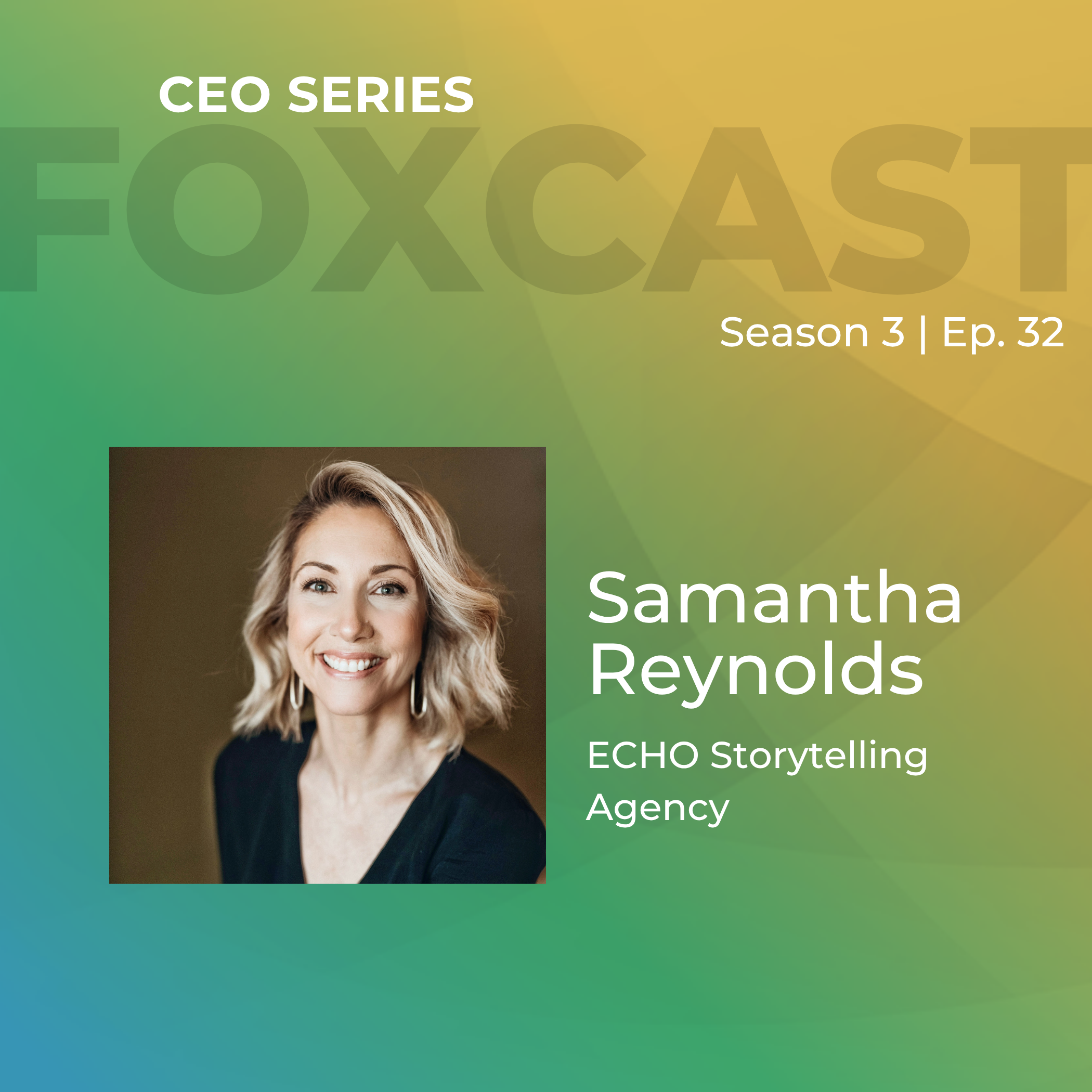
Integrating the Story of the Wealth into the Family Purpose With Samantha Reynolds
Aug 7, 202500:34:15Tap to summarizeToday, it is my pleasure to speak with Samantha Reynolds, Founder & CEO of ECHO Storytelling Agency. Since 1999, Sam and her firm have been trusted by hundreds of prominent families and global companies to preserve their legacies in books and videos. In 2005, Sam was named one of British Columbia’s “Top 40 under 40” and is also a Forbes Magazine Council Member and writes a monthly article on how to use authentic storytelling to drive business results. Sam and her firm, ECHO, are Specialist Advisor members of FOX, and we are excited to have her expertise and thought leadership within our membership community. In the family wealth space, we are increasingly talking about the importance of telling the family story and passing the history down to future generations. Sam talks about the neuroscience behind sharing authentic stories – both stories of success and of adversity. Can you talk about this and connect it with how you see the significance of the family’s story throughout their journey. There’s a delicate balance between sharing enough and sharing too much – both among family members and with external constituents. Sam shares her views on how families should navigate this balance and determine how much to share internally and with the public and their employees. One practical tool Sam has developed and uses with her clients is a list of questions rising-gen members can ask of their elders. She tells us about this list and highlights the top questions to ask and the best settings in which to ask them. Sam also describes some of the modern technology-enabled tools and resources she recommends to families to help them with their effective communications and storytelling – or as she calls it “memory insurance.” Enjoy this insightful conversation with one of the leading thinkers and practitioners in the storytelling and legacy preservation space.
Transcribe →Affording Family Investors Efficient Access to Venture Capital with Stephan Heller
Apr 25, 2024Tap to summarizeToday, I am pleased to welcome Stephan Heller, founding partner of AlphaQ Venture Capital (AQVC), a global VC fund of funds with an innovative semi-liquid evergreen structure, focused on early-stage VC funds and co-investments. Stephan is a next-gen owner in his family’s enterprise, a serial entrepreneur, an active angel investor with over 20 direct investments, including Talon.one, Surge Fitness and Caya. He led Intel's European Startup Program and co-founded Intel Ignite, which was voted the best early-stage DeepTech startup accelerator; founded FinCompare, a fast-growing fintech platform for small and medium-sized enterprise financing, which was acquired by Germany's largest banking group; and created Watchmaster, a re-commerce platform for new and used luxury watches. Venture capital (VC) is Stephan’s passion and domain of expertise, and he shares his views on where VC stands today as an asset class and what trends are shaping this corner of the investing universe. He then delves into how enterprise families are engaging in VC today and discusses the challenges, opportunities, advantages, and drawbacks facing multigenerational families who choose to be active as venture investors. Stephan offers a number of practical suggestions for families and family offices – he posits that families should develop a deep understanding of both the external factors (e.g., the VC value chain and the major trends shaping the industry) and the internal needs and preferences of the family (e.g., risk appetite and liquidity requirements, to mention a few). He recommends some useful tools and analyses families can employ to study and evaluate these internal drivers and external forces. As many families are interested in or drawn to venture but don’t necessarily have the capabilities to be competitive and efficient as investors in this space, Stephan describes some of the tools and channels for family enterprises and family offices to access VC effectively and profitably. Don’t miss this instructive conversation with a successful rising-gen investor and an expert professional in venture capital – the asset class that hold the potential for most differentiated and attractive returns for families in the long term.
Transcribe →