Podcast
Free Astronomy Public Lectures
Hosted by Swinburne University of Technology · EN
Each month, from February to November, the Centre for Astrophysics & Supercomputing presents a free public lecture at the Hawthorn campus of Swinburne University of Technology.
11episodes
Episodes
Newest firstAll episodes
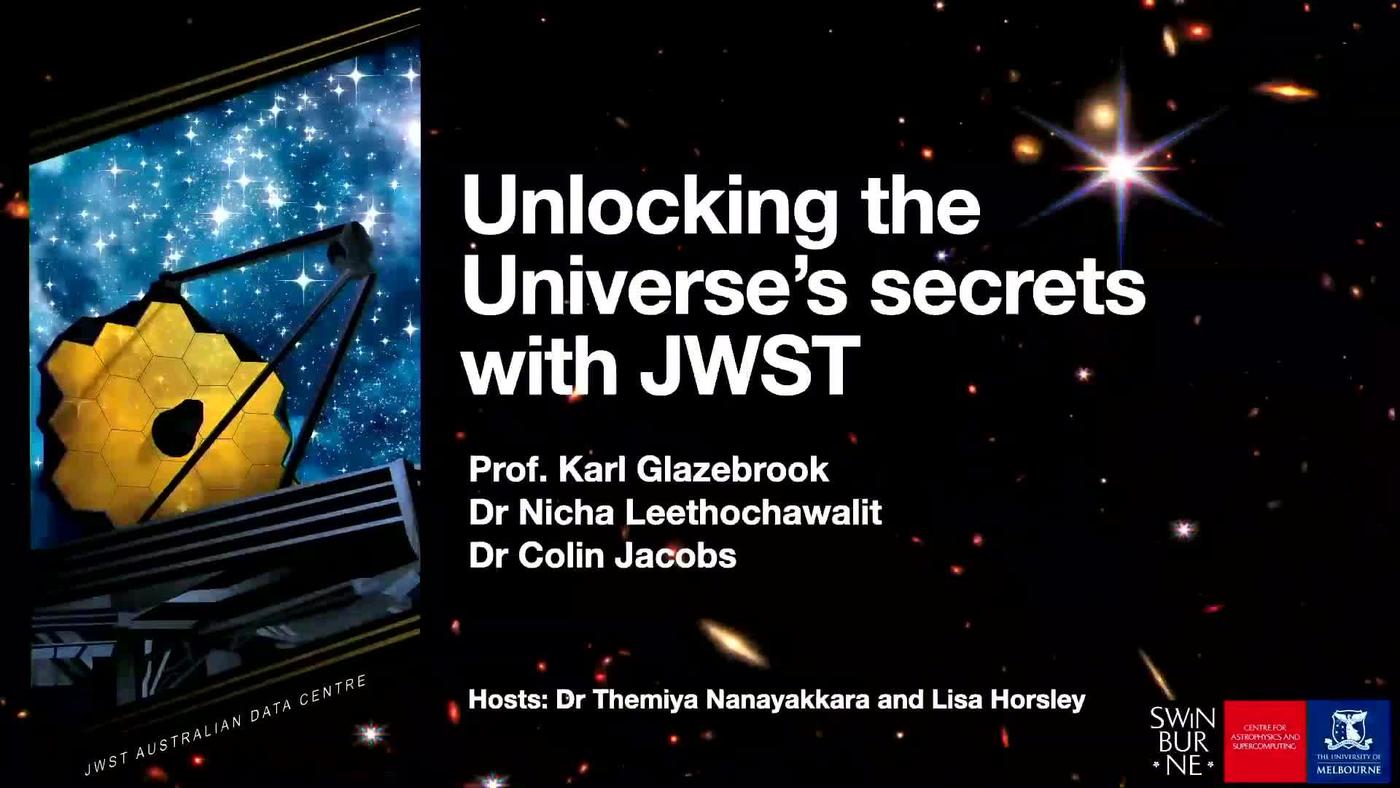
Unlocking the Universe's Secrets with James Webb Space Telescope (Free Astronomy Public Lectures)
Nov 19, 202200:58:13Tap to summarizeThis is a special State of the Universe lecture for National Science Week in August 2022. Presented by the Centre for Astrophysics and Supercomputing (CAS) at Swinburne University of Technology. Successfully launched on 25 December 2021, NASA’s successor to the Hubble Space Telescope, the James Webb Space Telescope (JWST) has taken its first images and will be released to the public 12 July. Join Professor Karl Glazebrook, Dr Themiya Nanayakkara and Dr Colin Jacobs, as they discuss these images and the potential secrets of the universe they reveal. Dr Nicha Leethochawalit from University of Melbourne will share her work on redshifted galaxies (z=10). Presented 19 August 2022.
Transcribe →
Australia's growing role in the global space industry (Free Astronomy Public Lectures)
Sep 30, 202200:52:32Tap to summarizeIn astronomy, we use cutting edge instruments and techniques to learn more about our Universe. But what about turning that focus back to Earth? More and more of our daily activities depend on space and it provides a unique perspective of our planet. In this talk, Dr Rebecca Allen (Swinburne University of Technology) will discuss Australia's growing role in the global space industry and how we are using our astronomy knowledge to drive cutting-edge research for Earth. Presented 30 September 2022.
Transcribe →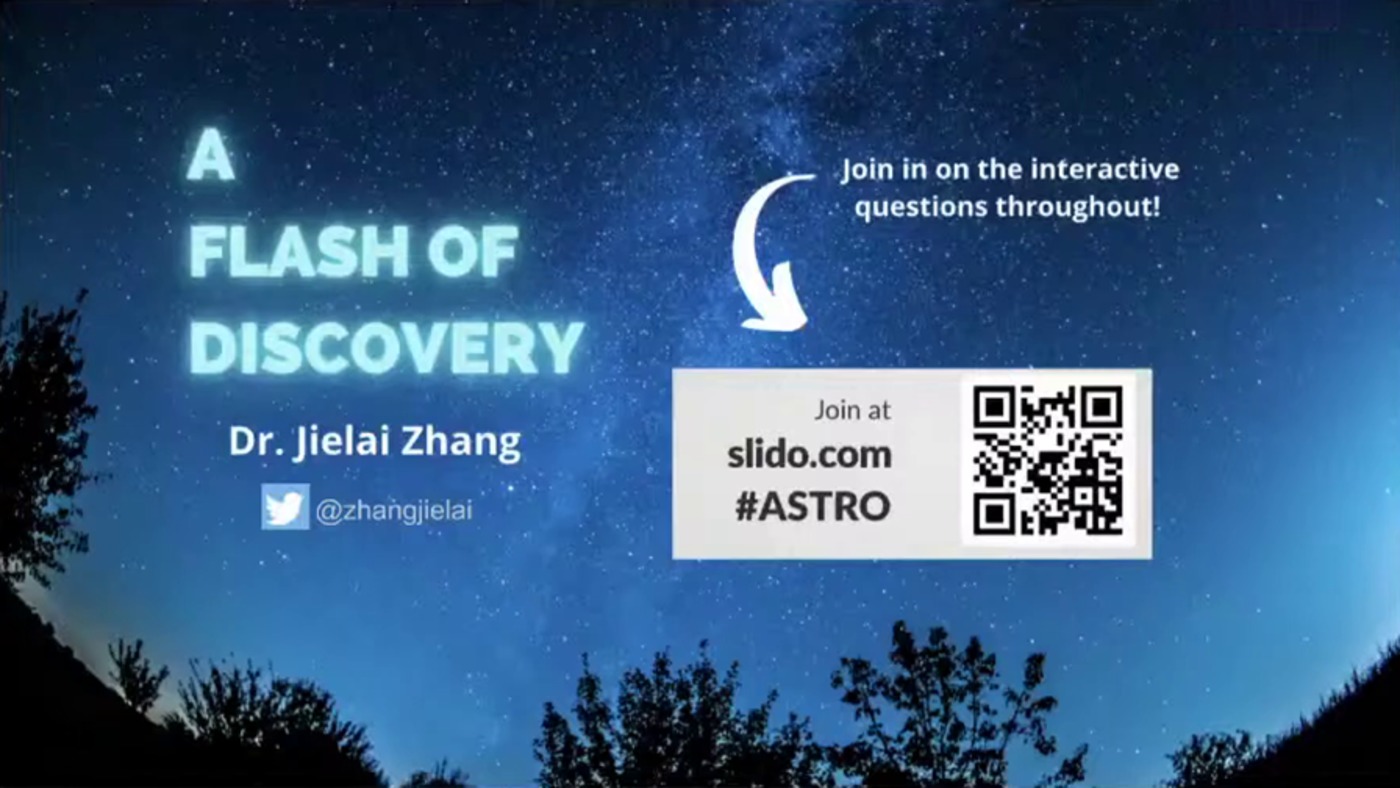
A Flash of Discovery (Free Astronomy Public Lecture)
Aug 17, 202200:58:10Tap to summarizeBehind the serenity of the night sky, hides an ever-changing Universe of brilliant explosions. Join us online for an interactive lecture uncovering the State of the Transient Universe with Dr Jielai Zhang as part of National Science Week 2020.
Transcribe →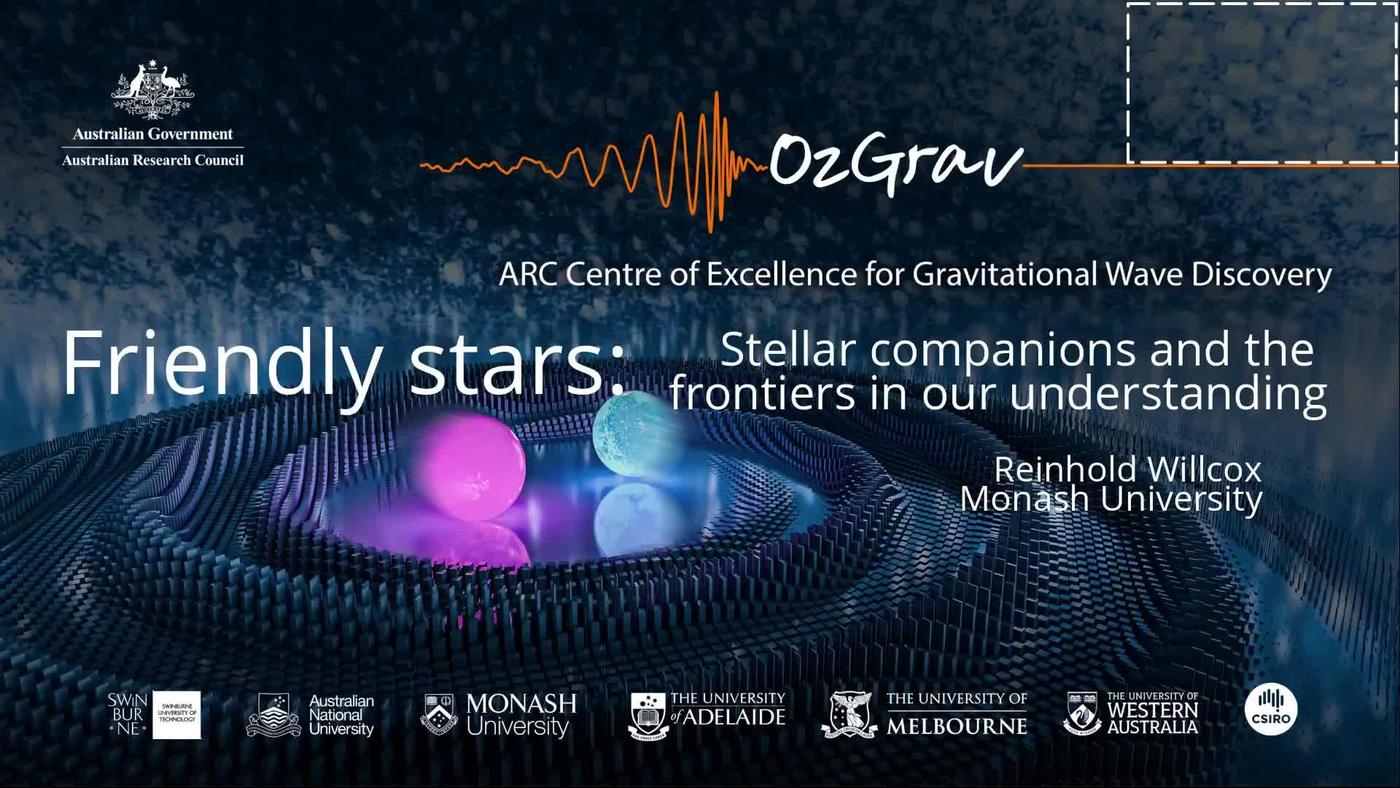
Friendly stars and where to find them (Free Astronomy Public Lectures)
Apr 22, 202200:58:44Tap to summarizeMost of our understanding of stars and how they evolve is based on the assumption that they are completely isolated in space, never interacting with one another. However, studies over the last decade have shown that many more stars than we thought exist in gravitationally-bound binaries, triples, and even larger groupings. The addition of companions increases the complexity in the systems, but also opens up the possibility for interactions between the stars and the formation of unusual astronomical objects. I will discuss the current state of the field, and some of the challenging open questions that continue to puzzle scientists. Presented 22 April 2022.
Transcribe →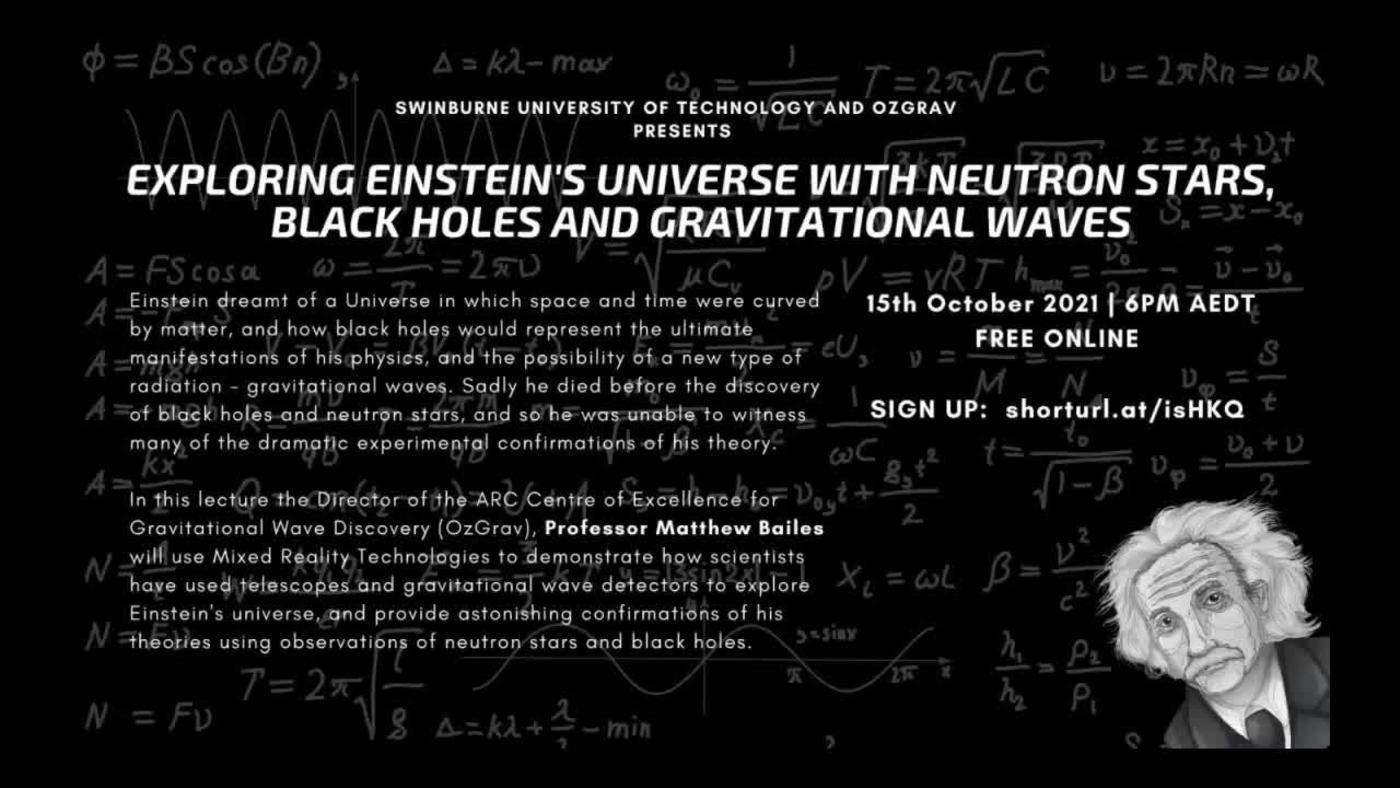
Exploring Einstein's Universe with Neutron Stars, Black Holes and Gravitational Waves (Free Astronomy Public Lectures)
Oct 19, 202101:14:10Tap to summarizeEinstein dreamt of a Universe in which space and time were curved by matter, and how black holes would represent the ultimate manifestations of his physics, and the possibility of a new type of radiation - gravitational waves. Sadly he died before the discovery of black holes and neutron stars, and so he was unable to witness many of the dramatic experimental confirmations of his theory.In this lecture the Director of the ARC Centre of Excellence for Gravitational Wave Discovery (OzGrav), Professor Matthew Bailes will use Mixed Reality Technologies to demonstrate how scientists have used telescopes and gravitational wave detectors to explore Einstein's universe, and provide astonishing confirmations of his theories using observations of neutron stars and black holes. Presented 19 October 2021.
Transcribe →
The Dark Universe (Free Astronomy Public Lectures)
Feb 28, 202001:15:34Tap to summarizePresented by Sara Webb and Grace Lawrence on Friday 28 February 2020. When we look to the stars, what we see is a fraction of the universe – only around 5%. Astronomers observe that a mysterious ‘dark universe’ of strange and enigmatic dark energy and dark matter makes up the remaining 95%. Swinburne PhD candidates Sara Webb and Grace Lawrence are working to unravel the mysteries of this dark universe, exploring the fundamental origins and nature of dark energy and dark matter.
Transcribe →
Truth and awe in astronomy (Free Astronomy Public Lectures)
Dec 18, 201900:40:27Tap to summarizePresented by Professor Sheila Kannappan on Monday 16 December 2019. Since ancient times, humans have been drawn to understand the heavens while at the same time observing them with a spiritual sense of wonder. In this talk Professor Kannappan will trace the dual power of truth and awe in the history of astronomy and in our modern world.
Transcribe →
The unintended humour of the Universe (Free Astronomy Public Lectures)
Nov 28, 201900:54:43Tap to summarizePresented by Dr Tiantian Yuan on 29th November 2019. Scientific research is not only fun but also funny. In this end of the year talk, Tiantian Yuan explains how the universe makes us laugh and think.
Transcribe →
The Cosmic Perspective (Free Astronomy Public Lectures)
Oct 17, 201900:53:42Tap to summarizePresented by Dr Edward (Ned) Taylor on Friday 18 October 2019.At its most basic, astronomy is an attempt to understand the nature of the universe in which we find ourselves. As such, understandings of astronomy have always had a profound impact on how we conceive of and understand ourselves — as a society, if not as individuals. In this talk, I want to share my 'cosmic perspective’: some of the lessons from modern astronomy and astrophysics that I carry with me into my daily life, and how my understanding of the universe shapes how I see the world. I also want to reflect especially on this extraordinary moment in the history of humanity, of our planet, and indeed our universe, and how our visions for our future might be enhanced with a more cosmic perspective.
Transcribe →
The Never-Ending Story of a Star (Free Astronomy Public Lectures)
Sep 20, 201901:00:12Tap to summarizePresented by Renee Spiewak on Friday 20 September 2019. Like humans, stars often live their long lives in pairs, called binaries. At the end of their lives, they experience drastic transformations, rather than simply ending, and these transformations greatly affect their companions. In this lecture, I will take you on a journey of the many lives (and spectacular deaths/rebirths) of a massive star with a lighter companion star. The mass of a star, among other factors, determines the path it takes and the changes it experiences, and stars in binaries affect each other greatly. In a quiet stellar neighbourhood, this massive star will peacefully spend millions of years with its companion before undergoing a sudden transformation into one of the most extreme objects in the universe. Billions of years later, a second transformation will occur when the star’s companion quietly reaches the end of its life. However, under the right conditions, the pair’s story will not end there.
Transcribe →