Podcast
Free Cities Podcast
Hosted by Timothy Allen · EN
The Free Cities Podcast is the leading podcast covering alternative governance, new jurisdictions, and the global movement to build freer societies.
Hosted by Timothy Allen, the show features long-form, in-person conversations with the people building autonomous jurisdictions and real-world pathways to more freedom. We focus on what actually works, the legal structures, incentives, economics, and business models that turn freedom from an idea into a way of life. Builders and sceptics welcome.
Free Cities, Charter Cities, Special Economic Zones (SEZs), Network States, Startup Societies, Pioneer Communities, Intentional Communities, Popup Cities, Governance Innovation, Competitive Governance, Governance as a Service, Regulatory Innovation, Polycentric Governance, Geopolitics, Seasteading, Homesteading, Freesteading, Digital Nomadism, Flag Theory, Freedom, Liberty & Bitcoin.
We are the official podcast of the Free Cities Foundation. New episodes every Friday.
25episodes
Episodes
Newest firstAll episodes
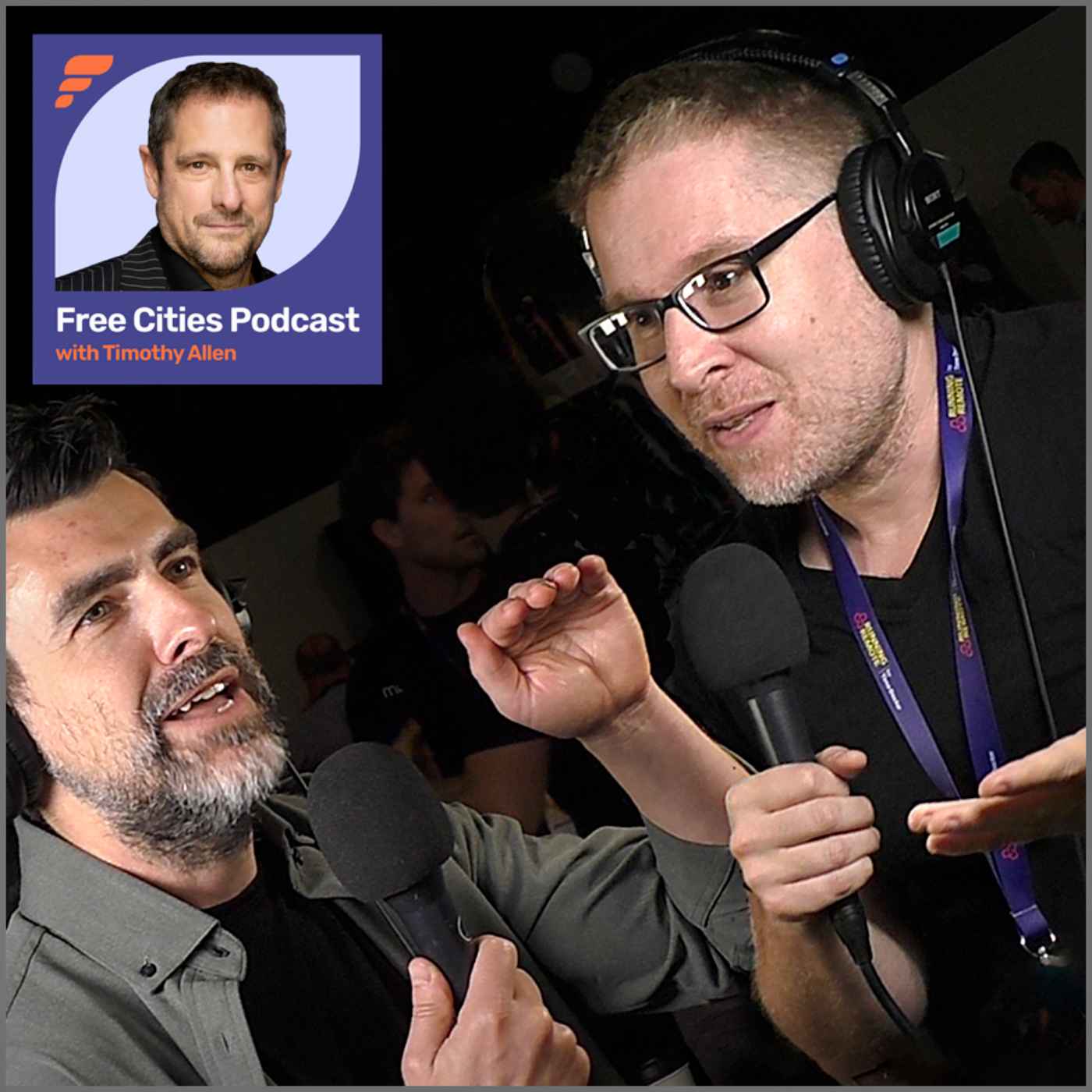
194 - Two Founders, Two Futures | Liam Martin & Nick Francis
1w ago01:05:12Tap to summarizeOne says relax. One bought a Bunker. Two founders on whether AI is coming for your job. - Liam Martin is the co-founder of Time Doctor and Running Remote, and the creator of Peppermint, an AI tool that builds a working digital twin of you out of your emails, messages and calls. Nick Francis spent more than fifteen years building and running Help Scout as a fully remote company. Both were recorded at Running Remote in Austin. When Timothy Allen first sat down with Liam Martin a year ago in Morocco, he was the one asking what an LLM actually was. Liam has been deep in this world for a while, which is exactly why it is worth paying attention when he says tens of millions of jobs could be gone inside twelve months, and why he has bought a chalet in the Canadian woods with its own water and power, just in case. Along the way: a digital twin that answered his accountant's questions for him, an AI that told him the premise of his conference talk was wrong and then built a better one in 78 seconds, and the p(doom) figure that AI insiders quote in private but not on stage. Nick Francis could hardly disagree more. He calls himself an incredible optimist, and he makes a good case. His argument is that the last ten percent of any work, the craft, the judgement, the human touch, is exactly the part AI cannot do, and the part that is about to matter most. He also has a clear-eyed read on where remote work actually stands now that the pandemic push has faded, and why the second wave raises the bar rather than lowering it. Timothy lands somewhere in between: fascinated, slightly rattled, and increasingly convinced that the one thing which holds its value is the human experience itself. A genuine argument about the future of work, in which nobody is entirely sure who is right. In this conversation: A year on, and the floor has dropped out Vibe coding a website, and a WordPress plugin built in seconds Distributed people to distributed intelligence The AI that rewrote a conference talk in 78 seconds Peppermint, and the digital twin that answers your emails Is it creepy? Privacy, PII layers and self-sovereign AI The prepper chalet in the Canadian woods p(doom): ten percent in public, seventy to eighty in private The Anthropic security lead who moved to Austria to write poetry Why Timothy wants the human experience, not the AI copy AI slop on Instagram and TikTok, and rejecting AI-written show notes Government oversight, and the case that AGI has already happened Thirty, forty, fifty percent unemployment inside a year The OpenAI valuation maths that gives the game away Waymo at seven dollars a ride Typing pools, electricity, and what a general technology does The horses of 1910 Why humans will choose to impose limits on themselves Liam's thirty percent chance of utopia Nick Francis and the second wave of remote work Remote before the pandemic, and why talent was always the reason The trade-offs nobody mentions Retreats, Rome and crowning a Pope What is actually happening to remote work right now Hubs, Googles and the geographic perimeter problem The future of work Why Nick is an incredible optimist Jensen Huang and the cost-cutting trap Why software as a service survives The last ten percent, and why craft is the moment Timestamps (audio version, includes Timothy's episode introduction): 0:00:30 - Introduction to episode 0:03:02 - Veritas Villages: the Atenas reveal 0:06:47 - Start of conversation: a year on, and the floor has dropped out 0:09:10 - Distributed people to distributed intelligence 0:10:04 - The AI that rewrote a conference talk in 78 seconds 0:12:00 - Peppermint, and the digital twin that answers your emails 0:14:38 - Is it creepy? Privacy and self-sovereign AI 0:16:59 - The prepper chalet in the Canadian woods 0:17:48 - p(doom): ten percent in public, seventy to eighty in private 0:18:16 - The Anthropic security lead who moved to Austria 0:20:08 - Why Timothy wants the human experience, not the AI copy 0:22:34 - AI slop, and rejecting AI-written show notes 0:24:37 - Government oversight and the case that AGI has already happened 0:26:15 - Waymos, novelty and the human element 0:28:01 - Where is the floor? 0:29:02 - Thirty, forty, fifty percent unemployment 0:29:31 - The OpenAI maths that gives the game away 0:32:36 - Does it eat its way to the top? 0:34:32 - Typing pools, electricity and general technologies 0:36:41 - The horses of 1910 0:37:57 - Why humans will impose limits on themselves 0:39:11 - Liam's thirty percent chance of utopia 0:40:53 - Veritas Villages 0:41:37 - Nick Francis: what is the second wave of remote work? 0:43:26 - Remote before the pandemic, and why talent was the reason 0:45:21 - The trade-offs nobody mentions 0:46:57 - Retreats, Rome and crowning a Pope 0:48:42 - What is actually happening to remote work right now 0:50:28 - Hubs, Googles and the geographic perimeter problem 0:53:14 - No head office: the branding question 0:54:04 - The future of work 0:55:38 - AI: which side of the fence is Nick on? 0:56:11 - Why he is an incredible optimist 0:57:12 - Jensen Huang and the cost-cutting trap 1:00:00 - Why software as a service survives 1:02:00 - The last ten percent, and why craft is the moment 1:03:27 - Wrap-up and how to support the show Guests: Liam Martin - Peppermint | Running Remote | Time Doctor | X | LinkedIn. Nick Francis - Help Scout | Website | LinkedIn Liam’s first appearance on the show, recorded in Morocco a year earlier: listen here The Free Cities Podcast is the official podcast of the Free Cities Foundation, hosted by Timothy Allen. New episodes every Friday. Long-form, in-person conversations with the builders, investors, residents, and thinkers shaping the future of Free Cities, charter cities, special economic zones, network states, private cities, and governance innovation worldwide. Listen & subscribe: freecities.fm | All platforms | Fountain.fm (bonus episodes & early access) Community: Telegram | Free Cities Foundation newsletter | Free Cities Conference Support the show: Donate via Stripe | BTC: bc1q5jun0nzxzqepch84rqk0jnv0rd8uvns28df7mg | V4V podcast apps Lead show sponsor: Veritas Villages - Off-grid, energy self-sufficient communities for freedom-minded people in Latin America. Bitcoin accepted for property purchases. New: Veritas Village at Atenas, Costa Rica, watch the official reveal Follow: Timothy Allen on X & Nostr | Free Cities Foundation on X & Nostr
Transcribe →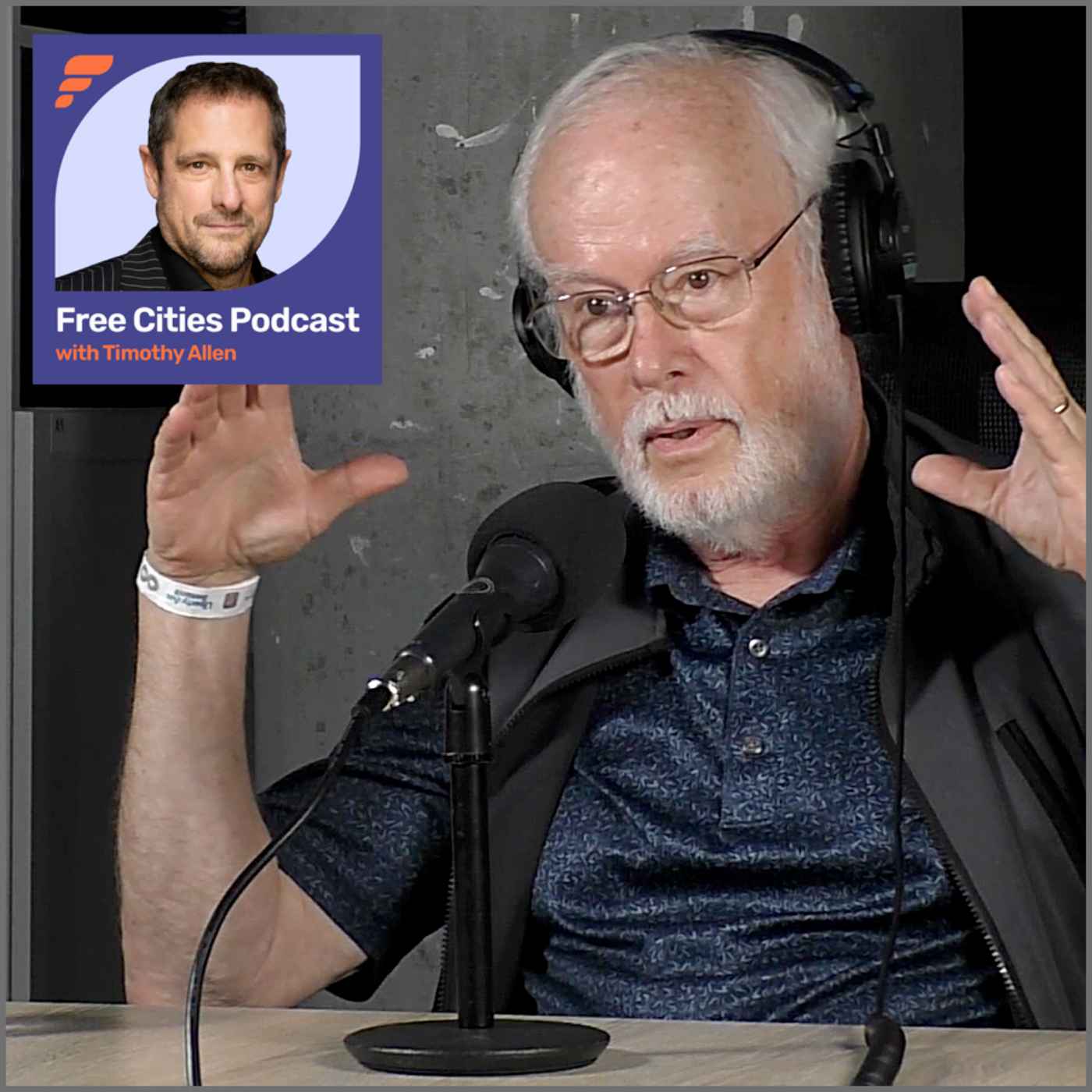
193 - Fifty Years of Watching It Go Wrong | Mark Frazier
2w ago02:18:00Tap to summarizeHe knew the men who tried to start their own countries. He watched every one of them fail. - Mark Frazier has been in this movement longer than almost anyone alive. He put out libertarian magazines in high school, and by eighteen he had been made publisher of Reason, back when it ran out of a truck driver's apartment and had three hundred subscribers. That was 1970. Over the following half century he worked on free zones in more than fifty countries, advised the Reagan administration on enterprise zones, consulted for the World Bank and USAID, and wrote the step-by-step guide on how to build these places. He is president of the nonprofit Openworld and chairs the advisory board of the Startup Societies Foundation. Timothy Allen sits down with Mark in Próspera for a genuine oral history of the Free Cities idea, told by someone who was there for its strangest chapters. Mark knew the men who tried to start their own countries in the sixties and seventies: Werner Stiefel and his Atlantis project, Mike Oliver and the flags raised on seamounts off Tonga and Vanuatu. He was a reporter on the ground in 1975 when one of those breakaway nations collapsed, and the epiphany he had on the way home became his life's work. What sets Mark apart is the lessons he drew from watching so much fail. Do not fall in love with a location and push, he says. Make it a prize that countries compete to win, the way he once got twelve nations bidding to host the first spaceport on Earth. And do not build an enclave that grows rich while the neighbours grow resentful. Design it from day one so the people already living there share in the upside. From there the conversation ranges a very long way: Shenzhen and Montego Bay, the birth of offshore call centres, thirty-dollar micro-vouchers that put Sri Lankan villagers into university, and why Mark thinks AI is about to pull the rug out from under the entire free zone model. And in the final stretch it turns genuinely strange, in the best way: abundance, spirituality, whether a silicon chip can want something, and a rat experiment called Universe 25 that neither host nor guest could quite let go of. In this conversation: A left-wing teenager who read Rand and changed course Becoming publisher of Reason at eighteen The lost history of libertarian new-country projects Werner Stiefel's Atlantis and Mike Oliver's island nations Watching a breakaway nation collapse in 1975 The spaceport prize that drew twelve competing countries Why funnelling money into one chosen location is the wrong way to start Shenzhen in 1982, sprouting skyscrapers from a fishing village Montego Bay and the birth of offshore call centres Uruguay, Zonamerica and the single paragraph that changed everything Anti-fragile zones and designing for shared upside Build-operate-transfer and why leasing land beats selling it Thirty-dollar micro-vouchers and the Sri Lankan school that reached university Why AI is about to pull the rug out from under the free zone model The future of zones as places of experience, safety and serendipity AI tutoring, the Alpha School, and a daughter learning from an AI horseman Hiring on proof of work rather than diplomas Land value as the mechanism that keeps a community on side The Phoenicians, gifts on a beach, and building trust from nothing What Mark thinks Próspera got right and what it missed Abundance, the unnecessariat, and why elite capture may not come Spirituality as the last uniquely human premium Universe 25 and the danger of a world without limits A prediction for the next twenty years Timestamps (audio version, includes Timothy's episode introduction): 0:00:00 - Welcome and introduction 0:03:15 - Veritas Villages 0:07:28 - Start of conversation: fifty years in the making 0:10:32 - The lost new-country projects: Atlantis, Minerva and the seamounts 0:15:37 - The epiphany in Fiji: make it a prize to be won 0:17:06 - The spaceport prize and twelve competing countries 0:24:18 - On the ground in a failed state 0:27:32 - Montego Bay, Shenzhen and the birth of offshore work 0:32:25 - Uruguay and Zonamerica: the gold standard 0:35:22 - Anti-fragility and designing for shared upside 0:41:13 - Why Silicon Valley actually worked 0:45:12 - Build-operate-transfer, leasing land, and debt-for-equity swaps 0:49:20 - Leading with a gift, and what Próspera got right 0:53:29 - Micro-vouchers and the Sri Lankan school that reached university 1:04:06 - Forty million freelancers and the reputation problem 1:06:16 - Why AI pulls the rug out from under the free zone model 1:09:58 - The future of zones: experience, safety and serendipity 1:10:43 - A daughter, a horse, and learning from an AI Buck Brannaman 1:14:48 - The Alpha School and AI-delivered learning 1:20:28 - Hiring on proof of work, not diplomas 1:33:26 - The founder's manifesto: lead with education 1:36:13 - The gentrification trap and vesting the people who add value 1:38:36 - The Phoenicians and gifts on a beach 1:49:53 - On the fence about AI: helpful, hollowing, and dangerous 1:53:00 - Why elite capture may not come in a world of abundance 1:54:04 - Spirituality as the last human premium 2:02:36 - Universe 25 and the danger of a world without limits 2:10:17 - A prediction for the next twenty years 2:16:04 - Wrap-up and how to support the show Guest: Mark Frazier - LinkedIn | Openworld | Startup Societies Foundation | Research papers The Free Cities Podcast is the official podcast of the Free Cities Foundation, hosted by Timothy Allen. New episodes every Friday. Long-form, in-person conversations with the builders, investors, residents, and thinkers shaping the future of Free Cities, charter cities, special economic zones, network states, private cities, and governance innovation worldwide. Listen & subscribe: freecities.fm | All platforms | Fountain (bonus episodes & early access) Community: Telegram | Free Cities Foundation newsletter | Free Cities Conference Support the show: Donate via Stripe | BTC: bc1q5jun0nzxzqepch84rqk0jnv0rd8uvns28df7mg | V4V podcast apps Lead show sponsor: Veritas Villages - Off-grid, energy self-sufficient communities for freedom-minded people in Latin America. Bitcoin accepted for property purchases. Follow: Timothy Allen on X & Nostr | Free Cities Foundation on X & Nostr
Transcribe →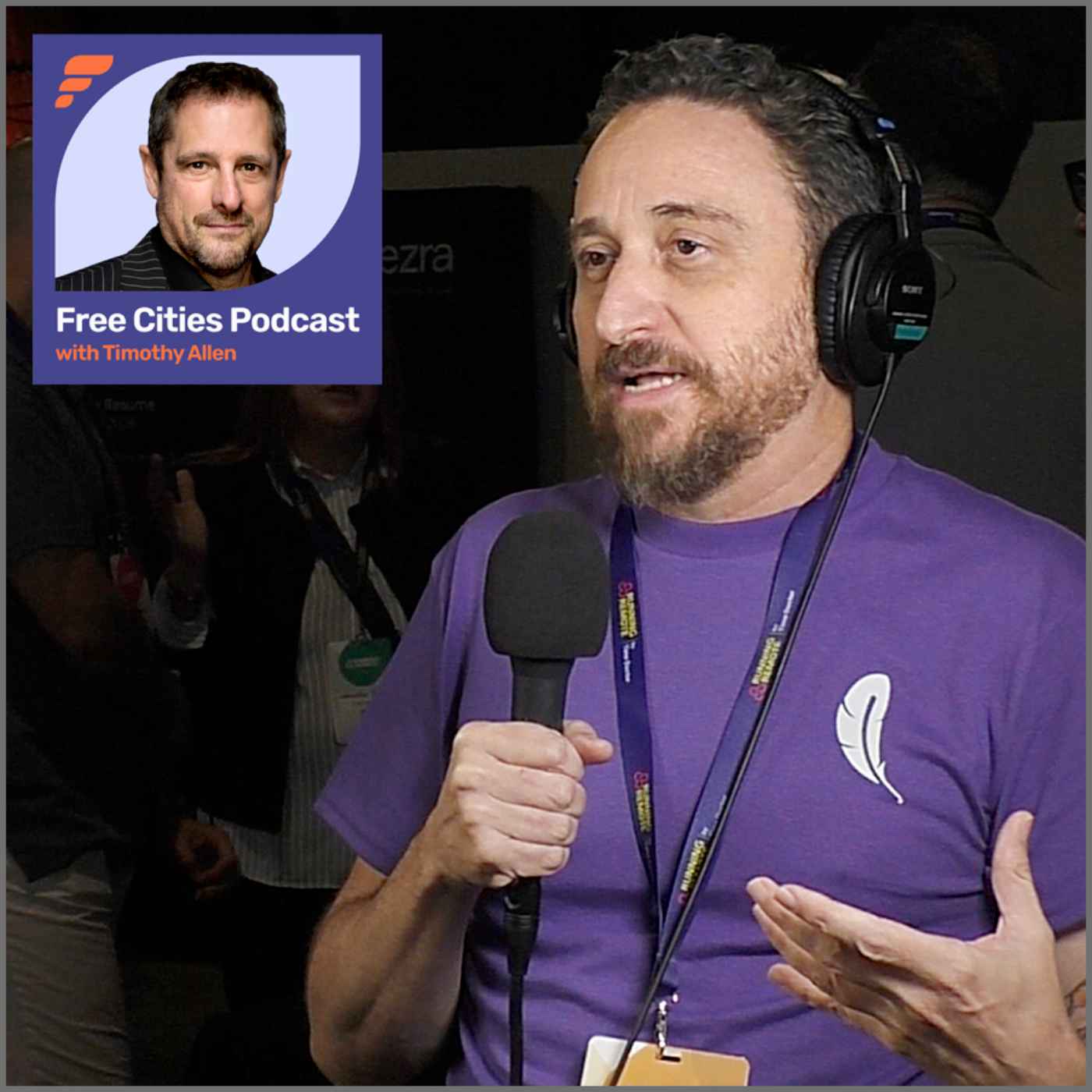
192 - The First Country on the Internet | Joey Flores
3w ago01:04:32Tap to summarizeA Country on the Internet, a Passport by 2050, and the Death of the CV - Joey Flores is Head of Marketing at SafetyWing, the Y Combinator-backed company building a global social safety net for remote workers. A two-time startup founder whose YC-funded music startup was acquired, he dropped out of high school at sixteen and now lives in Oaxaca, Mexico. Timothy Allen sits down with Joey at the Running Remote conference in Austin, Texas, for a conversation about building for the 21st century nomadic life. SafetyWing's pitch is simple and audacious: your healthcare, income protection and pension come from your country and stop following you the moment you live a borderless life, so they are building a safety net that travels with you instead. The endgame is to launch the first country on the internet, through Plumia, the nonprofit think tank spun out of SafetyWing and run by Lauren Razavi. They have mapped the vision to 2050, passport included. Around the edges, the conversation ranges widely: why you cannot simply build a new Silicon Valley wherever you fancy, an unusually honest insider's view of what digital nomads are doing to cities like Oaxaca, a company culture involving rented hotels in Patagonia and a houseplant stipend, a friend allegedly building a Mach 10 passenger plane, and what AI is doing to hiring, including Joey's own story of how resume-screening software made a company founder without a degree invisible to employers. In this conversation: A social safety net that travels with you The plan to launch the first country on the internet Plumia, network states and Edge City What would make an internet country a real country Nomad Citizen: income protection, healthcare and one-click visas A passport that brings its own safety net The 2050 timeline and a flag in the ground The future of remote work A Mach 10 passenger plane, allegedly six years away What Y Combinator is and why it matters Why Joey lives in Oaxaca on an American salary Talent, funding and why Silicon Valley is hard to copy How exits create angel investors and startup cities Nomad gentrification: tipping, housing and behaving well abroad Why long-term expats reject the nomad label Is there such a thing as nomad culture? Hunting the next great nomad hub, and why Florianópolis keeps coming up Patagonia retreats, Build Week in Norway and houseplant stipends What AI is doing inside SafetyWing Solopreneurs and who loses their job first Dropping out at sixteen and being filtered out by hiring software Should your kids skip university? How to actually stand out and get hired Timestamps (audio version, includes Timothy's episode introduction): 0:00:00 - Welcome 0:00:30 - Introduction to episode 0:06:04 - Veritas Villages 0:11:43 - Start of conversation: a safety net that travels with you 0:12:40 - The first country on the internet 0:14:07 - What makes a country a country? 0:14:28 - Nomad Citizen and one-click visas 0:15:19 - A passport that brings its own safety net 0:16:31 - Plumia, Edge City and the nonprofit arm 0:17:28 - Income protection and what is actually in the products 0:19:15 - Travel cover without the endless add-ons 0:21:42 - The 2050 timeline 0:22:44 - The future of remote work 0:23:53 - A Mach 10 passenger plane? 0:24:58 - What is Y Combinator? 0:26:03 - Why Joey lives in Oaxaca 0:27:11 - Can you build Silicon Valley anywhere else? 0:30:00 - Exits, millionaires and angel investors 0:32:39 - Nomad gentrification: an insider's warning 0:36:35 - Why long-term expats reject the nomad label 0:37:59 - Is there such a thing as nomad culture? 0:40:10 - Hunting the next nomad hub 0:40:48 - Florianópolis and Ipê City 0:42:05 - The future of work is global 0:43:12 - Patagonia retreats and Build Week in Norway 0:46:33 - Houseplant stipends and remote-first perks 0:47:50 - What AI is doing inside SafetyWing 0:49:13 - Solopreneurs and the jobs question 0:51:40 - Breaking in when AI already does the job 0:53:45 - Should your kids skip university? 0:54:24 - Dropping out at sixteen and beating the CV filters 0:56:16 - How to actually stand out and get hired 0:58:49 - Founders who cannot work for anyone else 1:00:40 - Where independent, self-driven people thrive 1:02:45 - Wrap-up and how to support the show Guest: Joey Flores - LinkedIn | SafetyWing | Plumia The Free Cities Podcast is the official podcast of the Free Cities Foundation hosted by Timothy Allen. New episodes every Friday. Long-form, in-person conversations with the builders, investors, residents, and thinkers shaping the future of Free Cities, charter cities, special economic zones, network states, private cities, and governance innovation worldwide. Listen & subscribe: freecities.fm | All platforms | Fountain.fm (bonus episodes & early access) Community: Telegram | Free Cities Foundation newsletter | Free Cities Conference Support the show: Donate via Stripe | BTC: bc1q5jun0nzxzqepch84rqk0jnv0rd8uvns28df7mg | V4V podcast apps Lead show sponsor: Veritas Villages - Off-grid, energy self-sufficient communities for freedom-minded people in Latin America. Bitcoin accepted for property purchases. Follow: Timothy Allen on X & Nostr | Free Cities Foundation on X & Nostr
Transcribe →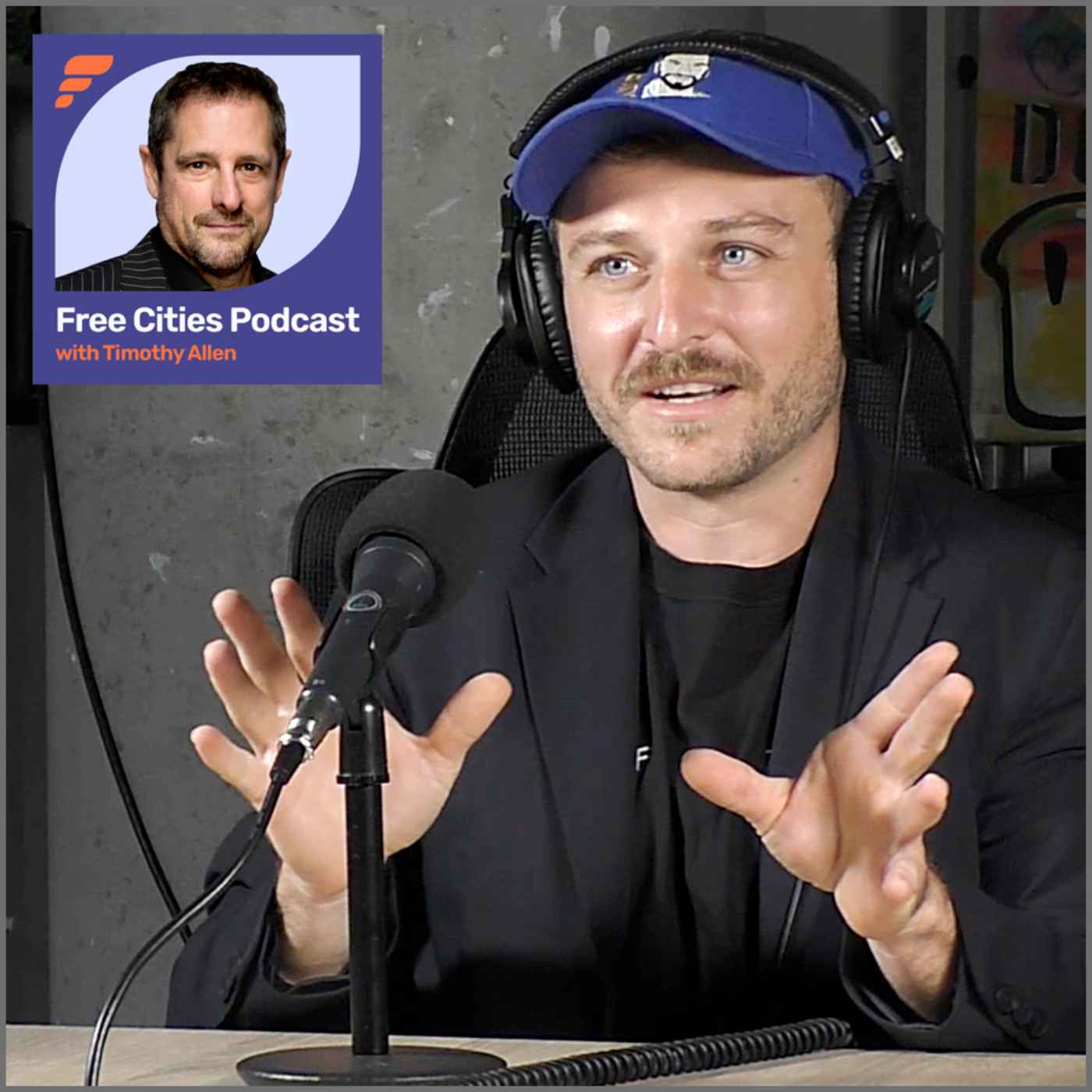
191 - Everyone Needs a Plan B | Vance
Jul 1701:39:29Tap to summarizeSecond Passports, Plan B Residencies, and the Americas Super Cycle - Vance is the founder of My Latin Life, an immigration agency covering residency visas across Latin America. A Canadian-American software developer, he began travelling after reading Tim Ferriss's The 4-Hour Workweek and arriving in Playa del Carmen in 2018. Timothy Allen sits down with Vance in Próspera for a practical guide to internationalising your life. They discuss the five routes to a second passport, why ancestry should usually be investigated first, why Mexico often suits Americans while Paraguay appeals to Europeans, and how some Latin American residencies can be maintained with very little time on the ground. The conversation then turns to the larger shift Vance sees taking place across the world: declining confidence in Europe, growing optimism in Latin America, El Salvador's transformation, Dubai's sudden vulnerability, and his belief that the present economic super cycle belongs to the Americas. In this conversation: Why Vance built an online identity around a pseudonym Canada, the United States and discovering geo-arbitrage How The 4-Hour Workweek turned travel into a way of life Choosing destinations to learn Spanish, Portuguese and French Why technical skills still matter in the age of AI Arriving in Playa del Carmen and finding the digital nomad world How My Latin Life became an immigration agency Residency visas, offshore banking, companies and asset protection The five routes to a second passport Why ancestry is often the cheapest and most overlooked route Mexico for Americans and Paraguay for Europeans US citizenship-based taxation and the Texas two-step Paraguay's residency process and low physical-presence rules Panama, tax blacklists and leaving your previous tax system UK tax residence, property, family and substantial ties Raising children in a stable home while preparing them for a changing world European pessimism versus Latin American optimism Flag theory and geographic arbitrage Building a podcast as a network rather than a standalone product What more than 300 interviews taught Vance about podcasting El Salvador's transformation and growing business confidence Dubai and the danger of mistaking a boom for permanence Portugal, Spain, London and historic economic super cycles Why Vance believes the present super cycle belongs to the Americas Europe or the Americas: where should you place your future? Timestamps (audio version, includes Timothy's episode introduction): 0:00:30 - Introduction to episode 0:10:10 - Start of conversation: living behind a pseudonym 0:12:35 - Canada, the US and early geo-arbitrage 0:13:31 - Coding, business and The 4-Hour Workweek 0:17:12 - Does a digital nomad ever plan to come home? 0:19:53 - Choosing countries through language learning 0:21:10 - Technology versus finance 0:23:29 - Preparing children for the future of work 0:25:07 - Studying unconventional success stories 0:26:28 - AI-assisted coding and entrepreneurial generalists 0:28:32 - The move from Miami to Playa del Carmen 0:32:25 - Discovering Latin America and creating My Latin Life 0:34:11 - Becoming an immigration agency 0:35:11 - Why everybody needs more than one passport 0:36:00 - The five routes to a second citizenship 0:38:31 - Latin America's accessible residency programmes 0:40:14 - Mexico for Americans, Paraguay for Europeans 0:41:05 - US citizenship-based taxation 0:42:23 - The Texas two-step 0:43:55 - US tax on worldwide income 0:45:13 - Living between Mexico, Paraguay and Portugal 0:46:17 - Paraguay's residency process 0:47:04 - One day every three years 0:48:29 - Panama and European tax blacklists 0:50:20 - Leaving your previous tax system 0:51:26 - UK property, family and substantial ties 0:52:17 - Positioning your family for the future 0:53:24 - European pessimism versus Próspera optimism 0:58:04 - Oil prices, heating costs and the family holiday 1:01:47 - Why you cannot save your way out of rising costs 1:02:11 - Europeans moving to Latin America 1:03:14 - Flag theory and geographic arbitrage 1:03:57 - Mobility versus stability for families 1:07:36 - Can a podcast become a primary income? 1:10:21 - The podcast as a networking tool 1:11:24 - More than 300 My Latin Life episodes 1:15:01 - Podcasts, events and a defensible business 1:17:29 - Why famous guests rarely create lasting growth 1:21:53 - Vance's latest visit to El Salvador 1:23:56 - Safety, opportunity and optimism 1:26:02 - Living near builders and innovation 1:28:12 - Dubai and how quickly a boom can reverse 1:29:39 - Mini cycles versus century-long super cycles 1:30:23 - Why the Americas are entering their super cycle 1:31:36 - Returning diasporas and rebuilding countries 1:34:18 - Europe or the Americas? 1:36:51 - My Latin Life and how to contact Vance Guest: Vance - My Latin Life | X | YouTube | Podcast | Newsletter The Free Cities Podcast is the official podcast of the Free Cities Foundation hosted by Timothy Allen. New episodes every Friday. Long-form, in-person conversations with the builders, investors, residents, and thinkers shaping the future of Free Cities, charter cities, special economic zones, network states, private cities, and governance innovation worldwide. Listen & subscribe: freecities.fm | All platforms | Fountain.fm (bonus episodes & early access) Community: Telegram | Free Cities Foundation newsletter | Free Cities Conference Support the show: Donate via Stripe | BTC: bc1q5jun0nzxzqepch84rqk0jnv0rd8uvns28df7mg | V4V podcast apps Lead show sponsor: Veritas Villages - Off-grid, energy self-sufficient communities for freedom-minded people in Latin America. Bitcoin accepted for property purchases. Follow: Timothy Allen on X & Nostr | Free Cities Foundation on X & Nostr
Transcribe →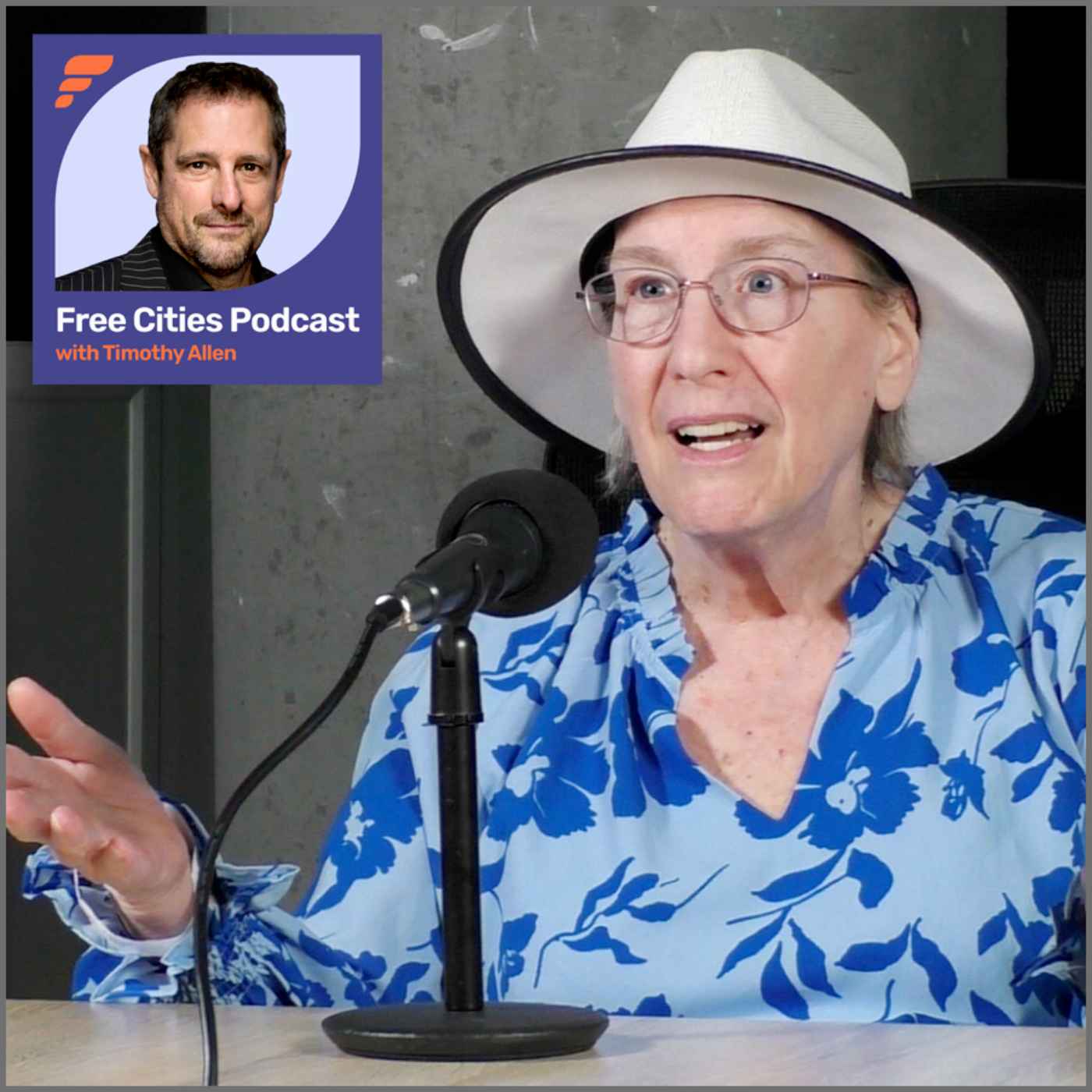
190 - Building Prosperity in the Danger Zone | Joyce Brand
Jul 901:33:03Tap to summarizeSpencer Heath, the Entrecom Model, and the City With One Owner – Joyce Brand is a proper OG of the Free Cities world: author of 'Pioneering Prosperity: The Morazán Model for Free Cities', co-author of Spencer Heath's posthumous Economics and the Spiritual Life of Free Men, and one of the very few people in this movement who has actually lived in a Free City. She spent three years as an early resident and chronicler of Ciudad Morazán, the "blue-collar" Honduran ZEDE built not for tech founders and digital nomads but for ordinary Honduran workers, in what was statistically one of the most dangerous parts of the country. Timothy Allen sits down with Joyce in Próspera for her first ever podcast recorded in person. It is the story of one of the great late-life plot twists: a forty-five year obsession with incentives that began with five unnecessary typewriters in Portland, Oregon in 1981, ran through a decade in Hollywood as a film editor, and ended with her moving to Honduras at 71 to watch a city rise from bare farmland. As she puts it, life begins at 70. It is also probably the clearest explanation you will hear of the entrecom model: Spencer Heath's idea that landowners, not politicians, are the natural providers of governance services, made real by the Italian industrialist Massimo Mazzone. Along the way: why Morazán and Próspera look completely different but are structurally almost identical, and what it is like to live in a place while the incoming government campaigns on destroying the legal framework it stands on. In this conversation: Joyce's first in-person podcast, stage fright, and Timothy's malaria blank in front of a thousand people Five memory typewriters nobody needed: the 1981 government order that revealed how perverse incentives are baked into the system Coercion and consent as a continuum, and thirty years of studying economics and political philosophy as a hobby A decade in Hollywood: editing a dozen independent features, starting in her late 40s, and cutting Eric Roberts Meeting Spencer MacCallum at Libertopia, and Spencer Heath's most controversial idea: the landowner as the natural provider of governance What governance actually needs to provide: security, fair dispute resolution, and infrastructure, and why everything else is the will to power Life begins at 70: the Peter Thiel question that gave her a purpose COVID, a cancelled move to Colombia, and the phone call that changed everything: Spencer bedridden in Mexico Finishing a 60-year book project at a dying man's bedside: Economics and the Spiritual Life of Free Men The last dinner party, and the four-hour conversation with Massimo Mazzone that ended with a house, a salary, and a mission: chronicle everything, the good and the bad Watching a city built from cows and bare farmland: the wall first, then the houses, then the road The escalator accident, a hospital that assumed COVID, and refusing remdesivir and the ventilator The autoimmune diagnosis that forced her back to the US, and taking responsibility for her own health How the ZEDEs became a campaign punching bag, and why the lady at the beauty salon had never heard of them The entrecom model explained: one entity holds title to all the land, and governance becomes a service you subscribe to rather than submit to The myth of home ownership: property taxes, zoning, and why you never really owned it anyway What if you get a bad owner? Contracts, third-party arbitration, and why customers leaving solves what voting cannot Why Morazán and Próspera are structurally almost identical: statutory autonomy, contractual governance, and monetary optionality (including the rent paid in stablecoin, not stable corn) Welfare versus real charity: entitlement, dependence, and the Morazán residents who pitched in for a neighbour's leg surgery Why governance as a business has never caught on: corporations, government favours, and why Pfizer is not capitalism Her vision: a world full of Free Cities, networked in alliances, so every human being can choose their governance Timestamps (audio version, includes Timothy's episode introduction): 0:00:30 - Introduction to episode 0:08:46 - Start of conversation: her first in-person podcast, and stage fright 0:12:03 - "You're a bit of an OG" 0:12:47 - Three years in Morazán, and the first visit: cows, farmland, one warehouse 0:14:01 - The 1981 typewriter story: perverse incentives revealed 0:17:44 - Thirty years of study, and a decade in Hollywood 0:21:53 - Meeting Spencer MacCallum at Libertopia 0:22:09 - Spencer Heath: the landowner as the natural provider of governance 0:27:33 - What governance services actually are: security, disputes, infrastructure 0:32:32 - Life begins at 70: the Peter Thiel question 0:34:43 - COVID, the cancelled move to Colombia, and the call to Spencer 0:37:12 - Finishing Economics and the Spiritual Life of Free Men at his bedside 0:39:37 - The last dinner party, and Massimo Mazzone's four-hour vision 0:42:40 - The offer: a house, a salary, and chronicle everything 0:45:15 - Watching the city rise: the wall, the houses, the road 0:46:54 - FreedomFest, the escalator accident, and two weeks in hospital 0:51:02 - The autoimmune diagnosis, and leaving Morazán 0:52:19 - Lessons from building a city 0:53:08 - Bureaucrats, customs, and trouble before the election 0:55:06 - The socialist campaign against the ZEDEs 0:57:02 - Did ordinary Hondurans actually care? 0:59:50 - The entrecom model explained 1:02:38 - The myth of home ownership 1:05:14 - What if you get a bad owner? 1:07:09 - Why Morazán and Próspera are structurally almost identical 1:08:24 - Monetary optionality, and the stable corn incident 1:10:02 - Subscribing versus submitting: opt-in, opt-out 1:11:04 - A world of networked Free Cities 1:12:30 - Welfare, real charity, and the Uber driver's surgery 1:20:53 - Local community, and why we now expect politicians to lie 1:23:06 - Can entrecoms scale? The market will show you 1:24:28 - Why governance as a business has never caught on: corporations are not capitalism 1:29:00 - Wrapping up: back to Morazán on Sunday Guest: Joyce Brand - Pioneering Prosperity: The Morazán Model for Free Cities | The Morazan Model | Linktree The Free Cities Podcast is the official podcast of the Free Cities Foundation hosted by Timothy Allen. New episodes every Friday. Long-form, in-person conversations with the builders, investors, residents, and thinkers shaping the future of Free Cities, charter cities, special economic zones, network states, private cities, and governance innovation worldwide. Listen & subscribe: freecities.fm | All platforms | Fountain.fm (bonus episodes & early access) Community: Telegram | Free Cities Foundation newsletter | Free Cities Conference Support the show: Donate via Stripe | BTC: bc1q5jun0nzxzqepch84rqk0jnv0rd8uvns28df7mg | V4V podcast apps Lead show sponsor: Veritas Villages - Off-grid, energy self-sufficient communities for freedom-minded people in Latin America. Bitcoin accepted for property purchases. Follow: Timothy Allen on X & Nostr | Free Cities Foundation on X & Nostr
Transcribe →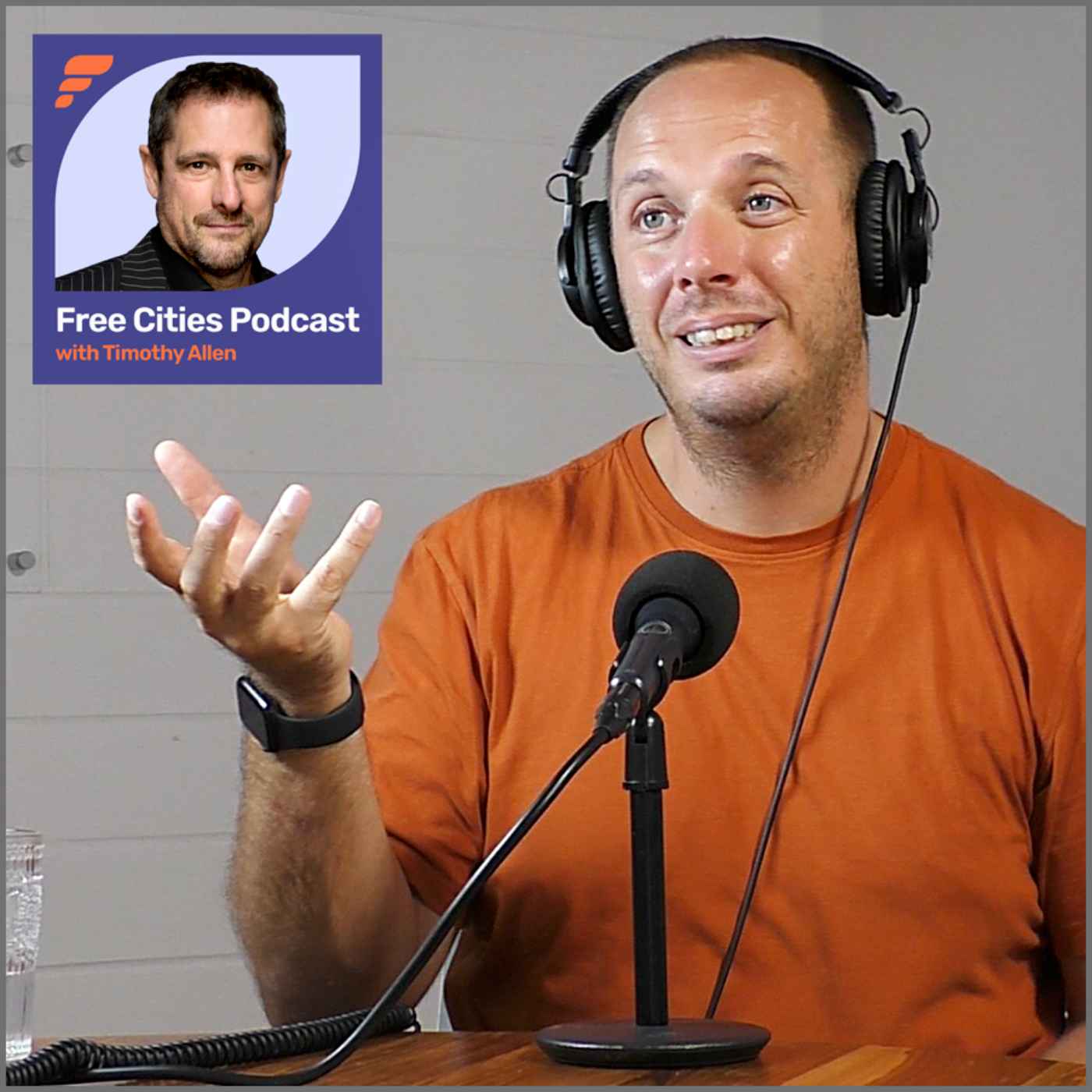
189 - The Nomad Pioneer Betting on a Free City | Gonçalo Hall
Jul 301:34:44Tap to summarizeNomad Villages, the Bali Playbook, and Building a Caribbean Frontier – Gonçalo Hall is a pioneer of the digital nomad movement, the builder behind the world's first Nomad Village in Madeira and the founder of NomadX, who now runs the Roatán Tourism Bureau, a Próspera company whose job is to put a little-known Caribbean island on the map. A year ago, in episode 130, he told Timothy that almost nobody in the digital nomad world had heard of Próspera, and that its real problem was community and public relations. Twelve months later he has moved to Roatán with his wife and young daughter and works inside the ecosystem he was once only studying from the outside. Timothy Allen sits down with Gonçalo in person in Próspera, having spent almost a month living and working there himself. It is a candid conversation about what is genuinely working in this frontier and what plainly is not yet, and about whether a place this early can become the builder's dream Gonçalo believes it already is. They move from the full-circle story of two strangers meeting in Morocco to both ending up in Honduras, through the hard-won lessons of Madeira and Bali, to the thing Gonçalo says matters most and is hardest to fake: community, experience, and integrating the local people. Timothy is sceptical about the frontier gaps, the disjointedness, the missing beach and the missing cafe, and Gonçalo does not pretend they are solved. But both agree the opportunity here is unlike anything else in the space. In this conversation: The full-circle story: meeting at an invite-only nomad gathering in Morocco, and how a three-month consulting trip turned into moving his family to Roatán Why Próspera feels disjointed and cut off today, and why Gonçalo frames that as an opportunity rather than a failure The "come for a month" model: why a few days makes you a tourist, and a month makes you a builder, and how Timothy accidentally proved it Build for nomads, but do not make them your end client: why building for nomads means building for everyone The Bali and Canggu playbook, from a single co-working space to the best cafes and gyms in the world, built by nomads for nomads Building for experience: the two layers of physical infrastructure and community, and why Próspera can control both from scratch Pop-up months and thematic months: a longevity month, a biotech month, and structuring the serendipity so it does not take a month to click The missing third space, the cafe that should open at seven, and the beach club that could connect Duna Tower to Pristine Bay The school as an anchor: Pristine Academy, a Montessori class of eight nationalities, and Noma Collective's family month retreats What the Roatán Tourism Bureau actually does, and why nobody knows where Roatán, let alone Próspera, is The cruise ship problem: 2.1 million visitors spending sixty dollars a day, and how to convert them into people who stay Longevity as the standout bet: the GARM Clinic, gene therapy, Peter Diamandis's X Prize, and the peptide boom What peptides actually are, GLP-1s, and Gonçalo testing the longevity products he is about to promote The entrepreneur ranch on the Honduran mainland: rural tourism, free rent, and empowering locals to build Community as the real differentiator: why here and not the Bahamas or Lisbon, two hours from Miami with regulatory autonomy Próspera's head start and the regulatory canvas for AI, crypto and real estate that Europe makes impossible Managing expectations and the danger of overselling a cutting-edge but early-stage place Crawfish Rock: the neighbouring village, the "same two ladies" in every interview, and why integrating the locals protects the whole project The butterfly effect, and how Lauren Razavi of Plumia is the reason this conversation happened at all Timestamps (audio version, includes Timothy's episode introduction): 0:00:30 - Introduction to episode: a year on from Morocco 0:09:55 - Start of conversation: how a consulting trip became a move to Roatán 0:13:55 - No holds barred: what is working and what is not 0:16:37 - Why you should come to Próspera for a month 0:23:02 - Roatán is twenty years behind the Caribbean 0:24:00 - Build for nomads, build for everyone 0:25:16 - The Bali and Canggu playbook 0:33:39 - Pop-up months and thematic months 0:39:43 - The missing third space 0:44:47 - The school, and family month retreats 0:51:52 - The land between Duna Tower and Pristine Bay 0:56:24 - What the Roatán Tourism Bureau actually does 0:57:58 - The cruise ship problem 1:01:37 - Longevity, the GARM Clinic, and gene therapy 1:06:26 - What are peptides? 1:09:37 - The entrepreneur ranch on the Honduran mainland 1:15:07 - Community as the real differentiator 1:17:55 - Próspera's head start and the regulatory canvas 1:21:23 - The Free Cities Conference comes to Próspera 1:22:45 - Managing expectations, and not overselling 1:26:54 - Crawfish Rock and integrating the locals 1:30:38 - The butterfly effect, and Lauren Razavi's role Guest: Gonçalo Hall - X @Gonzohall | Roatán Tourism Bureau | NomadX Gonçalo's first appearance: EP 130 - Why Most Digital Nomads Have Never Heard of Próspera The Free Cities Podcast is the official podcast of the Free Cities Foundation hosted by Timothy Allen. New episodes every Friday. Long-form, in-person conversations with the builders, investors, residents, and thinkers shaping the future of Free Cities, charter cities, special economic zones, network states, private cities, and governance innovation worldwide. Listen & subscribe: freecities.fm | All platforms | Fountain.fm (bonus episodes & early access) Community: Telegram | Free Cities Foundation newsletter | Free Cities Conference Support the show: Donate via Stripe | BTC: bc1q5jun0nzxzqepch84rqk0jnv0rd8uvns28df7mg | V4V podcast apps Lead show sponsor: Veritas Villages - Off-grid, energy self-sufficient communities for freedom-minded people in Latin America. Bitcoin accepted for property purchases. Follow: Timothy Allen on X & Nostr | Free Cities Foundation on X & Nostr
Transcribe →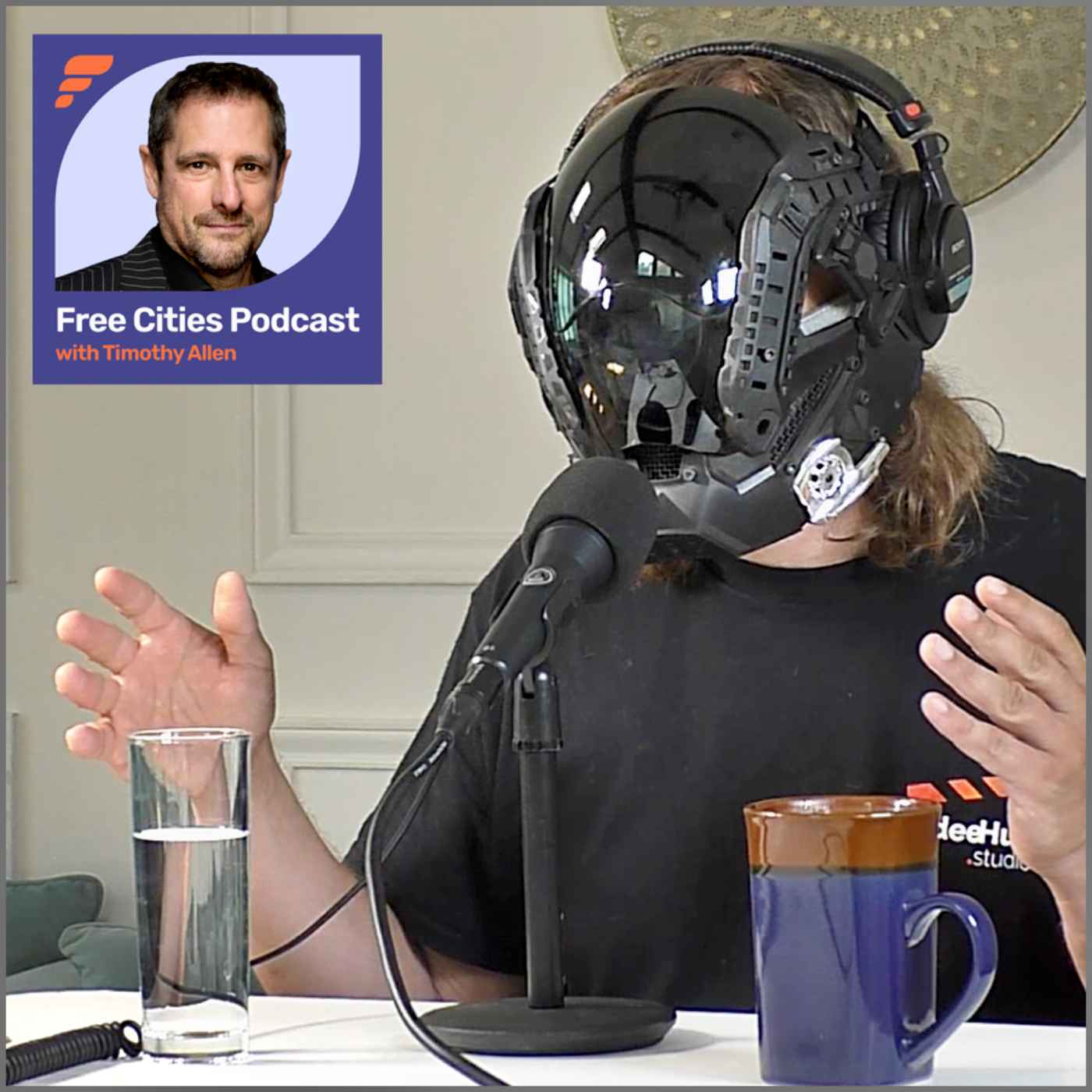
188 - Plan For Decentralisation | Polycarp Nakamoto
Jun 2602:23:53Tap to summarizeCommunity, Mesh Networks, and the Plan to Build a Parallel Society on Bitcoin – Polycarp Nakamoto is the masked, anonymous figure at the centre of Lab 484, a research laboratory and cluster of startups based in Austin, Texas, building for Web 5: a second internet that runs peer-to-peer on Bitcoin nodes rather than the centralised choke points of the web we use today. Through Lab 484 and its flagship Archipelago operating system, the community is assembling the hardware and software for a censorship-resistant mesh network, owned by nobody and run by everybody, that they believe will be needed when the internet as we know it fails. Timothy Allen sits down with Poly in person at a community compound near Austin for one of the more unusual conversations in the show's history. It is a conversation about whether you can rebuild the internet from the ground up on the one piece of digital infrastructure Poly considers genuinely decentralised: Bitcoin. They move from the question of anonymity, through the architecture of a second internet (mesh networks, Bitcoin nodes, Nostr, e-cash), to the harder problem sitting underneath all of it: people. Along the way: why Poly thinks the internet has roughly five years left, what a private AI living inside a shipping-container home looks like, why he frames the whole thing as a fork between a CBDC dystopia and a sovereign solarpunk future, and a genuine back-and-forth about whether any of this survives contact with the human condition. Timothy is an old Bitcoiner who runs his own node and lives on a remote farm, so in many ways Poly is preaching to the choir. But this is not an infomercial for the sovereign life, and the scepticism is real. In this conversation: Why Poly stays anonymous, and his argument that "everyone is building the mesh network," so the idea does not depend on any single person's identity Lab 484: a decentralised governance board with no ownership, a private membership association, and twelve startups each building a different piece of the new internet Web 1 to Web 5 in plain terms, with Amazon Sidewalk as the proprietary mesh network and Jack Dorsey's Bitchat as the open-source one Using Bitcoin nodes as a second internet: replacing the DNS, hosting "sovereign" websites that cannot be switched off, and why Poly says you need more nodes rather than mass adoption Ubiquiti point-to-point antennas, five-mile links, and how even a remote farm might connect The startups in detail: Bitcoin-node food trucks, shipping-container tiny homes, and a house with a private cloud, a private AI, and a private voice assistant built in Self-hosted, sovereign AI: the Framework Desktop with an AMD Ryzen AI Max chip, why open-source models are "cooking for yourself," and running it all on a node like Umbrel or Start9 The Archipelago operating system: a Linux-based, open-source Bitcoin-node OS bundling mesh networking, private AI and a private cloud, designed to spread from a USB stick What happens if the internet goes down: radio, Meshtastic, dark fibre, cheap satellites, and reusing old architecture with Nostr relays Jack Dorsey's Web 5 stack, as Poly tells it: decentralised identifiers, verifiable credentials, and decentralised web nodes, all designed to run on a nodal network AI you cannot hold accountable, the "golden calf," AI-generated code rot, and the spiritual experience as the new human frontier Digital ID as Timothy's line in the sand, the CBDC "triple threat" of identity, money and data, and the Tower of Babel as a parable for breaking centralisation Off-grid Bitcoin with Fedimint and Cashu, the warehouse-receipt analogy for e-cash, and earning a passive income by relaying data Network effects (eBay and PayPal, and Bitcoin's "seven network effects"), low time preference, and why staying under the radar only works up to a point Network states versus intentional communities, Próspera's legal survival, Liberland, and a spectrum of sovereignty that runs from hiding to recognition The closing argument: "remove the centralisation from your own heart first," and why anything worth building should be as easily replicated as Bitcoin Timestamps (audio version, includes Timothy's episode introduction): 0:00:25 - Introduction to episode 0:13:30 - Start of conversation: anonymity, the mask, and why the message does not depend on the man 0:15:01 - The Austin compound, Lab 484, and a decentralised governance board with twelve startups 0:20:00 - Web 1 to Web 5, Amazon Sidewalk, and Bitchat 0:25:51 - Bitcoin nodes as a second internet and a replacement for the DNS 0:41:00 - The startups: Bitcoin-node food trucks, shipping-container tiny homes, and a private AI home 0:43:15 - Self-hosted AI, the Framework Desktop, and the cooking analogy 0:55:00 - If the internet goes down: radio, Meshtastic, dark fibre, satellites, and Nostr relays 1:16:00 - AI accountability, the golden calf, and the spiritual frontier 1:24:00 - Digital ID as the line in the sand, CBDCs, and the Tower of Babel 1:39:00 - Off-grid Bitcoin: Fedimint, Cashu, and paying to send data 1:51:00 - Network effects, low time preference, and staying under the radar 2:09:00 - Network states, Próspera, Liberland, and the spectrum of sovereignty 2:16:00 - Individual sovereignty, running Archipelago, and "plan for decentralisation" Guest: Polycarp Nakamoto - X @polycarpweb5 | Lab 484 | Archipelago Foundation | Archipelago live demo | Public alpha The Free Cities Podcast is the official podcast of the Free Cities Foundation hosted by Timothy Allen. New episodes every Friday. Long-form, in-person conversations with the builders, investors, residents, and thinkers shaping the future of Free Cities, charter cities, special economic zones, network states, private cities, and governance innovation worldwide. Listen & subscribe: freecities.fm | All platforms | Fountain.fm (bonus episodes & early access) Community: Telegram | Free Cities Foundation newsletter | Free Cities Conference Support the show: Donate via Stripe | BTC: bc1q5jun0nzxzqepch84rqk0jnv0rd8uvns28df7mg | V4V podcast apps Lead show sponsor: Veritas Villages - Off-grid, energy self-sufficient communities for freedom-minded people in Latin America. Bitcoin accepted for property purchases. Follow: Timothy Allen on X & Nostr | Free Cities Foundation on X & Nostr
Transcribe →
187 - Free Cities Have a People Problem | Daniel Thompson
Jun 1901:13:02Tap to summarizeBuilding New Cities Starts With People: Digital Nomads, Families, and the Minimum Viable Society – Daniel Thompson is the co-founder and CEO of Noma Collective, a global community of remote workers, location-independent professionals and, increasingly, families, who travel and live together in different parts of the world a month at a time. Born and raised in the UK to a family of musicians, he spent his early twenties in music marketing and PR and ran one of the biggest weekly nights in the dubstep scene before leaving to travel. After two years on the road he settled in Buenos Aires, where he launched the country's first arts members club, and spent summers running large-scale European festivals including Outlook, Dimensions and Secret Solstice. He moved to Belize in 2019, and when the pandemic hit he reopened a hotel as a pop-up co-live that became Noma Collective in 2020. He has since acquired the work-travel program Hacker Paradise, and now develops the ideas at the centre of this conversation: his "7 Stages of Remote Life" framework and his new Minimum Viable Society project. He is based in Mérida, Mexico. Timothy Allen sits down with Daniel in Próspera for a conversation about the quiet problem underneath the whole free cities movement: not law, not land, but people. How do you actually get human beings to turn up, and then how do you get them to stay? They move from the idea that digital nomadism is a stage rather than a destination, through Daniel's belief that families are the missing key to critical mass, to his Minimum Viable Society project and a genuine disagreement between the two men about whether you build a new community on empty land or on one of the thousands of depopulated villages already standing across southern Europe. Along the way: how Noma started by accident in a locked-down Belize hotel, why it turned out to be solving loneliness rather than infrastructure, what a portable schooling network looks like, how a broken property ladder might be replaced with subscription-to-ownership, and why integrating with the existing local community matters more than any amount of capital. In this conversation: Why "people," not regulations or coastline, is the binding constraint on every new city and network state Digital nomadism as a stage, not a destination, and the path from remote work to multi-local living to a multi-generational network society "Multi-local," feeling at home in more than two places, a term Daniel credits to Emi of Crecimiento, Argentina's leading network state movement How Noma Collective began as a COVID pop-up in a Belize hotel, and why it turned out to be solving loneliness rather than infrastructure Why families, not lone nomads, may be the key to critical mass, and the 500 families who applied for a single month-long hub The Próspera family hub at Pristine Bay, and why walkability and a kitchen beat a resort every time Boundless Life and the case for connected, portable schooling The AI threat to an education system built on memorisation, and newer models like Alpha School and Acton Academy Return-to-office mandates, GitLab as a fully remote counterexample, and the "soft layoff" theory The Minimum Viable Society project: assembling a society from parts (health, housing, education, agriculture) instead of gathering like-minded people and hoping Subscription-to-ownership: using economies of scale to lower the barrier onto the property ladder, with echoes of the Homestead Act The build-versus-buy debate: empty land and a chateau near Montpellier, against Europe's depopulated villages Why galvanising the existing local community, rather than building an enclave, is essential Veritas Villages, SafetyWing and Plumia, and the partners already building the physical layer Timestamps (audio version, includes Timothy's episode introduction): 0:00:00 - Intro, episode 187, and the quiet problem of getting people to show up 0:03:43 - Sponsor: Veritas Villages 0:08:07 - Start of conversation: Bowie predicts internet dominance, AI, and the free cities movement 0:14:51 - How Noma Collective began, and digital nomadism as a stage not a destination 0:19:15 - Multi-local living and why families are the key to critical mass 0:24:34 - The Próspera family hub, schooling, and the AI threat to education 0:38:50 - Real estate, subscription-to-ownership, and the Homestead Act 0:45:40 - The Minimum Viable Society project and the chateau near Montpellier 0:58:00 - Build versus buy: Europe's depopulated villages 1:05:11 - Why a village beats a chateau, and closing thoughts Guest: Daniel Thompson - Noma Collective | LinkedIn | Minimum Viable Society | Instagram @nomacollectivehq The Free Cities Podcast is the official podcast of the Free Cities Foundation hosted by Timothy Allen. New episodes every Friday. Long-form, in-person conversations with the builders, investors, residents, and thinkers shaping the future of Free Cities, charter cities, special economic zones, network states, private cities, and governance innovation worldwide. Listen & subscribe: freecities.fm | All platforms | Fountain.fm (bonus episodes & early access) Community: Telegram | Free Cities Foundation newsletter | Free Cities Conference Support the show: Donate via Stripe | BTC: bc1q5jun0nzxzqepch84rqk0jnv0rd8uvns28df7mg | V4V podcast apps Lead show sponsor: Veritas Villages - Off-grid, energy self-sufficient communities for freedom-minded people in Latin America. Bitcoin accepted for property purchases. Follow: Timothy Allen on X & Nostr | Free Cities Foundation on X & Nostr
Transcribe →
186 - You're Not Allowed to Say This | Eric Kaufmann
Jun 1201:48:53Tap to summarizeWoke's 1960s Origins, the Race Taboo, and the End of the Progressive Era – Eric Kaufmann is a Canadian professor of politics at the University of Buckingham, where he directs the Centre for Heterodox Social Science. One of the most prominent academic voices on nationalism, national identity, and political demography, he is the author of Whiteshift: Immigration, Populism and the Future of White Majorities (Penguin, 2018) and Taboo: How Making Race Sacred Produced a Cultural Revolution (2024, published in the United States as The Third Awokening). After two decades at Birkbeck, University of London, he left in 2023 for Buckingham, Britain's self-described free speech university, following what he calls five years of steady hostility and being "cancelled by a thousand cuts." Timothy Allen sits down with Eric in the UK for an honest, often uncomfortable conversation about race, identity, and the things you are no longer allowed to say out loud. They move from Kaufmann's own cancellation story across two decades in British academia, through his central argument that woke is not new but the late-stage unfolding of the 1960s, to the claim that the whole edifice traces back to a single sacred taboo around race that formed in the mid-1960s and was then stretched and weaponised. Along the way: how affirmative action quietly mutated from equal treatment into enforced equal outcomes, whether woke is driven by women entering the professions or by feminine ideas, the survey data on who actually holds these views, and the hardest stretch of the conversation for Timothy, immigration, identity, and the contested idea of white culture, where the two men disagree openly and calmly. They close on Kaufmann's forecast that the progressive era has peaked, but that years of polarisation and populism lie ahead before anything settles. In this conversation: Kaufmann's cancellation story: four internal investigations between 2018 and 2022, and why he left a twenty year University of London post for Buckingham His core thesis from Taboo: woke isn't new, it incubated on campus for fifty years before social media and clickbait media blasted it everywhere The "big bang" of the modern moral universe: a good instinct against racism that hardened into an absolute taboo with no nuance How a sacred taboo becomes a weapon: stretch the meaning of racism and you can shut down almost any argument The quiet shift from equality of treatment to enforced equality of outcome, and the Orwellian word games that justified it Whether the rise of woke is about women entering the professions or about feminine ideas (emotional safety over free speech) The survey data on who is actually woke, broken down by age and sex, and why it is surprising Why Kaufmann rejects the simple pendulum theory, and why trans is the cultural left's first real defeat in public opinion in sixty years Attachment to your own group versus dislike of out-groups: why the psychology research treats them as separate things The contested idea of white culture, where Timothy pushes back hard and argues culture matters, not colour The coming demographic shift, and why Kaufmann thinks race and identity will matter more in the decades ahead, not less The distinction between the membership level (which should be open) and the system level (where caring about the pace of change is not racism) His forecast: an interregnum of polarisation and populism, and why he thinks de-radicalisation has to come from the left Timestamps (audio version, includes Timothy's episode introduction): 0:00:30 - Introduction to episode 0:11:02 - Start of conversation: Jordan Peterson and treading the academic tightrope 0:12:17 - Kaufmann's cancellation story: four internal investigations in four years 0:16:52 - Zooming out: living in the aftermath of the 1960s 0:18:27 - Why woke massified in the 2010s: social media and clickbait 0:19:31 - The big bang: the anti-racism taboo of the mid-1960s 0:23:55 - Back to the beginning: affirmative action in 1965, disparate impact in 1971 0:25:58 - How equal treatment quietly became enforced equal outcomes 0:27:15 - Word games, Orwell, and the redefinition of racism 0:30:02 - The feminization of culture: demographics or ideas? 0:33:58 - Who is actually woke: the survey data by age and sex 0:35:51 - Free speech versus emotional safety, public versus private life 0:38:54 - Who sets the taboos, and the problem of selective empathy 0:42:34 - Trans as the cultural left's first defeat in sixty years 0:44:22 - The right side of history and a belief system that cannot give ground 0:45:30 - Post-progressivism and the end of the progressive era 0:47:47 - Why young Britons moved left and young Canadians moved right 0:50:43 - Immigration, identity, and the discomfort around white culture 0:54:52 - Attachment to your own group is not the same as hatred of others 0:56:48 - What white culture actually means 1:02:12 - Timothy pushes back: culture, not colour 1:06:39 - White guilt and the ambient public morality 1:08:02 - Is defining people by race already outdated? 1:09:53 - Culture as outward expression, identity as inward attachment 1:13:23 - The Black Carol story and a child who never noticed skin colour 1:16:22 - The coming demographic shift and why Kaufmann thinks it will matter 1:17:39 - A legitimate democratic preference stigmatised as racism 1:20:09 - Does acknowledging race create a new divide? 1:23:08 - The next few decades: interregnum, polarisation, and who must back down 1:29:51 - Culture versus identity, and is Rishi Sunak English? 1:32:02 - Islam, Rupert Lowe, and halal slaughter at the village pub 1:34:19 - Competing versions of Britishness 1:37:58 - A free market of ears: the podcast's 95% male audience 1:41:12 - Membership versus system level: caring without being a racist 1:43:23 - Owen Jones, Ezra Klein, and who on the left will actually engage Guest: Eric Kaufmann - University of Buckingham | X | sneps.net The Free Cities Podcast is the official podcast of the Free Cities Foundation hosted by Timothy Allen. New episodes every Friday. Long-form, in-person conversations with the builders, investors, residents, and thinkers shaping the future of Free Cities, charter cities, special economic zones, network states, private cities, and governance innovation worldwide. Listen & subscribe: freecities.fm | All platforms | Fountain.fm (bonus episodes & early access) Community: Telegram | Free Cities Foundation newsletter | Free Cities Conference Support the show: Donate via Stripe | BTC: bc1q5jun0nzxzqepch84rqk0jnv0rd8uvns28df7mg | V4V podcast apps Lead show sponsor: Veritas Villages - Off-grid, energy self-sufficient communities for freedom-minded people in Latin America. Bitcoin accepted for property purchases. Follow: Timothy Allen on X & Nostr | Free Cities Foundation on X & Nostr
Transcribe →
185 - Medicine Without Permission | Niklas Anzinger
Jun 501:46:27Tap to summarizeSelf-Sovereign Medicine: Biotech, Right to Try, and the Cracks in the FDA's Monopoly – Niklas Anzinger is a German entrepreneur who has probably done more than any single person to put Próspera on the longevity biotech map. He is the founder and General Partner of Infinita VC, the first VC fund based in Próspera, Honduras, and the founder and CEO of Infinita City, formerly known as Vitalia, a network of hubs for longevity biotech acceleration. He also hosts the Stranded Technologies podcast, which has featured guests including Naval Ravikant and Balaji Srinivasan. Niklas is a returning guest to the show. Timothy Allen sits down with Niklas in Austin, Texas, a few days after spending a month living alongside him in Próspera, for a wide-ranging conversation that moves from aging as a disease and the FDA's 1962 turning point, through China's rise to 30% of global pharma licensing deals in just ten years, Sid Sijbrandij's AI-assisted cancer fight and the Australian who built a personalised cancer vaccine for his dog using AlphaFold for roughly the cost of a genome sequence, to the Right to Try movement taking shape in Montana and New Hampshire and the regulatory model that could replace the FDA monopoly, and finally to what comes next for Próspera, phase one trials as a commercial beachhead, the Massimo Mazzone profit-first model at Ciudad Morazán, and why the ZEDE framework may be the most underappreciated governance innovation of our time. In this conversation: Why Niklas is spending time in Austin: building a supplementary regulatory pathway to the FDA, modelled on what CLEAR does for TSA airport security Why aging isn't technically a disease and why that distinction is holding longevity biotech back The FDA's 1962 efficacy mandate: when drug costs exploded and pharma lost its independence Sid Sijbrandij's "founder mode" approach to his own bone cancer, and the Australian who made a personalised cancer vaccine for his dog for $3,000 using AlphaFold and ChatGPT China going from near zero to 30% of global pharma licensing deals in a decade and what that means for the United States The three regulatory models: FDA monopoly, the Dubai private-certifier model, and the Próspera insurance-based model based on Robin Hanson's ideas Right to Try in Montana and New Hampshire: what's actually changing, how private certifiers work, and the cannabis Cole Memo as the precedent Why Próspera should focus on phase one clinical trials and why medical tourism alone isn't enough without first building credibility Robin Hanson's idea of fusing your doctor and your life insurance company: aligning incentives to actually keep you alive Massimo Mazzone and Ciudad Morazán's profit-first model versus the venture capital model at Próspera: two legitimate approaches to the same problem Why the three Honduran ZEDEs Próspera (knowledge work), Ciudad Morazán (manufacturing), and Orquídea (agriculture) map almost exactly onto the three sectors of the economy The Free Cities Conference coming to Próspera in September: why it matters and who will be there Enjoy the conversation. Timestamps (audio version, includes Timothy's episode introduction): 0:30:00 - Introduction to episode 0:09:50 - Start of conversation: Austin instead of Próspera 0:10:13 - Why Niklas is in the US: an alternative regulatory pathway to the FDA 0:12:15 - Does mainstream biotech know about Próspera? 0:13:54 - The FDA's 1962 mandate and how drug costs exploded 0:19:23 - Aging as a disease: why the framing matters 0:20:27 - Unlimited Bio and combination therapies 0:21:06 - Sid Sijbrandij, the dog cancer vaccine, and personalised medicine 0:26:03 - Will doctors become redundant? 0:30:06 - Is aging a disease? The deeper philosophical question 0:34:19 - Biological immortality and the libertarian case for choice 0:35:44 - Right to Try: the moral argument and the regulatory underbelly 0:40:05 - How state sovereignty actually works against the FDA 0:44:45 - China's 30% market share in pharma licensing and what the US should do 0:57:58 - How Próspera's insurance model works in practice: GARM and Minicircle regulations 1:01:03 - Why the insurance model is the real innovation 1:03:18 - Right to Try in Montana and New Hampshire: the Cole Memo parallel 1:09:22 - Phase one trials as Próspera's commercial beachhead 1:15:35 - Robin Hanson's doctor-meets-life-insurer model 1:18:17 - Predictions: how fast will Montana and New Hampshire move? 1:20:24 - What comes next for Próspera 1:23:52 - Massimo Mazzone's profit-first model vs the VC model 1:31:27 - Why the three ZEDEs map to the three sectors of the economy 1:39:07 - Infinita as an events funnel and what comes next 1:41:43 - The Free Cities Conference in September Guest: Niklas Anzinger - LinkedIn | Infinita VC | Stranded Technologies Podcast The Free Cities Podcast is the official podcast of the Free Cities Foundation hosted by Timothy Allen. New episodes every Friday. Long-form, in-person conversations with the builders, investors, residents, and thinkers shaping the future of Free Cities, charter cities, special economic zones, network states, private cities, and governance innovation worldwide. Listen & subscribe: freecities.fm | All platforms | Fountain.fm (bonus episodes & early access) Community: Telegram | Free Cities Foundation newsletter | Free Cities Conference Support the show: Donate via Stripe | BTC: bc1q5jun0nzxzqepch84rqk0jnv0rd8uvns28df7mg | V4V podcast apps Lead show sponsor: Veritas Villages - Off-grid, energy self-sufficient communities for freedom-minded people in Latin America. Bitcoin accepted for property purchases. Offers: Become a resident or business owner in Próspera | ArkPad Próspera Resort Follow: Timothy Allen on X & Nostr | Free Cities Foundation on X & Nostr
Transcribe →