← Free Thinking Through the Fourth Turning with Sasha Stone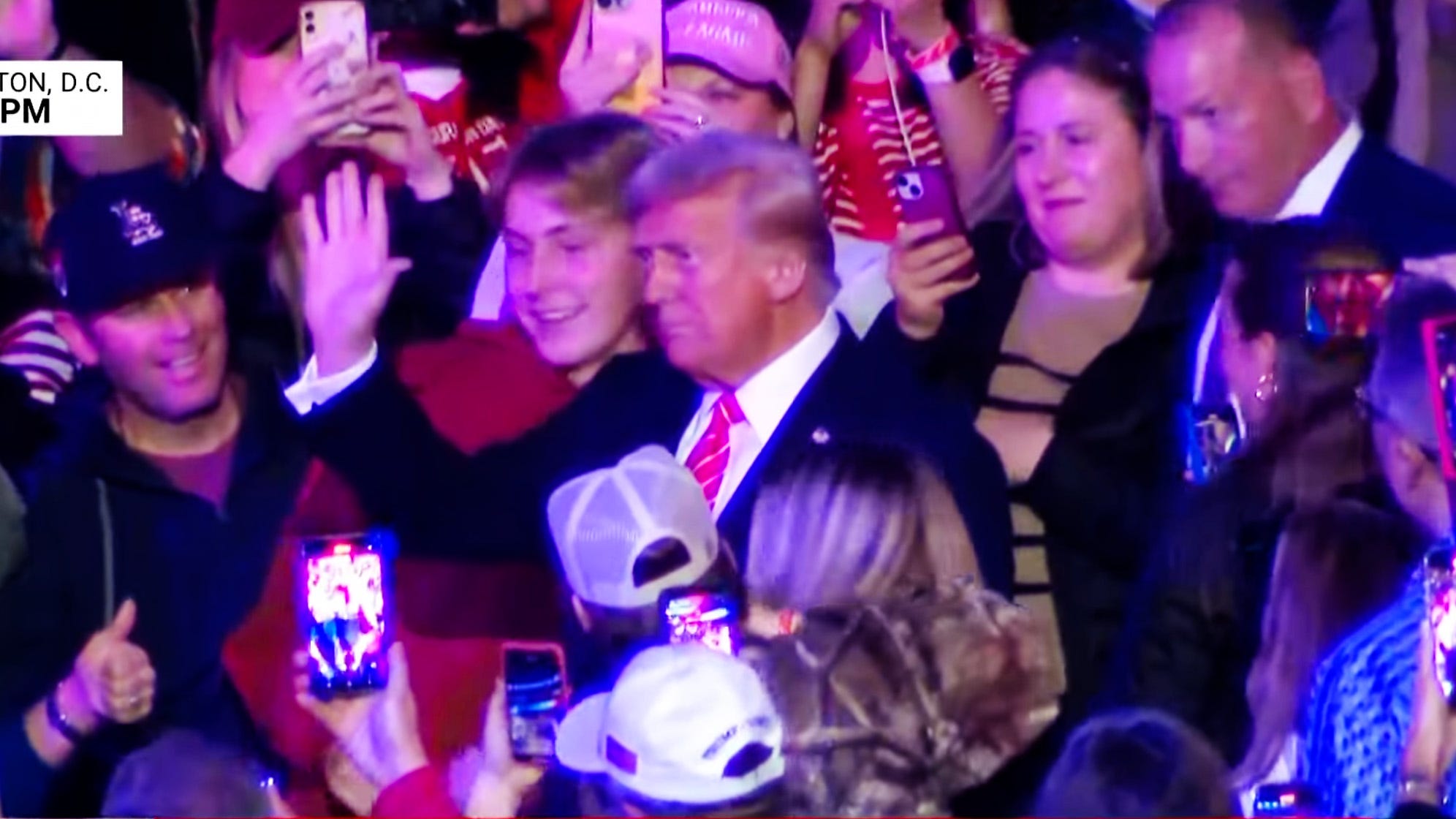
Free Thinking Through the Fourth Turning with Sasha Stone
Finally, a Real Celebration for MAGA
00:27:06
Loading summary
Transcript40 lines
- [00:00]
Sasha Stone
Hi. This is Free Thinking through the fourth Turning. My name is Sasha Stone. Finally, a real celebration for Maga. What a difference eight years makes.
- [00:11]
Matt
Want Mach 10? Let's give Mach 10. Now remember, the contract threshold is Mach.10. Not 10.1, not 10.2. Mach 10. That should keep the program alive. I don't like that look, Matt. It's the only one I got. Control, this is Dark Star Henry Dark Star Control. Loud and clear. How me?
- [01:03]
Sasha Stone
Loud and clear.
- [01:04]
Matt
Takeoff pre checks complete. Ready for APU start. Ready. Left engine start. Ready. Right engine start. Pedals for taxi. We are ready for taxi. Driver, this is Darkster. We are taxiing with information.
- [01:24]
Sasha Stone
Alpha Dark Star, you're clear to taxi, Runway 21. Winds 21010.
- [01:29]
Matt
Okay. Fuel temps are looking good. Control concurs. Battery's holding a 95% cabinet pressure looks good. Control concurs. Towers of Stark Star, we're ready for takeoff. Requesting an unrestricted climb to 600. Above Dark Star. The Runway and skies are yours. Rear Admiral Chester Kane. Maverick Kane just pulled up to the gate. It's not too late to stay. Stop. Buddy, you know what happens to you if you go through with this.
- [01:56]
Sasha Stone
I know what happens to everyone else if I don't. Dark Star's ready for takeoff.
- [02:06]
Matt
Everyone go for takeoff. Starting with engine. Engine. Go. Thermals. Go. Fuel. Go. Electric. Go. Control surfaces. Go. Dark Star Control. Do it. Cleared for takeoff. All right, sweetheart, one last ride. Dark Star, you are cleared above 6. 00. Increase the Mach. 3.5. Cleared above 6. 00.
- [02:54]
Sasha Stone
Increased to Mach. 3.5. It's been a long time coming, hasn't it, Maga? What a ride it's been for you. As people like me were arguing with Bernie Bros about the 2016 nomination for president and were caught up in our unending phantasmagoria about a reality TV star who was rising in the ranks on the right, you were being verbally and physically attacked already bullied at rallies, spit on, kicked, called racists, Nazis, fascists and bigots would only get worse. How far you've come from the last inaugural when so many protesters burned cars and smashed windows, screaming, not my president.
- [04:03]
Matt
In New York, thousands of protesters chanting and banging drums as they march past Rockefeller center up 6th Avenue, blocking off streets above Trump Tower. I was in tears of how it was so close, you know? And it's so hard to fathom that she was right there. And then all of a sudden, in two minutes, it was gone.
- [04:28]
Sasha Stone
He won.
- [04:29]
Matt
In Chicago, they burned Donald Trump paraphernalia. In Houston, angry demonstrators Taking turns beating a paper mache likeness of Trump with the bat, then torching it. In Boston, residents say they're frustrated but determined to work for Trump causes.
- [04:47]
Sasha Stone
The beautiful and elegant Melania Trump never graced the COVID of any magazine. They mocked her Christmas decorations and called her an uncaring Nazi. But almost no one got it worse than Ivanka Trump. Although all the Trump kids were put through the dehumanizer the left had become, they were called ugly and inbred. There were jokes about Trump sleeping with his own daughter just because he was proud of her and praised her as he does all of his kids. This was mainstream on the left. Dehumanization on a grand scale. As long as that was the version. We told ourselves that they were the rich, hollow, power hungry elites like the cast of Succession. We could convince ourselves we were the hardscrabble people lifting up the minority class and making the world a better place, one marginalized group at a time. But what of the majority? It would eventually lead to the government and their media lying about you. On January 6, riding the hysteria to ban the social media app parlor from Amazon's web server and ban the then sitting President of the United States from YouTube, Facebook and Twitter. It seemed there was no place for you in America anymore. But what did you do in the face of that kind of social and political oppression? You rose up and you fought back. You didn't have to do it by smashing windows or protesting. You did it with true grit, organizing, fundraising, and keeping the MAGA spirit high. You never lost your faith because you knew exactly what you were fighting for and what you were up against. And most of all, your unbreakable loyalty to Trump kept hope alive that one day there might be fairness in government, in our culture, and in our major institutions that decided it was perfectly fine to treat you like hostile invaders in your own country. But people like me had no idea that it was happening. What we heard was that Trump's rallies were violent, that his supporters were beating up black people, and that his rallies were like Hitler's. If you scare people enough, they'll go along with anything. We were the side that had all of the power. We were the empire. We were never the resistance. That we turned our helplessness and our fanaticism into dehumanizing half the country is a shame. We should never live down. I didn't realize it until 2020. I was so trusting of people like Rachel Maddow. I'd listened to NPR without even thinking about their political bias. We were the side that told the truth, I believed we weren't fooled by Fox News and Breitbart. How could anyone not trust NBC News? How could I ever think that what they told me on CNN might not be the whole story? I didn't realize until the Tom Cotton op ed disaster at the New York Times that my information was being carefully curated. I watched all of my friends and colleagues crucify Bari Weiss on Twitter for allowing the Cotton piece to be published in the New York Times. It was harm. They said it would get people killed. They said it terrorized their staff, they said.
- [08:05]
Matt
Should the New York Times have published this op ed by Republican Senator Tom Cotton? According to most of the journalists at the paper, no. Cotton's piece sent in the troops, which endorses military force on protesters, sparked a huge uproar online with many reporters at the Times posting a screenshot of the article with the words running this puts black New York Times staffers in danger. Cotton refers to some of the protesters who have taken to the streets following George Floyd's death as nihilist criminals and left wing radicals. One thing above all else will restore order to our streets. An overwhelming show of force to disperse, detain and ultimately deter lawbreakers. Pulitzer Prize winning reporter at the Times, Nicole Hannah Jones, had this to say. I'll probably get in trouble for this, but to not say something would be immoral. As a black woman, as a journalist, as an American, I am deeply ashamed that we ran this. Meanwhile, the New York News Guild makes the case that invariably invoking state violence disproportionately hurts black and brown people. It goes on to say, this is a particularly vulnerable moment in American history. Cotton's op ed Pours gasoline on the fire James Bennett, the New York Times editorial page editor, defended the decision to publish, saying Times opinion owes it to our readers to show them counter arguments, particularly those made by people in a position to set policy. But later on Thursday, the New York Times admitted the piece did not meet editorial standards, adding that Bennett hadn't even read the piece before allowing it to go to print.
- [09:44]
Sasha Stone
Tom Cotton was a United States senator who merely reported what most Americans already believed. The protests were violent and destructive. A majority of Americans wanted the military to be brought in. Bari Weiss was giving the majority a voice in the paper of record. But as we'd done with almost every news story since the beginning of the Trump era, we stretched the truth like taffy to suit our needs. Trump was Hitler and this was fascism. We'd all convinced ourselves to believe. With the help of the military experts, they trotted out to agree.
- [10:21]
Matt
We pick up our team coverage this morning with Tracy Potts and Tracy, Growing concern this morning about the president's plan to use active troops to control protesters across the nation. Officers taking a knee. Peaceful protest and violence in Chicago. A family pulled from their car roughed up by police.
- [10:40]
Sasha Stone
We will hold people accountable who cross the line.
- [10:44]
Matt
In New York, where thousands followed George Floyd's brother across the Brooklyn Bridge. A police officer was stabbed, two others shot. They're trying to keep themselves safe because the police want to go home to their families. President Trump's plan to meet protesters with military force, opposed by a growing chorus of former military leaders, retired Marine General John Allen, former Joint Chiefs of Staff Mike Mullen and Martin Dempsey. Our military was not trained for that purpose.
- [11:15]
Sasha Stone
It's really time that we said no. Our active duty forces should not be employed in a situation to crush peaceful protesters.
- [11:24]
Matt
On Capitol Hill, Some Republicans remain silent.
- [11:28]
Sasha Stone
Let me ask you a couple of questions.
- [11:30]
Matt
Do you agree with Mattis that the.
- [11:31]
Sasha Stone
President is a phone call?
- [11:35]
Matt
Others praising former Defense Secretary James Mattis for his op ed, accusing President Trump of dividing the country.
- [11:43]
Sasha Stone
He's an American patriot. He's an individual whose judgment I respect. By just blaming the president, he's only looking at half of the half of the equation.
- [11:53]
Matt
As Democrats mark the 8 minutes and 46 seconds George Floyd laid under an officer's knee, they're also planning hearings on police brutality.
- [12:04]
Sasha Stone
Alaska Republican Lisa Murkowski says she's rethinking whether to support the president's reelection because of his response to these demonstrations. The president responded on Twitter that in two years he'd be in Alaska opposing her, too. Tracy Potts, NBC News the truth. They needed the protest to be as violent and chaotic as possible. They encouraged them to make Trump look bad. By 2020, I'd already been the target of so much abuse from the left. I was called a white supremacist, a bigot, a racist and a transphobe. Many on the left now just assume it's true that I went to the dark side. Not a day goes by that someone from my former side does not lob me with some kind of hateful insult. Just yesterday, I was told by a longtime follower of my film site that I was a vile person and they regretted ever following me for all of those years. Enjoy MAGA, he said. So maybe that is partly why in 2020, I just couldn't take it anymore. I couldn't take watching so much collective hatred, so much sustained rage, all aimed at one man and his supporters. It felt familiar to me. And my empathy began to rise. All I wanted was to know how true it was. Had we all been lying about Trump and Maga? Did the media lie for that long? I remember my daughter wandering into the living room one time and hearing someone verbally trash Trump as he gave a speech. And my daughter said, poor guy. Caught me off guard. Her empathy was still intact. She could see what I couldn't. But I knew I had to change because I knew what I was engaging in was wrong. It felt like shaking the cold hand of Mr. Potter and it's a Wonderful Life. He's about to make a deal to save the building alone. But that cold hand stops him and reminds him of who he is and what he's about to give up. It was that cold hand on my side that made me take a step back. What are you doing? I thought.
- [14:24]
Matt
How about the building alone? Oh, confound it, man. Are you afraid of success? I'm offering you a three years contract at $20,000 a year starting today. Is it a deal or isn't it?
- [14:37]
Sasha Stone
Well, Mr. Potter, I. I know I ought to jump at the chance, but I just.
- [14:44]
Matt
I wonder if it'd be possible for you to give me 24 hours to think it over. Sure, sure, sure. You go on home and talk about it to your wife.
- [14:53]
Sasha Stone
I'd like to do that. Yeah.
- [14:54]
Matt
Then in the meantime, I'll draw up the papers. All right, sir. Okay, George. Okay, Mr. Potter. Oh, no, no.
- [15:13]
Sasha Stone
Now, wait a minute here. Wait a minute.
- [15:15]
Matt
I don't need 24 hours. I don't have to talk to anybody. I know right now, and the answer is no. No, doggone it. You sit around here and you spin your little webs and you think the whole world revolves around you and your money. Well, it doesn't, Mr. Potter. In the whole vast configuration of things, I'd say you were nothing but a scurvy little spider. You. And that goes for you, too. And it goes for you, too.
- [15:49]
Sasha Stone
Escaping my ideological feedback loop was not easy. I had to make a conscious effort to cut off all input from mainstream media and on my own social media feeds. Then I had to allow news only from the right. I watched a Fox News Tucker Carlson and listened to Steve Bannon, Dan Bongino and Ben Shapiro. I was like an Amish teenager stumbling on a pile of nudie magazines in the barn. It was contraband and I couldn't get enough. What is this world? I had no idea even existed. They were saying things we weren't allowed to say. They were Unafraid of our cultural leaders. And then I began watching Trump's rallies. I watched all five a day heading into the election.
- [16:44]
Matt
Could I ask the. Could I ask the fake news to take your cameras and show all the way back there, for hundreds of yards, all the way back there, there. Take your cameras. Go as far as the eye can see now. Now, tell NBC News it's not a thousand people. You don't. You don't. You can't see it. You can't see it down here. You won't believe how many people that thing goes.
- [17:25]
Sasha Stone
Watching those rallies, I saw the real Trump, the one MAGA sees and knows. I saw a man who was nothing like the one depicted in the press and among my friends. Their hatred, our hatred, was unlike anything I'd ever experienced. And yes, that is the result of social media algorithms on our brains. But how could we control it if we weren't even allowed to talk about it? Empathy is what drove me to want to get to know the people I'd been conditioned to hate, and even Trump himself. We can't allow social media to take empathy and humanity from us. And they've already got a big head start. What I saw in those rallies and why I came to look forward to them then and still do today, is that they were not driven by hate. They were driven by love. The media had it exactly backward. They saw his flaws, understood his weaknesses, and in him, they saw themselves. Everything the Democrats did in their attempts to stop Trump was exactly the wrong play. They built a trap for themselves and walked right into it. Doubling down on the persecutions, the hysteria, the rage, and the mass delusion about this version of Trump they invented, only helped Trump and hurt them. I am in awe when I think of this journey from 2016 to now. Everything you've gone through and endured, your refusal to accept their version of you or Trump and your unwillingness to give up your right as an American to participate in this people run government. When I see someone plant the MAGA flag in the middle of a hurricane, as many of you have, I can't help but smile. There's that MAGA spirit. I think to myself, knowing almost no one in my world would even begin to understand what that meant. They'd just think, there's that radicalized crazy terrorist who used to be one of us. The MAGA spirit is wearing that hat when everyone glares at you in the supermarket. It's standing tall and proud as people hurl insults at you. It's holding onto your character and knowing who you are. When you're kicked out of restaurants just for working for or supporting Trump and it's how you stand in the cold for hours, just for a glimpse of your hero. This is your happy ending, a tribute to your unwavering flame. As Walter Kern said, this is a rewrite of January 6th. Quote, an ecstatic, well attended Trump inauguration might obliterate and overwrite the cultural memory of Jan.6. I imagine many powerful interests would go to great lengths to prevent this from occurring. December 16, 2024. We got our happy ending now. You have written the narrative and you have written the history. They can't take it from you now. This isn't about the left anymore and all the ways they try to destroy you and everything you believe in. This is finally about you. Maga. This is your moment at long last to celebrate. Take it all in. What a time it is to be alive. Let's make America great again. Thank you for listening to my podcast. Sashastone.substack.com I can't believe we're here. I really can't. It doesn't even feel real. Wow, what a ride. And remember to thine own self be true. And how about one last dance?
- [21:30]
Matt
President Trump, I love you so much. I can't wait for the inauguration. I only pray and hope to the good Lord that he gives you good.
- [21:40]
Sasha Stone
Health and strength to carry your job through.
- [21:44]
Matt
And believe me, it's a big job. I know. Young man, there's no need to feel down. I said, young man, pick yourself off the ground. I said, young man, Cause you're in a new town. There's no need to be unhappy. Young man, there's a place you can go. I said, young man, when you're short on your do, you can stay there. And I'm sure you will find many ways to have a good time. It's fun to stay at the ymca. It's fun to stay at the ymca they have everything fun you're meant to enjoy. You can hang out with all the boys. It's fun to stay at home ymca. It's fun to stay at home ymca. You can get yourself clean, you can have a good meal, you can do whatever you feel. Young man, are you listening to me? I said, young man, what do you wanna be? I said a young man. You can make million dreams but you got to know this one thing. No man does it all by himself. I said, young man, put your pride on the shelf and just go to the ymca. I'm sure they can help you today. It's fun to stay at the ymca. It's fun to stay at the ymca. They have everything for your men to enjoy. You can hang out with all the boys. It's fun to stay at home. Ymca. It's fun to stay at home ymca. You can get yourself clean. You can have a good meal. You can do whatever you feel. Young man, I was once in your shoes. I said I was down and out with the blues. I felt no man Jared. If I were alive I felt the whole world was so giant. That's when someone came up to me and said, young man, take a walk up the street. It's a place there call the ymca. They can stop you back on your way. It's fun to stay at the ymca. It's fun to stay at the ymca. They have everything of your mental enjoy. You can hang out with all the boys. Ymca. It's fun to see it through. Ymca. Yeah. Young man, young man, there's no need to feel down. Young man, young man, pick yourself off the ground. It's fun to stay at the ymca. Young man, young man, are you listening to me? Young man, young man, what do you want to be? Ymca. You'll find it after ymca. No man, young man does it all by himself. Young man, young man, put your pride on the shelf. Why mca? It's fun to stay at home. Ymca. You can get yourself clean, you can have a good meal. You can do whatever you feel. Young man, there's no need to feel down. I said, young man, pick yourself off the ground. I said, young man. Cause you're in a new town. There's no need to be unhappy. Young man, there's a place you can go. I said, young man, when you're short on your dough, you can stay there. And I'm sure you will find many ways to have a good time. It's fun to stay at the ymca. It's fun to stay at the ymca. They have everything for your men to enjoy. You can hang out with all the boys. It's fun to stay and go. Ymca. It's fun to stay at the ymca.