← Free Thinking Through the Fourth Turning with Sasha Stone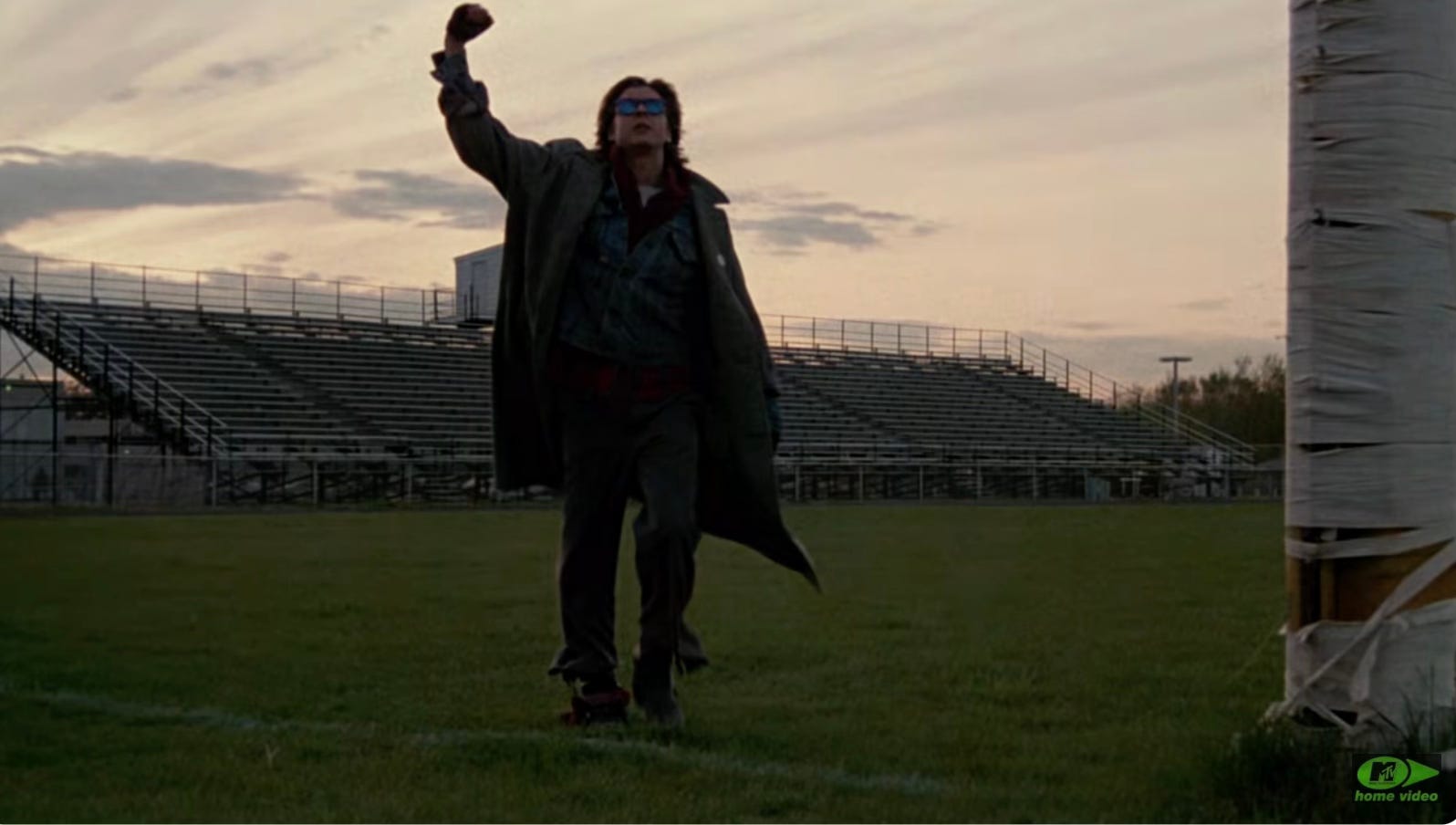
Loading summary
Transcript81 lines
- [00:16]
Unknown Host
How the left lost its cool and Trump found it. The Democrats on the left are still working their way through the seven stages of grief over the election. Many of them continue to be in denial as to how so many people could have voted for Trump and made the popular vote even close at all. In their defense, this wasn't just an election loss. It was the single most humiliating defeat probably in American history. They spent eight years doing nothing but selling hatred and fear of Trump. They pulled out the stops from Hollywood to the Justice Department. Headline after headline told the Democrats that all of the evil known to mankind was embodied in this one man. And all they had to do was stop him and their village could live on peacefully. Trump became the monster, the volcano that required sacrifices so that it didn't destroy the crops. He was the devil riding into Salem. He was Hitler. Now they're grappling with 77 million people in America who don't believe their hysteria anymore. It's been punctured at long last. But those are the rational ones. There are still many of them trapped inside the fear bunker who are now trying to survive in a country they view as full of Nazis and bigots, full of hate and white supremacy, or else toxic masculinity won the race. And now how to raise their daughters in a country full of rapists like this mom on TikTok.
- [01:57]
Concerned Mother
The rapists in this country have crowned their king, and now they have their anthem, your Body, My choice. Thinking about sending my daughter out into this world right now has me pretty up. I'm afraid for her to be too pretty. I'm afraid for her to be too kind, too trusting. But then I'm also afraid to harden her so that she can survive in this f cking bullshit world. She is so good and pure and trusting and doesn't know what's going on. We've protected her from all of this and I don't know what to do because while I don't want to ruin that, I also want her to be able to protect herself. So I don't know, being a mom, being a parent right now to a daughter is fucking hard.
- [02:46]
Unknown Host
Or this tweet by Paul. Listen up, maga ftards. Let me make this crystal effing clear. Don't you dare f with me or my followers for the next four years. You're in for a world of effing pain if you do. We won't back down, we won't be silenced, and we sure as hell won't let you eff with us. You think you can intimidate us? Think again, you pathetic small minded Fs. We're ready for you. We're ready for your bull, your hate and your effing ignorance. And we'll fight back every effing step of the way. So bring it on, you effing cowards. Bring on your best shot. We'll be here, standing strong, fighting for what's right and giving you a mouthful of effing reality. You can't handle the truth and you sure as hell can't handle us. Remember this. We're not alone. We're an effing army of people who believe in justice and equality and in a better future. And we won't let you effing destroy that. So keep your effing hands off us and be prepared to face the consequences if you don't. Now go F yourselves and think about what you're really fighting for. Hint. It's not freedom, it's not democracy, and it sure as hell not the American way. You're fighting for hatred, for division and for your own effing selfish interests. And we won't stand for it. F you maga. F your hatred, F your ignorance and F your pathetic attempts to silence us. We're here, we're loud and we're not going anywhere. Deal with it. But if they're honest with themselves, really honest, they will have to face the truth. Sure, they abandoned the working class. Joe Biden got out of the race. Too late for them to mount a proper campaign. Kamala Harris was a terrible candidate. I threw that last one in there. Though it's a truth they have yet to accept or admit. Elon Musk rigged the election. Yes, they are saying that. But they have to address one fundamental question about why they lost. Why aren't they cool anymore? Being cool means thinking critically, but that was abandoned years ago. On the left, it means being a rebel against the system. But they are the system. It means being counterculture. But they are the culture. True, it's hard to be cool when you're crippled by mass hysteria and when every tweet by Trump is the end of the world. I know because I felt it too. But it started even before that. Even before Trump. One might say the left losing their cool opened the door for the rise of Trump. Why? Because Trump is and has always been cool. He was cool in the 1980s when being rich was cool and saying whatever was on your mind that disrupted the status quo was cool. In the 90s, he became an icon in hip hop culture. Maybe things shifted a little when he starred On a reality TV series. Those weren't cool. And especially once he got into politics as Obama's rival, that most definitely was not cool. But in 2024, Trump is cool. MAGA is cool. Putting on the four words on a red trucker hat is like Marlon Brando sliding into a leather jacket in the wild one. Tell me what that means, brmc. What does it mean?
- [05:59]
Cultural Commentator
Black Rebels Motorcycle Club. Isn't that cute? Hey, Johnny, what are you rebelling against?
- [06:05]
Political Analyst
What do you got?
- [06:08]
Unknown Host
The left has gone so far over the rails now with their newfound religion of woke, where breast scars and abortions are rites of passage, blue hair and nose rings are standard wardrobe. But underneath it all, they've lost their cool because they believe more than anything in obeying the system, in conforming, in following the rules. They're so devoted to the rules, in fact, that they'll scream at you if you dare break them. They'll shame you for stepping out of line for one reason or another. It's cultural appropriation or it's demeaning the homeless unless you follow their carefully constructed rules of utopia. Out of utopia you must go. But none of that is cool. It's the opposite. It's strident, punitive, a total drag. Putting on the MAGA hat and dancing the Trump dance is like flipping the bird to the rules. It feels good. It feels liberating. It feels cool. Here is a montage of the Trump dance.
- [07:08]
Sports Commentator
The Trump dance has taken over. Jon Jones wins. Does the Trump dance Also, players on the Raiders, the Titans, and the Lions do the Trump dance. It's a major cultural shift. We have gone in the space of a few years from the NFL players taking knees during the national anthem and criticizing America to now everybody coming together, white and black, to celebrate the Trump dance. I think what you're seeing is young men are over the bs. Young men have fundamentally rejected the woke culture of the United States. And we saw this in the election results where young men, overwhelmingly white, black, Asian, Hispanic, moved in the direction of the Republican Party. And Democrats were aware that this was happening. But their solution for it was Tim Walls. Remember when they tried to introduce him as Coach Walls? And so right now, Democrats and the woke universe is an extreme cultural retreat.
- [08:15]
Unknown Host
It took Trump exactly eight years for the Hitler delusion to evaporate and for people to see him as he really is, rather than how the media has always defined him. The breaking point was when a bullet narrowly missed killing him in Butler, Pennsylvania. It was dramatic enough to snap many people out of the spell. And one of those People was Gen Z, Twitch Streamer, Aiden Ross, who suddenly loved Trump, as many others did, including Elon Musk. And once the spell was broken, it was much easier to see how the media distorts the truth. Ross not only interviewed Trump, but he gifted him with a Rolex and a Cybertruck emblazoned with the iconic fist bump photo on its side. And then they did the Trump dance outside of Mar a Lago. Check out this rap and let me.
- [09:04]
Cultural Commentator
Know your honest thoughts.
- [09:06]
Unknown Host
I think it's incredible.
- [09:08]
Cultural Commentator
I'll get on the other side.
- [09:09]
Unknown Host
Different kind of.
- [09:17]
Cultural Commentator
Yeah, they can see it. I didn't know this. Now I know it's. Now I know it's worth it.
- [09:40]
Unknown Host
As someone who forced myself out of Trump derangement syndrome and have gotten to know the real Trump and the real MAGA over the past four years, it was nice to see a shift in how many people saw the real Trump, especially young people. And after I saw that Adin Ross interview months ago, there could be no denying it. Trump and MAGA are cool. Says Bridget Fedisy on Dumpster Fire.
- [10:03]
Pop Culture Expert
And in this new right, they captured a lot of Gen Z, in particular young males and females, and they captured Gen X clearly, who, as you know, we've always known what cool was. We had the coolest music, and we knew it at the time, and it's still the coolest music. The freak out on the left that you're seeing online, not necessarily off, but online in the media with progressive talking heads and pundits, they seem to be freaking out. And it's because they. Not only did they not control the narrative anymore, because they lost control of that, because everybody lost trust in the media. And now there's all kinds of new media places where they can get their information. They've also lost control of the culture. And you saw that at ufc. Nothing was a better representation of this to me than all of these young people who are at this match and they're all cheering. And this was not the only instance of a young athlete doing the Trump dance. There have been many instances of it in NFL football. All over the place on TikTok, people are doing this, like, weird little macho, macho man dance that Trump does, and he's become this, like, kind of cool icon for young people and athletes. And. And I know people don't want to hear this. I've been hearing about it. They're like, oh, nothing more embarrassing than someone middle aged talking about what's cool. I'm like, yeah, I'm not saying I know what's cool? I'm just observing that lots of young people think this is cool. I'm not the only one noticing this. Look at the numbers of Gen Z boys and girls who have shifted to the right and Gen X, and pretty much literally everyone except for white liberal chicks and aging boomers. Like everybody moved right and with it, the culture went that way as well. But never in my lifetime have I ever known the right to have any kind of cultural capital that's regarded cool.
- [12:15]
Cultural Commentator
Ever.
- [12:16]
Pop Culture Expert
I would love for historians who watch this show, obviously. Why wouldn't you be watching this show if you're a historian? I would love to know what you guys think about this. Was there a time when the culture was like when was like the right wing cool?
- [12:36]
Unknown Host
It isn't that all of them on the left aren't cool. If you manage to stay above the madness of political discourse and you never went all in with Trump Derangement syndrome, you can still emerge now as cool like Keanu Reeves. Podcast listeners, a picture of Keanu Reeves at his girlfriend's art exhibit in Germany. It's more about what the left has come to stand for. The future they've mapped out for us. A world without cool. Strident Puritanism is not cool. Taking every single joke literally and seriously is not cool. And TDS is most definitely not cool. Podcast listeners, a tweet by Walter Kern Collect em all showing a cover of the New Republic American Fascism with Trump as Hitler. There is no way to be cool when people like this define your movement. Here's a video of a woman from TikTok.
- [13:29]
Concerned Mother
Does anybody else feel like the red heart emoji has been totally ruined for them after this week? I did not realize until Wednesday that I have a habit of ending every text, dm, email, et cetera with a red heart emoji. And now I feel like a red heart emoji implies maga, and so I no longer know how to punctuate my sentences. I guess I'll have to go back to using like an exclamation mark.
- [13:59]
Cultural Commentator
What?
- [13:59]
Concerned Mother
What emoji are we using now in lieu of the red heart? Because the red heart for me is dead, at least for a while.
- [14:10]
Unknown Host
Cool isn't marching up and down the street in a Handmaid's Tale costume. Cool isn't scolding people for not using the correct pro pronouns. And cool most certainly is in Jennifer Lawrence, Katy Perry, Demi Moore, or Beyonce telling us what we should care about and how we should vote. How can Scary Larry ever be cool for podcast listeners a profile of Scary Larry. You may have followed me in a past life. One thing's for sure. If you're fighting to defeat fascism and to save our democracy, then I am your friend. When you have bands like Green Day and the Foo Fighters throwing baby tantrums and screeching about fascism, not to mention John Cusack. John Cusack awash in the mass delusion that Trump is Hitler, you know the car has derailed, Neil Young pulled his songs from Spotify, and poor Rob Reiner checked into a mental health institution because of the election. For podcast listeners, a Blue sky post by Rob Reiner. I have made the decision to take the next few days to check into a facility for peace and relaxation. No phones, no social media, no trolls, just calmness to heal my pain. Ellen DeGeneres and her wife Portia moved to the UK because 77 million Americans voted for Trump. It reminds me of this line from Silence of the Lambs. Oh, Clarice, your problem is you need.
- [15:30]
Cultural Commentator
To get more fun out of life.
- [15:32]
Unknown Host
Anthony Hopkins as Hannibal Lecter might have been terrifying, but he was cool to be a rock and not to roll When I was growing up in the Reagan era, with my perm and my leg warmers, I never really thought about left or right, Democrat or Republican. I thought about cool and uncool. Republicans most definitely were not cool, but then neither were the Democrats. There was nothing cool about Al Gore or Hillary Clinton. Anyone who was well behaved and who wore pantsuits could never be cool. And when we bought tickets to a Springsteen show when the new Stephen King book came out, or the latest Hollywood film, we didn't think about the politics. We didn't prepare ourselves to be schooled or fixed or judged by them. We were just participating in American culture, chasing whatever we liked. I think about how Hollywood was a monument to cool for so long. Harrison Ford in American Graffiti, Humphrey Bogart in Casablanca, Clint Eastwood and Dirty Harry, Sidney Portier and guess who's coming to dinner? Chuck Nicholson in Five Easy Pieces.
- [16:42]
Cultural Commentator
I'd like a plain omelet, no potatoes, tomatoes. Instead a cup of coffee and toast. No substitution. What do you mean you don't have any tomatoes? Only what's on the menu. You can have a number 2. A plain omelet comes with cottage fries and rolls. Now I know what it comes with, but it's not what I want. I'll come back when you make up your mind. Wait a minute. I have made up my mind. I'd like a plain omelet, no potatoes on the plate, a cup of Coffee and a side order of wheat toast. I'm sorry, we don't have any side orders of toast. I'll give you an English muffin or a coffee roll. What do you mean? You don't make side orders of toast? You make sandwiches, don't you? Would you like to to the manager? Hey, Mac. Shut up. You've got bread and a toaster of some kind. I don't make the rules. Okay, I'll make it as easy for you as I can. I'd like an omelette, plain and a chicken salad sandwich on wheat toast. No mayonnaise, no butter, no lettuce. And a cup of coffee. Number two, chicken sal sand, whole, the butter, the lotus and the mayonnaise. And a cup of coffee. Anything else? Yeah. Now all you have to do is hold the chicken, bring me the toast, give me a check for the chicken salad sandwich, and you haven't broken any rules. You want me to hold the chicken, huh? I want you to hold it between your knees. You see that sign, sir?
- [18:12]
Unknown Host
Yes.
- [18:12]
Cultural Commentator
You all have to leave. I'm not taking any more of your smartness and sarcasm. You see? See this sign?
- [18:23]
Unknown Host
Rock stars were cool. The Jimmies were cool. Hendrix and Paige. It's a toss up between them really, as to who is more cool. But Stairway to Heaven is to me, the epitome of cool. Especially that guitar solo in Cameron Crowe's Almost Famous. He has whole conversations about what it means to be cool and uncool.
- [19:17]
Film Critic
Oh, man. You made friends with him. See, friendship is the booze they feed you as they want you to get drunk and feeling like you belong. Well, it was fun because they make you feel cool. Hey, I met you. You are not cool.
- [19:39]
Cultural Commentator
I know. Even when I thought I was, I knew I wasn't.
- [19:44]
Film Critic
Because we are uncool. While women will always be a problem for guys like us, most of the great art in the world is about that very problem. Good looking people, they got no spine. Their art never lasts. Then they get the girls who are smarter.
- [20:06]
Cultural Commentator
Yeah, I can really see that now.
- [20:08]
Film Critic
Yeah, because great art is about guilt and longing and, you know, love disguises sex. And sex disguises love. Hey, let's face it. You got a big head start.
- [20:22]
Cultural Commentator
I'm glad you were home.
- [20:24]
Film Critic
I'm always home. I'm uncool.
- [20:27]
Cultural Commentator
Me too.
- [20:28]
Film Critic
You're doing great. The only true currency in this bankrupt world is what you share with someone else when you're uncool. Is that my advice to you? And I know you think these guys are your friends. If you Want to be a true friend to them, Be honest and unmerciful.
- [20:52]
Unknown Host
By now, it seems clear that cool isn't even an objective for the left anymore. Why would anyone care about being cool when they believe the world is about to end? Any day now, democracy is about to end. This country and our freedoms are about to end. There will be mass arrests, concentration camps, climate change. Cool. Who needs it? Then again, it's not like any journalist would ever really ponder these questions. How the once cool side is no longer. To find any objective read of what defines cool, I had to dig FARTHER Back before 2016, when all media was transformed into a hate machine. Here is one from The Atlantic in 2014. What does it mean to be cool? Generations of Americans have used the term, but there's been no accepted universal definition.
- [21:39]
Cultural Commentator
Now that may be about to change.
- [21:41]
Unknown Host
Derek Thompson is senior editor at the Atlantic. Derek, good morning.
- [21:45]
Derek Thompson
Good morning.
- [21:46]
Unknown Host
I hesitate to try to define cool because that seems to me almost uncool.
- [21:51]
Cultural Commentator
But they've made an attempt to do.
- [21:52]
Unknown Host
That in a study, haven't they?
- [21:53]
Derek Thompson
They have. Coolness is sort of ineffable. It's sort of like beauty or humor. Everyone has their own definition. If you went around and asked 100 people for a five word definition, you'd have 100 answers. None of them would be very good. But what this study did is it said, all right, if we're going to study coolness, we have to define it. So they did. They said it's a measured violation of an illegitimate norm. So what does that mean? We can sort of, I guess, talk about it.
- [22:17]
Concerned Mother
So then I guess, what does it mean?
- [22:18]
Derek Thompson
Because it seems like in this study, when they did questionnaires, there's like specific rules. I mean, you have to basically break a rule that you think is repressive in some ways.
- [22:26]
Unknown Host
Is that right?
- [22:27]
Derek Thompson
That's exactly right. So I mean, cruelness is a rebellion. It's always a rebellion. And so the question is, are you rebelling against something that people consider illegitimate? You look at something like Butch Caskey and the Sundance Kid. Why are most criminals considered degenerates but Butch Cassidy, the Sundance Kid, considered cool? Well, they weren't robbing single mothers. They weren't slapping children. They were robbing banks. And we consider banks to be faceless, enormous monoliths that aren't particularly cool and can sometimes be illegitimate. So the robbing of the banks is what's considered cool. And so you see right there that the definition that they're using is actually really useful. It's a measured violation of a norm we consider to be not legitimate, Right?
- [23:04]
Unknown Host
A measured act of rebellion. Any casual observer would recognize Trump and MAGA in everything he's describing here. Rebels, rule breakers. High on charisma, low on caring what other people think. In other words, Judd Nelson and the Breakfast Club, who just happens to be like every type of person most on the left would call MAGA or toxic masculinity, or a man with white privilege or an incel. But Judd Nelson and the Breakfast Club was cool. And anyone who says otherwise is lying.
- [23:40]
Cultural Commentator
Excuse me, fellas. I think we should just write our papers. Look, just because you live in there doesn't give you the right to be a pain in the ass. So knock it off. It's a free country.
- [23:49]
Concerned Mother
He's just doing it to get a.
- [23:51]
Cultural Commentator
Rise out of you. Just ignore him, Sweets. You couldn't ignore me if you tried. So. So, are you guys like, boyfriend, girlfriend, steady dates? Lovers? Come on, sporto, level with me. Do you slip her the hot beef injection? Go to hell. No.
- [24:26]
Unknown Host
Hey, what's going on in there? It's not that hard to see how we would emerge in 2024 with Twitter free to become X, a living, breathing meme factory, and Trump and his posse walking into the ufc, the epicenter of cool.
- [24:47]
Sports Commentator
And, ladies and gentlemen, look who is.
- [24:49]
Cultural Commentator
Now making his way to the world famous Octagon, flanked by UFC CEO Dana.
- [24:55]
Sports Commentator
White, 45, soon to be 47. President elect Donald Trump.
- [25:04]
Cultural Commentator
I wish the people at your home.
- [25:07]
Political Analyst
Could hear the sound in the. This room is so loud in here. It is so loud.
- [25:15]
Unknown Host
It's always loud when he comes here. But now that he's won, now that he's the President again.
- [25:20]
Political Analyst
Oh, my God.
- [25:24]
Unknown Host
So Donald Trump.
- [25:28]
Sports Commentator
Making his way to.
- [25:29]
Cultural Commentator
Watch the ufc, which he absolutely loves, and doing so with some.
- [25:42]
Unknown Host
Putting on the MAGA hat. Now is the rebel spirit that says, we're kind of done with the trauma junkies, the moral arbiters, the sneering judgments, the rules. Now it's a new day. My generation, Gen X, was born skeptical, taught to question authority, and cautiously approached every rule. That's why we have always felt out of place. We weren't boomers or millennials. We were stuck in the middle as observers. That's partly why Gen X voted for Trump in such large numbers. We recognize something in him that's a big middle finger to the status quo, and we're into it. Also, we've been called upon to save America from the clutches of fanaticism. This is especially true for my daughter's generation. Gen Z who have been overprotective, coddled, shielded from the harsh realities of life, and told always to obey and follow every strident rule, lest an army of scolds destroy them. They were the generation that tasted the kind of freedom Trump offered for the first time. But once they tasted it, they couldn't get enough of it. Can you blame them? So, yeah, finally, Generation X got to be heroes, at least for one election. But just as Judd Nelson doesn't quite fit anywhere at the end of the Breakfast Club, we are continually adrift in a country caught between worlds. And we'll never be popular. And that's okay. We know what everyone watching the Breakfast Club back in the 1980s knew. Being popular has nothing to do with being cool.
- [27:15]
Cultural Commentator
Dear Mr. Vernon, we accept the fact that we had to sacrifice a whole Saturday in detention for whatever it was was we did wrong. But we think you're crazy to make us write an essay telling you who we think we are. And you see us as you want to see us in the simplest terms with the most convenient definitions. But what we found out is that each one of us is a brain.
- [27:38]
Concerned Mother
And an athlete. And a basket case.
- [27:42]
Unknown Host
A princess.
- [27:44]
Cultural Commentator
And a criminal. Does that answer your question? Sincerely yours, the Breakfast Club.
- [28:09]
Unknown Host
Thank you for listening to my podcast. I had a little bit of sound issues on this one. I hope it was all right. But we're on the road in Lincoln, Nebraska at 9:40am I have one more for you before Thanksgiving, but until then, remember to thine own self be true.
- [28:40]
Political Analyst
Pull off in the ass. Don't nobody like his ass, huh? Tried to cover up and tell the people go Brandon. But we know what they saying though you can hit a chant in every post don't nobody want this comic. Cause we not. In China everybody hated Trump and now they have to catch a body. That's what they get for treating us like we in square games Green light mandate like he's insane These times people waking up to a anything go, Brandon. But we all know what the saying mean.
- [29:09]
Unknown Host
Let's go, Brandon. Let's go, Brandon.
- [29:13]
Political Analyst
You know what they saying.
- [29:15]
Unknown Host
Let's go, Brandon. Let's go, Brandon.
- [29:19]
Political Analyst
You know what they saying.
- [29:20]
Unknown Host
Let's go, Brandon. Let's go, Brandon.
- [29:24]
Political Analyst
You know what they saying.
- [29:25]
Unknown Host
Let's go, Brandon. Let's go, Brandon.
- [29:29]
Political Analyst
Hey, you know what they saying.
- [29:31]
Unknown Host
Hug.
- [29:32]
Political Analyst
Hey, you know what they saying though? Hey, you know what they. Yeah.