← Free Thinking Through the Fourth Turning with Sasha Stone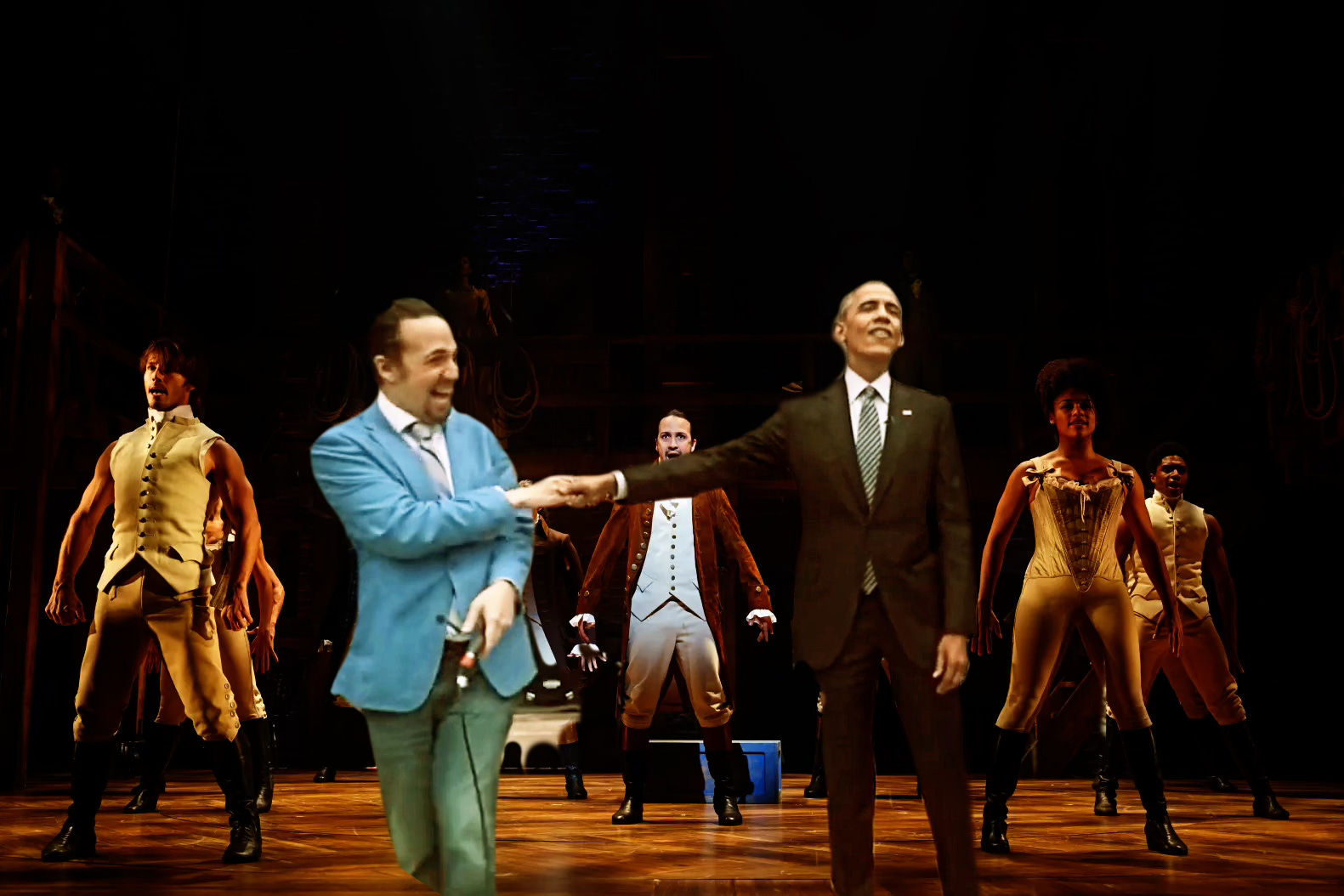
Free Thinking Through the Fourth Turning with Sasha Stone
I Thought Hamilton Was for America. I Was Wrong.
00:29:58
Loading summary
Transcript48 lines
- [00:00]
Sacha Stone
Hi, this is Free Thinking through the fourth Turning. My name is Sacha Stone.
- [00:07]
Lin-Manuel Miranda
How does a bastard, orphan, son of a whore and a Scotsman dropped in.
- [00:14]
Sacha Stone
The middle of a forgotten spot in the Caribbean by providence and poverty? I thought Hamilton was for America. I was wrong. What a fool I was to ever believe. In May 2016, I surprised my daughter for her 18th birthday with a getaway to New York City to see her favorite play, Hamilton, in the Richard Rogers Theater with the original cast.
- [00:45]
Historical Reference
1776.
- [00:51]
Sacha Stone
New York City.
- [00:52]
Lin-Manuel Miranda
Pardon me, are you Aaron Burr, sir?
- [00:55]
Mike Pence
That depends who's asking.
- [00:56]
Lin-Manuel Miranda
Oh, well, sure, sir. I'm Alexander Hamilton. I'm at your service, sir. I have been looking for you.
- [01:02]
Sacha Stone
I'm getting nervous, sir.
- [01:03]
Lin-Manuel Miranda
I heard your name at Princeton. I was.
- [01:05]
Sacha Stone
We would fly out for a day and then fly back. It would cost way too much money. I'd get my wallet stolen. But I only had one daughter. And you only turned 18 once. We were both obsessed with Hamilton. We knew every word of every song. It lived inside of us. It wasn't just that it was brilliant, funny, moving, inventive and original. It also reminded all of us what this country's founding principles were about. Best of all, it made learning history fun and cool. It was Schoolhouse Rock for a new generation.
- [01:38]
Mike Pence
Let me offer you some free advice.
- [01:41]
Lin-Manuel Miranda
Talk less. What? Smile more.
- [01:47]
Sacha Stone
When we take long road trips, we would blast the soundtrack, screaming every word. We'd start at the beginning and run through the entire play. Our inside jokes were witty asides from the play that we'd quote to each other so often that we had to force ourselves to stop. Because after years of this, it was getting old. By casting so many diverse people to play historical figures and making it a hip hop musical, Hamilton was a bridge to the black communities that were so often excluded from the Broadway experience and elite culture in general. Hamilton was for everybody. I thought. That was eight years ago. As a devoted Obama supporter and in 2016, a Hillary Clinton loyalist, I was overjoyed at the prospect of the first woman president to follow the first black president. Heading into the election, I wrote this. The remaking of Miranda's Hamilton, Barack Obama and Hillary Clinton. I wrote, quote, the election of Hillary Clinton is one of the most important battles in the war between two Americas. One America was built and maintained exclusively by and for white men. That demographic has awakened extremists on the left and right. The other America redeems the promise of possibility for everyone, no matter their status or skin color or class. That America has produced the nation's first black president who not only lasted one term, but two, and who now promises to make history by helping elect another Democrat to follow his two terms. Electing Hillary Clinton doesn't just say we're electing a woman for the first time in our country's history. It also dares to say the first black American president was so successful, he did the impossible by electing his chosen successor and end quote. I didn't notice back then that the Clinton campaign rented the entire Richard Rogers Theater as a fundraiser. Tickets started at $2,700 a pop. I would never have thought twice about it. We were on the right side. It was an all of society effort to stop Trump. We were the good guys fighting the good fight. So why wouldn't Hamilton be used that way? Lin Manuel Miranda's entire career exists only because of Barack Obama. Fifteen years ago, in 2009, in Obama's first year in office, Miranda performed this at the White House.
- [04:16]
Lin-Manuel Miranda
It's a concept album about the life of someone I think embodies hip hop. Treasury Secretary Alexander Hamilton. You laugh but it's true. How does a bastard orphan, son of a whore and a Scotsman dropped his in the middle of a forgotten spot in the Caribbean by providence, impoverished and squalor grow up to be a hero and a scholar? The ten dollar founding father without a father got a lot farther by working a lot harder by being a lot smarter, by being a self starter by 14 that you placed him in charge of the trade and charter and every day while slaves were being slaughtered or carted away across the waves Our Hamilton kept his guard up inside he was longing for something to be a part of the brother was ready to beg, steal, borrow or barter Then a hurricane came and devastation reigned and our man saw his future drip dripping down the drain Put a pencil to his temple, connected it to his brain and he wrote his first refrain A testament to his pain when the word got around they said this kid is the same man Took up a collection just to send him to the mainland. Get your education and don't forget from whence you came and the world is gonna know your name. What's your name, man? Alexander Hamilton. His name is Alexander Hamilton and there's a million things he hasn't done but just you wait.
- [05:46]
Sacha Stone
Over the years, Obama would co opt the reputations and careers of major artists like Bruce Springsteen, Tom Hanks, and yes, Lin Manuel Miranda. They would become ride or die for the President. And that wasn't something I would have noticed back then either.
- [06:00]
Lin-Manuel Miranda
Rose Garden Right now we are.
- [06:02]
Mike Pence
This is the Rose Garden right here. It must be a little nerve wracking. I hope I don't drop these cards. You ready? We get in the queue. All right. Drop the beat.
- [06:18]
Lin-Manuel Miranda
He's throwing up some words. I'm gonna say some freestyling that you never heard. Constitution, the potus. I'm freestyling. You know, this Obamacare, okay, I'm looking up because it was hopeless before you enacted that system. The Federalist Papers, Hamilton wrote the other 51 and greater and Sonny and Bo is canine. It's insane. Asinine. Oh, my gosh. Freestyling down the line. NASA. I want to see if we can get over to Mars and wrap more bars. Let's spit bars and leave a carbon footprint on it and lower my emissions. And this is limff freestyling in Congress. This is transmission. I hope in Congress works to our agenda.
- [07:00]
Sacha Stone
As Miranda's play exploded and became instantly profitable and popular, we all took that to mean that everyone wanted to be included in our America. It was the better, cooler America. But that changed when Trump won. Now all we could see was a hostile country that rejected us. Even when the cast called out Mike Pence during the performance to protest the Trump administration, I never thought twice about whether it was bipartisan or not. I knew it wasn't, and I agreed with it. I couldn't see the line between art and propaganda.
- [07:34]
Mike Pence
You know, we had a guest in the audience this evening and Vice President Elect Pence, I see you walking out, but I hope you will hear us. Just a few more moments. There's nothing to boo here, ladies and gentlemen. There's nothing to boo you. We're all here sharing a story of love. We have a message for you, sir, and we hope that you will hear us out. And I encourage everybody to pull out your phones and tweet and post because this message needs to be spread far and wide. Okay, Vice President Elect Pence, we welcome you and we truly thank you for joining us here at Hamilton and American Musical. We really do. We, sir. We are the diverse America who are alarmed and anxious that your new administration will not protect us, our planet, our children, our parents, or defend us and uphold our inalienable rights, sir. But we truly hope that this show has inspired you to uphold our American values and to work on behalf of all of us. All of us. Again, I truly thank you for sharing this show. This wonderful American spirit told by a diverse group of men, women of different colors, creeds and orientations.
- [08:51]
Commentator
And it's such a, you know, integrated, you know, environment there. Everybody there's no race, there's no color. There's like, you know, everybody gets along. And I look at that and it actually saddened me that we're at a point in America where people feel as though our elected representative as vice president and president does not represent everyone, that there's this palpable fear with so many people in this country that they would have to do that. We've got to do something about this.
- [09:20]
Sacha Stone
I worry, though, and that's because of the kind of thing Donald Trump. No. What If Marco Rubio were the president elect and Mike Pence were his running mate, and Mike Pence went there tonight, I think he would have probably gotten the same harsh treatment. And I think that's unfortunate. I don't think it's just about, I.
- [09:38]
Commentator
Don'T know that Marco Ruby would have chosen a Mike Pence as vice presidential.
- [09:41]
Conservative Commentator
This isn't a funny to me to watch that, honestly, because you're sitting in the middle of New York City at a Broadway musical where tickets go for, I just checked, $835. These are the elites that were dethroned when Donald Trump became president. Electricity and the booing that I saw there, it was, first of all, it was disrespectful.
- [10:01]
Sacha Stone
There was cheering, too, luckily.
- [10:02]
Conservative Commentator
And second, it just shows how out of touch The New York, L.A.D.C. elite are from mainstream America.
- [10:08]
Sacha Stone
But now I can all it took was this statement by the producer of Hamilton, Jeffrey Seller, wherein the play cancels itself, hiding behind the usual gaslighting and rationalization so common on the left. Political disagreement and debate are vital expressions of democracy. These basic concepts of freedom are at the very heart of Hamilton. However, some institutions are sacred and should be protected from politics. The Kennedy center is one such institution. The Kennedy center was founded over 50 years ago with a sincere bipartisan spirit. Indeed, it was founded during the administration of President Dwight Eisenhower, named after President John Kennedy, and opened in 1971 under the administration of Richard M. Nixon. The Kennedy center was meant to be for all Americans, a place where we could all come together in celebration of the arts. Politics have never affected the presentation of thousands of shows and the display of extraordinary visual arts. Notice right off the language. Here he is doing what all establishment Democrats and Republicans have done for 8 ignore the voices of the people. Trump defeated them not once, but twice. If you believe in the founding principles of this country, you must respect their voices. But they don't. The message they give is not for all Americans. It is only those Americans who agree with their ongoing delusions about Trump. Quote however, in recent weeks, we have sadly seen decades of Kennedy center neutrality be destroyed. The recent purge by the Trump administration of both professional staff and performing arts events at or originally produced by the Kennedy center flies in the face of everything this natural cultural center represents. This spirit of nonpartisanship ended on February 7, 2025, with the firing of Kennedy Center President Deborah Rutter, the Chairman of the Board, David Rubenstein, and numerous other Kennedy center board members, as well as the cancellation of important programming. These actions bring a new spirit of partisanship to the national treasure that is the Kennedy Center. Given these recent actions, our show simply cannot in good conscience participate and be a part of this new culture that is being imposed on the Kennedy Center. Therefore, we have canceled the third engagement of Hamilton at the Kennedy Center. Originally scheduled for March 3 through April 16, 2026, Hamilton was proudly performed at the Kennedy center in 2018 during the first Trump administration. We are not acting against his administration, but against the partisan politics of the Kennedy center as a result of his recent takeover. End quote. What they can't stand is that Trump is now saying this culture does not belong only to them anymore. It belongs to all of us, even the unwashed masses. All of them abandoned years ago and continue to demonize in films and plays and comedy and journalism and in all of their award shows. We are to accept that this only goes one way, that they have a right to decide what our culture will be, and Trump and his supporters do not. Our cancellation is also a business decision. Hamilton is a large and global production, and it would simply be financial and personally devastating to the hundreds of employees of Hamilton if the new leadership of the Kennedy center suddenly canceled or renegotiated our engagement. The actions of the new Chairman of the Board in recent weeks demonstrate that contracts and previous agreements simply cannot be trusted. This is sad because basic integrity and the rule of law have long been great American principles that help serve as a foundation for our nation. I have personally loved the Kennedy center since touring it as a seventh grader in 1977. Along with the Ligand Memorial and the Jefferson Memorial, I watched the first Kennedy Center Honors in 1978. Regardless of the political climate, I have always felt at home at the Kennedy center. And I am grateful for every person who has spent the last 50 years making it a beacon of non partisanship and celebration. But we cannot presently support an institution that has been forced by external forces to betray its mission as a national cultural center that fosters the free expression of art in the United States of America. End quote. You did this. You did this. You forced Trump and his supporters to beat down the walls of the castle to be included in America's culture. This is your fault. You politicized it. You pushed propaganda on all of us for years and now you can't stand it that you no longer control it, can you? Trump's second win was a complete and total humiliation and repudiation. They still refused to learn that lesson. They refused to move aside and allow this country to evolve into whatever it will be now. But know this. They didn't cancel themselves out of any high minded ideals or worries about financials or yearning for the past. An America they destroyed by systematically dehumanizing half this country and telling them they are no longer welcome. No, they canceled themselves out of fear. Not of what Trump would do, but of what the left would do. Hamilton, in fact, was already canceled by the Woke scolds for not being hard enough. On the Slavers podcast listeners, a headline from Bizarre Lin Manuel Miranda addresses claims that Hamilton glorifies slave owners. All the criticisms are valid, the composer and actor tweeted July 7, 2020. In the coming years, Miranda would never regain the luster of those early days of Hamilton. His musical in the Heights would be shut out of the Oscars. His film version of Hamilton also got no attention. Was it that Miranda was too tolerant of white America back then? Is that why he was no longer useful to the post 2020Left? Yes. That is why the ideology of the progressive utopian left goes something like are accepted on a conditional basis. We control everything. So your income, your status, your reputation, your legacy are all in our tyrannical little hands. You must conform 100%, adhere to the doctrine and ideology and stay loyal to the cause or else acceptance can be revoked at any time. If the Eye of Sauron falls upon you and someone believes they see something sinister against our utopia lurking just beneath the surface. She's a racist. They cry. She's a bigot. He's a transphobe. He's a homophobe. She is a Trump supporter. No one is so powerful they are protected from the left's wrath. Not even Obama. One wrong move and their entire reputations can be destroyed overnight. They live with that fear. It has seeped into every corner of Hollywood, book publishing and universities. Be careful what you wish for. Art can't survive on the left now. Don't try writing books, film scripts or even poetry because it is mandated to be propaganda. A dogma delivery device that speaks to one type of person and says the same thing over and over again. The White male patriarchy is bad and it must be dismantled. Trump is always the villain, and his story is played over and over again. Because if the blood that runs through your veins depends on the feeling of being oppressed, you need an endless supply, and Trump provides that. Very few of them find their way out of it. One of those people is Mike White, whose White Lotus series just dropped its third episode of season three. In it, three friends from high school are on vacation together when one of them might be a Trump supporter.
- [18:34]
Friend 1
You didn't vote for Trump, though, did you?
- [18:42]
Friend 2
Are we really going to talk about Trump tonight?
- [18:44]
Sacha Stone
What do you think that scene in this season is saying about the political divide and what a third rail it can be, even among longtime friends?
- [18:51]
Friend 2
Yeah. Politics can be so divisive. And I think somehow he was like, it didn't. Not like people can get like, oh, you're like you're a monster or something. And I think there are decent people who vote this way and there's decent people who vote that way. And we can't throw these people, we can't throw the baby out with the bathwater. It doesn't mean they're a bad person.
- [19:18]
Sacha Stone
I don't know, if I was just.
- [19:19]
Friend 1
Around a bunch of Texans who voted.
- [19:20]
Sacha Stone
For Trump, I guess I'd just feel a little alienated.
- [19:26]
Friend 2
They're nice people, really good families. I feel like Mike is, like, sort of trying to, you know, he likes to get in there and just poke the bear a little bit. But I think in a way he's saying that, like, not everybody. It's not so black and white. It's not all archetypes. It's not, you know, like, Kate's not a bad person.
- [19:51]
Sacha Stone
Yeah.
- [19:51]
Friend 2
And I don't know, maybe she didn't. Maybe she is an independent. Let's not. Melinda vacation.
- [19:57]
Sacha Stone
But do you think Laurie sort of rights cad off after that?
- [20:00]
Friend 1
I think for an east coast liberal lawyer, that was pretty triggering for her. Absolutely. Which is a, you know, I think that's a reality. That that's a real kind of easy, knee jerk default position. And then you have to ask yourself, you know, am I. Am I just going to dismiss a person I love because I disagree with them? Not only that I disagree with them politically, but that the political position they're taking is actually quite dangerous for someone I love? Like, the stakes are very high, but if we can't have those conversations with people we love, then we can't have them with anyone.
- [20:29]
Mike Pence
Yeah.
- [20:30]
Sacha Stone
Right away. Users on TikTok ran through the same madness and Hysteria that is not only the status quo on the left, but illustrates perfectly how disconnected they are from reality, how intolerant they are, how cold and uncaring and cruel they are. It isn't just that power corrupts. That power is a high no one can give up.
- [20:55]
Commentator
I know this woman. You know this woman. And Mike White knows this woman because he wrote this scene perfectly. How many of you have been through this, where you have a friend, a beloved friend, and this is the moment that you find out they voted for Trump? Since we all know this prototype, let's take a minute describing. She's the perfect combination of privilege, mischief, and internalized misogyny. She oozes privilege. Now, where does she get that privilege? She gets it from her dad. She has a good dad. She loves to go. Skiing is the sport where white people go and injure themselves in very remote locations, and it costs millions of dollars to pick them up and take them to the hospital. Even though you went to the same college, she took the same Women's studies class as you. She loves Taylor Swift, she loves the Zeitgeist, she loves gay people, she loves the lgbtq. But she doesn't think it's up to her to help them. She's fighting for herself. She always votes for her own best interest, and she sees herself as an exception to the patriarchy because she's special. She thinks that you don't know who she voted for or that you won't figure it out. And if you point it out, she will be very, very, very mad.
- [21:55]
Friend 3
I just finished watching this week's White Lotus, and if I, me personally would go on a trip with friends that I hadn't seen in years, and one of them ended up dropping the bomb that she did like I, the friendship would be over. The friendship would be over. I would go up to the front door desk and I would be like, hey, can I get a separate room? Cuz the trip with this person is over. Like, I no longer know who they are. I don't remember their first name. I don't know anything about them. Like, bye, this is a stranger to me.
- [22:40]
Mike Pence
Go away.
- [22:42]
Sacha Stone
Had the cast of Hamilton actually performed at the Kennedy center, they'd get a good hard lesson of just how accepting of free expression they are on the left now, how bipartisan they are. No one would be spared. Their reputations destroyed. They'd be attacked viciously. There would be agonizing op EDS in the New Yorker. They would be disinvited to parties. They might lose Instagram followers. They would be labeled toxic and fascist apologists, the press would say they were selling out for Hitler. The truth Going through with it. Performing Hamilton instead of throwing a baby tantrum would have been the true act of courage. If they were right and Trump would have canceled the performances then that would have counted as a win for the left and Lin Manuel Miranda, especially heading into the midterms. But they are just too crazy ever to be that smart. Performing Hamilton would have proved that the play really is for and about all of America. It would mean that art shines through and we'll all just have to learn to live with everything else. It would have stayed true to the promise of the original work and maybe it could have helped to unify this country. At the very least it would have shown that they aren't the immature, petty, overly fragile, punitive self pitying brats we all know them to be. But in canceling themselves they've now proven that Hamilton never was for America. It was only for the half that is still living in the past in their castle in the sky, their utopia. A utopia that is now collapsing. Oh they talk a good game but they know what I know. They can't risk their reputations even to stand up for art, decency, unity and America. Thank you for listening to my podcast. Sashastone.substack.com to remember to thine own self be true.
- [25:36]
Historical Reference
Bitterness was right on a tail with a la painted like the drum Loneliness wouldn't do no harm no other care over centered oh honey I'm just getting good at singing goodbye getting good single Honey I'm just getting good at Sing goodbye getting back getting good at sinning back heaviness O this hurt should wait now my flesh at arms with my pride how long to rest Left no room to pray so I confess to the gods of time oh honey I'm just getting good at Singing goodbye getting good Sing goodbye getting good at Sing goodbye oh honey I'm just getting good at sing goodbye getting good sing good Friend getting good at Sing goodbye goodbye there Hallelujah oh honey I'm just getting good saying goodbye just getting good Sing goodbye just getting good Sing goodbye just getting good Single bad just getting good Sing good just getting good Single just getting good Singer.
- [29:40]
Sacha Stone
Just getting good.