← Free Thinking Through the Fourth Turning with Sasha Stone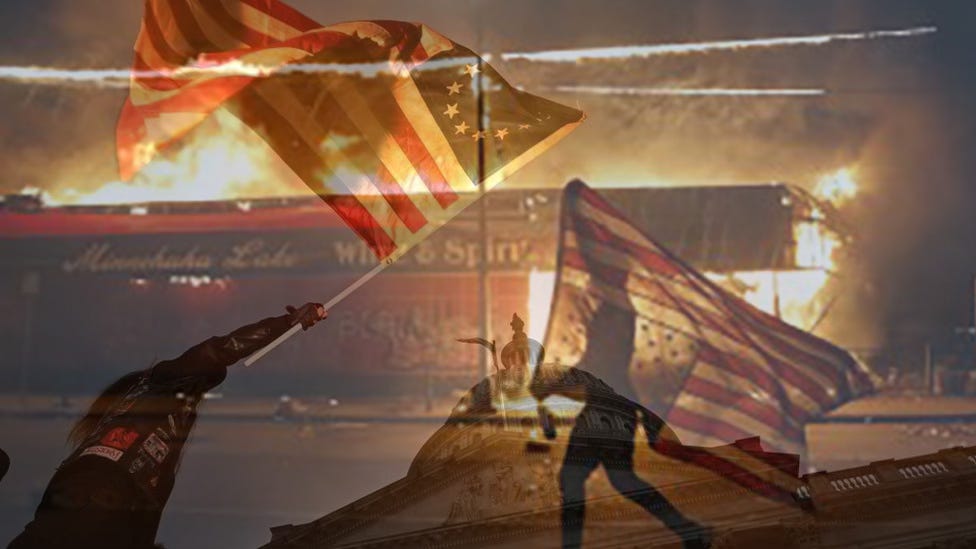
Free Thinking Through the Fourth Turning with Sasha Stone
January 6th and The Real Insurrection
00:40:24
Loading summary
Transcript67 lines
- [00:00]
Sasha Stone
Hi, this is Free thinking through the fourth turning. My name is Sasha Stone. January 6th and the real insurrection. January 6th was terrifying for many Americans. After all, they saw it on television. But what did they really see? Did they know what actually unfolded that day? Did they even ask podcast listeners various pictures of January 6th? Trump is the January 6th president, proclaims the New York Times editorial board. Quote, Five years ago, on January 6th, 2021, a pro Trump mob stormed the Capitol, hoping to overturn the result of the 2020 presidential election. After the sun set that day, Congress reconvened to certify Joe Biden's victory. The rioters lost, and so did Mr. Trump, who'd summoned them to Washington and urged them to march to the Capitol. The Trump era seemed to have ended in one of the most disgracefully anti American acts in the nation's history. End quote. What I learned living through these events as a former Democrat, is that the New York Times editorial board is lying through its teeth. Maybe they aren't lying. Maybe they really do believe it. They exist inside the doomsday cult of the left after all, along with all those high minded journalists at the New Yorker and the Atlantic. But to make the bold proclamation that any protest or even riot against oppressive forces, whether you believe them to be oppressive or not is un American, proves they don't know this country or its history very well. There were two sides to this story. If I'd never left the left, I would have believed their version of the event. I would have been just as horrified. I would have thought it was an attack on democracy. But protests are the voices of the unheard and a healthy sign of any democracy. And for a grassroots movement and millions of Americans who'd been disenfranchised for the four years Trump was in power, this was the best way for them to be heard, the only way for them to be heard. They just didn't know they were walking into an ambush by forces far greater than them and more powerful than any political party in American history. And what they wanted to do was use that protest. A moment of desperation for desperate Americans abandoned by the government, the culture and most institutions, and demonized them further by calling them extremists, terrorists, Nazis, insurrectionists. January 6 was played on a loop by the Democrats and their propaganda machine, once known as the legacy media. And why wouldn't it be? It was everything they needed at just the right time. See there's a Confederate flag. See there's a hangman's rope. See there's some guy in horns howling Inside the Capitol, zip ties hanging Mike Pence, Trump watching the mob and hoping they wouldn't stop. It all painted a picture in our minds of an angry president amidst a violent couple. And in our age of algorithm driven mass hysteria, we're no different from the Puritans in Salem who believed in spectral evidence. What you can't see but can only imagine. January 6th finally provided them with the proof they needed of their campaign against maga. It's just that none of it was true. Why would Trump have wanted a riot? He'd gone to great effort to convince Senators Josh Hawley and Ted Cruz to debate the election in the Senate. All the riot did was hand absolute power to the Democrats, Reichstag fire style. Not only did the media sell that lie, but you'd be severely punished if you asked any questions, especially about the 2020 election. Yes, we lived through that and more. And just because the Democrats have memory hold everything they've done in the last 10 years to cling to power doesn't mean it didn't happen or that we shouldn't talk about it. There was nothing wrong with talking about an election that was anything but free and fair. I naively went into it as a major Biden advocate, believing he could win the old fashioned way. I didn't know they'd hide him and Kamala Harris in the basement and let the legacy media do all of the heavy lifting. I didn't know they'd planned it. Everything that happened throughout 2020 to ensure Trump was taken out of power, like they were meddling in some third world country's elections. It's all written down in Time magazine. They planned on saving an election that was not theirs to save. Who gave them that right? The American people decide. And if one political party believes itself to be above the people, then that is an insurrection. Not against the government, but against all of us and a fair process we depend on. For podcast listeners, a picture of Time magazine, the secret history of the shadow campaign that saved the 2020 election. They justified everything they did by the lies they told themselves about who Trump really was and how dangerous he was supposed to be. They rigged the election by manipulating the media, changing any law that got in their way, using Covid as an excuse to push ballot harvesting funded by a 400 million cash infusion, and all the while pretending they were saving democracy. By all accounts, I should have been cheering them on. Yes, get Trump. Anything and everything should be allowed as long as we were saving the country from Hitler. I believed that at first. Why wouldn't I I was straight out of Central casting as a resistance lib. This was the back of my car in 2012. Podcast listeners a picture of a Toyota Highlander with Barack Obama 2012 sticker, a Save Medicare, Vote Democrat, Listen to NPR and an Obama Biden bumper sticker. This is who I was. For podcast listeners, a montage of photos of me with Barack Obama buttons, Hillary Rodham Clinton, Californians for Hillary, a Joe Biden hoodie, Biden buttons, a picture of me in a mask with goggles and a poster. Women are the largest untapped reservoir of talent in the world. HRC and a poster. 10 stages of genocide Classification Symbolization Discrimination Dehumanization Organization Polarization Preparation Persecution Extermination Denial before that, I was just a lowly Oscar blogger spending my time writing about superficial things. But suddenly, in 2015, everything changed. I was in a panic about the greenhouse effect and the sea level rise. So I threw myself into politics to help the Democrats win. Overnight, I became someone who mattered online, with a growing following, adoration and kindness from strangers. The warm embrace of the elite left felt intoxicating. Invitations to exclusive parties, friendships with high status blue checks on Twitter like Steve Schmidt, Rick Wilson and Oprah. So much love and support online. After all, I was helping to save democracy and the planet. I was even invited to an early fundraiser for Joe Biden in May of 2019. It was necessary. I was important. I mattered. You can imagine then how surreal it would have been for anyone who knew me that way to see me starting to question the official narratives. For me, it began with what I believed was mass hysteria that had overtaken my side. Just as the Southerners had whipped themselves up into a frenzy, believing that if the slaves were freed there would be chaos and violence, so too did we believe that if Trump won, that was the end of everything. But looking back on it, all it really was was a populist revolt against a ruling class that just decided what America would be. Now. Class no longer mattered, only skin color and gender identity. Little by little, I began to pull away as things got weird. The more I tried to speak out, the worse it got for me. They went after me hard on social media for years, but none of that would have driven me away from the Democrats. As with so many others, 2020 was the turning point for me. I suddenly could see the strings and I wondered who was pulling them. Trotting out experts to say systemic racism was more important than a global pandemic and trotting them out again to discourage Trump from sending in the National Guard and Again to say the Hunter Biden laptop was Russian disinformation. How stupid did they think we were? We lurched from COVID to racism back to Covid to lockdowns. As I would come to realize, the aim was only to get Trump. Imagine completely taking over an election to take out a one term president with a strong economy.
- [10:12]
Commentator/Interviewer
Why?
- [10:15]
Sasha Stone
I asked the same question then as I wonder why did it have to be an existential crisis? Why drive half the country to the brink of insanity? Why cosplay Trump as Hitler and pretend this was World War II? Couldn't they win the old fashioned way with better candidates and better policies? Russiagate, spying on his campaign, two impeachments, four indictments convicting him of a felony, taking his mugshots, raiding Mar a Lago, two assassination attempts, trying to throw him off the ballots and needing the Supreme Court to shut it down. And the American people still chose Trump. Shouldn't that have been the wake up call? Shouldn't that have been the moment their stupid feudal destructive war ended? No, it wasn't about politics for the left. It was deeper than that. It was as deep as preserving the south before, during and after the Civil War. January 6th allowed them a way out of what they'd become, not what MAGA had become. They were the violent ones and had been going all the way back to 2015 when a mob descended upon Trump supporters.
- [11:38]
Reporter/News Correspondent
A terrifying night of violence as Donald Trump's supporters were attacked by an angry mob waiting for them outside a Trump rally. It happened in San Jose. As the crowd headed home, they were set upon. One young woman tried to take them on, proudly showing off her Trump shirt.
- [11:56]
Commentator/Interviewer
She's egging them on. She's egging them on.
- [11:58]
Reporter/News Correspondent
Then it turns scary. She's hit in the face with watermelon and raw eggs.
- [12:03]
Commentator/Interviewer
Oh my God.
- [12:05]
Reporter/News Correspondent
She finds herself all alone and quartered. The crowd screaming obscenities and no one came to her aid, not even the cops.
- [12:14]
Commentator/Interviewer
Someone ever get her in?
- [12:16]
Reporter/News Correspondent
Finally she gets back inside and finds sanctuary. I was so scared watching this video, afraid for what was going to happen next to this young lady. And why were the police officers holding the doors and not grabbing her and pulling her inside? Headlines this morning say people leaving the rally were hunted and chased down like prey. Watch as this young man runs for his life. He's caught and knocked down. Look at the fear in his face as he attempts to flee.
- [12:43]
Commentator/Interviewer
Another fist fight's about to break out right now, but Trump supporter is getting fumbled right now.
- [12:48]
Reporter/News Correspondent
This guy's build the wall T shirt was ripped off his back. Then he's knocked and punched by six men.
- [12:56]
Commentator/Interviewer
Come on, get the hell out of here.
- [12:58]
Reporter/News Correspondent
That's a reporter you hear telling him to flee.
- [13:01]
Commentator/Interviewer
Seven more people just come in, start punching me, I look pretty bad.
- [13:05]
Reporter/News Correspondent
The mob even followed the Trump supporters to their cars. Inside a parking garage, the assault continued. An SUV was rocked and taillights and smashing tail lights.
- [13:16]
Commentator/Interviewer
I'm telling you, and I'm warning you, ladies and gentlemen, listen to what I have to say here. This is going to be the most intense election we've ever had. Everybody's got to cool down.
- [13:27]
Sasha Stone
They rioted at Trump's inaugural, burning cars and smashed windows.
- [13:33]
Commentator/Interviewer
A group of protesters dressed in black, their faces covered, armed with hammers and bricks, facing off with thousands of officers on site, many in riot gear, confronting.
- [13:45]
Sasha Stone
Them with flashbang grenades and pepper spray.
- [13:49]
Commentator/Interviewer
They're coming. I see us running because they're gonna throw more flashbangs. The chaotic scene just blocks outside the.
- [13:57]
Sasha Stone
Secure area of the inauguration and parade route. I personally have anti establishment slants, but.
- [14:04]
Commentator/Interviewer
I don't think that this is anything that I want to be a.
- [14:41]
Sasha Stone
They believed themselves justified in attacking Trump supporters because they were convinced they were fascists. But their words meant nothing because they distorted them beyond comprehension. What does it mean to call someone Hitler? A fascist? A dictator? A rapist? A pedophile? A racist? A white supremacist? These words mean nothing now. And then came 2020, the point of no. For me, it was the recognition that my side didn't care about democracy or the truth. They only cared about defeating an imaginary enemy they invented but never existed and were prepared to bring this country to its knees to achieve that goal. When I saw this video of Sue's 100-year-old mattress store, I posted it on social media and the response was how can you care more about property than people?
- [16:00]
Reporter/News Correspondent
This was a hundred year old building, a family run mattress store for one man who risked his life defending it. It was much more than that.
- [16:12]
Commentator/Interviewer
This is hard.
- [16:13]
Reporter/News Correspondent
She surveyed the damage up close for the first time today. Every inch of Sue Moniz and Keith McCarty's Mattress Store is destroyed. But they've had something else on their minds. Well, someone else.
- [16:26]
Commentator/Interviewer
He's teeny, but he loves fiercely and he's just my hero.
- [16:34]
Sasha Stone
I'm sorry, sir. I'm very sorry about that man.
- [16:37]
Reporter/News Correspondent
Armed with nothing but a fire extinguisher, 70 year old Robert Cobb tried to defend his friend Sue's shop from a group of arsonists and looters Monday night.
- [16:46]
Commentator/Interviewer
They just threw A bottle at this guy.
- [16:48]
Reporter/News Correspondent
The whole thing was caught on camera. We want to warn our viewers it's difficult to watch. Fresh from a double bypass surgery, Robert was standing guard until someone punched him so hard in the face.
- [16:59]
Commentator/Interviewer
No. No.
- [17:01]
Reporter/News Correspondent
That he collapsed to the sidewalk.
- [17:07]
Commentator/Interviewer
I can't. I can't. And I can't even think about.
- [17:13]
Sasha Stone
How.
- [17:13]
Commentator/Interviewer
Bad it could have been. I mean, it's bad enough they broke his jaw.
- [17:18]
Reporter/News Correspondent
Robert playfully dodged our cameras most of the day because he said he wants the story to be about how much the Kenosha community loves his friend Sue. It's funny because sue said the story is about Robert's bravery. Either way, their reunion was beautiful. Robert's jaw was broken in two places, and he went in for surgery this afternoon.
- [17:39]
Commentator/Interviewer
This is my rock, my inspiration.
- [17:42]
Reporter/News Correspondent
Even though their shop is rubble, we will rebuild. These owners say they found a silver lining in the violence and destruction that's ravaged their community. And that break in the clouds is a lifelong friend.
- [17:54]
Commentator/Interviewer
This is stuff. I mean, it's devastating. It was my livelihood. A lot of memories, a lot of. You know, but. But this is stuff.
- [18:02]
Sasha Stone
I can't replace that man.
- [18:04]
Commentator/Interviewer
That man's not just stuff.
- [18:10]
Sasha Stone
Trump's speech at Mount Rushmore was the first time I'd heard anyone in public life talk about what we could all see, but almost no one would say out loud. The media called it dark and divisive because, of course, they did. Are you getting it yet? This only goes one way. That was, for me, another layer of the onion being pulled back to reveal what the legacy media had become. They were not reporting the news. They were telling us what to think. And they still are. After I watched Trump's rallies for myself, I kept waiting for the version of Trump we were sold to emerge. He never did. Instead, a guy who would stand in the pouring rain to speak to his supporters showed me what MAGA was really about. It was a love story. Trump had their backs, and they had his.
- [19:08]
Commentator/Interviewer
And we are a nation that no longer has a free and fair press. Fake news is all you get. And we are a nation that loves to be rained upon. Let's stay out here. And. Let's stay out here, right? I'm not leaving. We're a brave nation. We are a nation where free speech is no longer allowed, where crime is rampant and out of control like never before, and where more people died of COVID in 2021 than in 2020. And we are a nation that is allowing Iran to build a massive nuclear weapon in China to use the trillions of dollars it has taken from us to build a military derived area. And just two years ago we had Iran, China, Russia and North Korea in China and they weren't going to do a thing against us. Not a thing. Not a thing. This is the greatest, this might be the greatest rally we've ever had.
- [21:07]
Sasha Stone
Just listen to them as he visits East Palestine, Ohio after the train derailed and spill toxic waste in their tiny, forgotten town.
- [21:15]
Commentator/Interviewer
Trump's coming, but Biden hasn't. Man of the people.
- [21:30]
Sasha Stone
President Trump just arriving in East Palestine, Ohio as the town continues. That's why they showed up in D.C. on January 6th. Not to storm the Capitol, not to hang Mike Pence, not to overthrow the United States government. As if, if you know them, you know there are no people in this country who love it more. You know they would never damage the Capitol. They're the side that prides itself on not being violent like the left. The narrative after January 6 was and remains a lie. Why is it that the left was given full and free reign to rampage anywhere they pleased all throughout that summer and the Trump supporters were treated like terrorists who flew planes into the World Trade center and the Japanese who bombed Pearl Harbor? Because the left had and still has most of the power to shape the media narrative and thus reality. I had to ask these questions of myself, someone who had gone along with so much of it, not because I was a conformist, but because I genuinely believed it. The more questions I asked, the worse it got for me. That was when I knew there was no talking to them, no shaking them out of it, no hoping for sanity to return. And there was no saving the left. They were no longer the party I once knew. What Democrats want is their utopia or woketopia back. They've always believed Trump was an insect that needed to be crushed. And his place in American life was temporary. And once he's gone, things will go back to normal. Podcast listeners, a tweet from Tom Santos. Quote, democrats will eventually return to power and every debilitating tariff will be removed. Every building and warship Trump put his name on will be renamed. Every immigration gold card scam he sold will be rescinded. Every fascist in his administration found to have broken the law will be prosecuted. The White House, after he quite literally tore down a third of it, will be rebuilt. Every vital American program he's killed will be reinstated and it will be as though he never existed. Patience. Merry Christmas, everyone. To them, it's all Trump. One last cancel. He's the only person they couldn't destroy. And the One thing standing in their way. Whatever he is for, they're against. They're even rooting against America, rooting for America to falter before the eyes of the world. Imagine being that petty. If we entered World War 3, does anyone doubt they'd all be out there trying to ensure Trump fails? For podcast listeners, a montage of tweets from Morgan J. Freeman. Trump is a war criminal. Trump is a war criminal. Trump is a war criminal. And a headline, the Brazen Illegality of Trump's Venezuela Operation. Trump's attack on Venezuela is illegal and unwise. From the New York Times. Trump plunges us into new era of risk in Venezuela. The irony of the Maduro capture is that it exposes the left as liars yet again. Here is what it looks like to be under the rule of a dictator. Everything the left has been LARPing, live action role playing for the last 10 years is what Maduro actually was. The juxtaposition between the Venezuelans celebrating and the liberals complaining is illuminating. Here is a video montage from TikTok. This is not what we want as American people.
- [25:41]
Commentator/Interviewer
This is.
- [25:42]
Sasha Stone
This is not okay. And I am so sorry to the people of Venezuela.
- [26:00]
Commentator/Interviewer
I can't believe it. The Orange man did it.
- [26:04]
Sasha Stone
I Woke up at 6am this morning and my wife is like, did you hear about Venezuela? I'm like, babe, we just woke up. What now? You heard it here? I'm telling you, he's going to get involved in some seven wars with seven different countries. I'm telling you, it is, it.
- [26:17]
Reporter/News Correspondent
It just.
- [26:17]
Sasha Stone
It's nuts.
- [26:18]
Commentator/Interviewer
He's not God.
- [26:20]
Sasha Stone
He's disgusting. I don't think anyone understands the emotion. Since I was 7 years old, I've had to live in a country where they took away my childhood, they took everything from me. And what's happening today is incredible.
- [26:44]
Commentator/Interviewer
It's incredible to every single American that keeps saying, by law, they were required. By law. By law. By law, they were supposed to. By law, they broke the law. Law, law, law. The law doesn't exist. The law doesn't exist in America. Everybody, every single member of the government is a criminal. And we keep expecting the criminals to hold the other criminals accountable. When the dictator in charge can ignore the courts, law doesn't exist. He's gonna be ripped out of office and jailed next week.
- [27:35]
Sasha Stone
Right? Right. I can't believe we're doing this again.
- [27:51]
Commentator/Interviewer
Now we're bombing mainland Venezuela. As if the fishing boats wasn't enough. I mean, are we not sick of this by now?
- [28:04]
Sasha Stone
And now I'm like, Yo, are we all gonna die?
- [28:07]
Reporter/News Correspondent
Cause we're just bombing people and kidnapping people.
- [28:10]
Sasha Stone
John Brown Two Ways John Brown was an abolitionist who was executed for treason by the federal government for a slave insurrection before the Civil War. He was hailed as a hero by the north and became an inspiration for those willing to fight and die for a cause. If the American Revolution was about liberating the colonies from the British and the Civil War was about liberating the slaves from bondage, what is our virtual civil war really about? Who is to be liberated by the end of it? More importantly, what are the causes worth fighting and dying for? For podcast listeners and image, the future is unapologetically pro queer, pro Palestine, pro worker and ready to tax the rich. And a picture of Zorha and Mamdani in the film One Battle after Another, sure to win best Picture this year at the Oscars. The film's antifa like revolutionary Perfidia, Beverly Hills lays it out. A picture of Perfidia saying the message is clear. Free borders, free bodies, free choice and free from from effing fear. Our virtual civil war already has a body count. Charlie Kirk's assassination by a transgender supporting terrorist, Luigi Mangione's assassination of a healthcare CEO and attempted assassinations of Trump and the ongoing attacks on ICE agents seems to lock in what the left is fighting for. Are they fighting for a border free America because borders themselves are oppressive white supremacy? It sure looks that way. Are they prepared to fight and die to preserve Woketopia? Some of them are. Maybe more of them will be. Does our Future look like 1984, where geography takes a backseat to ideology and will be aligned with Germany, the uk, Canada and France, with migrants flowing freely into our countries and where you will be okay as long as you agree that two plus two equals five and you love big brother. Abraham Lincoln, like Winston Churchill, was what Neil Howe and William H. Strauss called a great champion of the Fourth Turning. When I look at what Trump is doing now, the bold moves, the attacks he survived, there is no doubt he is our Fourth Turning's gray champion. And when I see videos like this, I am reminded of why. Who else but Trump would do this? He shows them every day that he is not afraid of them, not even a little bit. Even after being shot in the head, impeached and convicted.
- [31:10]
Commentator/Interviewer
I just got three things to say. God bless our troops, God bless America. And gentlemen, start your action.
- [31:31]
Sasha Stone
Will Tyler Robinson, Matthew David Crooks and whatever that surfer dude's name out in Florida was be seen by the left as the John Browns of their time, martyrs willing to fight and die to save democracy or to avenge transgender people or immigrants. Do those on the right see the Jan Sixers as the John Browns of their fight? Beating corruption and the deep. Stay for podcast listeners, a side by side of tweets from James Woods. Literally thousands of lives will be saved as narco traffickers are vaporized by sea and ripped from their beds in the dark of night. Trump is the greatest leader America has seen since Lincoln. And on the other side, Seth Abramson. Multiple members of Congress are calling for the impeachment of Trump. This is a disgrace. It should be at a minimum, every single Democrat and at least one or two Republicans. And an Axios headline, furious Democrats float Trump impeachment, 25th Amendment. Lincoln sought above all to preserve the Union and saw the war as a test of, quote, whether that nation or any nation so conceived and so dedicated, can long endure. End quote. Once you fracture the Union, there is no America at all. And it might as well be 1984. As for me, it's like Bob Dylan once said, how does it feel to be on your own with no direction home? Like a complete unknown? How does it feel? Feels like freedom.
- [33:17]
Commentator/Interviewer
Free men you are. What will you do without freedom? Will you fight. Against that? No. We will run and we will live. Aye. Fight and you may die. Run and you'll live. At least a while. I'm dying in your beds many years from now. Would you be willing to train all the day, from this day to that, for one chance, just one chance, to come back here and tell our enemies that they may take our lives, but they'll never take our freedom.
- [34:27]
Sasha Stone
Thank you for listening to my podcast, sashastone.com I hope you all had a happy new year and that you forgive me for the delay. Seemed like every time I had this thing ready to record, the news would break and things would change and I'd have to rewrite it. And if you enjoy my work, please consider becoming a paid subscriber@sashastone.com or you can leave a tip in the tip jar and the link is on the main page. Or you can write a review that always helps. And remember to thine own self be true.
- [35:22]
Commentator/Interviewer
Once upon a time you dressed so fine threw the bumps of dime in your prime within you people called save you went down your banners found you thought that they were wrong kidding you a year you're still life about everybody that was hanging out but now you don't seem so loud you don't seem so proud to be trying to find Your next meal. How does it feel? How does it feel to be without at home like a complete unknown like no direction home? I went to all the fine schools. All right miss lonely but you know know you're only used to get it's used in it. Nobody's ever taught you how to live out on the street. Now you're gonna have to give used to it. You say you never compromised with a mystery trap that now you realize that he's not selling an air. As you stare into the vacuum of his eyes and he says do you wanna make a deal? How does it feel how does it feel to be on your own? Window direction home and complete unknown Like a rolling stone? Ah, you never turn around and see the frowns on the jugglers and the clowns as they all did the tricks for you. You never understood that it ain't no good you shouldn't let other people get your cakes for you it's ride on a chrome horse with your diplomat caring on his shoulder s cat ain't it hard when he discovered that he really wasn't where is that after he took home everything he could see. How does it feel? How does it feel to be on your own with no direction and hope Like a complete unknown? Like a rolling stone. Pretty princess honesty for all the pretty people. They're all drinking, thinking that day I got it made. Get shut down then ring you better pawn it back. You used to be so amused at Napoleon's threads and the language he used. Go to him now he's calling you and you ain't got nothing when you got nothing to lose. You're invisible now you know that yeah, he got no secret to come see us. How does it feel? How does it feel to be on your own with no direction home life incomplete unknown Like a rolling stone. Like a rolling stone. Like a rolling stone.