← Free Thinking Through the Fourth Turning with Sasha Stone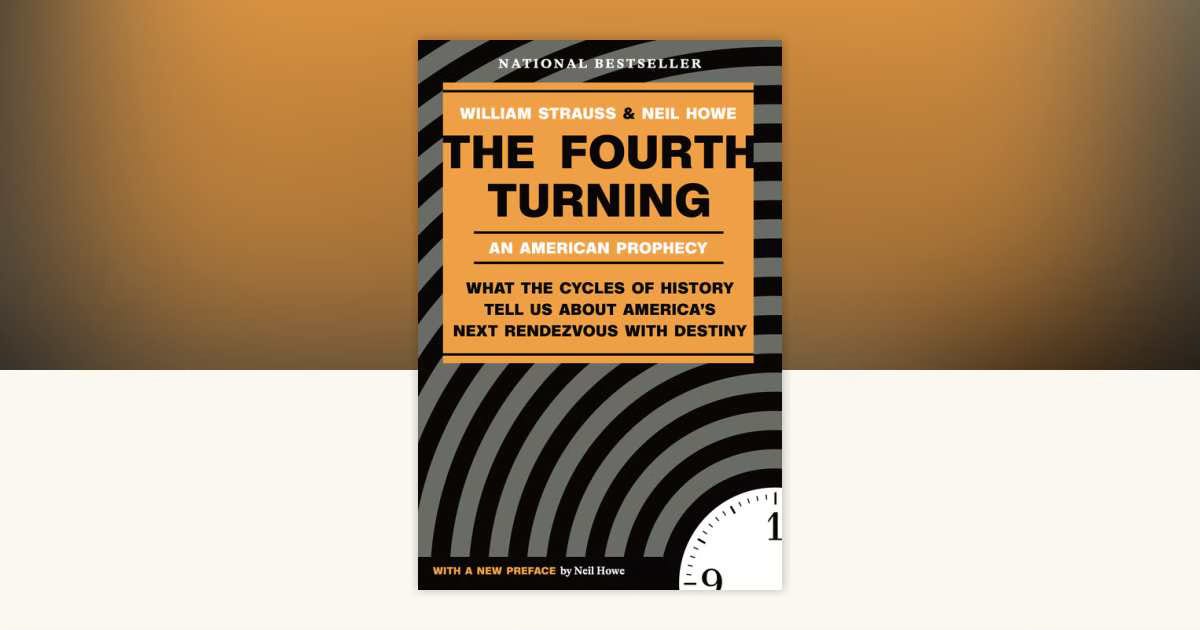
Loading summary
Transcript223 lines
- [00:00]
A
Hi, everybody. I'm here with our special guest, our good friend Andy Shalman. That's what you're going by now, right?
- [00:08]
B
Yes. Paul is dead. Paul is dead again. We put him to rest officially. Yeah. Paul Zimmee Finn, just for those who don't know, was a pseudonym I operated under for about five years as I was producing the Generation Report. It was done for lots of reasons, mostly because I was in a sort of a complicated work life situation at the time, and because this set of ideas is so associated with Steve Bannon's name, I was worried that I would be unfairly politicized. And pretty much all the nightmares and premonitions of doom I had about what producing this series would mean for me did come true. And so finally I got to a point last year where I said, the heck with it. I'm just going with my own name now. So Paul is dead.
- [00:54]
A
Paul is dead. But if you listen to the Generation Reporter, you go on YouTube, it's. It's mostly just your voice. So anybody who knows that video channel will recognize your voice immediately. Anyway, so we are here to talk about a very long overdue update on the Fourth Turning, because we're in the middle of one, and Andy and I have been trading thoughts back and forth for a while, but we've never gotten together to really talk about it. And there's a lot to talk about. Right. We're in the thick of it. It's really scary. I don't think people know day to day what is going to happen next in this country or even in the world. Right. Which is typical of a Fourth Turning. And so, first, for the people who aren't familiar with it, I think we're going to be getting a lot of people who don't know about the Fourth Turning. So we're going to have to give some exposition, background, what the Fourth Turning is, why we're in one. Now, who eventually came up with this idea? Who wrote the book? Who rewrote the book?
- [01:57]
B
Or tried to. Yeah, who rewrote the book. So if you like, I can take the baton on this one. So the extreme CliffsNotes version of this is that the Fourth Turning was a book written in the 1990s and published in 1997 by two historians, slash demographers named William Strauss and Neil Howe. William Strauss passed away in 2007. Neil Howe is still alive and has continued to give his insights on using the ideas in this book to explain or contextualize current events. Basically, ever since William Strauss passed away on his own and the basic thesis of the book is that American history is cyclical. Generational change has had a lot to do with why it is cyclical, and that once every 80 to 90 years, which is to say once every long lifetime, America goes through an era which these authors call a Fourth Turning, which totally transforms the social, economic and political and institutional face of American society, totally beyond prior recognition, and creates a new order, as it were, out of a previous order that was dying going into the era. The previous Fourth Turnings in American history were the period of the Glorious Revolution near the end of the 17th century when we were a colony, the American Revolution, and the period of the constitutional ratification near the end of the 18th century, the civil War and the period just around it in the 1860s, the Great Depression in World War II, between 1929 and 1945, and the era that we have been living through since the global financial crisis in 2008. Many people have tried to offer their own opinions that we entered this current Fourth Turning era at a different moment or thanks to a different event. For me, this is very intimate and personal because I graduated from college in 2008, and I can tell you, anybody listening, that the. We all, we all felt it to some degree. But as somebody who came out of college and into the real world that year, that change from the spring of my senior year to the time when I got caught up in the job losses that hit that fall and the immediate fallout of that, it was like getting hit by a tidal wave. And when I personally came across this book and its set of ideas some years later, it struck me immediately that what these authors had described back in the 1990s for what America was headed toward some point in the future. They predicted around the year 2005 to 2007, that that's what the global financial crisis and the rise of Barack Obama in 2008 represented, that America crossed over this threshold from the era that basically spanned from Morning America, Morning in America, excuse me, in the 1980s up to the first tremors of the housing market collapse in 2007, 2008, and that in 2008 when it became a full fledged political and economic crisis, or we entered a different political and economic context, we entered a different era. And it was because I got caught in the crossfires of this personally, that years later, when I stumbled upon this book and the set of ideas, I. I want to know more, because I feel like this set of ideas, if it's basically right, has a lot to say about how things got to be the way they are and where things are going.
- [05:49]
A
Very good rundown.
- [05:51]
B
So just to piggyback on that quickly, part of the reason that Sasha and I have been so adamant in having conversations, I believe this is the fourth recorded conversation.
- [06:02]
A
The fourth of the fourth. Yes.
- [06:04]
B
Fourth of the fourth is that is that. And I still say this with some hesitation, but Neil Howe, people have gone to the well on him to dispense insights about how and why things have gotten to be the way they are and where we are in the Fourth Turning for years. It's time that this conversation be seated to nude voices or the people that think that that should be you and I, or some of the other people who have contributed content and commentary about this, who I also respect, who we can maybe get into later, if you'd like. We just have a different take than the rather confining, I'll just call it Ivy League liberal point of view that Neil Howe has been dispensing about what the set of ideas means, how it works, how it fits current events. He's been the voice on this for a long time, and I don't believe his commentary syncs with what's going on today, really. Hardly at all.
- [07:10]
A
And I know which is itself a fourth turning. Because if you imagine a mirror with a mirror and a mirror and a mirror, Andy here is a millennial, classic millennial, and Neil Howe is a classic boomer. And so to want to take the conversation to a new place is itself a fourth turning. Because that's exactly what the fourth turning is. It's handing power from one generation to another. However, there are. So for me, I got into it because of Steve Bannon, because I was studying Steve Bannon as a liberal, as a Democrat, and I was like, what's this fourth turning? It's this apocalyptic view of the future. And I started looking into it, and I focused for a long time on the 2008 financial crisis and how I birthed two populist movements. It was MAGA, Tea Party, and it was Occupy Wall street and Bernie. But as time went on and we got into the fourth turning, I started to realize, wait a second, 2008 wasn't really it was that, but it was also this other thing. It was the rise of Barack Obama in 2008, the iPhone, social media, and then you just see this intense change happening at that point. So, yes, 2008 financial crisis, populist movements, but also this other thing, this other thing that we're now dealing with. And this other thing, not so much the financial crisis will decide our future. Although you could put the Barack Obama governing with the financial crisis, what it was with the bank bailouts and how it landed, if you want to do that, if you want to turn it into big corporate oligarchy. But the way I see it is two paths forward. One is set online and it's virtual. It's 1984, where our countries have no borders, and that doesn't matter anymore. What matters is race, gender, ideology. That's what puts people together. And you can see them now, no borders. You know, they're out there chanting for that. And then the other is the practical real life of borders and towns and cities and America and man, woman, marriage, family. Like, these two worldviews couldn't be more different. And that's what we're fighting for right now. That's the future. That's why this is such a scary moment. And neither of us think Neil Howe really understands that, because he can't. He's in, like, the Ken Burns world, right?
- [09:37]
B
Yes, he most certainly is. And there are, yeah, I'm sure, our favorite documentarian, some of the figureheads for that point of view later, perhaps. Absolutely. I couldn't agree with that more. And part of what inspired me to keep going when I started the Generation report back in 2019, I had initially planned to just make it maybe a 10 or 12 episode summation of defending the ideas on their most basic merits. The ideas that Strauss and how described not only in the book The Fourth Turning, but in their other books through the 1990s and the early 2000s, when they were collaborating. Because I wanted to. I wanted to take the conversation away from people just saying, well, this seems like conspiracy meddling. Or, as one person I've heard, I use the phrase a number of times, horoscopes for intellectuals.
- [10:36]
A
Yeah.
- [10:37]
B
Or just, you know, it's just an easy retrofitting of everything in reality into one neat little box and trying to make yourself, you know, more profound than things are. Well, as I've said many times before, I was skeptical myself when I first came across their ideas. I was just intrigued enough to keep going. But what really sold me that they were right and that they were onto something about the basic relationship between how things change and how generational differences move along was how they described the basis for the difference between Gen X and Millennials. Because I saw that up close all through my early childhood. And I just said, this has to be the explanation. And if this is how people fit into the bigger story of things, then we're really headed for some rough stuff.
- [11:24]
A
Where we're not even.
- [11:25]
B
Yeah, but it was based upon his ideas, his insights, or I should say Strauss and how's insights about people? First and foremost, I didn't buy into just the big kind of Steve Bannon picture of just making everything this kind of apocalyptic change that happens every 80 to 100 years, which I think is sometimes, sometimes something he gets caught up in a little bit. He's very, very, very bright. But I do think that he sometimes he. Sometimes when he gets into the. The explanation of what a fourth Turning is, he can sometimes just shortcut it and make it seem very apocalyptic, which is why people who talk about these ideas, like you and I are always on the defensive or are always aware that we could be put on the defensive very fast if we're not. If we're not down in the details about it.
- [12:11]
A
Let's take Steve Bannon and we'll take Neil Howe, one of the co writers of the Fourth Turning is here, which is the update. And what I think Steve Bannon did is I think he inserted himself in like he made that movie Generation Zero, which is his version of the Fourth Turning. And what I think he did was he saw. No, this is coming. I'm going to have to help spearhead this thing to the way that I think it should go. But I think where he and he and Neil Howe both went wrong. Neil Howe, I think wrote the Fourth Turning is here, like right after January 6th, for instance. Now, if you were Neil Howe and Ken Burns was like the guy you thought was the greatest man, and you listen to npr, could you have ever imagined Donald Trump would win again in 2024 after Jack? So how could you have written the fourth turning is here without understanding that Donald Trump was going to win in 19? Now, that's where Steve Bannon would have gotten it right. He's like, oh, he'll serve a third term or whatever it is, you know. But where Steve Bannon gets it wrong, I think is believing he can be the controller. He can guide this ship. And I think he's been a bit, I think, caught behind in. You have to. There's the thing I've seen about this Fourth Turning is it really is like being in waves in the ocean. You have to find a way to roll with it and understand it and not let it take you under. And it's a fight. It's a real fight. The forces are, you know, it could go either way. Neil Howe believes it will hand. It will flip to the left, you.
- [13:40]
B
Know, doesn't he his, his reference Point, speaking of Neil Howe is the longer I've studied this stuff, the more I found that he. His mindset and what he has said about the present situation in the country, even if you strip away a lot of the Fourth Turning language and all the concepts that he himself kind of patented, his breakdown of the country's problems and the way different events are covered and the way just he sees why different events are playing out. And what he sees going forward is very much a product of his background and his elite credentials and the people in the world that he inhabits. There's a writer. I live in the great state of New Hampshire now. There's a writer who I've become acquainted with, not personally, but with his writing, who was, I believe, a college classmate at Harvard of Bill Strauss and who knows Neil Howe at least somewhat, who has published at least one recent piece in the Boston Globe about Strauss and Howe's ideas. And there's very little difference between his interpretation and Neil's basic interpretation of events when you really step back and see what they're saying. Because this other gentleman, his name is David Kaiser, he is a retired Harvard historian and his reference point for what should be happening in America right now in his mind, is the New Deal all the way. And when you really listen to Neil Howe closely, you hear the same assumption of, well, if things were going correctly, I'm saying this is Neil's point of view. If things were going correctly, someone like Barack Obama would bring the country together and there'd be this very optimistic, government centered, community centered vision of the future that all Americans would agree to. And for all the present turmoil and disagreement in the country, we would have a happy ending to this era we're calling the Fourth Turning. Except Donald Trump completely derailed that expectation. And Neil hasn't really been able to square how and why that happened. Yeah, because just because Donald Trump is on the scene and has, in addition to everything else, galvanized so much support among the young. That alone is something that Neal Howe didn't.
- [16:18]
A
That's great. Great champion stuff right there is the great champion. We'll talk about that in just one minute. But I just wanted to finish with this, which is that Donald Trump has the Tech Bros. The tech Bros are against the left because they see it as a totalitarian threat. Now, I don't know about you, but when it comes to the future, I think I'm going to side with the tech Bros. I think they're the ones that are going to be guiding this ship with AI and with technology. And stuff. And I wouldn't bet against them. They're not going to want to go be stuffed back into that suffocating world of Kamala Harris. Like, no way. They want to be free. And Trump offers them that. Is he perfect? Is he meeting all of the needs of maga? No. Is he meeting, you know, is he still a major existential threat to the, to the left? Yes, absolutely. But here's the problem for them. They were not dealing in reality when dealing with him, so they created a villain who didn't exist. And that is what cost them. That is what cost them the Art of War. I wrote about it. You have to understand your enemy and you have to understand yourself. And they didn't understand themselves and they don't understand Trump. So I put my money on the other side. But I do worry sometimes. I do worry. I get really nervous and then I hear them on TikTok saying things like, I saw this one woman today say that if they win, anybody who voted for Trump is going to have to be kept off the Internet for four years and not allowed to comment on it. It's like, what? No, we can't let this happen. But that doesn't mean I feel confident that the right can get it together to stop them. You and I were talking about that as well, and we can. Maybe we can talk about that now or we can table it for a.
- [17:55]
B
Minute, but there's so much infighting on the right, and it saddens me. And yet the more I think about it, I come back to thinking that maybe I shouldn't be surprised, because I think we did, as a group, put so much belief that the most serious problems the country's facing and the most serious problems and anxieties we all face and feel would be resolved by Donald Trump coming back. And that hasn't happened. One thing I'll say to just follow that quickly, I agree with everything you said about the left versus right difference. I wish Neil Howe would be more frank in saying what we've been saying here and in prior conversations, too, which is the left versus right, blue versus red difference in America is no longer just about strict political ideological differences. It's reality, perception, differences that have nothing to do with each other. And he's. He's still trying to get around that. Or maybe he just doesn't see it. And that's, what's, for me, has really come to the surface in what's happened in Minneapolis. And for, I mean, for me, it's just another telltale sign that, I mean, the People who continue to dismiss the possibility that the left means business and the left wants to completely recreate the country in their own image. Just look at what's happening there.
- [19:35]
A
Yes, exactly. And we can talk about that, too. The thing about the fourth turning is the more you know about history, the better you understand it. And I've been listening to this 32 hour audiobook on the Civil War just to get an idea of what it was like. I didn't really understand it that much. The Revolutionary War and the Civil War were both about different perceptions of reality, and you were on one side or you were on the other. And in the Civil War, if you were in the south, you existed in this utopian bubble where everything was fine, the slaves were happy, we're doing great. We love. Gone with the Wind is basically that it's a perfect depiction of the utopian south and how it all came apart. But by contrast, on the north, it wasn't. You know, yes, the abolitionists wanted slavery to end, and they understood that it was a moral wrong, but it was dangerous, no matter which side you were on, to agree with, you know, to have any sort of critical thinking about the other side. Same with the Revolutionary War and the Tories and the. But World War II wasn't like that. It might have been right. The Great Depression pitted two sides, two ideological sides against each other. With Herbert Hoover, conservatives, the tent cities and extreme poverty, NFDR and the New Deal and all that. Right. The war brought everybody together. And that's something I did learn from Neil Howe, listening to one of his podcasts where he was talking about how divided we were before the war. There was like the socialists versus the Americans, you know, kind of similar to now. But the only reason FDR won that was because of the war. The war brought people together. The A bomb scared everybody. And then we all came together under Eisenhower as this united country, you know, and then everything would explode in the 1960s and the whole thing would start over. So it wasn't. But that division between the two sides was never really settled. And so I think we're still fighting it now, honestly.
- [21:43]
B
Absolutely. That. I've always tried to be careful because. State the obvious. I'm not a professional historian. I was a history major in college. That's, you know, that's a fly speck in the ocean compared to somebody who's legitimately even a subject matter expert on one particular area, which I do not profess to be. However, there are some people who I've read, one person in particular, who have made the case that while the conflict that was dividing this country during the American Revolution and during the Civil War, as well as the political tensions and the disagreements over not only what to do about whether or not the New Deal was good for the country or what to do about Hitler, what to do about Japan, that that characterized the 30s and early 40s, the disagreements were personal. But in some respects, it seems to me, and I'm mostly going by smart people who have looked at this a lot more closely than I have, that the level to which things got deeply personal was not nearly as pent up as things have become in America today, even during the Civil War. And the argument of this person, who. I'll plug his name here, his name is Angelo Cody Villa. C O, D E B, I double L. A brilliant guy who has. Who passed away in 2021, but who wrote a lot of brilliant writings over the years about the American ruling class and how they brought America to this point. He said, you know, for all the disagreements between the north and the south, for example, in the 1850s and 1860s and the moral fervor that engulfed the country when not even just when we actually went into a civil war, but when the Civil War became all but inevitable in 1859, 1860, as he said, the passions were more an extension of the consuming fire of the moment than any necessarily committed belief on either side that the other side was fundamentally anti American.
- [23:57]
A
Yeah, no, that's so true.
- [23:59]
B
In addition to that, he said that the. The military leadership of the north and the south during the Civil War, many of them were personally friends. They'd gone to the same military academies. Many of them had come from the same backgrounds. They were personally and socially friends. And the example that I come back to, to differentiate to today, because Cody Villa made this point, this is far too big for me is he said, what's going on now is so much deeper than that, than just political enmity or enmity of the moment. It's deeply personal. And as much as people kind of got caught up in all the malfunctions on stage that Joe Biden had against Trump In June of 24, look at his demeanor a few times when he looks at Trump and he's giving an answer and he's calling them names, you cannot get more invective. Yeah, you can. You cannot. I cannot personally. I can't imagine more of an unbelievably sharp and personal demeanor of one politician toward another than we saw in that debate. I. That, to me, that proves that what this fellow code of Villa said years ago that what we're facing in America today is actually scarier or has greater implications. I buy that argument.
- [25:23]
A
I absolutely do. And I thank you for reminding me of that. Like Robert E. Lee, for instance, he didn't agree with slavery, but he fought because it was his duty. And if you listen, if you read that story of the Civil War, you'll see that to them, it's just war was just kind of part of life. It wasn't an existential crisis. They wanted to secede from the Union because they wanted to keep slavery. Abraham Lincoln and the Union army wanted to keep the Union together. It was really as simple as that. And they didn't think much of picking up guns and fighting each other. Like it wasn't as unusual as it would be today to actually. And we're in a civil war. The thing that we should all be really worried about is the thing I've been writing about that I can't seem to get enough people to understand is that we have a ruling class. We have a Democratic Party, or whatever you want to call them. I mean, I don't even know if we can talk political parties anymore. I don't know what you want to call all this force on the left. But they didn't accept the results of the 2016 election because they didn't think Donald Trump was fit to lead the country. And everything they've done in 10 years backs that up. They still. And so that means they don't respect democracy. So how can we have a country if they don't accept the results of the election now? They'll say, oh, well, Donald Trump didn't. Donald Trump eventually did. Even if he said he won, he went through the motions. Yes. He protested. Yes. You could say that was the worst thing. That's what they would say is the worst thing that ever happened. And that's not the worst thing. The worst thing is 10 years of not accepting the results of an election and still not. And treating the other half of the country. You wouldn't have gone back to the times of the Civil War and seen someone from the south be treated differently by people in the north after the war. I don't think. Now, you do sort of get into that. When you look at slaves and how, when they were freed, how they were treated in the Jim Crow south, that shows you the Jim Crow south, to me and Nazi Germany, those are closer to what we're sort of living through. I wrote about this on Twitter. It's called, like, mass formation. The way that people in the south dealt with the trauma of losing the war was to segregate themselves in like this bizarre way that went on for decades until there was the civil rights movement movement that tried to end it. But that's more like what we're with right now. This bizarre. That is where you get your alternative realities. They don't belong here. We don't want them here. The Nazi Germany, where all the Jews and everybody had to be taken out so that they could have this utopia. That's what's scary about the left. They're not just fighting politics anymore. This is for them. They don't want the half the country to participate in our democracy, in our society and our culture. They don't want them. They want them gone. And we should be very worried about that. I have to hope that we can pull it together and we can stop them. I have to hope.
- [28:20]
B
Likewise, I. There are. I probably have not gotten into the minutiae of the situations in Minneapolis like so many other people have, but just, just from the knee jerk reactions by all the usual suspects, in addition to the tactics of Don Lemon, who had, as we record this, I think with it, just within the last day or two he was arrested, to which I can only silently put my fist. Except that he's.
- [28:57]
A
Yeah, except.
- [29:00]
B
And part of the reason I, I take so much issue now with the same version of events or the same version of the fourth turning theory being trotted out to explain how and why things are happening. Or this is just an example, another example of the polarization going higher. No kidding. Is there? And this is what we've been talking about. There wasn't a class of people in the 1930s or the 1860s or the 1770s and 80s featuring people like Don Lemon, whose singular characteristic, their singular claim to, you know, rising up the ladder and looking down on the rest of us was their ability to morally preen to people who he held in disdain. I mean, that really is what our ruling class is. And I think that encompasses some people on the right also. But it's fundamentally the side of the left and that kind of downward pushing of this moral, you know, high minded. I mean, to me it's all phony, but it's something that they actually absolutely believe to their core that they're, they're just better than us. You know, if that ever gets institutionalized by the changes that happen in the.
- [30:27]
A
Next five, even more than it already.
- [30:29]
B
Is, I fear for the future. And that's the last point I want to make about just the basics on the fourth Turning theory and how it applies to what we're presently living through, which is these eras that Strauss and Howe observed that America goes through, they call Fourth Turnings, with the exception of the Civil War, have tended to last between 16 and 25 years. And that has to do with the way these eras align with generational change. That's the simplest explanation I can give, but you and I both know that's true. We probably have five to seven years left to go before this era is over, which means we're going to see a lot more escalating craziness, like what we're currently seeing in Minneapolis and other places around the country like it. If ordinary people, regardless of what you. Where you may line up politically, don't see this for what it is and step up and. And do their best. Nothing, no. No outcomes guaranteed. But to prevent the left from doing as they will, then I just don't know what kind of future this country is going to have. But it's going to play out over the next five to seven years, and no outcomes guaranteed, good or bad.
- [31:56]
A
I know, but here, first I'll say something bad, and then I'll say something semi positive, which is that I could never have imagined a time in my lifetime when somebody of the left would take up arms against the government. And that's what's happening right now. And nobody on the left will say anything. Not Barack Obama, not Hillary Clinton, none of them, none of the small town leaders, none of the media, not Jake Tapper, none of these guys are going to say, you're taking up arms against the government. All they do is say, oh, well, I thought you guys were Second Amendment supporters. And now you're getting mad about a gun. No, he's taking up arms against the government. Even MAGA didn't do that. They might have walked around with guns. They never took up arms against the government. They never were armed with guns and threatening the government, which is what he was doing. Alex Preddy, who was that gun for? Right. It was for ICE agents. It wasn't for citizens. It wasn't for rioters. Kyle Rittenhouse was in there trying to protect businesses from rioters. He wasn't taking up arms against the government. So it's crazy making that we don't have voices of authority who will say something about it. That's what scares me the most, is that they don't have the nerve or the courage to just say, wait a second, we can't do this anymore. Guys, what are you doing? Stand up for the ICE agents. Stand up for the federal government, and they won't because the Democrats believe that this will win them the midterms. So they're letting it go because they think. And so this is their solution. 10 years of selling nothing but fear. Now, here's the positive, is what I shared with you the other day. And I'll have to put it in the notes of this podcast on my substack, sashastone.substack.com actually, it's just sashastone.com now. And if you do that, by the way, if you just get a domain name on substack, you can link it on Twitter and it'll show the full link if it's just substack at Wal. Anyway, side note, but I sent you that report showing all those people leaving blue states and heading to red states. And that meant that the Republicans could win without even the swing states. So it would dramatically change the electoral map just because the left has become so crazy, the people have left these states. Like, I would leave, probably leave California if I could. I can't because my mom, you know, is ill and I have to be here for her. But, but I could see why people would leave who'd want to stay here. You know, not California's beautiful, but I just mean like in a blue state, like if they're nuts, they're not even going to stop the rioters.
- [34:33]
B
You know, it seems like the latest state that's getting caught up in that is Virginia, that they just elected a Democrat governor. I can't remember if, forgive me for those listening in Virginia or who just follow this stuff very closely. And I don't, I can't remember if Glenn Youngkin was termed out or if he just decided not to run again. And his lieutenant governor, whose name I think is Winsome Sears, became the Republican nominee for the governorship last year. This for reasons I, I won't elaborate on unless it, it, unless it kind of leads naturally. But, you know, I had memories of an experience of a campaign that I used to be supporting here in New Hampshire when I saw the exchange in Virginia last year between Winsome Sears and the woman who's now their governor. Yes, about it was either something to do with immigration control or may have had something to do with the policies that she seems to support on gender transitions for minors. It was one of the two. But she really got a viral moment Winsome Sears did on this Democrat nominee or governor. And even though it created a viral moment, didn't move the electorate. And now Virginia is stuck with at least two years and probably four of an administration in Richmond that is hiking every tax it can to the maximum. And people are already starting to sound the alarms about it. It's just one more illustration of what this elite, meritocratic, ladder climbing, administratively oriented but skill deficient class of people that has been morally preening, you know, to us, to the rest of us for a long time. What they actually bring to the table when they get into leadership now. And it's, it's going to create, it's going to heighten this difference between red and blue states even more as it drives people out.
- [36:53]
A
Now let's talk about something about Neal. Neal Howe has a site called Demography Unplugged. Don't you think it's interesting that he never dealt with this situation of the immigration and immigrants or migrants. Does he even talk about that stuff? And here's what I see. I see the Democrats ironically coming all the way on the other side, becoming the Democrats again in the Civil War. Because it was the Democrats who were pro slavery in the Civil War who want to bring in this slave class of slave labor, of people who will vote blue no matter who. The reason they're doing what they're doing now is because they want those votes. They want the non citizen votes, they want the families of the non citizens votes, they want the rising Hispanic population in this country. They want their votes. And they lost those Hispanics to Trump. And Trump's immigration policies have begun to alienate Hispanics. And the Democrats are hoping to get. That's why they're making this. They would drop it if they thought it would hurt them in the elections, but they don't. They want more of it. They want the border free. Liberate the border. That's what's happening here. And to make it about race, which they do, is so disgusting to me. Everything is about Don Lemon saying that those people praying in that church were white supremacists and it was white coded. MAGA is like one of the most horrific things I've ever heard. And they get away with it because they're protected as a protected group. They can get away with, you know, categorize you white man. Like you're not expected to rise in America now because you're a white man. And it's ruined everything. It's ruined Hollywood, it's ruined books, writing, science, everything. And I don't think that Neil Howe could have ever predicted the Great Feminization either. That wonderful theory about how putting all these women in power has fundamentally changed our society. Not for the Better, mind you, not for the better.
- [38:53]
B
That reminds me of something that I have become more and more and more.
- [39:02]
A
Perturbed.
- [39:03]
B
That Neil has settled on. What I'm about to say as an explanation for why things aren't going so swimmingly on a lot of social fronts, including family formation, is funny. I've gone through probably more interviews of his and Bill Strauss's than anybody ever should and listened to so many of them. Seems like dozens, if not hundreds of times, just to get inside their mind space and remember and just take note of how they describe things and how they see things. It's fascinating to go back to the 1990s and hear them talk about. In their early interviews about the fourth Turning, they would say things like, hey, things seem to be reasonably peaceable in America now, But just wait 10 years, fellow boomers, because they're both boomers. Some of your worst tendencies are about to come to the surface.
- [40:04]
A
Yeah.
- [40:05]
B
Forewarning that boomers, even in the late 90s, as a gen Xer, you, you obviously have a vast wealth of insights on this. I'm sure the boomers were benefiting from a system that the way it was working at the time was totally not to the benefit of younger generations, especially Generation X. There was a lot of conversation about this back in the 90s.
- [40:29]
A
Oh, yeah.
- [40:31]
B
Since that time, Neil seems to have pivoted away from this, holding boomers to account for benefiting from a system that is holding younger generations back or even down, and has instead pivoted to saying things like the reason families aren't forming, the reason people aren't getting married, the reason kids aren't being born, is because young men aren't living up to what young women want from them. Now, in some respects, there may be a grain of truth to that. That's. That's substantial and, you know, can be backed up.
- [41:10]
A
Yikes.
- [41:11]
B
The problem is he can't be moved off of any other explanation for why that's happening. And I don't want to go in a long thing here, but, you know, sometimes not so much anymore. But in the past, there were times when I used to think to myself, you know, if Neil really understood what it's been like being a young man in america in the 21st century, the way. Forget everything else, just the way the meritocracy encourages certain traits and attributes and people, and the way it elevates certain kinds of people up and imposes kind of arbitrary expectations to do better on other people, he would have a better understanding of why so many young men feel like they've been left behind. But he doesn't care about that. He just sticks with the. The point of view that he's had for a long time, which is just that, you know, if. If. If successful meritocrats like himself decide something is true or must be, then it therefore is true or possible.
- [42:20]
A
Well, that's why I recommend to anybody who wants to read the Fourth Turning, read the 1997 version. It's an objective analysis of the patterns of history. The new one isn't. The new one is, as I was telling Andy, like, if you were, you know, if you were writing the Fourth Turning during World War II and the Japanese bombed Pearl harbor and you were trying to finish a book, you wouldn't know how that thing's gonna end. You have no idea he's gonna drop the atom bomb. You don't know anything or how it's gonna end up, or Eisenhower or McCarthyism or anything. Looking in hindsight at these things, you can better analyze it. But what Neil Howe did was he stopped around January 6, and he thought that was. And so no wonder he wrote it the way he did. Well, everything changed. Trump won again in 2024, and everything changed from there. It was supposed to be the end of our civil war. It turns out it was only the beginning, Terrifyingly enough, where you have sitting senators, which Neil Howe will never talk about, literally telling the military to go against the commander in chief on orders. And they're desperate for, unfortunately. Sorry, guys, but if you build a great feminization and you make everything about marginalized groups, you're gonna have hard time building a militia. All the tough guys aren't in your group, and good luck with that. You know, like, you can't fight them. You'll get crushed.
- [43:43]
B
Which only enhances. I agree with all that. Which. Which only enhances. Or it only reinforces the instinct of the other side, the site, that feels they're fighting for democracy to just continually morally preen themselves because they don't have. They don't have a lot of power other than the fact that they're entrenched in the establishment and that they just feel that they're. They're higher and mightier and, you know.
- [44:12]
A
And they have the media.
- [44:13]
B
And it's so funny that you mentioned the. The Great feminization. I listened to a little bit of Sasha's recent episode, for those listening. I listened to one of her recent episodes about the. The sniping at. Over at Vanity Fair at Caroline Levitt, and I can't remember if there were some other women in the Trump administration who were the targets of that story. But I know Caroline Levitt was most especially. And for what it's worth, Caroline Levitt and I went to the same high school, just a little, no way smaller than. Than we all realized. Yeah, I didn't even know that until about two years ago. But. But what, what that hit home for me was that you mentioned that the sort of people who drive the kind of stories at Vanity Fair tend to be, shall we say, either cosmopolitan women or men of a certain persuasion on things. Yes, I'm going to be very careful.
- [45:16]
A
About gay men and women.
- [45:18]
B
I'm just going to be very careful about what I say next. But part of the reason I have continued to talk about these ideas as long as I have is sort of an experience that I had about four years ago dealing with someone who I will just say is a man, for whatever it's worth, I'll just say is a member of Neil Howe's professional orbit who I had two conversations with. This. This person will remain anonymous, but I had two conversations with this person who has built a business for himself which essentially pedals special expertise and generational insight as the foundation of their business, and he's made a good living off of it. I engaged with this person in the attempt to just make them know who I was, that I was really interested in this subject and I was interested in engaging with other people in that professional circle to just say, hey, I'm kind of interested in contributing to this space and I feel like you ought to know who I am. I wasn't trying to wedge myself any further. I didn't feel. But as soon as this person picked up what my leanings are about a lot of things, I was Persona non grata. He told me to go pound sand. And that. That what that showed to me. I think you and I both understand this in a way that I think a lot of people are on our side of the aisle today do not, is that it's not just Democrat politicians and Democrat partisan figureheads in the media or like the craziest Marxist college professors on campuses, elite or otherwise, around America. It's not just those segments of people. It's so much deeper. It's the people who are CEOs or CFOs or whatever else of small businesses and say, 501 C3s that do really well and who profess their commitment to hiring the best people and all this morally uplifting stuff that sounds like it's taken from Oprah, but in reality, when it comes time to determining who gets opportunities to link up with them in the world of, you know, educated professionals around the big cities, they just exclude everyone who doesn't see things the way they do. Which only drives this polar polarization between red and blue America even more.
- [48:02]
A
I just saw this lady on Tik Tok. She, she had this. She said I was just unfriended in real life. She said I was. We were playing at this play yard. I'll play it on this podcast when I edit it. I'll play her TikTok.
- [48:15]
C
So I had this really unique privilege that not everyone gets to have by being unfollowed in person. The other day I was at the playground with my kids and my daughter really hit it off with this other girl. So I started talking to the mom. We talked for like an hour and a half. We talked about everything. We talked about work, we talked about faith, we talked about special needs, recipes, family, all sorts of things. And then when she asked me what I did for work, I told her that I was a recipe blogger, that I posted on social media and I sold sourdough merchandise like starters and sweatshirts.
- [48:38]
A
And all that stuff.
- [48:39]
C
She asked me for my social media so I gave her acts of sourdough and then I had to walk off because my son caught a fish and needed my help. When I came back, she was packing up all of her stuff and then separating the girls. And I was like, okay, did I miss something? And she told me that after looking at my social media she was going to ask me for my phone number, then realize that we don't have that much in common. She thought that we had a lot in common. But she left. I wish her well and it all worked out as it should. But it reiterates this point that I've been thinking that we have become so emotionally manipulated and intellectually weak that we can't even have a conversation anymore. Cuz I didn't say anything to her that she didn't like before she looked at my social media. And again, I'm a sourdough account. I'm not a political page. Politics is not my identity. I don't introduce myself to someone as who I voted for.
- [49:21]
A
For.
- [49:21]
C
And I know a lot of people are seeing it in their personal lives too. Like they've had this friend for 10 plus years and all of a sudden they reach out to them and they say, hey, I know who you voted for and I don't want to talk to you ever again. Completely disregard the entire relationship that they probably had fruit for prior to this because politics has become everybody's identity and we've entered into these silos of hearing the same thing with a different voice tone and it's just not a healthy way to live. I do understand not wanting to support a business that doesn't align with your morals and values, but I wasn't trying to sell this voice woman a sourdough starter. And outside of giving her my Instagram handle, her and I could have probably been friends. And if that's not a stark reminder to put your phone down re enter the real world, really love your neighbor in a tangible way and go touch some grass, then I don't know what is.
- [50:05]
A
So I went on the the Sourdough Baker site to see if I could find anything on there that would tell me, oh, she's a maga or whatever. But all it said was I love baking bread and Jesus. And to this woman, Jesus, the word Jesus, God was so traumatic and scary for her. Like, why doesn't Neil Howe talk about that? Why doesn't he talk about a community and a movement that thinks that feels threatened by religion and by religious people, which this country, I'm sorry, was founded on? This country was founded on. Yes, we did eventually develop religious freedom, but this was a Christian country for many, many most of its existence until very recently. But here's the thing about Neil Howe's book that you should and I'll put some quotes if I can find them. They're really good, juicy quotes about the predictions that they had. Neil Howe and William Strauss's book, not Neil Howe's book. Don't read that. I don't think it's very good, personally. I know you had to do it.
- [51:07]
B
I don't think it is either.
- [51:08]
A
Yeah, don't read it.
- [51:09]
B
He's going to come out and say it.
- [51:11]
A
The old one is very good because they're objectively looking at the future and they get it almost exactly right in the bare bones way that they do. They're not trying to predict, they're just trying to tell you what could be coming. So Trump is considered the great champion by Andy and I both because of how Neil Howe and William Strauss describe the great champion in the original book, which is he's of his boomer class. The boomer class is the dominant population group that's on its way out right now. Andy's part of the Millennium Group millennial groups that's coming in to take the place of the boomers. I'm a non existent Gen Xer, so I don't matter. But so it's millennials and boomers. You got to just remember that. So Trump, what is Trump? Trump is a boomer going against the tide and taking younger generations into the future. What would we do without Trump? He's the only guy who can rescue this country from the young people so they can have a decent future. Imagine what this country will become under the left, what it is almost now where you're judged only by the color of your skin, your gender ideology, and how compliant you are to their rules, their strict rules, and they will push you out if you don't. It's the most frightening thing. I think, if anything, Neil Howe and William H. Strauss underestimated how bad it would be. They could. Who could have ever predicted this madness? But I will say this. What's happening in the book, the. The idea is that the boomers become useless because they pander to the fanatics and the activists, I believe, of the younger generations. And the great champion has to be the one guy, or girl, whatever, usually guy, who stands up to it. Right. I don't know if there's a woman, great champion or not.
- [53:04]
B
Maybe it could have been Hillary, but I think we dodged. We dodged one there.
- [53:09]
A
But Trump, he's so. I don't think Neil Howe would put it in the book, but if you read the Old Fourth Turning, there's nobody else that fits it. And what Neal Howe says is that it all ends in 2030. Well, that is the 2028 will be the election where the Republicans will gain a bunch of seats. So I have to hope that what that means is it flips in the right direction. But my mother was born. My mother doesn't know who her biological father is because right before the war, right before America joined the war, my mother's mother got pregnant with some guy in Missouri, and my grandfather, who was about to go to war, married her. She never knew he wasn't her dad. He went off to war, probably. Her biological father went off to war. She was born in 1942, so her whole life is this era. And she's 83 or something now. I don't know. Do the math. I think she's 83 and she's coming to the end of her life. And the thing about the boomers is they're comfortable. Like you said, they made this world for themselves. They got rich, they got comfortable. And people like Jane Fonda, right, that she's a boomer. Springsteen, I think, is a boomer. Is he an actor?
- [54:35]
B
Springsteen's definitely a boomer. And I hope we have a.
- [54:39]
A
We'll get to horrible, horrible, horrible Springsteen in a minute, but, oh, my goodness, just Jane Fonda out there, like, so people like my mom. My mom is very much, you know, right in the bubble, watches MSNBC and all that. She's very much a typical boomer in that way. And it isn't surprising that this boomer class would be so threatened by Trump. It isn't surprising because he's of their class and he's the great champion. And I feel so proud to have seen that, to be able to have lived through this and to watch one person take on. There's nobody else that could have survived what he's survived. I don't know where it goes. I'm just saying it amazes me every day that there he is with a smile, facing the camera and the press. But my nephew is in his 30s. He's a millennial. I know so many lost men who've just been left behind. There's a whole article in Compact magazine about the lost men. Because we live in a bizarre culture that has decided that white men are the enemy. And you can just say this openly. You can say it in award shows, you can say it in movies, can say it online. There's no punishment for saying everything's the fault of CIS white men. We cannot have a country led by people like that. I'm sorry. I don't care what it takes. I know people on the right. The only reason you know the right. I'm not saying they're perfect. I know they're not perfect. There are a lot of problems on the right, but they don't have the same kind of institutional power that the left has. They did in the 1940s, but they don't now. So that's all I wanted to say was the boomer that's understanding. The fourth turning is understanding the different archetypes, which Andy can explain, because I'm not good at it. But there's different archetypes that are born into certain times and how they meet. The moment the GIs met the moment to fight in World War II, that was an incredibly important. Obviously. And I think that how a generation meets the moment. For instance, let's just imagine that we. Let's just say I think about this all the time. Let's just say I don't think it would happen. But let's just say that China and Russia and Iran decide they want to get rid of the United States. This is how I've always seen a world war is these three countries fighting US and Israel, although Israel and the United States probably aren't much of a match for those three countries. So we'd need more, we'd need the allies of Europe as well. But let's say that they decide they don't like us anymore, they want to take us out, and they invade. Now, what do you think would happen with guys like Eric Swalwell and people like that, Gavin Newsom? Do you think they would be like, yeah, we have to fight all as one country, or do you think they'd be like, President Trump? We're going to fight against President Trump. We're going to help you take him out of power.
- [57:39]
B
Everything is context dependent. If it's the Democrats going to war in a moment like that, that it's for, you know, upright and righteous and uplifting reasons. And if it's a Republican administration, let alone a MAGA administration going to war, it's the reaction that we saw with the operation in Venezuela. You know, America is trying to be the world's policeman again. It's like, like a, like a resuscitation of the argument that was being made in the 2000s. I absolutely agree with you that and I sort of think of it as among the generations that are alive today, like, for the most part, the GI generation has not entirely passed away, but pretty darn close to it. I think, for what it's worth, the last D Day veteran, the last surviving veteran who came ashore on Omaha beach or one of the neighboring beaches died just a few weeks ago. So that generation is passing out.
- [58:43]
A
And they're the parents of the boomers.
- [58:45]
B
The, the, the silent generation and the boomers were the two luckiest generations of Americans ever born.
- [58:53]
A
Yeah.
- [58:54]
B
Because of the material comfort aspect that you, that you referred to. And, and maybe this is, maybe this is, it's, it's a, it's a strange kind of dual thing, but certainly with the, with the silent generation, a lot of them seem to be very angst ridden. I've got silent generation relatives that are still alive and who have. So it's like Biden, Joe Biden era, Joe Biden's era. And if you, if you look at, if you move from the people you know in your personal life to the people who are, like, dominant in the culture, the, the people who were, I know everybody makes such a big deal out of boomers and the 60s were all about the boomers. Oh, my God, the world was changing and the boomers made it change. When you really get down to it, the generation that had the most to do with why the 60s? Why so much changed in the 60s, and the atmosphere of social conscientiousness and new ideas floating around. Most of it was coming from the silent generation, not the boomers.
- [60:03]
A
I mean, if you.
- [60:04]
B
When you look at the civil rights leaders in the 60s alone, they were almost all too young to have served in World War II and too old to be boomers. So that, on that generational aspect alone, is something that I think is worth.
- [60:17]
A
Like who? Like, I can see it if you give me name, like Clint Eastwood.
- [60:22]
B
Well, in Hollywood, most of the countercultural rebel types who created the new Hollywood in that era were from the silent generation, whether on the directorial side, the screenwriting side, the acting side, as you said. Clint Eastwood, Jack Nicholson, those are two of the biggest. But you get to people like Martin Scorsese and Peter Fonda and Dennis Hopper and I think even Jane Fonda, who, I'm not sure about this, I think is older than Peter.
- [60:56]
A
But so they're all silent. So Jane Fogg is not a boomer. I always think of her as a boomer.
- [61:00]
B
They're actually all. They're all silence, I believe. And what. What's very important for people to know about that is that sometimes the generational archetypes as described by Strauss and how a long time ago and as they continue to get described by people who just recite Neil's talking points, they can be very confining when they're applied to just one group of people. As though all people born in this period of time. It can be very easy to come away with the conclusion that all people born during a certain period of time have a certain set of qualities that make them this archetype and no other people born any other time. And. And this is sort of the comparison I would make with the silent and the boomers. And I'll try to play this into the. The Gen X and millennial dynamic next, which is a lot of the people who were openly rebelling against what they felt the post war order had been all about in the 60s and 70s were people a little bit older than boomers who had either been mostly clean cut in the 50s and early 60s and suddenly found their outlet to be rebellious and took it in that direction. Yeah, Jack Nicholson may be the best example of all. When I think of the movie characters he played in the 70s. Yeah, I mean, he was the. He was maybe one of the ultimate icons of that whole mentality. Yeah, he was born in 1937. And I think.
- [62:34]
A
When does the silent era end?
- [62:37]
B
1940. 2.
- [62:38]
A
Okay, so my mom was right on the cusp of that.
- [62:40]
B
Yeah, so. So what's significant about that difference between the silent and boomers is that the silent was a group, as a generation, that had a very complex. This is something I picked up from Neil. I should just be clear about that and have learned to sort of understand this on my own. The silent generation had a very complex relationship with what went on in the 60s and 70s. You had many who rebelled, and you had many who stayed quiet and many who didn't rebel at all and didn't like what was going on. So they had a difference of point of view. The significant thing with boomers is that they took in a social and political context that was suddenly, dramatically changed by the mindset shift that happened in the middle of the 60s. And they. They took it to a completely different level, and they mainstreamed it. They're the ones who took this strange mix of. Of changes that were happening in American society, particularly after President Kennedy was killed. And by the time the 1980s came around, they had completely individuated the culture and so many aspects of it. But it. It wasn't strictly the boomers who caused it to happen. It was the whole movement of generations up a phase of life. And whereas the silent generation were more the. The socially conscientious ones, the boomers were the ones who were the hard workers.
- [64:07]
A
The silent is marked by hard work, diligence, you know, stoicism.
- [64:12]
B
And the boomers defined everything by whether or not it was. It suited them, whether it gratified them, where. Whether it gave them a deeper sense of meaning. And this is why, when my generation, the millennials, started coming along in the 1980s. It's not that I want to be very clear about this. A lot of boomers, including boomers, that I know and have known well and in my family, had Gen X children. But they were, for the most part, following the parenting blueprint that the silent generation had made dominant in the 60s and 70s.
- [64:47]
A
Yeah, we talk about that. The older millennials versus the younger millennials.
- [64:50]
B
Yeah, right. And when my generation came. Started coming along in the early 80s and I think 1982, it's very important for people to know that the millennial generation did not start in 1980 or 81. It started in 82, because that's the year that this personality that Strauss and Howe called the hero archetype became the dominant one. That's when the boomer self seriousness and as they were kind of going through this. This phase that was captured in a Movie like, like the Big Chill. Suddenly, suddenly in the early 80s, the boomers suddenly became very self serious. And one of the ways that self seriousness, yes, redirected was into parenting, which created in myself and people my own age and about my age, a very different growing up experience than even people four, five, six years older than I am. So this, these generational patterns, these generational distinctions and differences are real. The archetypal differences are real. But it's not as though every single person who caused a rebellion or had a spark of rebellion inside them in the 60s and 70s was a boomer. A lot of them were silenced also. And by extension, I will just add quickly that although the conventional achievement oriented, kind of careerist blandness that's so often associated with my generation now, and I'll add deservingly, there are some people I have noticed and we've talked about some of them in the past, especially late wave Xers born in the late 70s or very early 80s, who have to me, what I can from I can tell, a similar strain of conventional mindset in them. They just happen to come along when a different generational personality, yours was the dominant one. And so even though they may have a strain of conventional to them, they're still Xers because they're part of a group that was a different archetype than the millennials who came later.
- [66:56]
A
Yeah, a great way to think of the boomers is Bill Clinton and Hillary Clinton and Al Gore and Tipper Gore on stage dancing to Fleetwood Max, whatever that song was. It. What was the song? It was Don't Stop, Don't Stop Believing. I can't remember the name of the song that don't stop thinking about tomorrow don't stop thinking about dancing. Totally unhip to my generation like Gen Xers. We hated the boomers, I might just say. And so we weren't like that. So we could see what boomers were like. And that to me is the epitome of the baby boomer. That particular presidential election and that inauguration, but everything that came after that, you know, Oprah, it's very boomerash. All these, these boomers they really thought so highly of. I can see why Neil Howe says that about Trump, because they really do have big egos. They think highly of themselves, they're very overly confident. And if you're a Gen Xer like me, we were the opposite of that. We were always suspect. Our saying was question everything. We were critical thinkers, we were anti establishment, we were outsiders and we followed the baby boomers and the baby boomers were making society building America that we were just kind of following in those footsteps. The millennials have a whole different mindset as Neil Howe describes them. And I think this kind of fits sometimes, which is they're very much go along to get along types. They are. You know, they don't get that they're not agitators so much. They're conf. You can see them on, on, on social media, you can see the millennial class and how they act and, and they are building a new America in their own way. In their own way. It's not like the baby boomers is not overly confident and flamboyant so much. It's less about the individual and more about the group I would say.
- [68:57]
B
And that's instinctive. And what's significant I think it's worth for older generations to know is that part of what makes the archetype that millennials are what part of makes my generation the way it is. And this is something that was also true for the GI generation that fought World War II is that from our very earliest childhood, because we were raised by this group of very self serious adults, in our case Boomers, self serious, self centered. We were not around for the most part. We were not around as small kids like 2, 3, 4 years old. We were not around other kids unless really two things had happened. Adults, our parents or someone else had shoveled us somewhere, had taken us and had taken us to a place where other kids were and then formed this very tight cordon of protection around us. That experience even in very early childhood does, in my opinion, I'm not a child psychologist or any of that. So I, I try to be very, very broad brushrooms. My make statements like this. But that sort of upbringing does create in small children I think, a certain orientation to structure.
- [70:19]
A
Yeah. That.
- [70:20]
B
That Gen X and boomers simply do not have in the same way because they didn't have the same upbringing experience even from their earliest childhood.
- [70:28]
A
Yes.
- [70:29]
B
And. And there are so many examples. And there are so many examples. And I know you, you probably have even more examples than I do in the popular culture. This is just how deep I could get into this stuff. I just love having these conversations about it because the movies of the late 70s especially there's in early 80s there are so many examples of portrayals of kids left completely uninhibited to go anywhere they want to go. And you never know if the parents give a damn about where they are.
- [71:00]
A
That's right.
- [71:02]
B
That is something that is totally antithetical to the experience of most people my age. And is it, is it an entirely generational difference? No, in my opinion. But is it to a great extent an extension of generational differences? Yes.
- [71:20]
A
Yeah. And think about this. I often think about it because I, as, as a Gen X, are following the boomers. Like so many women of my generation, we got into the Oprah era of trauma and healing from trauma. And that meant getting into therapy and that meant fixing ourselves. Well, we fixed ourselves. We wanted to fix our country, but we wanted to fix our kids. And this is where things start to get really bad for the left. And nobody realized it. They're starting to take things too far in this direction. You are an older millennial. So you didn't have. We've talked about this before, but you didn't have a coddling parent. My generation of parents. I did coddle my daughter. And I have such deep regrets about this. Everybody, every parent has regrets in how they raise their kids. But me and my sisters always talk about my sister. Yeah, we talk about how when we were raising our kids, my daughter was born in 1998 and 1999, was Columbine in 2001, was 9, 11, she was 3. And at that point, we were starting to mount one fear on top of the other. We had fear of school shooters, we had fear of terrorists, we had fear, fear of child molesters, we had fear of bullies. And so we protected them and kept them inside. Well, what was happening right then too? The Internet. So what did they do? They got online and that's where they found their freedom, this Gen Z. And they began living this virtual world, this virtual fantasy world which would ultimately result in gender affirming care and all this other crazy stuff. They don't know what real life is. They don't know what natural life is. I was watching them last night, and this in Los Angeles, they had this protest. It was actually kind of funny because on YouTube you had the chat, and the chat are like trolls. And they're making the funniest comments as you're watching this thing unfold. It was really funny to watch the chat, but it was this mob of people who were sitting there screaming at the ICE agents like, you're going to go home and commit suicide because everyone hates you. How do you sleep with yourself? How do you. In this bullhorn, you know, how do you live? The ICE agents are just standing there and like, how do you, how do you live with yourself? You know, you're so demonic. Nobody likes you. No woman would ever want to marry you. You're so gross. Why don't you go home and kill yourself? And then they. They all gather at this other place, and this punk rock band shows up, and they're screaming this, you know, f eyes. And then all of a sudden, these, like, sad, lumpy people start doing this weird circle dance. And the people on the right are like, what is going on? And they're doing this. And I'm just looking at them, and I'm thinking, there's no gender here. Like, there's no understanding of boy and girl. There's no real understanding of who they are in space, who they are in this universe, who the girls are, who the boy. You know, as we grow up, that's how we as humans relate to each other. Like, there's the pretty girls, there's the men looking at the girls. There's all that stuff happens when you gather as young people. But these people, all they had was f ice, and they were, like, hurling themselves around in a circle, and I was looking at them, and the women were all covered up, and you couldn't even tell what was going on. The boys were afraid to look at the women. I was just like, this is so sad. This is so sad. But it was also scary. It was also scary that this is going on in Los Angeles and all over the country and will continue to go on and has been going on since Trump's first term, you know, Evergreen College and all that. So I don't know what you call this generation of crazy. I don't understand what you. You know, you're a millennial. I'm Gen X, and I guess they're Gen Z, but what are they? Like, what. What is this weird group of people?
- [75:11]
B
So I have. I have some more thoughts on the. On the Gen Z matter. We can get into a little bit, if you'd like. I would just say, as a general matter, because I was born in 1985 and because I grew up around kids either exactly my age or around my own age, who. Whether they were on the millennial side of the generational divide or a little bit older, we all had at least a little bit of an individualistic streak in us. Even those of us who were millennials like me, there were very few, at least in my experience, growing up, people who seem to be like pod personalities. Like Mark Zuckerberg is. Mark Zuckerberg is a year older than I am.
- [75:56]
A
Oh, yeah.
- [75:57]
B
He's a millennials millennial in so many ways. Some of the best.
- [76:00]
A
Boy, there you go. Yeah, that's a perfect example right there.
- [76:03]
B
But. But those of us who were born in the years roughly spanning the later 70s through the early to mid-80s, we all had some, I want to emphasize again, some similar personality traits and points of reference, even though we were members of different generations, just because we were young at the same. And that's how you get generational cusps seeming similar to one another. I first noticed in meaningful measure for the first time when I was spending a year working out in Montana when I was about 3, that most of the people who are working with at this company based out there in a small town. I'll just name it here in Phillipsburg, Montana, for those of you who've been there. It's a pretty place, but it's middle of nowhere. Most of the people who were staff and interns at the company I worked at were under 25. And I saw in those people when I was there a herd instinct play out that was totally unlike anything that I had experienced in high school, college, before I was in high school. And applying all of these ideas that we're talking about here in generational archetypes. And the archetype that millennials are is more collectivists than other generations, which we are. Even people my own age, we're more collectivists than people a little bit older than us. We are. But that propensity to lean into the herd instinct, just from what I've seen, and I've seen a lot of evidence of this, just greater amongst people young and further, you go down the age ladder within the millennial generation, maybe even to the generation after us, that that company just gets greater and greater. And perhaps not surprisingly, the political polarization within the birth demographic, younger than me on the left and the right, just night and day, and sharp as it is among all generations, including among people around my age of 40, amongst people around 30 and over, the reality divide so huge. And the craziness, the first, the craziness of the left as well as the very regrettable. Yes, very regrettable, very regrettable beliefs being espoused by some on the extreme right.
- [78:38]
A
Not good.
- [78:39]
B
Not good that so much of that comes back to earnings. That's why you see that amongst people.
- [78:53]
A
So we have to confront one important thing, which is that these younger generations, like my daughter, have evolved with algorithms affecting their brains, their behavior. Can you hear me okay?
- [79:08]
B
Yes.
- [79:08]
A
Okay. Because you were breaking up a little bit. And. And I don't know if it's a reception.
- [79:14]
B
The sun's coming down in a weird place, and I haven't put in Shades yet.
- [79:17]
A
Oh, do you want to move so that you're not. You're gonna get a sunburn.
- [79:20]
B
I'll be fine. No, indoors, it'll be fine.
- [79:22]
A
I don't mind if you want to move. I'll. I'll cut it out of the podcast.
- [79:25]
B
Oh, I'll be good.
- [79:27]
A
Okay. You know, like, my daughter, she grew up with social media and that she's evolved. Her brain has evolved with social media. And I don't think people talk about this enough, which is that my daughter talks like she lives in a communist country to me. She'll say things to me in secret that she knows she can't say online, she can't share with her friends. And whenever I see her do that or I hear her do that, that makes me just want to fight harder to end whatever this madness is. I don't think she should. Every time I feel that in myself, of like, oh, you can't say that. I fight against it, and I say, yes, I can say it. I'm gonna say it. And yes, that. That does lead to the craziness on the right, the Nick Fuentes and all that. Like, they're doing that same thing. And, you know, we have to be able to say that's bad. Even though they're getting millions of views, that's bad. And that is something we're going to have to confront as a society. And if it gets bigger, then it will kill the right and they won't win, and we'll be stuck with these people in our government, and you and I will be in gulags. Like, we will. Like, I don't know what's gonna happen to us, you know, if the Democrats gonna. But when I see my daughter, she says, I would never say this to my friends, but. And she'll secretly share her thoughts with me, which is what they do in China. In China, they. They have these dual personal what they can say publicly and what they say privately with their closest, most trusted friends. And they've just learned to live like that. And maybe that's the case with these younger generations. They're just growing up to live like that. But what I noticed was in 2018, when I first saw the Evergreen College documentary, I remember how shocked I was, but I also remember how verboten it was to tell anyone to talk about it publicly for my friends to even acknowledge it. They wouldn't even acknowledge it. They thought it was racist to even acknowledge it. And this guy, Benjamin Boyce, did a really long series on Evergreen, which I highly recommend people watch. I think it's like a 21 part series on YouTube. Watch the whole thing, it will blow your mind. It blew my mind back then so I could see this coming. This force that was at Evergreen is now, has taken over the Democrats, has taken over the left. That's what's in Minneapolis right now, this force. So they're not just fighting for pre Palestine, they're fighting for open borders. Borders are now racist. ICE agents are racist. The movie that's about to win Best Picture, which is called One Battle After Another is about this force and how sort of they're fighting this systemic racism. This country that is infected with white supremacy. They just believe this, right? Imagine having to grow up in a country where they're telling you who you are just by the color of your skin and that you're supposed to go along with that. Like we can't. So the Great Feminization. Helen Andrews gives this speech and what she says at the end of it was I'm not saying women shouldn't have good strong paying positions. They shouldn't be in power, she says. I'm saying take your thumb off the scale. You know, let's let everybody compete and see who rises to the top. Let's let you know, we cannot be a country where the best and the brightest are held down because they happen to be white men. They tried. We've tried it the last 10 years, 20 years, whatever it is, it's failed. So anyway, I just got off track. I don't even know what I was talking about. I'm sorry.
- [83:00]
B
Oh no, yeah, there's all this. There are all these changes that have happened because of the ideas that have been how they influence younger people and how they've. They've risen up into the corporations because people who rose up to this meritocratic system are now making the same kinds of decisions in hiring and rewarding and promoting that are being that fit ideologically with the lessons being taught in the education system. It's all part of a climate of ideas that in my opinion is the left trying to totally determine what reality is and to sort people according to whether or not they fit the conception of reality that they prefer. If I may actually make a. A point about Generation Z. Yeah. One of the, one of the things that I have become mostly that I've mostly remained quite about other than myself and a few friends and a few very indulgent listeners in my private life, is that I believe that the whole generations as letters, pattern and social phenomenon is ridiculous and it needs to be retired.
- [84:31]
A
Well, we run out of letters now we're back to Gen Alpha because.
- [84:34]
B
Because now we're up to Gen Beta. People were throwing out Gen Alpha for a long time and then they wanted to move to Gen Beta. It's, it's, it's crazy but I'm going to try to give this the, the, the shortest possible explanation I can of, of how this got started and how it got off the rails and tell.
- [84:50]
A
Talk about the archetypes. Yeah. What the archetypes are.
- [84:53]
B
So gener the term Generation X we've long associated with people your age, which is generally speaking people born in the 60s, 70s and very early 80s. That term was actually first used in Great Britain in the middle of the 1960s when there was a lot of talk about the group of teenagers and younger people who were later called the Mods during the sort of the, the cultural awakening that happening happened in, in Britain, especially in the cities in Britain. Generation Gen X or Generation X is one of the terms used to describe that group of people. Then it later got picked up as a name of one, one of Billy Idol's bands in the 70s I think before he really hit it big. Years down the line from that it was the name of a book published by a guy named Douglas Coupland was a Canadian author. I forget if he was a novelist or what his particular niche was. But Generation X, the book was published in 1991 by this guy, Douglas Coupland who made it basically about. He was Canadian. He made the book about sort of angry, alienated, underemployed or unemployed youth of Canada who were sort of following in the boomer's footsteps and just like in America, didn't like it. But in addition to not liking that following the boomers, these were people who were basically told they were boomers all the time but didn't believe it. Not too long after that the Spike Lee movie Malcolm X came out and the letter X was all over the place. And to make the quick progression from there is that that got co opted into well, hey, a lot of younger Americans seem to be wearing a lot of this X merchandise either for the movie or for other reasons. And so when the media and the top rungs of the social sciences in cahoots with the media I think ultimately settled on a generational label for people your age, it fell back on this letter that they were noticing was being supported on T shirts and ball caps and in other ways by younger Americans at that time. And they thought well it just kind of fits them. Their, they're hard to figure out. And they're kind of edgy and alienated and the letter X just fits them. So let's use that. That's how Generation X got its name. And it was settled by about 1993. That same year, there was a story in Advertising Age which endeavored to try to give a label to the kids coming behind Generation X. So the kids born in 1982 and later, so we were up to, I guess, fifth or sixth grade and younger at the time. And the term used in this piece was just Generation Y. Why? Because Y follows X. For a long time, I would say up until about 2009 or 10, Gen Y was a term that was commonly applied to millennials, my generation, until it fell out of favor around 2010. And millennials became the consensus name for people born 1982. And later, in about 2014, the term generation Z first appeared. And I can't remember if it was first used in the media or by one of the big mastheads in the social sciences, but it was basically, as I see it, a byproduct or an extension of the same logic that caused the same group of people, the same, like, high flown professionals, to try to label millennials Gen Y in the early 90s, which was, well, we've sort of run out of things to say about the generation that's coming of age right now. What's the next group of people and what are they like? And it was the same logic, okay? This group, Millennials, has been called Gen Y. The people coming after them must be called Gen Z. And they applied an arbitrary. So they applied this arbitrary letter that was based upon this convoluted series of, you know, progressions of letters being used to describe generations that had been going on since the 1960s. And they picked an arbitrary start date for the people they called Gen Z that was based on their relationship with the Internet and social media and the fact that people born starting around 1997 don't have any meaningful recollections of September 11, 2001. So they picked 1997 as the arbitrary starting point for the new group. On assumptions that I don't believe actually work in practice, it's my contention, this is just me now, that the people the media has been calling Gen Z for years, at least on the older end, they're born between about 1997 and 2004 or 5. You're actually looking at people who are the same archetype as people born 1982 to 1996. And so therefore those people today, in their 20s, are actually the younger section of millennials. They've been mislocated generationally in my honest assessment, as a different generation than millennials, when in fact they're younger millennials. They were certainly protected with greater zeal and given more structure, and they were the coddled.
- [90:35]
A
Coddled, yeah.
- [90:36]
B
And had more of a. A reliance on technology as an outlet for experiencing the world than people my own age did when we were kids or even people a little bit younger than me. It's my contention that they're actually millennials because all the signs point to them being the same archetype.
- [90:54]
A
Right.
- [90:54]
B
I think the next generation after millennials actually begins around the year 2006. Neil Howe has made this point and as we've talked about at length already, I don't agree with him on everything. In fact, I disagree with him more and more. But I've looked around my life and I personally, I've spent a lot more time in the last few years around people who are today under the age of 30, including more time in some contexts around people who are teenagers. Now. To me, teenagers today seem to have a different personality than people even 10 years old. Yeah, they seem more. Yeah, they seem more docile and quiet and not quite as willing to just kind of be aggressively conventional and upbeat. And I think that that's a sign of an archetypal difference that makes them a different generation than people even born in the late 90s.
- [91:43]
A
Yeah, no, I agree with that. My daughter, she's born in 1998 and she is, I consider, a younger millennial, which I would define those as people who follow the rules, who want to be good citizens, who. My daughter is very much a good citizen. And that's, you know, what led to the whole woke madness. But it's also, you know, she would never, for instance, break the rules. She would never, like, drive without her driver's license or run through a red light or anything. You know, and we clash in that way because I come from a rule breaking generation. You know, it's funny, sometimes I laugh at it that she's such a good girl Scout. You know, she's so. And her whole generation is like that because they were raised by us, right? We raised them to be good people. My niece is younger and my daughter notices a difference between her, my niece's generation and my. They're not the same. They're. They're different. The. So they would be more Gen Z the later. My daughter's more a younger millennial and she knows that. She actually says that to me all the time she says, I don't really, I don't think I'm part of Gen Z. Gen Z's younger. And they are, they're like my niece's age. So they'd be about, I don't know, hitting 20s, early 20s right now. Not late 20s. Late 20s is younger millennials. You're an older millennial. But she's at the very end of that. And you're right that it doesn't really have a specific end point like these are. There is wiggle room between these, these various archetypes and how I'm absolutely 100% Gen X. Like, I, even though I was born right at the beginning of it, that was my generation. That's how I grew up. And I, and I know that my daughter Emma is very much of the millennials, for better or worse. It's good and it's bad. And I worry about what's happening for young people on the left and the right of this new generation, because I feel like they're following the rule. The rule, the millennials who stick by the rules. And you don't see that as much on the younger side on the left and the right. You see these crazy young right wings, right wing dudes, you know, who show up at these various events, and you hear them speak, you're just like, whoa, whoa, what's that? And I think younger people. So maybe the Gen Z types are starting to be more independent, think for themselves, question everything. Maybe a little more like Gen X. Now, just quickly let's go over the archetypes, because there are three components to the Fourth Turning. When Andy and I get together, we just sort of talk about stuff we don't really have a good way to. Like, this is what the fourth Turning is, which we should do more for people who just want to know about that, which we don't. We sort of assume everybody already knows. But the fourth turning generations are the time you were born in and the archetype you were born in. And I get these confused because I always confuse silent with boomer, hero with prophet. So will you explain the archetypes and how they fit through generations?
- [94:53]
B
Sure. So basically, and this dovetails to the. The term itself, fourth turning, that what Strassenhauer essentially said in that book is that history is not only cyclical, it's seasonal. And as an extension of that seasonality, history, they contend, like nature has four seasons. It has a spring, it has a summer, it has an autumn, has a winter, or an equivalent of each of those. And there are certain Things that happen. There are certain ways that societies change over the course of each of these four eras or turnings, and is with that a certain climate that influences the way children are raised, which in turn makes each generation born in each of those four turnings a separate archetype. Okay, to start at a, at an easy point in time, the boomer generation is an archetype that Strauss and how called the prophet. And that name harkens back to all these names, but I think especially the prophet archetype, hearken back to biblical references about just explaining or contextualizing the character arc of certain major figures in especially the Old Testament, and how and why they had a certain orientation towards spiritualism or, or building a kingdom or whatever it is. But in the case of boomers, they grew up a generation consumed with values, principles, right and wrong, individuals living by their own internal compass, by their own inclinations to express themselves. And I would also add in certain other respects, self indulge or morally pre to others at the other opposite or less instructive end. But the point is, boomers were the group of people that had absolutely no memory of World War II, even as small children. For that reason, Strauss and Howe actually locate the boomer generation as starting in 1943, not 46, which is what we've been hearing since time, since the boomers were born or since the boomers were coming of age. They've always been located as 46 to 64. But 46 to 64 is actually the essence of it, is that that's just when a lot of people were born. When you actually look at the personality of the people themselves, very individualistic rather than communitarian, consumed with right and wrong values, principles, kind of self involved, but also, you know, on, on their better days, very morally wise and, and able to sort of pass along counsel to younger people about sort of, you know, eternal, you know, nuggets of moral wisdom and right and wrong. Boomers are the generation that's most concerned about those things, that has the closest lifelong orientation to all those things. And when you look at when that personality in our current American context was dominant in terms of when people were born, it's 1943 to 1960, Generation X. And the other thing I should say.
- [98:17]
A
About boomers, so wait, wait, just stop for a second. Boomer is the prophet. Okay, so there are three components to the fourth turning. There's the seasonal, winter, spring, summer, fall. Fourth turning is winter. That's where we are now. Everything dies off so that new can be born again. The key Thing about the fourth turning is that everything dies and new things build. Okay? So that's the whole point of it. And then these archetypes that go through them. When he says baby boomer, that's not archetype, that's the baby boomer is a prophet archetype. And the reason that he says that is because every generation born into a certain time has its own label. Like Gen X is the 80s when I grew up. The boomers are, you know, that era. Gen Z is a certain time in the timeline. The archetypes go through the whole timeline. They're always like, for instance, Abraham Lincoln is considered a great champion. So he would be in the. Is it boomer? Whatever the boomer is, the boomer's a prophet. So.
- [99:17]
B
Abraham Lincoln is the same. Is considered by Strauss and Howe the same archetype as the boomers because he was born in the era just after the American Revolution and the ratification of the Constitution. He was born during an era that has commonly been called by historians the era of Good feelings, which was sort of the early 19th century equivalent to the 1950s.
- [99:37]
A
So they forgot about the war, their Revolutionary War.
- [99:40]
B
They had no. It was.
- [99:42]
A
I mean, I forgot, but had no memory.
- [99:44]
B
They had no reference point for the American Revolution or the founding of the country at all. They just grew up in the. In the comparatively sunny aftermath. And I. I wish I could remember as I sit here, whether it was Walt Whitman or Ralph Waldo Emerson or Henry David Thoreau or one of the. The famous writers or the north, who was. Who was part of Abraham Lincoln's generation and came of age later.
- [100:06]
A
I think I'm. Yeah.
- [100:08]
B
Made the observation about the 19. About. Excuse me, about the era of Good feelings, the era when he was children, when his generation were children. He said that there wasn't a thought. I'm going to butcher this quote, but he said something like, there wasn't a thought worth expressing. There wasn't a poem worth reading. Everything was stifled. Everything was conventional. And that bothered that generation, that Strauss and how called the Transcendentalist, which included all these writers and Abraham Lincoln who were children during the era of Good Feelings, who came of age in about the 1830s.
- [100:43]
A
Yeah.
- [100:44]
B
And who much later on were elders during the Civil War. So that was the prophet archetype born after the American Revolution.
- [100:51]
A
I just want to interject something right here before, because I. It does relate to the Civil War, as I was reading that book, by the way, just as a side note, when John Brown was like an insurrectionist who wanted to stop slavery when he became a martyr for the cause, those guys, those poets wrote about him in the run up to the Civil War. They were very much involved in that. One thing I also noticed, the reason they all signed up to fight the Civil War is that they had no memory of war, no real memory of it. They had forgotten it. So that part of the story is really important, whether you were born not remembering. The boomers were born not remembering World War II and our country. We haven't faced a major war that would define our era. That's supposedly what's coming next. We just don't know what that war is going to be anyway. Continue.
- [101:44]
B
So the boomers are the profit archetype. And Strauss and I go through a long explanation of why this archetype is born right after a crisis like World War II or like the Civil War, like the American Revolution. I won't get into all the particulars here, but basically the most important thing is they have no personal recollection when they're young of what total, cohesive, organized, constructive, collective, public effort looks like. And so when they come of age, they want to let their personalities and their inner compasses guide everything they do, everything they say, everything that, every way they behave.
- [102:22]
A
And they also don't remember the trauma of war. They don't remember legs being blown off. And, you know, and that does change. Yeah.
- [102:30]
B
And. And because they're raised in this very indulgent atmosphere of, hey, kids, we built all this for you. Just follow your inner light. I'm being. I realize I'm being overgeneralistic. Not all boomers grew up in warm, sunny, optimistic homes or environments.
- [102:45]
A
I want to be just the general.
- [102:47]
B
Yeah, but that's the general context in which they grew up and were raised and how they were acculturated to be happy days. Exactly right. Or was happy when Generation X started being born in the early 1960s. This kind of sunny, optimistic atmosphere as. Or. Or. Or acculturation, as it was directed to kids that the boomers experienced when they were children, suddenly got rather dark. And even before the cultural upheat and social upheavals of the 1960s hit it really with full force in the middle of the decade, there was starting to be a breakdown in the family unit that gave people born in the very early 1960s, like during the Kennedy early Lyndon Johnson years, a totally different characteristic upbringing than people even born just a few years old. And this is when America's inner cities started to hit real decline. This is when. This is when socioeconomically, differences in America started to get wider and people were just living more for their own immediate short term desires and impulses than, than, than focusing everything around having a strong family unit. And so as a consequence of that, this group of people born starting in 1961 is what Strauss and Howe call the nomad archetype.
- [104:22]
A
Nomad.
- [104:24]
B
And these are the people who historically and again, once again all this has Strauss and how make a good case for this that I buy into that all of these archetypes they lay out have a basis in, in biblical stories and biblical references and biblical characters going back thousand thousands of years and even writings from other ancient cultures that may even precede the Old Testament. But the, the point is, whereas prophet archetypes like boomers are born during the springs of history, when everything's new and growing and it's conferred onto children, nomad generations like Gen X grow up, are born and raised in the summers of history when discipline starts to ebb away. And that has a profound effect on the environment in which they're raised. And as a result of this, at least when young, they grow up every bit if not more individualistic even than boomers. But they have a hardened edge to them that for the most part is not characteristic of boomers in the same way, whereas boomers are self involved and, and more convinced that whereas, whereas boomers have this sense that they can sort of navigate life as their own passage and come what may, it'll kind of be all be a journey. Xers have, I think certainly when Xers were young, had a far more pragmatic sort of hardened edge sense that, you know, everything I get in life is totally up to me. Nobody else is looking out for me. And so therefore I got to get it on my own and deal with situ. Each situation is on terms. And as you said before, I don't really want to trust anybody if I don't have to.
- [106:07]
A
Yeah. Because my generation was, we called, when we, when I was growing up, before we knew any of this, we called the boomers the me generation. The me generation. They were all about me and they didn't care about their kids. If you look at movies from this era, like they dragged us to the movies. No matter what the movie was, it could be the Exorcist. You know, there was no protection of kids like me. We grew up, so we grew up with parents that cared more about themselves than about us. And that's what would change when we then became parents. And because the kids had parents who cared about them, I suppose that the kids that feel like they're the center of the universe, would then raise kids that felt like the kids think that their parents were too self involved and too self focused anyway. So if you're following along, it's, it's profit, Boomer, spring, Nomad, Gen X summer.
- [107:03]
B
Yes. And I should point out also that it's, it's very important people know that the, the, the sea. As the seasons of history change, what you Very often. What is what? Strauss and how make the case of, of one of the. What is the main marker of how these seasons of history change is that the group of people that's born in the spring of history, for example, comes of age in the summer. So boomers came of age in the 60s, 70s, early 80s. Gen X came of age. They were born in the 60s, 70s, early 80s. It came of age in the 80s, through the 2000s. So that's how this progression of time works, you know, season to season as generations age. So you have generation X born in the 60s, 70s, early 80s. What happened near the end of this era that came to a head in the very early 80s was that a lot of people started having conversations about how woefully kids had been underprotected, unstructured, not given a good education.
- [108:19]
A
Yeah.
- [108:20]
B
And there just needed to be a certain return to fundamentals, at least for the sake of kids. I think a lot of that, this is just my opinion. I think a lot of that was a lot of moral preening and not as, not, not as, as serious as Strauss and Howe sometimes made it out to be. But there was, that was at least the cultural messaging at the time.
- [108:47]
A
I just paused for one moment. If you read the Fourth Turning 1997 version, you will get their, their unfiltered analysis of these times we're living through, which is really important because they talk about social strife and they talk about how each generation deals with that without partisan leanings, without media manipulation. And that is the most important thing that you should know. That's why you should read the 1997 version and not the new one. Because everything that Andy's talking about is leading up to something about certain generations dealing with events and why they need people like gray champions who stand against their archetype to save future generations. All right, so now we get to the next one. So it's, it's Prophet Nomad, then the silent. Oh, the hero. Okay, the poor heroes, they're the ones that are going to have to deal with this.
- [109:46]
B
So this is worth going into a little bit of an exposition about most People. I won't resume too much, but I imagine many people listening have read Tom Brokaw's book the Greatest Generation.
- [109:59]
A
I think if they haven't read it, they know what it is. The Greatest generation is the World War II vets, our GIs.
- [110:05]
B
So for what it's worth, I've sort of been stagger reading that book as I've been doing so many other things in my life for a while now. I'm about halfway through it. And what stands out to me reading that book is that Tom Brokaw never ever goes into any exploration in any of the sit down interviews he did with any of the people featured in it as to what they were like when they were kids. And he doesn't explore that aspect at all. That's important, but it's important because the millennial generation started being born in 1982, because as I said before, that's when this new emphasis on protection structure, giving kids an achievement push, steering them to be more, more pleasing to adults and sort of answering to adult authority and working in teams and all these different things that created the millennial, certainly the early millennial growing up experience for people my age, it got hugely exaggerated to things like trophy kids, by the way. I should just give a quick detour on that. I've always felt that my generation, people my age have gotten a bad rap for being trophy kids. We were given the trophies by the parents. They wanted to make us trophy kids.
- [111:32]
A
Everybody gets a trophy generation, Is that what you mean?
- [111:36]
B
Yes. I've got a lot of trophies in a closet in the home where I grew up of bad baseball and basketball teams I was on at 10. Everybody gets a trophy 13 or 14 years old that I haven't looked at in probably 25 years. And you know, so, so these trophies, work, were conferred upon us, were given to us in a time and a place where adults just decided every kid got a trophy. We didn't make that decision ourselves. So I just want to let that.
- [112:06]
A
But let's just, let me just say why that happened, because that generation, and spilling over into my generation of parents, they wanted to look good, they want my mother, they want to be reflected well by their children. So if their children gets a trophy, that means they get a trophy because that means they raised this great kid.
- [112:24]
B
You know, it was their form of virtue signaling, before virtue signal. Signal was even a term. We, we got trophies for, you know, being on terrible basis.
- [112:32]
A
But let me just say one thing really quickly here about your generation. From my perspective as somebody who covers Movies. I noticed that Hollywood centered itself around the white male with movies in this era all through your life. And then they just pulled the rug out from under them. They just said, oh, wait a second, we're not doing this anymore. We're not going to center this. No, we're not going to. They. So they built up this whole generation to have high self esteem, to get all the trophies, to be achieved, high achieving. And then all of a sudden they said, like my nephew, we don't like you anymore. We're not, you know, we're not going to make movies for you anymore. It's your fault that people are calling us racists and sexist. And, you know, we're going to elevate women and minorities. And so you guys are going to be. I'm not saying that all millennials are white men, because this is all. But the reason we tend to talk that way is that that's still the dominant demographic in America. It's changing, but white people are still 60 to 70% and have, you know, it's. It's steadily going this way. But when you talk generalization, generalizations about generations, you tend to be talking about the dominant. Even though if you're Ken Burns. Ken Burns, you're not gonna tell it that way.
- [113:55]
B
No, no.
- [113:57]
A
You're gonna focus on every group except the majority. You're going to be critical race theory and women. And your story of the Civil War and the revolution is going to be about the people were the black soldiers. Anyway. I'm not saying it that way. I'm just saying that. I'm not saying that only white people. I'm saying that whatever it was, Hollywood centered itself around its strongest demographic, which was men. And so they made all these superhero movies that were about superheroes that were aimed at men. And then they just decided like in 2020, between 2020, between 2016 and 2020, that all that was going to change. And that has had a significant impact on what has happened to society. So I don't know if it's true about the past archetypes, if they had the rug pulled out from under them or not. I have no idea. I'm not smart enough to have looked into it, to understand our history that way seems unique to our times right now. But I just wanted to put that in there because the trophy kids got the rugs pulled out from under them.
- [115:02]
B
We've lived an interesting life arc as a generation where what you describe is 100% real in that we were given all of these incentives and encouragements to be very conventional and very achievement oriented and very group oriented from a young age. And yet at the very same time, a lot of these fundamental elements that would be particularly appealing to people my own age or would have been very appealing to us when we were younger, like laying out as many movies as possible, whether whether the protagonist or protagonists were male or female. It doesn't even matter where the histories, where the hero's journey is the backbone of the story.
- [115:56]
A
Right?
- [115:57]
B
But what's, what's changed in Hollywood? You, you are far and away an authority on this, you know, surpassing anything that I could be. But what I've noticed is that, and I think this is most obvious was made up most obvious to me through an example like the new reboot Star wars movies, where the hero protagonist of the story already is vested with these hero powers before anything serious even happens even.
- [116:34]
A
Right.
- [116:35]
B
Even the Harry Potter stories. Part of what made those stories so appealing to so many people around my age and younger, I would say it was mostly a little bit slanted, a little bit younger than me, was that those, that whole arc of especially painting, you know, the three main characters in the Harry Potter series was it was a hero's journey arc. But Hollywood is totally given up on that and the whole culture, in my opinion, has given up on that too. And that's a really, really unfortunate development. But just to get to the basics.
- [117:08]
A
One more thing about that, sorry, this is how we, he and I get into this trouble is we go off onto tangents, but it's easy to get into speak to that is that my daughter has noticed two things which was, she always tells me that she thinks the social justice thing is very much a direct byproduct of the kind of video games they played and the kind of movies they watched where it was justice, good and evil meted out, and that you're on one side or you're the other on the other. But as you say, this other thing that happened to her generation was this idea of most victim and that your power came from being a victim, of being marginalized, was being a victim. If you had some kind of disorder, eating disorder, body disorder, whatever it was, you couldn't be successful. You couldn't be all the way successful. You couldn't be a hero. You had to be a broken hero, a hero with a broken wing. You had to be like the disabled kid who saves the day. You know, I noticed that happening in movies a lot too. The kid would prevail, but the kid would have to be dealing. And you see that in all movies now, they have to be dealing with some sort of defect or weakness. They don't like this what Trump is. They don't like the alpha male, the strong hero. But boy, does our society need that right now more than it ever has, in my opinion. Movies and everything else, and we miss it and we need it. That's why Trump is in power, by the way. Anyway, go ahead, continue.
- [118:33]
B
I 100% agree with that. The people sense that the, I'll just say the mindset and the approach that characterize the people who came in, who led our country for the last, the four years prior to this administration just had a totally different view of things and it was going to destroy the country if it just continued 100%.
- [118:53]
A
Now, just very quickly, before you continue with the archetypes, I know we're. Just tell me when you need to get off the phone. But what kind of a generation you are. This is Neil Howe and William H. Strauss's overall theory, which I absolutely think is right on the money, and we're living through it right now. What kind of generations come of age in times of crisis has to meet the moment. Now, that's what the great champion is. The great champion is someone who prepares society and generations to meet the moment. Winston Churchill, for instance, was like the only guy who could see Hitler coming and nobody liked him. He was not exactly a popular fig, but he was a great champion because he had the guts and the courage to go against the tide, to prepare them for what was about to happen. I feel like Trump is coming around with, I mean, I don't know what Neil Howe is talking about right now, but what's he saying about, like the Department of War, like, it's not the Department of Defense, it's the Department of War. He's puffing up Trump this toughness and bringing up men who had no role models before at a time of extreme authoritarianism all over the world, with Vladimir Putin and Xi Jinping, whatever's happening in Iran. These are strong men. And we didn't have a leadership or a government that would bring us to that point, that could deal with that. But Trump is somehow like a great champion, preparing this sort of weak, feckless, you know, look, Barack Obama, you talk about that 2008, he came along at a time when that's came off of the, the two wars in the Middle east and George Bush and the financial crisis. They wanted this sympathetic, compassionate guy who would elevate marginalized groups. That was Barack Obama, women, you know, everybody like that. But, but these Archetypes that we're talking about, they, they do. I'm not articulating it very well, but what I'm saying is you have to be able to meet the moment or you'll be taken under.
- [121:01]
B
They have a role to play, and they tend to play a certain role that most often is a reflection of their age and which generational archetype they are. And the generational archetype they are and the age they are has. There's something, there's something in those, those traits that is a reflection of their entire generation's life story. So Donald Trump was born in 1946. He is a baby boomers. Baby boomer. I actually don't use the term baby boomer that much. They haven't been babies in a long.
- [121:40]
A
Time, but they're called baby boomers because.
- [121:44]
B
Because, because they came along after the war. They were the indulged kids of the immediate post World War II era. They came of age in the 60s and 70s. And as I said, as I described before, this archetype in history, and it's not just in America, it's very much a worldwide phenomenon and it has roots going back thousands of years. Generations that are born after eras like World War II. They, they grow up the most, at least as children on average, the most indulge in secure security and material comforts. They, they grow up very, very self assured, very individualistic, very concerned about right and wrong, very concerned about charting their own path in life and not necessarily thinking what's good for them. Maybe, maybe this is the key thing to the profit archetype, especially when they become great champions in old age, is they, they believe that they have arrived at a moment or an epiphany of absolute moral clarity about what's right and what's wrong for the nation. And they don't let that sense of moral clarity cloud their leadership decisions. And that's what gives them a certain personality and it also makes them very divisive leaders. Yeah, like when they're in old age. They hated him like Abraham Lincoln and Franklin Roosevelt were hated when they were, when they, when they were in leadership in particular. I think in Franklin Roosevelt's case, it seems like he was more hated in the middle to latter part of his administration than at the outset, which initially, when I came to that conclusion, didn't make a lot of sense. But he was just somebody who brooked no opposition and he was very smug and very self assured and very much into the idea that anybody who opposed him was wrong by definition, that is an extension of the prophet archetype. And it's why the boomers that we still have in power today have this personality that, whether they're on the left or right, they have this messianic kind of sheen or surface to them that is not characteristic of other people. But the. But the great champion is a phenomenon that comes along only in eras like this, and it's always of the prophet archetype. Neil Howe has hedged on this.
- [124:12]
A
Yeah, I know many reasons.
- [124:14]
B
I have a serious disagreement with him on But. But that's the profit archetype, and that's how this great champion figure in the new book.
- [124:21]
A
In the fourth turn, he's here. He hedges on the great champion. I was so disappointed by that. You can't do that. You can't just backtrack.
- [124:28]
B
He said. He said something about, you know, we could have, you know, multiple potential great champions. And then he started talking about, I won't get into. It's a little wonky here, but we could have a different progression of events that mean we could have multiple moments of transformational change in this era that mean X, Y and Z for where things are going to go. And he called them by the same name when he. He and Strauss very explicitly said in the first book that came out in the 90s. This particular moment that he hedged on in his subsequent book that came out three years ago, this particular moment only happens once in the progression of events, and it leads a certain way. He hedged on that, too. I have so many issues with how he has just retrofitted everything into just his version of the original set of ideas, which he has himself changed, but he's just moving the goalposts to make himself right about everything and so that he can't really be challenged.
- [125:33]
A
And it all comes down to Trump Derangement Syndrome, because he wrote that right after. He could never have predicted, like, even though if he was following his own book, he could have predicted that a great champion or boomer archetype would have done what Trump did, which was protest the election, because his ego is so big. That's the whole thing. He can't lose now. Great champions are born, not made. I mean, made, not born. They're not born. They're made. And you could argue that the left turned Trump into the great champion by trying to dismantle his reputation, ruin his brand, try to kill him, and they turned him into a great champion because you can't take someone with an ego that big and then say, guess what? We're going to make the Trump family Nazis. We're going to destroy this bread. Trump. The most thing he's proud of is his family name. So he had no choice but to try to salvage his family name. If they hadn't done that, there's a good chance Trump wouldn't have even bothered running again. But they kept pushing him, and they turned him into a gray champion. You could say the same thing about Abraham Lincoln. If you read through the thing about the Civil War, there were a lot of ways that could have gone. It didn't have to get to Civil War, but they kept pushing him. People of the south kept pushing him in a way of like, no, we're not gonna. I think that they could have reached a compromise somehow. It would have maybe spared a lot of people a lot of pain in the Jim Crow era if it hadn't gone to war. But it did go to war, and they happen to have the right man, and Abraham Lincoln's a hero. There's just no two ways about it. I think Trump's a hero, personally. I got to that point. I've got to that point where I see him that way now. I think Neil Howe believes, like a lot of people on the left believe, that Trump is the chaos. Trump is the war. Trump is the fourth turning.
- [127:28]
B
And they claim that he's. They claim that he's inciting the division.
- [127:32]
A
Yeah, that he's inciting the division. He's causing the chaos. And whatever comes after him is the great champion and the settling. The great. That's why he. They had to hedge on the age, because, I mean, how many old men are gonna rise up right now?
- [127:46]
B
And the important thing about a lot of these descriptions of the archetypes is a lot of people take the descriptions of each of these archetypes, and I'll get into what the fourth archetype is in a minute. But they come off like. Well, very often. They want to make it as though the profit archetype is, by definition, either good or bad. But the issue is not whether the profit archetype is good or bad. The central point is that the profit archetype is a natural extension of this cycle of generations that occurs because history is cyclical and because eras that follow, events like World War II and the Civil War and the American Revolution, produce a certain kind of group of children born in the aftermath. They grow up to have a certain life cycle that produces people with a certain kind of personality and a certain leadership style and approach. And Donald Trump very much fits the descriptions of Boomer or by Extension, profit, archetype, generations in power in old age that they described in their first book. Yeah, he's just, he's, it's just created a problem for Neil because even though he granted, as I said before, even though he granted 30 years ago, that a lot of boomers worst traits were about to come to the surface, he said this, I'm just quoting him. He did not. He's had to hedge on the idea that a boomer leader he disagrees with is driving this division is maybe sending it to an uncomfortable place. Because if he, if, if he didn't try to rationalize that somehow he would have to go into a different. He would have to reconsider his theory. He doesn't want to do that.
- [129:44]
A
He doesn't want to do that. But he did have one great quote about a boomer, I mean, a great champion, which is, they have this attitude that if they succeed, they're okay, and if they burn it all down, they're okay. And that is a thing that Trump has, which is. And Abraham Lincoln and Winston Churchill and FDR and any of these guys, like.
- [130:05]
B
And Hillary Clinton, I think I would add. I saw another clip of her the other day talking about, talking about the present situation and chiming in. Oh, she's totally on board with the same idea that if she leaves this world and it's all ashes everywhere you go, but she's satisfied with it, she'll be happy.
- [130:24]
A
And I don't see her as. I mean, wouldn't that be funny if she was the great champion? Right? Like she somehow finds her way back and gets elected and then Neil Howe turns out to be right, and the future flips. Oh, my God. To the great feminization. Oh, no, please, no. But can you think of any other baby boomers who could rise to be the great champion right now other than.
- [130:48]
B
Hillary at this point? Well, at this point, I, I think it's very unlikely because the, the boomer generation has, has. I'll just be direct about it. I, I say this some with, with boomer parents. The boomer generation has grown old enough, and there are enough politicians who have built up enough of a power base for themselves at the same time as they're just rising toward the traditional leadership age that I, I can't imagine we're going to have another boomer president after Trump. I think it's far more likely that the next president is either either JD Vance or a governor that you know very well, and you can imagine which one I hope it is.
- [131:36]
A
Right.
- [131:37]
B
But they're Both different archetypes.
- [131:39]
A
Yes. Yeah, because. And Barack Obama's Gen X, he's not a boomer.
- [131:45]
B
This is very important. Barack Obama was born in 1961, and he had a childhood that was about as disconnected and scattered and chaotic as a person can have. Sometimes I think the way people tell the stories about him, it. That's. That part's not always appreciated. They know that his, his, his father wasn't around when he was young, but it's like he was abandoned by both of his parents. And even in the years when he was living with his mother, he was living with his mother on the other side of the world. And then when his mother's second marriage wasn't going so well, he moved back in with his, with his mother's white parents and had this very, I guess, disaffected sense of, you know, having loving grandparents. But being in a situation where you're being raised by your grandparents is a little weird. And growing up in Hawaii, it's very multicultural, it's very diverse, but you didn't really feel like he was like anybody there and nobody could really understand him. And all of his fires of personal and political ambition were born out of this very scattered early series of experiences. Again, I want to be very clear. It's not as though people born in the very early 60s suddenly, like suddenly a switch flipped and everyone born 1961 and later had a totally different childhood than people born 1960 and earlier. It's just that the dislocations felt by people born in the early to mid-60s, even as small children, created a dominant growing up experience among people born in that time that made them a fundamentally different generation from the boomers who came before them and made them therefore a different archetype. And last thing I'll say about the specific point is it's very interesting and important to, in my, in my opinion that Strauss and how first made this observation about the difference between boomers and Gen X in the very early 1990s in their first book. And they located Generation X, the beginning birth year of generation X, as 1961 back then, and this was before Barack Obama became famous. There are many, many other examples of very famous people born in the early 60s who I think stand out as great illustrations of the Nomad archetype as a personality or as a character in history. The fact that they got the beginning birth year at 1961, even back then, even before the first Gen X president was even famous, I think is an astonishing testament to the fact that the things they got Right. They got really right. And one of those was when Generation X began.
- [134:49]
A
Absolutely. And we were still have to get to the hero generation. I sort of think, like, here's what I think, if, If Trump, if J.D. vance doesn't win in 2028, which I think it'll be a Republican. I personally think that because I think we're in one of those eras, the Democrats are too crazy. But let's just say that they did manage to take power. We're not through our fourth turning because the right is going to rise up and fight them because who knows what crazy stuff they're going to do. We might even see secession with various states. We might even see civil war because if the government's in charge of the military, the Democrats and the right builds its own militia and fights them, then you have civil war. So that's the thing that worries me is like, I think that's how I can see this thing turning out. If the south had won the Civil War, they wouldn't be through it. There would still be a war to end slavery. Right. If Hitler had prevailed in World War II or whatever and we had lost, that war wouldn't be over. So what marks a fourth turning is that the war is over. So that's why I think it's going to. I'm hoping, my predictive sense tells me that the Republicans win the fight is against these crazy people on the left and that they're going to be too crazy for Americans, especially the young, especially men. And I think that that's going to continue to drive and keep the Republicans in power. And once that's all settled, the treaties are signed, blah, blah, blah, then the left will have to rebuild itself and start again, just like the south had to rebuild itself. That's my theory. And they're still going to segregate MAGA the way that the south still segregated.
- [136:43]
B
And one of the things that has been true of hero archetype generations like mine, like the millennials through history, is that we get caught in the crossfire of all of this when we're young adults. We're born and raised during eras like the 1980s and 90s and 2000s when there's suddenly this totally new, at least going all the way back to 1982, that whole notion that kids should be assiduously protected, assiduously given structure, closely closely monitored to make to ensure their physical safety as often as possible. When that became the new dominant child child raising ethic in 1982, that one's totally different, at least in the Modern context. The previous time that kind of sharp pivot in attitudes toward raising kids happened was in the very early 1900s, just, I think, just after the beginning of the 20th century. And that's very important for people to know because the group of people that later became the GIs, or the greatest Generation, as they're more often called, they fought in World War II. And they did have this sense that, yes, their country needed them. Yes, collectively, they were expected to do something big. But this basic orientation that they had toward doing things in groups or having this very kind of upbeat, optimistic, but collectivist and bland kind of Persona that has been talked about so much about the GI or Greatest Generation, they, the foundations of that aspect of their personality did not start with World War II and their war deployments. It did not start even with the Great Depression. It started when they were little kids. And the parallel, the easy parallel to today, and that connects millennials today with millennials 20 or 30 years ago is, yes, the political environment is different. Yes, the social protests are crazier and getting crazier and scarier, and the violence, when it's breaking out, is getting more and more politically motivated and on a mass level, more and more, more and more intense and more and more destructive. But it's coming out of the same archetype and the same approach to looking at life that is very characteristic of the hero archetype. In young adulthood.
- [139:38]
A
In young adulthood. And so we have a couple of key millennials to look at who are I taught. I brought this, I'm bringing this up too late, I see in the podcast.
- [139:48]
B
But.
- [139:50]
A
Barry Weiss is a tip, is a very much a millennial who is moving and shaking. She's taken over CBS News. This is a very force turning thing to be happening. People don't respond to it well. They don't like it. But the fact that she's in that right age group and she's doing something semi revolutionary at CBS News, whether it succeeds or not, it's still a very fourth turning thing, replacing the old and bringing in the new. I would say Zorhan Mamdani is also somebody who is a very much a millennial type who is bringing in something new to the Democratic Party. AOC is very much a millennial of that order. I like the center and the center right Millennials, I think, for the future better than these kind of crazy people like AOC and Zorhan Mamdani. But you don't see a lot of sort of quote unquote, normal people on the left who are millennials they're all crazy. They have to be.
- [140:48]
B
I can attest to that.
- [140:50]
A
All the, like, you know, sharper sort of millennials are rising on the right. Is J.D. vance a millennial?
- [140:58]
B
Yes, he was born in 84, and I believe Barry Weiss was also.
- [141:02]
A
There you go. Typical millennials. Right in there, right in the right zone. And so that's the future, you guys. You've got your Zorhan Momdani AOC and you've got your JD Vance. Which do you think America's gonna pick?
- [141:14]
B
There is a young woman who is now in Congress, the state that I recently moved to, New Hampshire, who. I mean, it was. It was a strange experience because I was involved with a political campaign that was lined up opposite this person two years ago. Those who are listening to me can. Can figure out pretty quickly who it is. And this young woman who now is, no, not only in Congress, but representing the district next to where I now live, but who is a year younger than I am and has an elite background to the nth degree. Once I, once I began to glean a sense of who she was, I said to myself, my gosh, I've known people like her my whole life. Conventional, earnest, progressive in her political orientation is almost secondary, but the kind of conventional, earnest, adult pleasing, always say the right thing to the right person at the right time. Probably got perfect grades or next to perfect grades all the way through her progression up through education and the early, early days in the professional ranks. I've known so many people like that in my life, especially women around my age. It's true, some men too, but mostly young women.
- [142:53]
A
Great feminization is real.
- [142:55]
B
And then, and then it hit me. I've given this example before, but. And then it hit me who she was. George. The George Clooney movie Up in the Air. She's Anna Kendrick's character from Up.
- [143:11]
A
Oh, my goodness.
- [143:12]
B
That's who represents the district in New Hampshire in Congress, next to where I live now. And it's another illustration of the fact that, you know, every, every generational archetype, just like every generation, has positive and negative qualities, have qualities that. And sometimes qualities that go both ways. As soon as I saw this person, I was just like, oh, my God, if, if, if we're, we're going to lose to this person, they better be ready for the full truckload of millennial points of view and millennial habits and millennial characteristics that not only. I'll just say this, that not only I know irritate older people, but even irritate Us. You're about to get the full slate of this from this person, and it's going to be difficult to bear. And that's exactly what's happened.
- [144:08]
A
Oh, well, on the happier side, at least we know that, like, Mark Zuckerberg was able to sort of shift when needed. That, that gives me hope that all is not lost. But, yeah, that's, that's scary. What's scary about them is how resourceful they are, how good they are at winning elections and raising money and how mobilized they are. And as you said, the right has absolutely no. Now with Charlie Kirk dead. Charlie Kirk was the guy, man. He could, he, he could counter them mobilization efforts. You, you talked to me before about how the people that you saw were just not. They were layabouts. They weren't prepared in any way to fight this. They don't have any mobilization. They're. They're just like. They let Trump do everything, you know, and, and if they're not on their toes, man, I, I have to figure that the left is going to be so crazy that it's going to scare people. I, I really hope so. I don't know. Anyway, so wait, just really quickly, because we cannot talk for three hours. That's ridiculous. Nobody's gonna listen this far.
- [145:13]
B
We could, but people won't.
- [145:14]
A
Yeah, we could, but people won't listen. We stopped at the hero archetype. And then what comes after that?
- [145:21]
B
And what comes after that is the artist archetype. And I'll just say. I'll just say that's my artist. The artist archetype always gets mentioned last, mostly because. Well, I think there's a lot of reasons, but I think the main reason is that the easiest starting point for the whole conversation about these archetypes is the profit generation, which is the boomers. And that moving forward from the boomers, you always get to the artist archetype, which is the generation that comes after the hero, after the millennials, or after the World War II generation in a prior time. The artist archetype always comes last. But the artist archetype are the children born during history's fourth turnings, the people who have been born more or less since about the year 2006 or so. So they're about. They're turning 20 years old this year on younger. And it's my contention that they're still being born no matter what people say about Gen Alpha and Gen Beta and all the rest. But at any rate, in the, in the 20th century, this group of people, the artist archetype, were Those who were too young to have the full combat and service experience in World War II, but who grew up during the war and who came of age in the late 40s, 50s and early 60s, before the cultural and social explosion of the middle of the 60s really hit in full force. When you look at the Silent Generation, which was the artist archetype born in the 20th century, they produced the 20th century's greatest painters, musicians and singers, and musical performers and composers across the. And writers across almost every genre you can name.
- [147:15]
A
Wow.
- [147:16]
B
They had the. They had most of the actors, directors and producers who created the new Hollywood. They were, they. They represented the 20th century's largest one generation increase in percentage of credentialed professionals. They especially were became dominant in the law profession. So their orientation was to expertise, fairness, due process, and a kind of orientation toward the collective. But it was less decisive and uniform than for the World War II generation just older than them. This is why when the 1960s came around, they went from being this kind of gray flannel group the way they had been around age 20 or 25, and became the people who were leading the counterculture in the 60s and who were kind of defining this new hip sensibility in the 70s. But that was the artist archetype in the 20th century. And one last thing I'll say about that group, I've always found it interesting that 11 of the 12 astronauts who walked on the moon were from the Silent Generation.
- [148:30]
A
Wow.
- [148:30]
B
For what it's worth. But today, people up through age 20 today are by pretty much every sign that we can ascertain the artist archetype that's going to be born in, that's being born in our time. They're already confirmed as that they're that archetype, even though they're still being born today. And they're going to, as they grow up quietly at first, but then, I think more stridently, if not loudly, resist the culture and the sort of social framework of things that's going to be defined by my generation. When we hit midlife in about 10 years, they're. They're going to be quiet about it at first and then increasingly they're going to resisted. So the next time we have an era like the 1960s come up, probably around the year 2050, if schedules keep the way they kind of have in the past regarding this stuff, they're going to be different from the millennials. And I think then if people are paying close attention, they will see that these archetypal differences that we're talking about are not based upon just where people are, are, are not based on, upon, upon a pre assigned notion of which generation people belong to based upon where the media says they were born. It. It's a reflection of when they're born in the seasons of history. And if Strauss and how are right about history having four seasons and this current Fourth Turning era begin in 2008, they're going to be that group of people who has no recollection of anything before 2008 are going to be pretty well understood as being a different generation of people than those like myself who remember very well what the world was like before 2008.
- [150:37]
A
And that makes sense because the whole point of a Fourth Turning is everything dies. So the silence get to be part of the. Everything gets built back up again, which is why they have everything settled. Right? So they're not coming up in, in times of strife and conflict, they're coming up in time if it all goes well, as it always seems to have with new growth, new life. But it doesn't affect every community the same because you look at the way that the Civil War ended and how the south ended up, where was, you know, where, where did the silence that came out of that era, did that, did it also apply to them? Or were they stuck in some weird holding on to the past?
- [151:17]
B
So, so this is where, this is where it gets a little bit interesting. So without digging into the weeds too much, Rausenhow basically contended in their first book, which is something they continued in their subsequent writings, that the group of people who they call the Progressive generation, Teddy Roosevelt and Woodrow Wilson's generation, for just to give an easy reference point for people, these were the children born during the era around the Civil War, just leading up to the Civil War.
- [151:53]
A
They're the artists.
- [151:55]
B
Yes, they were raised. Started when, when they began being born as a group in the 1840s, they were raised in a manner that was very characteristic of hero generations born after them as well as before them. They were in terms of that they were encouraged to be more achievement oriented. They were given more conspicuous structure and conspicuous protection. But, and this is Strauss and Howe's argument, the Civil War, when it materialized, came so fast and was so ferocious that by the time and based upon fact that Strauss and House said this group of people started to be born from the year 1843, they still had not really reached full young adulthood when the Civil War came in. What they basically contend is that when a country, America or any other, has a crisis that materializes so swiftly and wreaks so much destruction as the Civil War did in the 1860s. It can create a situation where the hero archetype gets skipped because the social, the total unfolding of social and political conditions that confirm a hero archetype are sort of undercut. So Woodrow Wilson and Teddy Roosevelt's their generation, Strauss and how Contend actually grew up as an artist archetype and were more interested in living lives of. Of sort of figuring themselves out, but having this kind of strange mix of loyalties between being very instructive and civic oriented, but also wanting to fulfill their innermost desires. They were, they were indecisive. And that's a characteristic trait that's been true of artist archetype generations going back centuries where they always want to split the difference. They always, or I won't say always, they have a strong orientation towards smoothing over differences and smoothing over hurt feelings and at times ignoring, ignoring hurt feelings. This in terms of the Silent Generation, made them a great generation of civil rights leaders and figureheads when they were young because that gave them a cause to join that was. It was really the only cause that they had that could remotely measure up to what the GIs had during World War II. But at the very same time, artist archetypes don't tend to produce strong leaders, which is why someone like Martin Luther King amongst that particular generation and four archetype, four artist archetype generations in general, figures like Martin Luther King and I would add Teddy Roosevelt to stand out so much. Because when you actually look at the roll call of presidents they've produced, compared to the other three archetypes, it's pretty underwhelming. So every archetype produces different strengths and weaknesses.
- [155:25]
A
Yeah.
- [155:25]
B
But for the Silent Generation, it produces weak leaders.
- [155:28]
A
After the Civil War, they had that era where this whole group mobilized to build a KKK and to stop the Reconstruction, the rebuilding of the south, put in segregation. It seemed like so much of the south was held back because they were so resentful at having lost the war that they prevented progress. And all they really wanted to do was separate and bitterly cling to the remnants of their former glory. Which is why Martin Luther King rising up and fighting for civil rights was so important of that time. And anybody else who decided to go along with them. That was an interesting time. I'm so fascinated by the post Civil War America on both sides, really, because one side just grew wealth, like unimaginable wealth into the Gilded Age. Ridiculous wealth, horrific wealth. Right. And then in the south, it was a totally different story. And I Don't know enough about it to say what it was. All I can assume is that they just were clinging to the past. That's just doesn't. I don't know enough about it to say exactly what went on. But today's generation after this horrific war, I want to say I can already see some signs of change in this young group. Like this phenomenon of trad wives on the. You see these women, they're young, like, like Nara Smith on TikTok. I think she's like 22 or something and she's already had like four kids. And there's this, there seems to be this turn toward traditionalism and old fashioned values that is even rising within progressive circles on the left. I mean not, not these crazy progressives, but Nara Smith, someone like her. There is, I think, this feeling of, you can feel this generation pulling away from these crazies and wanting to have like the husband, you know, and the kids and the traditional way of life. I can feel that anyway, happening on, on social media that I see not everybody wants to be what, what they would have called in my era, a hairy legged feminist. You know, they want to be attractive to men. You know, life goes on. Look, we don't have 8 billion on this planet for nothing. Like you can't just say, oh, we're gonna. The people on the right are having more kids. The people who have more kids control the future. People on the left aren't. So we're talking about these generational forces. So you're saying like, like you're talking about the silent generation heading into the 60s and all that whatever this new silent generation is going to be all, you know, the kids that are being born are going to be being born to conservative parents, a lot of them traditional parents, not these crazies who don't even believe in having kids. They just believe in aborting them. So, you know, not all of them, but they're weird about kids on the left now. You know, it's like brave new world.
- [158:28]
B
Absolutely. One of the things as I know we're winding down and I'll try.
- [158:33]
A
We're winding down, guys. Don't worry if you've made it this far. Congratulations.
- [158:39]
B
My kudos. Yeah. Is that one of the things that has become sort of a topic that I've revisited from time to time, whether I've been producing material for the podcast or not, because it's, it's just something that has, I think enhanced my way of thinking about how things got to be the way they are, is I came along I think in particular, I think this, particularly when I was in high school, I came along at a time and in a place where the logic of what you did as a young person to succeed and get ahead was defined in such straightforward, conventional and insistent terms. You get the best grades and get the most extracurriculars you can in high school, you go to college. You not only go to college, you go to the best college you can, you get the best grades you conceivably can in college. While you also have a good time, if you want to go get a professional advanced degree, you go do that. And this is really something that I think people 10 and 15 years younger, younger than me, don't have the same relationship to. But when I was applying to graduate school in 2009, I was all about getting the best grade that I could, the best score that I could on the placement exam to get in the best graduate school I could. I mean, in the immediate aftermath of the global financial crisis and the jobs crunch that went with it, it was totally a point of insistence that, you know, if you were young and you were shut out of an entry level job, you had to go get an additional degree and you had to do the best you could to get in the best school you could to get the best job opportunities you could get for yourself on the other side of finishing that degree. That is totally gone now. And I think one of the ways it's a little bit, this is a little bit germane to what you were saying about the traditionalism. But what I think a lot of these trends, especially on the conservative side of things, but may not exclusively be, is it's, you see younger and younger people breaking away from the life paths and the life paths of sort of credentialism and self indulgence that were laid out for people when we were their age. They're just coming along in different circumstances now, and they've got a little bit of a different frame of reference. So to me, it's not surprising. I've got, I guess, a few mixed feelings about exactly what's driving all of the forces behind, like, as you said, the travel life phenomenon, for example. But I, as soon as I started picking up on what it is, I was like, oh, that's gotta be mostly women. Young, younger than my peers, for sure.
- [161:44]
A
No, they're young, younger women who, as you say, don't remember the past. They just think, this is so cool. You know, I want to be. And I've seen them, not just white women. Nara Smith's not Even white. One thing I think that we should just leave our audience with is one thing to think about the future, and that is to take it back to Neil Howe Demography. These immigrants coming in, closing the border, protecting the border, opening the border, all of that is going to influence the future. If we don't fix schools and they're still indoctrinating people, and you have these immigrants coming in that are taught the same thing, they're going to be having children. They have more children than any other group. That's why they're growing faster than any other group. So everything we say could be null and void, given that, because it's an unpredictable element of a country. We won't understand probably, if that happens, because you're not really talking about American culture anymore. You're talking about whatever this new thing is where this group has decided that marginalized people should be brought in to even things out. And that's going to change the future of the country in interesting ways. People from Mexico and a lot of Latin American countries tend to be conservative Catholics, but these crazy woke people certainly aren't. So I don't know. I mean, it's all a mystery of how it's all going to go. But I understand that the J.D. vance type of conservative and the Donald Trump perhaps, and if people want to take it to Tucker Carlson and all that, Matt Walsh and that, they're very worried about that. And you could say, oh, well, they're just racist. They just want to preserve the white race. But it's also about American culture, preserving American culture. And it's a conversation people don't really want to have. Even though if you ask them quietly and privately, like I said to my friend, would you be happy if 30,000 Nigerians were dropped into your small town in Connecticut? Like, I wish they dropped them into this town I live in which is 96% white and very liberal. Are you going to tell me that you're going to be happy with 30,000 or 3,000 or whatever it is, Nigerians suddenly living there? That's going to change things dramatically in America. So that's another weird fight that no one really wants to talk about because nobody wants to be called a racist. But America can't just be, you know, a haven for the third World. We can't. We can barely take care of our own at this point. So, anyway, I'll leave you with that. Thank you for. What has it been, three hours? We did a Joe Rogan podcast.
- [164:34]
B
Yes, we did.
- [164:36]
A
I don't know if anybody's gonna listen to it or if they enjoy it.
- [164:38]
B
I know, but if, if they're, if they're half as obsessed with this stuff as you and I are, I don't know, they may have gotten to the. They may have gotten to the one hour mark. I agree with everything you said. And the thing that I want to stress to anybody who is still listening to us is that the reason that Sasha and I have gotten so deep into these ideas, I don't want to. I don't claim that I speak totally for you, Sasha, but I think that we're basically like minded on the fact that what I think, what certainly bothers me about the way these conversations about these ideas have been going on from Neil and others for a long time is that they hold to the idea that no matter how bad things get, they'll be okay in the end or on the other side. And I'm not so convinced. And I don't have any greater power to predict the future than anybody else. But it's been my driving preoccupation for a better, what seems like an enormous share of my life at this point, for the reasons I mentioned at the outset, to figure out how, how and why things got to be the way they are and to offer a take that's somewhat different than is being offered elsewhere to explain to people that, you know, things got to be the way they are for a reason. This didn't happen by accident. And whatever happens this year or next year or for the next five or ten, this basic set of ideas about how and why history changes the way that it does probably has a lot to say about where things are going. And if people are concerned about the preservation of the things that they love in the country they love, this is, this is a set of ideas that they should look into that they should take seriously and that they should hopefully use in their own lives to try to make things better in whatever way they can.
- [166:45]
A
That's good. But I. My big question is the fourth turning says that it can end in apocalypse or it could end well. It definitely says that there's a chance it doesn't end well. And I think how it ends is in the eye of the beholder. What scares me the most, number one thing is that the left, in my opinion, isn't living in reality. They don't see who real Trump is. They don't see who MAGA supporters are. And I don't know how you fix that. I don't know how you fix a thing where people aren't seeing reality like you said, has there ever been a time like that in history? Nazi Germany, maybe. Salem, Salem in 1692. But they're caught up in a mass delusion perpetuated by the media. They're actually out there with guns, saying that they have to attack ICE because ICE are Nazis in the Gestapo. So, yeah, buckle up, friends. Buckle up. I don't know how long I'll live, but I hope I live long enough to see what happens in 50 years. No, I won't be alive that long. Maybe I live another 10 or 20 years. Maybe longer. Hopefully you'll be around, but I hope so. I will leave my sub stack up as a trail of breadcrumbs for people of the future to look back on, and I hope you do the same. Just keep in mind, every time I write, I think of, I'm writing for people 20 years in the future, trying to understand this moment from somebody who will speak honestly.
- [168:16]
B
Yeah, same with my work. Absolutely. If I, if I may plug just one episode of my podcast because I, I think, I think it touches upon something. And by the way, I, I recommend, of course, as I'm speaking on your show now, of course, I, I love Sasha's work and her insights about, you know, culture, politics, you know, how the left in particular got to be the way it is.
- [168:44]
A
That's all I ever write about.
- [168:44]
B
I love it because, because you, you, you have, you have a, you have a gift for writing and writing quickly that I just do not have and I wish I had. So that, that's always been something I've, I've, I've recognized and appreciated. If, if people are interested in how the fever pitch rhetoric about preserving democracy and, and overthrowing or fronting tyranny got to be the way that it is, I, I humbly recommend they check out an episode that I recorded back in 2022 called Saving Democracy A Nation of Intellectuals, which I recorded just right around the time of the midterms. And it was about six different talking heads in the world of sort of, you know, humanities professors who have been given a platform by the major media outfits, especially the artist formerly known as msnbc, whose talking points have been picked up by the highest levels of not only the media, but the Democratic Party. And it is to my great frustration that I think most people on your side of the aisle in mind, Sasha, do not know who these six people are, but I do. And we've talked about at least one of them at length in a prior conversation. I hope that people will begin to realize that just the way that these things are talked about in the public square. Have. There is a slant of what there is a slant on reality to these conversations that have been moved by a very select group of elite people on the left that I. I wish was more widely recognized by our side or and just in general, but which has been completely ignored by Neil Howe. And until it's better understood that very partisan people with an agenda have made such a sizable contribution to the very way our current political situation in America is even talked about, it gives a little you you. I think people will have a better sense of context for why the fever pitch we see now is going the way it is.
- [171:08]
A
That's great. I'll put that in the podcast post. I'll put that episode in there so you can see that. And I hope you check out all of Andy's great work on YouTube. But you have a substack now.
- [171:20]
B
I do have a substack now. I have been putting it on the back burner. I have. I have a piece of writing I've been working on for some time that is was. I was encouraged to start by a listener of mine who told me that the the largest birth year of Americans born maybe in American history, was born in 2007, which is interesting for a lot of reasons. But I'll just, I'll make the. The quick point to wrap up why I, I thought of writing something about it, which is everything that we're talking about, all these institutions that are changing and convulsing and getting caught in these political battles. The way higher education has gotten slanted and has had a. I think. In your opinion. Mine, I think, has had a very negative impact on the way, you know, all these events have unfolded. Higher education is not going to be the same after the cohort of people present in the higher education system today leaves, because there just aren't going to be as many people. That's another one of the infinite number of small factors to things that are going to are going to shape the political conversation and the political events that haven't even happened yet that people who have just scratched the surface on these ideas or just talk about them in generalities they don't know about because I didn't know about it. And I give credit to a listener of mine named Adam from Texas who gave me that idea. But that's still sitting in my substack right now waiting to.
- [172:53]
A
No, that's so interesting. And you know, we didn't even get to AI. We talked about everything. We didn't talk about AI is going to transform our society probably more than anything else. And one of the things we're battling it out now for is the future of AI and whatever side gets a hold of it. You know, Joe Biden and Kamala Harris wanted their to have total control over all AI that's one of the reasons why the tech bros. Sided with Trump. But you cannot. We cannot ignore that. That is very forth turning. Very forth turning. It's about to wipe out a whole bunch of jobs, completely transform Hollywood. We didn't even get to that. So we'll have to do a part two about A.I. darn it. I didn't even think of it. Everything I wanted to talk about, we backloaded it.
- [173:39]
B
We could do a part two on. On. On Joe Biden and Kamala Harris all to themselves, but also.
- [173:46]
A
Oh, absolutely, AI but it's going to change our society probably more than anything else, including warfare and everything. Like, that's what we're in the race for right now. Across the world, things are getting very scary and very weird. The one thing we don't need are these crazy people doing these circle dances in Los Angeles, blowing things up like. No, get out of your fantasy world. You know, we have to be serious now. All right. It was great talking with you, and thanks for taking 3 hours out of your Sunday. I don't know who listen to this.
- [174:19]
B
But it's always great talking to you. Sasha. Thanks again.
- [174:23]
A
All right. Okay, we'll talk soon. Bye.