← Free Thinking Through the Fourth Turning with Sasha Stone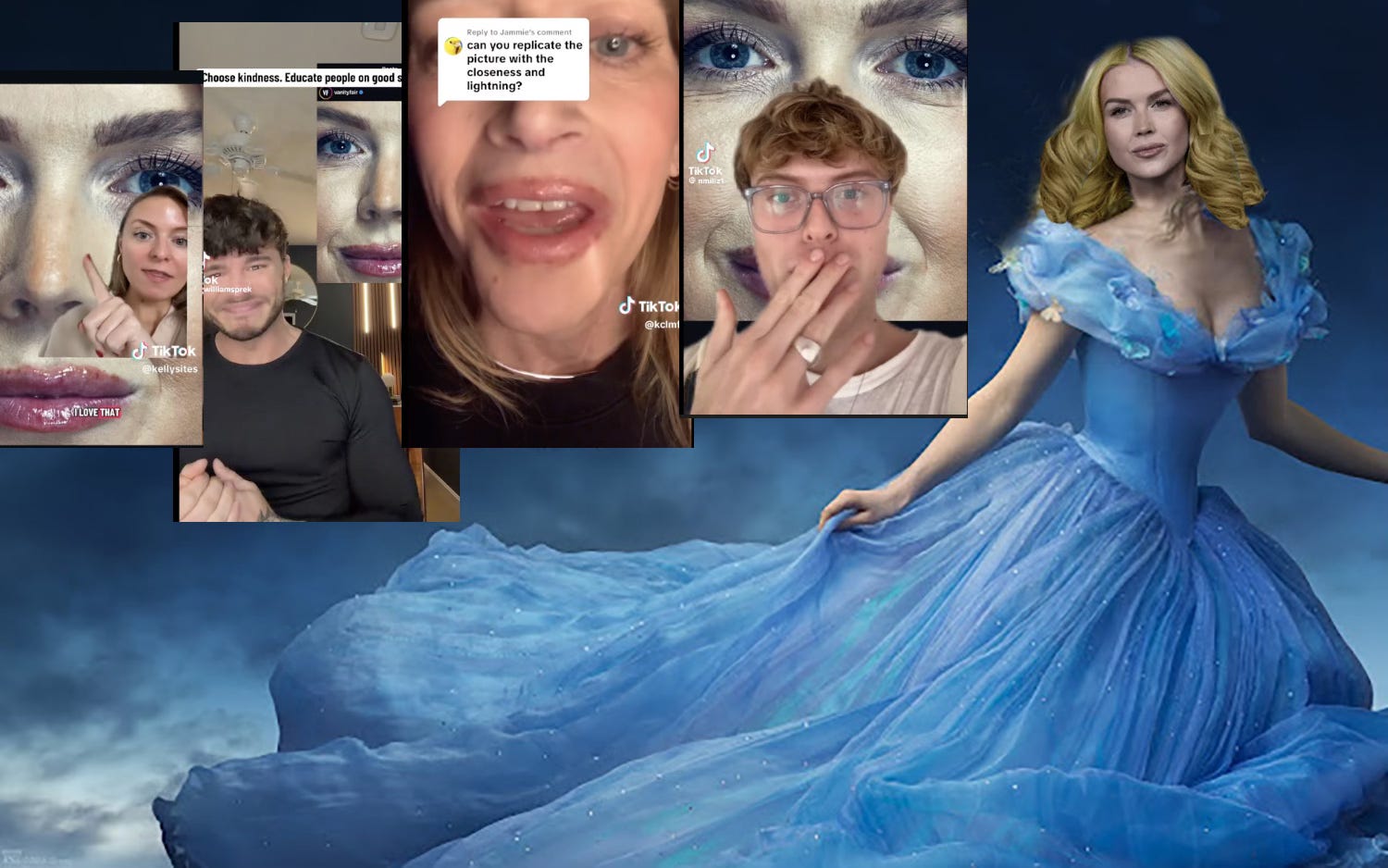
Free Thinking Through the Fourth Turning with Sasha Stone
Vanity Fair and the Incurably Ugly Left
00:31:38
Loading summary
Transcript61 lines
- [00:00]
A
Hi, this is Free Thinking through the fourth turning. My name is Sacha Stone. Vanity Fair and the incurably ugly left. They gave their voracious readers exactly what they craved. The Democrats have never been less popular than they are right now.
- [00:25]
B
That's right now.
- [00:25]
C
Yeah. I mean, Democrats in the minds of the American public are lower than the Dead Sea. What are we talking about here? Well, let's take a look at the net approval rating for Democrats in Congress. You said it, Kate Baldwin, the lowest ever. Look at this. Overall, they are 55 points underwater. Their approval rating is south of 20%. It's even worse when you look at independents. Look at this negative 61 points. That means that their approval rating is 61 points lower than their disapproval rating. Quinnipiac has been polling this question for the better part of the 21st century. The they have never found Democrats, at least those in Congress, in worse shape than they are right now.
- [01:04]
B
That's independence and overall. But what about Democrats on Democrats?
- [01:08]
C
Yeah, what about Democrats on Democrats? So part of the reason overall is so low is independents are driving it low. But that's not the only reason it's so low. What about Democrats on Democrats? Democrats net approval rating of congressional Democrats. I want you to keep in mind they had never rated Democrats negatively until this year. And right now, what are we talking about? We're talking about a net approval rating. This is Democrats on Democrats. Their approval rating is actually lower, lower than the disapproval rating. And that is quite the drop from October. I think during the shutdown there was a bit of a boost for Democrats. Right. There was a rallying around the flag effect going on. But Democrats did not like how that shutdown turned out. They have re turned against Democrats in Congress. And you mentioned Dan Goldman in that intro. One of the reasons that Dan Goldman is in trouble right now in a potential primary against Brad Ladner is because at this point the Democratic base is so upset with Democrats. So even if Democrats take back Congress, don't be surprised if Dan Goldman ain't there because of numbers like this one.
- [02:07]
B
This is quite a shift that you're looking at here. I mean, so this gets to the midterms, of course. What is this? What does this do to Democrats chances of taking back majorities in Congress?
- [02:17]
C
Yeah, you know, we're talking about it. You mentioned it. What is this? 22, 6? That's a 28 point decline falling through the floor. But of course the question is, can Democrats still take back Congress? If even with their ratings as low as this, the answer is yes. But in My mind, it's definitely hurting them. Why do I say that? Because take a look at the generic congressional ballot with a Republican president at this point, look, Democrats are ahead, but they're only ahead by four points. Historically, that is quite weak at this point in the 28, 2017, 2018 cycle was more than double that at 10 points. The same back during George W. Bush's second term in office where you saw, of course, the Democrats were also ahead by 10 points. So we're talking about a lead of less than half what we normally expect. And I think that's why at this point, there are a lot of Democrats who might be thinking, hey, we can spike that ball in the end zone. But the numbers at this point say, hold on just a minute. Yes, you're on your way to a congressional majority, but it's still a long time with numbers like this considerably weaker than historically speaking, it might be a tougher road to hoe than normally.
- [03:13]
B
Well, especially if you see that change from October.
- [03:15]
C
Yeah. If you see when you see your base going a 28 point shift and when you see numbers like this, you see this overall, a lot can change. A lot, a lot can change at this point. You know what? Democrats are hoping that Donald Trump's unpopularity can ride them to a congressional majority. But you know what? When you have numbers like this. Hold the phone just a second.
- [03:33]
A
Thank you, Harry.
- [03:34]
C
Thank you.
- [03:36]
A
They're suffering from many of the same problems that are causing Hollywood to collapse. They're dominated by white women and the LGBTQIA movement that looks more and more like a cult every day. Only a white woman and a gay man could have come up with the Vanity Fair photo shoot that made Susie Wiles look surprised and confused, as if to say, what am I doing here? J.D. vance is the villain in a superhero movie, obliterating his glittering aqua eyes because those make him look too good. And depicting Marco Rubio tipping over as though all it would take is a gentle push and down he goes. But they saved up their best for the woman the left calls KKK Caroline. Shown in extreme close up in high resolution with every pore and every wrinkle visible, not to mention injection marks on her upper lip. They turned the beautiful and young Levitt into the cartoon version they see in their mind's eye. They made something beautiful into something ugly. And on TikTok, they had a big party.
- [04:47]
D
This photo could be a case study because when the Benjamin Button Fox News is going on here, I'm not going to sit here and be unkind to Karen Levitt, like everyone else, is being. Okay. I think she looks amazing for a woman in her late 40s.
- [04:59]
E
No, because vanity Fair really said, if you're going to protect child molesters and pedophiles, I'm going to show everyone how heinous you really look on the inside and outside. And I love that for them.
- [05:09]
D
I'm sorry, but if Vanity Fair posted a photo of me looking like this, I would walk into the ocean. And before anybody hits me with a don't tear down another woman. That's Caroline Levitt. I'm not sure we can call her that. Also, as a guiding principle in my life, I try to be as mean as humanly possible to white supremacists. That's just something that I live by. And I am so sick right now, but I cannot believe that her and I are the same age. Being the princess of the Gestapo really ages you. Anyways, that pick is actually from Vanity Fair this morning, and what I can only call is a hit piece, because every single photo of the administration right now looks worse than the last. I actually gasped when I saw the photo of Marco Rubio. And then in the piece, it's mentioned that JD Vance said that he would pay Vanity Fair if they made everyone look much worse than him and even more if they made Marco Rubio look the worst.
- [06:15]
E
The Vanity Fair photos. Look, I'm not one to comment on someone's looks, especially a woman, but if you're the face of an administration that spews lies and hatred every day, it's open season. And also, everyone on that set hated her. That was a conscious decision on everyone's part.
- [06:37]
D
Makes me. It has made my entire day because. What do you mean? This was taken by a Vanity Fair photographer. Oh, and he even has a photo credit, if you can see that. Christopher Anderson. These are the best photographers in the world. Some of the best. A major, major publication. And the photos for this photo shoot, you cannot convince me it's not on purpose. Because who does? This is the most unflattering, zoomed in. See every poor, unedited photo I am living for. It is exactly what she deserves.
- [07:15]
F
Oh, man.
- [07:17]
D
Vanity Fair. I had to find the right setting to give you your just desserts for the most spectacular spread maybe ever. Like, is there an award you can win for revealing people for their truest selves? Cuz, wow. Obsessed with Vanity Fair, doing an article about the White House and making this picture of Caroline Levitt. The COVID photo. Fresh lip filler bruise that's not even bruising. Actually, that's straight up, just syringe marks. She left the clinic and went straight to the photo shoot. A damn mess. And there's fully other pictures they could have used of her as the COVID Like, this was literally the next slide. Like, you know, this was on purpose. Magazine photos are edited smooth, blurred face tuned, retouched down. Like, they could have taken this out, but they're like, no, we're actually gonna show America, like, what you're really working with. Maybe it was like a scheduling conflict. So she was doing on site filler at the photo shoot or something. I don't. Just a damn mess. I mean, nobody looks good from this, like freaky zoomed in angle, but she just looks like especially terrible.
- [08:09]
A
Okay, filter retouches off. I'm trying to replicate the pictures.
- [08:13]
B
Well, all the talk has been on the photographer, but I want to talk about the makeup artist because she or he is really doing something and it's part of the resistance. First of all, I love that it's an orange nose, okay? Not a brown nose, like a brown noser. But clearly, deliberately, there is way too much orange color bronzer on her nose. And we all know who her boss is.
- [08:36]
A
The Cheeto Vanity Fair. You absolute savages. Holy. If you haven't seen this, Vanity Fair shared this image of Caroline Levitt. This had to be intentional.
- [08:50]
B
There's no way.
- [08:50]
A
Editors looked at this photo and were like, yeah, that's a good one.
- [08:53]
D
She's gonna love that slap.
- [08:54]
A
That one. That bitch is 28. I am 54.
- [09:02]
B
This is Kakaka. Caroline's. It really speaks for itself. Beautiful work. The nose contour is giving Scarecrow from Wizard of Oz. Then there's little Marco looking like the before shot in an antidepressant commercial. Ask your doctor about Ralar today. They made him look like the Cabbage Patch doll memes. And they captured Susie Wiles reacting to the moment she found out exactly what she told Vanity Fair on the record in those 11 interviews.
- [09:30]
E
See? See how much fun it is to have media literacy? Because when you have media literacy, instead of getting mad at Vanity Fair for glazing the Trump administration, you get to sit back and cackle at this diabolical pictorial. Vanity Fair said Regina George's mean book, Make It Washington. Actually, not even. Not even. Because this is so much meaner. Being mean to people when they don't know that you're being mean to them is so much meaner than just being like, you know, Katie Heron is a fugly slut, and Trang Pac had sex with a hot dog. Or whatever Regina George said.
- [09:58]
D
Like, I'm so, so.
- [09:59]
E
Look what they did to this dude. He looks like a drug addled foreskin.
- [10:02]
D
Or, you know, Joseph Goebbels, depending on your view. This shows one that if you're an evil, terrible person who hates other human beings and what's best for them, you will age at an obnoxious rate. I am so sorry, girl. But I fear the only thing that could reverse this for you now is to summon the children of Salem to.
- [10:28]
A
Your cabin to suck out their souls.
- [10:31]
D
Oh, you already tried that. Vanity Fair did a carousel post and.
- [10:37]
B
A new cover on Caroline Levitt and other members of the cabinet.
- [10:40]
D
And this.
- [10:42]
A
This is.
- [10:43]
D
You guys. This is the COVID This is real.
- [10:45]
A
If I were, I would be suing.
- [10:46]
D
I would be suing if I. When I tell y' all that not being a hateful, bigoted white supremacist is the best skin care that you can possibly have. Caroline Levitt is exactly who I'm referring to. This is a 28 year old woman.
- [10:59]
B
This is the skin of a 28 year old woman.
- [11:06]
A
These are the same women who spent many months mocking Caroline Levitt's smallish upper lip. On and on it went. The bullying videos on TikTok. And when that failed to destroy the press secretary, they harassed and destroyed a running influencer named Kate Mac just for talking to Levitt.
- [11:25]
E
People on the left are currently trying to cancel Kate Max. For those of you who don't know, she's known for doing these interviews where they run and she asks questions at the same time, usually with celebrities, but she's done with people like Chris Cuomo and probably most famously and most viewed Tim Waltz right before the election. Now people are canceling her now because she did one with press secretary Carolyn Levitt, Trump's press secretary. Now, I get the little criticism that they didn't go for a run like she normally does. I think that's fair to say, but just listen to some of the things they're saying about this.
- [11:53]
A
No, no, no, no.
- [11:54]
D
You do not give a platform to.
- [11:56]
B
Fascism unless you are okay with fascism.
- [12:00]
A
Choice words that I have for that.
- [12:01]
D
Runner that decided to do like a.
- [12:03]
A
Little tour of the White House with.
- [12:04]
D
Caroline Levitt, like yesterday would get me banned off the app, so I can't. Kate Max, the girl who does the.
- [12:09]
E
How many miles are you running today? Videos. Doing a video with Caroline Levitt is disgusting. And her comments section are more the same on that same video. This is so beyond disappointing. Girl, what are you doing? Absolutely not. This is ins made their own, like, parody version of the video and basically said that Carolyn Levitt works for Satan. And this video, she's basically talking about what it's like to work for Satan. This is the issue the left has. There is nothing wrong with influencers or podcasters, whatever you want to call them, talking to the Trump admin, just like there was no issue with those same people talking to the Biden admin or the Kamala campaign. It's honestly more respectful when you reach both sides, like she clearly has. But the left just wants to shut down anyone that even comes close to Donald Trump or anyone that works for him. And you will never win the argument or the battle that you want to win just by shutting down conversation.
- [13:07]
A
These women, and probably lots of gay men, are the monsters. They're the wicked stepsisters in Cinderella who seethe with jealousy at the pretty blonde girl who is so confident and articulate at the podium. They're the evil queen in Snow White who can't stand that someone out there is prettier than she. After all, we did make a bargain, didn't we, Cinderella? And I never go back on my word. How very clever, these beads. They give it just the right touch. Don't you think so, Drizella? No, I don't.
- [13:48]
D
I think she's. Why, you little thief. They're my bees. Give them here. Oh, no.
- [13:55]
A
Oh, and look, that's my sash. Wearing my sash.
- [14:00]
F
Please.
- [14:09]
A
That's quite enough. Hurry along now, both of you. I won't have you upsetting yourselves. So Vanity Fair became the Magic Mirror and the Huntsman. They lie to their readers that they are the fairest of them all while they try to extinguish or destroy the object of their unending obsession. Oh, how they must have laughed and laughed as they chose these photos, knowing their readers would eat it up and lick the plate clean. The women who stab lawn signs into the ground pretend to stand for something and portray themselves as the better side. Were celebrating to see Levitt humiliated in a photo. It was, for them, like winning the lottery. It scratched an itch so deep they couldn't even tell you where it was. It felt good. That was all. The editor is this guy seen here is the date for Princess Beatrice in High Heels Girl About Town. Princess Beatrice's mystery date is revealed to be openly gay magazine editor Marc Guiducci. Guiducci was present during the photo shoot, which should have been a good indication that this would not go well for them. Though I would imagine he was dripping with fake niceness to make Them trust him. If you know, you know. Here's Megyn Kelly.
- [15:38]
B
The photography alone evidences the hatred that this magazine has for all of the Trump administration. I'm going to show you a couple of the up close photos you pose for. A photo for Vanity Fair, you know, a headshot. I think the common understanding would be that you're going to get a three quarter, like a top third of your body, you know, portrait like from the chest up. Look at Susie Wiles. Can you see this on your monitor? It is, it's worse than a mug shot. It's, it's even on the mug shot they give you a little bit of collarbone for listening audience. It's literally from her chin up to her forehead in a, in a facial expression that, where she looks like shocked, she, it does look mug shoddy. It's not flattering and she actually is a beautiful woman. You can easily get a good shot of Susie Wiles. Look at Caroline Levitt. That is Caroline Levitt. I'm, I'm sorry but it's such an extreme closeup, it doesn't even look like her. You can't even tell it's her. But it is, it's, it's her. But you can see the little needles from where she clearly had her lips done, which is something a lot of women do, but that is 100% by, by design. They wanted to embarrass her like fuck you. So she, you know what? I don't get my lips done, but I do get a bunch of needles in my face so they can inject a bunch of botulism in there and poison my forehead muscles. I don't think I'd appreciate it if that were close up on camera in Vanity Fair.
- [17:13]
A
The other editor was Jen Pastor, seen here bragging about the photo shooter, now treated like a hero by the good people of the left. For podcast listeners, an Instagram post by Jen Pastor of the story on the Trump White house. Back in 2014, the New York Times covered her wedding to Mark Hanna. For podcast listeners, a headline A Certain Metaphysical Attraction by Anita Gates. November 14, 2014. For a guy who was then the director of academic communications for Parsons, the New School of Design in New York, Mark Hanna was at a surprising, embarrassing loss for words. There he was in Soho on a cold Sunday afternoon in January 2012, settling in at the McNally Jackson Bookstore Cafe, reading up on the doctoral programs he was applying for. Caught a glimpse of Jennifer Pastor, then a 33 year old magazine photo editor planning a new freelance career, poring over the lonely Planet guidebooks for India and Bhutan. She was stunning, he thought, and so he decided to introduce himself. I said something really memorable, like going to India, huh? Mr. Hannah recalled. Pasteur was lovingly captured this way. The bride burst into laughter at least once during the vows, showing off an impossibly wide smile that was half Anne Hathaway, half 1990s Julia Roberts. You see, even in 2014, they had to stipulate. Yeah, you know, back when Julia Roberts had not aged even a day, they couldn't get away with that now. Or maybe they could. They make the rules. After all, it is nice to be among the privileged ruling class in America, among the good people of the left who see their mission to spread that goodness and if you don't go along with it, they will destroy you. Well, at least that was the plan. Trump upended it and they've never figured out exactly why. Even now, they think all of us should want to live inside their puritanical, suffocating bubble of goodness. Newsflash, we don't. The truth is that they are not a party defined by goodness so much as all consuming hatred for the lesser half of the country. It buzzes through their fake Anne Hathaway Julia Roberts smile like flies buzzing around rotting meat. Their hatred is everywhere, usually pooling and coagulating on blue sky, but every so often it seeps back to X, where they marshal their forces as a hate army to attack those they deem toxic, dangerous or disgusting. Why did they lose to Trump a second time is a question they would never ask. Is it them? No, it couldn't be. Everyone wants to be them. They're the special people, the good people, the chosen people, the woketopians that will take America into the future. I know what it feels like to see myself through their eyes, even though I was once one of them. They sent a photographer to take my picture for a New York Times profile of me at a time when they were trying to make it seem like they kind of sort of cared about the half the country that voted for Trump. Don't do it, my friend warned. Send them a selfie. I should have listened to him, but like the Trump administration, I was far too trusting. How bad could it be? Well, it was nothing less than the worst photo of me ever taken, appearing in the world's most widely read outlet. So there I was, looking fat, ugly and old, which is the message they wanted to send. Don't be like her or this is what you will look like. They say it openly and freely now. This is what hate does to You. And they define hate as disagreeing with their politic. The photographer was nice. She took many photos of me. And maybe it's true, they were all just as bad as the one the editor chose. But I think, as with the Vanity Fair photos, they picked the worst one because that is who they are. And if they didn't, they'd have been accused of elevating the wrong people to bad people. The racists and the fascists. This way, they signal to their readers, women and gay men, that they're still on their side. They're still on board with the real hate campaign, one they've waged for 10 years now and counting. They have no plan for the other half of the country. All they want to do is take back power again and raise the drawbridge to their queendom. While it's true that the right will mock how women look, especially the wicked witch of the left, Jennifer Welch, you'd never see that at Vanity Fair or the New York Times, where women on the left, especially minorities, are depicted as saintly in refusing to normalize the wife of a fascist. All magazines boycotted the beautiful Melania Trumpet. Nothing she could do would ever change their conviction of who they believed she was. They use every magazine, every late night comedy show, every Hollywood movie, every article in every magazine to push that lie. When they mocked Kellyanne Conway's age, she did something about it. She took that one thing off the table. They found something else when they mocked Sarah Huckabee Sanders for her makeup and her weight. She did something about it, but they found something else. And now when they mocked Caroline Levitt for her thin upper lip, she did something about it and they punished her for it. The truth doesn't matter to them. It never has. They can't even face the truth about themselves, let alone the other half of the country. Ivanka was always to be portrayed as the daughter of a Nazi, as are all the Trump children. There's never been one moment when they were given the credit they deserve. Not because they're American royalty, but because we the people, voted for them to fight for us. That used to matter in a country not under the control of an elite ruling class that sees themselves as better than everyone else. Trump, his administration, and his voters have to be whatever they say they are. If they need them to be kings, so be it. Hitler. Sure thing. Let us know what you want, women and gay men who live in a fantasy world. And we'll give it to you because you've been elevated inside Woketopia. The funny thing is, all they do is expose what liars they are. We all know What Caroline Levitt, J.D. vance, Marco Rubio and Susie Wiles really look like. This wasn't about telling the truth. It was about giving their readers the comfortable lie. See, it's okay to dehumanize them and treat them like toxic waste because they deserve it. Oh, Vanity Fair. Did you have to make it that obvious? They must wonder why so many Americans don't see them the way they see themselves. Or maybe they don't wonder at all. Maybe they never ask. Maybe they've been united in hate and dehumanization for so long, they don't know the difference anymore between what is real and what is a manufactured delusion. Isn't that the right didn't mock the Democrats Press secretaries Jen Psaki and Karine Jean Pierre, they did. It's that the left is the side that always pretended to be our moral betters because they aren't like that. They don't criticize women. They don't tear down other women. Except that they do. That was lesson number one for me almost 10 years ago. They are exactly like that. And I remember thinking, we aren't the good guys anymore. The women on TikTok, those who have helped make our culture intolerable by always portraying women as victims in fiction, in Lifetime movies, in Hollywood, become the very monsters they once pretended to oppose. So all Vanity Fair did was prove not who the Trump administration is, but what the left has become. They're nothing but a grease stain where a once mighty movement used to be. Caroline Levitt is not only beautiful, young, smart and successful, but she's also confident. And that's what they really hate about her. If they can't destroy her, they will try to humiliate her. It's become a ritual in the media by now, but never quite as blatantly as with this Vanity Fair piece. Maybe their readership is declining. Maybe they're bored. Maybe they don't know any other way to be anymore. Whatever it is, the stench of failure follows them around every time they signal to the rest of us that they're still this helpless and this desperate to lie to the American public with nothing less than lowly propaganda disguised as journalism. Vanity Fair, Hollywood, the New York Times, they don't exist for all of us anymore. They don't view the other half of the country as worthy of their attention or their coverage. Even though Trump won the popular vote and they still haven't figured it out, they haven't solved the problem. We picked Trump because we can't stand living in their America anymore. We can't stand them. They're the side that demands conformity, One that has cultivated a climate of fear and a culture of silence. Who wants to live like that? It's boring, it's predictable, it's mean. And it's over. Thank you for listening to my podcast, Sashastone.com and I hope you have a great weekend. If you like my work, you can always leave a tip on the main page, or you can become a paid subscriber, or you can write a review. And remember to thine own self be true.
- [28:28]
F
My heart don't feel the same Last year flew by Goodbye to the good vibes what we thought were the best times Nights out with the people I love but now I'm lost in the neighborhood they raised me, praise me, made me who I am but my father was twice the man and now that pain's resurfacing Brooklyn don't feel the same maybe I'm the one who changed or the one to blame Another dream down the drain a 10 more before I get on that plane I swear I knew just what to say the salt air on the tip of my tongue But I don't feel good enough for anyone But I won't unfold I know cause I, I, I, I got the spe.
- [29:12]
A
I ain't never giving up I never.
- [29:14]
F
Ever I never ever giving up my pride I never ever I never ever I never ever going to sell my soul I, I, I, I got the feeling I got this feeling I never give it up I never ever I never ever give. Pushed out of the family tree upside down but it was a good laugh I fell hard for the wine of France I didn't call you back Cause I was learning to dance this who I become the salt air on the tip of my tongue Wish I was good enough for anyone no I won't unfold I know cause I, I, I, I got this feel feeling I never giving up I never ever I never ever given up my pride I never let go I never ever I ain't never ever going to sell my soul I, I, I, I got this feeling I, I, I got this feeling I ain't never giving up I ain't never ever I never ever giving up my pride Take for me who I am cause this is me Like a fish out of water Do I belong here But I'm never gonna lose I'm never giving up my pride I'm lost in the ocean like an ode in a bottle But I'm never gonna lose I'm never giving up my pride well this is me who I am I ain't never giving up I ain't never ever I ain't never ever giving up my pride I ain't never letting go I ain't never ever I ain't never ever gonna sh I got this feeling I, I, I got this feeling I never give it up I never ever I never ever give it up my pride Take or leave who I am cuz this.
- [31:35]
D
Thank you so much. Thank you so much.