Loading summary
Transcript111 lines
- [00:00]
NPR Sponsor Announcer
This message comes from Capital One Commercial Bank. Access comprehensive solutions from a top commercial bank that prioritizes your needs today and goals for tomorrow. Learn more@Capital1.com Commercial Member FDIC.
- [00:16]
David Biancolli
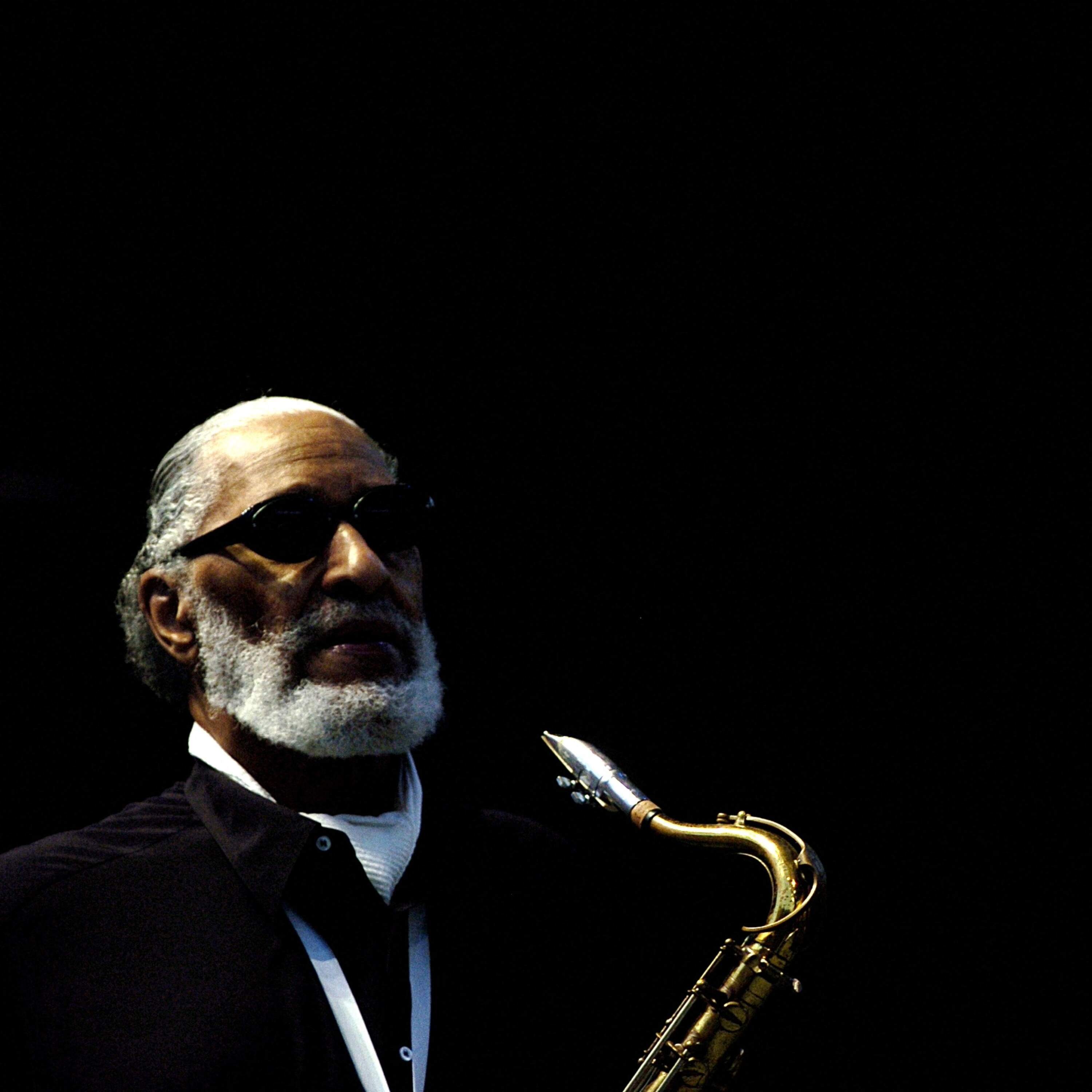
This is FRESH Air. I'm David Biancooli. Tenor saxophonist Sonny Rollins died Monday. He was 95 years old. For decades, he had been hailed as the greatest living jazz musician. Today we're going to Listen to Terry's 1994 interview with Sonny Rollins. But first we have this appreciation from jazz historian Kevin Whitehead. He says no figure in jazz was more universally Reverend.
- [01:16]
Narrator/Commentator
Wagon Wheels, old cowboy song written for Broadway's Ziegfeld Follies of 1934. It's from the album Way out west, an excellent introduction to a few things that made Sonny Rollins great, like how the saxophonist thrived in the bare bones trio format, which left him fully exposed. Also, the clarity of his best improvisations. When you have as much technique as Rollins, it's easy to overdo it, but he leaves so much space, the effect is more like singing than showing.
- [01:49]
Sonny Rollins
SAM.
- [02:22]
Narrator/Commentator
Wagon Wheels also speaks to Sonny Rollins's love of unlikely material. On Way out west, he also does I'm an Old Cowhand, just as he'd recently cut there's no Business Like Show Business and How are things in Glockamora? And then there's his imposing, sometimes garish sound. Sonny's saxophone tone in his 1950s pride is as durable and flexible as steel reinforced rubber. And he got plenty of mileage out of it. That's St. Thomas from 1956, the first of many Rollins calypsos. His parents came from the West Indies. Theodore Rollins was born and raised in Harlem and was nicknamed Sonny while still in diapers. He grew up surrounded by established and aspiring jazz musicians. Rollins started on saxophone at 8, practiced like mad and developed quickly, cutting his first session under his own name before turning 20. One months later he'd record Mambo Bounce, hinting at those calypsos to come. Even then he could give you the impression that when he improvises, he's both deep in the moment and standing back to coolly observe his progress.
- [04:15]
Sonny Rollins
Sam,
- [04:54]
Narrator/Commentator
You can divide Sonny Rollins career into three acts. First came Rollins the Searcher, the saxophone colossus of the 1950s when he had one of the all time jazz hot streaks, knocking out one classic album after another. But in 1959, he began a two year sabbatical from gigging to up his game. He practiced on the Williamsburg Bridge, blowing to the tugboats and act so New York iconic Spike Lee restaged it in Mo Better Blues. Coming back in the 60s, Rollins tried on new situations. A quartet with guitar, another with Ornette Coleman's sidemen and a brassy big band. Plus he wrote music for the film Alfie. Sometimes his playing revealed a harder edge and harder rhythm that look ahead to his next phase. This is the 1965 Calypso Hold' em Joe, Sonny Rollins's four decade last act began after a longer sabbatical in 1966. Fed up with the music business, he stopped recording for six years. When he came back in the 70s, much had changed. He was now using electric instruments, which gave the band a rockier edge. But that may have also been a practical move, easier to tour with a bass guitar than an upright bass. Rollins was gearing up for the long haul, conserving his energy for the stage. But also his glorious, pliable tone had become more metallic and yakety as his solos became more riffy and groove oriented. It was still exciting, but different. Sonny Rollins 1981 on the Dolly Parton favorite Here you come Again. This latter day music was designed to be more accessible. Backing musicians came and went, but it hardly mattered. His old bands were gloriously interactive. Now they were the curtain behind the star. And Sonny, for his part, didn't hold back. It was the most big hearted embrace of the public by a jazz horn player since Louis Armstrong. But where pops had set solos, Rollins the improviser shared his musical thoughts in real time. That made him famously self critical. But the candor was brave no matter how it all turned out. And even skeptics went to his shows in case he'd have one of those inspired nights. He had a few, like in Boston four days after 9 11. And yet with Sonny Rollins, as with Louis Armstrong, when it comes to their records, I tend to reach for the old classics, those first explosions of the creativity they'd later learned to measure out in more sensible doses to keep themselves from burning out. Sonny made it to 95 and performed into his 80s for a guy who blazed so brightly early on he paced himself.
- [09:40]
David Biancolli
Jazz historian Kevin Whitehead. Coming up, we listen to Terry's 1994 interview with Sonny Rollins. This is FRESH AIR.
- [09:49]
NPR Sponsor Announcer
This message comes from Sattva. How you sleep shapes how you live. Restorative sleep can sharpen, focus, stabilize mood and support long term health. Voted best luxury mattress by Sleep Foundation, Saatva's handcrafted luxury mattresses are designed to help people sleep more deeply and recover more fully at prices below traditional retail. Save up to $625 this Memorial Day at saatva.com NPR this message comes from BetterHelp. May is mental health Awareness Month, a reminder that you don't have to do this life alone. From loneliness to anxiety to financial stress, right now, people everywhere are struggling. But having a licensed therapist with you by video phone or chat can make a difference. And BetterHelp makes it easy. Sign up now and get 10% off@betterhelp.com NPR that's betterhelp.com NPR this message comes
- [10:47]
from Wise, the app for international people. Using money around the globe, you can send, spend and receive in up to 40 currencies with only a few simple taps. Be smart, get wise. Download the WISE app today or visit wise.com Ts and Cs apply today we're
- [11:05]
David Biancolli
remembering the great tenor saxophonist and improviser Sonny Rollins. He died Monday at the age of 95. Sonny Rollins started recording in the late 1940s. Early in his career, he played with musicians who were in the pantheon of modern jazz Charlie Parker, Bud Powell, Thelonious Monk, Miles Davis, Max Roach and Clifford Brown. Terry Gross spoke with sonny Rollins in 1994. They began with his tenor saxophone solo from his 1972 recording of the Hoagie Carmichael song. Skyl.
- [11:51]
Terry Gross
Sa. Sam.
- [12:56]
Sonny Rollins
Monk said to me one time that if it wasn't for music, life wouldn't be worthwhile living. I mean, I'm sort of paraphrasing what he said, but, you know, if I don't play for a little while, I get physically sick. You know, if I don't play my horn for a while, for a while, for a few days or whatever, I actually began to get sick. And I wonder, well, gee, what's the matter with me? Then I realized, well, I haven't played my horn for a few days.
- [13:28]
Terry Gross
When you're performing and you're improvising, are you thinking,
- [13:35]
Sonny Rollins
well, no, not really, no. No, I don't think that's why I really practice and I keep these exercises and so on, because when I'm actually on the stage and performing, the optimum condition is not to think. I just want the music to play itself. I don't want to have to think about it. If I have to think about what I'm doing, then the moment is already gone, you know. So there's certain times when actually it's an out of body experience, so to speak.
- [14:09]
Terry Gross
What do you do when you practice now? I mean, you're a brilliant player. You're a veteran player. I think a lot of people of your stature would probably just perform and not Exactly. Practice anymore?
- [14:25]
Sonny Rollins
Well, you know, when you play a reed instrument, it might be true with other instruments as well. But when you play a reed instrument, you have to deal with your armature, which is the position of your lips around your teeth and the instrument and the mouthpiece of the instrument. And this has to form sort of a cushion. And if you don't play for a while, what will happen is that your lips would bleed when you play. And even split your lip might split. It's happened to me when I. When I've had to lay off for a period of time for other things. I'm not certain I practice a lot of things, but I read once where my friend Mike S. Roach said that a lot of musicians shouldn't really practice. Practicing is cheating after you reach a certain point. So that may be right, but in the case of just keeping my armature from bleeding and my lip from splitting, I like to play a certain amount every day.
- [15:33]
Terry Gross
You know, one of the things that I love about your playing is. Is your repertoire, the songs that you choose to play. And you have a really diverse repertoire. And you play a lot of old pop songs that many people don't know or have forgotten. As well as some songs that are like novelty songs. Like, you know, T T Tutsi In Them and Old Cowhand and old Coward songs. Are these a lot of these song songs you grew up with?
- [16:03]
Sonny Rollins
Yeah, a lot of them songs that I heard when I was a youngster. When I was growing up, the big thing to do every week was go to the movies on Saturday. And on Saturday we used to see a lot of these movies that had this scores in it, you know, by some of the composers. And we'd see Louis Armstrong and pictures and different musical personalities that I enjoyed a lot. Of course, I also heard music
- [16:32]
Justin Chang
around
- [16:32]
Sonny Rollins
the house and so on. But the movies did provide a certain large part, I think, of some of the things that I play today, you
- [16:43]
Terry Gross
know, when you started performing, was it hard to find other musicians who liked the same songs you did and who wanted to play them? Even back in the days when you were playing with Miles Davis or with Clifford Brown, did they share your musical taste?
- [16:59]
Sonny Rollins
I would say basically, yes. People like Coltrane and Clifford Brown, we all had an appreciation of what they would call today the standard songs. In my case, I might have found some more obscure songs.
- [17:19]
Terry Gross
Did you ever, like propose playing something like Ti Ti Ti Tsi and have other musicians look at you like you were crazy?
- [17:24]
Sonny Rollins
Well, they might have thought so, but they wouldn't Dare to say it.
- [17:31]
Terry Gross
Why don't we pause here?
- [17:32]
Sonny Rollins
And it was my gig, you know.
- [17:33]
Terry Gross
Right, right. Why don't we pause here and play your recording of there's no Business Like Show Business. I love what you do with it. This is Sonny Rollins. There's no business like show business.
- [19:12]
Sonny Rollins
It.
- [19:42]
Terry Gross
Sonny Rollins is my guest. You grew up in Harlem in New York, and your parents, I believe both of your parents were from the Virgin Islands.
- [19:51]
Sonny Rollins
That's right.
- [19:52]
Terry Gross
What were your parents ambitions for you? Did they push you to excel when you were young?
- [19:58]
Sonny Rollins
Yeah, well, I was the youngest child. I have an older brother who was a very fine classical violinist. He ended up being a physician. Then I had an older sister who also sang a lot in church and everything. And so I was supposed to follow in their footsteps. Of course, I didn't because I was somewhat of a black sheep. They were much more studious than I, and I wanted to hang out and play ball. And as the years went on, I was really the guy that was out going to jazz clubs and all that. These things were frowned on at that time.
- [20:46]
David Biancolli
Sonny Rollins recorded in 1994. He died Mundy at age 95. Coming up after a break, we continue our interview with Rollins and hear from film critic Justin Chang, who has just returned from Cannes. Here's Sonny Rollins and Thelonious Monk. Hi, I'm David Biancooley, and this is FRESH air.
- [22:37]
Terry Gross
The jazz life, when you started to play, actually had a lot of heroin involved with it. And you, you got involved with that for a while when you were, when you were young. Do you think you would have tried something like that if it weren't for it being such a part of the jazz world in the 50s?
- [22:57]
Sonny Rollins
I don't think I would have actually. There would really have been no reason, I don't think, to get involved with that. I got involved with it because a lot of my idols were doing it and so on. So we thought that using drugs was sort of the thing to do. But this is something like asking whether Billie Holiday would be the singer she is if she didn't use drugs. I've had this discussion often with people, and my answer is that, yes, I think Billie Holiday would be the singer she is regardless of what happened to her. I mean, even though she may sing about hard times and all that, she was a consummate musician and beautiful singer. So yes, I think that she would sing the way she did. Charlie Parker would play the way he did. Everybody would do what they did.
- [24:02]
Terry Gross
It must have been your parents worst Nightmare when you entered the jazz world and then started using.
- [24:07]
Sonny Rollins
Oh, yeah. Oh, yeah. Well, you know, my mother was pretty. Since I was a baby. My mother really. She stuck by me regardless of what I did. She was really. But I had a lot of problems from the rest of my family. My father, my grandmother, they really were pretty down on me. And my siblings, they didn't really understand where I was coming from anyway. But I have to say that my mother really believed in me all the way, and I'm really happy that I was able to get myself together before she left the scene. So she kind of saw me start to make records and so on like that. So I sort of made her feel that her trust wasn't exactly all in vain, you know?
- [25:09]
Terry Gross
Were you ever arrested?
- [25:11]
Sonny Rollins
Oh, yeah. Oh, yeah, I was arrested. Unfortunately, I had to get involved with the justice system and all of this stuff, you know. But I was always lucky because I was able to get involved with music programs in the prison. Right. And in those days, there were other musicians there, you know.
- [25:34]
Terry Gross
So did it scare you when you were in prison? Did you say yourself, like, what am I doing here?
- [25:39]
Sonny Rollins
Yeah, it scared me a lot. It scared me a lot. But again, I was lucky because I could play an instrument, and a lot of the other prisoners knew of me, so I immediately had respect from them. But of course, you know, being locked up is no joyride.
- [26:01]
Terry Gross
How did you straighten out?
- [26:03]
Sonny Rollins
Well, it took a little while, but, you know, I slid back a couple of times and everything. But I eventually had gotten down to the complete bottom, so I couldn't have gotten any worse, you know. I mean, I was really in a complete.
- [26:24]
Terry Gross
What was the bottom?
- [26:25]
Sonny Rollins
Well, the bottom was sleeping in
- [26:31]
Bleeding Gums Murphy (Simpsons Character/Hologram)
parked
- [26:32]
Sonny Rollins
cars, in garages and all this stuff, you know, and what we used to call in those days, carrying the stick. Carrying the stick meant that you were homeless. I guess today they would just say, guys, homeless. But I did this mainly when I was in Chicago. Chicago was where I sort of was out there on my own in New York. Even though I was Persona non grata at home. I could always perhaps get by or sneak in the house or something. But when I was really away from home, I really had to pay a lot of dues, as we used to say.
- [27:23]
Terry Gross
How would you protect your horn during the periods when you were homeless?
- [27:26]
Sonny Rollins
Well, I didn't protect my horn. I mean, I didn't have a horn, really.
- [27:33]
Terry Gross
Were you barring other people's horns?
- [27:34]
Sonny Rollins
I was barring other people's horns, yeah. Yeah.
- [27:37]
Terry Gross
What did you learn about yourself during that Period.
- [27:41]
Sonny Rollins
Well, what did I learn about myself? Well, I learned that I had the strength to get over something, which was really. And I think one of the things that I'm always. That I always feel good about myself was that I was able to overcome that because I really had to struggle. You know, when I came away from the hospital one time and I went back to the nightclub, it was really the classic scene of the old drug pushers standing there saying, come on, man, come on. You know, and this is good. And I really went through the classic scene of fighting myself, you know, saying, well, gee, if I go with them, it wouldn't be so bad. It's just one time, and maybe I should do it, and why not? And this. And then that's the other part of me saying, no, don't do it. You know, I mean, the real classic battle between good and evil, right and wrong, whatever you want to call it. But anyway, I won out, you know, and that's one thing that I really feel good about myself. You know, I really went into the lion's den and came out alive.
- [29:05]
Terry Gross
Once you found that strength and knew that you had it, how else were you able to use it in your life?
- [29:12]
Sonny Rollins
Well, then I felt I could do anything, you know, and. And I could get back to what I really wanted to do, which was my music.
- [29:21]
Terry Gross
So how did you use that strength in your music?
- [29:24]
Sonny Rollins
Well, I don't know, actually. I think I always had strength in my music, even when I was a kid. And I used to practice for hours and hours and hours at a time. I mean, I always had something within myself which enabled me to be alone and play and get into what I'm doing and not think about anything else and really get into stuff myself. So actually, by getting rid of these negative elements, I was just able, really, to return to what I had in the beginning, you know, over the years,
- [30:04]
Terry Gross
you've taken several hiatuses. There have been several periods where you haven't performed. And I think one period like that lasted. Was it five years? Was that the longest?
- [30:14]
Sonny Rollins
I think about. I think the. Well, it's hard to say. I took a hiatus on the bridge, which was pretty well documented.
- [30:24]
NPR Sponsor Announcer
Right.
- [30:25]
Terry Gross
This was during the period when you were practicing on the Williamsburg Bridge in New York because it was too loud for you to practice in your apartment.
- [30:30]
Sonny Rollins
Right.
- [30:31]
Terry Gross
So when you take a hiatus, when do you know it's time to get back to performing?
- [30:35]
Sonny Rollins
Well, when I took my hiatus
- [30:40]
Bleeding Gums Murphy (Simpsons Character/Hologram)
on
- [30:40]
Sonny Rollins
the bridge, it became apparent because I had sort of gotten what I wanted to do. I was Trying to really accomplish something musically. And I'd sort of gotten close enough to what I was doing that I felt if I stayed there, it might have turned into a self indulgence. And that's not what it was about.
- [31:04]
Terry Gross
I'd love to know what it feels like to play your horn on the Williamsburg Bridge. And this was the period when you weren't performing, but you were practicing a lot on the bridge, I guess, in the middle of the night.
- [31:17]
Sonny Rollins
Well, yeah, we played in the night and in the daytime, anytime. It was actually a beautiful place to play because it was a nice space up there. You were really on top of the subway. The trains that came across the bridge were unto underneath you.
- [31:37]
Terry Gross
You were on the pedestrian walk.
- [31:38]
Sonny Rollins
Yeah, the pedestrian walk. So it's really a nice space up there. And you're sort of right in the middle of everything. You can see Manhattan and on the other side, Brooklyn. And the boats would be coming by at night and you could blow as loud as you want and nobody would even look at you. You know, every now and then people would walk by, but nobody would even look. You know, I mean, this was the sophistication of New Yorkers.
- [32:06]
Terry Gross
Yeah, New Yorkers are amaz. Immune to everything. It's just been a pleasure to talk with you. We've been wanting to talk with you on the show for so long. Thank you so much for doing it. It's been wonderful.
- [32:17]
Sonny Rollins
Thank you.
- [32:20]
David Biancolli
Sonny Rollins talking with Terry Gross in 1994. Rollins, it's worth noting, was the inspiration for a character in the long running popular Fox cartoon series the Simpsons. The character is a musician known as Bleeding Gums Murphy, who, like Rollins, takes a sabbatical to practice nightly on a Bridge. In 2013, Rollins himself made a guest appearance on the show in an episode titled Whiskey Business. He plays himself, not Bleeding Gums Murphy. Young Lisa Simpson, who is a big jazz fan, is writing a letter of complaint because a music company has started taking advantage of artists and their catalogs by presenting them as performing holograms. Sonny Rollins visits Lisa in response, but eventually she realizes he's a hologram too.
- [33:09]
Sonny Rollins
Dear she done left me records. Once again, I write protesting your holographic exploitation of blues icon Bleeding Gums Murphy. I call for a boycott and girlcott of your entire catalog until you, Sonny Rollins.
- [33:26]
Bleeding Gums Murphy (Simpsons Character/Hologram)
That's right, Lisa. And I'm here to beg you to stop writing those letters.
- [33:31]
Sonny Rollins
You're siding with record companies.
- [33:34]
Bleeding Gums Murphy (Simpsons Character/Hologram)
This isn't about money, Lisa. From Tupac Shakur to Dwight Eisenhower, holograms have introduced some of our leading dead people to a new audience of people with money. Resetting, resetting. From Tupac Shakur to Dwight Eisenhower.
- [33:51]
Sonny Rollins
You're a hologram, aren't you?
- [33:52]
NPR Sponsor Announcer
No.
- [33:53]
Bleeding Gums Murphy (Simpsons Character/Hologram)
Resetting, resetting.
- [33:57]
Sonny Rollins
Have you no shame?
- [33:59]
David Biancolli
Coming up, more with Sonny Rollins. This is FRESH air.
- [34:03]
NPR Sponsor Announcer
This message comes from Wise, the app for international people using money around the globe, you can send, spend and receive in up to 40 currencies with only a few simple taps. Be smart, Get Wise. Download the Wise app today or visit wise.com Ts and Cs apply. This message comes from Babbel. Babbel's conversation based language technique teaches you useful words and phrases to get you speaking quickly about the things you actually talk about in the real world with lessons handcrafted by over 200 language experts and voiced by real native speakers. Start speaking with Babbel today. Get up to 55% off your Babbel subscription right now at babbel.com NPR spelled B-A-B-B-E-L.com NPR rules and restrictions may apply.
- [34:54]
Support for NPR and the following message come from HomeServe. Owning a home is full of surprises, and when something breaks, it can feel like the whole day unravels. HomeServe is ready to help, bringing peace of mind to four and a half million homeowners nationwide. Plans start at just $4.99 a month. Sign up today@homeserve.com not available everywhere. Most plans range between $4.99 to $11.99 a month. Your first year terms apply. Uncovered Repairs.
- [35:25]
David Biancolli
Terry spoke to Sonny Rollins again in 2005. At the time, a concert album had been released, recorded in Boston four days after the 911 attacks. Rollins lived six blocks away from the World Trade center in lower Manhattan and saw the second tower fall. Rollins had to evacuate his apartment in lower Manhattan on the 39th floor. He grabbed his horn. But some things he had to leave behind.
- [35:52]
Bleeding Gums Murphy (Simpsons Character/Hologram)
Most of the things in there I had to eventually throw away, get taken away. You know, I had left my piano there, which was very sentimental to me. A lot of the guys played on that. Monk used to play on it. All people that came by to my house and I lost a lot of clothes that I had there. I lost a lot of books.
- [36:19]
Terry Gross
Why did you leave your piano behind?
- [36:21]
Bleeding Gums Murphy (Simpsons Character/Hologram)
Well, because I was so afraid of the fact that toxic material might have gotten into the mechanism of the piano. I was afraid that I would be handling something of that sort.
- [36:44]
Terry Gross
Do you know what happened to your piano?
- [36:46]
Bleeding Gums Murphy (Simpsons Character/Hologram)
No, I don't. I don't I tried to give it to the Salvation Army. So I ended up leaving it in the apartment and explaining to the people in the apartment. I was hoping that they would be able to handle it and take care of it in the proper way, you know, I just I hope so, you know.
- [37:13]
Terry Gross
Well, after you were evacuated from your building on September 12, you drove to Boston, where you're scheduled to play on September 15th. So many events were canceled in the days after September 11th. Did you speak to the producers at that event and have a long talk about whether you should go on with the show or not?
- [37:33]
Bleeding Gums Murphy (Simpsons Character/Hologram)
Well, I spoke to my wife, Lucille, and I was all for not doing the show because I was really very unsteady on my feet.
- [37:44]
Terry Gross
And did that have to do in part with having walked down 39, 39 flights of stairs?
- [37:49]
Bleeding Gums Murphy (Simpsons Character/Hologram)
Right. Right. It did. And also, you know, I was just really shook up, so I wanted to cancel it. But, you know, my wife Lucille, and Lucille was a person that never wanted to violate a contract in any way, and she also may have had a feeling that it would be important to do it, do a concert at that particular time, you know. So anyway, she convinced me to play the concert.
- [38:34]
Terry Gross
I thought I'd play another track from youm New CD Without a Song, the 911 Concert. And this is a Nightingale Sang in Berkeley Square. It's a beautiful version of it. How did you first hear this song?
- [38:51]
Bleeding Gums Murphy (Simpsons Character/Hologram)
Well, you know, Nightingale Sang in Berkeley Square. I guess I heard it during the 40s when I used to see all the movies that came in town every week. And it's funny, that Nightingale Sang in Berkeley Square may have had some connection to World War II. And the scene when I was evacuated and I walked down those steps that day when I came downstairs, it was very reminiscent of Those World War II pictures when there was a blitz of London with all of the emergency vehicles and the smoke and the fumes. I mean, it was really a it was really something that. But I guess it's something I'm trying to say, that it's stored someplace in my mind. So I guess since I'm still alive, I might have a way to turn it into some kind of a positive experience.
- [41:58]
David Biancolli
That's tenor saxophonist Sonny Rollins from a live album recorded in Boston four days after 9 11. Rollins spoke with Terry Gross in 2005. He died Monday at the age of 95. Coming up, Justin Chang tells us about the films he saw at Cannes. This is FRESH air.
- [42:17]
NPR Sponsor Announcer
This message comes from Wise, the app for international people using money around the globe. You can send, spend and receive in up to 40 currencies with only a few simple taps. Be smart. Get Wise. Download the Wise app today or visit wise.com Ts and Cs apply this message comes from Babbel Babbel's conversation based language technique teaches you useful words and phrases to get you speaking quickly about the things you actually talk about in the real world, with lessons handcrafted by over 200 language experts and voiced by real native speakers. Start speaking with Babbel today. Get up to 55% off your Babbel subscription right now at babbel.com NPR spelled B-A-B-B-E-L.com NPR rules and restrictions may apply.
- [43:08]
Support for NPR and the following message come from HomeServe it never happens at a good time. The pipe bursts at midnight. The heater quits on the coldest night. Good thing HomeServe's hotline is available 24. 7 Call to schedule a repair and a local pro will be on their way. Trusted by millions. For plans starting at $4.99 a month, go to homeserve.com not available everywhere. Most plans range between $4.99 to $11.99 a month. Your first year terms apply on covered repairs.
- [43:41]
David Biancolli
The Cannes Film Festival has been a launchpad for some of the most acclaimed films in recent years, including Drive My Car, the Zone of Interest, Honora and last year's Sentimental Value and the Secret Agent. Our film critic Justin Chang returned from the festival earlier this week. He says that although it wasn't a banner year for Cannes, there still were many good movies and even a few great movies to look forward to.
- [44:06]
Justin Chang
The first Cannes Film Festival I ever attended in May 2006 was a deliriously star studded affair. Penelope Cruz, Ethan Hawke and Kirsten Dunst walked up the red carpeted steps. Future Oscar hopefuls like Volvaire, Babel and Marie Antoinette competed for the Palme d', or, the festival's top prize. There were world premieres of blockbusters like the Da Vinci Code and the Last Stand. Terrible movies but great photo ops. And near the end of the festival, I walked into a film I knew nothing about called Pan's Labyrinth, and emerged knowing I'd seen a classic. This year's Cannes kicked off with a 20th anniversary screening of Pan's Labyrinth, but otherwise there wasn't much of that 2006 era razzle dazzle. The major Hollywood studios tightened their belts and stayed home, perhaps with still fresh memories of the stinging Cannes reception for the last Indiana Jones movie back in 2023, but there were stars here and there. Demi Moore and Stellan Skarsgrd were on this year's jury. Adam Driver and Miles Teller showed up for the world premiere of James Gray's terrific 1986 set crime drama Paper Tiger, in which they play brothers who unwisely go into business with the Russian mob. Driver and Teller are outstanding, and Scarlett Johansson is heartbreakingly good as a family member forced to deal with the fallout. Paper Tiger deserved a prize, but it left the festival empty handed. Instead, the jury awarded the Palme d' or to the gripping and sometimes infuriating small town drama Fjord. It's the second Palm win for the Romanian filmmaker Christian Munju. He won his first in 2007 for the movie Four Months, Three Weeks and Two Days in Fjord, Sebastian Stan and Renate Reinceve are almost unrecognizable as an evangelical Christian couple who have recently moved from Romania to a small Norwegian town with their five children. In this scene, they sing a hymn with their church friends at the cross,
- [46:19]
Bleeding Gums Murphy (Simpsons Character/Hologram)
at the cross where I first saw
- [46:22]
Sonny Rollins
the light and the burden of my heart rolled away
- [46:29]
Terry Gross
it was there by faith I received, I see my sight
- [46:36]
Bleeding Gums Murphy (Simpsons Character/Hologram)
and now I am happy all the day.
- [46:42]
Justin Chang
When the couple are accused of child abuse, Fjord becomes a fierce battle between the forces of religious conservatism and secular liberalism. It may be set in Norway, but it's likely to resonate with American audiences when it opens later this year. I hope there will also be robust turnout for Minotaur, a perfectly chilled tale of adultery and murder that won the Grand Prix or second place. It's a remake of the 1969 Claude Chabrol drama La Femme Enfiedle, this time set in Russia not long after the 2022 invasion of Ukraine. The director of Minotaur, Andrei Zviagantsev, nearly died of COVID during the pandemic, and it was moving to see him back in Cannes with a film this powerful and uncompromising in its critique of the Putin regime. One of the buzziest out of competition titles was Club Kid, a hugely enjoyable comedy directed by the actor, writer, comedian and social media star Jordan Firstman. He plays a gay New York City club promoter who's sent reeling when he learns that he has a 10 year old son. The result is basically a ketamine laced version of every adult Bonds with cute kid movie you've ever seen. But Firstman is a real talent. He's also one of several queer filmmakers who made a bold impression at the festival this year Jane Schoenbrunn, the director of the inventive transgender allegory I Saw the TV Glow, came to Cannes with their third feature, Teenage Sex and Death at Camp Miasma. Starring A very game Hannah Einbinder and Julian Anderson, the movie is a clever homage to and deconstruction of 80s and 90s slasher thrillers, digging deep into the often unspoken connections between our love of pop culture and our hang ups about sex and desire. Along with Paper Tiger Club Kid and Camp Miasma were welcome reminders that American cinema isn't close to dead at Cannes or anywhere else. Even so, I can't say that I minded the general absence of Hollywood at the festival this year. One of the reasons I keep returning to Cannes is that it shows interesting movies from all over the world, movies like the gorgeous and moving Rwanda set drama Benya Mana, about efforts to bring about truth and reconciliation years after the 1994 genocide. The film earned its director, Marie Clementine Dusabejambo, the Camera d' or prize for Best Debut Feature. My favorite film at Cannes this year was all of a Sudden from the Japanese director Ryusuke Hamaguchi. Set in and around a Parisian elder care home, it uses the close bond between two women, one French and one Japanese, to raise haunting questions about how we live, how we die and most of all, how we talk to each other. Like Hamaguchi's Oscar winning Drive My Car all of a Sudden is a reminder that something as simple as a conversation between friends can make for sublimely moving cinema. I can't wait to see it again. And I can't wait for you to see it too.
- [49:58]
David Biancolli
Justin Chang is a film critic for the New Yorker. On Monday's show, historian Elizabeth Stordor Pryor spent years lecturing on the most charged word in American English and never told a soul that her father was the man who infamously used it, the legendary comic Richard Pryor. We talk about the N word growing up as Pryor's daughter and why, late in his career he swore to never say the word again. Hope you can join us. For Terry Gross and Tonya Mosley, David I'm David Biancooli.
- [50:33]
NPR Sponsor Announcer
This Message comes from Indeed hiring do it the right way with Indeed sponsored jobs claim a $75 sponsored job credit to get matched with quality candidates@ Indeed.com podcast. Terms and conditions apply.
- [50:49]
This message comes from Bayer. Science is a rigorous process that requires questions, testing, transparency and results that can be proven. This approach is integral to every breakthrough. Bayer brings forward innovations that save lives and Feed the World ScienceDelivers.com this message comes from Grainger.
- [51:08]
For the ones who get it done, Grainger offers the professional grade products you need to get the job done with fast delivery and access to technical product experts ready to help you meet any challenge. Call click grainger.com or just stop by.