Loading summary
Transcript98 lines
- [00:00]
Narrator/Announcer
Support for NPR and the following message come from the William and Flora Hewlett foundation, investing in creative thinkers and problem solvers who help people, communities and the planet flourish. More information is available@hewlett.org this is FRESH AIR.
- [00:15]
David Biancolli
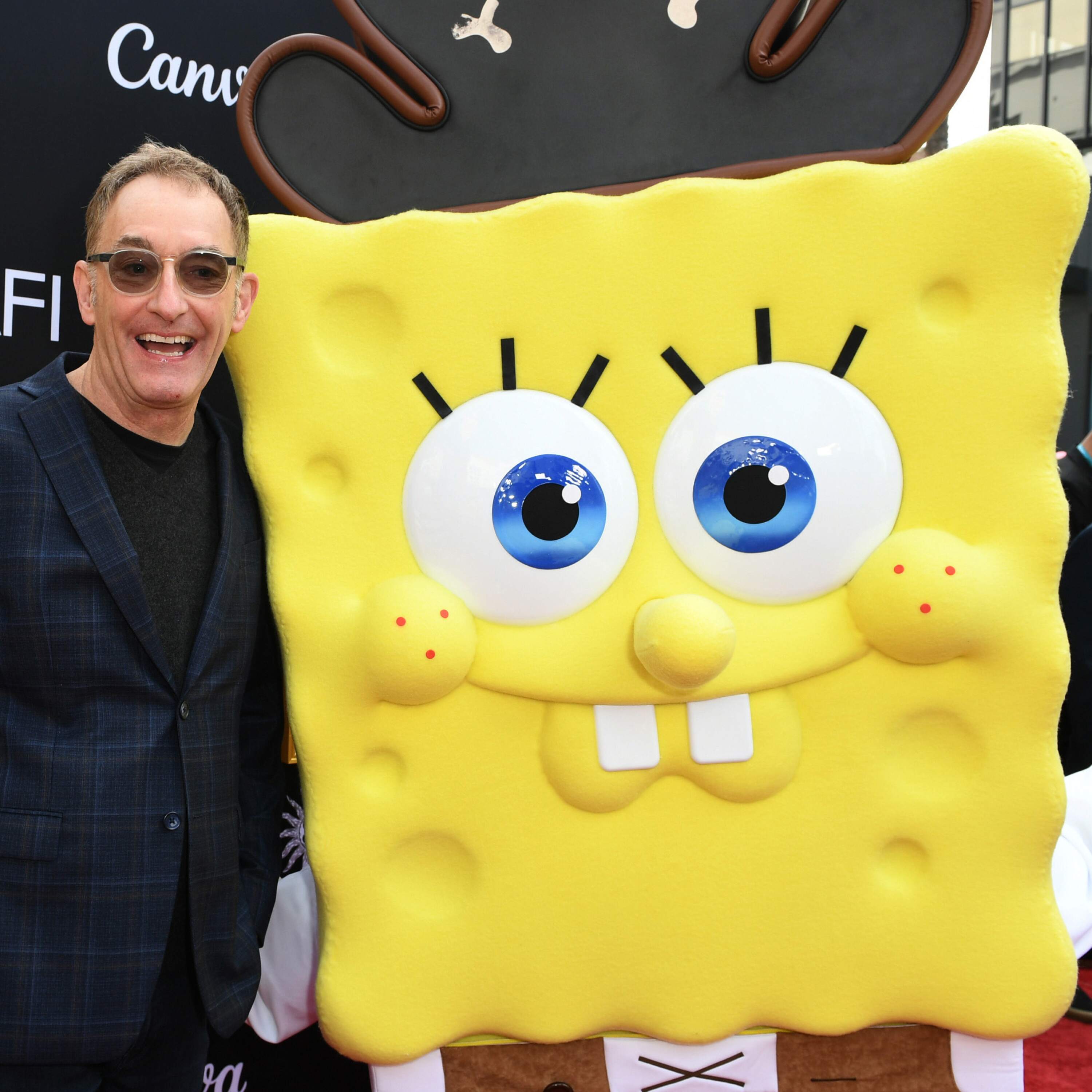
I'm David B. And Cooley. The latest SpongeBob SquarePants movie, the SpongeBob Movie Search for SquarePants is now streaming on Paramount plus, and that's reason enough to revisit our interview with Tom Kenny, who has been providing the voice of animation's most celebrated sponge since it premiered on Nickelodeon in 1999. SpongeBob SquarePants isn't the oldest continually running animated series currently on TV. Comedy Central's South park first appeared two years earlier in 1997. Both shows have launched popular Broadway musicals and movie spin offs. And like Fox's the Simpsons, which launched as a series way back in 1989, all have had a major impact on the current generation, which has been watching these shows and characters all their lives. When I teach television history to young 20 somethings in college, the one show with which they are more familiar and fluent than any other is spongebob squarepants. They all know and love the antics of spongebob and his undersea pals, including Patrick the Starfish, Squidward The Octopus and Mr. Krabs. All these characters and more were created by Stephen Hillenburg, who was a marine science educator as well as an animator. He died in 2018 at age 57, but his characters and his series live on. In search for SquarePants, SpongeBob wakes up one morning to discover he's had a small growth Spurt, making him 36 clams high, which, to a sponge who's been waiting all his life to be tall enough to be allowed onto an amusement park ride, is a big deal. As his friend Patrick notes, he's now a big guy. Tom Kenny is the voice of SpongeBob. Bill Fagerbachy is the voice of the Starfish. Patrick.
- [02:09]
Tom Kenny
Patrick, I've never felt so respected before. Get used to it, buddy. Do you know what the best part of being a big guy is? What is it, Patrick? No, I'm asking. It means I finally get to do what every little guy dreams of doing when they grow up. You don't mean. That's right. Ride the Big Guy roller coaster at Captain Foody Beard's Fun Park.
- [02:36]
David Biancolli
Somehow this leads to an adventure where spongebob sails away with a nefarious, ghostly Flying Dutchman whose voice is provided by Mark Hamill of Star wars fame. It's more silly than scary, but between all the sight gags, goofy jokes and bouncy music manages to teach subtle lessons about friendship, loyalty, and even maturity. Tom Kenny, as always, provides the voice of SpongeBob. Before taking that role, he was a stand up comic and a cast member of Mr. Show, the HBO sketch series starring Bob Odenkirk and David Cross. He spoke with Terry Gross in 2004 when there also was a new SpongeBob movie being released.
- [03:18]
Terry Gross
Let me ask you to describe SpongeBob for someone who's never seen the cartoon.
- [03:22]
Tom Kenny
Oh, wow. Yeah. SpongeBob SquarePants is a little square kitchen sponge, even though he was born of sea sponges. It's kind of an accident of nature. But he lives in a pineapple under the sea, works in a fast food restaurant called the Krusty Krab in the undersea community of Bikini Bottom. What else can I tell you? He pals around with an incredibly dim starfish named Patrick Star, has a crabby neighbor named Squidward Tentacles who lives in a giant tiki head next door to him. He's incurably optimistic and enthusiastic and kinetic and. Yeah, and he has a cartoon show on Nickelodeon.
- [04:04]
Terry Gross
Now, if you're doing a voice for, say, a cartoon animal, you know, animals make noises. So you can maybe base your voice on like a cat's meow or a dog's bark or, you know, a beer's growl or something. If you're doing the voice of a human character, humans really speak. If you're doing the voice of a sponge, there's really, like nothing in nature to base that on. So how did you figure out what voice you wanted to use?
- [04:28]
Tom Kenny
Which is actually very freeing in a way because there's no template. So when it came time to come up with a voice, it was just a matter of finding a voice that was child childlike and maybe childish, but not a child non age specific, enthusiastic and just kind of weird. And we've finally settled on this elfish, helium helium voice that SpongeBob wound up being. And you know, this weird, you know, that was. The fun part was before it was even a pitch or even a show. And we were just, you know, sitting in coffee shops irritating people at other tables going, you know, what would he laugh like? What would his laugh be like? And, you know, how about a dolphin? How about kind of like a dolphin? Like Flipper used to. Yeah, that's good. And, you know, it was really a blast. And then Steve went in and pitched it to Nickelodeon and they liked it. It's the only job in all the hundreds of Voiceovers I've done that I really didn't have to audition for. I had the job from the get go, which was nice.
- [05:30]
Terry Gross
You mentioned, like, the voice sounds as if it's on helium. Have you ever inhaled helium to see what it would do to your voice?
- [05:38]
Tom Kenny
You know, it's funny you should mention that in the seven minute pilot episode that we did, which, as far as we were concerned, might be the only episode of spongebob ever made, there was a school of anchovies that invade spongebob's restaurant and, you know, just this big school of destruct, like locusts, you know, that just descend down the restaurant and
- [06:00]
Terry Gross
go, eh, eh, eh, eh, eh, eh, eh.
- [06:03]
Tom Kenny
And Steve Hillenburg actually brought a tank of helium into the studio and all of us voice actors just suck down. And it was just. That was the pilot. So I said, boy, if this thing goes, we are going to have a lot of fun.
- [06:20]
Terry Gross
So did it help to hear what your voice sounded like on helium? Did you learn something about your voice you didn't know before?
- [06:26]
Tom Kenny
Yeah, I learned that I don't really need the helium because it's pretty easy to flick that switch and go right up there.
- [06:35]
Terry Gross
Were there voices you came up with for spongebob that you rejected?
- [06:39]
Tom Kenny
Oh, yeah. It's all hit and miss. On any animated character in any animated show, you're trying to dial in a voice that the creator is hearing in his head. And in the case of spongebob and a lot of the shows I've worked on, the creator of the show has a very definitive idea that he sometimes can't articulate because he himself is not a voice actor of what this character should sound like. So really, it's a matter of just letting yourself be dialed in like a radio or something with the creator going, okay, no, add 20 pounds. Okay. Now five years younger, and, you know, maybe he has a deviated septum. Okay. Yeah. And, you know, it really is hit or miss. You're zeroing in on this target, and when it hits, it's pretty obvious.
- [07:29]
Terry Gross
Okay, could you do that for me? Could you add 20 pounds to SpongeBob's voice?
- [07:35]
Tom Kenny
Yeah. Which when he absorbs water, I guess it's water weight. I have a tendency to retain water. Terry, this is SpongeBob on a very. I'm feeling very obese and very large today.
- [07:44]
Terry Gross
And make him five years younger.
- [07:47]
Tom Kenny
Make him five years younger. This is SpongeBob as a child. I am in Sponge kindergarten. Ay, ay, ay, ay.
- [07:53]
Terry Gross
Deviated septum.
- [07:55]
Tom Kenny
Deviated septum. I don't know what that means. I'm just a dumb sponge.
- [07:59]
Terry Gross
What was it like for you the first time the voice and the image were matched up? You actually saw, you know, a little bit of completed animation of SpongeBob with your voice.
- [08:09]
Tom Kenny
It was really great because, like I said, I had gone over to Steve's house, you know, even before the pitch was a pitch, and he had drawings and watercolored paintings of SpongeBob's Pineapple House and Squidward's Tiki Head House and the Krusty Krab Restaurant, which looks like an overturned lobster trap. And they were just so beautiful, you know, it was like looking into an aquarium or something. They were just gorgeous. And then when I started to do informal focus group testing at my house, you know, translation forcing people that dropped by to watch my cartoon pilot, sit down. We're watching SpongeBob. The clamps come out of the arms of the chair. But, you know, people really liked it more than they usually like a cartoon, especially kids. They liked it more than a little bit. They were just entranced and wanted more. And luckily, Nickelodeon took a flyer on it as a series.
- [09:09]
Terry Gross
The spongebob movie is kind of a musical. There's a bunch of songs in it. You sing a couple, and one of the songs you sing in the movie is called the Best Day Ever. Before we hear it, can you talk a little bit about what it's like to sing in character?
- [09:23]
Tom Kenny
Yeah, yeah, that's a good question. Boy, I've never talked about that before. Some voices really lend themselves to singing, and even though I didn't really think about it ahead of time, it's just serendipitous that spongebob did. It's pretty easy to sing in that voice. La la la la la la la My dog has fleas. But, you know, there are other voices that I've done where I'm just so glad I don't have to sing in them. You know, if you're doing that guy there of. There's not. Not a lot of Sondheim, like, range that you can tap into. But, but yes, spongebob really, really is fun to sing as. It's. It's sort of like a weird mix between, you know, Jerry Lewis and the guy from the. The schlock 70s band sticks. You know, it's. It's. It's kind of. Babe, I'm leaving. Must be on my way. It's. It's very weird.
- [10:19]
Terry Gross
Where do you place that voice in your head, Emma?
- [10:22]
Tom Kenny
Boy, I would have to say that If I were going to draw a circle around the target area, it would be somewhere between my fairly sizable proboscis and my thorax. It's definitely up in the nasal cavity, back of the throat area. And Bill Fagerbaki that does the voice of. Or it's Fagerbach or Fagerbach. He's never told me how to pronounce his name. He says, whatever. I'm not fuzzy. Whatever. But, you know, his voice as Patrick is just all pushed down right into his big barrel chest. And then spongebob is way up here. So it's kind of a neat contrast between spongebob and Patrick Starfish.
- [11:05]
Terry Gross
Well, Tom Kenny, let's hear you sing. And this is from the soundtrack of the SpongeBob SquarePants movie. And here's Tom Kenny singing the Best Day Ever, that song you co wrote.
- [11:16]
Tom Kenny
Yes, I did. With Andy Paley, power pop meister.
- [11:19]
Terry Gross
Okay, here it comes.
- [11:29]
Tom Kenny
Mr. Gunn came up and he smiled at me. Said it's gonna be a good one Just wait and see. Jumped out of bed and I ran outside Feeling so extra ecstatic it's the best day ever this day it's the best day ever, this day I'm so busy Got nothing to do
- [12:16]
Terry Gross
that's Tom Kenny, the voice of SpongeBob and the star of the SpongeBob SquarePants movie. So you actually wrote the Best Day Ever, which we just heard. Tell us something about your approach to writing a song for spongebob to sing.
- [12:30]
Tom Kenny
You know, it was this really fun mental exercise where my friend Andy Paley and I. And, you know, if you Google Andy Paley, it's insane. He's produced records by Jerry Lee Lewis and, you know, Brian Wilson and, you know, all these people. But it was very freeing to just put on SpongeBob's brain and say, wow. Well, SpongeBob is this unbridled optimist. You know, he jumps out of bed every day and greets the new day with the mantra, this is gonna be the best day ever. You know, every day has the potential to be the best day ever, which is, you know, how we'd all like to be. And then we're. By the time we walk out the front door, we're beaten into submission by life. But, yeah, it was really fun. And we tried to make the song sound like, you know, we were trying to figure out who in rock and roll history has been most in touch with their inner spongebob. And, you know, and it's John Sebastian from the Lovin Spoonful. You know, do you. You know, he is spongebob. Do you believe in magic? You know, Brian Wilson, where, you know, who will write like this beautiful four minute opus about the wind chimes? These are my wind chimes, you know, and it's like, well, you know, they sort of have this naif, like child man sort of sensibility that is spongebob. So it's like, let's write a lovin spoonful Brian Wilson pet sounds, you know, sort of thing with spongebob singing it. And that's where Best Day ever came from.
- [13:51]
Terry Gross
So what were the cartoons you grew up with?
- [13:54]
Tom Kenny
Oh, man, I was obsessed with Popeye the Sailor man as a kid, I think. I don't know, six or seven Halloweens in a row I was Popeye the Sailor man, which, you know, is a pitch that probably would not fly now. You know, you go into the big Cartoon Network and go, okay, he's a sailor and his eye has been poked out and he likes to punch people. What do you think? You know?
- [14:11]
Terry Gross
But, oh, and the real thing is he eats spinach.
- [14:14]
Tom Kenny
He eats spinach and then he gets strong and this enables him to punch people harder and beat them up more completely. What do you think? But it was Popeye the Sailor man. And it was a particular honor for me when spongebob and Popeye shared a cover of TV Guide as they did a series of covers featuring the top 50 cartoon characters ever. And they had a cover drawing that was Popeye the Sailor man drawing his anchor up out of the water and it's caught on spongebob's underwear and he's just kind of hanging off the anchor looking at Popeye. It was a weird kind of, I don't know, like full circle cosmic moment for me. I started crying in the grocery store. That's all I'm gonna say, Terry.
- [15:01]
Terry Gross
So when you were a kid and you loved Popeye, did you do the Popeye voice and that kind of Popeye mumble that he's always doing as he's walking and thinking.
- [15:09]
Tom Kenny
I loved that. Yeah, that thing, that Jack Mercer, the voice of Popeye, you know, he was Popeye for 80 years or something. You know, he was incredible. And I also loved the, you know, the Looney Tunes, you know, Bugs and Daffy, of course, and you know, Bullwinkle and Rocky were huge for me. And even those early Hanna Barbera cartoons like Yogi Bear and Huckleberry Hound and Top Cat, even when the anim fairly limited the voice work was really great. And from a really early age I was, I was conscious of the fact that there were grown, grown men whose job it was to help bring these. These things to life. And it seemed like a really fun job to me. I had a. An aunt, a very. A very hep aunt who, when I was a kid, gave me a bunch of Stan Freeberg record albums, like History of the United States and all that. And they had little biographies of the voice actors on the back of the album, like, you know, Stan Freeberg, June Foray, Dawes Butler, you know, people like that. And they were amazing. I was very aware that there was a guy named Mel Blanc whose name was on every cartoon. But, you know, pre Internet, in the pre Internet world, it was kind of hard to find out about that stuff. You had to sort of feel your way around. But that only made it more kind of mysterious. You know, I like to. I don't know, I felt like there was this whole hidden world of cartoons and voice acting that needed to be uncovered by me.
- [16:45]
Terry Gross
So did you have a sense when you were a kid that you wanted to be a voice actor?
- [16:49]
Tom Kenny
I did, Yeah, I did. And by the time I was a teenager, it was firmly in place. In fact, one of my best friends from first grade on is the comedian Bobcat Goldthwait. And we met in first grade and, you know, are still close at 42 years old or whatever. And he reminded me recently of a conversation that he and I had in high school. Like, just kind of, you know, kind of walking around your hometown where there's no show business and playing this game of whose career do you want? If you could have anybody's career in show business, who would you want? And this was probably 76 or 78. And Bob reminded me of this conversation we had had where he said John Belushi and I said Mel Blanc. And he's. And he said, wow, isn't that weird that you, you know, you sort of. You sort of did it. You're doing, you know, you're doing the same kind of work that Mel Blanc did. And I said, yeah, that is weird. I wanted to be an astronaut and I kind of got to go up in space a couple of times. It's cool.
- [17:47]
Terry Gross
I don't know how Bobcat Goldthwaite still manages to have a voice, because the voice that he does sounds like it would just rip up your vocal cords.
- [17:55]
Tom Kenny
Yeah, I know. I don't either. He has vocal cords of steel. He is more than human. But, yeah, we met in first grade. We went to the same Catholic school, but we were in separate first grades. And the first time I became aware of Bob was when the nun that taught his classroom just dragged him by the ear into the nun that taught my classroom. And his nun was crying and she just threw him into the classroom and said, I can't take him anymore, Sister. You have to. This Goldthwaite boy. And I said, whoa, I have to get to know this boy who can make a grown nun cry. It was really bizarre. And so him and I, he was the only other kid that had an interest in that left field kind of, you know, stand up and sketch comedy. And when SCTV came on the air, it totally blew our minds. And we went to see Andy Kaufman perform in Syracuse when we were. And you know, it was cool to have another person who was into that stuff. So you knew that you weren't crazy because again, now, you know, a kid can get on the Internet and just, you know, immediately be in touch with, you know, how many hundreds of like minded square pegs. But, you know, it wasn't that way back in the 70s. We had to find other nerds to talk to ourselves. There was one. There's one. There's one really funny memory I have. You know, I was, Bob was the quintessential fat kid that was the class clown. And I was the quintessential shy, skinny kid who didn't have the guts to be class clown, but considered himself the class clown's head writer. You know, hey, try this during math class, Bob, it'll work for you. You know, that's a good sound. Try that one. But, you know, I have a great memory of us in gym class. And they were picking teams for basketball and of course Bob and I were both just hopeless at sports and, you know, funny as a defense mechanism, that old chestnut. And it came down, they were picking teams and everyone got picked except Bob and myself and this little girl who had a hook for a hand. And Bob and I just look at each other and the kid, the captain of the other team says, I'll take Susie. And she walked. The girl with the hook for the hand walked over to play hoops and Bob and I just looked at each other and just started laughing. You know, these like, you know, fourth graders just laughing our heads off at how stupid and hopeless we were. Even now I can't explain how, you know, how perfect that moment was where it's just you and your other nerdy friend and the girl with the hook, and the girl with the hook goes off to play basketball and they're going, yeah, Tom and Bob, doesn't really matter what team they're on. They're just there to make us laugh. Anyway.
- [20:44]
David Biancolli
Tom Kenny speaking to Terry Gross in 2004. After a break, we'll continue their conversation and we'll have two reviews. I'll review Prime Video's man on the Run, the new Morgan Neville documentary about Paul McCartney. And film critic Justin Chang reviews Dreams, the new psychological drama starring Jessica Chastain. I'm David Biancooley, and this is FRESH
- [21:07]
Narrator/Announcer
AIR support for npr. And the following message come from the William and Flora Hewlett foundation, investing in creative thinkers and problem solvers who help people, communities and the planet flourish. More information is available@hewlett.org do you remember
- [21:24]
Terry Gross
the first voices that you started doing that made you realize that you could do it?
- [21:29]
Tom Kenny
You know, like I said, I was kind of shy up until junior high school, and it wasn't until then that I started to kind of step out and think that maybe, you know, maybe I could be funny in front of more people than my handful of selected trusted friends. So, you know, I wasn't really, you know, I wasn't really waka waka kooky guy in class. I, I had this secret desire to be, which makes the world of cartoon voiceover perfect for me because, you know, if you're simultaneously a little bit shy and also an annoying, irritating show off at the same time, it's the perfect, it's the perfect gig.
- [22:12]
Terry Gross
Do you have a favorite theme song from all the cartoon shows?
- [22:16]
Tom Kenny
Oh, man, I love Top Cat. I thought that Top Cat, the irrevisable leader of the gang, you know, that was just such a, such a cool, snappy rat packy. And you know, when I was thinking about it, I realized that all those Hanna Barbera cartoon characters that I grew up with as a kid were basically ne' er do well con men. You know, topcat lived in an alley and him and his buddies were always stealing from garbage cans and hiding from the cops. You know, it's like our market research shows us that children enjoy grifters. Let's make the cartoon series about them. It's like, you know, Yogi Berra is always stealing picnic baskets. It's like, you know, they were all con men and crooks. They were all they had this Sergeant Bilko whiff of illegality about them that I was responding to for some reason.
- [23:04]
Terry Gross
You did a lot of stand up comedy, too. And what was your stand up act like?
- [23:10]
Tom Kenny
You know, boy, I wish I remembered it. It was, I guess, very kinetic, pop culture oriented. Also a lot of stories about just people. I had Met or seen or people in my family or, you know, it sort of lent itself. It sort of was a good stepping off point for the sketch comedy stuff like Mr. Show with Bob and David on HBO that I later did. You know, just very broad strokes, very high energy, kinetic. I would change it a lot, which, you know, club owners occasionally did not appreciate. Your act is different than it was the first show. You gotta do the same thing you did the first show. Well, I get bored. I don't wanna do it. What's the point if you can't throw some stuff against the wal if it doesn't stick? Well, those are the breaks. I don't tell you how many cases of Heineken to order. Get off my case.
- [24:03]
Terry Gross
When I was growing up, all the comics, like so many of the comics did impressions and they did impressions of people who they must have grown up with, you know, like James Cagney and Al Jolson and then contemporary politicians like JFK and Nixon were thrown in there. Ed Sullivan. Yeah, right. Everybody had to duet Sullivan.
- [24:22]
Tom Kenny
Yeah.
- [24:23]
Terry Gross
Did you grow up with any of that? And was. Did you ever do impressions? Impressions just aren't what they used to be. Very few people do impressions in their act anymore.
- [24:32]
Tom Kenny
Yeah, and especially, you know, I was doing stand up comedy. You know, I started in 83 or so as a rank open micr. And to us, I don't know, maybe we were like snot nosed little wise guys. But to us, people like me and Bobcat, like the impression guys were, there was just something kind of square about it. There was just something kind of corny like, hey, here's, you know what if Jack Nicholson was on Star Trek, you know, it was just some sort of, sort of who cares? You know, who cares? So impressions were really not of much interest to me and maybe because I'm not very good at them myself, maybe it's just sour grapes because there are voiceover guys that I work with every day that are just have the most incredible ears and incredible radar for doing these uncanny impressions, not just of huge celebrities, but celebrities that you would think you couldn't do an impression of. Like, you know my friend Billy west, who's like a monster cartoon voice guy, you know, he was Ran and Stimpy and a bazillion other characters, including Popeye currently. But he, you know, he'll do like a dead on Charlie Sheen and you go, wow, I didn't know there was enough Charlie Sheen to do an impression of. Wow, that's really cool. And I never had that. I never had that. Skill, you know, my strength was always creating characters out of whole cloth and looking at a drawing or a picture and kind of figuring out what, you know, what these things might sound like. By the same token, though, a lot of my cartoon voices that I've actually been hired to do have been the result of my highly unsuccessful and lame attempts at impressions.
- [26:13]
Terry Gross
Like who?
- [26:14]
Tom Kenny
You know, like, well, I'll do an impression that's so terrible that it sounds like an original voice. You know, people go, wow, we haven't heard that before. That's very good. And I'll go, well, I was trying to do, you know, this person or that person, but. Or sometimes they're amalgams. Like the series the Powerpuff Girls, you know, has this ineffectual mayor of the town. Welcome to Townsville, ladies and gentlemen. That's sort of an amalgam of my bad impressions of Frank Morgan, the Wizard of Oz, and Joe Flynn, the guy from McHale's nav. To toss you in the brain for this, Mikhail. And you know, who is the woman? Ruth Gordon, you know, in her later years in those awful movies with Clint Eastwood and an orangutan. Get that monkey out of my Oreos. You know, so it's like there's three horrible, weak attempts at impressions that actually turned into an employment opportunity for me.
- [27:07]
Terry Gross
How did you break into voice work?
- [27:10]
Tom Kenny
You know, fortuitously, I was doing standup one night at the now defunct Improv in Santa Monica, and there was a person from Nickelodeon and also a person from what was then Hanna Barbera in the audience. And they both approached me the same night and said it was a showcase. And they said, geez, have you ever thought about doing animated voices for cartoons? And I said, you know, maybe every day of my life, perhaps. Where do I sign? And yeah, that was. It was. I really felt like, you know, once I did the first couple of them, the first one or two were extremely terrifying. And then I felt like I had just found this. This suit that fit me so well. It was. It was like, wow, this is. This is what I was looking for. You know, this. This feels even much better and righter to me than stand up does. It was. It was a blast.
- [28:05]
Terry Gross
What is the most devious thing you have ever done with your voice?
- [28:10]
Tom Kenny
Oh, boy, that is. That is very weird. Well, I have to say, occasionally parents who are maybe a little pushy will voice their kid on you and just say, this is Mr. Kenny. He does SpongeBob. Do SpongeBob. Do SpongeBob for Timmy. Mr. Kenny. Do SpongeBob. Do Spongebob. Do Spongebob. And then you do the voice and the kid just, you know, they're two years old, so they don't understand why this man with three day stubble is yammering SpongeBob in their face. It's terrifying for them. So that's kind of unwittingly evil on my part, but I sort of get, I sort of get hornswoggled into it. But I just know that that kid is gonna be on a psychiatrist couch somewhere down the line. So tell me again, when the sponge man yelled in your face and that made you cry. But it's, it's weird. And then, and then there's another school of kid who finds out what you do and just comes up with this sense of demanding entitlement and starts poking you and going, talk spongebob. Talk spongebob. Talk spongebob. It's weird. And then you just say, all right, I'll talk spongebob. Why don't you go to your parents and ask them to teach you some manners?
- [29:28]
Terry Gross
Do you ever get recognized by your voice since you don't really use your real voice in your work?
- [29:34]
Tom Kenny
No, actually, actually this is a character that I'm doing right now. This is, this is, this is really hard for me to do right now. No, my real voice is kind of just uninteresting and vanilla and, you know, nasal Syracuse accent. And, you know, if I didn't, if I wasn't able to twist it into various shapes, you know, I'd be working in a store. Like, I see guys like James Earl Jones and they've got the voice. They've got that voice. And it's what they do. And it's a, you know, it's a gold mine. It's a, you know, if I say Darth Vader's lines, it doesn't have the same, it doesn't have the same cache. Hey, I find your lack of faith disturbing. Okay? I must have those plans, you know, so, you know, like the guy that does the trailers. In a world where a man's voice goes down at the end of every sentence, it's like, wow, that guy really talks like that. I've run into that guy that really is his voice. And he really does do the thing where he goes down. Then like in promos, you listen to promos and you realize that it's all about the word then, you know, on a very special CSI Toledo, then on Buffy, then on a very special pretty people in their twenties, cellulite is discovered on Sarah.
- [30:58]
Terry Gross
Have you really met that guy.
- [31:00]
Tom Kenny
I have. Yeah. Yeah, man.
- [31:02]
Terry Gross
He gets a lot of work.
- [31:03]
Tom Kenny
He's the guy. I mean, there's, it's him. You walk around, you go, wow, yes, I'm ready for my car now. It's like, I love it, you know, Like, I can make fun of that, but I can't really do it.
- [31:14]
Terry Gross
Oh, you just did it, you know,
- [31:15]
Tom Kenny
and you have to be able to reference the word masterpiece in illimitable ways. You know, it's been called a small masterpiece. Critics are calling it some kind of a masterpiece. It's being hailed as a masterpiece. It's like, wow, if everything's a masterpiece, that makes everything sort of generic. If it's all a masterpiece, it's all,
- [31:40]
Terry Gross
well, Tom Kenney, it's just been great talking with you. Thank you so much.
- [31:43]
Tom Kenny
Thank you very much.
- [31:44]
Terry Gross
Terry, what voice was that?
- [31:47]
Tom Kenny
That was, that was, that was my Mr. Haney hillbilly voice from Green Acres. I don't know. No, I think that was, I did interviews all day today. Voice. That's phlegm. That's, that's Mr. Phlegm, my new character that I'm working on.
- [32:00]
David Biancolli
Tom Kenny speaking to Terry Gross in 2004. The SpongeBob Movie Search for Squarepants is now streaming on Paramount. Coming up, I review Prime Video's man on the Run, the new Morgan Neville documentary about Paul McCartney. This is FRESH AIR. Today on Prime Video, the new documentary man on the Run makes its streaming premiere. It's about Sir Paul McCartney, but it's not about his years with the Beatles. Instead, it's about his first years without them. Yes, there have been plenty of Beatles related documentaries in the past decade or so and yes, I've reviewed most of them. But in my defense, the Beatles are a great subject musically and biographically, and the best filmmakers are drawn to them. Peter Jackson gave us the Get Back documentary miniseries and the latest installment of the Beatles Anthology. Ron Howard directed Eight Days a Week about the group's touring years. Martin Scorsese directed Living in the Material World, his two part biography of George Harrison. All of them were terrific and all of them were made by Oscar winning directors. Documentary filmmaker Morgan Neville, who won an Oscar for his film about backup singers 20ft from stardom, has joined that club. He's already directed outstanding biographies of everyone from Johnny Cash and Anthony Bourdain to Steve Martin and Fred Rogers. And now Prime Video is premiering his latest documentary, man on the Run, about former Beatle Paul McCartney. And the word former is key here. While brief, artful montages encapsulate the frenzy and impact of Beatlemania. Man on the Run is focused on the decade immediately afterward, the 1970s. Specifically, it spans the period from when McCartney left the Beatles to when his former bandmate John Lennon was shot and killed. Neville conducted many lengthy new interviews with McCartney, but uses only the sound. Virtually all the footage in man on the Run is vintage, so there are no white haired rock stars in sight. But because McCartney is an executive producer and has provided a stunning amount of previously unseen private footage, there's lots of fresh stuff to see here. The danger of McCartney having such input, though, is of man on the Run becoming too sanitized as a personal biography. But it's not. The Decade covered includes McCartney announcing the breakup of the Beatles, his very public musical feud with Lennon, the formation of McCartney's post Beatles band Wings, even the Paul is dead rumor. And in these new interviews, McCartney seems to be speaking honestly not only about what happened, but how he felt about it all. On the Beatles breakup, for example, it was McCartney who announced it publicly, but it was Lennon who already had left the group.
- [34:58]
Tom Kenny
John had come in one day and said he was leaving the Beatles. He said, it's kind of exciting. It's like telling someone you want a divorce. But I was thinking, what do I do now? Because it'd been my whole life, really. You know, I'd had growing up, going to school and then becoming the Beatles. It was a puzzle I had to kind of unravel.
- [35:28]
David Biancolli
Paul's reaction at age 27, was to retreat with his wife, photographer Linda Eastman, and family to a remote property he owned in Scotland. In a vintage interview, she recalls his out of the blue suggestion.
- [35:42]
Terry Gross
He said, I've got this farm. I know you won't like it, but it was so beautiful up there. Way at the end of nowhere, civilization dropped away. It was quite a relief.
- [36:01]
David Biancolli
Man on the Run does rely on other voices and perspectives to defend some of McCartney's infamous actions during this period. John Lennon's son Sean, for example, excuses Paul's stunned, understated reaction to John's death when asked by reporters. Paul called it a real drag as having been in shock. And John himself, in an interview filmed years after the Beatles breakup, admits that Paul was right in hating and suing the manager that John had brought in to handle the group. At the time, John and Paul even attacked one another in song. And in a new interview, Paul is very open about how much that stung.
- [36:43]
Tom Kenny
The only thing you done was yesterday. The only thing you did was yesterday was apparently Alan Klein's suggestion, but the back of my mind I was thinking, but all I ever did was yesterday. Let it be long windy road. Ellen Rigby later, Madonna. John, how do you sleep? How do I sleep at night? Well, actually, quite well.
- [37:14]
David Biancolli
That same refreshing honesty extends to other key moments. The formation of his group Wings and recruiting Linda as its first charter member. His jail time in Japan for bringing pot into that country, even the time Lorne Michaels on Saturday Night Live jokingly offered the Beatles a ridiculously small check if they would reunite on his show.
- [37:36]
Tom Kenny
Now here it is, as you can see, a check made out to you, the Beatles. For $3,000, all you have to do is sing three Beatle tunes. She loves you. Yeah, yeah, yeah. That's $1,000 right there. Me and Linda were over to John's apartment in the Dakota. He said, oh, this is a big show over here. Saturday Night Live. In my book, the Beatles are the best thing that ever happened to music. It goes even deeper than that. You're not just a musical group, you're
- [38:07]
David Biancolli
a part of us.
- [38:08]
Tom Kenny
We grew up with you. We got kind of excited. We just go down. We show up, hey, it's Saturday Night Live. But it was like, why? You know, I mean, it'd be great for them. Would it be great for us? We've come full circle and now we're off on another journey. So we just decided to just have another cup of tea and forget the whole idea.
- [38:36]
David Biancolli
Man on the Run is more about the man than it is about his creative process. But his music runs all through the documentary, and it all adds up to an impressive, inspirational second act.
- [38:49]
Tom Kenny
I can tell you how I feel. My heart is light and will let me roll again. Let me roll it to you.
- [39:09]
David Biancolli
Coming up, Justin Chang reviews Dreams, starring Jessica Chastain. This is FRESH air.
- [39:15]
Narrator/Announcer
This message comes from Kachava. That wellness goal you set at the start of the year, it's not too late to stick with it and make your future self proud, especially with the all in One Nutrition Shake from Cachava. With 25 grams of protein, 6 grams of fiber, grains, adaptogens and more. No fillers, no nonsense, just the highest quality ingredients. Stick with your wellness goals. Go to cachava.com and use code NPR for 15% off. That's K A C-H-A-V A.com code NPR.
- [39:49]
David Biancolli
In the psychological drama Dreams, jessica Chastain plays a San Francisco philanthropist whose foundation supports a dance academy in Mexico City. The movie, which also stars the Mexican actor and ballet dancer Isaac Hernandez, is the latest from the writer and director Michel Franco, who previously worked with chastain in the 2024 film. Memory. Dreams opens in select theaters this week, and our film critic Justin Chang has this review.
- [40:18]
Narrator/Announcer
The first thing you see in the new movie Dreams from the Mexican filmmaker Michel Franco is a freight truck parked in the middle of nowhere. Inside the truck are several migrants who are making the perilous journey from Mexico to the US Franco is vague on specifics. He observes and implies more than he explains. One of the migrants is a young man named Fernando, played by Isaac Hernandez, and he quickly separates himself from the others and makes his way towards San Francisco. There's determination as well as exhaustion in Fernando's stride, almost as if he knows exactly where he's going. He does. Fernando heads to a swanky apartment, the home of a philanthropist named Jennifer McCarthy, played by Jessica Chastain. Jennifer is surprised to see him, but they're clearly not strangers. They immediately fall into bed in the first of the movie's many explicit sex scenes. The backstory comes together gradually. Fernando studied at a Mexico City dance academy that receives funding from Jennifer's arts foundation. Their torrid affair began some time ago during one of Jennifer's many trips to Mexico. Now Fernando has entered the US Illegally to be with her, and he's determined to stay and perhaps even launch his dance career. Dreams first screened at the Berlin International Film Festival last February, less than a month into the second Trump presidency. Although there are references to ICE and the looming threat that Fernando could be arrested and deported, immigration provides the context rather than the subject of the movie. What interests Franco the most is the ever shifting balance of power between Fernando, an undocumented immigrant trying to make ends meet as a bartender, and Jennifer, a privileged older white woman who travels by private jet. It's a dynamic as complicated as it is toxic. Fernando needs Jennifer's support, but only up to a point. He's a talented enough dancer to make inroads with a prestigious San Francisco ballet company. Jennifer's desire for Fernando verges on an obsession, but one that she indulges only on her terms. Things were so much more convenient for her when she could see Fernando down in Mexico, away from the prying eyes and sharp judgments of her family members and colleagues. In this scene, the two are at a restaurant where Fernando strikes up a conversation in Spanish with their waiter.
- [42:57]
Tom Kenny
I'm gonna start with the goat cheese salad. He's actually asking if he wants something to drink. Oh, sorry. No, no, I'm fine. Didn't mean to interrupt your conversation. Forget I'm here.
- [43:14]
David Biancolli
Why?
- [43:15]
Terry Gross
Well, you can speak English.
- [43:17]
Narrator/Announcer
I think you should know a little
- [43:18]
Tom Kenny
Spanish right now, no? After all the time you spend in Mexico having a Mexican boyfriend in Coquito Senorita Sorry.
- [43:29]
Narrator/Announcer
Chastain also starred in Franco's previous film Memory, playing a sexual abuse survivor drawn into a relationship with a man with early onset dementia, played by Peter Sarsgaard. The setup was tortured, but the actors were good enough to make you believe it. In a way, Dreams plays like a cruel B side to Memory's more optimistic romance, and Chastain, so sympathetic in the earlier film here, swaps virtue for outright villainy. She's long been one of our most fearless actors, and she gives herself over chillingly to the role of Jennifer, a monstrous manipulator and exploiter of someone she claims to love. Franco's films, including the class uprising thriller New Order, do not exactly overflow with the milk of human kindness. He's often struck his critics, myself included, as something of a junior League Michael Hanukkah hurling contempt at his characters, especially the rich ones, from a cold, clinical distance. With Dreams, an ironic title if ever there was one, he's in predictably cynical terrain here. He targets the racism and hypocrisy of liberal do gooders like Jennifer, and his point as is inarguable as his methods are obvious. This is the kind of movie where Jennifer's smarmy brother, well played by Rupert Friend, will make crass comments about Mexicans utterly oblivious to the Latina cleaner quietly tidying up the office around him. I rolled my eyes at that scene, recoiling not for the first time from Franco's posture of smug superiority. But not all of Dreams is so easy to shake off after a season of high minded movies about the redemptive power of art. There's something bracing about Franco's ruthlessly unsentimental view of the ecosystem in which artists and their benefactors operate. Not even Fernando's extraordinary talent is ultimately enough to make his dreams come true. Isaac Hernandez is a principal dancer at the American Ballet Theater, and the film's most pleasurable scenes are those in which we see Fernando dancing fleeting moments of beauty in a film with a relentlessly ugly vision of the world.
- [45:50]
David Biancolli
Justin Chang is a film critic for the New Yorker. He reviewed the new film Dreams on Monday's show. Jessie Buckley, the star of Hamnet, for which she's nominated for an Oscar and has already won a Golden Globe. She launched her career on a British TV singing competition with judges Andrew Lloyd Webber and director Cameron McIntosh. We'll hear what that sounded like. Hope you can join us. To keep up with what's on the show and get highlights of our interviews, follow us on Instagram at nprfreshair. You can subscribe to our YouTube channel@YouTube.com this is FRESH AIR. We're rolling out new videos with in studio guests, behind the scenes shorts and iconic interviews from the archive. Fresh air's executive producer is Sam Brigger. Our senior producer today is Roberta Shurrock. Our technical director and engineer is Audrey Bentham, with additional engineering support by Joyce Lieberman and Julian Hertzfeld. Our interviews and reviews are produced and edited by Phyllis Myers, Anne Marie Baldonado, Lauren Krenzel, Teresa Madden, Monique Nazareth, Thea Challoner, Susan Yakundi, Anna Bauman and Nico Gonzalez Wisler. Our digital media producer is Molly Seavey Nesper for Terry Gross and Tanya Moseley. I'm David Biancooli.
- [47:26]
Narrator/Announcer
Support for NPR and the following message come from the William and Flora Hewlett foundation, investing in creative thinkers and problem solvers who help people, communities and the planet flourish. More information is available@hewlett.org.