Loading summary
Transcript194 lines
- [00:00]
A
Hey, Fresh life. We want to welcome you at every location and church online. However, you're listening to this for a very special edition of this Is the Kingdom. We're here in Franklin, Tennessee, at the Experience Lab, which is what you guys are calling it, for Charity Water, which is the first of its kind experience to take people on an immersive tour to help them understand both the need and the solution for bringing what we're doing, taking for granted oftentimes in our lives. And that's clean water to people. And I'm here with Scott Harrison, who is the founder and CEO of Charity Water, currently on paternity leave because of his brand new baby boy. But we dragged him into this moment because it's just so important for us to get to have this conversation. And you'll know why in just a moment when we read our text. That's going to be our scripture this weekend. But we do want to say how glad we are, especially if you're with us for the first time at church. Brought by a friend, it just means the world you'd come. And we are talking about something that should move every person on earth's heart, but especially followers of Jesus. And in this series, we're talking about what the kingdom of God is like. And we don't have to wonder. We don't. We're not left trying to figure it out. I mean, in the red letters, Jesus tells us so often what the kingdom of God is like. He tells us what the kingdom of heaven is like. And when we scripted the series and were coming up with what the weeks were that we were going to focus on, we included Matthew, chapter 10, verse 42. And here's what Jesus says telling us what life in his kingdom is like, what lights his heart up, what pleases God. And he says that whoever gives one of these little ones a cup of cold water in the name of a disciple, assuredly I say to you, he shall by no means lose his reward. And Scott, I, I texted you immediately when we kind of planned the series up, because I was like, I don't know anybody on earth who has given their life over to this verse than you. I mean, you have literally spent your life bringing cups of cold water to people around the world.
- [02:09]
B
I love the specificity of the. The temperature.
- [02:13]
A
Yeah, that he said cold. That he said it needs to be cold. And how audacious when there wasn't even ice cubes then, you know, but, but really, I mean, you're no stranger to fresh life, and fresh life's no stranger to you. We've been partnering together for years, but just kind of for those maybe who are new, just kind of give us a 30,000 kind of overview of what God has done through cherry water.
- [02:34]
B
Yeah, well, maybe we start with a problem. So, you know, as we record this today, 700 million people around the world are drinking dirty water. So it's about one in 10 people alive on the planet, you know, will not enjoy this thing that, you know, you and I, and probably most people watching have taken for granted, you know, their whole life. And.
- [02:55]
A
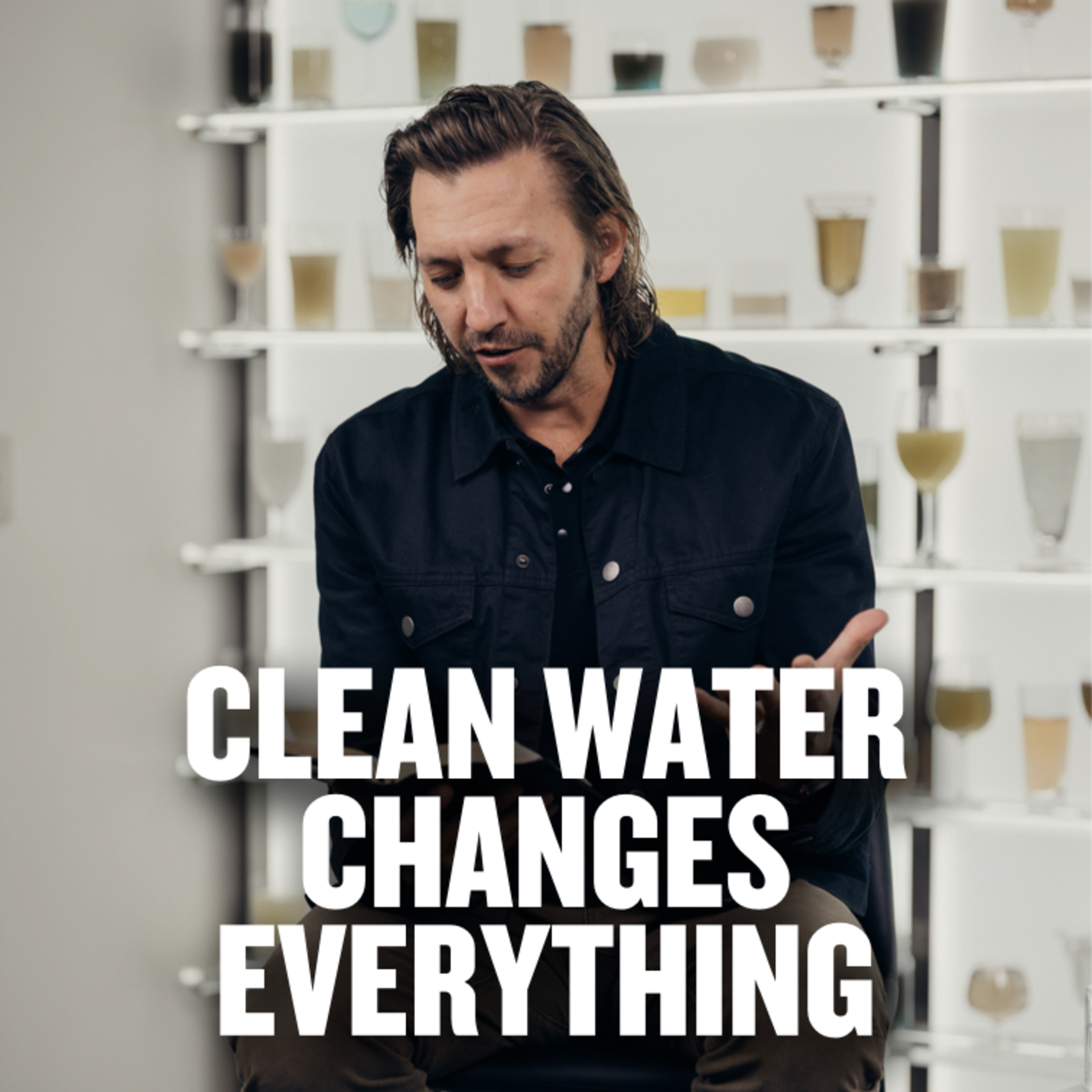
And behind you is literally shades of water that you guys have sampled around the world, right?
- [03:00]
B
Yeah, exactly. I mean, this is a little tongue in cheek kind of the dirty water bar. Here at this experience lab, we're in Tennessee, people like to show off their fancy alcohol, their wine, their bourbon, their spirits, and these beautiful lit bars. So we're showing off dirty water.
- [03:15]
A
Hey, here's life for 1 out of 10 humans on this planet.
- [03:19]
B
Yeah. And I think, you know, if you don't have clean water, it's hard to overstate the dramatic impact that has on your life. And if you talk about women and girls, you know, just today, women and girls will waste more than 200 million hours walking for dirty water.
- [03:38]
A
Yeah.
- [03:39]
B
So imagine, you know, you're a teenage girl and six hours a day, seven days awake, are spent walking for something that's not even helpful. It's not like, oh, I'm going to something that's going to make me healthy. I'm actually going to walk all these hours.
- [03:52]
A
But they don't come back with clean water. They come back with, they're going to.
- [03:55]
B
A river, they're going to an open source pond.
- [03:57]
A
Yeah.
- [03:58]
B
And this is why so many of the teenage girls will drop out of school. They don't get a chance to fidget. Education because they've got to go walk for the water of the family. It dramatically impacts health in many of these countries. 50% of the disease you can track right back to dirty water. So, you know, I remember somebody said to me in the early days, just give everybody water and you can empty half the hospital beds in the entire country. You would just send half the people home if they had the most basic need for health. It impacts education, it impacts women and girls, it impacts the local economy. These people are spending so much money, often on medicine for the waterborne diseases. I remember being in a village once and they said, well, it's actually not even the medicine that's the most expensive. Sometimes it's the taxi ride to the clinic which could be one month's wages. So you've got families often that'll have a sick child, and they can't afford to get their child to the clinic to get the medicine. So it's a huge problem. And the great thing is it's completely solvable down to the last person. And that's what's really energized me for almost two decades now, because 2006 is.
- [05:15]
A
When this all began.
- [05:15]
B
Yeah. So next year is our 20th anniversary, and there can be zero people drinking dirty water on the planet. And there are.
- [05:25]
A
The technology exists.
- [05:27]
B
The technology exists. And, you know, there's actually a lot of problems that we're working on that we haven't solved. There's no cure for Parkinson's disease. There's no cure for als. My mom eventually died of pancreatic cancer at the end of her life. It was a couple months from diagnosis to death, and the doctors had no idea.
- [05:46]
A
Yeah, pancreatic cancer as well.
- [05:48]
B
It was unsolvable. And today is, you know, it's almost a death sentence if somebody has, you know, stage four pancreatic. So unlike all those problems where we're spending billions of dollars in research labs looking for a cure, we actually have the cure for water. We've had the cure for hundreds of years. We haven't implemented the cure. We haven't gotten enough people to care. We haven't mobilized the resources, and we haven't kind of aimed those resources at the problem. So I think that's what's most exciting, is knowing that we are working on a problem where 700 million people could actually be zero people, where we could see a day where every human being on Earth has clean water to drink.
- [06:30]
A
And in the last almost 20 years, you and your team have been used by God and an army of people who believe in the mission around the world.
- [06:38]
B
And communities like freshlife stepped up.
- [06:40]
A
But the number that you guys have brought clean water to is astounding. That's now 21 million people.
- [06:47]
B
Almost 21.
- [06:48]
A
Almost 21 million people. I mean, that's. I mean, I know you keep.
- [06:51]
B
I mean, that sounds small because you're.
- [06:53]
A
Looking at the 700 million.
- [06:54]
B
Yeah.
- [06:55]
A
You're thinking, what. What are we still. What are we still. What are we still. Right. We've talked about before. But. But, I mean, that is a massive swing that's been taken.
- [07:02]
B
I mean, to see that about 190,000 communities around the world have. Have clean water. But again, that's 1 35th of the current problem. So 2.8% of the way there's.
- [07:15]
A
So when the water project opens up in a city, it's not just like it just solves the problem of E. Coli and giardia and, you know, all those diseases and mosquito worms and all that stuff, but it's also all the time coming back, Right? I mean, it's the little girls who can now go to school, right?
- [07:32]
B
Yeah. I think that probably has been the most exciting anecdotal evidence for me. And I've been to Africa 55 times now and I've gotten to travel to 72 countries and just been exposed to so, so much both need and then the problem being solved. It's the story of what people do with the reclaimed time. That is. They're the best stories. You know, women that will start businesses and they will bake donuts and then they'll start with one stall and then the next thing you know they're selling them in eight markets and they're using the money to repair their home and to put a tin roof on and then put all their kids through school. You know, time equals money. You know, we hear stories of girls when they don't have to walk for water. They go immediately to school. Here in the lab, we actually have a virtual reality film that shows this little girl and she's like, it's a tension because I want to be on time for school, but that means I have to wake up at four in the morning and start walking and I'm exhausted. And these kids get to school and they're often so tired. Yeah, when they're there, because they're walking in the morning, they're walking at night.
- [08:43]
A
When we went through the lab, there's the part where you get on the treadmill in a 90 degree heated room, which is probably actually being pretty conservative, I think.
- [08:51]
B
So I couldn't get it hotter with fire code, but I think I wanted 110.
- [08:55]
A
It was like I was sweltering. And then I put my daughter, Clover 13 up there and to see her, and really she's watching Esther, who's 12. Who's 12. And to see my daughter and think of five hours a day of her life, five trips to this well to bring back diseased water, and then to think about her life being given much because a lack of clean water really is a sexist problem. The problem does disproportionately discriminate and it's oppressing women around the world.
- [09:19]
B
It does.
- [09:19]
A
And as you have a daughter, I have daughters, it's hard to think about that.
- [09:23]
B
And I think look, that's just the biggest challenge for an organization like ours is, and that's why we built this experience here. It's just trying to bring people into the problem. You know, I guarantee no one watching this woke up this morning and said, wow, I'm so grateful for the clean water that came out of my refrigerator, for the long shower that I took, for the water that allowed me to.
- [09:44]
A
Brush my teeth, the cold plunge, the.
- [09:47]
B
Cold plunge, the pool, the golf course that I might play Sunday afternoon after church.
- [09:51]
A
Right?
- [09:52]
B
Let me go help the 700 million people who don't have that. So no one comes looking for us. No one comes looking to solve the problem. So we really have to share this need, share it in the most compelling, visceral way that we can, and then show people they actually can be a part of the solution. When we met many years ago, you did one, well, one water project. You said, I think our church can come together and fix this for one community. Now you're at 17 communities and by.
- [10:25]
A
God's grace, we're doing more. This is the can. We're going to attach some because cold cups of water in Jesus name. I mean, that's powerful. That's powerful to think about that.
- [10:33]
B
And what we love about this space is so many children get this intuitively. I mean, we've had kids donate their birthdays to Trinity Water who are, you know, 8 or 9 years old. We've had 6 year olds go out and sell lemonade 12 weeks in a row and give a little bit of money because kids understand other kids should be drinking clean water. And you know, that's. Sometimes it's the adults that get a little more jaded and apathetic. You know, how could we play any part in some paralyzing global issue? And you know, it's communities like yours, it's children who've just said we could do something. We can actually do something for one person, for one family, for one community. And that's really the approach charity water has taken. And you look back and you say, oh, the first community has now turned into 186,000 across 29 countries. Just using that. Just do the next one.
- [11:27]
A
Is that the exact number? 186,000? Because that's crazy. That's the exact amount of dollars we've been able to partner with you. Okay, $186,000. Come on, guys. I mean, that's crazy that, that lines up like that right there. And when you, when you see that water turn on and now everyone has access to it, like what Are you seeing of, like, the impact it has on a town or on a place? I mean, what.
- [11:48]
B
So we have about 14 technologies that we will use to bring clean water to people. Drilling is the most dramatic.
- [11:54]
A
Sure.
- [11:54]
B
And in a way, if you think about the irony, you've got hundreds of people living in a village, and they are living on top of the resource, but the resource is 15 stories underground.
- [12:08]
A
Oh, I thought of that when the VR was on, because I was like, oh, my gosh. It hit me. It was there the whole time.
- [12:13]
B
It was there the whole time, and it almost feels so easy. You bring in these big trucks.
- [12:18]
A
They come in like a dinosaur, you know?
- [12:20]
B
Yeah. And guys jump out, and they're all covered in kind of muddy overalls, and they stick pipes into the ground, and they go down one story and two stories and three stories. And then in about two days of drilling, they tap into a lake. And then there's this moment. So you're in these communities, and everybody is crowded around for days. So it never gets old, Levi, you know, hundreds of people waiting. Are they gonna find water? Cause some holes are dry. About 10% of the time, there's nothing there, and you gotta move to a different location.
- [12:50]
A
Do you ever strike out completely?
- [12:52]
B
You just try again. You keep trying.
- [12:53]
A
Yeah.
- [12:54]
B
But there is this moment where they strike water and they start flushing the well, and they push compressed air down, and this plume of clean water shoots out of the ground 100ft high. And everybody's getting wet, and the kids all crash the drilling rig. And they're trying. They got their hands out. They're trying to touch the water.
- [13:15]
A
They're tasting the water that's been there their whole lives. They just can't get into it.
- [13:19]
B
And.
- [13:19]
A
And.
- [13:19]
B
And, you know, and you're standing there saying, like, that was $10,000.
- [13:23]
A
Wow.
- [13:23]
B
Like, all that was needed there was the equipment that was needed, but it actually cost $10,000 to help 250 people in this community.
- [13:32]
A
Yeah.
- [13:33]
B
I mean, it's kind of crazy. $40.
- [13:35]
A
And they're. They're waving. They're waving.
- [13:37]
B
There's. Sometimes these celebrations will last for days. It's like a party that lasts for days, watching.
- [13:43]
A
I mean, I've seen with knowing being your being, it's addicting. It's like there's not much that can compare to that. That joy of that moment, like, as far as, like, a high or an addiction, like, to see that joy break out, and it's just such a tangible symbol of the kingdom. Because as I was praying for this week, I was reading this text and I just kept thinking to myself, like, why did he pick that? Why is that a symbol? Why is this the kingdom? This, this. I mean, but obviously beside the fact that it's such a building block of life, so many of the miracles in scripture, from beginning to end, tap into water. Yeah. So I was thinking about Moses throwing the branch and turn the salt water fresh. He's the original Scott Harrison. Right. I know that's, you're like, that's the worst thing someone ever said, but we're going to allow it. Right. But then you have Elijah pouring water out on the sacrifice on Mount Carmel. You have the river to blood in Moses's day. You have the Red Sea parting. You have the rock being struck.
- [14:42]
B
I think you have Jacob digging the wells that are contested and then just continuing to kind of move on. Like, I'll give you this and I'll keep looking for fresh water.
- [14:49]
A
Isaac re digging out Abraham's wells because those wells had gotten stopped up. Right. I mean, I mean, you have Jesus's first miracle happening with water turning into wine. I mean, the spirit comes at the baptism of Jesus in water. You have Ezekiel, the river from the throne. Jesus said, when the spirit comes, we get to have rivers of living water. So I mean, really there is something so symbolic, significant and really spiritual. I mean, we all feel at peace by the sea. We feel at peace by a lake or a stream. I mean, I think there's something deep inside of us that is touched on by this theme that's totally true.
- [15:23]
B
And I think that the cold, if you think about it, most of the bad water is on the surface. So the problem we're trying to solve as we go into Ethiopia, which is also talked about in the Bible a lot, it's, it's a open source that is shared with cattle. Well, that water is out in the sun and it's hot. The minute you go deep, the water becomes cold and clean. So the water that we're bringing out of the ground is actually cold because it comes from the depths of the earth. Naturally it's cold. Naturally it's coming out kind of like out of your refrigerator temperature. And it's clean because it's been trapped.
- [15:59]
A
Warm waters to dirty water. So Jesus, when he says cold water, he's talking about spring fed deep out of the ground. Wow, that'll preach. Yeah. And it does. Wow. So the water that is on the surface, I mean, we're looking at some photos here on the wall. I mean, it's getting down by the sun.
- [16:14]
B
Exactly. It's contaminated. And it breaks my heart often to see children next to the cows, next to the donkeys and the livestock, and they are sharing the same kind of open source. It might be a swamp, it might be a giant puddle. And you realize like, this is fecally contaminated. I mean, this is, you know, the place where animals are going to the bathroom is the same water that is, that is being drunk. It's not protected, it's not safe, it's not clean.
- [16:46]
A
So I was thinking about, as you were sharing that, like how for all these people living on top of water they can't tap into, it's much like us living on the solution to the problem, just many of us not being mobilized, not being activated to realize, like you said, for $40 to take part in water for 12 people a year, right?
- [17:08]
B
It's $40 a person, $40 a month. 12 people a year.
- [17:12]
A
Yeah. If people come on that membership or $10,000 for a project like you said, and now a wells there, and that well's there forever, right?
- [17:19]
B
I mean, for 10 plus years.
- [17:20]
A
Okay, 10 years on a well.
- [17:22]
B
But we have wells now that are 19 years old that are just as long as. And that's one of the things that the organization at Charity Water has invested really tens of millions of dollars in the ongoing sustainability. So we train mechanics and we send them out on motorcycles to go and maintain and fix wells. It's almost like the Geek Squad or Apple. Care for wells.
- [17:46]
A
Oh, gosh, you're so fun.
- [17:47]
B
And if something breaks, you have software.
- [17:51]
A
On every well that can monitor.
- [17:53]
B
Yeah, not on every well, but we've been working on sensor technology, kind of smart wells. So we've had a project in R and D for eight years now where we can create a water project, throw a sensor on it, and then when it breaks, it alerts a team of mechanics and they say something's wrong, they go out and then the community pays for that repair. So we've kind of helped set the whole thing up. But when that $65 repair bill comes, the community values the water and they actually pay the mechanics.
- [18:22]
A
You've empowered them, first of all, giving them so much of their time back. But then also now you've. You've also given the wind to local outfitters too. Right. Because even the digging local, you don't send in the outsiders. Hey, get out of the way. Dad's here. Like, you empower them.
- [18:37]
B
That's right.
- [18:37]
A
Right.
- [18:38]
B
Nobody that looks like me is working at a charity water project around the world. Yeah, we employ over 7,000 locals.
- [18:43]
A
Now. It's incarnational ministry, right?
- [18:46]
B
You want to create local jobs, you want to help people empower and lead their communities and their countries forward in the future. You know, I remember we told the story of this kid, John Bosco from rwanda. He was 13 years old and he was drinking the most brown, viscous, toxic, poisonous water you've ever seen. We have one of his photos actually there, that photo in the lab. And you know, one day a family decides to help and these drilling rigs leave the capital city, Kigali, and they start heading towards his rural village. And they, they pull down the dirt road and he watches eight Rwandan hydrogeologists jump out and they've got their, you know, blue work coats on and they look for water over the next couple days and they find it and they build the well. And a week later, John Bosco is drinking clean water for the very first time in his life. And you know, you just think like, what, what that must have felt like for a 13 year old Rwandan boy to see his people come and solve the problem. And what they didn't have was the capital. They didn't have that $10,000 for the village. And I love his story. We went back and visited him eight years later and we had this picture of this kind of shy teenage boy. His face had changed. He was a 21 year old man and he had just gotten married and had his first daughter. And she was this, this beautiful girl. Her name was Jeanne Marie. And you know, we just realized like how profound that change was. She was born into a world of clean water. She would never know the poisonous swamp that, you know, threatened her father and mother's lives when they were children. And you know, this kind of generational change, you know, every child born into that village knows something better, knows the pure water, knows something new. And that's why we're so passionate about making that possible for every community on the planet.
- [20:44]
C
Hey, we're going to get back to this interview, this compelling. It's so good, in just a moment. But I mean, just we, we cannot.
- [20:50]
A
Help but to know that the cup.
- [20:52]
C
Of water being given out in Jesus name, guys, this is the kingdom. And that's how we've been able to partner with water all these years, opening up these different wells. But that's just one of many outreach partners as the first 10% of everything coming through this year end offering this is the Kingdom goes out to outreach partners around the world doing good work. Just like this. This is what lights up heaven. It should light up our hearts as well. So as you partner with us, you're not just helping us to fulfill these outreach grants that's going to make a difference in these different ways, but also sending out this message from God's Word each week through this ministry where people can come to life in Christ.
- [21:31]
A
That's right.
- [21:32]
D
I love when we get to run into you around the world, when we've met you in an airport or in a city and you've said, fresh life has changed my life. And I just, I'm so grateful that we get to do this together and give together and grow in faith together.
- [21:51]
C
Yeah. It means the world when you receive. But I'm telling you, things always take on a different level of meaning and significance when you get into the arena. And by you stepping into partnership with us as we send out messages and do this work around the world, I just believe it will be exponentially more significant in your own life. So between now and the year end, go to FreshLife Church. Give and make a mark. Be a part of what God's doing. Like you've told us, each week we can select from the dropdown that this is the kingdom offering. But you also can begin the journey of generosity giving with us each week, setting up recurring giving like we do, where everything God gives to us, we can bless his kingdom all around the world. And thank you for praying about it.
- [22:34]
D
Enjoy the rest of this interview.
- [22:36]
A
Good. You were saying 7,000 different people are on the construction teams and then the mechanics are separate from that. Is that.
- [22:45]
B
No, that's including mechanics.
- [22:46]
A
Yeah.
- [22:46]
B
We work with 59 local organizations in, we're active in 21 countries. So there's 300 people in Ethiopia, there's 180, let's say in Rwanda. And they're taking the funding and they are turning into clean water. They're building solar powered pipe systems, they're building bio sand filters. There's a lot of different technologies. It's actually not a one size fits all solution. The well is fun because it's very visual, but sometimes they're more boring. You're laying pipe and you're running clean water up to a reservoir and then you're letting gravity take it down to these different villages and they turn on a tap at a kiosk and the water comes in.
- [23:23]
A
It's just right there. It's not as Instagrammable, but just not quite as Instagrammable. Just as life changing, it's just as.
- [23:28]
B
Life changing and that's the end result.
- [23:30]
A
So you.
- [23:32]
B
And what I love about just Working on this for so long is it might be one of the few things that everybody can agree is good.
- [23:39]
A
Yeah.
- [23:39]
B
I mean, Republicans and Democrats can come together and say, yeah, people should probably have clean water.
- [23:44]
A
Yeah, we should probably do something about that.
- [23:45]
B
Faith communities and even your atheist agnostic friend, you know, hey, what, do what, what's, what are we doing together as a community? We're helping people get water. Yeah, that seems like a pretty good thing to do.
- [23:55]
A
Yeah. I mean, you've seen like Will Smith and just all kinds of corporations and just, it's pretty universally agreed upon. This is something we should, we have.
- [24:03]
B
Taken people now, I think I've taken 400 people to Africa and they would have the most diverse set of views on religious issues or social issues or politics. But again, they can all agree, hey, clean water is an inarguable good. It's a common good. It's, it's an indisputable transformation of life when you can take someone from drinking dirty water and providing them with clean water.
- [24:31]
A
Now to circle back because, I mean, obviously we've said that everyone's like, yeah, that's amazing. For those maybe who weren't in the church or with us back in the day when you came and shared right after your first book, Thirst came out, which is still a great read if you haven't read it, you shared a little bit about kind of the origins and how it's kind of personally so beautiful and full circle and redemptive that you're going to be a part of all this. We talked earlier in the series about a carbon monoxide scare we had in our family, where we woke up and it was, you know, they were going, they were going off and I was scared because we were in a dead sleep and there had been a leak in our home. And it was just one of those brushes with death for my whole family that was terrifying. But this, the origin stories of you realizing something could be fatal going on in the home took place when you were at a young age with your mom. And not everybody would have heard that story.
- [25:18]
B
Yeah. So New Year's Day, 1980, my mom walked across her bedroom and she collapsed unconscious. There was a slow carbon monoxide leak in the house that we had just purchased. It was winter, all the windows were closed. The house was advertised as an energy efficient house, which is great. Keeping everything in.
- [25:38]
A
It's great. It's a gas chamber. It's a gas chamber.
- [25:40]
B
Yeah, it's a gas chamber. And my dad and I, I was an only child, we were starting to get these strange symptoms. Migraines, you know, heart racing. But mom was really the canary in the coal mine, unpacking boxes 24 7, and specifically spending time in the basement. So this led to the discovery of the leak. And she was never the same again. She became an invalid for the rest of her life, unfortunately. And, you know, that really kind of set me on a course when I grew up. I was taking care of my mom. I was doing the cooking, I was doing the cleaning. She wore masks her whole life. She was allergic to the world as her immune system had just irreparably shut down. And I wanted to be a doctor. I was gonna become a doctor. I was gonna cure my mom and all the sick people. And then my life sort of took a turn at 18, where I decided instead of becoming a doctor, I was gonna become a nightclub promoter.
- [26:33]
A
Yeah, it's a similar trajectory to the.
- [26:36]
B
Horror of my parents when I announced that. And I spent 10 years running 40 clubs in Manhattan, in New York City, tasting all the stuff.
- [26:47]
A
You were focused on getting a clear liquid out. It was just a diff. It was vodka, not water.
- [26:51]
B
It was a very different one. You know, listen, I'd grown up in the church, and you weren't allowed to sleep around, and you weren't allowed to use bad language. You weren't allowed to drink. You weren't allowed to dance. You weren't allowed to have fun. I thought so. This was kind of that sad, cliche, prodigal son rebellion that lasted for 10 years. And I woke up one day, I had the Rolex watch. My girlfriend was on the COVID of fashion magazines. I drove a BMW. I had a grand piano in my New York City apartment. You know, all these things that I thought would make me happy. And maybe no surprise now, just to.
- [27:25]
A
Pause right there, there might be some, you know, young people in our church or older people in our church who are like, wait, those things won't make me happy. Like, if I could just get my hand on that, you know. But you were miserable.
- [27:33]
B
I was miserable. And I. And. And, you know, I believe that so much more now, having been exposed to the lives of, you know, 20 billionaires, or it does. There's always more. You know, somebody always has more. Someone always has better. And it was this insatiable desire. And. And.
- [27:52]
A
And you talk.
- [27:53]
B
All of these things were my identity, right?
- [27:54]
A
The hangover the next day, just waking up, just empty, looking for it again. Right? I mean, that's.
- [27:58]
B
I mean, I would go to dinner at 10, the club at 12, after hours. At 3 and it was noon, you know, I'm popping Ambien to try to come down, knowing that I would have to wake up at 7pm and do it all over again. So it was, it was a really dark, selfish, hedonistic existence. And you know, thankfully, by the grace of God, 10 years into it, I came to my senses and started reading some deep theology and just said, man, I want to make my life look exactly the opposite. And I got this idea of tithing time. You know, there was this idea I'd grown up with you tithe money. I'm like, well I, I spent 10 years chasing all the wrong things. What if I gave one year to service to others? And that led me on an extraordinary.
- [28:50]
A
Hospital ship, the Ywam Mercy ship.
- [28:53]
B
Yeah, the Mercy ship in, in Liberia, West Africa. So I go Levi from these clubs where we're spraying thousand dollar bottles of champagne, Cristal from the DJ booth and like Jay Z's at table one and Denzel's at table three and Jim Carrey just came in the club and the Rolling Stones are coming in later. And you know, you think you're so.
- [29:12]
A
Fabulous, that's as high as the world gets.
- [29:14]
B
It's as good as the gets.
- [29:15]
A
Literally, like if there's not a better table.
- [29:17]
B
A couple weeks later, I'm in the poorest country in the world after a 14 year civil war had just ended. There's no electricity in the country, there's no running water, there's no sewage. And I'm with a group of doctors who, who are trying to pick up the pieces. And I fell so in love with that mission that when the year ended I just signed up for another year. And of all the things that I saw when I was volunteering, I saw people drinking dirty water. And I think it was just, you know, not on my watch. There's something so personal because I used to sell bottled water in my clubs for $10 a pop and people wouldn't even open them. I mean, I remember they would come in, they'd buy 20 bottles of Voss water, it would sit there and then they'd drink champagne and vodka. And I remember just when I saw people drink dirty water for the first time, I was like, I gotta do something about this.
- [30:11]
A
Because you connected the dots, connected the health. There's a couple things.
- [30:14]
B
First, I did connect the dots and there was this powerful moment for me. The third day I was in Africa where we had done a casting call for sick patients. We're like, the doctors are coming. It's a Huge shift. If you have a tumor or a cleft lip or a cleft palate, or you're blind with cataracts, or you have flesh eating disease, turn up on this day at 7 in the morning or so, and we had 1500 available surgery slots. And I remember when we turned up at 5:30 in the morning, there were 5,000 people standing in the parking lot. So it was, it was this realization, wow, we're going to send 3,500 sick.
- [30:57]
A
People home who walked for maybe days.
- [31:00]
B
Some of them walked for a month.
- [31:01]
A
Oh my gosh.
- [31:01]
B
We later learned some of them walked from neighboring countries as the word had spread.
- [31:05]
A
There's a ship coming with doctors on it.
- [31:07]
B
And then I learned half the country's drinking bad water and half the disease is waterborne.
- [31:13]
A
So what you're saying, a lot of those people wouldn't even be patients had they had water. You're cleaning, you're going two steps back.
- [31:17]
B
Exactly.
- [31:18]
A
Yeah. Okay, so there's a lot I want to say, but first, just your testimony and just connecting to, you know, my heart's always for these, these in the church. Maybe you're hearing this who are kind of on the fence about Jesus or whatever. Just, but just to think, I mean, how your story portrays what Jesus said. If you drink of the water of this world, you'll thirst again. But if you drink the water I have, it will well up in him as a fountain of living water. Right? So under, under. Springing up an everlasting life. So to think about like you knowing the truth, but, but looking to the world for happiness versus now, like as you think back to what God's doing in your life now and you compare it to that. I mean that, that must probably just blow your mind thinking about it.
- [31:58]
B
It's interesting you use that reference, the, probably the, the most. And it's such a, almost an overplayed verse if it was. But the, the important verse for me was James 1:27, When I come to the end of the clubs. And it was, hey, true religion is to look after widows and orphans and to keep yourself from being polluted, which is the word that you'd use, polluted from the world. And I was not only personally polluted using drugs, using cigarettes, you know, having meaningless relationships, I was actually polluting others. So I was like a severe O for two. I'm not giving, I'm not contributing to anything. And you know, I wanted to go 2 for 2. Right. I wanted to live a life of service where I could use what I was blessed with. My. My time and my talent in the service of others. And then I wanted to, like, live pure, you know, I didn't. I didn't want to smoke anymore and drink and I didn't want to be.
- [32:49]
A
Defile your body. Yeah.
- [32:50]
B
Yeah. So I had this kind of cold turkey moment. I'm like, I'm never going to look at a pornographic image as long as I live. Never going to smoke again. I'm never going to touch drugs again. You know, I wanted a new, you know, chapter of my life to unfold at 28 years old. And it's been pretty easy, you know, honestly, because I know how that felt, and I don't want that again.
- [33:16]
A
The other text I was thinking about was Jeremiah when he says, you forsook me. I'm a fountain of living water. But you've built for yourselves broken cisterns that can't hold water. Right. But your story illustrates the way your soul can be quenched when you find what you're looking for. Right. But what I love is that the seeds. And the reason I wanted to start by talking about your mom. The way you were formed by taking care of someone with what now we realize is a preventable issue. The CO2 detector hadn't been invented yet. Right? Yeah. At that point, because it was like.
- [33:51]
B
Late carbon monoxide detection.
- [33:52]
A
What year would that have been?
- [33:53]
B
It was 80.
- [33:54]
A
Okay. Yeah, sorry, I didn't mean.
- [33:55]
B
They were not. And now they're in blister packs, right? You go to Home Depot and you buy like, five bucks. Yeah, exactly. Yeah.
- [34:00]
A
That was six for 30, right? Scary for me was like, when I realized my life, my family's life, was saved by $15 Walmart purchase, you know, but that was something that didn't exist then. And so your mom's chronic illness and all of that difficulty and. But you were formed and forged in the fire of taking care of her. And when you. When God called you back to himself, those things came out, those instincts came out. I mean, you. You literally. All of our shadows conformed in different ways. But the pain you had to face, that's honoring your mom as you do what you do every day. Have you thought about that? Yeah.
- [34:30]
B
I mean, was lost on me for a while. But somebody said years ago, well, you're just trying to bring clean water to your mom. I mean, you're trying to cure your mom. And she was sick, and she would be poisoned by almost anything. And they're like, you just found something poisoning the world, and you're trying to make everybody healthy. So I Had never really connected that to my childhood before. But I think in some way I wanted to be a doctor. And now in some way, we've been able to bring health to 20 million people. So it's a different. A different way maybe to, you know, to think about medicine or to think about healing people.
- [35:09]
A
And during your prodigal season, she never lost the.
- [35:12]
B
No, they prayed for 10 years.
- [35:13]
A
I mean, they prayed for you, right?
- [35:15]
B
They tried to pray the prodigal home. And this is fed churches and prayer chains.
- [35:20]
A
That's what I'm saying.
- [35:21]
B
Nothing worked for a decade.
- [35:22]
A
Encourage the moms and the dads who are praying for that lost son and daughter who are going.
- [35:26]
B
It would have looked. Looked. It would have looked like a 0% possibility for a full 10 years until it became 100% possibility.
- [35:35]
A
Almost over and on a dime. And you said it was reading theology.
- [35:38]
B
Yeah, I was reading Tozer's Pursuit of God in Punta del Este, Uruguay, on a New Year's Eve vacation. Everybody was on drugs. Where did you pick it up? Well, my dad would just keep sending me books, and I would just throw them in the trash, and I would. For some reason, he sent me a book for this New Year's Eve, and it just found its way in my bag.
- [35:56]
A
So here's encouragement to the parents. Keep sending the book. Keep buying the book. You think, oh, they're never going to come there. I've invited him to church a hundred times. I keep mailing it to him. It's like, but. But that one day, until you didn't. You did.
- [36:07]
B
And it's funny because I read that book now. It's not an easy book. It's a really dense book. But I think what I got out of that book was I was just reading the Opposite of My Life. It's a book where he's trying to. He's chasing after virtue and knowing God and like, living a, you know, a pure life of integrity. And I'm like, man, I am. I couldn't be more opposite than what I'm reading than the end. You know, my. The intention of my life is exactly that. I'm like, this feels better. Like, that feels noble in a way.
- [36:39]
A
Yeah. I remember he talks about the nations are a drop in a bucket and a soap bubble.
- [36:43]
B
And there's actually a bunch of water references in that.
- [36:45]
A
Yeah.
- [36:46]
B
When I went back and read it, you know, it was lost on me at the time.
- [36:49]
A
Everywhere. I mean, and that's prophetic, but I just love that. Like, your mom's prayers for you. Your mom's you know, unnecessary suffering, all of that kind of being played out in a redemptive way. And I think that's hopeful and encouraging for all of us to believe that every suffering, every. Every tragedy, there is redemption and there's beauty that can come out of that.
- [37:12]
B
When the first charity water well was actually built in a nightclub. So day one of the organization, it was my 31st birthday party, and I didn't know where else to start, so I called up some friends who were opening up a new club. It was Fashion Week in New York. The club wasn't open, so I said, could I just have it for free and would you give us open bar for an hour? And then I just emailed everybody that I had known from my former life and said, I'm turning 31. I'd like to turn my birthday into clean water. Come to my birthday party, but bring $20 as a donation. And we put out this big plexi box. And as people came into the nightclub that night, they dropped $20 in the box. And at the end of the night, there was $15,000. There was enough for one. Well, and that's really where it started. You know, some of the most unlikely people, you know, I'll never forget, there was one guy that night who was a weed dealer, and he gave $500 because he'd known me from before. And he said, scott, this is the first charitable donation I have made in my entire life. But I believe this money is actually going to help people. So, not that that would be our market, but it was. It was so cool, kind of seeing somebody.
- [38:24]
A
Dealers. There's more weed dealers.
- [38:25]
B
Seeing the most jaded person I know, like, Louie would never give to a charity. And like, lou threw down 500 bucks, you know, enough to give.
- [38:34]
A
I didn't know Lou Giglio was a weed dealer. My God, I love that. And what I love about you, Scott, too, is like, you're. You're the most big thinking, you know, creative storytelling, the execution of things is always so excellent. Like, walking around here, being. Being in this, like, it's, it's. It's excellent. It's. I think the creativity honors God. I think the way that you approach things. I know you. You were reticent to start a charity because you, you knew none of your friends trusted charities. Yeah, right. I mean, I think the number is 42% of Americans say they don't trust charities. And so you've always sought to, like, with transparency. One of the reasons we love giving grants to you, because you can track the wells. Like, we know exactly where every project we've given to you. Raise your overhead separately. I mean, it's just. There's so much you do that's just different. It's really incredible.
- [39:23]
B
Yeah, I mean, I think when I started, I remember just thinking, like, where's the apple of charities? Where's the Nike of charities? Where's the imagination and the design thinking and the inspiration? You know, so many charities back then were using shame and guilt. They would try to make people feel awful about what they had and almost, you know, coerce them into giving. And I remember thinking, let's just take a very different approach. Let's create a new kind of charity where 100% of all the donations that we would ever receive anywhere in the world could go directly to these water projects in a separately audited bank account, which is true today. You know, almost 20 years later. We would go find a small group of people to pay the overhead, the nasty staff salaries and the, God forbid.
- [40:12]
A
Toilet paper and airplane tickets, Epson toner.
- [40:15]
B
For the copy machine. Right?
- [40:16]
A
The unsexy aspect.
- [40:17]
B
We said, hey, we know that business leaders and entrepreneurs would actually love to pay the salaries, you know, the unsexy costs, so that millions of people could give in the purest way possible. So that was kind of the first.
- [40:30]
A
Big idea, which is shockingly different.
- [40:33]
B
You know, I mean, it's incredibly difficult too, right? You have to kind of run these two things in perfect balance.
- [40:38]
A
It's like running two organizations really under.
- [40:40]
B
The same, under the same umbrella. But that's, you know, that's now over 2 million people have given over $1 billion. And that has been one of the main reasons why people have chosen us. Like, if I give a dollar, I know the whole dollar is going. If I give a million dollars through my business, you know, I know all million dollars is going to go. And then the second big idea was kind of just a follow on, well, if we know where all the money is going, can't we just track it? I mean, you could track your package with FedEx, you could track your, you know, your delivery meal with Uber Eats or, you know, or one of these services. Why can't we build technology that would track donations? So we became the first charity in the world just to put every water project on Google Earth and Google Maps. So we would send donors the satellite images of the well they built or the pipe system that they built. And that seems so intuitive to us. But again, nobody else was doing that. Nobody was closing that loop. So proof became this real kind of tenet of the organization today, we call it waterproof. So if somebody gives 62 cents, they will see that 62 cents tracked to a village in Malawi or a village in India. So I think it's been this desire to reinvent or reimagine charity. Charity means love, and it's caritas in the Latin. It's a really beautiful word that means to help your neighbor in need and not get anything in return. And I just wanted more people moving towards the idea of charity, towards the idea of love, not coming up with excuses of why they weren't giving and really depriving themselves of the blessing that comes with sharing your resources and giving. So, you know, I wanted it to be fun. I mean, think about fundraising. The first three letters are fun.
- [42:33]
A
I mean, it should be there. Yeah.
- [42:34]
B
It's not guilt raising or shame raising. Like, it should be a joy to come together as a community and use our resources to transform human life in a positive way.
- [42:49]
A
Well, I love what you've done. I love what you're doing through your team, the way that you've given a whole new creative imagination to a world of those who have a heart to do good and to see. Because now this exists. Because before you were like, this didn't exist. You blazed this trail and now it exists. And I'm sure it is inspiring others around the world. I know it's inspiring me. So on behalf of all those of us at Fresh Life, thank you. Thank you for what you're doing. It's such an honor for us to be a small part of it, of what's happening, significant part.
- [43:18]
B
I mean, 18 communities with clean water.
- [43:21]
A
Is 17, but we're going to get. We're going to get to 18. Huge difference. Well, we're going to continue. I want everyone, if you're not the spring, you have this, like, spring, which is a monthly subscription thing like we talked about. $40 a month can touch a person with water.
- [43:35]
B
Kids giving $10.
- [43:36]
A
Yeah.
- [43:36]
B
We have college students that are like, every four months they get one person clean water. I think what's made a lot of charities have monthly giving programs that 100% promise. And the ability to track every month's donation has really helped the community grow. So that's called the spring. And yeah, everybody's more than welcome.
- [43:53]
A
We love being a part of it. We want everyone to. It's, of course, holidays a time of all this thing, which is why we always try and focus our attention on how can we give. And of course, we're so excited that charity Water gets to be part of this is the kingdom.
- [44:05]
B
How many emails did we all just get for Black Friday? And then it was Cyber Monday, right?
- [44:10]
A
You mean how many emails per hour? Like, yeah. I always tell our team, I'm like, they're not afraid. Don't be afraid to email. Yeah. Well, can I pray for you? I would just be someone. I know you guys had this new baby and just God's growing your family. Number four. I mean, hello, Father. We thank you so much for Scott. We thank you for this man, the. The redemption story. He's living your work in his life. We thank you for the way that he proves what I know is one of his favorite verses, that you can take the years that the locusts have eaten and you can bring redemption out of it. God, you can restore what was eaten by the canker worm. And not only it's like it didn't happen, it's like even more powerful because it did. And so, God, those years of partying that he's now sown his life to your kingdom and Vic and the family, I pray your blessing on him, on the whole team. Thank you for every single one of the 186,000 projects that are sending, even at this moment, clean water into communities and the way that women's lives have been empowered and changed around this world. I'm so touched as a, as a. As a father of two girls. And I just thank you for what you're going to continue to do, God, for these 700 million people that still don't have water. And we thank you that your kingdom, what's it like? It's like cold, clean water pulled from the depths of this earth you gave to us, going out to people in your name. And so we thank you that this problem will be solved, that you'll continue to bring the right people, that churches like ours will continue to come on board and that God, you're already going to use Scott for the next problem, his mind, which is just brilliant. His team, God, they're so excellent at what they do. We know that you'll use them for the next thing, God. And so we pray protection upon the whole team and staff and this space and may many more people keep coming through here in Franklin and being told the story in a creative way and coming along and just all the efforts around the world. Bless the.
- [46:03]
C
The new baby.
- [46:04]
A
And we just love you, God, and thank you so much for what you're doing in our lives. And we pray this in Jesus name. Amen. Thank you, brother. Appreciate it. Thanks. You guys have done so fun.