Podcast
Fresh Tracks Weekly
Hosted by Marcus Hockett and the Fresh Tracks Crew · EN
The Fresh Tracks crew, led by Marcus Hockett, keeps you in the know about what's happening in conservation. The good, the bad, and the ugly. Don't miss this weekly podcast covering the everything you need to know.
40episodes
Episodes
Newest firstAll episodes

Ban Hunting Completely | Week of March 2
Mar 600:30:03Tap to summarizeThis week we’re discussing ballot measures and how they can be used to impact wildlife and conservation, specifically with the example of Oregon IP28, a proposal that would criminalize standard animal husbandry, hunting, and fishing practices The Senate Energy and Natural Resources Committee voted 11 to 9 along party lines to advance Steve Pearce’s nomination for Director of the Bureau of Land Management to the full Senate. The Secretary of the Interior opened 2.1 million acres along the Dalton Highway to mining claims, a move that facilitates land transfers to the state and clears a path for the proposed Ambler Road. The Colorado Parks and Wildlife Commission approved a petition to ban the sale and trade of fur statewide, despite opposition from the agency’s director and the majority of public commenters. House Bill 4145 passed the Oregon House, modifying a previous ballot measure to extend firearm permit processing times and increase fees. Learn more about your ad choices. Visit megaphone.fm/adchoices
Transcribe →
Congress Needs to Grow a Spine | Week of February 23
Feb 2700:27:52Tap to summarizeIn this episode of Fresh Tracks Weekly, Randy Newberg and Marcus Hockett dive deep into the complex world of public land management and the fragile nature of administrative rules. Using the Roadless Rule of 2001 as a primary case study, they explore how major land-use policies can remain "fickle" for decades because they lack the permanent weight of Congressional law. The conversation sheds light on the growing trend of "management by executive order," where shifting administrations use tools like the Congressional Review Act to bypass public comment and overturn established rules, creating a political pendulum that swings further with every election cycle.The duo highlights the real-world consequences of this instability such as the potential loss of wildlife habitat and hunting opportunities. Randy issues a call to action, urging citizens to hold their elected officials accountable and demanding that Congress "get a spine" and return to the hard work of legislating. By prioritizing durable, bipartisan laws over short-term administrative shortcuts, the guys argue we can restore public enfranchisement and ensure that the voices of the people and the health of our wild places, aren't lost to political theatrics. Learn more about your ad choices. Visit megaphone.fm/adchoices
Transcribe →
Refilling the Swamp | Week of February 16
Feb 2000:28:58Tap to summarizeThis week we discuss the Congressional Review Act. This fast-track law allows a simple majority in Congress to overturn agency rules and permanently bars those agencies from creating any "substantially similar" regulations in the future. We also cover a few news stories including:A new Forest Service proposal would shorten public comment periods to as little as 10 days and move official notices from newspapers to government websites while using AI to summarize feedback. A new citizen petition aims to ban the commercial sale of fur through the Colorado Parks and Wildlife Commission meeting on March 4 and 5. A new study reveals that wolves frequently scavenge mountain lion kills, forcing lions to hunt deer over elk to minimize the time spent at vulnerable kill sites. Another new study suggest that hunting vocal toms during peak breeding periods may reduce overall reproductivity, sparking discussions about shifting season dates to better protect populations. HJR 140 is still up for a senate vote. The resolution threatens protections upstream of the boundary waters canoe wilderness area. Theodore Roosevelt IV has issued an open letter urging the Senate to vote against HJR 140, arguing that the resolution favors foreign mining interests and ignores sound science. Learn more about your ad choices. Visit megaphone.fm/adchoices
Transcribe →
Repaying Political Debts | Abusing the Congressional Review Act | Week of February 9th
Feb 900:22:58Tap to summarizeACT NOW!!! Capitol Switchboard (202) 224-3121 Email your Senators https://www.senate.gov/senators/senators-contact.htm The Senate could vote on HJ 140 as early as tomorrow, February 10th. This backdoor political move uses the Congressional Review Act to ignore public input and allow mining that cannot withstand scientific or economic scrutiny, at the risk of the wild waters near the Boundary Waters Canoe Wilderness Area. Learn more about your ad choices. Visit megaphone.fm/adchoices
Transcribe →
Bad Game Management | Week of February 2
Feb 600:42:14Tap to summarizeThis week, we explore the friction between hunters and state wildlife agencies, specifically focusing on the common misunderstandings regarding agency jurisdictions and roles. Contact your Senators via the Capitol Switchboard (202) 224-3121 Watch the Killing Catalina film here https://www.howlforwildlife.org/catalinaisland Also... The Senate is expected to vote next week on using the Congressional Review Act to overturn the 20-year mining ban near Minnesota's Boundary Waters; those opposed can use the Backcountry Hunters & Anglers website to quickly contact their representatives. https://www.backcountryhunters.org/get-involved/take-action A recent cold snap allowed the Florida Fish and Wildlife Conservation Commission to issue a unique executive order, resulting in the removal of over 5,000 invasive green iguanas after citizens were permitted to collect and transport cold-stunned animals to state drop-off sites. Arizona is considering its first-ever landowner deer tag system through a new bill that could be a step towards the potential privatization of wildlife and the allocation of public hunting opportunities. Learn more about your ad choices. Visit megaphone.fm/adchoices
Transcribe →
Everyone is Lying to You | Week of January 26
Jan 3000:38:10Tap to summarizeThis episode discusses tribalism and the tendency for individuals to follow group narratives over personal beliefs, using recent media coverage of the Alex Pretti case as a starting point. The conversation focuses on how tribalism manifests within conservation and public land management. Topics covered in this week’s news: Utah Wolf Removal: State officials lethally removed three wolves in Northern Utah to comply with management plans. Wyoming Public Land Sale: A review of House Bill 55, which proposes selling state land for housing development. Oregon Petition: An update on an initiative to ban hunting, fishing, and animal agriculture that may reach the 2026 ballot. Ecological Research: The impact of losing long-term datasets on invasive species management and habitat conservation. Profitable Conservation: A Nature Conservancy report on how edge-of-field practices can improve farm productivity and wildlife habitat. Learn more about your ad choices. Visit megaphone.fm/adchoices
Transcribe →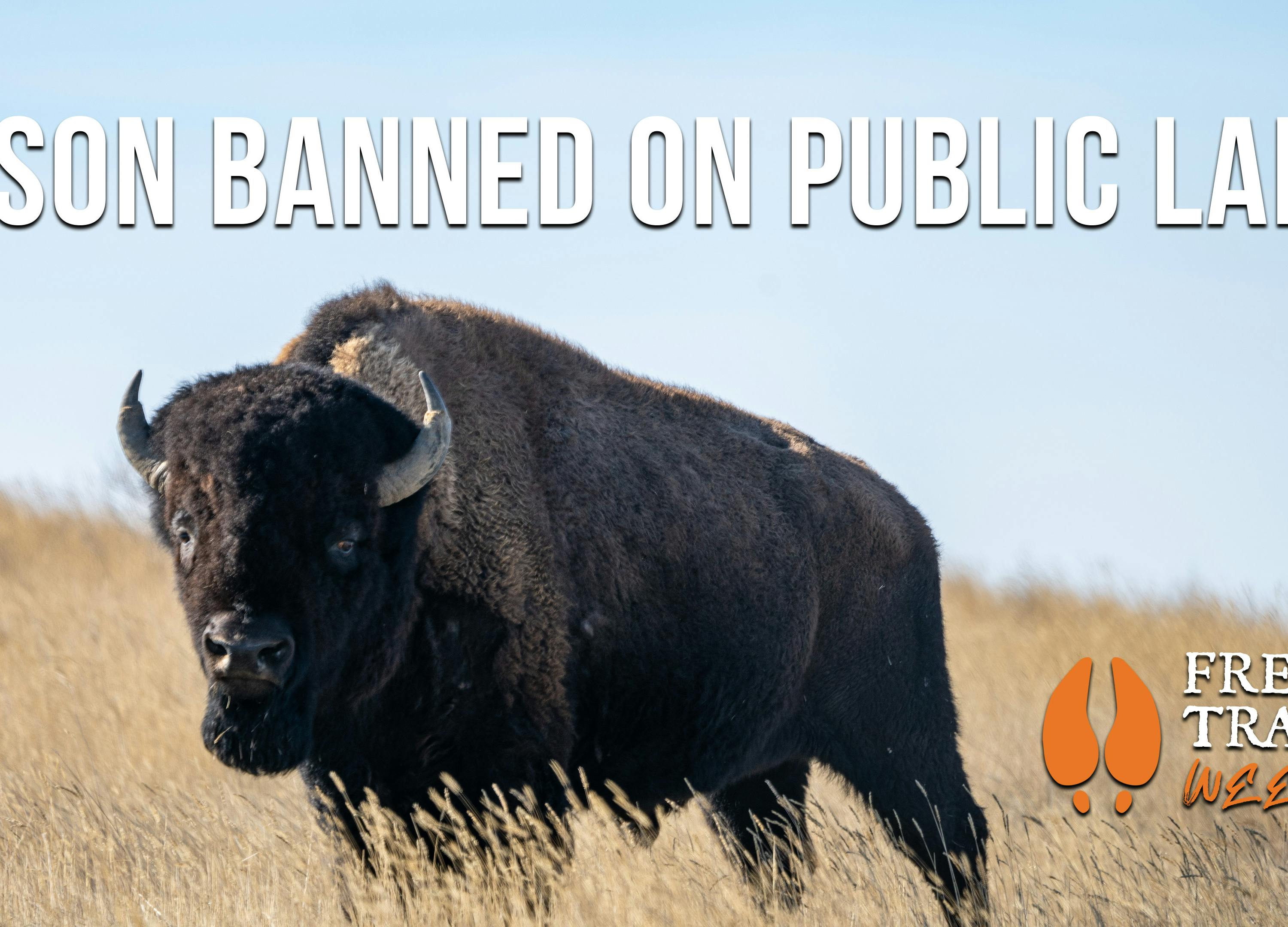
You Can't Graze Here! | Week of January 19
Jan 2300:36:16Tap to summarizeThis week, we examine the Bureau of Land Management's decision to revoke grazing leases for American Prairie bison and provide updates on public land funding, mining in Minnesota, wolf reintroduction in Colorado, and land access in North Carolina. Learn more about your ad choices. Visit megaphone.fm/adchoices
Transcribe →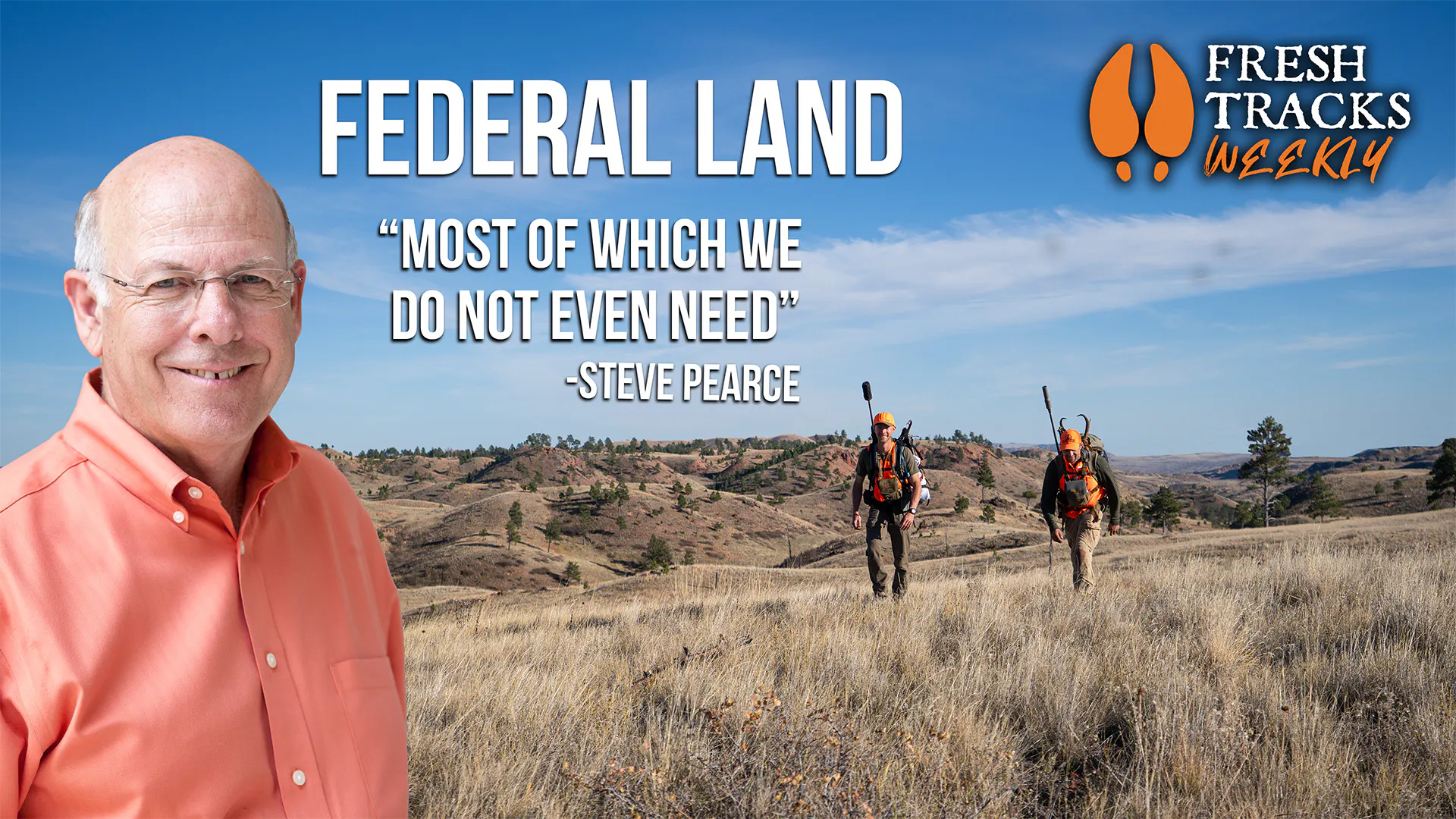
BLM Director Who Wants to Sell Public Land | Week of January 12
Jan 1600:28:55Tap to summarizeThis week, we examine the nomination of Steve Pearce to lead the Bureau of Land Management (BLM) and talk about why there is so much pushback from public land advocates Pearce has a history of advocating for the disposal of federal lands. In 2005, he pushed for initiatives to sell public land to mining companies and has argued that the federal government does not "need" the majority of its western land holdings. We also cover a few news highlights from the week including Secretarial Order No. 3447 to Expand Hunting and Fishing Access on Department of Interior lands, new regulations in Idaho concerning technology and hunting, proposed changes to the Clean Water Act and a Joint Resolution that threatens the Boundary Waters in Minnesota. Learn more about your ad choices. Visit megaphone.fm/adchoices
Transcribe →
Do We Need Them? | Fresh Tracks Weekly (Ep. 109)
Jan 900:26:32Tap to summarizeIn this episode of Fresh Tracks Weekly, we discuss a renewed threat to Wyoming’s famous mule deer migration. New oil and gas leases on BLM land are near critical winter ranges and migration corridors for the Sublette mule deer and pronghorn herds. We discuss how the Rock Springs Resource Management Plan is being bypassed and why "energy independence" is no longer a valid excuse for poor conservation. We also cover several headlines from the week, including 2026 federal budget cuts, the reopening of the National Petroleum Reserve in Alaska, and the controversial "flooded corn" baiting debate in waterfowl hunting. Learn more about your ad choices. Visit megaphone.fm/adchoices
Transcribe →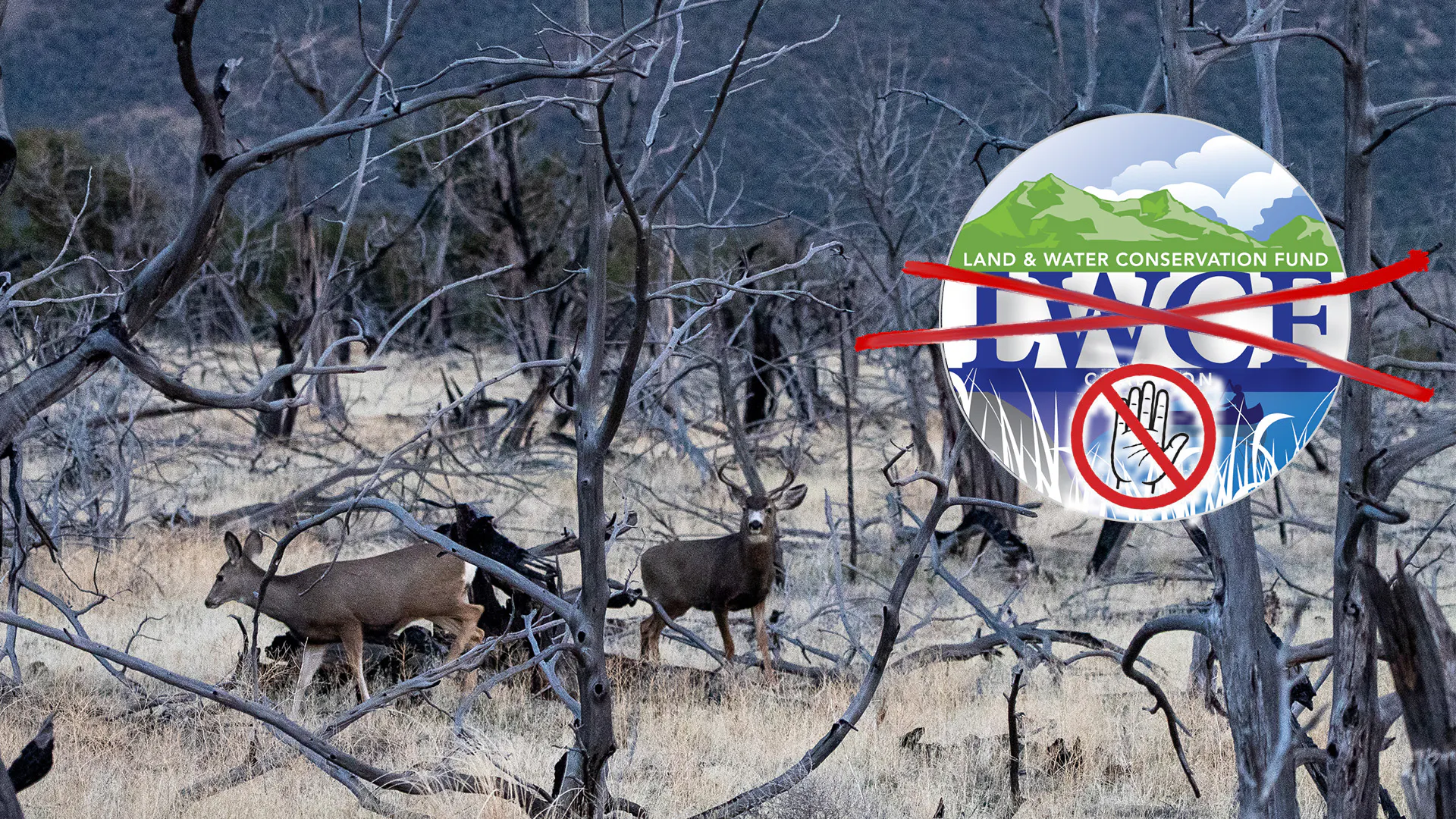
46,000 Acres of New Access Cancelled? | Fresh Tracks Weekly (Ep. 108)
Dec 1900:27:19Tap to summarizeIn this episode, we break down how Land and Water Conservation Fund (LWCF) money generated from offshore oil and gas revenues and intended to permanently protect public lands is likely being diverted away from approved conservation projects. One of the projects in jeopardy is the 46,000-acre La Jara Basin land sale in Colorado, which is eight years in development, has broad public support, and already has funding fully approved and allocated. Despite this, new Department of the Interior actions could block LWCF funds from being used, putting this and many other conservation projects at risk. Learn more about your ad choices. Visit megaphone.fm/adchoices
Transcribe →