← From Our Own Correspondent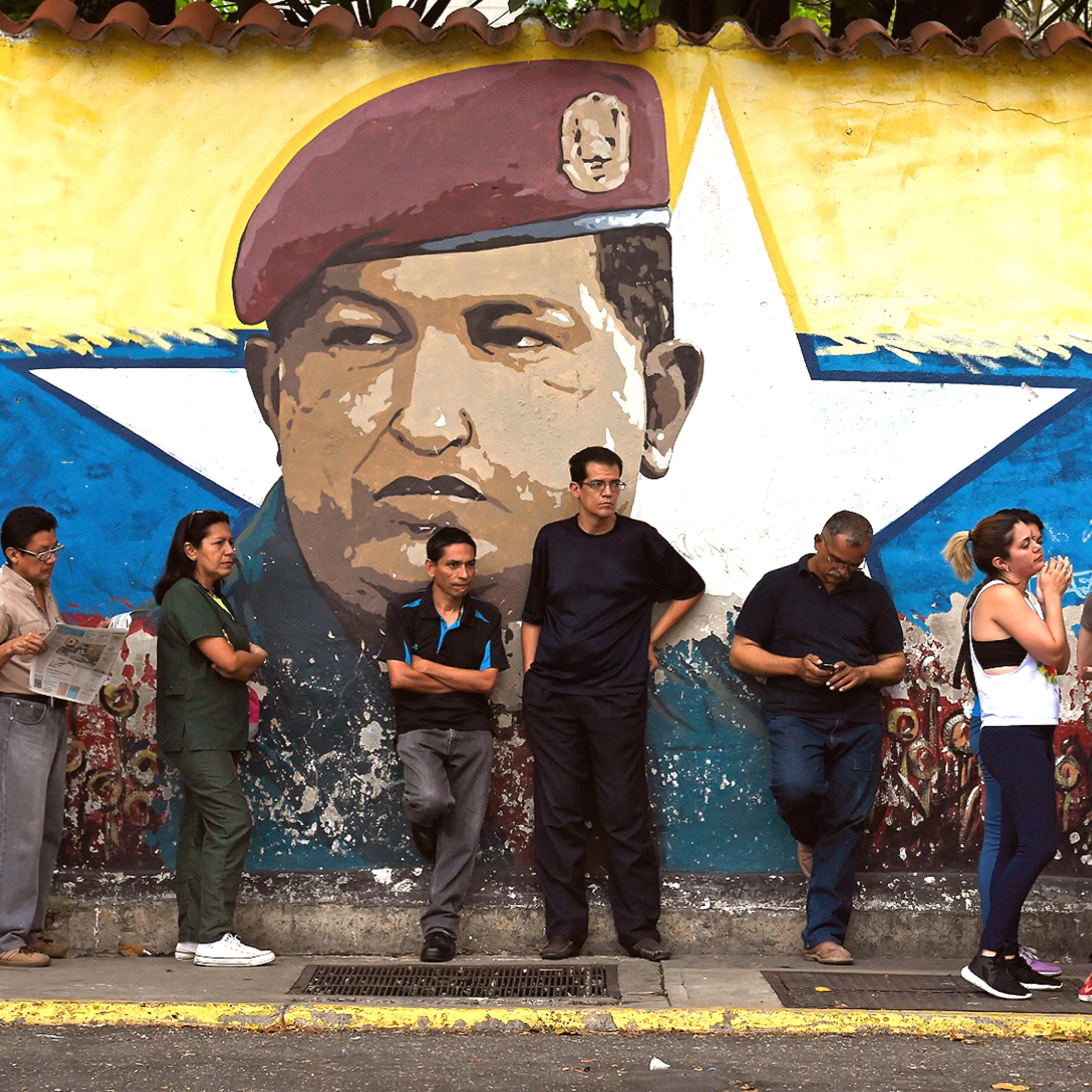
From Our Own Correspondent
We Can't See an End to It
00:26:28
Reports from writers and journalists around the world. Presented by Kate Adie.
Loading summary
Transcript10 lines
- [00:00]
A
Hello.
- [00:01]
B
Today, a government's ruling party hangs on despite major problems. We're in Venezuela, where food, medicine and cash are in short supply. Yet another possible bid for independence. This time it's the Faroese, with their distinctive language and culture. Pondering life without Denmark, a correspondent heads to the land of her grandfather for the first time to assess the devastation left behind by Hurricane Maria in dominica. And after 50 years, one of Britain's best known travel writers returns to Damascus. He once found himself alone there because the tourists hadn't come yet. Now he's alone again because they're long gone. Rarely does Venezuela appear in the news these days without the word crisis. Such is the political, humanitarian and economic situation in the country. For months, opposition supporters held almost daily protests after what they saw as an unconstitutional power grab by the ruling party. Food and medicine can be hard to find and the economy is shrinking, if not collapsing. Last week, plans were announced to restructure around $100 billion of foreign debt, prompting fears of possible default. Venezuela would continue to honour its obligations, President Nicolas Maduro insisted, but was being hindered by financial sanctions on what he called the global financial dictatorship. Despite the various crises, the ruling party has continued to consolidate power, as Katie Watson has found.
- [01:43]
C
Recently, I was invited to Miraflores, the presidential palace in the centre of Caracas. Nicolas Maduro was holding a press conference for international media after the government had won a majority of governorships in in regional elections. Mr. Maduro was sat at a desk with a painting of independence hero Simon Bolivar behind him. Bolivar is revered as a man who stood up to colonial Spain. Now the government casts the US as having taken over that role of meddling foreign power. The imperial forces in the north that see us as their backyard, they've launched an attack against us over the past four years, he told us, adding that they had allies inside Venezuela, too. In all their sinfulness, their perversity, their psychological political and economic warfare, they're all working to destabilize and damage Venezuela. Peppered throughout his speech were mocking references to the US president as my friend Trump. At one point, he said, I don't talk just for the sake of it. But several hours into the press conference, I was beginning to have my doubts. Mr. Maduro wants to prove to the world that he's winning. The regional elections were, he said, a victory. But when the opposition and the international community call them fraudulent, that still bothers him. It felt as though the press conference had been called to rebut those claims. You have to ask, though, if you're that convinced why not just get on with the job? More than anything, Maduro wants people to recognize his government as legitimate. But that's a hard sell when Venezuela's economy is in such a dire state. The country is one of the most oil rich in the world, but people are queuing for hours to fill up at petrol stations. Four in five Venezuelans are living in poverty. One in three are skipping meals because they can't afford to eat. The statistics are scary. Even more alarming is the figure for Venezuela's annual rate of inflation. The International Monetary Fund says it could reach a whopping 2,300% next year. Every day, people queue up to get cash out, but the maximum they can withdraw is about 10,000 bolivares. That won't even get you two loaves of bread. Nowadays, people must trudge from bank to bank to get that precious cash out. Cash has become so hard to come by that people now rely on their debit cards more than ever. But then there's a problem. How do you tip the waiter in the restaurant or the valet who's looking after your car? Venezuelans are nothing if not resourceful. We were given little notes with personal bank details so that when we got home, we could send the tip via bank transfer. It may seem like a long winded procedure, but it's still quicker and easier than queuing up outside a bank that has no cash. As life gets harder in Venezuela, it's a wonder that Nicolas Maduro, who has an approval rating in the low 20s, is still in power. The protests earlier this year didn't affect him. The elections have also kept him in the game. He's a survivor, someone said to me, that's for sure. But how can his unpopular government survive so long in such conditions? Professor Michael Penfold has studied the workings of the Venezuelan socialist state and told me the government's now able to decide when and how to hold elections and how to control the opposition. He says it's mastered the art of clientelism, where the government provides benefits to the people in return for political support. It's become far more sophisticated than it actually was. In past years in Venezuela, he explains, Maduro has introduced subsidized food parcels and initiatives like the carne de la patria, a new sort of ID card which the government says streamlines handouts, but which critics say is a form of political control to keep tabs on who supports the ruling party. But that's another thing. It's clear that the support for Mr. Maduro comes from the public's enduring love of his charismatic predecessor Hugo Chavez. Maduro calls himself the son of Chavez. His supporters are Chavistas. Their social movement is Chavismo. There are a great many people in Venezuela who still believe in what Hugo Chavez did for the country, and Mr. Maduro inherited that mantle on a visit to Chavez's tomb. The guide who is showing us around talked to us not about the death of their beloved leader in 2013, but about his physical disappearance. And that's just it. Chavez's presence as a leader is still felt. It's scrawled in graffiti everywhere, the refrain chavez lives on. But as Venezuela becomes more isolated, as the antagonism grows and people's lives get harder, more and more of them are asking whether Venezuela can live on and whether this is really what Chavez would have wanted.
- [06:37]
B
Katie Watson the last time a referendum on independence was held on the Faroe islands was in 1946. There was a tiny majority in favour, however cautiously, they decided merely to agree a new settlement with their Danish rulers. Today, the archipelago of eighteen islands way to the north of us is responsible for most of its own domestic policy, while law enforcement, currency and foreign affairs are among the areas still governed by Copenhagen. But in April next year, the Faroese will vote on a new constitution which, if adopted, will prepare the way for another independence referendum. In the island's largest town, Simon Parker went in search of local opinion and a decent night out.
- [07:27]
A
I'd already been in Torchhaven for a few days and no disrespect to the Pharaohs, I was really rather bored. Two pints of locally brewed stout in my hotel bar had definitely got the juices flowing. But London, Berlin or Paris, Torch certainly is not. Somehow it lacks buzz. This is usually one of the busiest places at weekends, said the barman apologetically when I quizzed him on where to head for a spot of North Atlantic night life. I looked around me and just one other patron sat glumly staring into his half drunk lager. We shared an emphatic nod as the wind whistled incessantly through the rigging of the fishing boats in the harbour outside. My desire for some late night revelry, though, wasn't entirely inspired by mild inebriation or even the daylight, which was still very much present at gone 11pm playing havoc with my circadian rhythm. Instead, I was on the hunt for opinions. Opinions regarding whether they'll hang on to their current status as an autonomous part of Denmark or vote for independence and go it alone. At the moment, the archipelago of 50,000 people, 200 miles adrift of North West Scotland has its own parliament and government, but decisions on defence, policing, justice and foreign affairs are still made in Copenhagen. And the Pharaohs use the Danish Krone. For the previous three days I had been waiting for an appointment with the Prime Minister, but having been stood up each morning, I had taken to discussing the subject of Pharaoh's Danish relations with anyone who showed an interest. There's mumblings about independence all the time, a 20 something in a cafe had told me apathetically the day before as we slurped cups of thick black coffee. Either way, she'd gone on, I can't see things changing much. Her opinion, like many other people I'd spoken to that week in the sleepy cafes and restaurants of Torchaven, was one of indifference. I was hoping that pubs with alcohol acting as conversational lubrication might offer livelier and perhaps louder debate. Inside the Irish themed bar at the opposite end of the harbour, the weekly pub quiz was taking place, and between rounds of general knowledge, sport and history, I managed to share a beer or two with a more talkative bunch of locals. Most young Faroese people like it the way it is, said a 30 year old man sipping from a bottle of sweet red liquid, the colour and consistency of agricultural diesel. Right now we can go to Denmark and get a decent education. And who knows, if we become independent, will we still have those opportunities? At the other end of the bar, a much older man drinking a more traditional kind of tipple was on the opposite side of the fence. I want independence, he said, taking sips from a glass of the strong Scandinavian liquor aquavit. We had to learn Danish when I was at school and we weren't allowed to speak Faroese. That leaves a sour taste in the mouth. And now I want us to do our own thing. But what that own thing is, or even what that might be, was hard to define for everyone I spoke to. The obstacle to Faroese independence, as some MPs have put it in the past, is that of Danish money to the tune of 625 million Danish kroners, about £75 million in annual subsidies. Where do you think all this infrastructure comes from? Piped up a Danish tourist who'd been eavesdropping on our conversation. We've been ploughing money into these islands for years and now they want to cut and run, he scoffed. It was an opinion offered up in good spirit with a wry smile. But he did have a point. The roads, bridges and tunnels of the Faroe Islands are certainly impressive, and there is, at least among some mainland Danes, a perception that their taxes help pay for them. Between now and April next year, though, there's more than enough time for the population to discuss finer points, providing the pubs stay well stocked with beer.
- [11:46]
B
Simon Parker the destruction wrought by Hurricane Maria was mind boggling, wrote the Prime Minister of Dominica shortly after he had to be rescued from his official residence. According to the un, nearly a quarter of all buildings on the island were destroyed and another 40% were severely damaged. More than 20 people died. Angelica Bell recently travelled to the Caribbean island to survey the aftermath of the storm and to hear about the cleanup effort.
- [12:18]
D
My grandfather was a tall, dark, imposing figure. Always dressed in jacket and tie. He never went out without his smart hat. He had a deep and definitive voice and would use his hands and fingers to punctuate his words of wisdom. Although he was self taught, his memory was a storehouse of knowledge. I can clearly remember him quoting the sayings of Josephus and leafing through his Reader's Digest collection. He was born in Dominica in 1920, and one thing was for sure, he was immensely proud of his country. He would describe it as a kind of Garden of Eden, brimming with luscious rare species and rich green trees which covered the island like a reassuring blanket. But then he would go on to say it was always at the mercy of the gods child. Hurricane season is when grown men cry and coconuts become bullets. At the time I was too young and naive to comprehend what he meant, but now I understand. Recently I took my first steps on his island. Even three weeks after the hurricane had hit Dominika, we arrived on a small aircraft chartered by an ngo as commercial flights still couldn't land safely. The Paradisiacal Caribbean image of palm trees, plantations and clear blue seas was nowhere to be seen, nor were the animals and plants my grandfather had told me about. In stark contrast. I saw homes lying in heaps of rubble, houses with no roofs, a brown expanse of devastation with trees strewn everywhere and stripped bare of their foliage. Cars upturned concrete buildings clinging on to stay upright. This was far worse than any of my fellow travellers had envisaged. We'd obviously have to adapt immediately to living with no power, water or sanitation, as the locals had already been doing for weeks. Yet it soon became apparent that we were spared the very worst of it. The residents had been working hard to clear their beloved island since well before we arrived. Guilt started to set in. Where have you been? You are three weeks too late were comments I heard again and again one day whilst driving up the west coast, I stumbled across a small road leading to Merrow, a seaside community living beside a long, beautiful stretch of dark volcanic sand where tourists would come and visit and where cruise ships would unload for short shore excursions. There I found Connie's Merrow Beach Bar, where Connie and her 80 year old mother, Oona, were tirelessly trying to clear up the beach, which was covered in gigantic logs swept in there by the hurricane. This is the livelihood of this community and it's my mum's and it comes to the family. But at this moment, that's the way it is. Connie's eyes were sad, but still conveyed some optimism when she spoke. Ever since the day of the hurricane, they both had been working to rehabilitate the area outside their bar so they could welcome visitors and start trading once again. You've got to shed the tears because you feel the pain, she told me. But you hold it inside and you try to do what you can do because it's for the benefit of you and the people. Strength from within, she went on. This is why I'm fighting hard. If the cruise ships come back and say they are ready to return, then we are ready. In Castle Bruce on the east coast, I met the owner of a small hotel, the Sea Breeze Inn. She showed me the devastation there. Doors had literally been blown off their hinges and inside the watermarks were almost a metre high up the walls. Opposite was a school which was being used as a temporary shelter. But many people who had lost everything and had no insurance were deciding to leave the island. Others, like Connie, were waiting to see if their insurance would help them and pay out for repairs. There wasn't a single area on the island which I saw that hadn't been chewed up and spat out by Hurricane Maria. Small communities have been ripped apart, with schools and medical centres destroyed, yet people are surviving the best way they can. The resilience and determination of this tiny nation were evident everywhere. I may not have seen Dominika during my granddad's lifetime, or in its full flower, the the way he'd always described it to me. But I'm proud to say that I finally felt a connection to a place that is my heritage and I look forward to seeing it restored to its former glory, however long that may take.
- [16:50]
B
Angelica Bell It's 50 years since the travel writer Colin Thubron published his Portrait of Damascus. In it, he recounted his travels around the Syrian capital and explored the history of the city from from biblical times to the revolution of 1966. A lot has happened since then, not Least the seizure of power by Hafez Al Assad and his replacement by his son Bashar al Assad, decades later. And of course, the civil war. Throughout the six and a half years of fighting, the city has remained largely under the control of the Assad regime. This despite repeated attacks, suicide bombings and parts of the city falling in and out of rebel control. Recently, Colin Thubron returned to Syria to see what was left of the place he once wrote of so fondly.
- [17:43]
E
The city that comes into view is of course bigger than I remember. Its population must have quadrupled since I was here. Its suburbs have swamped the old city that I loved. And even inside its walls, restaurants and boutique hotels have appeared. But they're all closed now, or empty. It's a city at war. Whole streets are fenced off by tank blocks and reservoir. Not far away from my empty hotel, I can see burn type tenements still in rebel hands. This is perhaps the oldest continuously inhabited city on earth. In the Muslim world, it has grown open and tolerant. A quarter of its people belong to Christian and other minorities, including Alawites, a subsect of the Shia who dominate the government and army. However reluctantly the Damascenes cling to the regime of Bashar Al Assad, the Islamist alternative just outside the walls might be fatal to them. Fifty years ago, I was almost alone here because tourists hadn't come. Now I'm alone because they're gone. Yet I see an old city, miraculously intact. It's escaped the devastation of Aleppo, but late every night the regime's artillery opens up on the enemy suburbs. It sounds like far off thunder. In the dark, I stand outside my hotel, listening, wondering how this can continue. Once a week, a defiant mortar shell flies the other way. By day I wander the alleys and monuments that had so fascinated me as a young man. Sometimes I find myself gazing through his eyes, remembering the youthful enchantment of entering an old mosque or sultan's tomb. I'm more wary now, and old. The sentries rarely frisk me. In the great bazaars still bustling, the shopkeepers stare at me with hope, as if I might be the vanguard of returning foreign business. I'm surrounded by ethnic complexity. I glimpse russet hair and green or hazel eyes. But there's a darker and more homogeneous influx. Immigrants from the countryside, refugees. In the lanes of the old city, the an odd quiet descends. I think it was always like this. But now there are more windows boarded up, more doors padlocked. Behind them, out of sight, I know, are marble paved courtyards fountains, lemon trees. I find the home of a student I once knew. But I can see through the windows that it is derelict, the courtyard piled with builders, rubble. I check to ensure that I am not being followed. People speak with me more cautiously than they did once. I could barely walk down a street without an invitation to coffee from Christians or tea from Muslims. But those voices have gone. We can't see an end to it. People say now we've become like Baghdad or Kabul or Tripoli. This war will never end and prices go up all the time. They talk of suicide bombs, of children killed, houses wrecked. But the deepest wounds, I think, are in people's psyches. They seem to be losing hope. There's a sweetness of old custom still, and hospitality. If I linger long enough at a door or inquire strenuously for an absent family, somebody will probably ask me in. But Syria's just the toy of foreign powers. They routinely say, here, have some coffee, you are our guest. But Syria is bleeding. My friends may have gone, but the buildings I loved are still here. The only damage I find is to the mausoleum of a warrior sultan against the Crusaders, which has taken a mortar bomb through its dome. Then I come with trepidation on the city's greatest monument, the 8th century Umayyad Mosque, the first great mosque in Islam. It was built in the shell of a Roman temple to Jupiter. Its sister mosque in Aleppo was wrecked months ago. I find the huge spaces still unblemished. A shrine contains the supposed head of John the Baptist. Worshippers are caressing its gilded bars, and Muslims and Christians venerating it together. Above all, the mosaics in the courtyard arcades still shine undamaged. They're beautiful things in emerald green and gold. In the absence of living figures, the mosaics depict an idyllic river flowing among palaces lit with mother of pearl lanterns. An image of the Barada, perhaps the river that feeds Damascus, or a foretaste of the Koranic paradise. The head of Syria is Damascus, reads the biblical book of Isaiah, and Damascus is still the head of Syria. But it's a different Syria and a tense city. Its gates and railings are plastered with outsized photos of soldier martyrs, and the bazaars hung with portraits of Bashar Al Assad, who looks justifiably a bit concerned. His notional Shia faith elicits Iranian support. You see these people everywhere nowadays, a man complains to me. The Shia are walking tall now. And now I start to see them too. Iraqis and Iranians mainly praying at the supposed tombs of Muhammad's Family. They clutch at the bard Cenotaph that separates them from the buried head of their martyred imam Hussein and trail through the Babar Sahir cemetery just outside the city walls. I come here too. More than 40 pilgrims to its shrines were killed by bombs a few weeks ago, and now the graveyard is patrolled by heavily armed soldiers. Here, Muhammad's muezzin Bilal, the first man to call the faithful to prayer, is buried in a little green domed tomb. And suddenly at noon, the call to prayer arises, whose plangent cadence, relayed from minaret to minaret, had entranced me all those years ago. But now its cry of Allah Akba resonates differently among the gravestones. And I wish I could love the sans as I once did. It's not the army that controls this country, I think, but the Mukhbarat, the feared intelligence service. I was taking a careless snapshot of the city from a hillside suburb when two plainclothesmen appeared behind me. They escorted me to a room immured among poor houses. There my captors multiplied to five and were deferential at first. They spoke formulaic English and my tourist Arabic had gone. You are a guest. You have nothing to fear. What are you doing here? How did you get here? I answer that my visa was granted by their Ministry of Information. They demand my passport and camera. The passport bears an entry stamp from the frontier with Lebanon. The camera. They scroll through avidly. It shows photos of Damascus alleys, of posters stuck to the city gates, martyrs, slogans. Their suspicion grows. They scroll back to leftover photos of a holiday on Lundy island in the Bristol Channel. There's a shot of a pretty woman in headphones in the cockpit of a helicopter. Who is this? This is my wife. What's she doing in airplane? Why has she these on the ears? These are headphones. She's going to Lundi Island. She listening to Mtn or Siriitel. These are Syrian network providers. No, there is no serial tell on Lundy Island. She is listening to the pilot. They stare harder, their suspicion fermented. They scroll back to shots of Highland cattle and seals gazing at the camera from the sea. What are these? These are seals. Why are they looking? But now they have summoned a fox faced officer who looks senior. I'm driven to a guarded compound deep in the city. A thin tiled stairway leads into a warren of sordid passageways. There's little light and an acrid smell I can't identify. I'm put in a prison cell now, I am afraid. But the iron door is left open, and it's lined with filing cabinets. Three different portraits of Bashar al Assad hang on the walls, festooned with tinsel. The questioning grows more intense. I have the telephone number of the Ministry of Information official who granted my visa, but nobody rings it. A thug in a black vest lumbers in and out as if mutely playing bad cop, while different interrogators come and go. At last I am taken to a huge room where a uniformed officer sits at a desk with his back to the light. There's no more talk of Lundy island or seals. I have just returned to a city I once loved, I say, as if to emphasize the sadness between that time and this. He lays my passport and the camera on his desk within reach. I think these are holiday snaps, he says. But it is only an hour later that I am free. After Foxface drives me to the Ministry of Information, where my official, an elegant woman behind another huge desk, describes it all as a misunderstanding.
- [26:20]
B
Colin Thubron and that's all from us today. We'll be back with more from our correspondence on Saturday morning. Do join us. Goodbye.