← Front Burner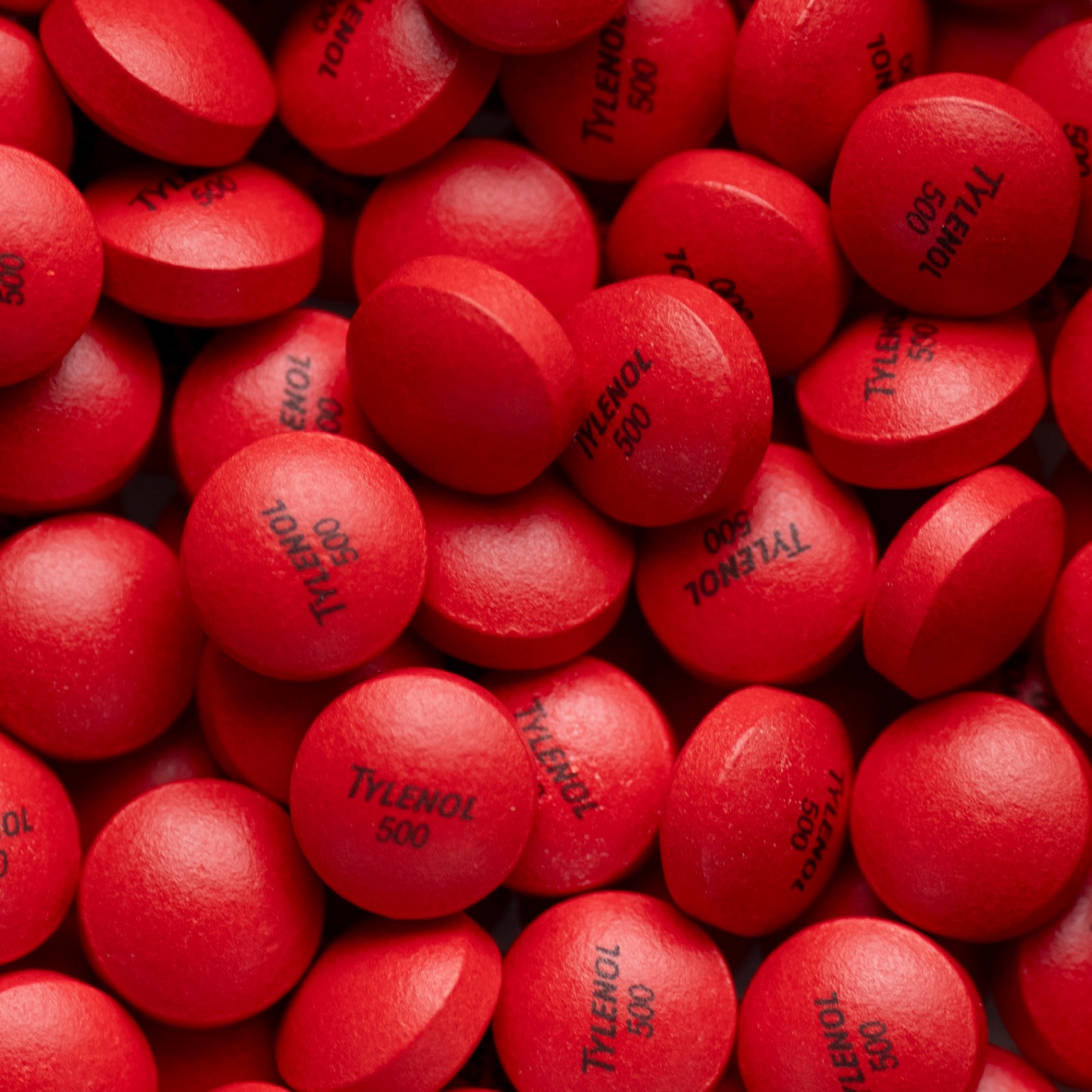
Front Burner
Autism and Tylenol: what the science says
00:27:15
<p>Health professionals around the world are disputing the Trump administration’s claims about autism and its potential causes. U.S. Secretary of Health Robert F. Kennedy Jr., along with President Donald Trump himself, said this week that taking Tylenol while pregnant may cause autism in babies, and the U.S. FDA said it would reclassify the drug leucovorin — primarily used to mitigate chemotherapy side effects — to treat autism symptoms in children.</p><p><br></p><p>But the established, peer-reviewed research on autism and its causes does not support either of these claims — or a number of other statements made in that announcement. Health experts have called the claims premature, misleading, and even dangerous.</p><p><br></p><p>Deepa Singal, the scientific director of the Autism Alliance of Canada, explains what the science actually says about autism, why health professionals aren't changing their recommendations, and why autism is so hard to get definitive answers about in ...
Loading summary
Transcript79 lines
- [00:00]
A
Hi, I'm Darina, co founder of Quo. You might know us as openphone. My dad is a business owner, and growing up, he always kept his ringtone super loud so he'd never miss a customer call. That stuck with me. When we started Quo, our mission was to help businesses not just stay in touch, but make every customer feel valued, no matter when they might call. Quo gives your team business phone numbers to call and text on your phone or computer. Your calls, messages, and contacts live in one workspace so your team can stay fully aligned and reply faster. And with our AI agent answering 24. Seven, you'll really never miss a customer. Over 90,000 businesses use Quo. Get 20% off@quo.com tech that's Q U O.com tech and we can port your existing numbers over for free. Quo. No missed calls, no missed customers.
- [00:57]
B
This is a CBC podcast. Hey, everybody, I'm Jamie Poisson.
- [01:11]
C
So taking Tylenol is not good. All right, I'll say it. It's not good.
- [01:20]
B
On Monday, US President Donald Trump held a press conference at the White House. Along with his health secretary, Robert F. Kennedy Jr. His head of Medicare and Medicaid, Dr. Mehmet Oz, and several others, Trump billed it as a major breakthrough in understanding autism. This, of course, is an RFK Junior Crusade that began long before his time in the Trump administration. But what followed has been described by doctors, researchers, and other health experts around the world, as well as as misrepresentations, overgeneralizations, and even outright lies. Trump repeatedly claimed that taking Tylenol while pregnant could cause autism in the baby. He claimed a drug called Leucovirin could be an effective treatment for autism. It's a drug most commonly used to treat the side effects of chemotherapy. But the research around using it to treat autism symptoms is very preliminary. He said babies get too many vaccinations. Trump, in particular, did not back up almost anything he said with scientific evidence.
- [02:19]
C
And by the way, I think I can say that there are certain groups of people that don't take vaccines and don't take any pills that have no autism, that have no autism. Does that tell you something that's currently. Is that a correct statement, by the way?
- [02:35]
B
So today on the show, we wanted to take a closer look at autism itself. What we know about it and maybe more importantly, what we don't, whether there is any science at all to support the claims made by the Trump administration and what all of this means for the people directly affected by autism, either themselves or their families. With me today is Deepa Singel. She is a scientific director of the Autism alliance of Canada. She's also an adjunct assistant professor in the Department of Pediatrics at the University of Alberta and a researcher who has worked directly on studies about autism prevalence and and prenatal medical exposure. Deepa, thank you so much for coming onto frontburner.
- [03:18]
D
Thank you so much for having me, Jamie.
- [03:21]
B
Well, I'm really glad to be speaking with someone like you today. So we'll talk more about these claims that the American government has made this week in a few minutes, but I wanted to start by talking a bit more about autism itself. What exactly is autism?
- [03:37]
D
Okay, so autism is a lifelong neurodevelopmental condition, and it affects how a person experiences the world, how they communicate, how they interact with one another, how they process information. And so it's called a spectrum, because every autistic person is different. There's a lot of heterogeneity there. They've got their own strengths, their own challenges, their own ways of learning and engaging with society and with people.
- [04:05]
B
And tell me how it's diagnosed. What are the criteria?
- [04:09]
D
So it's diagnosed based on largely behavioral criteria, typically by a team of specialists such as pediatricians, psychologists, or developmental clinicians. And the main diagnostic criteria looks at challenges in social behavior, patterns of repetitive behavior, and sensory needs or sensory differences.
- [04:31]
B
And when would a person normally be diagnosed with autism? What, what age?
- [04:36]
D
Typically, autism is usually diagnosed earlier in the lifespan, so during early childhood. But what we're seeing in a lot of the research is showing, the prevalence research, is that autism can be diagnosed throughout the lifespan. And particularly right now, we're diagnosing adults who've been previously misdiagnosed or missed because the awareness of autism and the medical community's ability to diagnose has changed and increased over time. So really what we're seeing is an increase in diagnoses across the lifespan, but primarily in the younger ages.
- [05:12]
B
And I know this is going to get into my next question, which is what does the science show about what might cause it? But, you know, is autism something that you are born with, or is it something that develops after you're born? What do we know about that?
- [05:27]
D
Yeah, it is something that you're born with, and it's lifelong. And there's no evidence that it can be, quote, unquote, prevented. And multiple lines of evidence point to genetics that are playing a major role in autism. And so we see siblings quite often. If one sibling has autism, another can. You know, parents of autistic kids are often autistic Themselves. You know, and I want to take this moment to say that framing autism as an epidemic or, or as a disease or something that's preventable is really inaccurate according to the science. And it's very stigmatizing for the population.
- [06:03]
B
When we're talking about what might cause it, I, I hear a lot of talk about pollutants, genetics screens, people having children later in life. And just what does the research say about some of these popular explanations?
- [06:21]
D
So the research, there is research that shows links to all of the things that you're talking about. But when you're looking and thinking about the research, you're thinking about the quality of that research and the ability of that research to prove causation, which none of these observational studies can do. And so they're, they're looking at sort of what researchers called association versus causation. And right now the totality of the body of research evidence is saying there's these multiple, multiple causes.
- [06:51]
B
Right, Right. There are still, there's still a lot of uncertainty. Right. Like we have no smoking gun.
- [06:57]
D
Absolutely. There's no smoking gun. And, and more research is being done in this area. You know, and for those studies that are showing environmental causes, pollutants, et cetera, most of those studies are observational. Right. So again, can't show causation. And just we've. More investment needs to be done, more research needs to be done in this area using high quality methodology.
- [07:18]
B
Deepa, like, considering this is something that's gotten millions of dollars in research funding, there's so much motivation behind trying to understand it and develop treatments. Why do you think it's been so hard to find that smoking gun or these conclusive answers here?
- [07:35]
D
Yeah, that is really the billion dollar question, Jamie, that scientists are pondering around the world right now. You know, research in autism is really challenging. It's heterogeneous. No two autistic people are the same. There's a wide variety of behaviors, of symptoms, of co occurring conditions as well that add to the complexity of studying this.
- [08:13]
B
So then, now let's go through some of what President Trump and his health officials said on Monday and break down some of the claims that they were making. And the one that I want to start with is Tylenol. So most people probably have a bottle at home right now. I do. It's also called acetaminophen or paracetamol. And Trump claimed that taking it while pregnant could give your baby autism.
- [08:37]
C
Effective immediately, the FDA will be notifying physicians at the use of acetaminop. Well, let's see how we say that acetaminophen, acetaminophen is that okay, which is basically commonly known as Tylenol during pregnancy, can be associated with a very increased risk of autism.
- [09:06]
B
He said that pregnant mothers should avoid taking it.
- [09:09]
C
They are strongly recommending that women limit Tylenol use during pregnancy unless medically necessary. That's for instance, in cases of extremely high fever that you feel you can't tough it out, you can't do it. I guess there's that. It's a small number of cases, I think, but if you can't.
- [09:31]
B
He said parents shouldn't give it to their young children. What does the science say about any possible link between Tylenol and autism?
- [09:41]
D
So, unequivocally, the body of evidence shows that Tylenol does not cause autism. So Tylenol during pregnancy, prenile exposure to Tylenol does not cause autism in children. The biggest study out there, the largest study that came out of Sweden, that used a sibling design to sort of tease apart whether Tylenol causes autism. They're looking at siblings that were. One of them was exposed to Tylenol in the prenatal period, one of them wasn't. And then they're looking to see the relationship between those sibling pairs, if they've got autism or not in childhood. And what the study is showing. And they followed 2.48 million children, I believe, over time. And the study is showing that when they use the sibling design, and the sibling design is what accounts for things like family genetics and prenatal health. And so socioeconomic factors that can't be used in observational studies, that there is no association. Numerous medical societies, including the Canadian Society of Obstetricians and Gynecologists in Canada, the American College of Obstetricians and Gynecologists, have reviewed this issue and they continue to recommend Tylenol is safe during pregnancy when medically indicated. This morning, World Health Organization also issued a statement confirming in globally that the totality of evidence demonstrates that there is no causal link between prenatal Tylenol exposure and autism in the developing child.
- [11:09]
B
Yeah, I believe Health Canada just released a statement as well on, along similar lines, other medications that are commonly used to control fever and pain, like ibuprofen or naproxen, those have been shown pretty conclusively to have negative outcomes on your unborn baby. Right. Like that is why health professionals have said that acetaminophen is the safe option. Right?
- [11:36]
D
Absolutely. And so that's the other really important thing to consider here is that Tylenol is the safe option to treat fever during pregnancy, and that fever during pregnancy can also have harmful consequences towards both mom and baby. And so these, you know, risks need to be considered really carefully. When pregnant women are looking at this rhetoric in the media at the moment, they need to consult their healthcare providers. But unequivocally, scientific bodies are coming out across the world right now to say that this is unsubstantiated.
- [12:11]
B
And I want to ask you specifically about Trump's claim that he does not think you should give young children Tylenol at all.
- [12:19]
C
If you're pregnant, don't take Tylenol when you have your baby, don't give your baby Tylenol at all unless it's absolutely necessary, don't do it.
- [12:31]
B
Which was a pretty jaw dropping moment for me. What do we know about that?
- [12:38]
D
You know, once again, no medical bodies are coming out to change their guidance and change medical treatment right this, there's not a body of evidence that is strong enough for both of these claims to change the medical advice that clinicians are giving their patients across the world.
- [13:00]
B
Trump and his team, they, they did seem to be drawing on some studies that did seem to find some connection between Tylenol and autism. And can you tell me more about those studies that have actually looked at this and, and what they found and what you think of them?
- [13:15]
D
So this is really important because the nuances of the scientific process and the nuances of scientific design are really important to take into account. So the studies that Trump and his team are talking about are largely observational studies. And observational studies are designed to look at association and not causation. And so the gold standard of causation are randomized control trials. And ethically, pregnant women don't participate in randomized controlled trials. Like, we can't say, okay, we're going to randomize a group of pregnant women to Tylenol and one group not to Tylenol if there's perceived harm. And so when you look at the observational studies, there's sort of a host of limitations within their study design that prevent such a strong association from being determined.
- [14:04]
B
Listening to all of this, I couldn't help but, but think about what this puts on mothers and parents more generally. Mothers who maybe have a child with an autism diagnosis who are now feeling, God, I don't know, guilty about taking Tylenol. Parents wondering if they should have given their young children that the medication to calm a raging fever. And I just, I wonder if you could speak directly to those mothers, those parents right now. I know you have children of your own.
- [14:37]
D
I do, I do. I'm really glad you asked me this question. The fear is real and the guilt that moms carry all the time for so many different reasons is so very real. But fear and guilt over Tylenol is not what we want Canadians and pregnant women and families to feel because there's no scientific evidence that shows that this could have been a possibility. The totality of the evidence does not show this. These are inconclusive claims. They're extrapolated. Uh, it's not a measured approach that's being taken when you look at the science, when you analyze science. And so I think what, what families and women in particular need to know right now is that the evidence that is being cited or is being spoken about is not strong enough to change any medical guidance at this moment by any credible medical body. Global.
- [15:41]
B
Only.
- [15:41]
C
Boost Mobile.
- [15:42]
B
Boost Mobile will give you a free year of service. Free year when you buy a new 5G phone.
- [15:46]
C
New 5G phone.
- [15:47]
B
Enough. But I'm your hype man. When you purchase an eligible device, you get $25 off every month for 12 months with credits totaling one year of free service. Taxes extra for the device and service plan online only. What kind of person takes on the law? Can they ever really know what they're getting into?
- [16:00]
C
A really tough looking guy came up to us and said, are you part of this gay? My family started getting death threats. I wasn't able to go outside alone anymore.
- [16:11]
B
I'm Faen Johnson, host of See you in court a new podcast about the cases that changed Canada and the ordinary people who made history.
- [16:19]
D
This is David and Goliath.
- [16:20]
B
We have here find and follow. See you in court wherever you get your podcasts. Another drug that was talked about at length on Monday was lent. The Commissioner of the FDA, Dr. Marty Macary, said that his agency would relabel the drug for treatment of autism symptoms.
- [16:39]
C
It's a fairly established mature pathway. Again, we have a duty to let doctors and the public know we are going to change the label to make it available. Hundreds of thousands of kids, in my opinion, will benefit. One study found that.
- [16:52]
B
What is glucovirin? What does the research show about any possible clinical role it might play play in treating autism?
- [16:59]
D
You know, it's a prescription form of folate and it's primarily used in cancer care right now there's emerging studies, right? So these are emerging studies using really small sample sizes, which is really important. So you know, I think the largest sample size was 48 or 80, it was under 100 kids that were these randomized control trials. And the take home message is at this moment, once again, no medical body is saying that this is a standard of care for autism. It's not a cure. And much, much more research needs to be done before those claims can be made. So we've, we need randomized control trials with big populations. We need reproducible evidence for the totality of evidence to show that it, it's a standard of care.
- [17:51]
B
Right. Am I right to say that there were some set, I mean, I know these are very, very small studies, but do you think it's fair to say that there was some promise? Yeah, just that promise didn't meet, you know, the level of confidence that we heard yesterday. Would that be a fair summary?
- [18:06]
D
That's absolutely a fair summary. So what those smaller studies are showing is that it might help communication, it may help social interaction, it might help some irritability in some children as small subsets. It's likely not going to help everybody who's autistic. And it's an emerging field. And so much, much more study has to be done. The scientific process takes time, needs to be respected for this very reason. Right. So that we don't draw harmful claims or we don't draw incorrect claims. And so yes, while these smaller studies do show some promising results, it isn't enough to change medical guidance at this moment in time.
- [18:46]
B
So as you mentioned, the chemical name for it is folinic acid. You can buy, as I understand it, non prescription forms of it, often billed as like a health supplement. I'm just gonna note here, one of the main suppliers of this form of it in the United States is a company called IHERB, which Dr. Mehmet Oz at one point held a substantial stake in. He reportedly said he planned to divest, but it's not clear whether he's actually done that yet. But what do we know about any potential negative effects from taking Leucovin or folinic AC acid when not prescribed by a doctor?
- [19:21]
D
So the studies have shown relatively mild side effects like sleep changes, agitation. But what people should know is that this is still being studied. Right. And so until there are studies that are looking at, you know, drug interactions. Right. So if your child is also taking other medications though, that hasn't been studied. Right. And so is taking this drug going to affect the effectiveness of another drug that they're taking? Are there longer term side effects that hasn't been studied? And so this is very much an emerging field right now. It's mild side effects, but there could be more serious side effects, but it just hasn't been studied yet. Right. And best advice to families is to talk to your healthcare provider who knows the fulsomeness of your medical history, who knows what medications your children are on, and who can give you that case by case advice.
- [20:26]
B
Trump also talked at length about concerns that he has about vaccines. Most of this seemed to be based on his personal feelings rather than any hard science.
- [20:35]
C
The mmr, I think, should be taken separately. This is based on what I feel. The mumps, measles, and the three should be taken separately. And it seems to be that when you mix them, there could be a problem.
- [20:55]
B
The supposed connection between vaccines and autism is of course, not new. It's something RFK Jr. Has talked a lot about, too, but the science has really been clear on this. Claims that vaccines cause autism have been disproven again and again and again. I want to say that again, disproven, not unproven, because there's a difference between those two things. And why do you think this supposed connection has been so hard to debunk?
- [21:22]
D
So the evidence here is unequivocal. There's decades of research across millions of children worldwide to show that vaccines are safe, they're safe and they're essential. And bringing this conversation back into the global discourse is dangerous and harmful. And we are saying that in pockets across the world where we're seeing a resurgence of measles because parents are not getting their, their kids vaccinated. Vaccines don't cause autism. Why this keeps coming up, I think it is sensational. I think media is picking up on sensationalism and we're revisiting this again and again and again. And to be honest, I, I just think instead of debating these include inconclusive claims, we just really need to bring it back and focus on what is going to help autistic Canadians and their families. Think about the challenges they're facing within our systems here in Canada. Think about how we can better include them, how we can support employment, how we can ensure that autistic kids are supported within our education system so that they thrive and contribute to society, instead of focusing on these inconclusive claims that are just, you know, decades old, debunked, fraudulent science. Yeah.
- [22:33]
B
Another thing that Trump and RFK talked about was the increasing rates of autism.
- [22:38]
C
It used to be 1 in 20,000, then 1 in 10,000, and I would say that's probably 18 years ago, and now it's 1 in 31. But in some areas it's much worse than that, if you can believe it.
- [22:54]
B
This is also something RFK has talked about a lot before. He's called it an epidemic. And it certainly does seem to be the case that there are many, many more cases of autism diagnosed now than even a few decades ago. Right. But can you put some numbers on that for me in terms of the rates that we're seeing now?
- [23:12]
D
So we're seeing rates of anywhere from 1 to 27, 1 in 31 kids, up to 1 in 50 kids. And we're definitely seeing an increase in rates, but the increase in rates is really due to broader diagnostic criteria, better awareness, better recognition and screening. We're identifying people who are long overlooked, including girls, gender diverse people, racialized communities. There's less stigma, better understanding of what being autistic means. You know, those are the reasons that the rates are, are primarily increasing. And so, you know, these figures are really reflecting inclusion and understanding and not this emergency, not this epidemic of how it's being framed.
- [23:59]
B
Yeah, I've, I've heard RFK respond to what you just said, essentially, you know, and say that it's not just broader diagnostic definitions.
- [24:08]
C
Oh, do doctors and therapists in the past were not stupid, they weren't missing all these cases. The epidemic is real.
- [24:17]
B
He's claimed that the rates of more severe cases of autism are going up too.
- [24:22]
C
In all the core states, the trend is consistently upward and most cases now are severe.
- [24:31]
B
And how much truth is there to that?
- [24:34]
D
Rates are going up. Acro across the spectrum. Right. So for lower needs individuals. Higher need individuals for the reasons that I just stated, that is what the scientific community is reporting.
- [24:47]
B
He has also been a major proponent of the idea, the idea of cause causes of autism aren't genetic, that it's caused by things that happen to the baby as it's growing and developing. Right. Things like environmental pollution, vaccines or other drugs. We know it's an environmental exposure.
- [25:03]
C
It has to be. Genes do not cause epidemics. They can provide a vulnerability. You need an environmental toxin.
- [25:11]
B
So he has talked a lot about specific populations that have lower rates of autism than we'd expect from the general public. Specifically mentioned on Monday was the Amish.
- [25:23]
C
There are some studies that suggest that. Yeah. With the Amish, for example. The Amish, Yeah, virtually, I hear no, I heard none. See, Bobby wants to be very careful with what he says, and he should, but I'm not so careful with what I say. But you have certain groups, the Amish as an example, they have essentially no.
- [25:42]
B
Autism Are there specific populations that do not, in fact, have higher or lower autism rates? And do we know why?
- [25:52]
D
That is a very interesting line of inquiry. I'm not, you know, completely familiar with the Amish population that was being referred to, but let's unpack that a little bit of what we see here, here at home. And so we do see at that the. That there is, you know, different cultures have stigma around autism that, you know, members of the Autism alliance of Canada, which is the organization that I lead, are working really, really hard at alleviating. And so often what we can see with different cultural norms or different populations is that stigma is what is preventing, you know, parents from communicating with their physicians or getting that diagnosis or from autistic people themselves from sort of understanding their autistic traits or symptoms. And so I think that probably is a reasonable explanation for some of what is happening and why we're seeing lower rates in some populations than others.
- [26:55]
B
Deepa, we've heard a lot of reaction since that press conference on Monday. Health professionals have called it irresponsible and dangerous, as I mentioned. But one thing I am wondering about in all of this is autistic people themselves, you know, who you've mentioned a couple times during this interview, and their families, of course. This is a community that your organization works directly with here in Canada. And I. I know it's not a. A monolith, but when claims like this are made at this level, h. How does this affect all the people that you're working with? What are you hearing from them right now?
- [27:29]
D
Yeah. Thanks so much for. For bringing that human element into this, Jamie, because I think that so often experts forget that they're talking about real human beings with emotions, feelings, dignity. And so, you know, framing autism in this epidemic way, this emergency way, this burden, it really, really disrespects the life experience and the contributions and the dignity of autistic people and their families. We're hearing from our members from coast to coast to coast about, you know, this really sad, tragic moment where the global discourse has shifted from awareness, from acceptance, from supports, from services, from dignity to fear, dehumanizing language. And it's really quite unfortunate and dangerous.
- [28:25]
B
Okay, Deepa, thank you so much for this.
- [28:28]
D
Thank you so much for having me.
- [28:38]
B
That is all for today. I'm Jamie Poisson. Thank you so much for listening. Talk to you tomorrow.
- [28:54]
D
For more CBC Podcasts, go to CBC CA Podcasts.