← Front Burner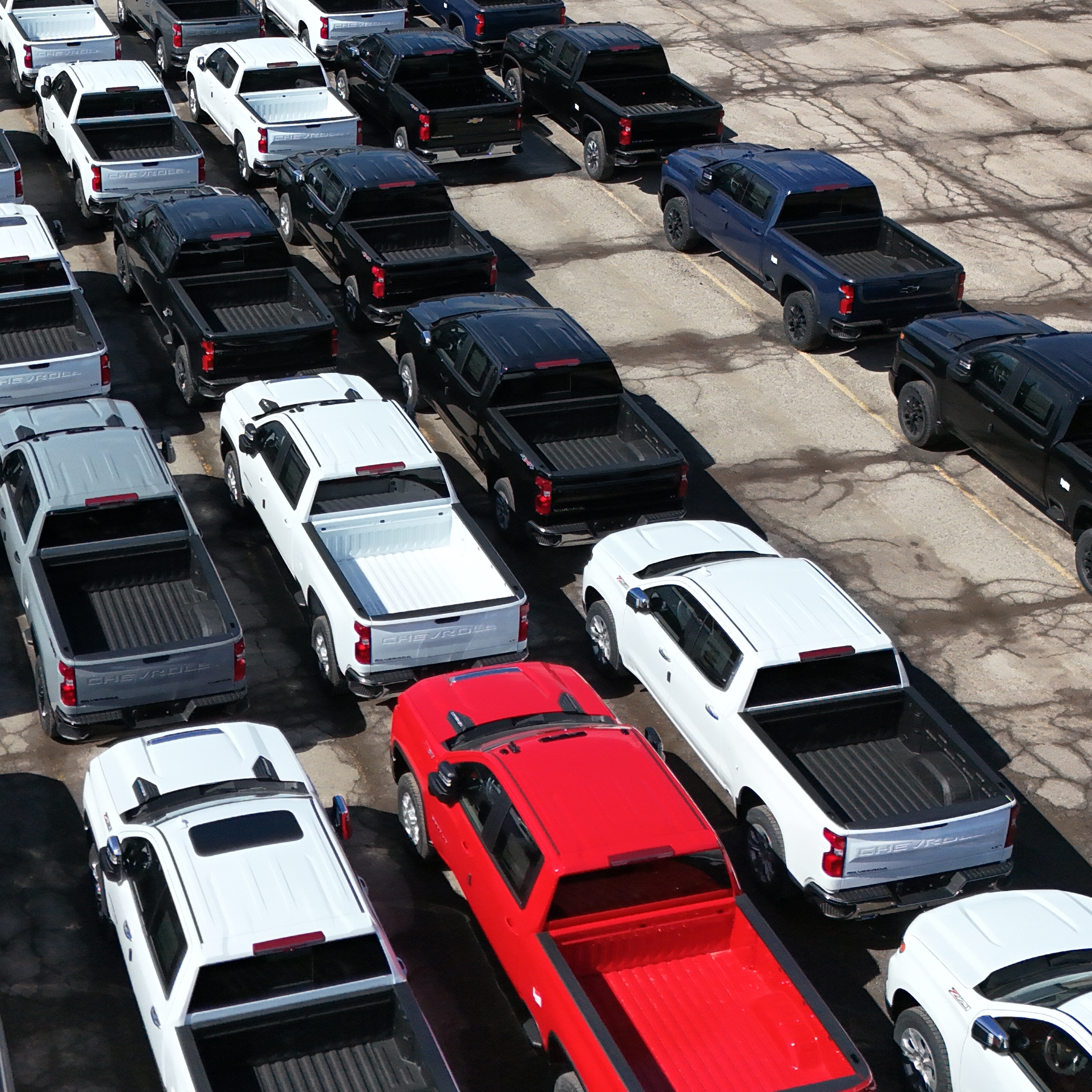
Front Burner
Can Canada’s auto industry survive Trump?
00:24:28
<p>After an anti-tariff ad commissioned by the Ontario government ran during the World Series, U.S. President Donald Trump pulled the plug on negotiations between his office and the federal government. </p><p><br></p><p>It comes as Stellantis and General Motors announced they were moving some production to the U.S., affecting thousands of jobs on this side of the border. </p><p><br></p><p>So we’re talking to historian Dimitry Anastakis about the importance of the Canadian auto industry, how it became so intertwined with America and what options the government has.</p><p><br></p><p>We'd love to hear from you! Complete our listener survey <a href="https://cbc.ca/FrontBurnerSurvey" rel="noopener noreferrer" target="_blank">here</a>.</p><p><br></p><p>For transcripts of Front Burner, please visit: <a href="https://www.cbc.ca/radio/frontburner/transcripts" rel="noopener noreferrer" target="_blank">https://www.cbc.ca/radio/frontburner/transcripts</a>.</p>
Loading summary
Transcript48 lines
- [00:00]
Podcast Narrator
AI agents are everywhere, automating tasks and making decisions at machine speed. But agents make mistakes. Just one rogue agent can do big damage before you even notice. Rubrik Agent Cloud is the only platform that helps you monitor agents, set guardrails and rewind mistakes so you can unleash agents, not risk. Accelerate your AI transformation@rubrik.com that's R U B R-I K.com this is a CBC podcast.
- [00:37]
Jamie Poisson
Hey everybody, I'm Jamie Poisson. Enraged by an anti tariff TV ad reminding Americans that Ronald Reagan was in.
- [00:52]
Dimitri Anastakis
Fact a free trader, high tariffs inevitably.
- [00:56]
Narrator/Announcer
Lead to retaliation by foreign countries and the triggering of fierce trade wars. Worst happens, markets shrink and collapse, businesses and industries shut down and millions of people lose their jobs.
- [01:10]
Jamie Poisson
Donald Trump has lashed out, ending trade talks with Canada and threatening another 10% tariff hike. On top of the slew this country is already facing, who knows what Trump will do next? But here we are, the latest in a fundamental break in the U.S. s approach to trade. We one that is disproportionately hammering Canadian lumber, steel and autos. It's that last one, cars and trucks, that we're going to talk about today. This is one of the most consequential manufacturing sectors in the country, and the US Administration has made it clear that it is in their crosshairs. In the last few weeks alone, Stellantis and GM both announced that they were moving some production to the United States. Thousands of jobs are imminently on the line. Dimitri Anastakis is a professor of history and business at the University of Toronto, and he's also written a number of books about Canada's automotive industry. And we're going to discuss the industry's history and import and what the path forward could actually look like. Dimitri, hi. Thank you so much for coming onto Front Burner.
- [02:19]
Dimitri Anastakis
Great to be here, Jamie.
- [02:21]
Jamie Poisson
So before we get into any of the history here, I want to first talk about the current reality of the Canadian auto industry and its importance in the Canadian economy writ large. How much trouble would you say the Canadian auto sector is in right now?
- [02:37]
Dimitri Anastakis
Well, you can tell from the headlines it's in a lot of trouble. This is a very challenging landscape that we find ourselves in because it's an unprovoked attack upon our industry, one that is, as everyone knows, is deeply integrated into the United States. So it's not just an attack upon our industry, it's also an attack upon the American industry. But it is a very challenging landscape because the administration in Washington has been pretty surgical in targeting certain aspects of the sector. It's resulted in these responses that we've seen in the headlines.
- [03:12]
CBC News Reporter
Ottawa calling it unacceptable that Stellantis and General Motors are both scaling back manufacturing in Canada, breaching its commitments. Stellantis announcing it's moving some production to the U.S. as CBC News first reported, Ottawa is now trying to put pressure on them to back down by limiting the number of vehicles they can bring in from the US Tariff free.
- [03:38]
Dimitri Anastakis
So, you know, before we get into the history, I would say this is probably the biggest challenge that Canadians have faced in their auto industry certainly since the early 2000s, certainly since the 1980s and certainly since the 1960s. But there have been other instances in which the Canadian industrial industry has faced real challenges and it has been resilient. This one though, is very much an existential crisis that is unlike anything that we faced before. In part because it's not a consequence simply of changing technologies or the kind of usual trade disputes and trade wars that have happened. This is a conscious, conscientious attack and an effort to end our auto sector.
- [04:23]
Jamie Poisson
How crucial is our auto sector to our economy?
- [04:28]
Dimitri Anastakis
It's the largest value added sector of the Canadian economy outside of energy. Automotive certainly as an export and import industry, is been historically the most significant industry. When I say value added, it's got a multiplier effect in the sense that, you know, every one of those auto assembly jobs actually leads to five or six or seven additional jobs along the supply chain. And in the EV sector it's even more, you know, amazingly, even though EVs are made with many fewer parts, the supply chain and the, the multiplier effect on employees is up to 10 employees for every assembly job in the EV sector. So this is a huge industry. Yes, it is concentrated primarily in southern Ontario, but the auto sector has all kinds of connections and a ripple effect across the economy.
- [05:22]
Jamie Poisson
You mentioned before that this was an attack on. The tariffs are an attack on both sides of the border. But if you ask the US President, he certainly obviously doesn't think that. Right. He was on True Social the other day talking about how the heads of GM and Ford called him to thank him for putting tariffs on midsize and large trucks and that their stocks are going through the roof. And how has this actually been going for American carmakers and then by extension American workers?
- [05:53]
Dimitri Anastakis
So, you know, yes, the stock market is going up because in the short term, certainly, you know, the kinds of things that the industry is doing to respond to the sector, especially in terms of slowing down on the EV revolution, which is going to be A costly rollout and really focusing on the immediate turnaround in terms of the ICE internal combustion engine vehicles that they're selling. Sure. But the longer term implications of this are pretty difficult. So you have situations where Jim Farley said all these tariffs are causing chaos and cost, or Mary Barras saying that EVs are still the North Star for General Motors and for the industry. So, you know, the game that's being played right now in terms of trying to get a deal so that there can be a return to some normalcy, some consistency, some predictability in the sector is very different from the longer term implications of what this means in the auto sector itself. Yeah, General Motors and Ford and Tesla might be going up in certain ways, but there are a lot of other players in the industry that are not just disturbed by what's going on, but are facing real difficulties in terms of reorienting their supply chain networks, figuring out what their next investment is going to be, and trying to actually come to terms with an administration that is so arbitrary and irrational that they don't know day to day what's going to happen.
- [07:34]
Jamie Poisson
Dimitri, when we're talking about the auto industry, can you tell me the story of how it came to be that we have this industry that is so integrated and how it works?
- [07:47]
Dimitri Anastakis
Yeah. And you know, this is a story that does speak to this kind of closeness between Canada, the United States, the proximity that we have that has its tremendous benefits, but also can have its tremendous drawbacks, as we're experiencing right now. And, you know, when the auto industry first emerged in the late 19th and early 20th century, it did so in an era of tariffs. There were tariffs on both sides of the border for manufactured goods coming back and forth across the border, both into Canada and the United States. And from the period from 1900 to 1939, most of the production that gets done in Canada is by the big three branch plant operations of Ford, General Motors and Chrysler. And all of that production, almost all of it, is built just for Canada and to be sold outside of Canada, not to the United States. And it exists that way right up until the 1960s.
- [08:38]
Jamie Poisson
And then that this is when we sign this autopacked.
- [08:41]
Dimitri Anastakis
Right.
- [08:41]
Jamie Poisson
I've heard lots of people talk about this recently. Just if you could briefly tell me what that was.
- [08:46]
Dimitri Anastakis
In the 1950s and the 1960s, Canadians didn't build cars with automatic transmissions. And right up until the 50s and the 60s, most of the cars have a stick shift. They're not automatic, they're standard. Well, starting in the 1950s, 1960s. Everybody wants to buy automatic transmissions, but we don't build them in Canada.
- [09:08]
Narrator/Announcer
When you drive a Chevrolet with the new automatic power team, all you do is move the pilot control lever to D step on the gas and you're away smoothly, swiftly, with a torrent of power under velvet control.
- [09:24]
Dimitri Anastakis
So this causes a pretty big freak out because all of the cars that are suddenly coming into Canada that Canadians want are not protected by the tariff. They come in duty free. Canadians want automatic transmissions. The Canadian big three doesn't have the technological capac capacity to build automatic transmissions, so the government freaks out. Part of the branch plan industry of the big three also freak out. The Canadian government decides to do something pretty dramatic in response to this. And they say, okay, guys, you know what? We're going to now start applying tariffs on automatic transmissions. We didn't before, but we're going to slap a big tariff on that. But we said to the big three, look, we will give you the tax back. We won't charge you the tax if you decide to build more other vehicles and parts in Canada and ship some of those back to the United States. And the big three say, sure. But this upsets a lot of manufacturers in the United States and it threatens a trade war which prompts and provokes the Canadian government and the United States government and the big three operations on both sides of the border to get all together and say, hey, how can we figure out a way that maximizes all the production we do in Canada, all the production that we do in the United States, and benefits the industry, the big three, and the consumers on both sides of the border? And the solution they come up with was the auto pact. And the auto pact is a managed contingent trade regime which doesn't get rid of tariffs, just, hey, we're going to get rid of tariffs and make everything duty free. It says, look, we're going to get rid of tariffs on big three manufacturing that goes back and forth across the border if you do a few things. Number one, the big three had to continue to build as many cars and trucks as they sold in Canada. Okay? So it meant that you couldn't just suddenly shut down all your plants in Canada. Export straight from Detroit. You know, that was what the tariff was originally meant to do, create a branch plan economy. So the branch plan is there, but instead of getting rid of the Canadian manufacturer, the branch plant operations of the big three manufacturers, they have to agree to continue to build in the 1960s, the big three, because they have this new trade regime that gets rid of tariffs. Are able to integrate their Canadian operations right into their North American operations. And suddenly Ford of Canada is now producing for all of North America. General Motors is producing for all of North America. And you have a rationalization that is hugely beneficial to the industry on both sides of the border.
- [12:04]
Jamie Poisson
Demetri, if this was also great, why did Richard Nixon try to dismantle it in the 70s?
- [12:10]
Dimitri Anastakis
Well, because Richard Nixon, like Donald Trump, fast forward 50 years later, had a kind of an America first approach. He did threaten to shut down the auto pact and cut it off. One of the reasons that the auto pact was not dismantled was because the United States auto industry came to the White House and said, guys, you can't do this. If you decide to abrogate the auto pack, get rid of the auto pact, it's going to disrupt our industry so much that the auto sector is basically going to come to a standstill. So he didn't end up doing that. And at the time the industry was very much integrated. It was still dominated by the big three. And the big three had so much production going on in Canada that it would have been very, very, very bad for the industry. Now you fast forward 50 years later and because of other changes that have gone on, including the end of the auto pact, the big three don't have as much production in Canada, which helps to explain why they've been less or they've been more reluctant to kind of stand up for the integrated industry, even though this is going to cost them a lot. There are other players in the sector like the Japanese who arrived in the 1980s or the Germans. VW has a plant that they're building, battery plant that they' building that, you know, means that the big three, the United States part of the industry is not going to, it doesn't benefit as much as it once did or exclusively. So you've got a, a little bit of a different dynamic that doesn't take away from the fact that General Motors, Chrysler and Stellantis are still very much integrated into this sector on a cross border basis and unraveling, disintegrating that sector is going to be very costly, both for the industry but for ordinary consumers as well. You've already seen a huge spike in the cost of vehicles going up even in the last 10 months just because of all of these measures that have been announced.
- [14:19]
Podcast Narrator
AI agents are everywhere, automating tasks and making decisions at machine speed. But agents make mistakes. Just one rogue agent can do big damage before you even notice. Rubrik Agent Cloud is the only platform that helps you monitor agents Set guardrails and rewind mistakes so you can unleash agents, not risk. Accelerate your AI transformation@rubrik.com that's R U V R I K Narvele Morso is one of the most famous indigenous artists ever. Looking at his paintings, it's easy to see why.
- [14:56]
CBC News Reporter
Colors are intense, color is medicine.
- [14:59]
Podcast Narrator
But look a little closer and you'll see something else. Fakes.
- [15:03]
Dimitri Anastakis
We believe it's the world's biggest art fraud.
- [15:05]
Podcast Narrator
There are thousands of fake Norvell Morisot paintings beneath some of these forgeries, Assaults, abuse, and even an unsolved murder.
- [15:13]
Dimitri Anastakis
I want my paint back. I know you killed that boy.
- [15:17]
Podcast Narrator
Forged available now wherever you get your podcasts.
- [15:22]
Jamie Poisson
Amidst all of this uncertainty, what options are there moving forward to try to save or remake the auto industry here?
- [15:33]
Dimitri Anastakis
Well, you see the first effort, which is to try to maintain some semblance of an integrated industry. And, you know, this is something that, you know, I think will probably emerge, but in a way that benefits the United States sector disproportionately. And, you know, I've just talked about the auto pact a little bit. You know, that was a trade agreement that Americans, including Richard Nixon, as you pointed out, felt that was a setup that disproportionately benefited Canada. And Canada did get the benefit of that. We had a lot more production that happened in Canada. There were a growth of parts plants like Magna and Linamar that benefited from the autopact. So we did pretty well off of it. I think you might see a kind of re emergence of an auto pact type arrangement that specifically benefits the United States. That could happen.
- [16:26]
Jamie Poisson
And are you thinking about this as like a possible renegotiation of the old nafta, the current Kusma Is. Is that how people are thinking about this?
- [16:36]
Dimitri Anastakis
It could very well be. Now, I'm speculating here because I'm not privy to the details of what's going on, but this would make the most sense. I mean, it gives Trump more of what he wants, which is reshoring a lot of that production back to the United States. It maintains some semblance of the integrated industry where you don't have a situation where you're going to wipe out everything on the north, north of the border or in Mexico as well. You know, this is something that would benefit the industry, which does not want to shut down plants. It's so costly to shut down a plant. So let me give you an example. For instance, you know, the Ingersoll Cami plant that was building bright drop trucks which is EV vehicles that Canadians were building up until very recently. You know, that plant probably cost General Motors, in terms of tooling and retooling, at least $2 billion. You know, they've now walked away from that. That is a very expensive plant to walk away from. And one of the key reasons they're doing that is because Trump has opposed a 25% additional tariff on medium and heavy duty trucks. So, you know, this is really costly for General Motors. If they can mitigate some of that loss and continue to use that facility as a site of production, it would be a lot better than walking away from a massive investment. And the other side of it is, too. You know, General Motors and Ford and Stellantis, they sell a lot of vehicles in Canada. They don't want to be bad corporate citizens where they remove all of the production that they make in Canada and then turn around to Canadians and say, oh, well, you know, we just shut down the plant in br. We shut down the plant in Ingersoll. You know, we're threatening to shut down the plant in Windsor, but we still want you to buy our vehicles. You know, Canadians and the Canadian government, Canadian consumers certainly is not going to take it too kindly to that. So it's a really delicate operation in terms of how this plays out. So you've really got to, you know, kind of avoid that frontline tariff. If it means that there's going to be other aspects of the integrated relationship that do drive more production in the United States, that might not be so bad. And it's certainly better than no deal, because no deal is really one in which the Canadian industry, or, you know, the Canadian part of the industry that is intended to import, to export to the United States is really, really challenged by the numbers. I mean, it's really become so costly and difficult to do this. And you see this kind of spillover already in the industry.
- [19:12]
Jamie Poisson
You hear a lot of people right now talking about how we have to focus on the things that we can control because what's happening south of our border is so erratic and unpredictable. So let me ask you about this video that the conservative leader Pierre Polya put out this weekend. It's a couple of minutes long. He's walking along the river in Windsor.
- [19:34]
Pierre Poilievre
No place better symbolizes the Canada here, US Tug of war for auto jobs than the river separating Detroit from Windsor. A tug of war that has intensified as President Trump has made clear he wants our auto sector and our auto jobs. Now, of course, Mark Carney, it's about.
- [19:53]
Jamie Poisson
The auto industry, and he's criticizing the Carney government for policies that he says are just already inhibiting investment here, namely the government's plan to ban internal combustion engines and the industrial carbon tax.
- [20:07]
Pierre Poilievre
The government's plan to ban internal combustion engines, gas and diesel powered vehicles, is already killing jobs even though it's not yet implemented. Because of course, if you're a business looking at making an investment in a plant, you're not going to do it if that plant is going to be banned or severely penalized by a government mandate three or four years down the road. In fact, you'd move it to another.
- [20:32]
Dimitri Anastakis
Plan place like the U.S. and what.
- [20:34]
Jamie Poisson
Do you make of his critiques? Are they fair? Would getting rid of these policies be the right thing to do here in your estimation? Would they make any difference?
- [20:44]
Dimitri Anastakis
Well, I gotta say, I haven't seen the video, so I can't really, I, I can comment to the extent that based on what you've told me, Carney's already paused or at least put a kind of pause on the EV mandate. So, you know, I mean, without being partisan, it seems like Poliev is fighting yesterday's battle. Still, Carney is in a very difficult position. He is negotiating with someone who is irrational. So, you know, Poliev, you know, has the benefit of being in opposition where he can fire off and say criticisms. You know, Carney is trying his level best, as far as I can tell, to get to a negotiated settlement to take as long as he can, because the longer he does take, hopefully there's more pressure that ratchets up from the industry on the US Side of things. And, you know, we've already seen a number of countries come to agreements with the US Administration on automotive and other trade relationships. And those agreements seem to be either not that beneficial for those countries or are kind of ephemeral in the sense that it's not even clear whether they do signify real good faith agreements or that they're just efforts to kind of pacify the toddler in the White House. You know, we're in a period of very fraught economic circumstances, one in which Canadians are going to have to realize that, you know, no matter what we do, no matter what policies we've had in the past, if you've got a kind of determined, determinedly irrational partner who wants to destroy your auto industry no matter what, and we're in the situation that we are in because of historical circumstances, path dependency, and the reality of the globalized North American auto sector, there is only so much we can do. And in terms of getting rid of internal trade barriers, seeking out partners outside of Canada, trying to deal with the Japanese producers who are here, the German producers who are here, trying to encourage other producers to potentially come here. Including the Chinese. Including the Chinese. I think Carney is playing the game that he needs to play. And, you know, we haven't talked about the tariff on Chinese vehicles, which has a pretty big impact upon Canadians.
- [23:04]
Jamie Poisson
Yeah, I was just going to ask you about that. Yeah, we have a 100% surtax on all Chinese electric vehicles. And so if we welcome them into our market, what kind of impact would that have?
- [23:14]
Dimitri Anastakis
So I think, you know, when we established that surtax, we were doing so in line with the Biden administration. And, you know, the Biden administration had a very clear, well thought out ramp up of the EV revolution. The Inflation Reduction act included, you know, hundreds of billions of dollars and different types of legislative support to launch the EV revolution. And one of the ways to ensure that that was done in, you know, the kind of most effective manner as an infant industry protection tariff to keep competitors out. I mean, this was one example that is actually falls within the kind of classic interpretation of why you use tariffs, which is to protect infinite industries. I think of the EV tariffs as a kind of, you know, not last resort, but it is in some ways a one more card that we can play. Because if things really do go sideways and the administration says, screw you, no deal, or we're going to maintain tariffs, or we're going to really target effectively, you know, the Canadian industry and, you know, effectively the American side of the Canadian industry in more ways than one. You know, why wouldn't the Canadian government hold that in advance as a card that they could play to say, you know, yes, maybe we will strike a deal with the Chinese, as we did with the Japanese in the 1980s, to encourage them to manufacture vehicles in Canada, that would include lowering the EV tariff, that would allow the Chinese to maybe export more cars to Canada, which would benefit Canadian car buyers, benefit our EV goals, benefit the industry. Now, the counterargument obviously is, hey, you're dealing with an authoritarian regime with China. There's privacy issues, there's all kinds of concerns. But, you know, as far as I looked, the United States is effectively becoming an authoritarian regime that have all kinds of issues that make them just as bad to deal with on many levels as the Chinese are right now. I mean, I think it's a kind of break glass if we get to that point where we've removed Chinese tariffs on EVs coming in, you know that something fundamental has really happened.
- [25:25]
Jamie Poisson
Okay, well, that seems like a good note for us to end this conversation on Dimitri. Thank you so much for this. This was really interesting.
- [25:31]
Dimitri Anastakis
Okay, thank you very much, Jamie. Nice. Nice chatting with you.
- [25:42]
Jamie Poisson
All right, that is all for today. I'm Jamie Poisson. Thanks so much for listening. Talk to you tomorrow.
- [25:57]
Podcast Narrator
For more CBC Podcasts, go to CBC CA Podcasts.