← Front Burner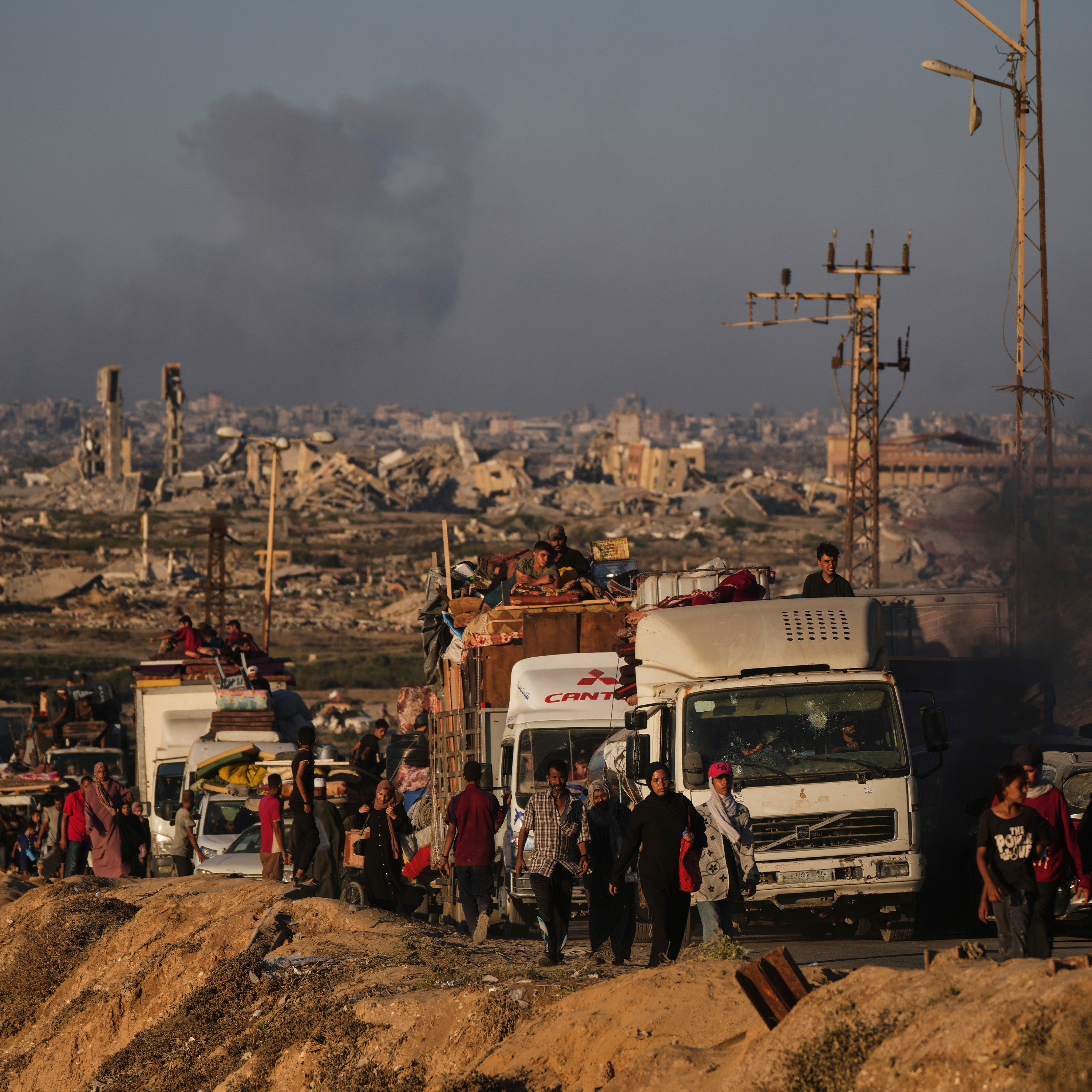
Front Burner
Can Trump’s peace plan help end the war in Gaza?
00:26:25
<p>Indirect talks between Hamas and Israel in Egypt are underway, with the goal of reaching an agreement on the first phase of U.S. President Donald Trump’s Gaza proposed peace plan. It would see the release of all remaining Israeli hostages by Hamas and potentially, over a thousand Palestinians detained by Israel as well as<em> </em>a ceasefire. The overall plan aims to end the war altogether.</p><p><br></p><p>But after previous hostage exchanges and ceasefires have failed to bring a permanent end to the war, what’s different this time? Are they any closer to peace?</p><p><br></p><p>William Christou, a freelance journalist working for The Guardian currently in Jerusalem, joins Jayme Poisson</p><p>to parse through Trump’s plan, the talks so far and how people in Israel and Gaza are reacting to it all.</p><p><br></p><p>We'd love to hear from you! Complete our <a href="https://insightscanada.qualtrics.com/jfe/form/SV_bfIcbmcQYPwjUrk?Podcast=Front%20Burner&Prize=Yes...
Loading summary
Transcript63 lines
- [00:00]
Madupa Akinola
Hi, I'm Madupa Akinola from TED Business, and I'm here to talk about the Financial Times. Every day the world bombards you with endless headlines and noise. What matters most? Facts and context. That's where the Financial Times comes in. With clarity, depth, and truly independent reporting, the FT helps you cut through the noise and see what's real and why it matters. Stay informed with the trusted source leaders around the world rely on. Visit FT.comSourceFT to read more and save 40% on a digital FT subscription.
- [00:42]
Jamie Poisson
This is a CBC podcast hey everybody, it's Jamie. I just wanted to take a moment to shout out some of the people who have been writing in with their thoughts about the show. We got some really great notes about an episode back in August about the shifting nature of Canadian summers and climate change and wildfires in particular, what that means for young families. Thanks so much to Chloe and Julie for letting us know how much you appreciated it. And you can let us know what you think about the show anytime at FrontBurnerCBC CA. Tell us what you like, disliked and what kind of episodes you want more of. And make sure that you're following us on your podcasting app of choice. It's the best way to make sure you catch every episode. Okay, here is today's episode. Hamas and Israel enter their second day of indirect talks today with the goal of reaching an agreement on the first phase of Donald Trump's Gaza peace plan. It would see the release of all remaining Israeli hostages by Hamas and potentially over a thousand Palestinians detained by Israel, as well as a ceasefire. The overall plan aims to end the war altogether. Today marks two years since Hamas led an attack on Israel, killing around 1200 people and taking 251 hostages back to Gaza. That set off Israel's retaliatory military campaign in Gaza, killing over 67,000 people, according to Palestinian health authorities. A growing number of experts and organizations have called it a genocide, and after previous hostage exchanges and ceasefires have failed to bring a permanent end to the war, what's different this time around? Are they any closer to peace? To parse through Trump's plan, the talk so far, and how people in Israel and Gaza are feeling, I am joined today by William Christou, a freelance journalist working for the Guardian currently in Jerusalem. Just to timestamp this in case there are any developments, we spoke to him at around 2pm Eastern on Monday, which is 9pm in Egypt, where the talks are taking place. William hey, thank you so much for making the time.
- [02:58]
William Christou
Thanks for having me.
- [02:59]
Jamie Poisson
So there Continues to be a number of protests calling for the return of the hostages and an end to the war in Israel. Recently you've been in Jerusalem. What have people been telling you there, especially as it was nearing the two year mark since October 7th.
- [03:14]
William Christou
Yeah, the majority of people in Israel want this war to be over and then they've wanted it to be over for a while now. Polling shows that. And also when you just walk down the street, that's the sentiment you get. Saturday night there is a rally at the Hostage Square in Tel Aviv to mark the two year anniversary of the war and also to push the Netanyahu government to be serious about this round of negotiations that are happening in each.
- [03:43]
Hostage Square Protester
When we heard the news from President Trump on Friday evening, we were very emotional and excited about the potential upcoming release of all of our brothers and sisters from captivity in Gaza. So we've decided to join our forces, come to Hostages Square and gather and pray for that moment to finally come after so, so many days of captivity.
- [04:08]
William Christou
And I was talking to people there and every single person I spoke to said that hostages should have been, should have come home a long time ago, but that they're hoping that this current round of negotiations and this peace plan will be the one that brings them back.
- [04:24]
Jamie Poisson
How are people in Israel, or the people that you're talking to in Israel feeling about Netanyahu in particular right now and what a potential deal could mean for his coalition government?
- [04:34]
William Christou
Yeah, there's a lot of negativity around Netanyahu within Israel.
- [04:38]
Anonymous Interviewee
It's a shame. You know, we have a prime minister that I shame of him. He don't want, he doesn't want to bring our son back home.
- [04:48]
William Christou
He's seen, he's a very divisive figure. And it's particularly negative when it comes to the crowd that wants the war to end. They see Netanyahu as having placed his own interests above the interests of the country. They accuse him of elongating the war in order to avoid the corruption trial that he faces and also to hold together his pretty fragile coalition of far right wing ministers.
- [05:12]
Jamie Poisson
And this deal, this potential deal, what could it mean for that coalition?
- [05:17]
William Christou
It's hard to say. I think what has become abundantly clear is that the person that holds the power in the room right now is not Netanyahu, but Trump. And even his far right wing partners like the firebrand Ben GVIR and Smotrich, the finance minister, have respected that so far. You know, Ben GVIR and Smartrich in the past have threatened to quit the government if there's any prospect of a ceasefire this time around. They said we will quit the government if Hamas remains after the hostages are released, which means they're indulging at least ceasefire negotiations that are happening. And they're waiting and seeing.
- [05:58]
Jamie Poisson
I want to come back to this with you, but first, leading up to these talks that started Monday evening in Egypt, people in Gaza are still facing a lot of the same conditions they have for a long, long time now. Airstrikes, attacks on aid seekers, hunger. And they've seen so many of these talks fall through now. And the humanitarian crisis has deepened significantly with famine setting in in recent months. Do you have any sense of how people there are feeling about this potential deal?
- [06:27]
William Christou
I think there's cautious optimism. We remain steadfast until now, and we wish that Hamas's acceptance will stop Palestinian bleeding. They're not under any false delusions. They know that this could collapse. They've been here before, like you said. There's been promises from Trump before that a deal was days away only for talks to collapse. But this time feels different. We slept well last night on the good news here in the north, we have suffered relentless bombardment and starvation. We were all happy to hear the positive response. It seems like this has a real chance of achieving an end to the war, and they're desperately, desperately hoping that that is the case. Because over the past two years, everyone in Gaza has not only lost someone, but many people have lost dozens of members of their family. Everyone, almost everyone, has been displaced multiple times and the Gaza Strip has been reduced to ruin. And so, you know, regardless of politics, people just want to be able to breathe and they want a little break in this war.
- [07:51]
Jamie Poisson
Can you take me through why people are saying that this is the closest that we've gotten to a deal that could end the war in Gaza? Like, what is it about this 20 point peace plan that the Trump administration has put forward?
- [08:07]
William Christou
Essentially, because it gives very little room for the Israelis to sort of wriggle out of negotiations. And there's been many points where the Israelis have pinned the blame on Hamas for a collapse in ceasefire talks, and then the war continued. But this time around, the plan that was given by Trump is widely seen as deeply unfavorable to Hamas. You know, the group has to give up any governing role in the Strip. They're disarming, they give up all of the hostages, which is their main source of leverage going forward. But despite that, they've conditionally agreed to it. So now, you know, the Israelis cannot say that they don't want to enter into negotiations. And so that with the enthusiasm of President US President Donald Trump has really made a lot of people feel in Gaza and in Israel, like that this time feels more possible than any time in the past.
- [09:04]
Jamie Poisson
Right. I know they've conditionally agreed to these three points, right? The requirement that they release all the remaining hostages, both dead and alive. They said that they would need to discuss the rest alongside other Palestinian parties, as well as a collective national stance. But just why are they agreeing to this now, you think?
- [09:24]
William Christou
Yeah, and I think that's an important point, right, because they agreed to three points out of 20, which usually, you know, if that was a test, that would be a failing grade. Usually people would see that as a rejection. But I think they did it in a very smart, sort of Trumpian way. They thought about the way that Trump thinks, and they knew that for Trump, the big shiny thing is the release of the hostages. So they put that up front. And for Trump, that was enough to say that that peace could be possible and that Israel should stop firing in the Gaza Strip. So I think the fact that Hamas agreed to release all the hostages has made Trump say, okay, we can figure out the details later. And if you look at the way that negotiations are happening, the first phase is figuring out that release of hostages before all the other details.
- [10:12]
Jamie Poisson
And just why do you think they agreed to release the hostages? You know, you just mentioned that this is their one big piece of leverage. Why do that now?
- [10:21]
William Christou
I think it's two things. The first is that they've been really pushed. This, this proposal really pushed them into a corner because it came after mediation with a bunch of Arab and Muslim leaders across the world. It was welcomed by pretty much everyone, including Qatar, in Egypt, who's mediating peace talks. So if they rejected the plan, they knew that negotiations would not come till much later date. And who knew, you know, who knows who would still be around at that point? And also it comes as Israel's launching its offensive on Gaza City, which the group desperately doesn't want to happen. And almost immediately when they accepted it, Israel announced, under pressure from Trump, that they'd be suspending it.
- [11:08]
Jamie Poisson
Is there a sense of how much time Hamas will be given to follow through on what they've agreed to?
- [11:14]
William Christou
So the deal says they have 72 hours to give back all the hostages. They've already said that that's probably not going to be possible because there's hostages buried under rubble. The Gaza Strip is hard to move around. Some might be held by different factions. And Trump seems to be a bit lenient on that. But besides that, it seems like the talks will progress in such a way that it will become apparent in a few days whether or not it really has some motion if it's going to lead to peace. You know, Netanyahu said that he expects them to be over in a couple days. Trump said he wants the hostages to be released within a week. So I think if either side feels as if the negotiations aren't being taken seriously, they might withdraw their negotiators.
- [12:04]
Jamie Poisson
The plan demands that Hamas disarm and that they have no role in governments over Gaza, both things that they've objected to in the past. Do we have a sense right now of where they stand on those two fronts? Not really big sticking points.
- [12:22]
William Christou
Yeah, yeah. Not small things. And that's the thing about the way they responded. Right. They said, okay, we'll release all hostages, which is new. We'll surrender power to a Palestinian technocratic government. Which is not what Trump asked for. He asked for an international one, but he overlooked that. But then essentially the rest of their response on Friday has been the same as their points over the past two years. They didn't say yes to disarming. They didn't agree to the other points that they've objected to in the past. So it's not clear at all what it means when they say, well, you know, it seems like there's two different versions of reality right now that, that are going on for Hamas and their allies. You know, they haven't said yes to disarming, and it seems unclear whether or not they will actually agree to language that is full disarmament. But then on the Trump side, it seems like they're existing in a reality in which Hamas has agreed to the main points of the plan and everything else will come, including disarmament.
- [13:21]
Jamie Poisson
For Israel's part, the plan calls for them to, you know, withdraw troops from the Gaza Strip. And according to Hebrew language media and the Times of Israel, Netanyahu told a right wing group representing families of IDF soldiers that he will not agree to any other points in the plan until all the hostages are returned. But if all the Israeli hostages are released and returned by Hamas, what incentive is there for Israel to cooperate with the rest of the plan, including withdrawal of IDF troops from, from Gaza?
- [13:53]
William Christou
That's, that's a really good question. And I think that's the question that Hamas is going to be posing to Israeli negotiators, because you're right, the hostages are the leverage that Hamas has. You know, they, they've said in the run up to the Gaza City offensive, they said, you know, your hostages are there, you might not want to be bombing Gaza City. And that's what they're afraid of, is that if they turn over the hostages, there's nothing restraining Israel. What we know in terms of what's happening in the negotiations now is that there's an initial withdrawal line that Trump has, has drafted up and the Israelis have agreed to it. Hamas has not agreed to it yet. And that'll be step one, withdrawal. But still quite deep within Gaza. I mean, at Some points it's 6.5km deep into the territory. But I know there's a lot of distrust, you know, on the Hamas side that after they give up the hostages, that Israel will respect the withdrawal agreement. And that's exacerbated by the fact that quite publicly Netanyahu is saying, we won't leave.
- [15:07]
Jamie Poisson
What kind of person takes on the law? Can they ever really know what they're getting into?
- [15:11]
William Christou
A really tough looking guy came up.
- [15:14]
Anonymous Interviewee
To us and said, are you part of this gay case?
- [15:16]
William Christou
My family started getting death threats. I wasn't able to go outside alone anymore.
- [15:22]
Jamie Poisson
I'm Faelan Johnson, host of See youe.
- [15:24]
Faelan Johnson
In Court, a new podcast about the.
- [15:26]
Jamie Poisson
Cases that changed Canada and the ordinary people who made history. This is David and Goliath. We have here find and follow See you in court, wherever you get your podcasts. What do you think Trump's gonna do here? Like, there's been reporting that Trump's patience with this conflict has continued to wear thin and that he has strong armed Netanyahu into reentering ceasefire talks. And what have you heard about how that's played out? What do you think we can expect from the Americans moving forward here?
- [15:59]
William Christou
There's been a few times where we've been reminded that Trump is the only person that can control Netanyahu. The first was when he immediately entered office and sent Wyckoff to Israel to force a ceasefire.
- [16:11]
CBC Announcer
Rebuilding Gaza is meant to be phase three of this tenuous ceasefire. And the new US Administration's envoy, Steve Witkoff, came to ensure both sides get that far. He met with Israeli Prime Minister Benjamin Netanyahu, and in a rare move for a US Official, he visited Gaza, including the strategic Netzerim Corridor, where half a million people have passed through on their way north this week.
- [16:35]
William Christou
And that was in January. And reportedly, you know, when Wyckoff told the Israeli counterparts that he was coming to Israel, they said, oh, but Shabbat. And he said, I don't give A fuck about Shabbat. And then the ceasefire happened. And we're seeing now that Trump is again forcing it, because apparently, reportedly Netanyahu's reaction to the Hamas partial acceptance of the deal was, this is a rejection. And then after a call with Trump, who told him plainly, you have to get on board, he changed his tone.
- [17:07]
Jamie Poisson
What do you think Trump's intentions are with this plan? Is it as plain as his pursuit of a Nobel Peace Prize, which an Israeli advocacy group nominated him for? A group representing some of the families of the hostages? He has previously proposed turning the Gaza Strip into a US owned resort filled Riviera?
- [17:27]
Anonymous Interviewee
We have an opportunity to do something that could be phenomenal. And I don't want to be cute, I don't want to be a wise guy, but the Riviera of the Middle east, this could be something that could be so bad, this could be so magnificent.
- [17:41]
Jamie Poisson
But does this current plan mean that he no longer wants that?
- [17:45]
William Christou
It's a good question to try to understand Trump's mind, but I think, you know, he's all about the big victories, he's all about the deals. And we've seen throughout his second term, he's very big into mediating deals. You know, he claimed credit for the India Pakistan ceasefire, which apparently pissed off the Indian Prime Minister. Modi.
- [18:07]
Anonymous Interviewee
On Saturday, my administration helped broker a full and immediate cease fire, I think a permanent one, between India and Pakistan, ending a dangerous conflict of two nations with lots of nuclear weapons.
- [18:21]
William Christou
He's just claimed credit for some peace accord between Armenia and Azerbaijan.
- [18:27]
Anonymous Interviewee
It's a long time. 35 years they fought and now they're friends. And they're going to be friends for a long time. But it's a big, beautiful honor to welcome everyone to the White House for this very historic peace summit between Armenia and Azerbaijan. It's really a great thrill for me. I love seeing good people get together. And that's what you have. You have two great leaders.
- [18:57]
William Christou
He really likes making those deals. And I think the biggest, one of the biggest deals he could make besides Ukraine, is peace in Gaza. And if you look at the way that he is affirming it, you know, he said, we haven't had peace like this in 3,000 years, which isn't true, but it's like, very typical Trump.
- [19:17]
Jamie Poisson
And also, there's no. There's no peace yet. Yeah, there's no peace.
- [19:20]
William Christou
There's no peace. And also, this isn't a peace plan. They call it a peace plan, but, you know, Palestinians in Gaza who are desperate just for the Bombing to stop. You know, they say we want this because it's an end to the fighting and whatever it takes, we want an end to the fighting. But they're not, you know, they're not unaware that this is not a path to self determination or that they think this will guarantee long term safety. No, they just think this will stop the bombing. So I don't think there's any delusions about that. You know, I think this is a remarkably vague plan, it's 20 points long to end an incredibly complex two year long conflict. And so it seems like it's something that Trump is just trying to ram through. And you can see the way that they're approaching the negotiations. You know, he saw the words release the hostages in the response and immediately accidentally tweeted the text of the Hamas response. So I think there's a lot of excitement on ending this war from the Trump administration. But now, once you enter into negotiations again, they're going to be hit with the reality of how difficult it is to bridge these gaps that still very much exist.
- [20:29]
Jamie Poisson
Right. I heard, you know, one kind of take on it that Hamas answered with yes, but. And Trump only heard the yes. Before we go, I want to talk a little bit more about, you know, parts of the plan that we haven't spent a lot of time on yet, which is essentially the, the rebuilding process. Right. And how that could work. A handful of Western nations, including Canada, recently joined a growing call to recognize a Palestinian state.
- [21:12]
William Christou
And we offer, we offer our full partnership in building the promise of a peaceful future for both the State of Palestine and the State of Israel.
- [21:23]
Jamie Poisson
Egyptian President Abdel Fattah El Sisi reiterated on Monday that lasting peace in the Middle east will not be reached unless a Palestinian state is created based on the principles of international legitimacy. What do the talks so far tell us about whether we are any closer to this happening and whether any of the international recognitions from the past month.
- [21:43]
William Christou
Have moved the needle at all towards the Palestinian state?
- [21:47]
Jamie Poisson
Yes.
- [21:50]
William Christou
I think at this point it's purely symbolic. There's some irony around recognizing a Palestinian state while part of it is getting erased. And what's being carried out, according to many human rights bodies in the UN Commission of Inquiry, is genocide in the Palestinian territory. And I think, you know, a lot of Palestinians we spoke to, when they reacted, when they saw that news, the way they reacted was sort of, this is a bit a little too late. With that being said, the deal or the Trump plan contains very vague language. It kind of has a token gesture lip service to a pathway to Palestinian statehood sometime in the future. Sort of vague, wishy washy language. And I think that's to sort of appease some of the Arab world and Palestinians. So at least it's mentioned. But also make it vague enough and weak enough that it wouldn't push the right wing members of Netanyahu's coalition to quit the government. So it's a very weak middle ground and not a route to self determination by any means. And the fact that they're bringing in what Trump's calling what the Trump Peace Board headed potentially by Trump and Tony Blair, you know, that doesn't sound like traditional notions of sovereignty.
- [23:12]
Jamie Poisson
Yes. And also not something that Hamas has agreed to either. Right. I believe they've agreed to give up power to a technocratic Palestinian committee, but they have not agreed to this board of peace headed by Donald Trump and Blair. The announcement that Tony Blair would be part of this board immediately raised, you know, all sorts of consternation. And just tell me a little bit briefly about why that would.
- [23:40]
William Christou
Yeah, I think, you know, the inclusion of Tony Blair and the Trump Peace Board in general, I think has really raised some alarms because it's part of Trump's almost like glib approach to the Gaza Strip. I mean, you remember in February he promised a Gaza Riviera where currently there's rubble, ruin and dead bodies in Gaza. And he did so by sharing and weird AI video which featured bearded belly dancers. And then later we found them reporting that the Tony Blair Institute was working with consultants like the Boston consultants to draft up a plan to potentially displace the Palestinians from the Gaza Strip and turn the Strip into some glitzy sort of Riviera scenario. And while the words Gaza Riviera don't appear in the Trump plan, there seems to be a nod to that and also sort of a troubling raise troubling questions about why he would pick someone like Tony Blair, who seems to have very little qualification to run somewhere like Gaza without asking the Palestinian people.
- [24:45]
Jamie Poisson
Final question and just something I wanted to touch on with you before we go. On Monday, Israel deported around 171of the activists that were trying to sail to Gaza with aid and medical supplies as part of the Summa Flotilla. Swedish Climate Activ. Greta Thunberg was one of them. Some of them have been speaking out about alleged abuse that they faced while in Israeli custody. And what have we been hearing from them?
- [25:12]
William Christou
Yeah, so what activists said, and the Guardian actually reported on some of this was that they were kept in pretty poor conditions. Greta Thunberg, in particular, you know, it was said that she was staying in a cell with bedbugs, that she was forced to pose and take pictures with an Israeli flag. And other members of the flotilla said that she was beaten upon her arrest.
- [25:37]
Faelan Johnson
It is a shame. And I could talk for a very, very long time about our mistreatment and abuses in our imprisonment, trust me, but that is not the story. What happened here was that Israel, while continuing to worsen and escalate their genocide and mass destruction with genocidal intent, attempting to erase an entire population, an entire nation, in front of our very eyes, they once again violated international law by preventing humanitarian aid from getting into Gaza while people are being starved.
- [26:18]
William Christou
And the Israelis deny all this. But within Israel itself, there's been some. Some gloating over the arrest of these flotilla activists. You know, Ben GVIR visited them as they were held on the ground in detainment and called them terrorists and yelled at them, and then he tore it in a video. The. The cell, the, The. The prison that they were taken to, which is meant typically for what Israel deems terrorists, not for activists who were engaging in nonviolent resistance. And so, you know, it seems like so far, based on the claims, which Israel denies, but based on the claims, it goes against the agreement that Israel gave to countries like Italy that they wouldn't mistreat activists that they arrested.
- [27:05]
Jamie Poisson
William, thank you so much for this.
- [27:08]
William Christou
For sure. Thanks for having me on.
- [27:17]
Jamie Poisson
All right, that is all for today. I'm Jamie Poisson. Thanks so much for listening. Talk to you tomorrow.
- [27:33]
CBC Announcer
For more CBC Podcasts, go to CBC CA Podcasts.