← Front Burner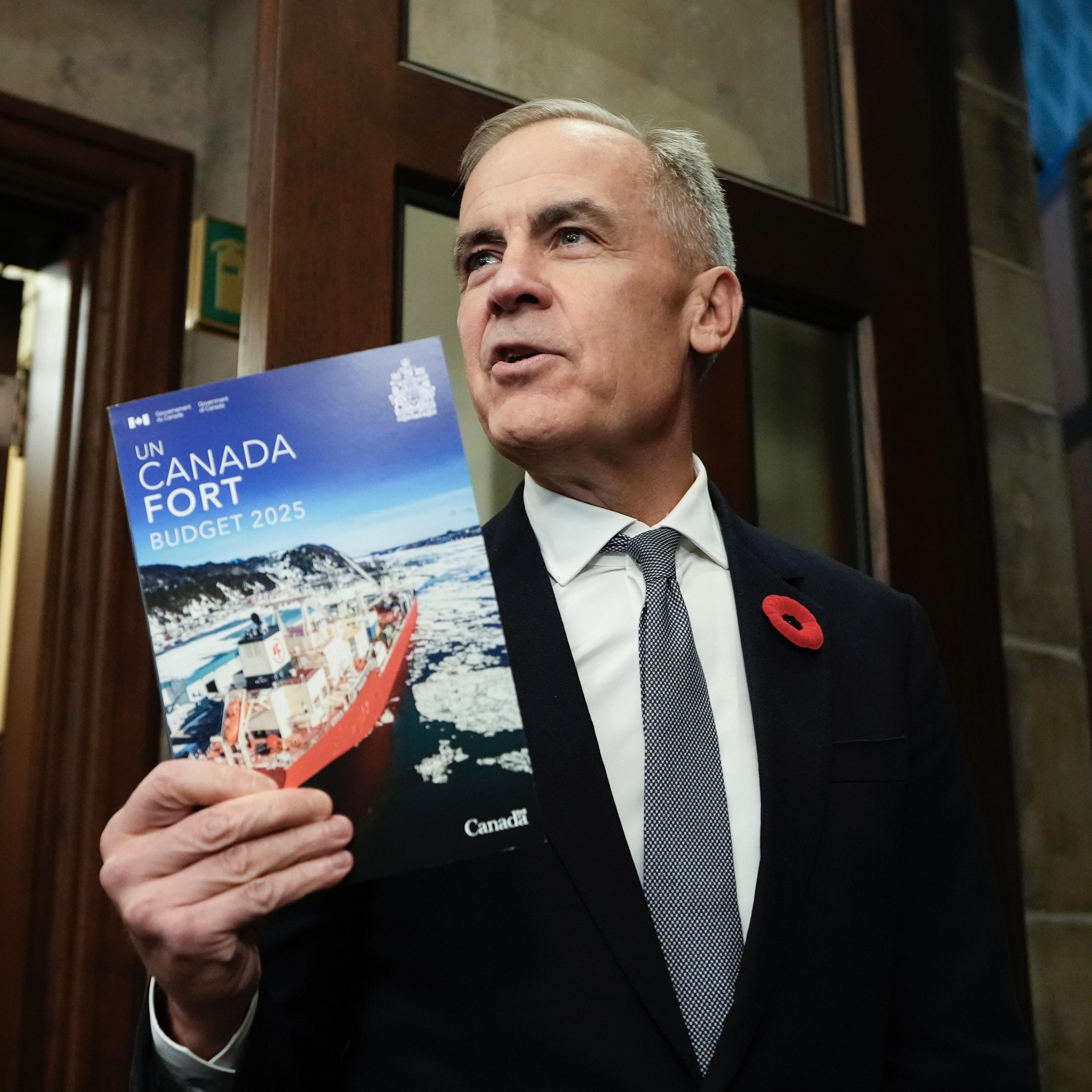
Front Burner
Carney’s budget: generational or generic?
00:26:40
<p>Prime Minister Mark Carney and the Liberal government have unveiled a budget that calls for $141-billion of new spending in the next five years to prop up an economy grappling with major economic disruptions. It also proposes $51.2-billion in cuts and savings, including the slashing of tens of thousands of public service jobs.</p><p><br></p><p>From billions of investment in infrastructure and defence, to new details about the government’s climate and immigration targets, we’ll break it all down with Aaron Wherry and David Coletto.</p><p><br></p><p>Aaron is a senior writer with CBC’s parliamentary bureau, and David is the CEO and founder of Abacus Data.</p><p><br></p><p>For transcripts of Front Burner, please visit: <a href="https://www.cbc.ca/radio/frontburner/transcripts" rel="noopener noreferrer" target="_blank">https://www.cbc.ca/radio/frontburner/transcripts</a></p>
Loading summary
Transcript77 lines
- [00:00]
Aviva Software Announcer
If you're listening to this, you're ready. Ready to join the industrial intelligence generation. A generation defined not by age, but by a shared mindset to connect teams, accelerate efficiency and drive innovation. Using the power of Aviva software to reshape industries, turning real time insights into real world growth. Discover our stories@industrialintelligence.com Join Generation I.
- [00:31]
CBC Podcast Announcer
This is a CBC podcast.
- [00:39]
Parliament Speaker / Politician
To weather the storm of uncertainty. We will not lower ourselves, Mr. Speaker. Quite the opposite. We will raise them to catch the winds of economic change.
- [00:58]
Jamie (Host)
Hey, everybody, it's Jamie. And I'm here at with my colleague Erin Wary, who has been in lockup all day looking at Mark Carney's first and very much anticipated budget. Hi, Erin. Welcome out of lockup. Thank you for being here.
- [01:11]
Erin Wary (Colleague / Analyst)
Hey, Jamie. It's good to be free.
- [01:13]
Jamie (Host)
I am also here with David Coletto, head of Abacus Data, who's going to help us unpack all of this as well. David, good evening to you.
- [01:20]
David Coletto (Head of Abacus Data)
Good to see you all. And I was not locked up, so I felt free all day.
- [01:25]
Jamie (Host)
Me neither. It was. It was good. Sorry, Aaron. Okay, there's a lot to go through here, not the least of which is a Conservative MP who has resigned from caucus and crossed the floor to the Liberals. So let's get straight into the convo. I know that you two really want to talk about capital investments, but I actually just want to take a minute here and talk about what really jumped out to me, which is what seemed like a commitment from this government to help Canada join Eurovision. And. And David, is this a naked attempt to get public opinion on side here?
- [02:01]
David Coletto (Head of Abacus Data)
Well, look, I think it's a. At least a naked attempt to get us talking about something. And you just proved its effectiveness. There's one thing that Canadians might remember from this budget is that let's. Let's not talk about $78 billion deficit. Let's talk about Eurovision. I know sometimes a political strategy that works.
- [02:21]
Jamie (Host)
I did it. They were like, hey, look over here. And I looked, I guess is the lesson here. Aaron, I know that you are a guy who loves nuance and complexity, so let me give you this completely reductive question right off the top. If you could write a headline for this budget, what would it be?
- [02:45]
Erin Wary (Colleague / Analyst)
I mean, I guess I'll go with the headline that I put on the piece I just wrote, which I think is, are Canadians going to get behind Mark Carney's Generational budget? There's a lot in this budget, and I don't know that it's going to please everyone. And I think it's also sort of the first time we've really seen Mark Carney have to make a bunch of choices and decisions and lay down what his agenda is. And I'm interested to see how Canadians respond to it.
- [03:13]
Jamie (Host)
Well, let's go through some of what was in the budget. Do you want to start with the deficit number and work backwards from there?
- [03:19]
Erin Wary (Colleague / Analyst)
Sure.
- [03:20]
Jamie (Host)
Okay. 78% billion for the 25, 26 fiscal year. We were primed for, for this. It is what we were expecting. Some people anticipated it might have been closer to 100 billion. That is a very large number, 78 billion. Do you want to put a little more context around that?
- [03:39]
Erin Wary (Colleague / Analyst)
Yeah, it's so look, it's, it's bigger than the federal government projected last December when, as you may remember, Christian Freeland presented or sort of presented the fall economic statement, resigned. I gu on the way to doing so. And it's bigger than the deficit that the Carney Liberals projected in the spring when they laid out their election platform. You know, it sort of comes down to how you look at it, I guess, in a way because as you say, there was a lot of projections that said, oh, you know, this deficit could be 90 billion, it could be 100 billion. So I confess, when I came in, went into the lockup and saw it was, it was 78, I thought, oh, well, that's not that much. So, you know, it's sort of a bit of expectation management. It's big and it's, you know, going to be the focus of conservative attacks. But it's maybe not quite as big as some people thought it was maybe going to be.
- [04:34]
Jamie (Host)
And I'll just stick with you for a little bit longer and then we'll circle back with David. Just because you were in the lockup, like, just give me some of the highlights here. When we talk about how the deficit is being used, what are the biggest line items? What is the government spending the most money on?
- [04:52]
Erin Wary (Colleague / Analyst)
Yeah, so the single biggest line Item is about $57 billion to. I think it's rearm reinvest in the Canadian armed forces. So this is the big defense spending push that we were told was coming that lots of people said we needed to do. Now you're sort of seeing what it looks like in hard numbers. The second biggest single line item is actually the middle class income tax cut that they implemented in June. It's about $27 billion. Then there's a bunch of, you know, kind of the bigger pieces of this, you know, broader Carney agenda. That's around building and getting infrastructure and housing built. You know, there's 20 billion for investments in infrastructure. There is 12 billion for, you know, protecting and sort of reorienting strategic sectors like agriculture and the auto sector. And then there's 7 billion for build Canada Homes, which is the agency that's going to be focused on expanding the supply of affordable housing. So there's lots in this budget, actually. There's a ton of stuff that people are going to be going over for days and probably weeks. But those are sort of the biggest items that kind of go into how you get to a $78 billion deficit.
- [06:07]
Jamie (Host)
I think they're saying all in. It's 141 billion in new spending over the next five years, and that that will be partially offset by 51.2 billion in cuts. Eventually, the deficit's supposed to come down right, to 57 billion. 29, 30. When it comes to cuts, what is being cut?
- [06:29]
Erin Wary (Colleague / Analyst)
Yeah, it's a big cut. It's. It's an interesting budget in the sense that, you know, Mark Carney's going to, on the one hand, have to defend a bigger deficit, and on the other hand, he's going to be, I think, fighting a lot of battles on what's getting cut. And it's unclear to a certain extent what those specific cuts are going to be. There are a few kind of headline items that they throw out. It was reported going into the budget that, you know, Justin Trudeau's $2 billion tree program is being abandoned. But a lot of the cuts are, you know, at the department level, and they're sort of cast in these kind of euphemistic phrases, you know, modernizing government operations, streamlining program delivery and recalibrating government programs. I think it's possible that some of the cuts in there will be relatively easy, but I think a lot of them, you know, when someone finds out they're not getting their funding or the program that they had signed up for suddenly disappears, you're going to hear about that. And I think that's going to lead to, you know, the government having to defend a lot of choices here.
- [07:37]
Jamie (Host)
Yeah. And just to be clear, you know, certainly there's no indication right now that some of these big social programs that people do really like will be cut. Dental care, pharmacare, $10 day child care, the Canada child benefit, that kind of stuff.
- [07:54]
Erin Wary (Colleague / Analyst)
Yeah, the government was very specific about kind of drawing a fence around those big programs, around transfers to individuals, around transfers to provinces. And so it's really out of departmental Budgets for, like, you know, grants and contributions and things like that that I think everyone is looking at.
- [08:13]
Jamie (Host)
Okay. And lots of jobs on the table. 40,000 public service jobs, right? 10%, yes.
- [08:20]
Erin Wary (Colleague / Analyst)
The idea, I think, is that it still is going to be largely based on sort of attrition and retirements, but it is going to be a fairly significant drop, I think they said about 10% drop in the size of the federal public.
- [08:46]
Jamie (Host)
I want to dig into a couple of more things here. We got more details on Cardi's climate competitiveness plan, and it looks like the oil and gas emissions cap will be scrapped. It certainly is being set up to be scrapped. And just, Aaron, tell me a little bit more about what's going on here.
- [09:03]
Erin Wary (Colleague / Analyst)
Yeah, I think this isn't entirely unexpected. You know, people could kind of see the writing on the wall for the emissions cap, the oil and gas emissions cap. There is a bit of a wrinkle here in that, you know, they're definitely dangling the possibility that they're willing to get rid of it, but it's contingent on the provinces and territories agreeing to, you know, both strengthen the industrial carbon price and sort of commit to it long term, you know, looking out to 2050 and, you know, getting to net zero by 2050. So it's. It's sort of a bargain I think they're making with the provinces and perhaps particularly with Alberta Premier Daniel Smith, which is, you know, look, we'll. We'll get rid of the cap, but, you know, we need a strong industrial carbon price that, you know, their argument is if we have a strong industrial carbon price in place, that will kind of ultimately do what a cop would have done anyway.
- [09:59]
Jamie (Host)
David, how do you think something like this might land?
- [10:04]
David Coletto (Head of Abacus Data)
This is not new. If you care deeply about the environment or climate change, I think the Carney government, from pretty much day one, is a signal that it is going to pull back the ambition of the Trudeau government and this budget moves it there. I think from a public opinion perspective, you know, climate change just continues to drop in terms of a salient issue relative to others. So only about 11% in our last survey put climate change in the environment in their top three issues. It's pretty close to the lowest it's been in a number of years, in large part because people are now worried about their job, and housing and health care remain top concern. So I don't suspect from a broad perspective that Carney government's going to expect much public pushback to this. But to Aaron's point earlier about specific stakeholders who might look at this budget and say, like, you know, where's, where's the Mark Carney we saw in that book you wrote a few years ago? Yeah, values. I think that that's a little bit of the risk.
- [11:03]
Jamie (Host)
Carney has also been talking about bringing immigration under control. And the new immigration plan cuts the annual target for temporary residents almost in half to 43%. Permanent residents come down a little bit, but not, not a ton. What do you think that this government is hoping to achieve with this reduction?
- [11:25]
David Coletto (Head of Abacus Data)
Well, I think it's a, they're entirely responding to public opinion on this. Again, while climate has fallen as the top issue, immigration has risen. And I think you've seen over the last two years almost a realignment in Canadian politics on immigration where the Liberals have moved to a more restrictive kind of position, starting with Trudeau and now continuing with Carney. And the Conservatives have kind of went even further. And I think this is, you know, in light of that could, could be argued as a more moderate version of what maybe the Conservatives would do who had, you know, just weeks ago, Poly have announced he would scrap the temporary foreign worker program entirely.
- [12:02]
Conservative Party Representative
Under this proposal, existing permits would be wound down until they entirely. The program is entirely eliminated. Canadian jobs will go to Canadian workers first. It's time that Mr. Carney.
- [12:13]
David Coletto (Head of Abacus Data)
So I think this is again an attempt to say we are listening, we're responding, we're trying to get the system to be in a place that people feel like is in control and still catching up on things like housing, healthcare and other kinds of services that Canadians say right now. High levels of immigration or the last number of years has really created some scarcity around Erin.
- [12:38]
Jamie (Host)
The other one that I wanted to dig into a little bit was the productivity super deduction, which was kind of like a headline in there, I guess, or it's a bunch of provisions designed to try to make this country a more business friendly environment, is how I read it. But I was in lockup. You were. So can you tell me a little bit more about what was announced around this and what the hope for these kind of moves is?
- [13:05]
Erin Wary (Colleague / Analyst)
Yeah, I think there's a, so there's a mix of things. Some of it is pre existing measures that the Trudeau government was going to implement and, and some is new. And it really is focused at this question of business investment, corporate investment and trying to solve that issue, which is longstanding and is now being exacerbated by the tariffs and trade issues with the United States. And so I think it, you know, it's trying to address, I guess, a few problems at the same time. And it, and it fits within sort of the larger, you know, agenda which is, you know, capital investment, building the Canadian economy up, you know, trying to stimulate economic growth and investment and that being sort of the primary focus of this government.
- [14:00]
Jamie (Host)
Lots of write off opportunities for sure. Capital investment write offs.
- [14:14]
Erin Wary (Colleague / Analyst)
Only.
- [14:14]
Parliament Speaker / Politician
Boost Mobile. Boost Mobile will give you a free year of service. Free year when you buy a new 5G phone. New 5G phone, enough.
- [14:20]
David Coletto (Head of Abacus Data)
But I'm your hype man. When you purchase an eligible device, you get $25 off every month for 12 months with credits totaling one year of free service, taxes extra for the device and service plan online only.
- [14:29]
CBC Podcast Announcer
The headlines never stop and it's harder than ever to tell what's real, what matters, and what's just noise. That's where Pod Save America comes in. I'm Tommy Vitor and every week I'm joined by fellow former Obama aides Jon Favreau, Jon Lovett and Dan Pfeiffer to break down the biggest stories, unpack what they mean for the future of our democracy, and add just enough humor to stay sane. Along the way, you'll also hear honest, in depth conversations with big voices in politics, media and culture like Rachel Maddow, Gavin Newsom and Mark Cuban that you won't find anywhere else. New episodes drop every Tuesday and Friday with deep dives every other weekend. Listen wherever you get your your podcast, watch on YouTube or subscribe on Apple Podcasts for ad free episodes.
- [15:05]
Jamie (Host)
Let's zoom out now. I feel like we've hit a lot of the big highlights, but I know that going into this budget there was a hope among many that it would help to answer some of the questions that people have been asking. Vis a vis, what is this government's plan, you know, what is it exactly that they're trying to execute here and what questions were answered for you today that we haven't yet discussed? Aaron, do you want to go first?
- [15:33]
Erin Wary (Colleague / Analyst)
I mean, I think it, it's, it's broadly a statement of where, you know, this government's priorities and principles are, you know, not to harp on the cuts. But I really do think the details of that are going to matter a lot. And I think it still sort of leaves some questions about, like, what more, you know, needs to be done going forward in terms of, you know, just sort of meeting this moment. You know, they use the word generational all over this budget and it was all over the prepared text of the finance minister's speech.
- [16:06]
Parliament Speaker / Politician
And we must use this fiscal power to make generational investment because we believe in Canada.
- [16:16]
Erin Wary (Colleague / Analyst)
I think that's an interesting rallying cry. I think it speaks to the moment. I think it tries to explain a lot of what they're doing. But I think, you know, I think ultimately, you know, one budget isn't going to respond to the kind of change we've seen in the world over the last 12 months. And so I'm interested to see where the debate goes now in terms of what more they need to do and perhaps, you know, do they need to make slightly different decisions in some areas.
- [16:46]
Jamie (Host)
Do you think that this budget comes close to the definition of a generational budget, or would you put it closer to a generic one? You know, I was just looking at Andrew Coyne's column in the Globe and Mail, and the headline was basically like, this is it. That's all you've got. I just like, how are you thinking about that?
- [17:11]
Erin Wary (Colleague / Analyst)
Yeah, I think it's interesting because. Because they had used these big words like transformational. I think there was an expectation that, you know, we were all going to go into lockup today and they were going to show us a budget. We were all going to be, like, blown away by the stuff they were doing. And I don't. So, you know, it doesn't quite live up to, like, oh, wow, I can't believe what I just read. But, you know, it does start to move some big pieces around, and it does start to make some big investments in things. And, you know, it does run a higher deficit and project higher deficits for the next, you know, higher than previously projected deficits over the next few years. You know, the thing about calling it generational is like, you kind of have to wait a generation to know whether it had that big of an impact. I think it's hard to judge it in this very moment how big the impact of this is going to be.
- [18:00]
Jamie (Host)
David, do you want to add anything there or.
- [18:03]
David Coletto (Head of Abacus Data)
I mean, I think. I think what I also hear in this budget and in some of the commentary I think, I think is around execution. And so there is a piece of me that wonders if this government is skeptical of its ability to actually implement what we would feel is a generational, transformational budget. Right. So in many ways, I think if you compare this budget to what the last three or four Trudeau budgets have been, it is, in a sense, generational in that it is tilting the government's focus away from fairness and equity and using government operational funding to level the playing field to one that is very much driven to wealth creation, prosperity, resilience, defense spending and the like. And so, you know, I think maybe this is as transformational, as transformational as they can be without, again, promising more than they can deliver.
- [18:55]
Erin Wary (Colleague / Analyst)
Right.
- [18:55]
David Coletto (Head of Abacus Data)
I wonder if they are being, you know, purposely muted in the ambition, in part because they're not convinced that they can do it all, all that they need to do in a short period of time. And. And so we'll see. But that's. That's one way to read this. Think about, like, the federal government is a massive organization that they are trying to shift its orientation away from filling in gaps to creating, you know, new. Basically building up instead of filling in.
- [19:26]
Erin Wary (Colleague / Analyst)
Holes just to jump in. Like, I think David put his finger on a really good and important issue there, which is that the previous government, the Trudeau government, you know, the knock on it was they were all announcement and no follow through. And I think the Carney government is. Is advertising itself as we are. The government that follows through on stuff. We're going to get stuff done fast, we're going to get stuff, you know, built, you know, speeds, you know, unimaginable. All those things that Mark Carney has said, you know, whatever dollar figure you want to put on it, I think that's sort of the stuff that's really going to matter now is are people going to see tangible signs of things being built and done more than what's the size of the deficit?
- [20:09]
Jamie (Host)
David, I know you're going to do a bunch of polling in the coming days. When you see this budget, what are you kind of most excited to ask people about?
- [20:17]
David Coletto (Head of Abacus Data)
Yeah, maybe it's more nerdy. But I like to know one thing. What do people, if anything, remember about the next few days? Because it's not just today. It will be, you know, tomorrow and the rest of the week as this filters out. So, you know, those most interested will pay attention today and then it's going to kind of spill over. Similarly, it's like the dinner table test. Like, what, are people only talking about Eurovision or are they talking about the deficit? Is this transformational? Is this, you know, big spending? So, you know, I remember in the 2021 budget, the government was very good at making it about childcare. Like when you asked Canadians, what is that budget about? Childcare was what people repeated. And so this is a really complex budget. There's a ton of stuff in it. So I'm not sure what people are left with. But I think one of the things I'm watching for is we've seen in our Research, and we've talked about it, you know, in the lead up to the election and then on election night, the divide in the country between, you know, those who kind of have something versus those who have nothing to lose. And I think this is a budget that speaks to a part of the country that has something to lose and wants protection. And I think there's going to be a subset of the country, many of those listening right now, Jamie, who are wondering like, this seems like it's going to take forever and I need help today. And so it meets maybe the moment in terms of the urgency of reorienting Canada's economy to the new world Order, but maybe not the urgency that people are feeling in their day to day lives with both their immediate job prospects, paying the rent, paying for food and all the other things that they tell us in our surveys are still top of mind.
- [22:14]
Jamie (Host)
I, I do want to get the reactions from the opposition parties here, but oh my God, we have got to talk about the former Conservative MP Chris Donchemont announced that he was no longer with the Conservative caucus and he's crossed the floor to the Liberals, which is really stunning.
- [22:34]
Conservative Critic
So you know, he'll have to go back to the, the, the supporters in his writing that dug deep into their own pockets to support his campaign explain why he took their, their precious time and resources and then turned their back on them just a few months later.
- [22:47]
Erin Wary (Colleague / Analyst)
Might it be that he doesn't think.
- [22:49]
Jamie (Host)
Your party's solutions are the correct ones?
- [22:51]
Conservative Critic
You know, he ran on them in the platform. He saw our platform.
- [22:54]
Jamie (Host)
Aaron, do you know any more about what happened here? Are there more that might be coming?
- [23:01]
Erin Wary (Colleague / Analyst)
Yeah, I think that's sort of the million dollar question at the moment. I mean, so what we know really is the statements that have come out, which is that he, you know, went to the Conservative leader and said he wanted to leave the caucus and was, was going to go sit as a liberal. There was a report in Politico actually just about a half hour before the budget was presented that said he was considering it. And I would dare say that once you are publicly considering crossing the floor, you're kind of obligated to do it. And uh, so I think, you know, there have been. This city, this town has been wild with rumors of potential floor crossings for the past week or so. And then it seemed to have died down and now it's actually happened. So there's some, you know, very simple House of Commons math. The Liberals are three, were three seats short of majority in the House of Commons. They're now two seats short.
- [23:57]
Jamie (Host)
Yeah.
- [23:58]
Erin Wary (Colleague / Analyst)
And so the question becomes, you know, okay, is this the first. Are we going to start seeing more of these and can the Liberals kind of get over that majority threshold? And then, you know, the other question is for Pierre Poliev about his leadership and about whether there is, you know, some degree of unhappiness about where he's taking the party.
- [24:18]
Jamie (Host)
Yeah. Oh, it's going to be really interesting the next couple of days in terms of where the parties are right now. Jump in. Correct me if I heard any of this wrong, but here's what I heard today. Elizabeth May, no way she is supporting this budget as is.
- [24:34]
Green Party Representative
There's no way that we can as Greens vote yes on this budget. But I want to emphasize there are several days in which this budget can be negotiated and amended before it goes to a vote. And that's something that doesn't get discussed much. I am surprised that Mr. Carney has not reached out or that more of his ministers haven't reached out to say what would it take to get.
- [24:59]
Jamie (Host)
I imagine it's largely because of the, the oil and gas emissions caps, the block they're meeting tonight, but they don't see how they can support it.
- [25:07]
Conservative Party Representative
I hardly see how, after having met with our caucus tonight, we could vote in favor of this budget because the.
- [25:18]
Jamie (Host)
Liberals didn't meet enough of their demands. The Conservatives also seem like they're giving a hard no. Conservative leader Pierre Poliev posted. Mark Cardi and the Liberals call this progress. We call it what it is. Decline.
- [25:32]
Conservative Party Representative
And on behalf, behalf of all the Canadians who can no longer afford to eat heat or house themselves because of Liberal inflation, we Conservatives cannot support this costly Liberal budget.
- [25:45]
Jamie (Host)
And the NDP said that they're going to read it and take a look. And as we talked about on Monday with Rosie, it's really unclear what the NDP might do here and whether or not they'll even vote as a, as a block.
- [25:58]
Conservative Party Representative
I can tell you that New Democrats are going to take the time to study this budget. We're going to consult with stakeholders, we're going to talk to Canadians, particularly working Canadians, and review this budget to see if this budget passes our lens of whether it works for working Canadians.
- [26:14]
Jamie (Host)
Do you think that's a pretty fair read on that situation, Aaron?
- [26:18]
Erin Wary (Colleague / Analyst)
Yeah, I think that's where we're at. You know, the Conservatives had already sort of staked out their position actually, you know, kind of connected to the point David was making a moment ago about, you know, young people and saying this is a budget that wasn't going to do enough for young people and was going to ask them to make sacrifices. I think it was always a very big long shot that they were going to support this budget. I think it really does come down to those NDP mps and whether maybe some of them vote for it, maybe some of them vote against, maybe some of them abstain. With this floor crossing, the math at least got just a slightly bit easier for the Liberals.
- [27:00]
Jamie (Host)
And they have until what? To figure this out and to vote on this budget, there has to be.
- [27:06]
Erin Wary (Colleague / Analyst)
Four days of debate on the budget policy of the government and then there would be a vote. But the MPs are actually off next week for Remembrance Day, so you're looking at probably November 17, November 18, for sort of the exciting vote whether or not the House would approve the government government's budgetary policy.
- [27:26]
Jamie (Host)
Okay, guys, this is great. It's always good to have you. Thank you.
- [27:31]
Erin Wary (Colleague / Analyst)
Thank you.
- [27:32]
David Coletto (Head of Abacus Data)
Thanks, Jane.
- [27:42]
Jamie (Host)
All right, that is all for Budget Day. Thanks, everybody. We'll talk to you tomorrow.
- [27:57]
CBC Podcast Announcer
For more CBC Podcasts, go to CBC CA Podcasts.