← Front Burner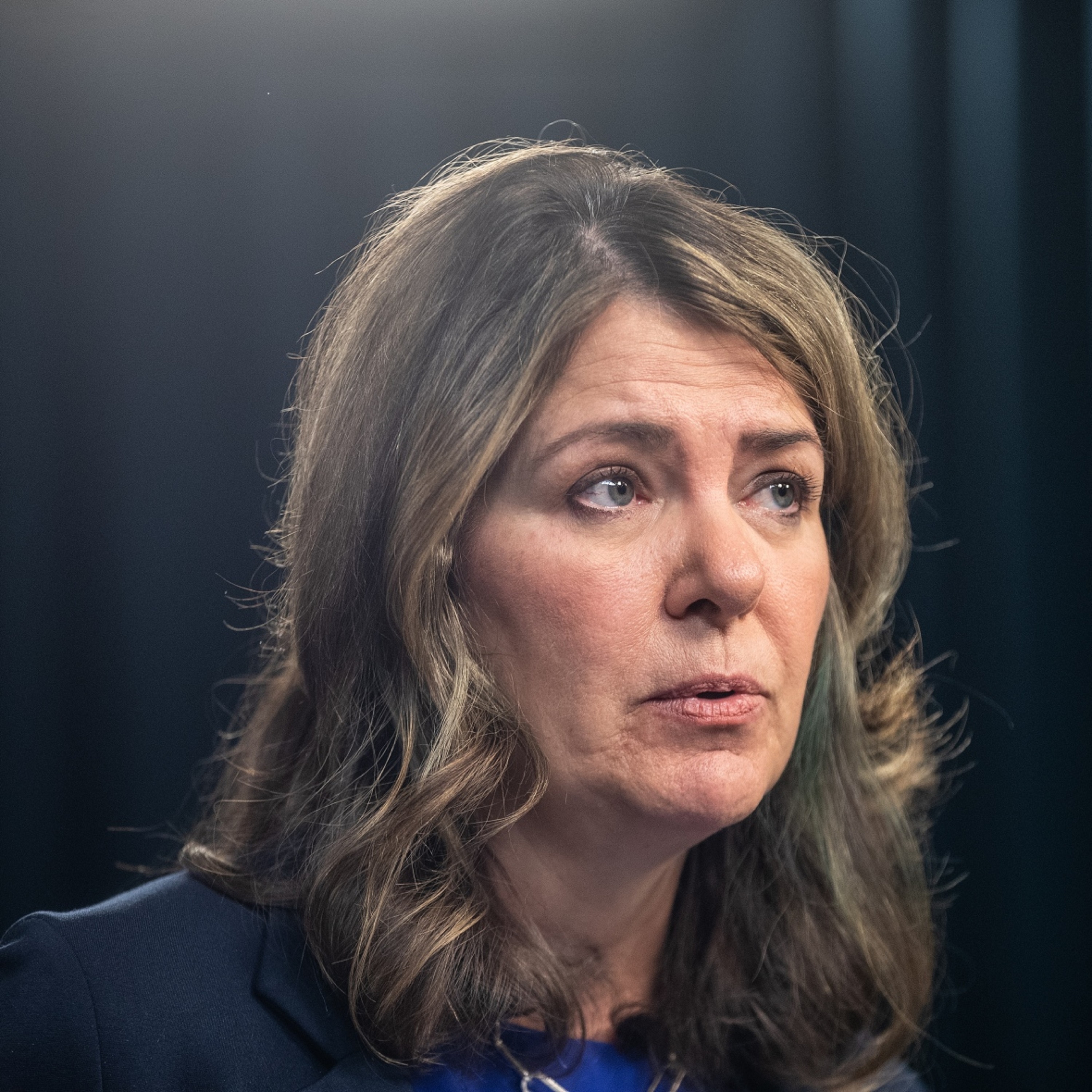
Front Burner
Danielle Smith on Carney, Kirk and pipelines
00:29:04
<p>Today, a wide-ranging interview with Alberta Premier Danielle Smith.</p><p><br></p><p>She talks to host Jayme Poisson about Alberta’s future in light of the Carney government’s push to fast track major projects, arguing that energy development is an issue of national unity for her constituents.</p><p><br></p><p>Smith also responds to the controversy around her potential use of the notwithstanding clause in protecting three laws that affect transgender youth. She also offers her thoughts on Charlie Kirk’s assasination and its aftermath, something that has clearly resonated with Albertans who took part in large vigils in Calgary and Edmonton.</p><p><br></p><p>For transcripts of Front Burner, please visit: <a href="https://www.cbc.ca/radio/frontburner/transcripts" rel="noopener noreferrer" target="_blank">https://www.cbc.ca/radio/frontburner/transcripts</a></p>
Loading summary
Transcript60 lines
- [00:00]
Boost Mobile Advertiser
Only Boost Mobile. Boost Mobile will give you a free year of service. Free year when you buy a new 5G phone.
- [00:05]
Boost Mobile Promoter
New 5G phone.
- [00:06]
Danielle Smith
Enough.
- [00:07]
Boost Mobile Promoter
But I'm your hype man. When you purchase an eligible device, you get $25 off every month for 12 months with credits totaling one year of free service. Taxes extra for the device and service plan. Online only.
- [00:17]
Danielle Smith
This is a CBC podcast.
- [00:22]
Jamie Poisson
Hi, I'm Jamie Poisson. Today I'll Alberta Premier Danielle Smith is on the show. She's a big player in Canadian political life, from the trade war with the US to the major projects key to.
- [00:40]
Interviewer
Prime Minister Carney's government.
- [00:42]
Jamie Poisson
We talk about all of that and Charlie Kirk's assassination and its aftermath. This is clearly something that's resonating with Albertans. There were large vigils commemorating Kirk's life.
- [00:51]
Interviewer
In Calgary and Edmonton.
- [00:53]
Jamie Poisson
Smith is also at the center of some controversy for potentially using the notwithstanding clause to protect three laws that affect transgender young people. And partway through the interview, I'm going to pop in with some medical information.
- [01:06]
Interviewer
That I just didn't have at my.
- [01:08]
Jamie Poisson
Fingertips during the interview. So please do listen for that. Okay, here's my conversation with Danielle Smith.
- [01:24]
Interviewer
Premier Smith, thank you so much for coming onto the show. It's a pleasure to have you.
- [01:27]
Danielle Smith
Oh, nice to talk to you.
- [01:29]
Interviewer
So, as I just mentioned, I am hoping to start this conversation with Charlie Kirk's assassination and the aftermath of that much has happened since. And I wonder what is taking up the lion's share of your thoughts on this issue right now?
- [01:44]
Danielle Smith
Well, I was, maybe it's because I'm a little bit older. I really, when I was following some of the American commentators, I was really following Tucker Carlson and, and Ben Shapiro. And so I'm new to watching Charlie Kirk because my feed has just been flooded with video clips of him over the last week. And I'm very struck by the fact that he was doing exactly what you want to have happen on university campuses. University campuses are supposed to be a place where kids are exploring ideas. It's supposed to be a safe place where kids can explore challenging ideas, disagree with each other. And it's just such an appalling tragedy that while he is doing that and encouraging kids to look inward and be self reflective, that an assassin decided to silence him. And that is, to me, the worst part of all of this is that we have to have safe spaces for people to be able to explore ideas. And kids, university kids have to get back to understanding that that is part of the function of going to a university if you're not prepared to listen to somebody who has different ide than yours, maybe you shouldn't go to university, because that's what the whole purpose of it is. So I've been so saddened to see what has happened. I've been encouraged to see that a lot of people are having the same conversation that I'm having here today with you saying that we've got to have a greater tolerance for people who have a difference of opinion.
- [03:15]
Interviewer
So I understand that he was creating room for debate and the exchange of ideas, and I agree that's such an important thing. We all need to talk more right now. But after this horrible assassination, there were people across the political spectrum that, like you, argued that he was practicing politics in the right way. But there were others who have argued that this framing was essentially sanitizing his legacy. For example, he has said that the acknowledgement of transgender identities was, quote, one of the most destructive social contagions in human history. And he once said prowling blacks go around for fun, to target white people. And what do you make of that debate that he might. That he wasn't practicing politics in the right way?
- [04:03]
Danielle Smith
I never heard him call for anyone to be assassinated. I never heard him celebrate anybody who died. And so anybody who's celebrating his assassination or celebrating the fact that he's dead is in the wrong. Like, you can't do that. It's a criminal code violation to be wishing for somebody to be dead. And so we can have a whole robust discussion about. About ideas. And, yeah, some of those ideas sometimes hurt people's feelings, but there's a hard line. Don't call for people to be killed. Don't call people Nazis. Don't spin people into a state of frenzy that an idea is something that warrants somebody being murdered. I just don't have a lot of sympathy for the other side of that argument. I think that we should all be able to recognize that there's a line and anybody who was celebrating his death has crossed it.
- [04:56]
Interviewer
Of course. Of course. I mean, I don't think that people making this argument or that he deserved.
- [05:00]
Danielle Smith
It and sort of that's kind of the argument he deserved it. No one deserves to be ideas.
- [05:05]
Interviewer
No, no. I think the argument is. Is more that by papering over or not acknowledging some of the more controversial things that he says, that it kind of makes these ideas mainstream. Right. I mean, he has, for example, said that Joe Biden was a corrupt tyrant who should be put in prison and. Or given the death penalty for his crimes. Against America, I guess. Do you think that at some point ideas can also become dangerous? Right. Well.
- [05:34]
Danielle Smith
And we do have a criminal code sanction if you call for the murder of somebody or you call for a particular group to be targeted for death. Yeah, that's actually a pretty strong line in the criminal code that you can't do that. But you should be able to have a robust discussion with people about a whole range of ideas. And some of it's uncomfortable, and some of it you're going to find that you can't find some common ground. But you can't have the kind of censorship that I think is often being promoted by those who get their feelings hurt about having their ideas challenged. And you certainly cannot create an environment where it's somehow normalized for someone to be shot because they end up having a different opinion than you. So I would hope that we could all understand that where we have to get to is we have to get back to having campuses being a place of robust free speech and that we can't ever tolerate anything like this happening again.
- [06:32]
Interviewer
Related to that. I've been watching you talk about the importance of free speech for many years now. And since the Kirk killing, both the left and the right in America have talked about how there is a dangerous crackdown on free speech. For example, ABC has pulled Jimmy Kimmel from the air after a monologue he gave was criticized by the chair of the fcc. And Donald Trump recently floated this week the idea of revoking broadcast licenses for TV networks that speak out against him. And how are you thinking about free speech at this moment?
- [07:04]
Danielle Smith
Well, Alberta's a different place, and we intend to be able to keep an environment where we are able to have robust debate and discussion and free speech. And I think we do really well in that regard. So I'm really more interested in the kind of environment I can foster in Alberta. Others are making different decisions in different jurisdictions. I think it's wrongheaded. I mean, you have to remember, you and I both have spent a large part of our careers criticizing government, which is illegal in a lot of places in the world. And whether you come from the left perspective or the right perspective, you always have to be able to retain that right to say government is doing things you don't like and to be able to criticize it. So I get my fair share of criticism, and my view is that I have to be able to go onto forums and explain why I'm doing what I'm doing so that I can hopefully foster some understanding. But that is not the pathway that I go down, I just know I wouldn't have been able to have the career that I've been able to have doing the things that I've done in many, many countries in the world. And I'm grateful that we have such a robust environment for free speech in Canada and in Alberta in particular.
- [08:23]
Interviewer
I was hoping to ask you about a government memo leaked earlier this week laying out how you and your government plan to invoke the notwithstanding clause to block any legal challenges against your three laws dealing with transgender youth. And just for our listeners, just for clarity, these laws generally deal with banning transgender women from participating in women's sports and institutions, banning pronouns or name changes without parental consent for students under 15, and banning gender affirming care. So hormones and surgery for minors. The older teens would need a series of permissions. Right. And then opt in sex education. And just why do you feel the need to use the withstanding clause here?
- [09:05]
Danielle Smith
Well, it's a leaked memo which tells you that there's somebody within the administration that doesn't like the fact that we're having that conversation. And so they've leaked it to the press so that we can have the conversation in public before we've had it at cabinet or a caucus. And so we haven't had the decision.
- [09:23]
Interviewer
You might not do it.
- [09:25]
Danielle Smith
Well, I will say we're having the discussion because we have to consider that an injunction was granted pending it, going through all the different levels of litigation. And my preference is to go to court to litigate it, because I think we can make a very strong case under Section 1 of the charter, which is you can do things with reasonable limits if you've got evidence base and you're able to argue from that basis that you're taking a reasonable measure. I believe that the courts will side with us, but we, we have to ask the question of how much harm comes to, to children who are sterilized over the next three or four or five years if we don't act. Because let's be frank about what it is. When you give puberty blockers to a child who's not gone through puberty, they don't become sexually mature, which means they can't have children. And we just happen to be of the view that those are decisions that are made when you're a grown up. And so you can make those, start making those decisions at 16, but you can't make those decisions by 10. And you shouldn't have anyone other than that person able to make a decision that is that important. To their life path.
- [10:26]
Interviewer
The notwithstanding clause was intended to be used, as I understand it, sparingly in emergencies or a last resort, essentially. And as you know, the Supreme Court is now being asked to weigh into how it is being used in relation to Quebec's religious symbols law. Do you think that this is what it was designed for?
- [10:45]
Danielle Smith
Yeah, I think it's exactly what it was designed for because we have a difference of opinion about this issue. We have lots of situations where 10 year olds are restricted in their decisions. We don't allow them to drink, do drugs, sign contracts, join an army, work. And so for us to now say, well, we'll make an exception and they can sterilize themselves with the permission of their parents and the permission of a doctor, I just think that's at odds with how we treat 10 year olds and children who are 15 years of age and under. Now we treat children who are 16 years of age and older differently because we recognize that there's a maturity level and they can take on more and more adult decisions. Not the complete range. They don't get to make the complete range of adult decisions until 18. But I think that there's a difference of opinion on this and when you have a difference of opinion, then you litigate it out. But in the end, I believe in parliamentary supremacy and that means that politicians do get to have the final say.
- [11:45]
Interviewer
Just one of the moral arguments against this is that many people in the medical community argue that restrictions on gender affirming care or on pronouns may lead to worse mental health outcomes for trans youth, that delaying or denying this kind of care could cause distress, dysphoria, risk of self harm, like suicide. And I know that some of the parents of trans youth have come out already to say that they worry that these laws will interfere with treatment that their children need for their own mental health. And I just. What would you say to those parents?
- [12:21]
Danielle Smith
There's lots of doctors who take the idea of watchful waiting, that there are lots of issues that kids are going through when they go through puberty, their bodies are changing, they may have same sex attraction, they may feel uncomfortable in their body, they may have issues that have not been resolved, maybe they've had some trauma that needs to be worked through. And so that's part of the reason why you wait until they're of an age that they can process the long term consequences of what their decisions might be. Doctors aren't always right on things. And so I'm looking forward 10 or 20 or 30 years when people are asking why didn't somebody stop these Doctors from sterilizing 10 year olds? And that's what we're doing. We're going to prevent that future harm and still allow a pathway once a child becomes old enough to understand the consequences of their decision to be able to make those choices. And that age is 16.
- [13:17]
Jamie Poisson
Okay, so just jumping in here before we take a break with that medical information I mentioned off the top. According to a 2023 position paper from the Canadian Pediatric Society, hormone blockers do not permanently impact fertility. They're intended to pause or slow down puberty, which typically starts around 10 or 11. But for people who go on to take gender affirming hormones, the paper also says that taking testosterone and estradiol can permanently decrease fertility to an extent that.
- [13:48]
Interviewer
Is not yet fully known. Okay, we'll be right back.
- [14:02]
Boost Mobile Advertiser
Only Boost Mobile. Boost Mobile will give you a free year of service. Free year when you buy a new 5G phone.
- [14:07]
Boost Mobile Promoter
New 5G phone.
- [14:08]
Danielle Smith
Enough.
- [14:08]
Boost Mobile Promoter
But I'm your hype man. When you purchase an eligible device, you get $25 off every month for 12 months with credits totaling one year of free service. Taxes extra for the device and service plan. Online only.
- [14:18]
Greg Jenner
Hello, I'm Greg Jenner, host of youf're Dead to Me, the comedy podcast from the BBC that takes history seriously. Each week I'm joined by a comedian and an expert historian to learn and laugh about the past in our all new season. We cover unique areas of history that your school lessons may have missed. From getting ready in the Renaissance era to the Kellogg brothers. Listen to youo're Dead to Me now, wherever you get your podcasts.
- [14:42]
Interviewer
I want to spend some time now talking about Alberta's economic future in light of recent announcements by the Kearney government. The Major Projects office just opened, I believe in Calgary and there's now a list of major projects that are set to be fast. And you said that you are more optimistic than ever that the concerns of Albertans are finally being heard. What. What is it about this government that you think is good for Alberta?
- [15:06]
Danielle Smith
I would say the jury is still out. I'm hopeful that this is a true change of direction. I've seen some positive signs. I mean, when I. When I look at this current prime minister, I have to look at his actions through the realm of or through the lens of would Justin Trudeau, his predecessor, have done this? And I'll tell you the things that I'm encourag Rich by. Number one, when he first got elected, he got rid of the carbon tax. Justin Trudeau would not have done that. Number two is that he campaigned on making Canada the strongest economy in the G7 and being an energy superpower on both conventional as well as renewable energy. I don't think Justin Trudeau would have done that. He did create a major projects pathway so that we can get major projects approved within two years. Again, that's a new, a new policy. On that project list you have four projects which are resource development projects. So that's an affirmation that that's the direction he's going. And also he put the project office in Calgary and put Dawn Farrell at the helm of it. And she was the CEO of course of Trans Mountain Pipeline which did get built to the coast. And let me add one more. He has also suspended for now pending a further review of the net zero vehicles which is one of the nine bad laws that I think had to be reviewed. So I'm seeing some positive indication that he's moving in direction. That being said, we don't have a bitumen pipeline to the B.C. coast, a new one, because I think we do need another million barrel per day pipeline. We haven't seen a repeal of the worst laws, the emissions cap, the greenwashing bill and the net zero power regs which are absolutely. And the tanker ban which are absolutely essential to be able to do some meaningful development of our energy sector in Alberta. We're having good conversations and so I think he certainly understands the perspective that we have on that. But I'm waiting to see if we can get to a grand bargain agreement. And that means bitumen pipeline, the Pathways project to decarbonize the existing oil sands operations on the upstream as well as a significant movement on the nine bad laws in order to create a better investment climate. And I think we're all hoping that we'll be able to have that in time for the next announcement of major projects which he slated for November 16th during Greco.
- [17:24]
Interviewer
But let's talk about the pathway alliance then. So this is a project that has made the second list which according to the federal government needs more work before approval. And you've been a big proponent of it, so have many in the oil and gas industry. Prime Minister Carney has said that a carbon capture project like this project would be a quote, necessary condition to unlocking a potential pipeline project, which I also want to talk to you about. But there are a lot of questions about how effective this technology is. Right. Industry often claims that it can capture 95% of the carbon dioxide. But according to the Institute for Energy Economics and Financial Analysis Projects have failed to achieve those targets in practice. There are also concerns that it won't be profitable given that the carbon credit market is so soft right now. Why are you such a big fan of it?
- [18:15]
Danielle Smith
Well, it certainly isn't profitable. I mean, nobody would do a 10 to 20 billion dollars project like this because there's no income tax to be generated from it. It is all cost. And that's why I would reverse it and say that this Pathways project is contingent upon getting a new source of revenue from a new bitumen pipeline. So you can put 10 to 20 billion dollars in cost if you're looking at potentially a pipeline that will generate 20 billion a year in revenues for the next 20 or 30 or 40 or 50 years. So that's why I think those two things have to be together. I feel like it's the Pathways project, it's the Pathways Group of companies that have been proposing this for many years, PR me even becoming premier. So they seem to be quite committed to looking at a technology solution that will get them to carbon neutral by 2050. And so I think that they've done the calculation that that's the way for them to be able to secure new markets. And as long as we can get both of those things together, I think people should be optimistic about a technological solution.
- [19:16]
Interviewer
Let's talk about a pipeline itself. None of the major pipeline companies have said that they want to develop a new big oil pipeline in Western at the moment. The chief executive currently at Trans Mountain, Mark Mackey, says that we currently have plenty of pipeline space to get Canadian crude oil to market until at least 2030 without the need for a whole new pipeline to be built from scratch. And, and just I know you did some of it before, but if you could tell me what you think the business case is for a new pipeline.
- [19:48]
Danielle Smith
Well, I can tell you that I've watched the OPEC analysts for some time talking about what the future looks like by 2050. And their conservative estimate is that we're going to grow from a need of 104 million barrels a day to 121 million barrels a day. And the International Energy Agency finally has stopped doing backcasting and started doing forecasting again. And they've understood and came up with a correction just this week saying that you can't create forecasting models based on what you wish will happen and what policymakers say they're going to do. You have to do it on the basis of what reality is and what is actually happening. And so what they're talking about is Renewables being additive to the current system. But I'm going to suggest to you that I think all types of energy are going to be additive because we've got 4 to 5 billion people on the planet who want the same quality of life that we have. And to be able to do that, you need reliable sources of energy. And traditional hydrocarbon fuels are the kind of energy that we need. And so when I look at the United States being the largest economy in the world, we already export to them 4 million barrels a day. They may well see their existing fields start to decline, and so they will need to have some backfill. When I look at what happened with Trans Mountain, half of that product is now going to Asian markets. Korea, they have three heavy oil refineries that have started taking shipments and they committed to buying a million barrels a month from us, and they want more. And I think that we'll see those same kinds of opportunities in India, in Spain, and in other jurisdictions where they rely on heavy oil, because heavy allows you to make a whole range of products, not just gasoline, diesel and aviation fuel, but also all the petrochemical products and including asphalt, which we're going to need. Regardless of whether we've got combustion engine vehicles or electric vehicles, we'll all need roads to drive on. So that's the reason why I would argue that we're going to see a movement towards emissions reduction, but we're not going to see a movement away from oil and gas production. And we want to be a player in that future, future world. If the, if the market for the product is growing, then Canada should have a growing share of it. And if we can get a greater number of customers because we have a lower carbon barrel, then all to the good, I think that'll be good for not only the environment, but also be good for energy security.
- [22:09]
Interviewer
I take your point about forecasting, but do you worry about global oil demand going down? Okay, so I mean, the International Energy Agency, they have said that they believe that oil demand will peak by the end of this decade. So do you worry that we could have a pipeline, go through all of this effort to build a pipeline and then not really have a use for it?
- [22:32]
Danielle Smith
As I said, International Energy Agency realized they have to stop their hopeful thinking, forecasting and do real forecasting. And in the real world, what we're seeing is that there are a lot of nations in the world that want to develop their economies. And the best way to do that is with reliable fuels. We know that solar and wind are intermittent and need to have a backup. And the backup is natural gas. That's the way that most markets that have been able to accept more solar and wind onto their grid have been able to operate. So I just look at what I see in the world. I look at where the real opportunities are to reduce emissions. And the real opportunity to reduce emissions is in being able to have less coal, less wood, less dung being used for fuel sources and more clean burning natural gas. And then on top of that, looking towards the development, development of hybrid vehicles. Hybrid vehicles are a pretty good solution where you can get electricity when you're doing the short haul drives in the, in the city, but then you also are able to use a reliable fuel when you have to do longer, longer drives. Those might be a good interim step. I think that incrementally we're going to be moving to lower and lower emissions, but at the base of it, you're still going to see a very large demand for hydrocarbon fuels.
- [23:57]
Interviewer
I'm curious to know, what if you don't get a pipeline? You know, I know you've been traveling the province, you've been hosting these Alberta next town halls where you've been hearing directly from Albertans. Are they telling you that they expect you to deliver on this front? Is, is there a tranche of other things that you and Albertans would consider a win here?
- [24:17]
Danielle Smith
Well, I have said that the nine bad laws that I put on the table, that's table stakes. Like that is my short list. That is not my long list. There's a whole pile of other things that irritate me about the federal government. And we've got about 15 lawsuits of ways in which they're intervening in our jurisdiction. But you can solve a lot when people are making money. You can solve a lot when people have jobs. You can solve a lot of public problems when you've got the revenues to be able to pay for the pressures in healthcare and education and public interest infrastructure. And that applies equally to Alberta as it does to the federal government. And so profitable companies are good for all of us. And so that's been our basic pitch is this isn't just about Alberta, it's about Canada. And it's about helping out our international trading partners and allies as well. But there's no question that Justin Trudeau created a separatist movement in Alberta. I've been watching for several years. I mean, the last time the separatist movement had any kind of success was in the 80s when Gordon Kessler got elected to politics and Brian Mulroney came in and reversed the National Energy Program, and that sentiment dissipated. Well, Justin Trudeau created the same kind of separatist sentiment in our country. And I think that Mark Carney, by undoing some of those bad laws, will also be able to deflate it. But he has to take action.
- [25:37]
Interviewer
I was telling you at the beginning of this, when you came on that I was in Alberta a couple of months ago and I did speak to a lot of people who were kind of. They kind of like had their hands hovering over the separatist button. Like they're not interested in pushing it right now, but they have a real wait and see. And I just, I think what I'd love to try and get a feel for from you is, like, what would be acceptable, like is, is it a pipeline or bus? Because they're also. A lot of them were looking to you. They were looking to you to kind of spell out what an acceptable package would be.
- [26:17]
Danielle Smith
Well, I think you have to understand that a pipeline only gets built if there are producers willing to fill it with barrels. And so, yeah, I suppose we could build a shiny new pipeline. But if you have a tanker bin and aren't permitted to load any of your resource onto a tanker, no one's going to put anything in it. If you have an emissions cap which currently is so stringent it would actually require us to shut in production by 2 million barrels by 2035, no one's going to increase production. So a pipeline is a mechanism to be able to get more barrels produced. So that's why they're connected, is that you've got to change the investment climate if you're going to bring that investor confidence back. So I would say that we have to think of it this way. We had three projects that should have gone ahead that didn't. The Keystone XL project, the Energy Ease Project, and the Northern Gateway project. If those three had gone ahead, they would be generating two and a half million barrels of oil per day and about $55 billion in GDP for the country. And so that's billions of additional dollars that would go a long way towards addressing the federal deficit or our NATO commitment. Those are billions of dollars that we would use to be able to address healthcare and education. And so that's what I look at as the missed opportunity of the last 10 years. And we don't want that same missed opportunity for the next 10 years.
- [27:38]
Interviewer
And if you feel like you've missed this opportunity, if you don't get everything that you've asked for, is this still, this is an issue of national unity for you?
- [27:46]
Danielle Smith
Well, it's an issue of national unity for Albertans. I mean, there is already a petition campaign that is generating signatures to ask the question, do you want to remain in Canada, yes or no? I think the petition signature campaign comes to an end in October, and I'm watching that with interest to see if enough people signed on to that. But there are pretty stark implications if that goes to a vote and Albertans are not feeling confident in Canada and decide to vote no. I want to avoid that. I want Albertans to feel like Canada respects them and that the federal government respects them and that the federal government is going to do its job of helping us get our products to market, not block them from getting to market. I think that the country is with us because the former government of trust in Trudeau was facing wipeout. I mean, I think we have to be honest about how bleak it was and why they so quickly acted to change their leader. But their leader only won because he was saying many of the same things. I'm saying that we need to be an energy superpower. We need to support conventional and new energy. We want to be a strong economy in the G7, and we've got to be practical about how we balance emissions reduction targets with economic growth. So I think there has been a major change of heart on the part of Canadians and a major change of heart that they expect to see represented in their government. So we'll see. I mean, as I said, I've had some very good conversations with the prime Minister, but we have to see some action on those fronts, and we have to see it very soon because I've been at this now for three years trying to get to some kind of accommodation and have been unsuccessful. And I think Albertans are running out of patience.
- [29:26]
Interviewer
Okay.
- [29:27]
Jamie Poisson
Premier Daniel Smith, thank you very much for this.
- [29:29]
Danielle Smith
You've been. Thank you.
- [29:39]
Interviewer
All right, that's all for today. I'm Jamie Poisson.
- [29:42]
Jamie Poisson
Thanks so much for listening.
- [29:43]
Interviewer
Talk to you tomorrow.
- [29:55]
Danielle Smith
For more CBC Podcasts, go to CBC CA Podcasts.