← Front Burner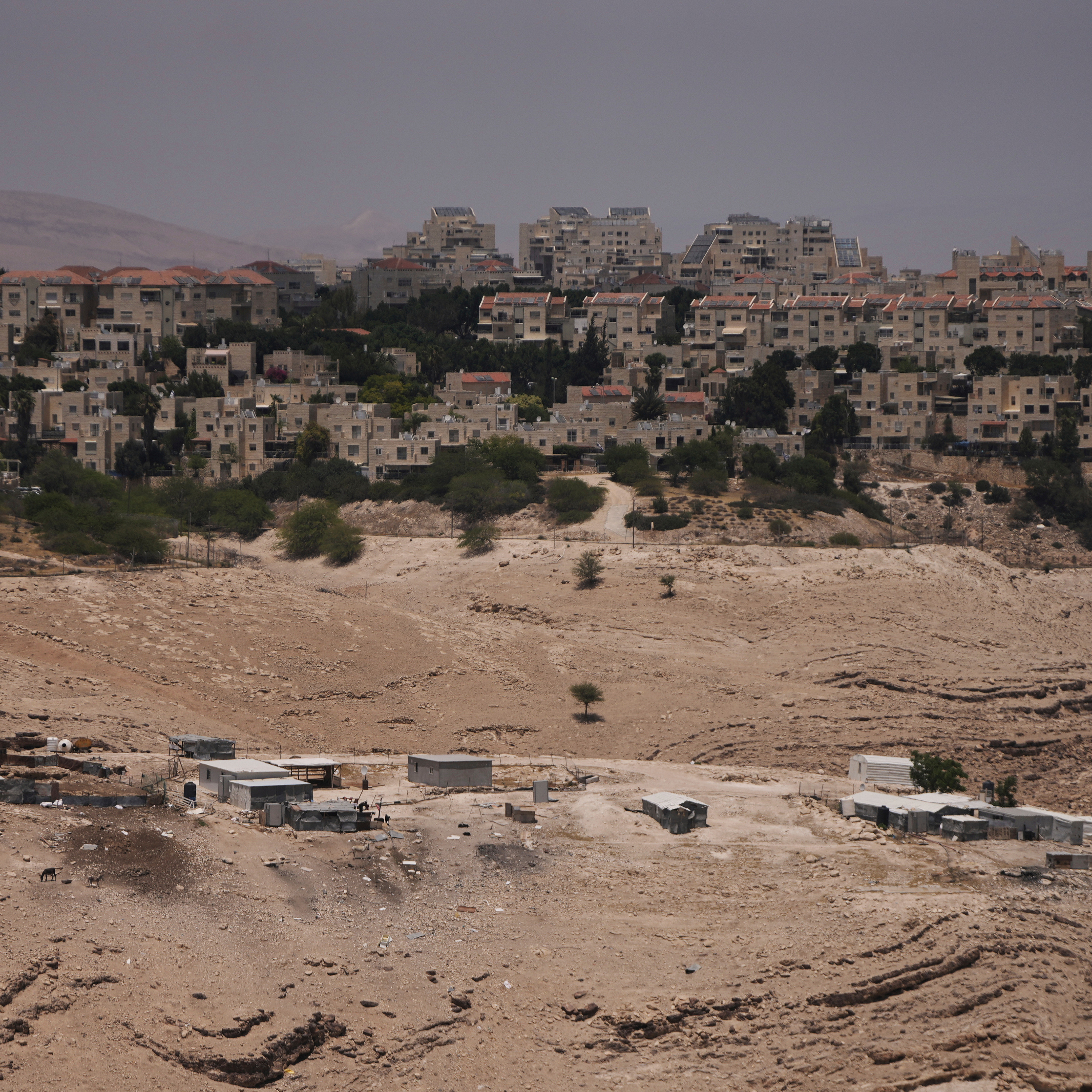
Front Burner
How Canadian charities fund illegal West Bank settlements
00:32:06
<p>Since the 1960s, Israel has been building settlements in the occupied Palestinian territory of the West Bank — settlements deemed illegal under international law, and condemned by the Canadian government. With the settlements has also come many documented cases of violence from Israeli settlers against the Palestinians whose homes are being bulldozed to build those settlements.</p><p><br></p><p>Now, a new investigation by CBC's the fifth estate has found that Canadian charities have been indirectly funding organizations, including the Israeli military, that support the ever-expanding settlements. That includes issuing tax receipts on those donations — despite them running afoul of the rules governing registered Canadian charities.</p><p><br></p><p>Cohost Ioanna Roumeliotis breaks down her team's reporting, and why critics say these donations are perpetuating violence that threatens the possibility of peace and a Palestinian state.</p><p><br></p><p>We'd love to hear from you! Com...
Loading summary
Transcript92 lines
- [00:00]
Paige Desorbo
Hey, I'm Paige desorbo and I'm always thinking about underwear.
- [00:03]
Hannah Berner
I'm Hannah Berner and I'm also thinking about underwear, but I prefer full coverage. I like to call them my granny panties.
- [00:10]
Paige Desorbo
Actually, I never think about underwear. That's the magic of Tommy John.
- [00:14]
Hannah Berner
Same. They're so light and so comfy. And if it's not comfortable, I'm not wearing it.
- [00:18]
Paige Desorbo
And the bras, soft, supportive and actually breathable.
- [00:22]
Hannah Berner
Yes. Lord knows the girls need to breathe. Also, I need my PJs to breathe and be buttery, soft and stretchy enough for my dramatic tossing and turning at night. That's why I live in my John pajamas.
- [00:33]
Paige Desorbo
Plus, they're so cute because they fit perfectly.
- [00:36]
Hannah Berner
Put yourself on to Tommy John.
- [00:38]
Paige Desorbo
Upgrade your drawer with Tommy John. Save 25% for a limited time@tommyjohn.comfort. see site for details.
- [00:48]
Ioana Ramiliodis
This is a CBC podcast.
- [01:03]
Jamie Poisson
Hi, everybody, I'm Jamie. Amy Poisson. Israel's war in Gaza has been one of the biggest ongoing news stories in the world since the October 7 attacks just two years ago. But today we're focusing on another aspect of the Israeli Palestinian conflict, the West Bank. We've talked on the show before about the ongoing violence there. For decades now, Israel has continued to build settlements in the Palestinian territory, settlements that have been deemed illegal under international law and that the Canadian government has condemned. Along with those settlements has come many, many documented cases of Israeli settlers attacking Palestinians who've lived in the area for generations, the people whose homes are being bulldozed to build those settlements. Now, a new investigation by CBC's the Fifth Estate has found that Canadian charities have been indirectly funding organizations, including the Israeli military, that support the ever expanding settlements in the West Bank. That includes issuing tax receipts on those donations, despite them running afoul of the rules governing registered Canadian charities. Ioana Ramiliodis is the co host of the Fifth Estate and part of the team that broke that story. She's here with me today to walk us through it. Hi Joanna, thank you so much for coming onto frontbrner.
- [02:20]
Ioana Ramiliodis
Hi Jamie.
- [02:21]
Jamie Poisson
It's good to see you. So this August you went to the west bank to visit a few of the Palestinian communities there and just. Could you tell me a bit about the communities that you went to?
- [02:31]
Ioana Ramiliodis
Sure. We spent most of our time in the Palestinian village of Susya, which is called more formally Khirbet Susya. And it's in the west bank, in the southernmost tip of the West Bank. We spent most of our time there and we also spent Some time in the Palestinian city of Yatta, which is about half an hour away from Susya. And that was not for a great reason. It was because we ended up getting a lead about family members of one of our main characters who ended up going to hospital because they were attacked by settlers.
- [02:59]
Jamie Poisson
I want to talk to you more about those events, but just these communities, how big are they? How many people live there? How long have these communities been there for?
- [03:09]
Ioana Ramiliodis
You know, it's an interesting area because it looks pretty barren. But Massafir Yatta, which is the collection of farming communities in the area that we were in, it houses about 200 families, I would say, are there. It's in the South Hebron Hills in the occupied West Bank. And human rights activists have called this one of the most volatile areas in the region, and where most of what they call a systematic displacement and ethnic cleansing is how they refer to it, of Palestinian communities, is taking place mostly by the hands of extremist settlers who are attacking them and with the tacit support of the military, who they say does very little to either stop the attacks or investigate them.
- [03:51]
Jamie Poisson
How close are the communities that you visited to the nearest Israeli settlements? Can you see them from.
- [03:57]
Ioana Ramiliodis
Yeah, you know, we drove in from Jerusalem. It's about an hour and a half. And along the way, there is no distinction between Israel proper and the West Bank. There are blocks and blocks of Israeli settlements along the way that are kind of seamless. And once we got to Susia, which is in the most southern part, the settlements are smaller because these communities are a bit more remote. But they're there and they're expanding. And there are also Israeli settler outposts that are there that are not authorized by the Israeli government, but they're pretty much tolerated.
- [04:28]
Jamie Poisson
Can you tell me more about the people who you spoke to and the kind of violence that they described?
- [04:35]
Ioana Ramiliodis
Sure. Well, most of our time, as I mentioned, was spent in Susya. And there there is about a dozen or so families that are living in what is a makeshift community. And I say makeshift because they had lived for centuries before in a place that is now called by Israel, ancient Susia, that houses an ancient synagogue. It's an official archaeological site. And because it was deemed an archeological site, the families who were there who've lived in caves primarily, were forced out, and they built homes on the farmland that they own nearby. And that's where we met them. They talk about the fact that settler violence is not a new phenomenon. They have dealt with it for many, many years, but has certainly surged by their accounts, by the United nations, by human rights groups that are monitoring it since October 7, and to the point that it involves not only attacks on their proper attacks on their livestock, attacks on their homes, certainly personal attacks on them, but it has also led to the death of some of these Palestinians who live in that area, including a couple of weeks before we got there, a man named Auda Hathelin, who. He was part of a community where an Israeli settlement is expanding literally right next to it, And Israeli settlers brought in an excavator into the part that is earmarked as a Palestinian community. And when the Palestinian community started to protest, one of those settlers fired into the crowd and killed Hathelin. And that settler has been on Canada's sanctions list since last year. He's pretty notorious for attacks on Palestinians.
- [06:11]
Nasser Nawaja
The man with the gun is Inon Levy, a notorious settler who was sanctioned by the European Union as well as the United States under the Biden administration. The Biden administration at the time said, quote, levy regularly led groups of violent extremists. But those sanctions were removed earlier this year by President Donald Trump. Police arrested Levy on the scene, and after questioning him, they released him under house arrest. This is what his lawyer.
- [06:39]
Jamie Poisson
I remember that from when it happened. I know that you spent a lot of time with a man named Nasser Nawaja. Can you tell me a little bit more about him and what he told you?
- [06:53]
Ioana Ramiliodis
Sure. Nasser Nawaja was the main character that we focused on while we were there. He was someone who has not only lived in the Susya area in the original village, and now in this more makeshift community, but he's also worked as a field researcher for the Israeli human rights group Betselem. So something to mention is that Nasser's new makeshift village has been deemed illegal by Israel. So it is also under constant threat of demolition. And because it has been deemed ille by authorities, they can't get access to water or electricity. They're basically living off the grid. And he basically talks about how difficult it is just to even harvest his land. He has olive trees, he's got goats, and he can barely find land to graze because of the encroaching settlements. And the olive trees are. There's a lack of water, so they have to bring in water, even just to water, though, so that they can get their. Basically, this is how they live.
- [07:50]
Nasser Nawaja
If you see this valley, this. Our olive trees, and even now, our olive trees in very bad situation because no rain, we not have any water. We buy water for drink and if you in the place. Non water, even the pipe of the water, if you see there, just run beside our. Not beside, inside our land and settlers and the army use this pipe. And we not have any water, just we buy water.
- [08:26]
Jamie Poisson
Do they have.
- [08:27]
Ioana Ramiliodis
They closed the pipe or.
- [08:28]
Nasser Nawaja
Yeah, here. The pipe beside our.
- [08:32]
Ioana Ramiliodis
Who stopped the water from coming in.
- [08:36]
Nasser Nawaja
The Swen state? Tell us, you illegal village, we not give you any water.
- [08:44]
Ioana Ramiliodis
Not only has he been there for a long time, his work gives him a pretty much a frontline look at what's happening. It's happened to him, it's happened to his family members and people call him because he's almost like their touch point. Oh, I heard about something that happened in a village like 10 km away. We were with him while he was showing us where his relatives were attacked, and his phone kept ringing about yet another incident that happened just a little further away. And he basically says this is their normal, the constant, if not being the victim of hearing of more and more attacks.
- [09:16]
Jamie Poisson
Can you tell me a little bit more about what happened to his relatives? I know that you ended up visiting them in hospital. They landed in the hospital.
- [09:23]
Ioana Ramiliodis
Right. So after we spent the day or so in Susia, a couple of days later, we got a call from our fixer, who's the person on the ground who's helping us with interpreting, interpreting interviews and finding leads for us. She called us and she said Nasser's relatives are in the hospital. Yata, come.
- [09:39]
Jamie Poisson
There's this really chilling emergency call, right. That came from the house that night.
- [09:44]
Ioana Ramiliodis
Yeah. And that was the daughter of the Nawajas. She, Aileen, was sleeping in the house and she heard the attack and she had barricaded herself in the house and she sent out a voice message on the community WhatsApp group. So we raced over. It's about an hour or so from Jerusalem where we were staying. And we didn't know what to expect when we got there. You're not. You're used to Canadian hospitals where there are a lot of rules and regulations about access. Instead, the son of the couple who was attacked, and these are Nasr's relatives, came to greet us, brought us upstairs to this crowded hospital room. Packed, packed, packed. Khadr and his wife Fatma were in the same room, separated by a curtain. There were people surrounding them, community members, family members. And they told us that the night before they were sleeping outside. It was very hot while we were there, high 40s. So they were trying to get some respite from the heat. So they decided to sleep outside and they woke to settlers from the nearby settlement near Susya, either from the settlement proper or from the outposts. Settlers came and attacked them with wooden rods and large rocks. Their injuries were pretty severe. They both required surgery. They were bandaged and bruised and certainly seemed to be in shock. But they were pretty gracious in that. They invited us in and they took the time to tell us what happened to them.
- [11:13]
Jamie Poisson
You spoke to a doctor at the hospital and he really gave you this sense of just how often this happens, right?
- [11:23]
Ioana Ramiliodis
Yeah, we asked him. I asked him directly, how often do you see injuries related to settler violence? Thinking that's a pretty specific question. And he says, oh, if not daily, definitely three, four times a week. So it is a very normal occurrence. And the more the cases that involve major head injuries or gunshot wounds, those are triaged to other hospitals. So the fact that he's seeing this is just one indicator. There's many more, according to him. Foreign.
- [12:07]
Jamie Poisson
Let's talk now about how all of this links to Canadian charities. I mentioned off the top there in the intro that these Israeli settlements have been declared illegal under international law. Canada also recognizes them as illegal. The federal government has said that it considers the settlements a barrier to peace. Right. But the meat of what you have uncovered in your reporting, it starts with an organization called the Mount Hebron Fund. And what exactly is the Mount Hebron Fund, and how did they come to be on your radar?
- [12:41]
Ioana Ramiliodis
Now, the Mount Hebron Fund is significant because it is basically an organization that supports the settlements in the area that we were at near Susia. And its stated goal is to help promote the expansion of settlements. So when we went on the site, we were particularly curious about the Mount Hebron Fund because it is known to governments, including Canada, by many names, including Har Hebron, for example. We find out that they are on Canada's sanctions list as well for facilitating, encouraging, even financing, settler violence. So we wanted to see if, in fact, this group that was on this Israeli website was accepting Canadian donations because it appeared that they were taking donations in all forms of currency, including the Canadian dollar. So we did an experiment and we donated $. And in an automatically generated email, we were thanked for our donation, and we were promised a tax receipt from a Canadian charity called Mizrahi Canada.
- [13:41]
Jamie Poisson
So you reach out to them, right? What happens?
- [13:44]
Ioana Ramiliodis
Well, we reach out to them, and we reach out to the Canadian charity that is promising the tax receipt. And this was weeks later. We didn't make that ask right away. We were just trying to gather as much as we could to understand how this was working. So it was weeks later, and. And after we asked for those interviews, we got an email saying, we're sorry, we took your donation in error. There will be a refund. There was a technical error on the website, and that should not have happened. And shortly after, when I checked again, they had stopped accepting donations in Canadian dollars, but we're still accepting in other currencies.
- [14:18]
Jamie Poisson
Tell me more about this Mizrahi Organization of Canada, the one that promised you the tax receipt. This is a group that has already been the subject of public complaints to the cra. Right. And what ties did they have to the actual settlements?
- [14:34]
Ioana Ramiliodis
So Mizrahi Canada was offering Canadian tax receipts for donations to the Mount Hen Brawn Fund. It came on the radar of a network of activists that we were talking to because for years, it did not disclose to the CRA where tens of millions of dollars in donations to Israel were going. And after some public pressure, it started to a few years ago. And once it did, and we got a look at the tax filings, we saw that millions of dollars have been going to support projects in the settlements. And we don't have direct evidence of donations going to any one violent settler. But critics say that the support of anything in those settlements normalizes their existence and legitimizes the violence some extremist settlers resort to to lay claim on the land. So any support for settlements, as we mentioned, runs counter to Canada's public policy, which does not recogn permanence and considers them obstacles to peace.
- [15:26]
Jamie Poisson
Okay, I just want to be really clear here. Which parts of this could be illegal and which parts of it are just problematic?
- [15:34]
Ioana Ramiliodis
It's a really good question. If we look at it from the perspective of international law, the settlements are considered illegal. Canada subscribes to that policy that the settlements are illegal, and Canada does not recognize the permanence of the settlement. So anything to support those settlements in any which way, say the activists who we spoke to for this story, goes against that. Now, in terms of the legalities, certainly financing or supporting financially a sanctioned entity, yes, that definitely breaks the rules. And a person who does that can face criminal charges under the criminal code of Canada. When we're looking at the bigger picture, it's harder to say, is this illegal under the criminal code? No, it's not. But it breaks public policy. Charities are supposed to align to public policy, not run counter to it. There's also the issue of the Income Tax act, which governs charities. And while there's no explicit rule saying, you cannot support a settlement in the West Bank. The consideration for what is a charity under the Income Tax act is something that has been taken into account in the past and looking at is it a charitable act to support a settlement or in some cases indirectly, the Israeli army. And in both of those cases, the CRA has in the past said those are problematic.
- [16:55]
Jamie Poisson
On the tax receipt issue, what are the problems with that?
- [16:59]
Ioana Ramiliodis
Well, we asked the question going into this story, why would the average Canadian care about this? Because people can donate wherever they want, and assuming that it's not a sanctioned entity, that's something that is completely up to them. But the issue of the tax receipt is especially relevant because it means people are getting tax breaks, and those tax breaks mean that millions of dollars are not in the public coffers. And the activists that are pointing this out to the CRA are saying these are millions of dollars that could either be spent on what they say are valid charitable causes or at the very least, being spent here in Canada and supporting the Canadian population. Foreign.
- [17:48]
Paige Desorbo
Hey, I'm Paige desorbo and I'm always thinking about underwear.
- [17:51]
Hannah Berner
I'm Hannah Burner and I'm also thinking about underwear, but I prefer full coverage. I like to call them my granny panties.
- [17:58]
Paige Desorbo
Actually, I never think about underwear. That's the magic of Tommy John.
- [18:02]
Hannah Berner
Same. They're so light and so comfy. And if it's not comfortable, I'm not wearing it.
- [18:06]
Paige Desorbo
And the bras? Soft, supportive and actually breathable.
- [18:10]
Hannah Berner
Yes. Lord knows the girls need to breathe. Also, I need my PJs to breathe and be buttery, soft and stretchy enough for my dramatic tossing and turning at night. That's why I live in my Tommy John pajamas.
- [18:21]
Paige Desorbo
Plus they're so cute because they fit perfectly.
- [18:24]
Hannah Berner
Put yourself on to Tommy John.
- [18:26]
Paige Desorbo
Upgrade your drawer with Tommy John. Save 25% for a limited time at tommyjohn.com comfort See site for details.
- [18:35]
Ioana Ramiliodis
Narvele Morso is one of the most famous indigenous artists ever. Looking at his paintings, it's easy to see why.
- [18:42]
Jamie Poisson
Colors are intense.
- [18:43]
Nasser Nawaja
Color is medicine.
- [18:45]
Ioana Ramiliodis
But look a little closer and you'll see something fakes.
- [18:49]
Nasser Nawaja
We believe it's the world's biggest art fraud.
- [18:51]
Ioana Ramiliodis
There are thousands of fake Norval Morisot paintings beneath some of these forgeries. Assaults, abuse, and even an unsolved murder. I want my paint back.
- [19:00]
Nasser Nawaja
I know you killed that boy.
- [19:03]
Ioana Ramiliodis
Forged available now wherever you get your podcasts.
- [19:09]
Jamie Poisson
I know you looked at a few other Canadian charities with links to both the west bank settlements and the Israeli military. Should we Start first with the Jewish National Fund for Canada. The CRA actually revoked their charitable status last year. Why was that?
- [19:24]
Ioana Ramiliodis
Well, last year the CRA revoked that charitable status of the Jewish National Fund of Canada in part for failing to have control and direction of donations sent to Israel. Because one of the rules governing charities is that yes, you can raise money for another country, but you have to show that you know where that money is going and how it's being spent. And that was a violation that they found. And they also found in past audits that conducting projects in the occupied territories and supporting the armed forces of another country also ran counter to Canadian public policy. So it's certainly been a matter of concern for the cra. Now JNF Canada is appealing the revocation through the courts. And last month it announced that a registered Canadian charity called Friends of JNF Canada would have stepped forward rather and would be accepting donations for similar projects and that it would also keep issuing tax receipts. So certainly the work seems to be going on yet just now through a different charity.
- [20:27]
Jamie Poisson
And JNF was also involved in the building of a place called Canada park in the West Bank. And what exactly is Canada park and how is JNF connected to it?
- [20:38]
Ioana Ramiliodis
Well, shortly after Israel occupied the West bank in 1967, JNF Canada raised millions of dollars to build Canada park on the land where three Palestinian villages once stood. Canada park, if we were there, it's basically a nature park with some picnic tables, a place that you can walk around. There's no structures on it, but it's certainly meant to be a recreational space for, for people in Israel. Now the issue is the people who were displaced. Years after that happened, the United nations deemed that illegal, the displacement of those people. So based on that, a Toronto lawyer named Shane Martinez, who's a human rights lawyer who volunteers for the International center of justice for Palestinians, he recently put together a criminal complaint and requested that the RCMP investigate JNF Canada for possible war crimes around the building of Canada park because of that displacement of the Palestinian people who live there.
- [21:38]
Jamie Poisson
There are also other Canadian groups that support Israeli soldiers. They don't support the IDF directly, but they do things like help former soldiers find jobs after their military service. For example, people might remember in particular the Hessig foundation, which was co founded by Heather Reisman, the CEO of Indigo. That was a big story about a year ago when some Indigo stores were targeted by protesters.
- [22:03]
Ioana Ramiliodis
The activist targeted Indigo CEO Heather Reisman, who is Jewish, because her nonprofit supports former soldiers of Israel's Defense Forces.
- [22:11]
Jamie Poisson
Indigo did not respond to requests for comment. What were you able to find out about groups linked to supporting Israeli military personnel?
- [22:20]
Ioana Ramiliodis
Well, one of the groups that we looked at that the CRA has received public complaints about is called the Canadian Zionist Cultural association. And it openly solicits tax deductible donations for Israeli military support groups. And that is why it got on the radar of the activists who are looking at this. The Hessig foundation, as we also know, has been criticized for its support for its Lone Soldier program. Now, the activists are calling on the CRA to crack down on those charities because they argue that any support is equal to funding a foreign army in some form or another, because they say the Ministry of Defense in Israel is, in fact, responsible for supports that extend to the ones we're seeing with these charities, which could be mental health support, could be educational support. So they're saying that falls within the domain of the Ministry of Defense and therefore should not be a charitable cause. And I just wanted to go back, Jamie, to the point about Mizrahi Canada raising money for settlement activity. One of the questions that we repeatedly faced in the course of our investigation was, is there a direct money trail between these charities and to the extremist settlers that we hear about who are attacking Palestinians? There is no direct evidence of money from a charity here going into the hands of a violent settler. And that's probably a very hard line to find. But what the critics are arguing is that any support for settlements not only normalizes the existence of those settlements, it also legitimizes the use of force by some extremist settlers to enforce their claim on the land. So they don't see that as a separate thing. So they often told us it doesn't matter if it goes to a violent settler, even if it goes towards a school in a West Bank. All part of the same issue.
- [24:05]
Jamie Poisson
We're talking about these specific examples. But do you have a sense of the scope of this? Is it widespread or the amounts of money overall that we might be talking about here? Are there other organizations?
- [24:18]
Ioana Ramiliodis
Well, we keep hearing millions, but it's difficult to get a gauge on how many charitable dollars have been sent from Canada to support settlement activity that results in Palestinian displacement. We know the JNF just on its own, raised millions for Canada park, and that the charities that are facing public complaints are sending millions every year. And in the last few years, some charities sending money to Israel have lost their charitable status. And the violations cited included not specifying how tens of millions of dollars that were going to Israel were actually being spent.
- [25:02]
Jamie Poisson
So what has the CRA said about any of this? Have you been able to speak with any government officials where this would be their purview?
- [25:11]
Ioana Ramiliodis
CRA declined our request for an interview. It did provide some context that we were able to find online. They have revoked the status of some charities that were sending money to Israel, mostly for violating issues on direction and control of where the money was being spent and whether or not that charitable cause was in fact a charitable cause. So there is some history of action in the cases of the groups that we were looking at. We know that there are public complaints, but they would not comment on those. We also reached out to the Finance Minister who basically oversees the cra, and he, his office, rather, said that he would not be available for an interview. So we went to Parliament Hill and we waited for him and we were able to stop him for a minute or two and to ask him, can you help me understand why does Canada allow charities here to support Israeli settlements and even the military in the occupied territories when that goes against Canada's public policy and the tax laws? He stopped for a moment. He talked about the fact that all registered charities are supposed to follow the rules and principles that are in the tax code, and that these rules have been established for a long time.
- [26:21]
Nasser Nawaja
I think the laws of Canada are in line with what you find in other G7 countries, as far as I know, and we always make sure with the cra, which is the Canadian Revenue Agency, that anyone who wants to qualify as a registered charity follows all the rules and principle that we have in the tax code. And as far as I know, these rules have been well established in Canadian law for a long time. So that's what I can say for now.
- [26:48]
Ioana Ramiliodis
And certainly I asked him, but what about people who violate those rules? And by that point he walked away. So we didn't really get a satisfactory answer. It's certainly something, though, that the activists that we spoke to continue to put pressure on, either through online petitions or calls to his office.
- [27:05]
Jamie Poisson
What about the charities themselves?
- [27:06]
Ioana Ramiliodis
The charities themselves also refused to speak to us or simply didn't answer our emails. That's probably the more accurate way of saying it. Mizrahi Canada. We left emails, phone calls, and we even called the man who runs it while we were in Jerusalem because we heard that he spends half of his time in Israel. We did get him on the phone. He hung up on us. The CZCA is the group that basically solicits donations in support of military personnel. We also reached out to Them phone calls, emails, no answer. And one of our colleagues went to a fundraising event just a few weeks ago and approached people there asking, asking the security. It was very, very heavily, huge security presence and basically couldn't get past the front door. Asked them to send an organizer out. That was also turned down. So we didn't get anywhere really with the charities themselves. And we also spent a lot of time reaching out to different recipients of the donations and we only heard back from one of them. Regevim.
- [28:08]
Jamie Poisson
Right. So tell me more about regavim. This is an organization that I understand is based in Jerusalem. On their website they call themselves a quote, public movement dedicated to the protection of Israel's national lands and resources.
- [28:25]
Ioana Ramiliodis
So REGVIM is a very controversial group because it was co founded by the ultranationalist minister Bezalel Smotridge. And he has also been sanctioned by Canada for his role in facilitating settler violence. So those are the roots of Regavim. And what Regavim does is it calls itself a think tank and takes issue with any Palestinian structure in the west bank that doesn't have a direct land deed, which is for most of these villages that have been around for centuries. It's very difficult to procure a land deed. So what they do is they go to courts, they mobilize and advocate, push the government basically to demolish these homes. This is how places like Susya have come under threat of demolition constantly. And it is partly from the work that Regavim does because they're point is that settlers are actually not settlers. That that is a loaded term because these are people who have an ancestral and biblical claim to the land. They say, so they're not the ones who are the intruders. Rather they frame the Palestinian communities there as the ones who are the ones who do not belong there. So Regevim received donations from Mizrahi Canada. We were able to determine that through the tax records. It didn't receive a lot of money, about $16,000 Canadian. But the reason it was FL because of its controversial ties to Bezalel Smotrich, the ultra nationalist finance minister, and the work that it does to quite openly try to displace Palestinians from the West Bank.
- [29:58]
Jamie Poisson
When you were there, I know that you spoke with Israelis in Tel Aviv about this whole situation and what did you hear from them?
- [30:05]
Ioana Ramiliodis
We went to Hostage Square where families have been gathering since the October 7th attack. Now when we went, it was before the ceasefire, so people were still gathering. And over time the vigils there have also drawn anti war protests People who were tired of the war in Gaza and the cost it was having on not only this, obviously not only the Palestinians, but the soldiers as well, who were serving. So I spoke to a lot of people in that crowd, including retired IDF soldiers. Most of them firmly denounce the violence in the West Bank. They don't associate themselves with that kind of extremist, subtler narrative. They all told us that they were worried that that violence would really undermine the prospects for peace. Because as the settlements grow and this particular government under Smotrich is pushing for more and more and more settlements, it is on the land that ultimately is the basis of a two state solution. So the more those settlements grow, the more complicated that becomes and the more it undermines not only the prospect of an independent Palestinian state, but the promise of peace that comes with that.
- [31:07]
Jamie Poisson
You also spoke with former Israeli Prime Minister Ehud Almer. What did he tell you?
- [31:12]
Ioana Ramiliodis
He is an interesting person for many reasons, but on this topic, he's come out writing some pretty scathing editorials about the violence in the West Bank. And while he says the war in Gaza there was a defensive reason why Israel launched that attack and continued the attack, he said that there was no excuse for Israel to let the violence in the west bank continue. So he is interesting too because he is very scathing in his criticism. But he was also and still is to some extent a hardline politician. And he used to be very pro settlement. And he talked about the donations that came from all over the world, including Canada, to help support the building of them decades ago. But he said over time, and this has been the case for at least 20 years with Olmert, he's been promoting the concept of a two state solution as the only viable way towards peace. And he kept reiterating through the interview with us that the only way to get there is to have settlers leave the West Bank.
- [32:10]
Nasser Nawaja
Look, settlements are the main obstacle towards a possible political solution of the conflict between us and the Palestinians. The more and more and more settlements will just ruin the chance of building on ground, on premise Palestinian state. And that's what they are aiming at.
- [32:41]
Jamie Poisson
Just before we go today, I wonder if we could just come back to the Nawadjas. What's happened with their case? How are they today?
- [32:51]
Ioana Ramiliodis
Well, you know, we keep in touch because we were there in August and we wanted to make sure that things hadn't changed drastically with them. We know the Nawajas are out of hospital. They're back home. Nasser Nawaja, who was related to them, it's been more than two months since we were there and since the attack. And he says that no charges have been laid. As for the Nawajas themselves, including Nasser and his own family, we kept asking them, is this sustainable? How can you live like this? And how long will you live like this? Because thousands of Palestinians have been displaced because of the violence. They say that it makes them more resolute in their decisions to stay. But again, it's a question of how long, because it is a very difficult place to live in with that threat, not only of the threat of violence, but in their case as well, the threat of demolition of their homes.
- [33:43]
Jamie Poisson
Joanna, thank you for that.
- [33:45]
Ioana Ramiliodis
Thank you.
- [33:52]
Jamie Poisson
All right. That's all for today. I'm Jamie Poisson. Thanks so much for listening. Talk to you tomorrow.
- [34:08]
Ioana Ramiliodis
For more CBC Podcasts, go to CBC CA Podcasts.