← Front Burner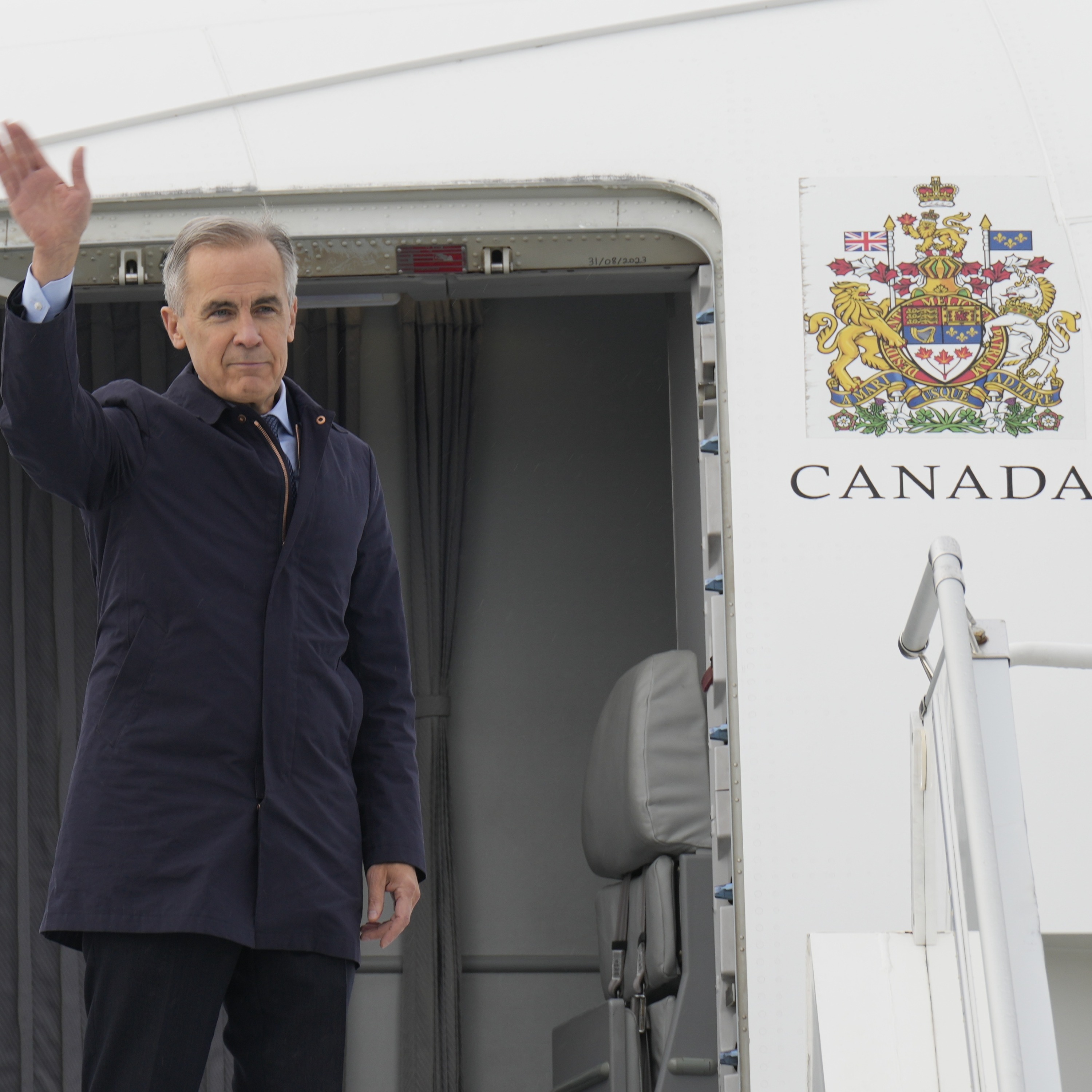
Front Burner
In Asia, Canada hopes to fill a Trump-sized void
00:29:38
<p>As Donald Trump ends trade talks with Canada, Prime Minister Mark Carney is in Asia this week, meeting with leaders, and pitching Canada as a reliable partner in a moment of geopolitical realignment. </p><p><br></p><p>On the trip, Carney has talked about Canada’s search for new reliable partners “who honour their commitments, who are there in tough times, and who engage collaboratively to fix something that isn’t working.” </p><p><br></p><p>So, with Carney in Asia in search of new partners, where does this leave Canada? </p><p><br></p><p>Our guest is Vina Nadjibulla, Vice-President of Research and Strategy with the Asia Pacific Foundation of Canada.</p><p><br></p><p>We'd love to hear from you! Complete our <a href="http://www.cbc.ca/FrontBurnerSurvey" rel="noopener noreferrer" target="_blank">listener survey here</a>.</p><p><br></p><p>For transcripts of Front Burner, please visit: <a href="https://www.cbc.ca/radio/frontburner/transcripts" rel="noopener n...
Loading summary
Transcript58 lines
- [00:00]
Hannah Burner
This is Hannah Burner from Giggly Squad. Opill is the first over the counter daily birth control pill available in the U.S. let's be real. Getting a birth control prescription is not always easy and it's so much admin. In fact, about a third of women face barriers to access prescription birth control. Between scheduling appointments, missing work class or just trying to exist, it's a lot. But now Opill is putting birth control in our control. Opill is a daily birth control that's FDA approved, full prescription strength and estrogen free and 98 effective when used as directed. Grab it online or at most major retailers. No prescription or doctor's appointment needed. So if you're thinking about birth control, check out OPILL to see if it's right for you. Use code GIGGLY for 25 off your first month of opill at O-P-I-L-L.com that's code gigglY-P-I-L-L.com birth control in your control. We love to see it.
- [00:56]
CBC Announcer
This is a CBC podcast.
- [01:02]
Jamie Poisson
Hey everybody, I'm Jamie Poisson. As the difficulty of trade talks with Donald Trump continues, Prime Minister Mark Carney is in Asia this week meeting with leaders on the continent. He's slated to take part in a series of events and summits and meet leaders of nations like Malaysia, India, Vietnam, Singapore and China. And really, Carney appears to be in Asia as a kind of salesman selling the possibility of Canada to the world.
- [01:32]
Prime Minister Mark Carney
We value a rules based system. We respect trade agreements and the rule of law. We value the free exchange of goods, capital and ideas. We're a natural partner.
- [01:41]
Jamie Poisson
In what reads to me as a not so subtle nod to Trump, Carney told leaders in Malaysia's capital that we're.
- [01:47]
Prime Minister Mark Carney
At an uncertain time in the world. There's a shift. We don't know the new system that's going to emerge. It underscores the importance of reliable partners who honor their commitments, who are there in tough times and when things are not working, who work collaboratively to fix them. Colleagues. I would like to just underscore that Canada can be and is such a partner.
- [02:09]
Jamie Poisson
So with Carney and Asia in search of new partners, where does this moment of geopolitical realignment leave Canada? Veena Najabullah is the Vice president of Research and Strategy with the Asia Pacific foundation of Canada, and she joins us today for a discussion about Mark Carney's new strategy in Asia and where Canada stands in a world order no longer organized around American unipolarity. Veena hi. Thank you so much for making the time today.
- [02:45]
Veena Najabullah
Good afternoon. Thank you so much for the invitation.
- [02:47]
Jamie Poisson
So Prime Minister Mark Carney is in Asia right now where he has been for several days now. His first series of visits to the continents is becoming Prime Minister. He's currently attending a summit called APEC where Trump is actually in attendance. And what would you say are some of the primary goals of his trip to Asia?
- [03:06]
Veena Najabullah
Yes. So this is his first trip to the region as Prime Minister. He's going to try to position Canada as a reliable, serious partner that's interested in doing business with Asian partners and that values inclusive trade as well as sustainable development and is committed to rules based trade, which puts Canada in a different category than the big powers like US and China. So the big job is to really to show that Canada has something to offered the region and is committed to being a serious partner that is also reliable.
- [03:45]
Jamie Poisson
Of course, as everyone will know, the never ending trade saga with Trump has taken another turn.
- [03:50]
Veena Najabullah
US President Donald Trump has canceled trade talks with Canada over an anti tariff advert released by the Ontario government featuring former Republican President Ronald Reagan.
- [04:00]
Ronald Reagan (archival audio)
When someone says let's impose tariffs on foreign imports, it looks like they're doing the patriotic thing by protecting American products and jobs. But over the long run, such trade barriers hurt every American worker and consumer.
- [04:16]
Jamie Poisson
A Trump official recently said this wasn't just about the ad and the Canadians are, quote, very difficult to negotiate with.
- [04:24]
Ronald Reagan (archival audio)
Ronald Reagan loved tariffs. He used them sparingly and they totally changed that to say that he didn't because they're catering to the Supreme Court because Canada has been ripping us off for a long time and they're not going to rip us off anymore.
- [04:38]
Jamie Poisson
Canada, how much of this trip to Asia is essentially about Canada broadcasting its desire to distance itself from the United States on the world stage?
- [04:47]
Veena Najabullah
You think? I mean, I think we have to recognize that the trip was planned long in advance of the latest downturn in discussions with the US to attend both the ASEAN Summit and the APEC Summit, which have been on the calendar for the Prime Minister for the last few months. But of course, our need and urgency for diversification is very much connected to the fact that the United States, our single most important partner, is no longer reliable. We've been talking about diversification for 30 years, but I think now it's not just kind of a nice to have, but it's a must have if Canada is to continue to be a prosperous, secure country. So I think there is an urgency to the trip that is connected to President Trump and The trade war, but the necessity for Canada's engagement with it. Asia has been recognized for a long time because quite apart from the U.S. the region, the Indo Pacific region or kind of Southeast Asia, plus Japan, Korea, Taiwan, Australia, that's where a lot of the economic growth is going to be happening. It is already happening and will continue to be happening in the next few decades. And for Canada to continue to be a prosperous country, we need to participate in that opportunity.
- [06:05]
Jamie Poisson
I wonder if you could tell me a little more about what Canada is kind of practically trying to achieve here. So the trip covers stops in Malaysia, Singapore, South Korea, and then engagements with China and Korea. And what signal is Canada sending by choosing those stops? What do they stand to tell us about what they're trying to accomplish concretely?
- [06:27]
Veena Najabullah
So Malaysia is an opportunity for Prime Minister Carney to participate in the asean, the association of Southeast Asian nations summit, a chance to meet with all the leaders of the Southeast Asian countries in one place, as well as to have discussions with other leaders that are at the summit. And Southeast Asia is sort of the part of the Indo Pacific that Canada believes has the most opportunity for us because of complementarities of our economies, because that's a region that has demand for energy, for food as it's growing, and they have tremendous need for the kinds of resources that Canada is really blessed with. So deepening our strategic partnerships in Southeast Asia with countries like Indonesia, Vietnam, Philippines, Singapore, Malaysia is critical. And being at the summit allows Canada also to kind of put forward a few messages about Canada's foreign policy, certainly under this new government. So a shift from kind of a more values based, if you will, principle, forward foreign policy to one of pragmatic engagement of really focusing on commercial and economic relations as well as kind of messages around rules based trade, free trade, integration of economies at a time when so many countries, especially the big ones like US and China, are becoming more protectionist and are turning away from rules based trades. So I think it's a chance for Prime Minister Carney to set kind of the vision for how Canada wants to engage with this region now that things are changing under President Trump in particular, and then also kind of signal some key areas. So for instance, energy is a big thing that the Prime Minister is pushing.
- [08:19]
Prime Minister Mark Carney
We're an energy superpower, unabashedly energy superpower. We have the third largest reserves of oil. We have the fourth largest reserves of lng.
- [08:27]
Veena Najabullah
So he specifically signed a deal with Malaysia on exploring additional investments in lng. Now your listeners would remember that Petronas, which is a Malaysian company is already invested in LNG Canada that's now shipping for the very first time Canadian LNG to Asia. So energy is a big centerpiece. Similarly kind of this idea of Canada as a leader in technology in AI and quantum and cyber. So technologies of the future, that's another area. And then finally kind of investment. I think Prime Minister recognizes that in order for us to be able to diversify our trade, we need to build trade enabling infrastructure here at home. And that's going to require an investment.
- [09:14]
Prime Minister Mark Carney
One of the lessons we take from the big change in the world that's happened over the course of the last few years, intensified in the last year, is that we need to build at home and we need to build at scale at home. And the orders of magnitude are, you know, in the half a trillion up of investment domestically in Canada.
- [09:34]
Veena Najabullah
Well, we need some of that money to come from Asia and that's why he's in Singapore. Yeah.
- [09:40]
Jamie Poisson
Of all the projects that you hear people talk about here, which ones like are most relevant to the discussion about doing business with Asia? Obviously the LNG terminal, but just if you could.
- [09:52]
Podcast Host (Shook Scrutiny)
Yeah.
- [09:53]
Veena Najabullah
So it's also obviously anything to do with ports in Singapore. The Prime Minister met with their port authority and of course Singapore is already involved in ports in Halifax and bc. So really upgrading Canada's port infrastructure is going to be critical because if you look at some of the kind of the numbers on port efficiency, unfortunately Canadian ports don't score very well. In fact, Port of Vancouver is I think only fourth from the bottom globally. So we need a lot more investment and upgrades to how our port facilities function. Obviously we also need investment in a critical mineral sector. So we have noted that Canada has enormous deposits of critical minerals and we have the mining know how. But we do need actual capital to be able to get those minerals out of the ground and then into market. So investment in the critical mineral sector would be another any kind of partnerships around nuclear particularly smarts. So we just saw that the government, federal government invested a couple of billion into a project in Ontario around SMRs. So many countries in Southeast Asia, Asia would be very interested in partnerships around that because obviously conventional nuclear technology takes a longer time and it's harder for them. But there's a ton of interest in SMRs. Similarly, I think a couple of other sectors to note that there's interest in the region for is aerospace as well as AI and cyber. So and those are the areas where Canada wants to invest more through our defense expenditures. As you know, the Prime Minister is saying that we will be quadrupling our defense budget. Much of that will go into these kind of sectors, which are dual use, so which can be used both for civilian economy as well as for our defense needs. Well, in order for us to build those industries here at home, they need additional customers. It can just be Canadian needs. So they need other customers. And Southeast Asia and Asia in general could. Could offer that customer base.
- [12:13]
Jamie Poisson
I was hoping now that we could dig into China specifically. So Carney is reportedly meeting with Xi Jinping. I don't think he has yet. You and I are speaking on Tuesday, and we're not so far removed from a Canadian foreign minister referring to China as a, quote, disruptive global power.
- [12:35]
Veena Najabullah
It seeks to shape the global environment into one that is more permissive for interests and values that increasingly depart from ours.
- [12:44]
Jamie Poisson
That was just a few years ago. Even more recently, I remember that Kearney was referring to the country as, quote, the biggest security threat facing Canada during an election debate. That was in April of this year. And today, the tone and the tenor and the language is really shifted. Canadian officials are now referring to China as a strategic partner in an increasingly complicated world. And just what do you make of that shift in tone?
- [13:10]
Veena Najabullah
Yeah, so things are changing with respect to our China strategy really quickly. I think it's still not quite clear where the Carney government wants to take our relationship with China. So they began by talking about recalibration.
- [13:24]
Prime Minister Mark Carney
This is the start of a process of recalibrating the relationship with China. It's very important that we reopen dialogue with Chinese authorities.
- [13:34]
Veena Najabullah
Now, of course, Minister Annan, after her trip to Beijing, sort of brought back the conversation around strategic partnership.
- [13:42]
Minister Annan
When we think about India and China and other relationships, we have to remember that it is necessary to raise issues of concern to the Canadian population. At the same time, we need to be pragmatic about our economic needs.
- [14:02]
Veena Najabullah
Now, you'll have to remember that we signed a strategic partnership with China exactly 20 years ago, and things looked very different 20 years ago. And of course, strategic partnership is something that we think of when we think of Japan or South Korea, countries with whom we are aligned. Japan is a G7 country. So I think strategic partner is probably not the frame that easily or best describes the relationship that we have with China. We have a complex relationship, and it is true that it needs to be recalibrated because what we had said three years ago in our Indo Pacific strategy may not be fit for purpose, given all the changes over the last year to the entire global order and the US Becoming Now a much more disruptive power as well. So I think it is right that we need to recalibrate the relationship. But what that relationship could look like, I think there are still more questions than answers. And Prime Minister Carney, in his most recent interview, said that he wants to kind of get a sense for the expectations around the relationship. So he's now saying that the meeting with Xi Jinping will allow him to better understand the full parameters, the scope of what is possible with China.
- [15:16]
Prime Minister Mark Carney
Now we're in the process of a resetting of expectations of where the relationship can go and where it won't go. We have a lot of areas where. On which we can build. And look, this is our second largest trading partner. This is the second largest economy in the world. This is one of the most influential actors in terms of the global system, such as it is.
- [15:42]
Veena Najabullah
What he means there, I think, is that country, from Canada's perspective, we would like to have more trade and to be able to deepen commercial ties with China, but in a way that doesn't undermine our national security and in a way also that doesn't undermine our negotiations with the US which remains our most important partner. Right. So that triangulation is a really difficult one. And China is not an easy partner to negotiate with on a good day from a position of strength. So to negotiate with China now, when China feels emboldened, confident, because from its perspective, it's winning the trade war with the US And Canada is in a very difficult situation because of our own predicament with the US and the state of our economy. So we are coming arguably into this conversation in a weaker position at a time when China feels emboldened. So to be able to kind of demand a relationship that serves our interests, but at the same time sort of protects us from all the things that we know China does that is in contradiction to our national security and our values, I think that's a hard task. I mean, I'm sorry if this is a very convoluted answer, but I'm trying to kind of be as analytical about this as possible and note that the desire to have a better relationship with China is understandable, but the reality of the regime in Beijing is such that it's going to be very difficult for us to do all the things that the Prime Minister wants and to protect all the things that matter.
- [17:12]
Jamie Poisson
Yeah, I just want to try and pull it apart a little bit more with you now. So, of course, as you know, well, we went through years with China after we, at the behest of the United States arrested a leading electronics executive.
- [17:27]
CBC Announcer
Canadian officials arrested Huawei executive Meng Wanzhou earlier this month at the request of the Americans. Days later, the Chinese detained former Canadian diplomat Michael Kovrig and entrepreneur Michael Spavor. Beijing says both men pose a risk to state security. This dispute comes amid trade tensions between the US And China. And as Ottawa is conducting a national security review of telecom giant Huawei.
- [17:55]
Jamie Poisson
I know that you were very involved with the efforts to get them both released. We've also seen this steady stream of reporting over the last few years about China's many attempts to meddle in Canadian elections.
- [18:06]
Canada's Election Watchdog
Canada's election watchdog normally keeps her work confidential, but an arrear move went public, saying she's reviewing complaints Beijing meddled in the past two federal elections. It comes after the Globe and Mail and Global News reported serious allegations based on leaked intelligence. Those reports detailed sophisticated efforts by China in 2019 and 2021.
- [18:31]
Jamie Poisson
Of course, there are the human rights concerns as well. There's China's treatment of the Uyghurs. In 2021, Parliament passed a motion referring to China's treatment of the Uyghurs as a genocide, though the Trudeau and his cabinet ministers did not participate in that vote. And are we just, like, putting that all aside now?
- [18:49]
Veena Najabullah
I mean, I don't think we can. I mean, I think we now recognize who we're dealing with in the Chinese Communist Party, and I think we'll need to be able to hold all of that in our minds while also try to have kind of a more pragmatic, more constructive dialogue on the issues that we also care about, notably trade and commercial relations, as well as maybe some discussions around the climate agenda or global health agenda. Right. So, I mean, it's. It's not an easy thing for Canada in particular, because historically, Canada has approached foreign policy from a perspective of we have friends in the world and we have actors that are disruptive and that we. We don't deal with as much. So China, Russia, a few others. And I think in the current global environment, that simply is not something that we're able to do anymore. So we don't have that luxury anymore. We have to be able to engage pragmatically in some areas while also recognizing that there will be limits to that engagement. There are red lines, and we have to be able to do multiple things at once. We have to continue to develop instruments that protect us when it comes to things like foreign interference, when it comes to investments in critical infrastructure. So we need to have investment screening mechanisms in place. We need to have foreign registry in place. We need to be able to continue to educate our population, especially diaspora community, about the threats that are emanating from China and at the same time have a conversation with their leadership on trade and areas of economic cooperation where the interests of both countries might align. Right. So. But it's a very different approach than just sort of saying that we will try to mend fences and pretend like the last five years didn't happen.
- [20:43]
Jamie Poisson
I know. On areas of economic cooperation. I've heard to several people talk recently about EVs. Right. Which we currently have a 100% tax on. We did this with the United States several years ago. China responded by imposing tariffs on canola and then I think on seafood too. Right?
- [21:06]
Veena Najabullah
That's right. And pork.
- [21:07]
Jamie Poisson
And just, you know, let's say there were some concessions around the EV stuff. Just speaking to your earlier point that it's a tricky line to walk with the United States. Right. Could that result in another fracture with the United States and another set of consequences here, here at home for us?
- [21:25]
Veena Najabullah
Yes. So we absolutely need to be very mindful of our discussions with the US and our discussions with China and the implic of them. So kind of the triangulation and if you look at what the US Just signed with Malaysia and with Cambodia, they've signed trade agreements with those two countries that have very strong economic security language that basically says that those countries agree to align with the US On US Export controls, US tariffs and other measures taken in the name of economic security. So that's a direction of travel that the US is now engaged in. So it would be very hard for me imagine that when and if things get renegotiated with Kuzma, that similar language will not be in those agreements as well. Meaning we can only sort of move in some areas with China, like EVs, if we have given up on those areas with the US and that might be where we'll end up with the auto sector here in Canada. But I don't think that conversation has yet finished. So therefore, we have to move carefully and sequence decisions in a way that allows maximum option and agency for Canada. So we have to really do everything possible to protect our industries today, but also to create the foundations that allow us to have the kind of industry that we want also five, ten years from now. Right. Because it's not just about market access with respect to China. We also have to think about economic competitiveness in our overall industrial strategy. So it's not just about dvs, it's about the kind of industrial economy we want to have have right around clean technologies, around technologies of the future in general. And when China enters a market, we have seen this time and time again, they destroyed domestic manufacturing. So from an economic security perspective and from kind of economic competitiveness perspective, we need to approach this not just from like EVs versus canola, but we need to have a broader picture in mind about what kind of economic relationship we want to have with China that serves us today in terms of some of our export sectors, but also is in line with the vision of Canadian economy that we have 10, 20 years down the line.
- [23:59]
Blue Apron Advertiser
Why does every recipe I try need 18 ingredients, including a jar of something paste I'll never use again but will sit in my fridge for nine months? I just want dinner in the oven fast. That's why I love Blue Apron's new one Pan Assemble and Bake Meals. They send you fresh ingredients that are already chopped. All you do is put it all together and bake. That's it. No chopping, no weird leftovers. Just delicious, easy to make meals. Get 20% off your first two orders with code apron20 Terms and conditions apply. Visit blueapron.com terms for more.
- [24:31]
Podcast Host (Shook Scrutiny)
The Supreme Court opened its new term with a pro racial profiling wrecking ball. And and they're just getting started on the docket. The justices weigh whether cops can storm your house without a warrant, states can do racial gerrymandering, and if bans on conversion therapy for LGBTQ minors violate free speech. Oh boy. But don't worry, our podcast Shook Scrutiny is here to break it all down with sharp analysis and just the right amount of shade. New episodes drop every Monday. Listen wherever you get your podcasts or watch on YouTube.
- [25:01]
Jamie Poisson
The other major player I wanted to speak to you about in some detail today is India, where Canada's diplomatic crisis is probably even more dramatic. We are just, what, two years removed from the day that the former prime minister got up in Parliament and accused the Indian government of having a hand in the killing of a Sikh activist on Canadian soil in Surrey, bc.
- [25:23]
CBC Announcer
Over the past number of weeks, Canadian security agencies have been actively pursuing credible allegations of a potential link between agents of the government of India and the killing of a Canadian citizen, Hardeep Singh Nijar.
- [25:40]
Jamie Poisson
The RCMP also accused India of COVID activity on Canadian soil, espionage, interference, extortion, violence, and more. India suspended visas. Diplomats were expelled. None of this has been resolved publicly yet. Today, Canada says that it is elevating its relationship with India. And like, how do you interpret this pivot?
- [26:02]
Veena Najabullah
Yeah so that's, that's a really good question. And I think the answer to that begins with the recognition that our challenges with India and China are very different. So with China we're dealing with the Communist Party and with a regime that represents a kind of structural, a comprehensive challenge to Canada's interests, both economic and national security and our values. With India we have a very specific issue that deals with foreign interference and transnational repression to the issue of Sikh separatism and Khalistan. Now that issue is serious, it's complicated, it has a 40 year history. But the challenge from India is not kind of systemic. It doesn't come from the regime in Delhi because, because India, while imperfect, still is a democracy. It's a parliamentary democracy where also it's a federated system where a lot of the states are governed by parties that are not the same as the BJP and Prime Minister Modi's party. So my point is that we have to see India quite differently than we see China and the threats and challenges from the two are very different. So I think the way that we approach reset with India then has to deal with specifically addressing foreign interference and getting accountability for what transpired two years ago and ensuring that that doesn't happen in the future, that we basically are able to protect Canadians and at the same time be able to essentially move forward on the rest of the relationship as we had imagined it three years ago in the Indo Pacific Strategy, naming India as a critical partner, recognizing that there's a lot of opportun with Canada and India both bilaterally, but also regionally in the Indo Pacific and globally. So I guess what I'm saying is that with India we now have a plan for a step by step reset in the relationship that is conditioned on progress in the security and law enforcement side, which from everything that we're hearing from our law enforcement officials and from RCMP to CSIS to the National Security and Intelligence Advisor, there is now constructive discussion happening that India is cooperating in a way that they weren't arguably even six months ago. Right. So we're making some progress there. It's going to take time and at the same time we are resetting the relationship. But we have to understand that India is a strategic partner to European, Australia and Japan, other actors. Right. So India's place in the kind of the overall map of relationships for Canada is a very different one than that of China.
- [28:55]
Jamie Poisson
Do you think there's danger though, in kind of pursuing both paths at the same time? Accountability and promises that this stuff won't happen again and then also signaling that we want to move forward on this strategic relationship with them. At the same time, like, what kind of, of message does that send? Does. Does it signal that political violence could be overlooked if a partner is economically valuable?
- [29:21]
Veena Najabullah
No. I mean, I think the only way to get accountability is actually to have dialogue and conversation. And that's what we're seeing now. Right. I mean, and that was an approach that also was taken by the Biden administration two years ago when all of this happened. Right. So, I mean, I think, think this is not about rewarding political violence. This is about figuring out how to best achieve Canada's interests and protect Canadian values. So we have an interest in making sure that this never happens again and that there is accountability and justice for what transpired. And we have an interest in advancing a relationship with the most populous country in the world with one of the fastest growing economies, where Canada also has a state, take in that engagement. So, I mean, I think, again, we have to be able to do multiple things at once. We are not living in a world of black and white, unfortunately, the world is getting very gray and we have to figure out how to execute a foreign policy that best protects our values and advances our interests. With India, we are on a path. It's not going to be easy, but if we approach it step by step and make sure that at every turn we are doing, doing multiple things, we're moving on law enforcement and moving on, kind of rebuilding trust and deepening economic partnerships, I think it's a more feasible relationship to repair than the one with China. For all the things that I mentioned in terms of the difference of the regimes in Beijing and New Delhi, Veena.
- [30:58]
Jamie Poisson
This was really interesting and helpful. Thank you so much for this.
- [31:01]
Veena Najabullah
My pleasure. Thank you.
- [31:12]
Jamie Poisson
All right, that's all for today. I'm Jamie Poisson. Thanks so much for listening. Talk to you tomorrow.
- [31:28]
CBC Announcer
For more CBC Podcasts, go to CBC CA Podcasts.