← Front Burner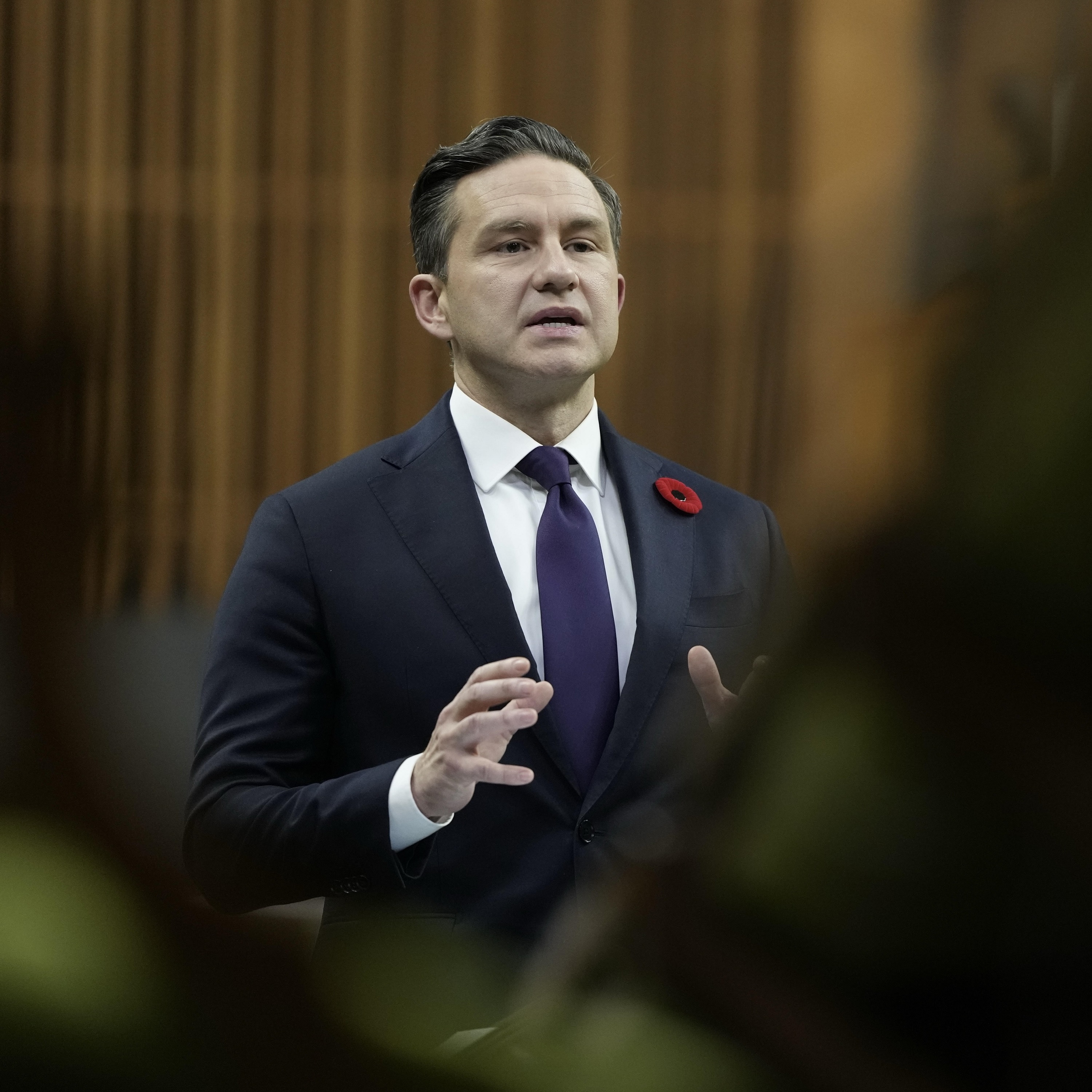
Front Burner
Is Pierre Poilievre’s leadership in trouble?
00:22:58
<p>The Conservative party is reeling from a pair of resignations that happened during budget week.</p><p><br></p><p>First, Nova Scotia MP Chris d’Entremont crossed the floor to the Liberals, citing disagreement with Conservative leader Pierre Poilievre’s approach to politics.</p><p><br></p><p>Two days later, Edmonton MP Matt Jeneroux resigned from his position, citing the need for more time with his family. According to a senior Liberal source who spoke to the CBC, Jeneroux was in talks with Prime Minister Carney about defecting.</p><p><br></p><p>Longtime federal politics reporter Stephen Maher walks us through the high stakes political drama. Maher is also the author of “The Prince: The Turbulent Reign of Justin Trudeau”.</p><p><br></p><p>For transcripts of Front Burner, please visit: <a href="https://www.cbc.ca/radio/frontburner/transcripts" rel="noopener noreferrer" target="_blank">https://www.cbc.ca/radio/frontburner/transcripts</a></p>
Loading summary
Transcript60 lines
- [00:00]
A
Hi, I'm Darina, co founder of Quo. You might know us as openphone. My dad is a business owner and growing up, he always kept his ringtone super loud so he'd never miss a customer call. That stuck with me. When we started Quo, our mission was to help businesses not just stay in touch, but make every customer feel valued, no matter when they might call. Quo gives your team business phone numbers to call and text on your phone or computer. Your calls, messages and contacts live in one workspace so your team can stay fully aligned and reply faster. And with our AI agent answering 24. Seven, you'll really never miss a customer. Over 90,000 businesses use Quo. Get 20% off@quo.com tech that's Q U O.com tech and we can port your existing numbers over for free. Quo. No missed calls, no missed customers.
- [00:57]
B
This is a CBC podcast.
- [01:11]
C
Hey, everybody, I'm Jamie Poisson. I am here with friend of the POD and longtime federal politics reporter Stephen Marr. Hey, Stephen.
- [01:19]
B
Hello.
- [01:20]
C
It is great to have you. What a week it has been at a time when we were expecting lots of coverage about the budget. Instead, it's been kind of overshadowed by one Conservative MP crossing the floor to the Liberals and another, following rumors he would follow suit, quitting his job completely. It adds up to Pierre Poliev's biggest crisis so far. I think that's fair to say. And it could get much worse for the Conservative leader. All right, let's get straight to the political drama. Stephen. I think it is worth us spending some time to just lay out what happened with these two politicians. One floor crossing, one straight up resignation. So let's start with Nova Scotia MP Chris Doncherman. On Tuesday, Budget Day, he resigned from the Conservative caucus and announced that evening that he had joined the Liberal Caucus the next morning. On Wednesday, he holds this press conference saying that he doesn't feel represented in the Conservative Party and he doesn't like Conservative leader Pierre Poliev's, quote, negative approach to politics.
- [02:30]
D
It's time to actually try to lead. Lead a country, to try to make it better and not try to knock it down. Not to continue to be negative in my case.
- [02:45]
C
What was going through your head when you watched that presser?
- [02:48]
B
Well, I would say I'd been wondering if he would cross the floor. I. I live not far from his riding. He's a Red Tory. He barely won. Won by 533 votes in the last election. And unlike in many parts of the country, Poiev's national campaign would not have been helping him, in my case, as.
- [03:14]
D
A Nova Scotian, we're always trying to find ways to work together to solve the issues that are important to our communities. And I didn't see it by sitting in the opposition. I saw it by being a part of the government caucus.
- [03:28]
B
So it didn't come as a, as a shock. Poliev's unpopular in Nova Scotia generally. He has his supporters, but. And d' Entrema has kind of got a low key East Coast Tory style. So the attack style of Poliev kind of feels like a poor fit.
- [03:48]
C
And when you say Red Tory, just tell me a little bit more about what people mean when they say that.
- [03:52]
B
It's partly a question of style. They tend to be more conservative, not in a partisan sense, but in, you know, they strive to comport themselves in a certain way.
- [04:08]
D
I didn't find I was represented there that my ideals of an Easterner, of a Red Tory, I mean, quite honestly of trying to find ways to find solutions and help your community rather than trying to oppose everything that's happening.
- [04:24]
B
They tend to be more open to progressive ideas, if not embracing them. They're often, you know, more open to a communitarian sense and less libertarian. I could go on and on, it's complicated, but we have a bunch of them in the Maritimes and they're different from the reformers, basically.
- [04:48]
C
Do you think that it's fair for me to say that this floor crossing probably didn't roll out the way that it was supposed to? Don Tremont told my colleague Katherine Cullen on Sunday that after Politico broke the news that he was considering crossing House Leader Andrew Shear and Whip Chris Worketon barged into his office.
- [05:08]
D
You know, push my assistant aside, rush in, push, take the door and just push it wide open to sit there and, you know, tell me how much of a snake I really was and turning my, turning my back on my constituents and the people that voted for me.
- [05:26]
C
And, and I know that there was reporting that when the news broke, when that political story broke, that he turned kind of white and walked out of Parliament. Right?
- [05:41]
B
Yeah. So the Politico's Mickey Jurek had a chat with him. She asked him if he was going to cross the floor. He said something about, well, I guess I'll see what's in the budget. And she said, I've got a scoop here. And so it hit and all hell broke loose. And Matt Gennarou was in his office. Right. Gennarou, who's also considering crossing pops by, likely to say, what's this so how's it going? You're crossing the floor. And while they're in there, Andrew Scheer bursts in and pushes open the door and comes in and starts to yell at Don Tremont. Genaroux gets out of there. Don Tremont and Chris Warkinton, the whip, and Andrew Scheer, the House leader, have I, I think, a frank exchange of views.
- [06:37]
C
I'll. I'll just mention that a spokesperson and Conservative leader Pierre Poliev's office says that Don Tremont is, quote, spinning more lies after crossing the floor in response to that. And just tell me more about what happened with Genaru, because this is. This is the other big story of last week.
- [06:58]
B
Genaru has not come forward to tell his version of events. So a lot of people are talking to a lot of other people about what they hear about what Genaru has done. What we know for sure is that he announced his resignation after talking to Warkinton, we are told, I believe, that he did meet with Kearney and was thinking about crossing the floor. I have that on good authority. What everyone is wrestling with is rumors, very detailed and specific rumors about warnings he received from the party about what would happen if he crossed the floor.
- [07:52]
C
And what are people talking about exactly when they talk about that?
- [07:57]
B
Well, I don't think it would be fair to him to get into the details at length because we don't know with 100% confidence that this is right. But I find the specific and detailed nature of these rumors kind of rattling in, that it sounded like really ugly politics, intense pressure on him. And I find it sort of disappointing that here he is a member of Parliament, he's supposed to be able to speak up for himself and explain to his constituents what's going on. But at the same time, if what I'm hearing is true, he's also a human being. And you have to think, well, this has been extremely intense, and maybe he's just really not in a position where he can step up and speak for himself.
- [08:58]
C
I've heard Conservatives say that he was going to resign from politics. This was something that he was already thinking about doing in that Matt Jenner has.
- [09:08]
B
Has. Has had to make this decision known earlier because of these liberal pressure tactics that I mentioned. I mean, he's been the victim of that.
- [09:17]
C
That came from House leader Andrew Scheer specifically. And so what do you make of that response?
- [09:24]
B
I. That doesn't fit with what I'm hearing. It is possible, and I have heard that he had been thinking of getting out of politics. It's a tough life. And he and his wife and kids, they have moved away from the rioting and that may not be sustainable. So that sort of makes sense that he was thinking about getting out. But, you know, Mr. Scheer suggesting that the Liberals are somehow responsible for pressuring him seems. That seems like a very partisan way of looking at her foreign.
- [10:12]
C
You talk to a lot of people around this and in the Conservative Party. What is the mood like in the Conservative Party? Is the sense that these two MPs are the end of it, or is there more discontent beneath the surface?
- [10:25]
B
The MPs who I've been communicating with, they are being kind of guarded and defensive. This has been a very difficult week for them. And, you know, this is reflected badly on the whole team, on their leader. And I, I don't think they want more of this kind of thing. Right.
- [10:49]
C
I was reading in the Star, in the Toronto Star, that as many as 10 to 15 MPs and his caucus are, quote, very frustrated with him and his senior leadership team. With, with POV and his senior leadership team. Is it possible that we would see more crossings?
- [11:08]
B
I. I think it's entirely possible. This is kind of unusual in that the Prime Minister keeps basically inviting people to cross the floor, which these things are usually done more subtly, more quietly. So this is kind of Carney's being a little different than his predecessors in this case. And I'm told that there are at least a couple who've been in talks with the Liberals. I'm also hearing some talks behind the scenes on the Liberal side, critical of PMO for mishandling the general crossing, who are thinking they could have landed him if they'd handled it better.
- [11:51]
C
How. Oh, that's interesting how it's very important.
- [11:54]
B
In these situations to make someone feel that they're going to be part of a team and to develop trust. And that seems to not have happened in the generous case. Now, in the case of Chris Donferma, he was the. The only Nova Scotia Tory MP. Right. Of the 11 MPs in Nova Scotia, all the rest of them were Liberals. And he's also a very experienced guy, a former minister at the provincial level. So he would not have needed a whole lot of hand holding, if you know what I mean. But you look at the history of these things, there's often a sort of trusted intermediary who helps walk the person from one team to the other. I think of former Ontario Premier David Peterson played that role with Belinda Stronach because she knew and trusted him. It was possible to make an arrangement accordingly. I am very pleased to announce that Ms. Stronach will cross the floor and has agreed to join the cabinet as Minister of Human Resources and Skills Development.
- [13:00]
E
I cannot exaggerate how hard this was.
- [13:03]
B
For me, but for Stronock, the reasons for defecting are clear.
- [13:07]
E
I find myself at a crossroads forced on me by the decision of the leader of the Conservative Party to try to force the defeat of this government this Thursday, because the consequences are serious.
- [13:21]
B
As with many things with Mark Carney, he has not been in politics for a long time. Right. So he and his people may not have the institutional memory for the best way to handle these very subtle situations that require a careful human touch.
- [13:38]
C
Right, right. That's really interesting. And just to state the obvious to Paul, an Alberta mp, as you just said, is a different thing. I think that Gennaroo won that race by about 3,000 votes. So, you know, still a tight race, but not as tight as the Nova Scotia one. As Don Tremont.
- [14:13]
F
The Supreme Court opened its new term with a pro racial profiling wrecking ball, and they're just getting started on the docket. The justices weigh whether cops can storm your house without a warrant, states can do racial gerrymandering, and if bans on conversion therapy for LGBTQ minors violate free speech. Oh, boy.
- [14:29]
C
But don't worry.
- [14:30]
F
Our podcast, Strict Scrutiny, is here to break it all down with sharp analysis and just the right amount of shade. New episodes drop every Monday. Listen wherever you get your podcasts or watch on YouTube.
- [14:41]
C
Coming back to the Conservatives and this pressure campaign that we're hearing about. Is this the way that you get MPs to stay on side with you? You think that strategy.
- [14:53]
B
I have not often heard of stuff like this, although I've been thinking about the history of it. And there was a time. This reminds me a little bit of the last days of Paul Martin's government. And there was quite a lot of pressure put on Chuck Cadman. Chuck Cadman was a man of great integrity. But now we learned that the Conservative Party tried to bribe him and that the Prime Minister was aware of it, including. I don't want to get into the ancient history about it, but allegations that there were certain Conservatives who were talking to him about his insurance and wanting to make sure that he would be financially whole if he stuck with the Conservative Party. He was suffering from cancer.
- [15:37]
E
In an unprecedented move, Prime Minister Stephen Harper threatened to sue Liberal leader Stephane Dion and other Liberal MPs over statements on the party's website about the Chuck Cadman affair. Those statements accuse conservatives of trying to bribe Cadman to vote against the Liberal budget in,022 2005, and that Stephen Harper knew it.
- [15:59]
B
So the stakes are very high for both sides. If you look at it from Mark Carney's side right now presiding over a minority, that means that all kinds of things that he can't control can happen in the committees. One of the committees, for instance, is launching an inquiry into Brookfield and their use of offshore tax havens. He's the former chairman of Brookfield, so that's calculated to cause him and his former colleagues at Brookfield a lot of problems. The Liberals are not able to avoid that kind of mischief at committees in a minority. So that's what's at stake for Carney as well as the prospect of losing his government on a vote, although that doesn't seem likely in the near future for the Conservatives. One more crossing, one or two more people cross the floor and Pierre Pauliver's leadership could be fatally undermined. So in the people around him, his the tight knit group who Don Tremont described as kind of having a frat house atmosphere, quite honestly, a lot of.
- [17:13]
D
Times I felt it was a part of a frat house rather than a serious political party.
- [17:17]
E
What do you mean by that?
- [17:19]
D
Well, I mean it was about who, who was friends with who, you know, what kind of fun could you have with something. What, how could you end up beating up on someone else? You know, what kind of negativity could you, you know, who could be the most negative, who could be the most cutting, that kind of stuff?
- [17:39]
B
Andrew Scheer, Chris Warkinton, Jenny Byrne. These people have been together since, since the late 90s or early 2000s there. A lot of them were Reform Party interns under Preston Manning. So they are a very tight knit team and they have worked long and hard to take control of this party. And just a few months ago they were within everyone thought that they were going to be running the country.
- [18:08]
C
Yeah.
- [18:09]
B
And now. And now they're risking losing it all. So both sides are highly motivated to do things that they might not normally think about doing in order to get through these next couple weeks.
- [18:38]
C
You know, you just mentioned one or two more crossings and Poliev's leadership could be fatally undermined. Is it possible that. It already is possible.
- [18:51]
B
The way these things typically work is people who might wish that they had a better alternative to Mr. Polly, but no one is presenting themselves. Nobody is saying, well, if you get rid of Poliev, and it doesn't even seem to be happening behind the scenes. So if there really are 10 people who want to do him in within his own caucus, they can start leaking and make his life unbearable. That kind of thing typically happens when there's someone else who wants the job. And at this time, we haven't seen that. We haven't seen anyone. And the people who I'm interested in are Jason Kenny, Mark, Carolyn Mulroney. People talk about Doug Ford. That seems unlikely to me. But if someone high profile with some kind of organization starts working against Poliev, then things could change very quickly. But he has a strong control of the party. The campaign manager in the last election, Jenny Byrne, has built his team, knows people across the country. He's got strong support among, you know, libertarians and anti vaxxers. He appears to have good relationships with the evangelical wing of the party, which was strengthened under Shi. So it's kind of hard to imagine that a, that they're going to be out organized by another group.
- [20:30]
C
Might be worth noting here. A new poll from Abacus asked what would happen if Poliev was replaced. Some of the names the Canadians were asked about included Ford, former Prime Minister Stephen Harper. And it essentially found that no other potential successor performed better than Pollyv. At the moment, though, as you say, that can change very quickly when he put a new person on the scene and introduced people to that, that person. You know, we, we've been talking about Carney and how Cardi's motivated to get this majority. But this was also, do you think, a pretty good week for Carney last week too, because the attention was really placed on the chaos and infighting in the Conservative Party and not on the budget. And talk to me a little bit more about how you're thinking about, about that or was it, is that good for Cardi?
- [21:26]
B
Yeah, I think so. When you're, what's the old saying when you, when your opponents are having trouble, stay out of the way. So, yeah, they're. The liberals are laughing behind their hands here at the trouble on the Conservative side. They did not plan to have Don Tremont break the news when he did and probably would have liked it better if he'd gone a day later and been able to say, gosh, this budget is so great that I think I have to cross the floor to support it. Right. Like there would have been a way to make this better for them. But, you know, my sense of the budget is that it's landing fairly well. A lot of the people who don't love it say, well, it could be better, but I guess it's okay. And given the very difficult economic and political circumstances that we're in, those kinds of reviews are actually pretty good, I think.
- [22:23]
C
Okay, next couple days, what are you going to be watching for specifically? What do you have your antenna up about?
- [22:32]
B
Well, I mean, there's some sort of soap opera type questions, you know, will Matt Gennarou resurface and explain himself? Will any more MPs cross the floor? But in sort of more substantive stuff, it would be good in a way for the country if we get back to the kind of questions that have to do with the administration of the government in this country. And I, I hope the conservatives get their shit together during this soap opera. They failed to move the opposition amendment to the budget, which is their main job on the. In the days after a budget comes out, they're obviously so distracted by all of this drama that, that they're failing to fulfill their basic functions as an opposition party. So they need to have a little think and try to get their team together. I think they look pretty bad, and when they look bad, it gives the liberals a free pass. So they need to stop messing things up, get their team together, and focus on providing decent opposition for the people of Canada.
- [23:49]
C
Okay, that feels like a great place to end this. Stephen, thank you so much for this. This is great.
- [23:55]
B
My pleasure. Thank you.
- [24:05]
C
All right, that is all for today. I'm Jamie Poisson. Thanks so much for listening. Talk to you tomorrow.
- [24:20]
B
For more CBC Podcasts, go to CBC CA Podcasts.