← Front Burner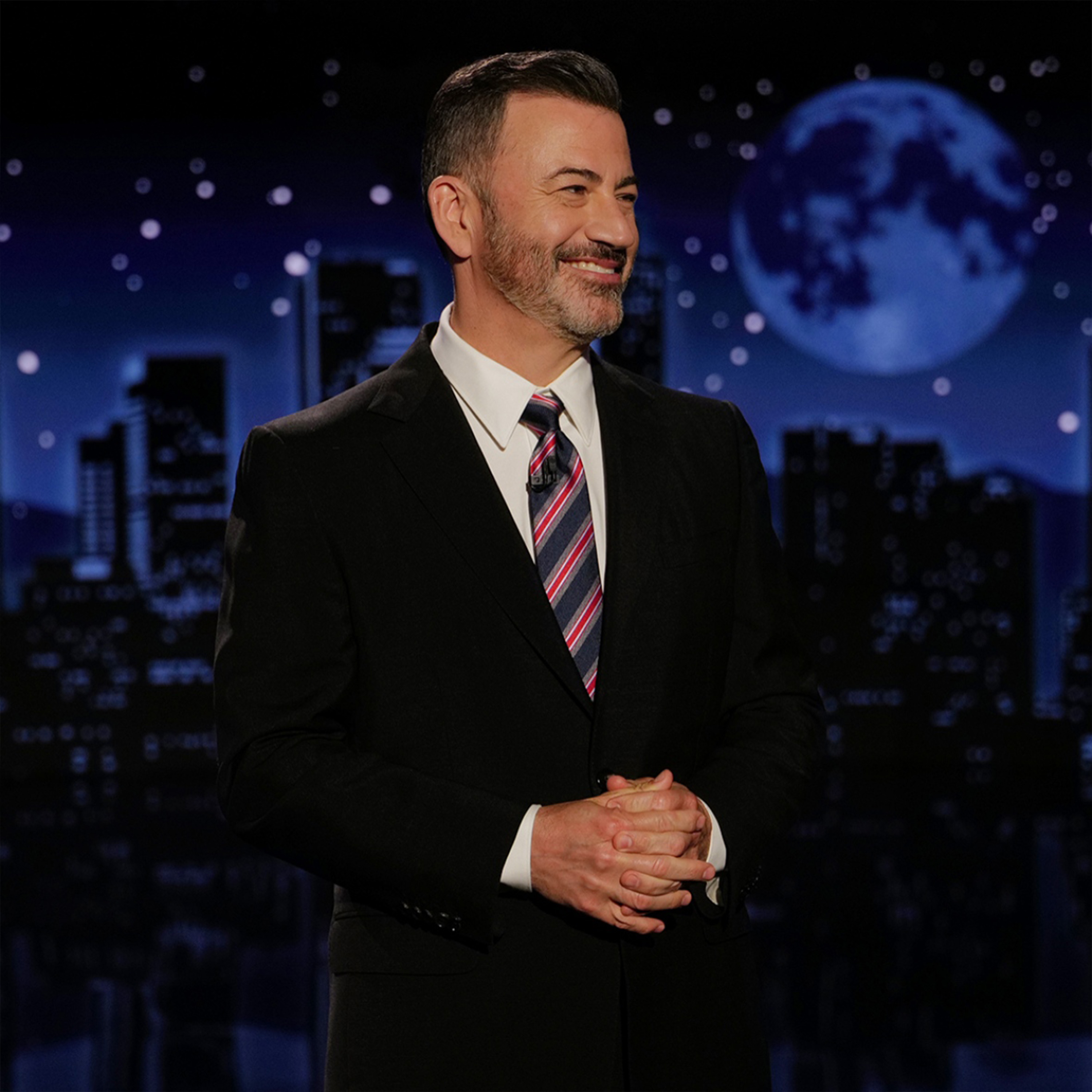
Front Burner
Jimmy Kimmel, free speech and big money media
00:30:48
<p>After a brief suspension for comments he made in the wake of the Charlie Kirk killing, Jimmy Kimmel has made his return to late night.</p><p><br></p><p>It was just the latest example in a string of cancellations, resignations, lawsuits, settlements and potential mergers that tell the story of a media industry buckling to Trump or consolidating under a wealthy and powerful few, many of whom are friendly with the Trump administration. </p><p><br></p><p>Eoin Higgins, independent reporter and author of “Owned: How Tech Billionaires on the Right Bought the Loudest Voices on the Left” joins us to talk about the bigger story of what’s happening with American media and the changes still to come.</p><p><br></p><p>For transcripts of Front Burner, please visit: <a href="https://www.cbc.ca/radio/frontburner/transcripts" rel="noopener noreferrer" target="_blank">https://www.cbc.ca/radio/frontburner/transcripts</a></p>
Loading summary
Transcript73 lines
- [00:00]
Darina
Hi, I'm Darina, co founder of Quo. You might know us as openphone. My dad is a business owner and growing up, he always kept his ringtone super loud so he'd never miss a customer call. That stuck with me. When we started Quo, our mission was to help businesses not just stay in touch, but make every customer feel valued, no matter when they might call. Quo gives your team business phone numbers to call and text on your phone or computer. Your calls, messages and contacts live in one workspace so your team can stay fully aligned and reply faster. And with our AI agent answering 24. Seven, you'll really never miss a customer. Over 90,000 businesses use Quo. Get 20% off@quo.com tech that's Q U O.com tech and we can port your existing numbers over for free. Quo. No missed calls, no missed customers.
- [00:57]
Owen Higgins
This is a CBC podcast.
- [01:02]
Jamie Poisson
Hey, everybody, I'm Jamie Poisson. So Jimmy Kimmel made his return to the air Tuesday night. And while he didn't apologize for anything that he said in the wake of Charlie Kirk's murder, he did offer.
- [01:21]
Jimmy Kimmel
And the truth is, I don't think what I have to say is going to make much of a difference. If you like me, you like me. If you don't, you don't. I have no illusions about changing anyone's mind, but I do want to make something clear because it's important to me as a human. And that is, you understand that it was never my intention to make light of the murder of a young man.
- [01:40]
Owen Higgins
I don't.
- [01:42]
Jamie Poisson
In a 20 minute monologue that got emotional at times, Kimmel went after Trump's chair of the fcc, Brendan Carr, who had suggested that Kimmel be suspended.
- [01:51]
Jimmy Kimmel
Brendan Carr, the chairman of the fcc, telling an American company, we can do this the easy way or the hard way and that these companies can find ways to change conduct and take action on Kimmel or there's going to be additional work for the FCC ahead. In addition to being a direct violation of the First Amendment, is not a particularly intelligent threat to make in public. Ted Cruz said he sounded like a mafioso.
- [02:19]
Jamie Poisson
Then he set his sights on Trump himself.
- [02:22]
Jimmy Kimmel
You almost have to feel sorry for him. He tried, did his best to cancel me. Instead, he forced millions of people to watch the show. That backfired bigly. He might have to release the Epstein files to distract us from this. Now.
- [02:39]
Jamie Poisson
Earlier in the evening, Trump responded to Disney and ABC's decision to put Jimmy back on the air by posting that Kimmel is, quote, quote, yet another arm of the DNC and to the best of my knowledge, that would be a major illegal campaign contribution. I think we're going to test ABC out on this. Let's see how we do. Last time I went after them, they gave me $16 million. This one sounds even more lucrative. He's referring there to a previous settlement with abc, which we'll get into. The crackdown on criticism after Charlie Kirk's killing has raised fears of threat threats to freedom of speech and press freedom in the United States. But this was just the latest in a string of cancellations, resignations, lawsuits, settlements and mergers, all of which tell the story of a media industry buckling to Trump or consolidating under a wealthy and powerful few, many of whom are friendly with the Trump administration. What comes next could radically change some of the most watched news channels, not just in the U.S. but worldwide, including here in Canada, in a big way, not to mention one of the most used social media platforms. So to go through all of this, I'm talking today with Owen Higgins, independent reporter and author of Owned How Tech Billionaires on the Right Bought the Loudest Voices on the Left. Oh, and hey, it's great to have you on frontbrner. Thank you so much for making the time.
- [04:05]
Owen Higgins
Thank you so much for having me. Real pleasure.
- [04:07]
Jamie Poisson
So we heard a little bit of Jimmy's monologue in the intro there, but I would just be curious to get your thoughts. What did you make of it? Any moments that stood out to you?
- [04:17]
Owen Higgins
Yeah, I thought that it was, I mean, from his perspective, probably a pretty smart monologue to give. It was conciliatory in as much as it needed to be while kind of still holding the free speech, I guess, aspect of things as kind of the most important.
- [04:35]
Jimmy Kimmel
This show is not important. What is important is that we get to live in a country that allows us to have a show like this.
- [04:45]
Owen Higgins
And in doing so, he ended up kind of, I think, trying to draw a line between, you know, the Trump and Brendan Carr and maybe like other people on the right, like Ted Cruz and and some others who he pointed out don't particularly like him or what he believes and he doesn't like them or what they believe, but they can come together on this.
- [05:06]
Jimmy Kimmel
Maybe most of all, I want to thank the people who don't support my show and what I believe, but support my right to share those beliefs anyway. People who I never would have imagined, like Ben Shapiro, Clay Travis, Candace Owens, Mitch McConnell, Rand Paul, even my old pal Ted Cruz, who, believe it or.
- [05:31]
Owen Higgins
Not, I thought that for as far as that goes. It was fine. I think that, you know, Kimmel is in a bit of a tight situation in which he can't address every single free speech threat that there is out there. He kind of kept the focus on Brendan Carr, kept the focus on Trump, and made it kind of about him and the other late night hosts. But the one thing I would say is that this is part of a, kind of an overarching attack on free speech in the US Right now. And it's certainly the most, I guess, prominent just because of the fact that Kimmel's. Kimmel is aired into a million millions of households every night. And the other people who are the victims of this crackdown are perhaps not, but it is part of a larger whole. Want to emphasize that.
- [06:22]
Jamie Poisson
Yeah. And this is much of what I'm hoping we can go through today. Just sticking with Kimmel for a little bit longer. You know, obviously there was a big backlash after he was taken off the air. Lots of people in Hollywood signed petitions.
- [06:38]
Karen Attia
Over 400 Hollywood stars, including Jennifer Aniston, Tom Hanks and Meryl Streep, have signed an open letter by the American Civil Liberties Union condemning Disney's suspension of Jimmy Kimmel live and supporting free speech.
- [06:52]
Jamie Poisson
People like Ted Cruz even came out against it.
- [06:54]
Jimmy Kimmel
I like Brendan Carr, but we should not be in this business. We should denounce it. It's fine to say what Jimmy Kimmel said was deplorable.
- [07:04]
Owen Higgins
It was disgraceful, and he should be.
- [07:06]
Jimmy Kimmel
Off air, but we shouldn't be threatening.
- [07:08]
Owen Higgins
Government power to force him off air.
- [07:11]
Jimmy Kimmel
That's a real mistake.
- [07:12]
Jamie Poisson
People called for a boycott of Disney plus, which is ABC's parent company. What do you think was really behind Disney's decision to reinstate him? Why do you think they did it?
- [07:23]
Owen Higgins
Well, I don't think that the subscription model that they have for their streaming platform, I mean, I think that probably had something to do with it. Right. I think that the general bad press and the possibility of any kind of a boycott as the US Economy is starting to contract and perhaps go into recession, which. Which looks like it, it may happen. I think that if you're a large company like Disney, you probably want to minimize as much disruption as possible. And that's kind of like, you know, the position that they were put in by Carr and by Trump here is kind of interesting because they have a lot of pressure from the administration, the White House, which is, you know, the. I mean, the federal government is much more powerful than any company in the US by far. And then they're also seen pressure from distributors like nexstar and Sinclair, which have their kind of their own reasonings for wanting to ingratiate themselves with Trump. For Sinclair, I think is kind of a more ideological thing. Where Sinclair Media is, tends to be kind of lined up with Trump and Republicans and right wing politics in the US More broadly. Nexstar is as well. But I think that for them, they have a merger that they're trying to get through with a similar distributor. Tegna, which is Gannett, was a very large media company conglomerate down here in the US and it split about 10 years ago into Gannett. And Tegna is the one that kind of controls the TV distribution and they are trying to merge with nexstar and nextstar is going to be purchasing Tegna. So they want to make sure that, that they are staying on the good side with the administration because ultimately Brendan Carr is the one who's going to approve that through the regulatory scheme that.
- [09:22]
Jamie Poisson
We have down here to approve the merger. Right. Just for people who are listening, right next are and Sinclair, these are the companies that own something like 30 ABC affiliates each. And they have both announced that they are not going to be playing Jimmy Kimmel moving forward. Right. Like they're putting news programming in its place at the moment.
- [09:45]
Owen Higgins
Right at the moment that. At the moment, that's what it is.
- [09:48]
Jimmy Kimmel
We are still on the air in most of the country, except ironically for Washington D.C. where we have been preempted. We are off the air in Nashville, New Orleans, Portland, Oregon, Salt Lake City and St. Louis, where none of my.
- [10:01]
Owen Higgins
I mean, I think that if there's, there was a broad outcry, it's possible that they might change their minds on that. But you know, ultimately it's hard to really know.
- [10:29]
Jamie Poisson
Can you tell me more about Brendan Carr? So I know that he has a chapter that he's written in Project 2025, which is really this kind of right wing manifesto or guide from the Heritage Foundation. And in it he wrote that quote, the FCC should promote freedom of speech. It was interesting in that monologue, Jimmy's monologue last night. I found very interesting this quote from him back in 2022 where from when he worked under Joe Biden and he.
- [11:02]
Jimmy Kimmel
Said that political satire is one of the oldest and most important forms of free speech. It challenges those in power while using humor to draw more people into the discussion. That's why people in influential positions have always targeted it for censorship. You know who wrote that? FCC Commissioner Brendan Carr.
- [11:22]
Jamie Poisson
Tell me more about this guy and what he's been doing since becoming the chair earlier this year?
- [11:28]
Owen Higgins
Sure. I think, you know, I think the first thing I would say is that the, someone saying that free speech and satire are good when a, when their political adversary is in power and saying that it's bad when they're, when the person who they agree with politically is in power is kind of a long standing right wing approach to free speech that goes across countries and certainly, certainly administration. So I'm not surprised that Carr said that he, his, his perspective since, you know, joining the FCC or before has been that the media and the media landscape, the FCC skew too liberal, that they, that they kind of hand over indoctrination and propaganda to the left and that the right is being underserved. This right wing narrative goes back decades. It goes back to the Fairness Doctrine, which was an FCC policy requiring that differing viewpoints be aired. Right. And this was abolished or. Yeah, it was abolished in 1987 under Reagan. And after that happened, that's when you start to see, you know, less of an influence by the FCC on how news organizations report out news and you see things like Fox News kind of come up. Of course that's, you know, that's like 10 years later. But the stage was set at that point. The reason that they didn't like the Fairness Doctrine to begin with is that they felt that it kind of uplifted left wing views and uplifted this kind of like liberal sensibility when, you know, reality would say that, you know, it should be, it should just be on the right like that. Those are the only viewpoints that should be heard. So what Brennan Carr is saying now is like an evolution of that. It's, it's a, it's a different perspective on that, but it is part of the same overall like right wing narrative, right wing opinion on this. The issue that arose here where lots.
- [13:32]
Stephen Colbert
And lots of people were upset was not a joke. It was not, you know, making fun.
- [13:35]
Owen Higgins
Or pillaring me or the administration or the President. It was appearing to directly mislead the.
- [13:43]
Stephen Colbert
American public about a significant fact of probably one of the most significant political.
- [13:48]
Owen Higgins
Events we've had in a long time. Certainly the most significant political assassination we've seen. Only Boost Mobile.
- [14:03]
Jamie Poisson
Boost Mobile will give you a free year of service.
- [14:05]
Owen Higgins
Free year. When you buy a new 5G phone. New 5G phone. But I'm your hype man. When you purchase an eligible device, you get $25 off every month for 12 months with credits totaling one year of free service, taxes extra for the device and service plan online.
- [14:16]
Gavin Crawford
Only hey, I'm Gavin Crawford from the Podcast Because News. It's a show where I ask comedians questions about the news of the week and they try their best not to answer correctly. This week we play a game called Two Truths and AI delve into some forgotten baseball slang as we cheer for the Jays. And I'll ask the panel which entertainer is refusing to perform in America this year. Join me, Martha Chavez, Alice Moran and Miguel Rivas, three comedians who are not worried about getting yoinked off the air because they made fun of the President. Get Because News. Wherever you get your podcast, which I'm presuming is here, I want to go.
- [14:51]
Jamie Poisson
Through some other pretty high profile examples with you. Like we mentioned earlier, Kimmel wasn't the only casualty of the Post Charlie Kirk assassination crackdown. Other journalists have lost their jobs as well. I'm thinking of Matthew Dowd on msnbc who talked essentially about how hateful thoughts.
- [15:14]
Stephen Colbert
Lead to hateful words which then lead to hateful actions. And I think that's the environment we're in that, that people just, you can't stop with these sort of awful thoughts you have and then saying these awful words and not expect awful actions to take place. And that's the fortunate environment we're in.
- [15:32]
Jamie Poisson
But I want to talk specifically about columnist Karen Attia, who ended her 11 year run at the Washington Post after she says the paper was fired for a series of blue sky posts where she was, in her words, speaking out against political violence, racial double standards and America's apathy towards guns. She also quoted Kirk's comments that black women lack brain processing power. Pen America said firing the firing of journalists in the wake of the Kirk killing should alarm anyone who cares about free speech and a free press. But the Washington Post has gone through a number of changes, largely brought on by its owner, Amazon billionaire Jeff Bezos. And can you remind us of some of the changes that we've seen at the Post and how this recent decision to fire Atia fits in with that?
- [16:18]
Owen Higgins
Bezos's approach to the Washington Post for a long time was pretty hands off. He didn't really want to involve himself too much in the newsroom. That was until last year, before the election, when the endorsement of Kamala Harris was prepared and ready to go out. And Bezos stepped on that. He said, don't do that. We're not doing that. This is allegedly, allegedly this came from him. David Remnick said if Jeff Bezos had said two years ago that he thought the editorial page should get rid of endorsements all of them. You could argue the case one way or another, but he was effectively suggesting that given this scenario, with the timing of it, look at.
- [16:59]
Jimmy Kimmel
If I had had the prescience to think about this topic at all two years before, that would have been better for perception reasons. But in fact, we made this decision.
- [17:12]
Owen Higgins
It was the right decision.
- [17:14]
Jimmy Kimmel
I'm proud of the decision we made, and it was far from cowardly because we knew there would be blowback.
- [17:21]
Owen Higgins
It's interesting because from my perspective, Bezos is probably making the calculation that if Harris comes into office, he is not going to suffer any kind of consequence for blocking the post's endorsement. He's not going to lose any of his contracts. He's not. You know, Amazon Web Services makes billions of dollars from the federal government. Now, Trump, on the other hand, is the type of person who would do that. He would use the power of the US Government vindictively, not because Bezos doesn't deserve those contracts. I'm not making a case for that either way. But to say that from Trump's view, it would be because Trump would feel insulted by it or Trump would just make things harder, I think, for Bezos. So that was the calculation there. Then the opinion page kind of shifted its focus to be more, you know, about free markets and, you know, Americanism. There have been a few other changes there, but the Karen Adia firing is a whole other level, I think. I think in the letter that they reportedly sent her that she posted, they said that part of the reason was the things that she said about white men. You know, rewind. Five years ago, this was not the way that these companies were talking. Now they're talking this way. It's. It's hard to think of this as having kind of any, I guess, like, ideological consistency other than they're just trying to kind of, you know, ingratiate themselves to Trump and to the ruling regime.
- [18:58]
Jamie Poisson
Okay, let's do cbs, shall we? Because I think when you take all of these examples together, they really start to paint a picture here. The Late show with Stephen Colbert, another critic of Trump's, was canceled.
- [19:13]
Stephen Colbert
Before we start the show, I want to let you know something that I found out just last night. Next year will be our last season. The network will be ending the Late show in May, and.
- [19:28]
Jamie Poisson
CBS said that that was a purely financial decision. But there are suspicions, suspicions that this was another move motivated by political and business interests. Tell me, how did canceling Colbert and. And a $16 million settlement with Trump over an interview with Kamala Harris on the current affairs program 60 Minutes contribute to the sale of Paramount Global, CBS's parent company, to Skydance Media.
- [19:54]
Owen Higgins
First of all, the $16 million settlement with Trump for this spurious defamation lawsuit seems to be what, what could be called just a straight up bribe, $16 million to his, to his foundation as, you know, like a way of paying this off and settling and not, not having it go to court.
- [20:16]
Jamie Poisson
And I don't mean to interrupt you, but maybe worth noting here, this isn't the only settlement he's extracted. He also extracted one out of abc. Right. For an interview with George, that George Stephanopoulos did, which, you know, I've heard many, many media experts say was completely defensible under, you know, every American free speech and media law.
- [20:41]
Owen Higgins
Yeah, I think that, I think that a good way to look at those lawsuits and, and I'll return to, to Paramount, CBS in just a second, but I think a good way to look at those lawsuits is they're just kind of throwing everything against the wall and just see what will stick. It's not so much about specifically, you know, getting the media organizations or getting media figures in a particular moment or a particular lawsuit. It's more about just kind of flooding the zone and making things very difficult just to go back to Paramount here. You know, the thing with, with Colbert is the Colbert wasn't actually technically canceled. What it was, they didn't, they announced that they were not going to renew his contract, which is effectively the same thing. But, but he wasn't, he wasn't like kicked off the air like he still has like another, you know, year, year and change to go. It's my opinion that this was probably done because they were looking for an excuse not to continue to produce this expensive show. That probably doesn't make them a lot of money. It probably loses them some money. But it's hard to kind of square the announcement with the Paramount Skydance sale, as at least like the announcement was probably made to, to curry some favor with the Trump administration.
- [21:53]
Stephen Colbert
Now, I believe this kind of complicated financial settlement with a sitting government official has a technical name in legal circles. It's big fat bribe. Because this all comes as Paramount's owners are trying to get the Trump administration to approve the sale of our network to a new owner, Skydance.
- [22:11]
Owen Higgins
I mean, there have been resignations since this deal went through. There's been a new policy put in place after DHS Secretary Kristi Noem complained that, you know, that her interview was taken out of context. Now CBS is pledging to air unedited, like Their entire interviews with these figures. They are continuing to just be very sycophantic towards the administration. I think that, you know, part of that is because they are attempting to purchase other, other, you know, media properties like. David Ellison owns Skydance, which bought Paramount, which, which is the parent company of cbs. His father is Larry Ellison, Very hard right, big Trump backer, founder of Oracle, the software company. His son David is trying to buy Warner Brothers, that CNN and HBO. Larry himself is trying to buy TikTok. So there's a lot of or like be part of a group that's going to buy TikTok. So they continue to want to control different parts of the media to buy them up. But in order to do that they need to get regulatory approval from the federal government in order to get that federal regulatory approval rather than going through the normal channels as they might have in the past to get this approval. They know that what they need to do now is to made Trump happy.
- [23:51]
Jamie Poisson
Focusing on CBS News a little bit longer. We've talked about some of the casualties of this rapidly consolidating media industry, but let's talk about some winners here. Someone who could see a pretty remarkable rise is someone like Bari Weiss. Right. And can you remind us who she is and why Paramount is looking to buy her Free Press, her substack for over $100 million and make her, according to reports, the editor in chief and co president of CBS News.
- [24:20]
Owen Higgins
Yeah, Barry Weiss is a former Wall Street Journal and New York Times editorial page editor. She famously or infamously I suppose, resigned from the New York Times.
- [24:33]
Jamie Poisson
Her scathing resignation letter reads in part quote, they have called me a Nazi and a racist. My work and my character openly demeaned on company wide slack channels.
- [24:46]
Karen Attia
Saying that I am offended is a way of making someone radioactive. It's a way of smearing their reputation, of making them a liability. Because once you tar someone as a racist or a misogynist or a fascist or whatever the word of the day is, you know, it's a way of sort of taking them down a peg.
- [25:02]
Owen Higgins
After kind of, you know, know a rocky tenure there, and started a publication called the Free Press, which is the one that you just mentioned, that is going to be sold or maybe sold. It's, it's in the, it's in the works. It seems her like the Free Press basically is a hyper pro Israel, hyper right wing culture war publication.
- [25:23]
Karen Attia
A lot of people on the Internet believe that you are my boss because they believe that I am a member of the Mossad. Oh really? This is actually the first time that I'm meeting you, or at least as far as I know, any member of the Mossad. So I'm very excited to meet you.
- [25:37]
Owen Higgins
That its reporting has traditionally been dogged with accusations, often well founded, that it's inaccurate. It is an ideological project, not, not a straight news organization, but it is backed and supported by a lot of powerful people, especially in Silicon Valley. You know, specifically Mark Andreessen, who is, you know, like the, the tech VC who has money in Facebook, money in substack, his A16Z. Andreessen Horowitz is his investment firm with, with Ben Horowitz is incredibly powerful. They have investments in crypto and all kinds of different stuff. So, you know, they're behind it. Reportedly there have been, there have been some rumors that Elon Musk has some money in it. There was a funding round that was led that valued it at I think $100 million. And now David Ellison is proposing to buy it for that much and put Weiss in charge of at least CBS's editorial direction, which is a meteoric rise for Weiss. And I think that she has pushed her ideological project and it has kind of dovetailed with the interest in the ideological project of the current Silicon Valley. Right. Which is paying off her.
- [26:57]
Jamie Poisson
Tell me more now about the, the, the potential deal to buy Tik Tok. Right. Who are the big players and what is the sense of, of what they want to do with this enormous, enormous social media app?
- [27:10]
Owen Higgins
Yeah, this is another merger slash buyout. You know, we have Andreessen Horowitz here, we have Larry Ellison. Tik Tok was banned or, or legislation to ban Tik Tok went through under Biden, it was postponed under Trump. But the desire on the part of the US Government through both administrations has been that this company specifically, they don't like and they don't want it to be operating in the US which raises a lot of questions about free speech and who is allowed to speak and who is not. TikTok is of course, a Chinese company and that's kind of what's behind this, this idea that, you know, that they are spying on people, that they are trying to, you know, shape events within the US to the extent that that's true, I don't know. But, but, but that has been kind of the, the driving force behind this. Now, now it seems like ByteDance, which is the parent company to TikTok, has reached an agreement with this consortium and they are going to kind of turn American TikTok over to this group. There are Questions about, like the algorithm, there are questions about, you know, how much of the technology that they're going to get. But overall, what they are going to achieve here is to, you know, just effectively take over this important website and yeah, have it under the control of Trump allies, which, you know, is going to. I don't know what that looks like, but, but that's, that's the goal.
- [28:57]
Jamie Poisson
You mentioned Ellison and in Andreessen, I think you mentioned Horowitz as well. Right. But I also read that Rupert Murdoch and his son Lachlan also may be part of this deal as well. So quite a large group of Trump aligned allies. I know that there have been concerns that there will, for example, be crackdowns on pro Palestinian, pro Palestinian speech and activism on the app. So you wrote this book, Owned. And it looks at the way that right wing tech billionaires have set their sights on owning and controlling as much of online and traditional media as possible today. The media, especially the news industry, has been struggling to survive and continue to turn a profit for such a long time now. It's why we've seen so much of the landscape atrophy to the point of all these outlets and companies being merged into just a few conglomerates. And I would just be curious to hear from you, someone who spent so much time thinking about this. Why are we seeing this era where so many of them are jumping into, into media in this way, into the attention economy in this way.
- [30:21]
Owen Higgins
What it really comes down to is these guys don't like being challenged and they don't like oversight. And for a long time tech, you know, they were kind of siloed into tech media, which was relatively sycophantic, which, which relatively just kind of reported out press releases and what they were told. And you know, over the last like 10 or 15 years, that started to change. And especially politically, as these social media companies became more powerful and more important to politics, they started to face a lot of challenges, you know, at the government level. And they were also kind of getting attacked and looked at and investigated. And I think that there are a lot of overlapping interests and a lot of overlapping reasons. But if I had to break it down to two, I would say that Silicon Valley has taken a hard right turn. So that's the ideological reason and I would say that the material reason is that under Trump they can really use their influence over him to continue to get, you know, big contracts and to continue to like, make a lot of money. And it's just easier to do that when you have someone like Trump than it is someone, you know, someone a more traditional conservative or, you know, centrist politician in the White House.
- [31:46]
Jamie Poisson
Yeah. And just worth pointing out here, this is all happening at the same time that the government is defunding npr, pbs, public Broadcasting. All right, Owen, that was really interesting. Thank you so much.
- [32:03]
Owen Higgins
Pleasure. Thank you so much for having me.
- [32:12]
Jamie Poisson
All right. That's all for today. I'm Jamie Poisson. Thanks so much for listening. We'll be back tomorrow.
- [32:20]
Owen Higgins
Foreign for more CBC Podcasts, go to CBC CA Podcasts.