← Front Burner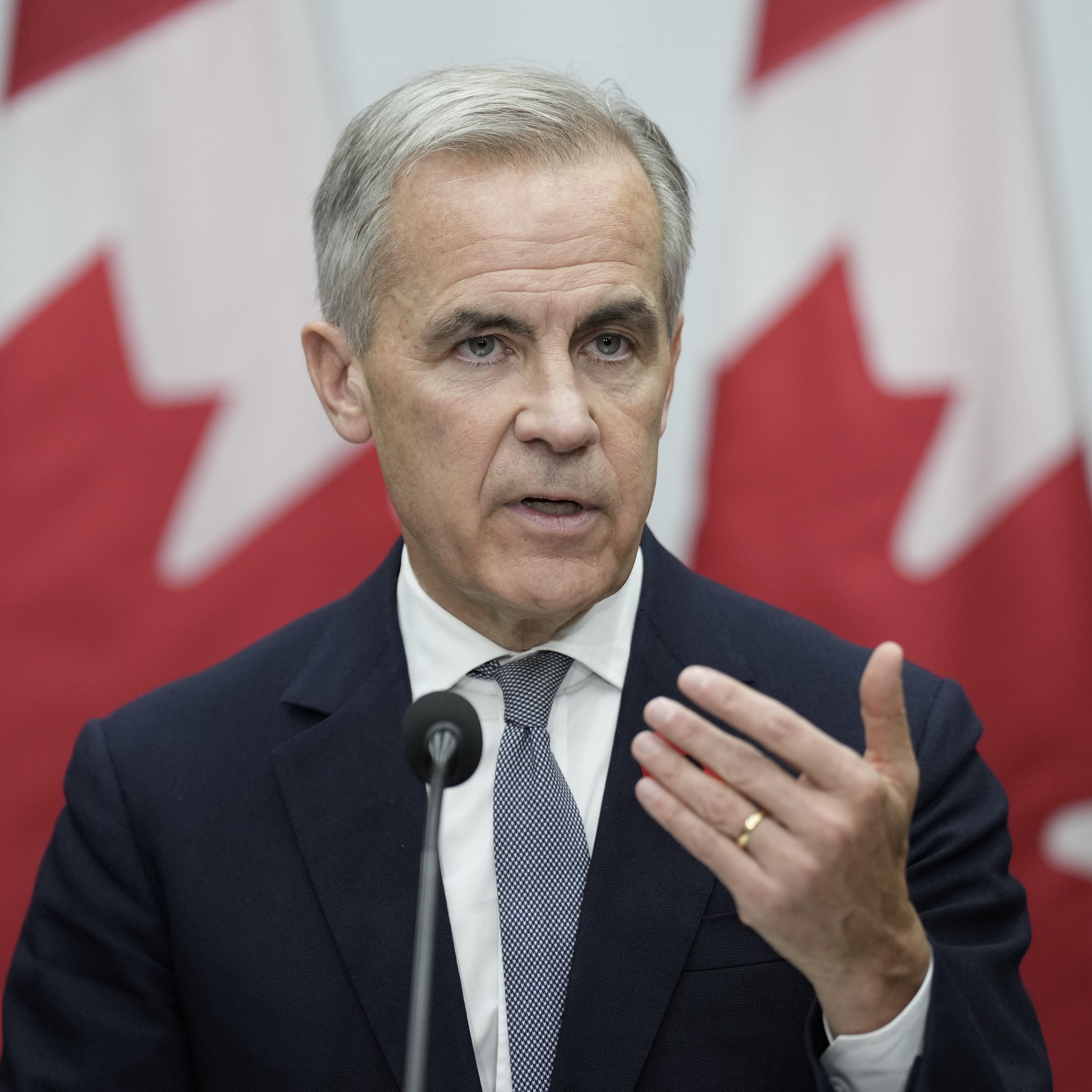
Front Burner
Mark Carney’s high-stakes first budget
00:27:09
<p>On Tuesday, Canada’s Minister of Finance will announce his much anticipated budget.</p><p><br></p><p>It’s Mark Carney’s first as Prime Minister, and comes at a time of instability and uncertainty for the country. Trade negotiations with the U.S. are on hiatus, and the pressure’s on to spark economic growth while trimming spending and making life more affordable for Canadians.</p><p><br></p><p>Carney’s minority government also needs support from other parties for the budget to pass. And if it doesn’t, we could be looking at another election.</p><p><br></p><p>Our guest is Rosemary Barton, CBC’s chief political correspondent.</p><p><br></p><p>For transcripts of Front Burner, please visit: <a href="https://www.cbc.ca/radio/frontburner/transcripts" rel="noopener noreferrer" target="_blank">https://www.cbc.ca/radio/frontburner/transcripts</a></p>
Loading summary
Transcript83 lines
- [00:00]
Rosie Barton
High interest debt is one of the toughest opponents you'll face unless you power.
- [00:04]
Jamie Poisson
Up with a SOFI personal loan.
- [00:07]
Rosie Barton
A SOFI personal loan could repackage your bad debt into one low fixed rate monthly payment.
- [00:12]
Jamie Poisson
It's even got super speed since you.
- [00:14]
Rosie Barton
Could get the funds as soon as.
- [00:15]
CBC Announcer
The same day you sign.
- [00:17]
Rosie Barton
Visit sofi.compower to learn more.
- [00:21]
Jamie Poisson
That's s o-fi.com P-O-W-E r loans originated.
- [00:25]
Rosie Barton
By SoFi bank and a member FDIC. Terms and conditions apply. NMLS 696891.
- [00:32]
CBC Announcer
This is a CBC podcast.
- [00:46]
Jamie Poisson
Hey everybody, it's Jamie. I am here with my colleague Rosie Barton, CBC's chief political correspondent. Hey Rosie.
- [00:52]
Rosie Barton
Hey Jamie.
- [00:53]
Jamie Poisson
It's great to have you as we all continue to be heartbroken about that Game seven law school. I'm not sure I'm ready to talk about it, but big week over here on the politics front. The much anticipated budget comes down on Tuesday. Both Prime Minister Carney and his finance minister Francois Philippe Champagne have called this a generational one where we're expecting a big deficit and deep cuts. It comes at a time of great instability. Trade negotiations with the US Are on hiatus right now. There's a lot of pressure to grow the economy while cutting spending and to make life more affordable for Canadians. On top of all of this, Carney's minority government also needs support from other parties for the budget to pass. And if it doesn't, we could be looking at another election. All right, let's get into it. We are going to do a full episode on the Budget on Tuesday night with Erin Wary and David Coletto. So please do listen for that on Wednesday. But I do want to set the stage today. And so, Rosie, earlier this month Carney gave this big speech to prepare Canadians for this budget.
- [02:08]
CBC Announcer
At the core of our strategy will be to catalyze unprecedented investments in Canada over the next five years. That's what's going to come above and beyond these projects.
- [02:19]
Jamie Poisson
He hit, in my estimation, many of the same notes that we've heard since the election and during the election. A need for non American allies and markets, self reliance spending that stays in Canada. As for specific promises of what the budget would contain, there weren't a ton. Has this budget taken more shape since that kind of prime time address?
- [02:42]
Rosie Barton
Hard to say. And let me start by saying I'm happy to distract you from your Blue Jays depression with some good old politics and setting the stage for yeah, what is not a World Series thing, but it is a determinant moment for Mark Carney and the government. What's interesting about this government so far is that they haven't leaked very much from this budget. Typically, governments do do that, but. But we do have a couple of things that I think I can point to that have either been announced or to keep an eye on. First of all, the other thing about this budget is it's not just going to be about money. It's also going to include a new immigration plan. It's going to include a climate competitiveness strategy.
- [03:22]
CBC Announcer
Our strategy will recognize that in today's global economy, we have to build sustainably. It's not just a moral duty, it's also an economic imperative. It is a moral duty, but it's an economic imperative.
- [03:33]
Rosie Barton
And obviously those have economic impacts. But it's kind of unusual that they would be inside a budget. There are a few bits and pieces that the government has announced in the past couple of weeks. Personal support workers tax credit is one, foreign credential recognition fund. They made the national food program a permanent thing. They renewed the Canada Strong pass for the holidays, that kind of stuff. But no big, big ticket measure that you would point to to say, ah, now I understand what this budget is going to be about.
- [04:11]
Jamie Poisson
The Prime Minister did talk about sacrifices.
- [04:15]
CBC Announcer
We won't transform our economy easily or in a few months. It will take some sacrifices and it will take some time. Our government will work relentlessly to cut waste and drive efficiencies. And when we have to make difficult choices, we will be thoughtful, we'll be transparent and we'll be fair.
- [04:35]
Jamie Poisson
Do we have any sense of what that means?
- [04:39]
Rosie Barton
I don't think we have a clear sense, but I can speculate a little bit. You know, he said that word and he said it to a group of university students, which the Conservatives has seized on.
- [04:50]
CBC Announcer
But instead of saying, given that things are so bad, we Liberals are going to reverse course on all of the policies of inflation, of blocking home building, of standing in the way of resource projects. Instead of that, he asked young people to make more sacrifices. This was the sacrifice speech to Canadian youth. And he said, I don't think he.
- [05:12]
Rosie Barton
Was speaking, though, just to young people. I think he was speaking to Canadians. One of the things that he hinted at was not that specific services would get cut, though I think we should expect that. But also potentially that services might get frozen or not further expanded pharmacare would be one that I would watch for on Tuesday. But he also talked about time. Right. And the fact that the kinds of changes he's trying to put in place are not going to happen overnight. I think that also kind of speaks to sacrifices and how long people will have to wait to see an improvement in their personal situation and in the economy writ large. But there will be cuts. Like, it won't just be attrition and it won't just be job cuts are some things that are going to fall by the wayside necessarily because they are not going to be a priority of the government. And those things, while we don't know them yet, will impact some Canadians. And that's the other piece that we'll have to watch for.
- [06:09]
Jamie Poisson
And also jobs. Right. In the public service. I know that the public service is bracing for lots of spending cuts here. And just like, what is the vibe in Ottawa ahead of this?
- [06:18]
Rosie Barton
Yeah, I mean, we're looking at, I think it's 7.5% in the first year and then another in the second. So that is getting rid a fair number of jobs. But you know, the Prime Minister makes the point that the size of government has also ballooned over the previous 10 years under Justin Trudeau. So you could argue that the government got too big anyway and that this is a necessary adjustment to what is needed. The, the other thing, and I know you've talked about this too, that they're looking for, are ways for AI to help deliver some services to Canadians. So there may be some redundancies there. There is nervousness because Ottawa has the largest number of those public sector jobs and they are well paid jobs. You know, when you talk to the ndp, that's one of the issues that they are most concerned about. That at a time right now, cutting jobs doesn't make a lot of sense, but that is definitely going to happen.
- [07:25]
Jamie Poisson
So the budget, for sure, we're going to see cuts, but also spending, right? Military spending, for example, measures to support industries hit hard by tariffs. And as soon as the budget comes out, I imagine everyone's going to be looking at that deficit number. Right. And just to help set the stage for everyone here, what do you think would be helpful for people to know before they see that number?
- [07:49]
Rosie Barton
I mean, I think it's important to remember a few things, that a deficit is not the only measure of how an economy is faring. Right. Debt to GDP ratio is another important one because it shows how big the economy is expanding, how quickly it's expanding compared to its population, and that that also is important. And if this government in particular thinks that it is necessary to spend public money in order to spur investment and to really address what, what I think everyone can agree is a crisis moment in the country's history or a hinge moment, as the Prime Minister calls it. Perhaps that money does need to be spe. Conservatives don't think so, but certainly that seems to be what this government believes will help in this moment. So we're talking big numbers, right? We're talking 70 to $100 billion of deficit spending. Those are the kinds of numbers that you see during a pandemic, during a recession, when you actually need to support Canadians in the economy. So what the government will have to try and explain is why it's spending at that level and that rate at a time when there is no recession. You know, growth is meager, but it's happening. There is certainly no global pandemic. So what is it that the government thinks it will get out of that kind of spending? Because the Conservatives would would say, well, why are you not trying to attract money from the private sector instead of using taxpayers dollars to do this? And one of the other things that will be different about this budget is the way it looks, right? There's one part of the budget that will be operational and that part the Prime Minister seems to say will be problematic. It's the other side of the ledger, the capital expenditure part of the budget, where you're going to see those big numbers that they are going to have to justify as being needed because of this moment that we are in, caused by Donald Trump, certainly, but also now really impacting the entire world.
- [10:05]
CBC Announcer
Dreaming of getting the all new iPhone 17 Pro, designed to be the most powerful iPhone ever.
- [10:10]
Rosie Barton
Then stay in bed and let a Boost Mobile expert deliver and set it up for you.
- [10:14]
CBC Announcer
Oh, actually they will have to get up and open the door.
- [10:16]
Rosie Barton
Oh, right.
- [10:17]
CBC Announcer
Delivery available for select devices purchased at boostmobile.com, terms apply.
- [10:20]
Rosie Barton
Hello, it's Ray Winstone. I'm here to tell you about my podcast on BBC Radio 4, History's Toughest Heroes. I got stories about the pioneers, the rebels, the outcasts who define tough.
- [10:35]
CBC Announcer
And that was the first time that.
- [10:36]
Rosie Barton
Anybody ever ran a car up that.
- [10:38]
CBC Announcer
Fast with no tires on.
- [10:40]
Rosie Barton
It almost feels like your eyeballs are.
- [10:41]
CBC Announcer
Going to come out of your head.
- [10:43]
Rosie Barton
Tough enough for you?
- [10:45]
Jamie Poisson
Subscribe to History's Toughest Heroes wherever you get your podcast. So, just a reminder, budgets are confidence votes, which means that if they get voted down, the government can fall, triggering an election and we are in a minority parliament situation. The Liberals have 169 seats. They need three more seats to pass it. About a week after Carney's Speech, the Liberal House leader said, we don't have the votes.
- [11:15]
CBC Announcer
The opposition parties will have to determine whether the differences between us are sufficiently large to cause the Canadians to go to the polls.
- [11:24]
Jamie Poisson
What did you make of the House leader saying we don't have the vote? How do you read that?
- [11:28]
Rosie Barton
Well, at this stage you can ask any party and they, they don't know where the votes are and where they're coming from. I think it is always interesting when the government says that though a government in a minority position, its job, if it wants to survive, is to seek the support. It's not just to show up and cross your fingers that it's gonna suddenly arrive. So I saw that as fair amount of posturing from the Liberal House leader and frankly, maybe some fear mongering tactics to try and see how far he could push the opposition parties into thinking that this could really happen and sort of just freak them out. Frankly, I'm not sure if that's worked, but I think that was the intent. It is also the opposition party's decision though as well. They have all the Conservatives and the Bloc Quebecois in particular put very specific demands on the table from the government with almost no response, frankly. So if they feel like because they didn't get anything met there, then they also get to make a decision about an election. What parties like to do in minority governments though, is play the blame game so that nobody is held responsible if something happens. If we end up in an election.
- [12:40]
Jamie Poisson
It'S clear that the member opposite is.
- [12:42]
Rosie Barton
Driving for a Christmas election.
- [12:44]
Jamie Poisson
And I really hope that's not true because Canadians are counting on us to pass this budget to make the school food program permanent.
- [12:51]
CBC Announcer
They want their budget passed. They have to make it an affordable budget so that there's affordable food and affordable quality of life.
- [13:00]
Rosie Barton
It's my experience that whoever caused the election is usually a two day story and then people move on because that's not gonna be the issue. Right. Canadians will ask themselves why they're relitigating something that hasn't changed substantially over six or seven months.
- [13:16]
Jamie Poisson
Yes. I feel like right now I wanna talk to you about what certain parties might want here, whether they might want an election. But I do feel pretty confident saying that voters probably don't want their election.
- [13:29]
Rosie Barton
No one I know. No one I know.
- [13:30]
Jamie Poisson
Yeah, I've literally talked to no voter that wants to go to the polls again. But let's do the block first. Have they gotten anything or are there signals that the Liberals are going to do anything to kind of appease this list of demands that they made, which was quite long.
- [13:49]
Rosie Barton
Yeah, I think there were 18 demands total, but there were six that they were very committed to, including increasing old age security, making sure that health transfers are increased to provinces, and a few others.
- [14:01]
CBC Announcer
They will face Canadians and Quebecers with an unbelievable deficit which looks like madness. I do not. I cannot see how we could support a budget which is first based on some taxes reductions, electoral gifts and some fantasies in many regards.
- [14:22]
Rosie Barton
I don't think that they're going to get those things. They say that they are not that costly and the government could do them. But at the same time, those are not the things that the government was elected on. So that would also sort of create some complications. They are also very specifically things that would, of course benefit Quebec. And yes, there might be benefits writ large, but they are specific. Quebec asks. There has not been a lot of back and forth. And you might remember that the block leader after the election said he was willing to give the government sort of a year of free space to do what they needed to do, given the moment we're in. But because of the lack of consultation and talks, he decided in September he was walking away from that position. So I don't think that the block is the place where this is going to happen. There was one measure that the government announced last week to shut down tax evasion with. With trucking companies, which is something that was important to the block. They did say that they were gonna do that, but that's frankly, I don't think gonna be enough. They will look at the budget, they say, and they will make a decision that caucus will vote altogether. And they say that there will not be a choice to abstain. That's not how the block is gonna roll on this one.
- [15:38]
Jamie Poisson
The idea that he's stepping away from that. His earlier comments about giving the Liberals some room here because they haven't been like, working with him or working with them. Are there any other reasons they might pull a 180 here that would have to do with, like, what's happening provincially in Quebec?
- [15:55]
Rosie Barton
For sure. You know, they are very cognizant of the fact that there is a Quebec provincial election that should happen in October 2026. And there is also the reality that the CAQ or the CAC, the current government, is not faring well. And the Patri Quebecois has had a bit of a resurgence in Quebec. It is not always preferred in Quebec to have a Parti Quebecois government and an extremely strong bloc, because then you've got sort of two places where you're having the same battle, if you were. But more importantly, the Peltech Quebecois will start a conversation around a referendum again.
- [16:32]
CBC Announcer
Each year we send to Ottawa 82 billion of our money, but what do we get in return? Hardly any significant direct services for our people. On top of that, Ottawa oversteps in our areas of jurisdiction and imposes an immigration policy that. That far exceeds our capacity to integrate newcomers in terms of housing, the French language and delivering quality services to everyone. What if I told you we could keep these 82 billion here in Quebec?
- [17:03]
Rosie Barton
And that that makes things very complicated for the Bloc to try to elicit anything from a federal government? So y. Francois Blocha is very aware of all those different bits of timing. So, you know, does that mean he wants an election? No. But does it mean that he has to make sure there isn't one next fall? I think that's fair to say. Yes.
- [17:31]
Jamie Poisson
Let's do the ndp. Now, I know that they have said that they will not vote for an austerity budget. Carney's kind of backed off that framing of the. Of the budget, though he did did say it out loud a while ago. So it's out there. But they also have no leader. Right. And their party is in shambles after getting wiped out in the last election. Is there a world in which they are thinking of the possibility that an election might better their current circumstances? Maybe they regain official party status if they can add a few seats. Like, is it possible that they abstain or. Or don't vote for this?
- [18:08]
Rosie Barton
Yeah, yeah. I mean, listen, there's seven MPs. They would need five more to get official party stat. It is not a caucus, even though it's so small, that is incredibly united, incredibly on the same page with everything that it's doing, which maybe is sort of normal as the party looks to redefine itself and reshape itself. So, yeah, there are people in that caucus and outside the caucus, NDP supporters who believe that, you know, an election wouldn't be the worst thing. They'd keep most of their seats and maybe they'd find a way to add them on. But the reality is, is that they probably don't want an election with an interim leader. They are in the midst of a leadership race and as always, the NDP has some serious financial challenges, so it wouldn't be setting them up for any sort of great success. I think based on the conversations that I've had and talking to Don Davies, the interim leader, abstaining is very possible.
- [19:04]
CBC Announcer
The Liberals seem to be blaming the opposition if there's an election. And frankly I would turn that around and say any election that's coming, which I agree Canadians don't really want or need at this point, is entirely up to Mr. Carney because he holds the pen, he drafts the budget, and they have not invited other parties in to really craft the budget in a way that I think they should have in a minority situation. So they run the risk of not earning our support.
- [19:27]
Rosie Barton
And listen, that's not a lot of people that don't have to abstain. It's just a couple. And I think that there's a way to explain that to voters. For the NDP that is perhaps much easier than for the blockers are obviously the Conservatives.
- [19:43]
Jamie Poisson
You know, if we're going to look to the NDP as a possible place for where the Liberals would find their votes, certainly I think it's fair to say that the Conservatives are the least likely place where they would find those votes. And I know that you talked to Conservative leader Pierre Paliev about this and what did he have to say about it?
- [20:03]
Rosie Barton
Yeah, I mean, I would say they're the least likely. First, let's just talk about the asks for the Conservatives. They would like the deficit to stay at 42 billion doll or below. It's not going to do that. And that would necessitate cuts on a scale unlike anything Canadians have seen since the mid-90s. He also wants the government, for instance, to get rid of the industrial carbon tax.
- [20:27]
CBC Announcer
I came with some very collaborative ideas and I asked why isn't the government at least considering them? I've said let's bring down the cost of food by getting rid of the industrial carbon tax on farmers and the people who feed us. Let's get rid of of the food.
- [20:39]
Rosie Barton
That is not something the government is going to do either, though they probably will alter things like the hard caps on emissions. So just given those two examples, I don't see how the Conservative leader and his caucus could turn around and vote for this budget, but in a political way as well. It doesn't make a lot of sense. Right. If you line yourself up as the prime minister in waiting, all you've done is criticize everything that Carney's done for weeks and weeks and weeks. It would be very strange for the Conservatives to support this budget, particularly because the leader himself is facing a leadership review in January and he needs to show that he has the courage and the strength to still take on the Liberal leader in case there is an election anytime after that review too do.
- [21:25]
Jamie Poisson
You think he actually does want an election right now? Because when it comes to leaders, Poliev is still less popular than Carney, even though polling shows that the two parties are kind of tied right now. Right. And he's also just come off quite a bit of damage control after accusing the RCMP of covering up for Justin Trudeau so that he could avoid criminal prosecution.
- [21:49]
CBC Announcer
Many of the scandals of the Trudeau era should have been involved jail time. I mean, Trudeau broke the criminal code when he took a free vacation from someone with whom he had government business. And again, he probably violated the criminal code and the SNC Lavalier scandal. The leadership of the RCMP is, frankly, just despicable when it comes to enforcing laws against the Liberal government.
- [22:11]
Jamie Poisson
How do you think they're actually thinking about that kind of behind the scenes right now?
- [22:15]
Rosie Barton
Yeah, for sure. He remains a drag on the Conservative Party. His popularity is still not good. And it's unclear to me what exactly they're doing to turn that around or how aware they are that that needs to be turned around. But put that aside, there are not Conservatives clamoring for an election right now either. Many of them believe that this is not the moment. We are still facing largely the same set of election issues that we were back in the spring, and we are still dealing with a Prime Minister, a Liberal leader, who has an impressive resume in dealing with these things. There's also another part of that, Jamie, and that is the longer you leave Mark Carney to try and do this job, the better the chances are that you actually improve the situation for the Conservatives. Because as we've already seen, some of the shine has worn off. The prime minister, he hasn't made any progress with Donald Trump, and he hasn't had any success on that front. So the longer they let the Liberal leader sit there in government, the more likely it is that Canadians start to question how good this guy really is. Now, it could go the other way, too, but the chances that people become more critical is higher. And I think the Conservatives are well aware of that, that that time is probably on their side.
- [23:43]
Jamie Poisson
And the last party that we haven't talked about is the Liberals themselves. Right. Do you think that there's any appetite for an election or any optimism about its potential outcome? Let me put this question another way. Do you think they really care if the budget passes or not? Could they see this also as an opportunity to go for that majority that they didn't get the last time around and that they want?
- [24:07]
Rosie Barton
I do think they care that the budget Passes. I think that this is a prime minister, as you know, with a big, big ambition and big agenda. And in order to get some of those pieces moving, they, they need to put this budget forward and start really showing and demonstrating results. The prime minister himself was asked this when he was in Asia and he said he would be willing to fight an election because he's always ready to fight the right fight. He believes that this is the budget for the right moment.
- [24:36]
CBC Announcer
I am 100% confident that this budget is the right budget for this country. This is not a game, you know, this is a critical moment in the global economy or it's an important moment in the global economy. It's a critical moment for our country.
- [24:50]
Rosie Barton
Do I think that there are liberals in those ranks who wouldn't be mad to fight an election against a leader that continues to not be the most attractive to Canadians? Do they see a window there? You bet. I don't think it is the first play though. I think the first play is to keep doing the work. And I think that things have not only not changed since the last election, you could argue they've maybe gotten worse. And I don't know that this prime minister and this government is gonna be able to solve them, but, but it is gonna take some time. And so I'm not sure that Liberals would be comfortable going into another election and then having maybe the same outcome, maybe a better outcome, maybe a worse one, and then be responsible for the fact that the country has not resolved any of these huge challenges standing in our way.
- [25:43]
Jamie Poisson
Final question for you, and I'm gonna try really hard to craft it in a way that doesn't land on what do you think's gonna happen, but it's gonna be a version of that. Fre former Conservative Party national campaign manager wrote a piece last week that I'm sure you've seen. It was titled we are Headed to an Election. His argument was that as we have talked about, every party does have something to potentially gain here by voting down the budget, the ndp, the block, and the Conservatives. Again, not going to ask you to predict anything, but is delorious take on this, like a minority opinion among the people who are pretty in the know in Ottawa?
- [26:25]
Rosie Barton
Fred delaure is a really smart person. He's a very skilled campaign manager and I listen to him and many other people and their, their thoughts. But I did read that piece lying in bed at around 6:30 in the morning and then my stomach like dropped into my feet. That was my reaction. But that said, I don't think that that is where we're headed. I do think that sanity will prevail, and here's why I say it's sanity. Canadians, I am not sure, as you and I just have said, I'm not sure they have an appetite for an election seven months later over the holiday period in winter. Whoever is going to make the decision that they do want that, and that is something Canadians will want, is gonna have to. Why that is so could we end up there? Yes. That's what minority governments lead us to, and that's what's so wonderful about them. But I don't think based on. Not on my thinking, but based on all the people that I've spoken to in the last couple of weeks, I don't think that's where we're gonna end up.
- [27:40]
Jamie Poisson
Rosie, thank you very much for this. You have cheered me up a little bit.
- [27:42]
Rosie Barton
Oh, that's good.
- [27:45]
Jamie Poisson
I'm still very. I'm very sad had. They're a great team, though. They did. They did make us proud. But this has cheered me up. I. I do love talking to you.
- [27:53]
Rosie Barton
Thank you.
- [28:04]
Jamie Poisson
All right, that is all for today. I'm Jamie Poisson. Thanks so much for listening and talk to you tomorrow.
- [28:21]
CBC Announcer
For more CBC Podcasts, go to CBC CA Podcasts.