← Front Burner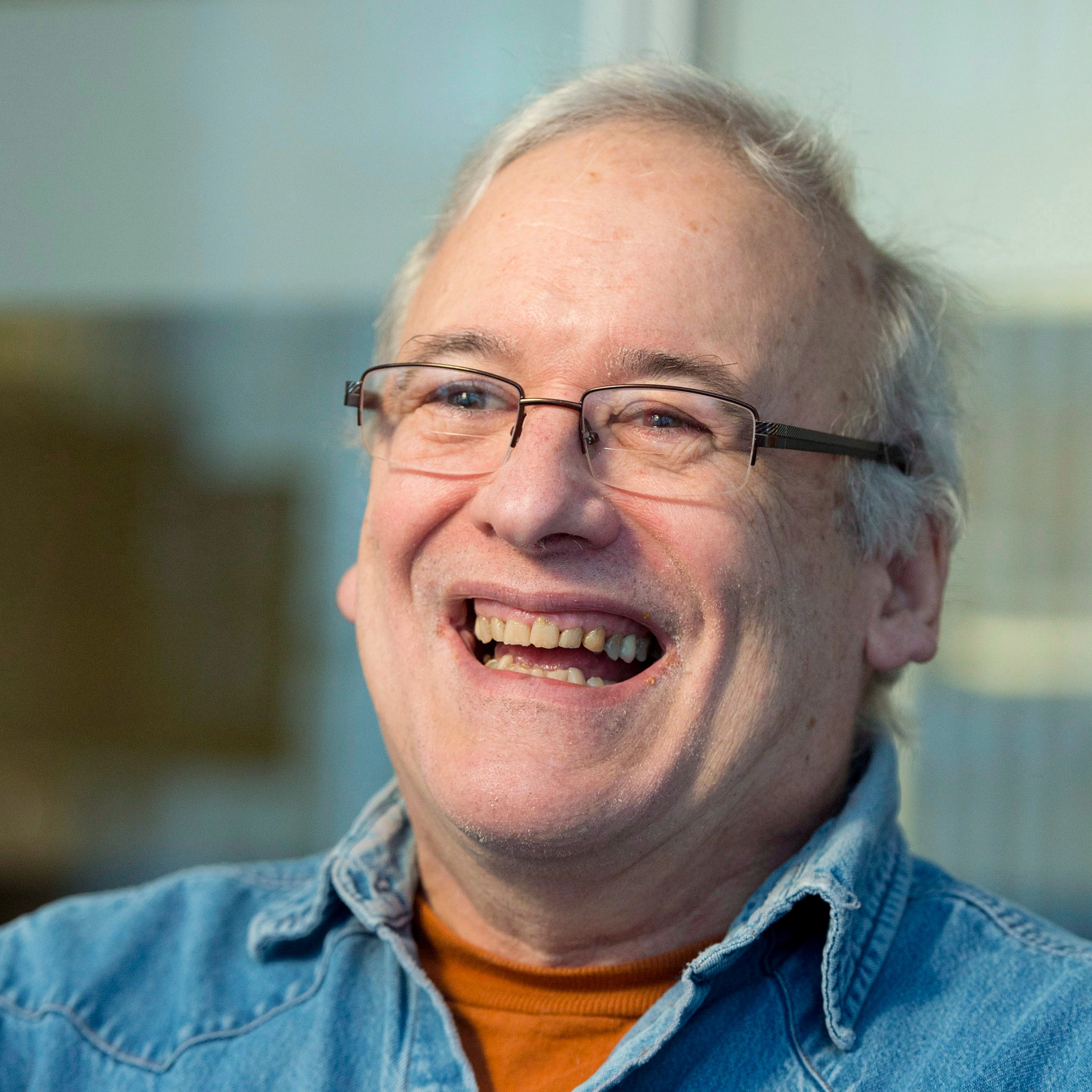
Front Burner
Robert Munsch’s decision to die
00:27:02
<p>Beloved children’s author Robert Munsch has chosen medically assisted death. Canada is one of the few places in the world where MAID is legal for patients like Munsch, who are not terminally ill. Today, a conversation with journalist Katie Engelhart, on the legacy of one of the great Canadian writers, how dementia has impacted his life and ability to come up with stories. Plus we take a broader look at how MAID works in Canada today, who can access it, and the persistent moral and ethical questions it raises. </p><p><br></p><p>For transcripts of Front Burner, please visit: <a href="https://www.cbc.ca/radio/frontburner/transcripts" rel="noopener noreferrer" target="_blank">https://www.cbc.ca/radio/frontburner/transcripts</a></p>
Loading summary
Transcript68 lines
- [00:00]
Narrator/Host
Only Boost Mobile.
- [00:01]
Katie Engelhardt
Boost Mobile will give you a free year of service.
- [00:03]
Narrator/Host
Free year when you buy a new 5G phone. New 5G phone.
- [00:06]
Katie Engelhardt
Enough.
- [00:07]
Narrator/Host
But I'm your hype man. When you purchase an eligible device, you get $25 off every month for 12 months with credits totaling one year of free service. Taxes extra for the device and service plan. Online only. This is a CBC podcast.
- [00:22]
Jamie Poisson
Hi, everyone, I'm Jamie Poisson.
- [00:30]
Narrator/Host
Look, Shane, look here. Nice five speed bicycle. And Shane went over, looked at it. He kicked the tires, he bounced it up and down. He says, nah, too slow.
- [00:41]
Jamie Poisson
That is beloved Canadian children's author Robert Munsch reading to a group of kids back in 1991.
- [00:50]
Narrator/Host
Shane says, Blood.
- [00:54]
Jamie Poisson
You likely know him from the stories that you read as a kid or like me, the stories that you are also now reading to your own kids. The Paper Bag Princess, Mortimer. Love you forever. A few years ago, Munch revealed that he'd been diagnosed with dementia and Parkinson's. And recently there was a beautiful piece written about Munch by journalist Katie Engelhardt in the New York Times. It's about his legacy, but also about the fact that he's been approved for medically assisted dying or maid. We were so moved by the story that we wanted to bring Katie on to talk about it and medically assisted dying more broadly. Katie, hey, thank you so much for coming onto the show. It's so great to have you.
- [01:38]
Katie Engelhardt
Thank you for having me.
- [01:40]
Jamie Poisson
So I think you and I are probably pretty close in age and I know you grew up reading Munch like me, and now you're reading those books to your own children, right?
- [01:49]
Katie Engelhardt
That's right. I guess about a year ago, my 3 year old started expressing interest in stories that had a bit more substance to them. Previously, I guess we'd been doing a lot of, you know, construction vehicle stories and, and he seemed to want stories with more beginnings, middles, ends, characters, plot development. And I found that Munch was a really good author to bring into our lives at that point because his books have, you know, plot, but not too much plot. They have characters, but, but not ones that are too complicated or, or too difficult to be legible for a child. So, so at that moment where we were really progressing to real stories, Munch was an obvious person to turn to.
- [02:35]
Jamie Poisson
And Mortimer is such a great one. My, my boys love Mortimer. They love, like, pretending to be like Mortimer. They do not like to go to bed. They make crazy noises. They try to drive us, drive us crazy, just like Mortimer.
- [02:49]
Narrator/Host
Mortimer's father heard that racket he came up the stairs, opened up the door, he said, mortimer, be quiet. Mortimer shook his head yes. Oh, yeah, yeah, yeah, yeah, yeah, yeah, yeah, yeah, yeah, yeah, yeah. Father shut the door, went back down the stairs. Whap, whap, whap, whap, whap.
- [03:15]
Jamie Poisson
They like thinking that we're going to send police officers up to their room like it is. It is such a joy to see them experience these books, probably in very similar ways that we did back then. Hey, yeah.
- [03:25]
Katie Engelhardt
My boys are the same. It's funny, my one year old literally cannot say his own name, but can say Mortimer. So. And it's funny, Mortimer's. Mortimer's one of those ones that I. I have such a clear memory of my father reading me Mortimer. And I think it's because it's such a. I mean, beautiful, but in a way, simple book. The repetition is so consistent. This, this refrain really sticks in a child's memory.
- [03:53]
Narrator/Host
Clang, clang ring bang gonna make my noise a big clang clang robin bang gonna make my words all day.
- [04:06]
Katie Engelhardt
So I don't know, even, even just the way my father read it to me, it really remains with me.
- [04:12]
Jamie Poisson
One thing that I really loved was learning in your piece was how Munch would come to these ideas. Could you tell me a bit about how he got an idea and also how he workshopped them?
- [04:22]
Katie Engelhardt
Yeah. What was amazing to learn about Munch was just how much time he spent not just coming up with stories for children, but interacting with children. For him, children were always more than just his audience. They were a part of his creative process. He really came up with everything in conversation with or interaction with children. So he started his career as a preschool teacher. And the story he tells is that he used to volunteer to be the teacher who sat in the nap room where children are sleeping on their little cots. And he found that if he told stories, the children would stay on their cots, stay still, and eventually drift off into sleep. And that was sort of the first place where he was training his storytelling abilities. He discovered that if he was telling good stories, interesting stories, the children would stay there. If he told bad stories or moralistic stories or prescriptive stories, the children would get bored and wander away and, you know, not nap, and the day would be a disaster. And. And he really took that philosophy of story, story writing in concert with children throughout his entire career.
- [05:37]
Narrator/Host
My rewrite method is to continuously tell the story. That's how I do most of my rewrites. They're not written versions, but the stories do ch. And I'm not thinking about rewriting when I'm telling stories. I'm just thinking about keeping these kids happy.
- [05:51]
Katie Engelhardt
He spent a lot of time in classrooms, at children's festivals, testing out new material, incorporating the interruptions of small children into his stories, changing his plots based on how he saw his audiences responding. I spoke with his longtime editor at Scholastic, and she had this interesting way of describing it. She said other children's authors, or would be children's authors, write stories that they think children need as opposed to. Munch just wrote objects for children to devour and enjoy.
- [06:26]
Jamie Poisson
My kids just really love how the paper bag princess calls that prince a bum. At the end, they just die every time.
- [06:33]
Narrator/Host
Elizabeth says, ronald, Ronald, your hair is all nice. Your clothes are all pretty. You look like a nice guy, Ronald. But you know what? You are a bum.
- [06:55]
Jamie Poisson
In your piece, you also tell this story, this really lovely story about a young girl who would correspond with Munch through letters about her daily life. I know he spent a lot of time writing and communicating with kids, but can you tell me about this one girl that you focus on?
- [07:12]
Katie Engelhardt
Yeah. Her name is Ganing Tang. She's now, I think, approaching 50, but going back to when she was younger, she, at eight years old, decided to write her favorite author, Robert Munsch, a letter. She wrote a little greeting and sent a picture of herself in a hot air balloon. And at that time, Munch was receiving. I mean, thousands. Some years, he received tens of thousands of fan letters a year. His policy was that he responded to everyone. He gets this letter from Gunning Tang, and he writes back to her. And to his surprise, she keeps writing him. Every two weeks, she sends him a letter. When I connected with Ganning later, she told me that she had recently lost a beloved grandmother who'd been her kind of confidante. And she thinks maybe she was writing to Munch because he was another adult who was outside of her immediate nuclear family. And she just wrote to him about her daily life, how much her little sister bothered her, how boring she thought her small town was. And a couple of years later, Munch. Munch told me he decided to visit her. He arranged a trip to this tiny town called Hearst, Ontario. He didn't tell Gunning that he was coming. He just showed up. One day at her school. Gunning was called to the staff room and found that Robert Munsch was there waiting for her. And she just had this amazing story of spending the day with him. You know, this wasn't like a photo op. He wasn't being followed around. This visit was just for the sole purpose of getting to know her. He wandered around the town with Gunning and her sister and her cousins. They went to the graveyard to visit, visit her grandmother's gravestone. And he and Gunning stayed in touch for decades.
- [08:54]
Jamie Poisson
You also wrote about some of the tragedies and struggles that he's had in his life, which I didn't. I didn't know about, and how some of that tragedy actually inspired Love you Forever, which is a book that means a lot to a lot of people.
- [09:11]
Katie Engelhardt
So the way he told the story was Munch and his wife, Ann, they'd both been educators and both really wanted children of their own. Ann gave birth to two stillborn children, a boy and a girl, in quite short order. And Munch was, you know, awash with grief, as is understandable. He came up with a little refrain.
- [09:38]
Narrator/Host
I'll love you forever. I'll. I'll like you for always. As long as I'm living my baby, you'll be.
- [09:52]
Katie Engelhardt
And it was just something that he repeated to himself over and over for comfort. But one day he was on a stage, I think, in Guelph, and he made up a story around the refrain and told it. What he told me later was that, you know, it wasn't the final version of the story. It wasn't perfect. But Munch knew that it was meant to be a story, and he just went behind stage and just wept after that release. His own publisher, Anick Press, didn't want the story. They didn't think it really worked as a child story. It was about a parent growing older, and there's an allusion to a parent dying at the end of the book. So he went to Firefly Books. They did a small printing, and it became one of the best selling children's books in history.
- [10:37]
Jamie Poisson
I'm so grateful to know the story behind that. Now the next. I'll never read it. Kind of the same way again.
- [10:49]
Katie Engelhardt
Hey, I'm Paige desorbo and I'm always thinking about underwear.
- [10:53]
Hannah Berner
I'm Hannah Berner, and I'm also thinking about underwear, but I prefer full coverage. I like to call them my granny panties.
- [10:59]
Katie Engelhardt
Actually, I never think about underwear. That's the magic of Tommy John. Same.
- [11:04]
Hannah Berner
They're so light and so comfy. And if it's not comfortable, I'm not wearing it.
- [11:08]
Katie Engelhardt
And the bras, Soft, supportive, and actually breathable.
- [11:11]
Hannah Berner
Yes. Lord knows the girls need to breathe. Also, I need my PJs to breathe and be buttery, soft and Stretchy enough for my dramatic tossing and turning at night. That's why I live in my Tommy John pajamas.
- [11:23]
Katie Engelhardt
Plus, they're so cute because they fit perfectly.
- [11:26]
Hannah Berner
Put yourself on to Tommy John.
- [11:27]
Katie Engelhardt
Upgrade your drawer with Tommy John. Save 25% for a limited time at tommyjohn.comfort and see site for details.
- [11:38]
Narrator/Host
Hello, I'm Greg Jenner, host of youf're Dead to Me, the comedy podcast from the BBC that takes history seriously. Each week I'm joined by a comedian and an expert historian to learn and laugh about the past. In our all new season, we cover unique areas of history that your school lessons may have missed, from getting ready in the Renaissance era to the Kellogg brothers. Listen to youo're Dead to Me now, wherever you get your podcasts.
- [12:04]
Jamie Poisson
You visited Robert Munsch at his home in Guelph, Ontario over the summer. And I, I know. Well, you spoke to him very candidly about his diagnosis and just how. What did he tell you about how he's doing?
- [12:18]
Katie Engelhardt
So it. It was clear, meeting Munch, that he's dealing with a lot of deficits. He now has been diagnosed with Parkinson's disease and Parkinson's dementia. So a pretty sizable percentage of people with Parkinson's will develop dementia as well. But because he has Parkinson's disease, he's clearly dealing with a lot of physical frailty. He's falling around the house. He's using a walker or a cane wherever he goes. He's been forced to sort of retreat indoors more or less because of that. And then the dementia symptoms are also progressing. So in his telling, the first symptom was that he found he couldn't fit his car into a parking spot anymore. He stopped driving. Then he found he was falling off of his bike. He stopped using his bike. And now the symptoms have progressed. So he has trouble remembering when friends come to visit. He has trouble finding words. The other day, he couldn't think of the word dinosaur, which is obviously, you know, a word that a child's author will. Will have used quite a lot. What we spent a lot of time talking about was the effect that the disease has had on his creativity. You know, that that was really why I was interested in speaking to Robert Munsch. I wanted to understand better how something like dementia affects a creative mind. And he had a really interesting answer to that question. He explain that he's not able to come up with new ideas for stories anymore. Plots for stories used to appear to him almost fully formed, and it used to happen all the time. So he had this kind of limitless bounty of stories available to him that doesn't happen anymore. Occasionally he'll think of a kind of premise for a story, or he'll hear a noise that he thinks would be funny in a story, and he will wait for the story to appear to him like it always has. But that doesn't happen anymore. On the other hand, he says his existing stories, and he's published more than 80 books, remain completely intact within them. It's almost mysterious to him because he's having all this trouble with speech and with recollection, but his stories are available for him to think about and retell. And that's kind of amazing. He said that these, these little nuggets preserved in his deteriorating mind.
- [14:56]
Jamie Poisson
So the raison d' etre essentially for your piece was certainly about his legacy, but also about the fact that he decided shortly after his diagnosis to apply for Medically Assisted Death or maid. And what did he tell you about why he ultimately chose to go that route?
- [15:16]
Katie Engelhardt
I mean, it's interesting because when I set out to write this piece, I had no idea that he had applied for maid, which is a subject that I've covered very extensively for the last decade or so. I had no idea. But what, what Bob explained to me was that he knew pretty early on after his diagnosis that he wanted apply for maid. At that time, his symptoms seem to be progressing very quickly. He thinks they've slowed down, but at the time he. He was really facing the possibility of being, in his words, a turnip in a year, and he wanted another way. Bob had also watched one of his brothers, who was a monk, die very slowly of Lou Gehrig's disease or als. And as his brother died, the people around him really pushed for more and more medical intervention. And Bob says he remembers thinking, just let him die. So he knew he didn't want to go that way. He applied for maid. He was approved. The process he's agreed to with his physicians is that he will be sort of almost reassessed. Every six months he has a follow up conversation with his assessors and what they're trying to do is take stock of his cognitive decline and make sure he doesn't progress to the point that he can no longer consent to maid. So I think they're working together to find what Bob thinks is an appropriate time. What he said to me was that once he loses more of his communication abilities, when he really has trouble speaking and communicating what he wants, the time will be right for him.
- [16:52]
Jamie Poisson
And this idea that he has to be able to consent to it. Tell me more about how that fits into how we practice mate in this country.
- [17:02]
Katie Engelhardt
So in, in most of Canada, a person has to be able to, in most cases, actively consent on the day of their death. So they have to have decision making ability on that day. In the context of dementia, that sometimes means that patients feel pressured to have maid sooner than they otherwise would like to because of this fear of losing their chance. The difficult thing, of course, is that no one can tell a person with dementia exactly when they will lose the ability to consent, Particularly since, you know, that kind of capacity can fluctuate. There can be good days, bad days. So the fear is that they will progress and lose their chance and then, and then potentially live many, many years in a way that they previously didn't want to. There's an exception, and that's the province of Quebec, which recently legalized advanced directives for maid. So in that province, someone can write an advance directive stating, you know, when I reach such and such a point, it'll be different depending on the person, but when I can, you know, no longer recognize my family members, when I need daily help toileting, whatever it is, when I reach that point, I would like a doctor to provide me with maid, even if on that day I don't understand what maid is or, or know what's happening. That's a, a very controversial legal expansion. And, and again, it only applies to Quebec.
- [18:35]
Jamie Poisson
Yeah, and I mean, interestingly, Quebec, it has the highest proportion of maid deaths at 7.3%, the highest in the world. How do people explain that?
- [18:46]
Katie Engelhardt
You know, I don't know what it is. You know, there are people who make arguments that there's something about the culture of Quebec or French Canada that has explained this expansion. Maybe something about the desire for autonomy and self direction. Others argue that maybe it's more structural. There could be just more physicians providing assisted death. So I don't think I know what explains it, but it's certainly interesting that assisted dying has been legalized in other jurisdictions for much longer. But it's Quebec that has the highest proportion of maid deaths in the world.
- [19:20]
Jamie Poisson
And what about Canada more generally?
- [19:23]
Katie Engelhardt
It's high. In 2023, which I believe is the last year for which we have complete data, There were around 15,000 maid deaths in the country, just over. Which means that one in 20 Canadians who died, died by maid. And that's pretty striking given that maid was only legalized in Canada in 2016. I also think it represents, you know, a kind of broader sociological shift. If 1 in 20 deaths are deaths by maid. That means we probably all know someone who's died by maid.
- [19:55]
Jamie Poisson
I do. Yeah.
- [19:56]
Katie Engelhardt
Yeah. It's no longer this kind of abstract thing. It's just this other way of dying in Canada.
- [20:02]
Jamie Poisson
How would you explain that? Is it because we do it differently than other places? Is it because our laws around it are more lax in other places? How do people try and explain that?
- [20:13]
Katie Engelhardt
It's probably a number of reasons, but certainly, you know, if we compare Canada's maid legislation to the made legislation in the American states, where it's legal, Canada's law is a lot broader. So Canada's law would allow many more people and many different kinds of patients to qualify in the American states and in the District of Columbia, where it's legal, a person has to be terminally ill. And really at the very end of their lives, their requirement is that a person be within six months of a natural death, according to two physicians. And Canadian patients don't actually have to be dying of anything in particular to qualify.
- [21:10]
Jamie Poisson
So I know that you've mentioned the controversies and the criticisms, but I would like to get into them with a little bit more specificity. Of course, over the years, we have expanded our maid laws. And just if you could articulate what the criticisms are around that.
- [21:29]
Katie Engelhardt
First, there's criticism on kind of religious or theological grounds. In my reporting, I. I give a lot less space to that first because I think it's less influential on the Canadian political scene, but also because it's sort of predictable. Another main source of criticism comes from certain disability rights groups who argue that Canada's maid law, in particular, because it's so broad, will either directly through the medical system, through the force of the law, or indirectly, in more subtle ways, push people with disabilities towards choosing an early death. So an argument from a group like Inclusion Canada might go along the lines of, you know, in every Canadian state and province, the disability benefit is below the poverty line. Canada doesn't support people who live with disabilities. They are often denied access to either medical services or caregiving services that they require to live well. Under those circumstances, a person might be declared eligible for maid because of society's failure to protect them. And I think that's a very compelling argument. And then I think there's criticism that comes from inside the maid provider community, specifically criticism of the expansion of Canada's law in 2021 to include people who are not dying. So under Canada's expanded Bill C7 law, people who have, for instance, spinal cord injuries, chronic pain, chronic migraines, Even disorders that we don't fully understand, like Long Covid, can qualify for a medically assisted death. I spoke with a doctor in Toronto, Dr. Madeline Lee. She oversaw the development of the maid curriculum for Toronto's University Health Network. She's also personally overseen hundreds of maid assessments and she's hesitant to involve herself in the cases of patients who are not dying. She told me she doesn't think that's what medicines should really be doing, helping people to end painful lives. And she said, you know, it's not really assisted dying if the person's not dying. It's something different. There are different forms of criticism. Certainly when the Canadian government was deciding whether or not to legalize Maiden, whether or not to expand it, I mean, there were just dozens and dozens of people who were brought in to outline all of these critiques of the people.
- [24:13]
Jamie Poisson
Who are using maid. Do we have a sense of how many of them are using it because they have terminal illness and how many are using it because they're part of this like so called Track 2? Right.
- [24:26]
Katie Engelhardt
The vast majority of people who choose made in Canada have a death that's reasonably foreseeable. So I'm looking at the numbers here. In 2023, there were 14,721 Track 1 deaths and 622 deaths on the so called Track 2. So patients who aren't dying of their condition.
- [24:49]
Jamie Poisson
And you mentioned Dr. Madeline Lee, and I just wonder if you could talk to me a little bit more about the position that this puts doctors in and the complexity of actually assessing the patient in order to prove that in some ways this is a last resort.
- [25:06]
Katie Engelhardt
I mean, it's interesting because Canada's law doesn't require that maid be a last resort. It is up to a patient to decide that her condition is causing sufficient suffering to merit death. It is up to the patient to decide what is a reasonable course of treatment. But ultimately a patient can decline care and then become eligible for maid. You know, I think that's something that is hard for some doctors to wrap their minds around. And Dr. Lee's interesting. She had, she made a distinction between what's allowed under the law. And she thinks a lot, maybe too much is allowed under the law and what a doctor should permit or what a doctor should become involved in. She argues that too often maid providers are concerned only with what the law allows. So if a patient wants to die, qualifies, she should be offered maid. Madeleine Lee thinks doctors need to be thinking more about whether they should provide the maid or whether instead they should encourage the patient towards more treatment, towards staying alive. You know, that's, that's real dispute within medicine. There are many providers who agree with Lee that the role of a physician should be to encourage life and that maid should be a last resort. There are others who see this approach as fundamentally being, you know, paternalistic. They would argue that it's the patient who knows best whether her life is worth living, not the physician who interacts with her, you know, at most for a few hours here and there.
- [26:47]
Jamie Poisson
You know, I know Robert Munsch is just one of many, many, many patients that you've talked to in all your work on this. And just if there's one thing that comes up over and over again, what do they tell you about what it feels like?
- [27:00]
Katie Engelhardt
Well, something that's interesting is that a significant minority of patients who are approved for MAID never go through with it. Sometimes that's because they die naturally. Sometimes they, they lose decision making capacity before the day that they scheduled to die. But sometimes it's because they just change their minds or they decide day by day that the decline they feared is actually tolerable to them. But still, I've heard from people who argue that the MAID approval itself is a sort of medical treatment, like a palliative treatment, because it makes them feel better to have. And, you know, Robert Munch isn't planning on dying by maid anytime soon, from what I understand. But he's got this approval and it seemed to me that that approval had had some benefit to him, that it made him feel better to have.
- [27:56]
Jamie Poisson
I think that's a good place for us to end. Katie, thank you so much for this.
- [28:00]
Katie Engelhardt
Thank you.
- [28:09]
Jamie Poisson
All right, that is all for today. Thanks so much for listening. Talk to you tomorrow.
- [28:25]
Narrator/Host
For more CBC Podcasts, go to CBC CA Podcasts.