← Front Burner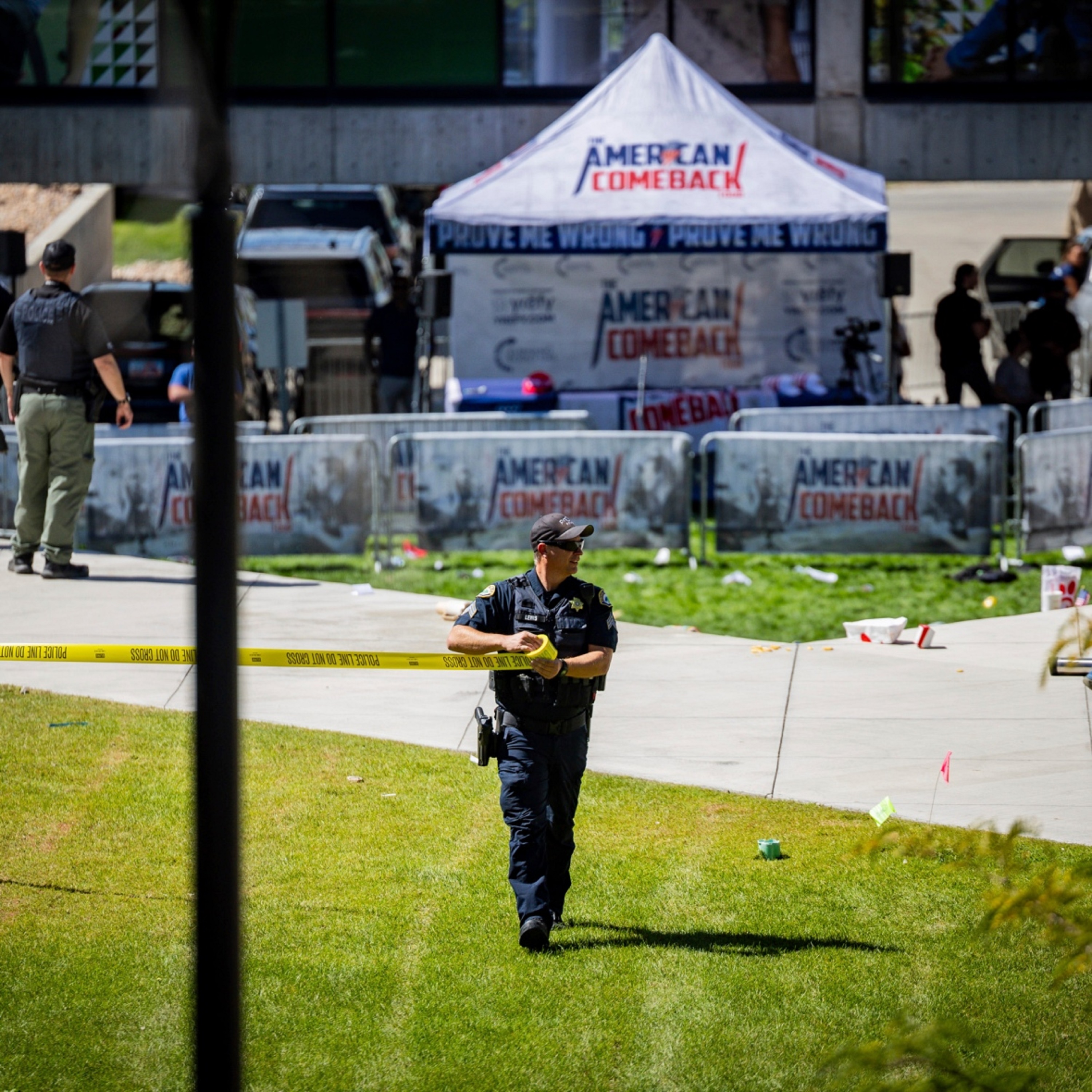
Front Burner
The era of meme shooters is here
00:29:02
<p>Memes have been written on weapons, quoted in manifestos, and cited by young attackers as the inspiration for acts of mass violence. It's a phenomenon that springs from groups of disaffected people communicating on the web through a convoluted language of impenetrable memes and irony.</p><p><br></p><p>Utah Governor Spencer Cox has said about the 22-year-old man charged with the killing of Charlie Kirk: "There was a lot of gaming going on. Friends have confirmed that there was that deep, dark internet — Reddit culture and other dark places of the internet where this person was going deep. You saw that on the casings. I didn't have any idea what those inscriptions meant, but they are certainly the memeification that is happening in our society today."</p><p><br></p><p>Aidan Walker is a journalist and content creator whose work explores the "video game to meme to extremist" pipeline. And he's joining the show to pull back the curtain on a world where irony, gaming, and fascist subc...
Loading summary
Transcript51 lines
- [00:00]
A
Barbie Ferreira isn't afraid of taking risks. From being the first in her family to pursue a career in entertainment as a model first, then actor, to taking on the role of Cat in Euphoria, one of the buzziest shows of the last few years for its raw and gritty depiction of high school life. Barbie stars in the new film Mile End Kicks, which just premiered at this year's Toronto International Film Festival. She'll tell you how Euphoria changed her life and how she prepared to speak Canadian. Follow Q with Tom Power wherever you get your podcasts.
- [00:32]
B
This is a CBC podcast.
- [00:37]
C
Hi everyone, I'm Jenny Poisson.
- [00:46]
D
There was a lot of gaming going on. Friends that have confirmed that there was deep, dark Internet Reddit culture and these other dark places of the Internet where this person was, was going deep.
- [00:59]
C
That was Utah Governor Spencer Cox talking about the online environment inhabited by the 22 year old charged with the shooting of Charlie Kirk.
- [01:07]
D
You saw that on the, on the casings, I think. I mean, I didn't have any idea what many of those inscriptions even meant, but they are, you know, certainly the memeification that is happening in our society today.
- [01:18]
C
This episode is going to include references to people, platforms, memes and personalities some of you might not have heard about before. And that's part of the point. We're going to talk about Gen Z and Gen Alpha communicating online via cryptic and obscure memes and online jokes. A world that has become a routine part of life for countless young people. And we're going to try and pull at some of the threads that connect what authorities say happen in Utah to other horrible acts of political or racist violence. Memes that inspire or confuse killings as content. Live streamed murder. Aiden Walker is a journalist and content creator whose work explores the gaming to meme to extremist pipeline. I've seen him described as a meme anthropologist. Aiden, hi. It's great to have you.
- [02:20]
B
Great to be here on front burner. Thanks for inviting me, Jamie.
- [02:23]
C
So let's begin by making very clear the need to be careful here. We have some information that law enforcement say they have learned about Robinson, that he was in a relationship with someone transitioning from male to female and they released these text messages where Robinson purportedly admits to the crime to his partner and writes, quote, I had enough of his hatred. Some hate can't be negotiated out. He wasn't more specific about what that hate was. Investigators have not said that this was linked to LGBTQ issues. There remains much we don't know about his politics. His mother apparently told law Enforcement that he had started to lean more to the left, becoming more gay and trans rights oriented. But the journalist Ken Klippenstein has been in contact with some of his friends who have said that his family didn't fully understand him and that he wasn't a cookie cutter lefty on every or even most issues. And what have you made of how people have been trying to describe the politics of this young man?
- [03:27]
B
Yeah, so there's a lot of people saying a lot of things about what is ultimately a pretty small amount of primary source here. We have the charging document. We have this information about what was engraved on the bullet casings. We have a bunch of online rumors that have sort of followed a script that we've seen take place following other high profile acts of political violence where folks are, you know, scraping through his mother's old Facebook posts or kind of looking through whatever we can glean of his online footprint. And so I'd agree that there is very little that we can say. But one thing that I feel fairly confident in saying is that he was extremely online.
- [04:05]
C
Let's dig into what that means. Can you walk us through the origins and meaning of some of the memes that appeared on the bullet casings? And what do they stand to tell us about the online culture and meme world that we're talking about here?
- [04:20]
B
Yeah, so according to. I think the governor of Utah was the one to give the statement or law enforcement gave it out. And as far as I know, we don't yet have sort of public pictures of what these bullet casings actually look like. But the first one, which contained the shot that ended up taking Kirk's life, is engraved with notices. Bulge. Oo Woo. What's this? Or owe o W o, which is an old meme. The phrase ow is kind of from 2013. The combination of it in notice is bulge is 2015. There's a webcomic that's pretty famous. And the context is it's making fun of the furry subculture, which are people who dress up in animal costumes. And there's a slight sort of shade of transphobia to that too, with sort of the notices bulge. And it's also kind of a lewd meme as well. And it was ironically adopted to make fun of furries. These online spaces are filled with irony, but it's a strange thing to put on a bullet casing. Then the second casing contains this. Hey, fascist catch. And then this sequence of arrows. Up, arrow, right arrow down arrow, down arrow, down arrow, which is a reference, it seems to this game Helldivers 2, which is a little bit like the film Starship Troopers, where it's sort of you are playing as a soldier in what's designed to kind of be a fascist regime in space. And it's a heavy sort of satire of fascist rhetoric that pretends to stand for liberal democracy. And that specific code is what you do to call in like a really big bomb in the game that you can use against your enemies. And among people who played Helldivers 2, it became a thing you'd sort of post online because it was cryptic and like, if you know, you know, the most common image is it's one of the characters from the game. And then it says, I'm not gonna sugarcoat it. And then that command sequence, the third has sort of lyrics from Bella Chow written on it, which we know of as like an anti fascist anthem. And it has some of that reputation online, but in part because it was on the English speaking language Internet and people don't speak Italian. It's been used by both the far right and the far left in sort of these terminally online contexts. But it is at its core and antifascist ballad, but it had this different life online. It was used in various video games, various films and television shows. And then the fourth casing was etched with, if you're reading this, you're gay. Lmao. Which is kind of a schoolyard taunt, I guess, a troll. Or as I called it, a shitpost for law enforcement, journalists, the general public to read.
- [06:59]
C
Well, you've called this assassination a shitpost, right? Which I found really interesting because I've never heard that word used in this context. And just why do you think this was a real world manifestation of one?
- [07:13]
B
So a shitpost, to me is something you put on the Internet not to contribute to a conversation, but to derail it on purpose or to introduce an element of chaos, to call attention to yourself and to say that the rules that have been governing this conversation that determine, you know, the relevance of statements or, you know, their credibility, their appropriateness, those don't really apply. So there's a lot of shit posting that looks to my mind a little bit like performance art. And most of it is very nonviolent. You know, you have people posting non sequitur jokes on the Internet, messing with people. Then there's some shitposting that's like very, very chaotic and designed to, to get a reaction to, to derail. And then there's shitposting that is, you know, purposefully incomprehensible that to me is what this act with those etchings in particular corresponds to because we have this cultural script now where we expect a shooter to leave a manifesto. And Luigi Mangione very famously left some messages etched onto his bullet casings. And so by putting, if you're reading this, you're gay lmao, in the place where people would expect to see a manifesto. It's an act of violence against coherence, against meaning, against the way we, we describe it. And in that charging document, one of the text exchanges they have from him is him saying, you know, if someone on Fox News reads notices bulge UWU on the air, then you know, that'll be hilarious essentially. And so I think that's, that's a piece of it is that it's designed to confuse us.
- [08:52]
C
We've talked about the groipers on this show before, led by online fascist influencer Nick Fuentes.
- [08:59]
E
It's not just that I'm telling the truth, it's not just that I'm a good broadcaster. They hate that I have an army. They hate that I raised my fist and the gripers go into action. It eats them up, you know, cuz they got money and they got shows and they got stuff, but I got shooters. That's a metaphor.
- [09:15]
C
This was really the primary group that many people quickly tied to this shooting. A lot of that was due to the, the fact that there was this Facebook group photo posted by Robinson's mother seven years ago on Halloween. And in the photo his mom says, quote, Tyler is dressed as some guy from a meme. And can you walk me through that image and why many people were so quick to use it as evidence of his connections to this broader online movement.
- [09:43]
B
Yeah, so that image shows him in a tracksuit and a beret, squatting on sort of just open field grass. And the X post that kind of went viral about it was pairing the Halloween photo of him with a meme of Pepe the Frog dressed in a tracksuit and squatting, which people call Gopnik Pepe Gopnik as sort of squatting Slav, it would be called wearing a tracksuit. It's a thing from sort of Eastern European, post Soviet culture that got adopted by the Internet. Pepe the Frog is its own separate meme in these sorts of spaces. Pepe himself has been adapted many different ways, so people dress him up in different costumes to be a different nationality or a different ideology. And one variant of him makes him, makes him look kind of a bit more diabolical and scuzzy. And that's called Groiper. And so for a lot of people, I think they sort of saw the Pepe referenced and thought of Groiper, which is a separate meme from Pepe or all this stuff gets tangled and filled with illusions. It's like a. It's like a literary text really.
- [10:47]
C
It sounds to me like you're throwing cold water here on the theory that he's part of these gripers.
- [10:53]
B
So I wouldn't say it's totally cold water. I think that we have very little in terms of primary source evidence to say one way or another what he was. And my instinct would be the most likely thing is he is as those sort of Ken Klippenstein messages that were reported show that he kind of had his own terminally online irony poisoned path. I do think the Graeper hypothesis, if you could call it that, rested not just on that Pepe image, but just sort of the tone of those bullet casings that we were talking about, which feel to me, having spent time archiving these spaces and looked at it to sort of reek of right wing message board culture. But there's not a firm evidence to the point where I, or I think anyone who's sort of studied this space close up would say, like, we're sure it was a griper or we're sure it was someone of the radical left. There's an incoherence here. And as I said, I think that's part of the point.
- [11:53]
C
If we could just talk about the Pepe meme. It's an image that you've referred to as like a collective self portrait, an image that people make their display pictures on social media when they adopt as an avatar. Can you tell me why that image is so resonant and why so many young men seem to be adopting it?
- [12:13]
B
Pepe has been a meme with a long and interesting history. It started as a web comic by an artist who has really nothing to do with the later political history it took on. It was used in protests in Hong Kong. I know in the Chinese speaking world it has a different valence, but kind of in the Anglophone message board culture where Pepe is most famous, it became this collective self portrait. 4chan is an anonymous platform. And so one way to kind of represent who you are as an anon is to post Pepe. But the thing that strikes me about Pepe as a collective self portrait for these people is it's a sad, weak little character. He looks like a little boy, he's lonely, he's alone and you'd expect someone espousing like a right wing ideology, you know, being racist, anti semitic, you know, calling for the end of democracy to want to look really tough. No, they're anchored in this sadness and this vulnerability. And their core constituency is very young, very alienated, who are often, for lack of a better word, marginalized. A lot of people who are isolated, often rural areas, people who don't have access to opportunity, maybe come from abusive family situations, lower economic status. And to the extent that all those things are global phenomena, it's a global phenomenon. And Pepe is the avatar of that. It was the dawn of a new era of spaceflight. Our space program has reached another important milestone. We're going to fly this new rocket, never been flown before, and we got people on it.
- [14:00]
C
You know that there are a lot of things that can go Wrong.
- [14:03]
B
From the BBC World Service, 13 Minutes presents the Space Shuttle. I think we've got something that's really going to mean something to the country and the world. Listen on the BBC app or wherever you get your podcasts.
- [14:20]
C
These conversations that are happening online, where are they happening on the Internet? This convoluted communal language of impenetrable memes and irony.
- [14:33]
B
In a sense, the answer to that is everywhere online. The nexus of it historically is like 4chan and then 8chan, but it's always leaked over. It's always been everywhere. And I'd say at present X post Elon Musk is a really important point for this community to coalesce. Yeah, there's also a side of it that is not on public platforms that is in sort of discord servers. Discord kind of being like Slack but for gamers where they can talk and plan and chat and do stuff. But it really is, you know, a part of our pop culture and our experience. It's not marginal. It's been around like that furry meme that was on the casing is, you know, a decade old. I think for Gen Z people it's been an influence we've grown up with. So the answer is kind of everywhere, but centered certainly around platforms like X or 4chan, which don't really do content moderation in the same way that other platforms do.
- [15:28]
C
I was just reading that the heads of Discord, Twitch, Reddit are all being summoned to testify in the House Oversight Committee in October to speak to radicalization on their platforms. And can you imagine what those conversations between like a 60 year old member of Congress and those guys and those guys are going to be like? Is it just a given that young People are just kind of developing a natural literacy in all of this that a lot of people do not have.
- [15:56]
B
Well, I think what this exposes is that what we take to be mainstream discourse, CBC or BBC or, you know, New York Times, any other outlet, that itself is just one algorithmic bubble among many. And so I think some of the blind spot about this isn't really generational. It's, you know, where we've been algorithmically sorted, who we listen to, who we talk to. Because I would really guess that as many, if not more Americans and Canadians or other nationalities are plugged into these sorts of online conversations than are plugged into traditional journalism. You know, the narrators of most people's worlds and inner lives are no longer institutional. You know, it's some random streamer that they're listening to.
- [16:43]
C
I've read that this world really became mainstream in 2019, a year in which there were three different mass shooting incidents in which perpetrators announced their plans on the far right message board 8chan just before committing these acts of violence. And I've also seen it elsewhere that this all really started when Steve Bannon purchased a video game company in 2005 and realized the largely young and male gaming community was a kind of political contingency lying in wait, one that just needed to be activated. As someone who knows all of this stuff pretty well, much better than myself, what would you say the origin story is here?
- [17:23]
B
I would say that there has been a gradual process of it becoming more and more visible. And so I think where it's kind of emerged into the mainstream for me, I trace it back to maybe like the 2016 election here in the US 2020 Covid especially, there's a sort of doubling down on the online world. It is really deep rooted at this point. And I think it's important to remember that, because these memes in these online spaces are like 10 or 20 years old. There's a lot of people who are in their 20s or their 30s in positions of power who have had experience in this world or maybe are still in it. I think if you follow the way the White House posts on social media, that becomes apparent.
- [18:20]
C
We talked about how there was nothing really strong or tangible connecting Robinson to the Groipers, and that there's still a lot of questions when it comes to his political beliefs and motivations. But I do want to get back to them because we're talking about this online world that other acts of violence have sprung from as well. Right. And the groipers are the online group, really. I think at the vanguard, right, of this network of online memes and irony. In some ways, I don't know if you'd agree with that. A world both full of and devoid of meaning, as we've been talking about. And just. Can you take me through who they are?
- [19:02]
B
Yeah. So the Groipers are the furthest fringe of kind of this shitposty online, right? Or one of the furthest fringes. And they are explicitly white nationalists, explicitly anti Semitic, and they're led by this streamer, Nick Fuentes, very, very young guy when he started out doing this.
- [19:25]
E
In 2028, we're going to get Hitler. Like in 2028, if we get four years of Kamala. In 2028, you're going to get an American fascist. People go, you can't vote for Kamala. She's going to be a communist. It's like. And I hope she is, and I hope she does.
- [19:42]
B
And they use this, you know, modification of Pepe the Frog, the Griper Toad thing as their collective self portrait. So kind of distinguishing themselves in that way from the. The usual suspects, the usual kind of 4chan crowd. And they spring to prominence in 2019 for targeting Charlie Kirk, for targeting Turning Point, which at that point is mostly not like the organizing arm of the GOP that it turned into. It's Kirk touring college campuses, debating folks in these big public spectacles. And the groipers, who brand themselves as the groiper army and brand this effort as the Groiper war, decide to come up and ask questions that will hopefully goad Kirk into saying something more extreme, more unpalatable, more, you know, anti Semitic or homophobic or whatever than he was already saying.
- [20:31]
E
And a couple of fans of my show, I didn't tell them to do this, but two guys who watched the show, they went out and I think the one guy asked a question about legal immigration. You're against illegal, but you're for legal immigration. How's that conservative? And then another guy came up and he said something about Israel. You know, you seem to be Israel first. What about America? And the two clips blew up on Twitter. I said that was unbelievable because, you know, if we show up in MAGA hats and ropes, rosaries, who we are, you know, and we present as the real right wing. This is unignorable. And people.
- [21:01]
B
And so you have this. This sort of tension where the Groipers are trying to derail this somewhat more mainstream kind of conservative thing that's going on. And to me, the. The readiest analogy to it is sort of Kirk is A little bit of a William F. Buckley figure for the online right, where he is kind of this mediator between the establishment to the extent it exists and sort of this edge fringe. And his role in part was to determine what is the boundary of the coalition. And Grovers were outside of that boundary. And there's been tons of sort of Grover clashes with the mainstream right in the years since. And really the TPUSA groiper conflict.
- [21:45]
E
He goes, I don't debate bad faith actors and trolls who blame the Jews for everything. Oh yeah, you just debate communists, socialists, Democrats, the governor of Canada or of California. He lives in fear. Rent free. Rent free, buddy, we're coming for you. We're coming for you. Globalist.
- [22:06]
C
Obviously, this is also one of the reasons why many people might have jumped to speculate that, like it might be one of these, these gripers, just Fuentes as this cultural force. What do you think his popularity represents, right, the fact that a legit Nazi became this counterculture sort of hero for many American youth.
- [22:30]
B
I think his popularity represents the ascendance of that kind of point of view. One thing that happens when you get a video that has a lot of views like the one I had about the casings, is that you kind of get. Everyone shows up in comments. And the most disturbing comments that I got were ones that would be like, you seem to have said the correct things about the gripers and these memes. But you know, Fuentes, he's a nice guy. He's just kidding around. He's just joking. And so I think he, in the past few years has sort of made himself a little more palatable.
- [23:12]
C
You know, as we have been discussing, Tyler Robinson is not that first example of high profile real world violence we've seen tied in some way to this online meme world. And there are clearer examples because we know more information about some of these other ones. The shooter responsible for the attack on a Minnesota area Catholic school just a few weeks ago left behind a manifesto that included all kinds of illusions to the same deep, dark corners of the Internet that we've been talking about. A lot of it is incoherent to me. Some of these shooters are believed to have actually interacted in similar online spaces. To what degree are some of these young people essentially motivated by one another? And does that change how we should even think about these attacks as like isolated tragedies or as part of an ongoing movement with its own language and rituals?
- [24:07]
B
I think it is part of an ongoing movement with its own language and rituals that is a very disorganized and decentralized movement. So in a way it eludes the usual definitions we have for how a movement functions or operates. And there is some extent of like almost gang type dynamics, you know, peer pressure. But to me, the bigger dynamic is kind of represented in Pepe the Frog and that sort of sadness. I think a lot of us are living in a world where offline real life opportunity and happiness and kind of meaning are becoming harder and harder to come by. It's hard to find a job, it's hard to afford rent. It's hard to feel like the world is going in a good direction. But meanwhile online you can go to that search bar and find anything from the craziest pornography to knowledge that you used to have to go to a library card catalog and ask for like the microfiche or whatever to get. And so there's this world of infinite accessibility and a world too where you can kind of put on any mask you want to put on and be anyone you want to be. And it's within your control. It's all legible to you. And you're able to feel free in a way that I think people don't in a lot of places. People come to value that online world and that online life more than their real world lives. And we'll break the law, will commit violence, we'll do things to preserve that. And ultimately the incentives of that online world come to twist our offline world.
- [25:38]
C
You know, also I'm thinking about how some of these incidents have literally been live streamed for public consumption.
- [25:45]
F
An 18 year old white male has been arrested and charged with first degree murder for a mass shooting at a supermarket in Buffalo, New York in what authorities called an act of racially motivated violent extremism. Buffalo Police Commissioner Joseph Grimoglia said the suspect was armed with an assault style rifle and body armor when he opened fire in the parking lot while live streaming the attack on Twitch.
- [26:08]
C
Other shooters have specifically cited or name dropped high profile influencers and content creators like Candace Owens and others after carrying out their crimes. And are Gen Z extremists more likely to view assassination as a kind of content, you know what I mean? Like a spectacle that is a strictly political act. And is there a kind of creative creator feedback loop at play here?
- [26:32]
B
I wouldn't blame creators necessarily. I do think we're living in a dynamic where rhetoric is coarsening, where violent acts like that video of what happened to Kirk spread everywhere far and wide. And so I would agree, you know, people were live streaming when they went into the capitol, too, on January 6th. Like, that, to me, is like, materially, substantively, like what is a political event in 2025. It is content for the majority of people who encounter it. And in large part, I think we see our own lives as content. You know, we're constantly filming, we're constantly taking pictures. And so it just seems logical that as life gets channeled through the phone, all parts of life, including the really horrible, violent parts, and society will get channeled through it.
- [27:17]
C
Every generation of kids has their cultural mores, right, Their subculture that their parents do not understand. I think back to the reporting around the general reaction to the Columbine shooting or the federal reaction to rap or rock and roll music, or just how many times that video games have been used to explain mass shootings. Is this just another example of that phenomenon, you think, or is this as serious as. As it seems? It seems different to me, but I worry that. That I sound like those people talking about rap music. You know what I mean?
- [27:54]
B
Yeah. I mean, I think there is some resonance or rhyming there between earlier moments where something new that kids were doing felt violent or unsanitary or dangerous somehow, and this moment here. I think it's important to keep in mind that just like with rap music, you know, the majority of people who are on these servers talking about violence, hearing about it, don't go on to commit it, you know, but in a sense, what's really sick to me, and that the youth culture is just a manifestation of, as it borders into sort of nihilistic violence, is what's wrong with culture at large. You know, it's the topics we talk about every day in the news. You know, backsliding, democracies, inequality, climate crisis. And to some extent, there is the issue of, you say, oh, well, everything is everything and everything is wrong. It's all structural. But when I sort of get to that point in thinking, which I think a lot of us do, where like, oh, it's just the whole thing is wrong. People are lonely, you know, modernity doesn't feel nice, et cetera, et cetera, I think it comes down to we can take action as ourselves in our communities to really understand and empathize with each other and try to do more, try to tell better, more useful narratives online and offline.
- [29:07]
C
Aiden, thank you so much for this. Thank you.
- [29:10]
B
Thank you so much, Jamie, and hope you have a good rest of your day.
- [29:20]
C
All right, that is all for today. Front Burner was produced this week by Joytha Shangupta. Matthew Amha Ali Jaynes, Lauren Donnelly, Simi Bassey, Sam McNulty, Dave Modi, and Mackenzie Cameron. Special thanks this week to our colleagues Erin wary and Justin McElroy. Our YouTube producer is John Lee. Our music is by Joseph Shabasin. Our senior producer is Elaine Chao. Our executive producer user is Nick McCabe. Locos, thanks so much for listening to Front Burner and we'll talk to you on Monday.
- [29:58]
B
For more CBC Podcasts, go to CBC CA Podcasts.