← Front Burner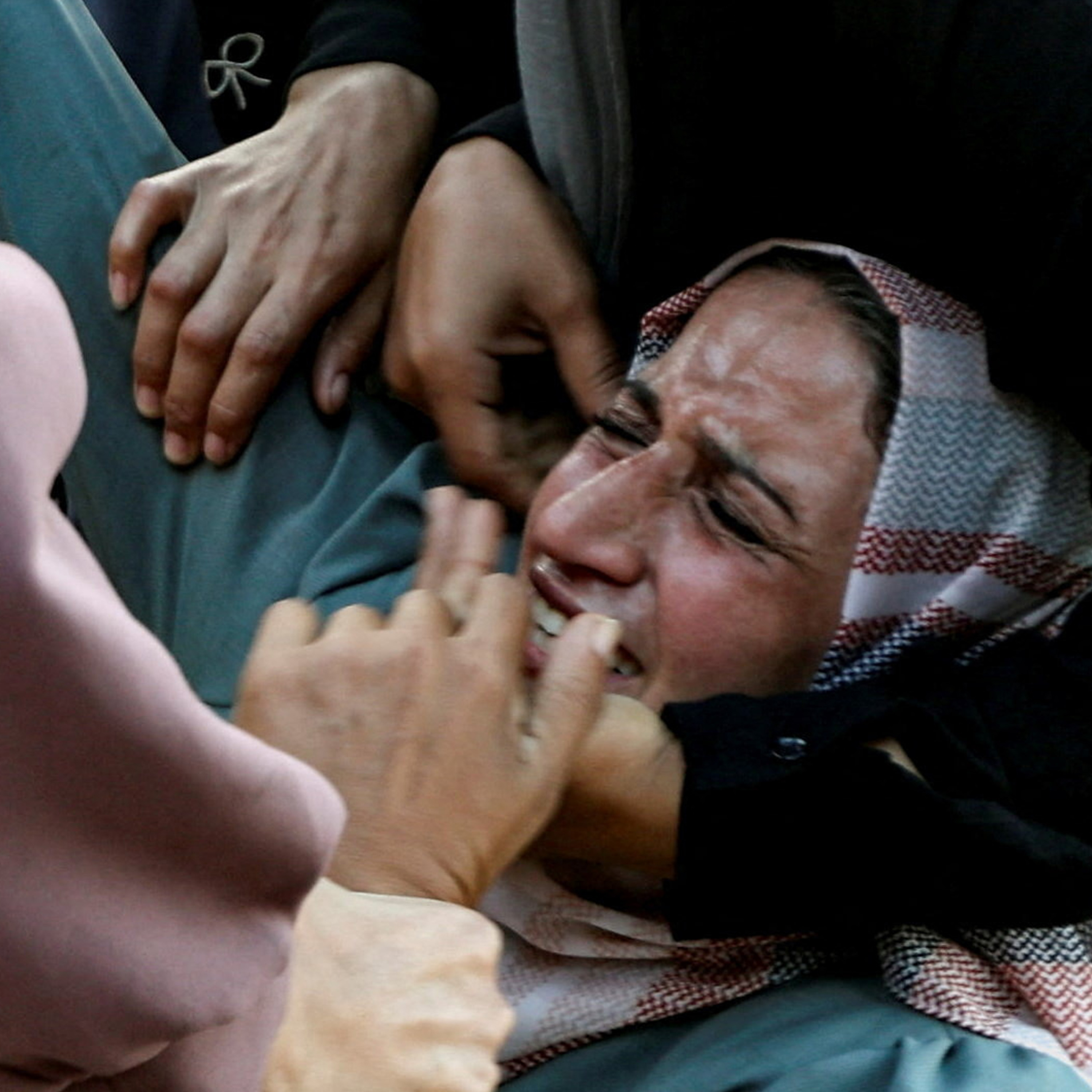
Front Burner
The precarity of Gaza’s ceasefire
00:18:56
<p>Over the last 10 days Israel and Hamas have observed a ceasefire that saw the return of hostages and prisoners to Israel, Gaza and the West Bank as well as deliveries of much needed aid to famine-struck Gaza since the deal was reached. </p><p><br></p><p>However, the ceasefire has remained shaky and the possibility of a permanent end to the war is still uncertain. Israel carried out airstrikes throughout southern Gaza after it said Hamas militants fired at IDF troops in Rafah. Hamas has denied this. </p><p><br></p><p>To parse through the events that led to those developments, we talked to William Christou, freelance journalist based in Jerusalem for The Guardian. </p><p><br></p><p>We'd love to hear from you! Complete our listener survey <a href="https://cbc.ca/FrontBurnerSurvey" rel="noopener noreferrer" target="_blank">here.</a></p><p><br></p><p>For transcripts of Front Burner, please visit: <a href="https://www.cbc.ca/radio/frontburner/transcripts" rel="noop...
Loading summary
Transcript39 lines
- [00:02]
A
This is a CBC podcast.
- [00:17]
B
Hi, everybody, I'm Jamie Poisson. Today on the show we've got William Christou. He's a freelance reporter working for the Guardian out of Jerusalem. And we're going to talk about how the ceasefire in Gaza has or has not been holding. We're talking about that because over the last number of days there have been Israeli airstrikes, the halting of aid, and accusations that Hamas fired on Israeli troops in Rafah. On Sunday afternoon, after we recorded our interview with William, Israel announced its decision to uphold the ceasefire agreement once again. But the events that led up to this are really important to understand because they underscore just how precarious the situation is right now. Okay, here's William. William. Hey, thank you so much for coming back onto Front Burner.
- [01:06]
A
Thanks for having me.
- [01:08]
B
So there have been a number of developments over the last day or two. Let's just timestamp this conversation. We're speaking at around 2pm Eastern on Sunday. The Israeli Air Force carried out airstrikes in southern Gaza today. And what can you tell us about these strikes, these attacks?
- [01:25]
A
Yeah, unfortunately it's not looking good. And I think last time we talked we ended on a more optimistic note. Today has been the most serious test of the nine day ceasefire in Gaza. You know, we woke up to news this morning that there had been some sort of attack on Israeli soldiers in southern Gaza. Israel says it's Hamas. Hamas denies having any knowledge of what's going on. And then Israel released a wave of airstrikes across the strip, namely the northern part of Rafa Said, the northern eastern part of part of Rafah city, as well as the central area with the Zawaida town in the northern western part of de city, as well as Palestinians.
- [02:04]
B
Were rushed to a hospital in Gaza's Dr. Al Bala on Sunday after Israel launched a series of deadly strikes in the enclave.
- [02:12]
A
You know, this is not what a ceasefire should look like. This looks more like active fighting.
- [02:18]
B
Once again, some outlets have reported that Hamas was targeting Yasser Abu Shabaab. And just can you tell me how that fits into the conversation that we're having? Who is he?
- [02:32]
A
Yeah. So Yasser Abu Shabaab is the leader of a Palestinian militia that is accused of being backed by Israel. And for months now, the gang has been in opposition to Hamas and has actively fought with them. In recent days, since the ceasefire has started, we've seen Abu Shabaab fighting with Hamas, Hamas sort of, you know, taking revenge against these clients. We've seen a video of Hamas publicly executing A number of men, what looked like a town square and they said they were, they were killing people who had violated the law. But others accused them of taking out rivals, including these gangs.
- [03:17]
B
And I know, you know, there's still a lot unknown at this point. As you said, Israel is saying that Hamas fighters fired on them. Hamas is saying that they don't know anything about it. We have also heard these reports, namely from independent journalist Yunus Tirawi, that the incident in Gaza wasn't a Hamas attack, but may have been sparked by a vehicle owned by an Israeli settler company driving over an undetonated explosive. And can you speak to that at all?
- [03:48]
A
You know, it's really hard to say. And a big part of this again is foreign press not being allowed to enter Gaza. What we can say is that Israel says that they are fired at with bullets and with an anti tank missile. So if it was a vehicle that ran over an explosive, there would have to be a serious, you know, the Israeli army would have to have not known what's going on. Um, but the, the clashes seem to, to continue for a number of hours at least according to the Israeli Army Radio, which is a state broadcaster. Um, what is strange is that Hamas is coming to have no idea what happened. Uh, they said they have no awareness of what's happening. So it could be if this is a clash and again, things are quite unclear at this moment. If it is a clash, it could be that this is from another armed group in, in Gaza. There are a number of different armed factions that operate in Gaza, some of you know, which are allies with Hamas, others not so much, including the Palestinian Islamic Jihad and pflp.
- [04:52]
B
Tell me a little bit more about these groups in Gaza. We keep hearing about Hamas cracking down internally with violence in Gaza. Last week, for example, several people were executed in western Gaza City.
- [05:08]
A
A chilling vision, the last moments before a street side execution. Hamas fighters shooting members of a rival armed clan. Bloodied bodies collapsing in the crowded street as the fragile ceasefire.
- [05:20]
B
Just tell me more about these militias and groups. Some of them are reportedly Israeli backed, some of them not.
- [05:27]
A
Yeah, so we saw throughout the course of the war, especially in the last six months, we saw that Israel had started backing a number of gangs sort of as alternatives to Hamas, including probably the most famous Yasser of Shababs clan. The, the group that started to be called the Al Shabab group. And they had their origin in stealing aid actually. And eventually they started residing in an area that was, was overseen by Israeli troops. And reporting indicates that they have been supplied by Israel as well, although the group has never admitted to that. And, you know, Israeli media quoting unnamed Israeli officials sort of floated the idea that these groups might be part of an alternative force that could rule Gaza in the future. Today, even before the clashes, there were suggestions that these clans could help oversee the, you know, civilian administration in Gaza and be part of reconstruction of the Strip. So there's suggestions that maybe the areas that they can control, that they do control, could see reconstruction of housing and infrastructure.
- [06:49]
B
Meanwhile, the. The Rafah crossing between Gaza and Egypt continues to be closed, even though the Palestinian Embassy in Egypt said that it would be opening on Monday. So when this episode is out, just tell me more about what's happening with the crossing and why it is so important for Gazans.
- [07:08]
A
Yeah, I think this is probably the most dangerous and immediate consequence of what happened today. Rafah is the only sort of outlet to the rest of the world that Gaza has. And as part of the first phase of the ceasefire deal, we were supposed to see a surge of aid into Gaza. And again, parts of Gaza are undergoing famine. We've seen a hunger crisis resulting in almost 500 people starving to death over the last few months. So getting aid in there is critical. But after the attacks today and the airstrikes, the Israeli army said that they are going to not open the Rafah crossing and aid will not be going in any future. Humanitarian aid that's been promised under the first phase of the ceasefire deal is not going to go ahead as promised.
- [07:51]
B
And up until today, what were we seeing when it came to the aid? Was there aid getting into the Gaza Strip? Was it meaningful?
- [07:59]
A
So there had been sort of an uptick in aid under the ceasefire deal. Aid groups say shipments are increasing, but not nearly enough.
- [08:08]
C
The ceasefire has opened a narrow window of opportunity, and WFP is moving very quickly and swiftly to scale up food assistance.
- [08:17]
A
But there are warnings. Aid groups say getting supplies to Gaza City and northern Gaza is extremely challenging. Challenging, but there was still sort of haggling over the opening of the Rafah crossing. And, and the sticking point was the return of the remains of deceased Israeli hostages. You know, as part of the ceasefire deal, Hamas is supposed to return all 48 hostages to Israel, 28 of which are deceased. Hamas has returned a number of. Of remains of hostages, but say that they need specialized equipment and expertise to enter the Strip to get those who are buried under rubble. You know, they claim that there's a number of hostages killed by Israeli airstrikes and they don't know exactly where they are. Israel for their part, say that Hamas knows where the hostages are located and that if they wanted to, they could repatriate the hostages wherever they want. And so they've delayed the full opening of the crossing until now over that issue.
- [09:13]
B
Well, up until these strikes this weekend. What would you say the military operation on the ground was was like? I know both sides have accused each other of violating the ceasefire. The Gaza government media office accused Israel of violating the ceasefire 47 times and killing 38 Palestinians since it began.
- [09:33]
A
Yeah. So Hamas and the Gaza media office have both accused Israel of violating ceasefire dozens of times since it went into effect nine days before. Israel on its part, say that Hamas has been approaching troops and that the people they've shot have been people who have approached Israeli troops. When the ceasefire started, the Israeli troops withdrew to a certain line in Gaza, and they said that anyone who approached them would be in danger. And they've claimed that the people that they've killed have approached them. But the issue is that if you're a normal person in Gaza, you don't have access to those maps that show where the Israeli troops are located. Right. On. On the ceasefire map, there's this big, thick yellow line that says, you know, do not cross line. These are where Israeli troops are still operating. And that's about 50% of Gazan territory. But, you know, if you don't have Internet access or if you're driving, you don't see that on the ground. And so on Friday, for example, a. A car holding 11 people in Gaza City went to go check on their home. They accidentally crossed over the yellow line, and they were hit by two Israeli tank shells, killing 11 people, including seven children.
- [10:58]
B
So you mentioned, of course, all of the living hostages have been returned to Israel. There were really jubilant scenes of that last week. What would you say the mood is now on the ground in Israel? You know, you're in Jerusalem.
- [11:17]
A
Yeah, I think I'll answer that in two ways. The first thing is that the priority in Israel was returning hostages. Consistently when they did polling, including as late September, you know, the majority of the people in Israel wanted to end the war, but the overwhelming reason was to return the hostages. And that, you know, in a September poll by the Israeli Democracy Institute, only 5% of people said that the safety of people in Gaza was a reason they wanted to end the war. So really, whether or not fighting resumes in Gaza, unless you're related to a soldier, a soldier yourself, doesn't really matter once the Israeli hostages are back. At the same time, the Second thing to consider is that the Israeli government has, you know, the Israeli government is a coalition which includes very far right wing elements, and they've been skeptical the ceasefire deal since the beginning, and they've threatened to quit the government if Hamas endured past the signing of the ceasefire deal. So today we saw an immediate reaction from them. The two most firebrand far right wing ministers in the government, Ben GVIR and smartrich. You know, they both immediately made statements. Smartrich just tweeted the word war, and Ben GVIR said that the war needs to resume. So there's a lot of pressure from a certain part of the government to take a very firm response to this, including potentially restarting fighting. And now that the living hostages are back, the population, you know, the Israeli population itself doesn't necessarily care that much if the fighting begins again.
- [12:51]
B
I wanted to ask you about the Palestinians that were freed by Israel and who have returned home, the captive Palestinians, because I know you were in the west bank recently and can you describe some of the scenes there and in Gaza? Talk to me about who some of them are.
- [13:11]
A
Yeah. So you had about 88 Palestinians who were released back to the west bank in Jerusalem, many of whom were carrying life sentences and were charged with violent crimes. I was there in Ramallah when the bus of those Palestinian prisoners and detainees came back to their families. Uh, and it, it really was sort of a joyous scene. Um, you had crowds and crowds of families waiting for their loved ones to come out. Some of the people I spoke to told me that they hadn't, you know, their loved ones have been in prison for more than two decades and they hadn't been able to visit them for the last two years because Israel's restricted family visits. Uh, it was also, it was a little bittersweet as well, because a lot of these detainees and prisoners look quite gaunt. Um, some could barely walk, some had fresh bruises and scarring on their face. Um, it's, it's clear, or at least it looked like they had been mistreat during their time in Israeli detention.
- [14:02]
C
The Israeli army warned Palestinians not to celebrate their releases, even dropping leaflets to that effect. A reminder to those arriving back in the west bank that the occupation is far from over, despite declarations of everlasting peace.
- [14:22]
A
At the same time, about 1700 Palestinian detainees were released back to Gaza. They were initially arrested in Gaza, almost all of them not charged with a crime.
- [14:32]
C
Most of the released were taken to Gaza. And there too, crowds greeted the buses that rolled into Khan Yunus, city of Destruction. Despite all the devastation In Gaza, this man said its beauty would always be much better than the life we had in prison.
- [14:49]
A
And we spoke to some of those detainees and really, they all had really horrific stories of their times in Israeli detention. We spoke to one man who had been arrested for nearly two years, never charged with a crime, never saw a judge. And he detailed just being tortured for months and months on end. You know, he said that that guards would use dogs in them, spray them with tear gas, shoot at them, take them into a room where music would be played, loud music would be played 24 7. And he said that the day before he was released, the guards bound his hands, put him on the floor and began to beat him for one last final beating. And then the worst thing of all is that he came home, tried to call his wife, phone was out of service, and then he found out that she had been killed in an Israeli strike some time ago.
- [15:53]
B
Well, just the final question for you before we go. You started this conversation off talking about how things don't look good, but I wonder if maybe you could talk to me a little bit more about that. I. I've heard people talk about how they're worried that this is going to be just like the last ceasefire, for example, which lasted a short period of time, and then the fighting and the onslaught just resumed. And are you thinking about it in the same way as that, or do you think that this is still different?
- [16:20]
A
You know, look, this, this could collapse. There's all the perfect ingredients for it. You have potentially a Hamas attack that killed two Israeli soldiers. You have a right wing coalition that's pushing Netanyahu to resume the war. Hostages are gone, so there's not much stopping him from doing that. It could collapse, I would say. But the difference from March is that the amount of political capital that Trump has put into this, the amount of investment he put into it, means that he's very invested in making sure that this ceasefire continues. You know, this is supposed to be his peace prize sort of submission.
- [16:54]
D
And after so many years of unceasing war and endless danger, today the skies are calm, the guns are silent, the sirens are still, and the sun rises on a holy land that is finally at peace. A land and a region that will live, God willing, in peace for all eternity.
- [17:17]
A
So he's very personally invested in this. And again, Trump is the only person that can influence Netanyahu. So it really, really depends on if how Trump feels about this. In March, when this ended, there wasn't much blowback from the US If Trump puts his foot down, as he did during the Iran war when he told Israeli planes to turn around on the rates of Tehran. This could change things, but it really depends on the US Response.
- [17:43]
B
Have you been able to speak with people in Gaza about how they're feeling right now at this moment?
- [17:49]
A
Yeah, we did. And people in Gaza are very, very afraid. They had just managed to catch their breath, and then they have a day full of airstrikes and killings, and they're very afraid that this war is going to kick off again. And after two years of fighting, after just tasting a little bit of peace, they can't imagine going back into war and displacement again. You know, they had already started to think about rebuilding their lives, and there's so much to rebuild in Gaza. So the prospect of renewed fighting is very, very frightening for them.
- [18:23]
B
Okay, Will, thank you so much for this. Really appreciate it for. All right, that's all for today. I'm Jamie Poisson. Thanks so much for listening. Talk to you tomorrow.
- [18:52]
A
For more CBC Podcasts, go to CBC CA Podcasts.