← Front Burner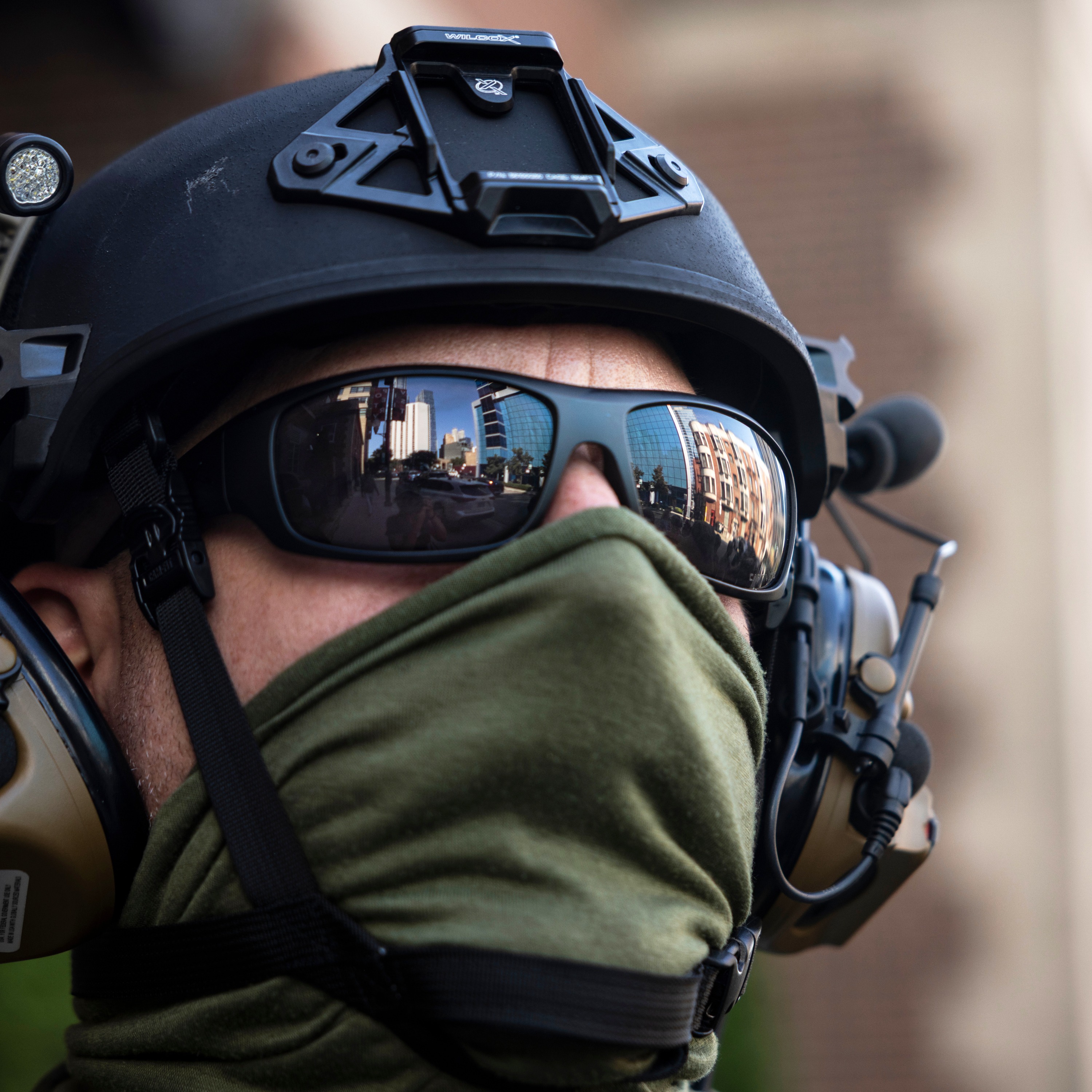
Front Burner
Trump, and the alarm bells of fascism
00:31:17
<p>After Donald Trump was elected for a second time, historian Timothy Snyder wrote this in the New Yorker: “Trump has always been a presence, not an absence: the presence of fascism.” Today on Front Burner, Snyder makes that case again. His warning about fascism feels particularly relevant at this point in Trump’s presidency, as the U.S. sees an escalation in political violence, the deployment of federal law enforcement in major cities, and the proliferation of masked ICE agents on what critics call ‘roving patrols’ across the country.</p><p><br></p><p>Timothy Snyder teaches at the University of Toronto’s Munk School of Global Affairs. He is the author of books like “On Tyranny” and “On Freedom”.</p><p><br></p><p>We'd love to hear from you! Complete our <a href="http://www.cbc.ca/FrontBurnerSurvey" rel="noopener noreferrer" target="_blank">listener survey here</a>.</p><p><br></p><p>For transcripts of Front Burner, please visit: <a href="https://www.cbc.ca/radio/frontburner/transcr...
Loading summary
Transcript54 lines
- [00:00]
A
AI is transforming customer service. It's real and it works. And with fin, we've built the number one AI agent for customer service. We're seeing lots of cases where it's solving up to 90% of real queries for real businesses. This includes the real world, complex stuff like issuing a refund or canceling an order. And we also see it when FIN goes up against competitors. It's top of all the performance benchmarks, top of the G2 leaderboard. And if you're not happy, we'll refund you up to a million dollars, which I think says it all. Check it out for yourself at fin AI. This is a CBC podcast.
- [00:34]
B
Hey there, it's Jamie. I just wanted to give a shout out to some of the folks who've been writing in to share their thoughts with us about the show. We've gotten some really great notes from some of our recent coverage of the war in Gaza. Thank you so much to James, Maxine, Emily, Michael, Felix and more. It's a very difficult story to tell, but it's one that we're committed to keep telling and we're glad that you've been appreciating it. If you're new to the show, you can get a new episode from us in your feed every Monday through Friday. All you need to do is click that follow button and you can always tell us what you think of how we're doing. We are at frontburnercbc CA okay, here is today's episode. Shortly after Donald Trump was elected for a second time in November of last year, historian Timothy Snyder wrote this in the New Yorker, Trump's skills and talents go unrecognized when we see him as a conventional candidate. Yet this is our shortcoming more than his. Trump has always been a presence, not an absence. The presence of fascism. Snyder made the case, including on our podcast, that Trump's lie about winning the 2020 election, the January 6th attack on the Capitol, were clear examples of undermining democracy. A key tenet of fascism. That Trump's focus on declaring an enemy, whether they be Democrats or immigrants. Another key tenet of fascism. Snyder's warning about fascism feels particularly relevant at this juncture in Trump's second administration. We've seen and talked about on this show masked and armed ICE agents snatching people off the streets in unmarked cars, the escalation of political violence, the deployment of federal law enforcement to deal with so called epidemics of crime in places like Washington, D.C. and we wanted to have him back on to really help us pull a bunch of these threads together. Timothy Snyder now teaches at the University of Toronto's Munk School of Global Affairs. He is the author of books like On Tyranny and On Freedom. Professor Snyder, welcome back to the show. Thank you so much for making the time.
- [02:54]
A
I'm very glad I can do it.
- [02:55]
B
I'm hoping today we can go through a bunch of recent examples with you to get a sense of how someone like you is thinking about them. And let's start with earlier this week, Defense Secretary Pete Hegseth and President Trump summoned an unprecedented number of top US Military officials from around the world for a meeting in Virginia. The goal seemed to be a kind of talk about priorities, including ferreting out the so called woke agenda in the military.
- [03:21]
A
Foolish and reckless political leaders set the wrong compass heading and we lost our way. We became the WOKE department, but not anymore.
- [03:34]
B
But also Trump talked about how US Cities should be used as training grounds for the military, ones that are run.
- [03:40]
C
By the radical left Democrats. What they've done to San Francisco, Chicago, New York, Los Angeles, they're very unsafe places. And I told Pete we should use some of these dangerous cities as training grounds for our military National Guard, but military.
- [03:58]
B
He spoke about an enemy within.
- [04:00]
C
Only in recent decades did politicians somehow come to believe that our job is to police the far reaches of Kenya and Somalia while America is under invasion from within. We're under invasion from within.
- [04:14]
B
Of course, he has already ordered troops to LA, Portland, D.C. and what did you make of that event of the speeches that you heard?
- [04:22]
A
So let me, let me, let me go from the very bad to the catastrophic. It's worth noticing that just from a conventional perspective of national security was an insane thing to do. There's just no reason why you would have the top command of your armed forces in a single room at a known time. Nothing really justifies that, let alone a kind of self absorbed pep talk, which is the second point. What Hegseth and Trump did in their speeches was just project themselves and their desires. And it's painful, I think, not just for me, but I think for many Americans to watch our country reduced to the internal demonic struggles of a couple of individuals. Hegseth, when he talks about the military, just talks about his own successes and failures and he projects them out to everyone else. No more politically correct and overbearing rules of engagement, just common sense, maximum lethality and authority for war fighters. That's all I ever wanted as a platoon leader. He doesn't have, this is my third point. He actually doesn't have any idea what modern war is like, how it's fought, what it might be fought for. What it comes down to then is that in the absence of any strategic reason to do this, and given that this was a strategically crazy thing to be doing, what we are facing and this actually becomes clear, what Trump said at minute 44 and what Hegseth said throughout, what we're facing is the realization that these two men believe that our armed forces should be fundamentally used in order to carry out regime change inside the United States. That that is in fact their purpose. Now, that is evil. But it's also complicated. And this is the last thing I'm going to say. I worry that they will try this, they are trying it, and that it's the kind of thing that in its failure will break up not just the armed forces, but the republic. It will put so much strain on the way that the armed forces are supposed to work and so much strain on the way our constitutional order is supposed to work that I think it will have consequences that they're not foresee. I think they imagine a kind of easy cinematic transition with shiny weapons and shiny boots on the street and we're all happy and we become a fascist regime. I just. The world is not like that. It's much more complicated. There'll be conflicts within the armed forces and without. And I think they're setting us up for an entirely artificial, unnecessary and complicated breakup. That's what I worry about.
- [07:13]
B
Could you tell me more about why what you hear there is a plan for regime change?
- [07:19]
A
Well, the first, our constitutional order and long standing legal and constitutional precedent is based upon the notion that the armed forces are meant to be used for discreet purposes which have to do with the defense of the country. It's a long standing tradition in law and generally in practice, although there have been a couple exceptions that the armed forces are not to be used for domestic law enforcement. So the President of the United States repeatedly saying that the purpose of the armed forces is in fact domestic law enforcement is a very substantial change in principle. And then in practice, what I have in mind is this. When you do have the armed forces present in your cities in the hundreds and the thousands and the tens of thousands, people react to that one way or another. But the way that they react is also an element of regime change. You either get used to a certain kind of military dictatorship in which it's been established that laws and what matters but direct orders from the commander in chief are what mattered or you don't. But either way, it's going to be some kind of a change.
- [08:34]
B
And when you talk about the fracturing of the military itself, can you just tell me more about what you think that could practically look like?
- [08:40]
A
I mean, I hesitate to predict exactly, and I think it'd be a wonderful show if you brought on some US Veterans from various backgrounds to talk about this. I do it from a certain distance, but I'll just point out that the United States Armed Forces are a meritocratic institution in general. They bring in people from all walks of life, all backgrounds. A lot of people in the armed forces are first generation citizens. And that's the first issue that Hegseth and Trump are imagining America of us and them, where it's clear who are the good guys and who are the bad guys. And of course, the, the United States Armed Forces represent, in many ways, some good things about America. They represent variety. They represent diversity, represent social mobility. They don't represent whatever Hegseth and Trump might think, where all of the soldiers are naturally going to think, oh, yes, our fellow Americans are the enemy because our leaders say so. So that's one tension. Another tension is the command structure. The people who are the officers in the United States Armed Forces have been trained from the beginning that their loyalty is to the Constitution to which they swore an oath, not to any particular person. So the commander, the president's the commander in chief, but the orders that he gives must be legal orders or constitutional orders. And if this kind of practice is pushed much further, you're going to have consciences that are stretched, I imagine some already stretched, and consciences that are broken, and people who are going to have to make very difficult decisions letting themselves be fired, resigning, or, you know, God forbid, following orders to actually invade American cities and kill Americans. I'm putting it very simply now, but if there are, so to speak, natural demographic tensions among the soldiers and natural legal and moral tensions among the officer class, if you press this entire institution to do a thing that it wasn't designed to do, what you can expect are fractures of some kind. And this is. So that's precisely the thing that I worry about. Not so much that, that they would, you know, they'll give the order and nothing will happen. Or not so much that they'll give the order and that America will immediately switch, like changing the chann to fascism, but rather that the attempt to move this enormous organization to a completely different purpose, which is in contrast to what both the officers and the soldiers believe that they are meant to be doing, that that's going to lead to fractures and unpredictable instability. And I fear a level of instability which is inconsistent with the kind of predictability that Americans take for granted. But also, and here's the rub that the leadership that Trump and Hegseth take for granted, I think people are very cynical to the point where they become Nai and Trump and Hegseth are very cynical. But at the end of cynicism is naivete. And I think their naivete is the idea that essentially that they can just push a button and the armed services will be able to do a completely different kind of mission without all kinds of unexpected instability.
- [12:01]
B
Hi, I'm Madupak Enola from TED Business, and I'm here to talk about the Financial Times. Every day the world bombards you with endless headlines and noise. What matters most, facts and context. That's where the Financial Times comes in. With clarity, depth, and truly independent reporting, the FT helps you cut through the noise and see what's real and why it matters. Stay informed with the trusted source leaders around the world rely on. Visit FT.comSourceFT to read more and save 40% on a digital FT subscription. What kind of person takes on the law? Can they ever really know what they're getting into?
- [12:46]
A
A really tough looking guy came up.
- [12:48]
C
To us and said, are you part.
- [12:50]
A
Of this gay case? My family started getting death threats. I wasn't able to go outside alone anymore.
- [12:57]
B
I'm Phelan Johnson, host of See you in Court, a new podcast about the cases that changed Canada and the ordinary people who made history. This is David and Goliath. We have here find and follow See youe in Court wherever you get your podcasts. I was struck well by many things, but at one point, Trump talked about how American history is filled with military.
- [13:21]
C
Heroes who took on all enemies, foreign and domestic. You know that phrase very well. That's what the oath says. Foreign and domestic. Well, we also have domestic. George Washington, Abraham Lincoln, Grover Cleveland, George Bush and others all use the armed forces to keep domestic order and peace. Many of our.
- [13:44]
B
And what does that conjure for you?
- [13:46]
A
I mean, that's an interesting thought. The basic point, of course, would be that in U.S. history, it's always been the kind of Cincinnatius idea that, you know, you, you serve for a time and then you go back. And Washington was the preeminent example of that. He won the Revolutionary War, he served his terms as president, and then he declined to be a dictator or a tyrant. And he left behind a legacy of political thought to the effect that you know the boundaries, you know the limits, you respect Them you shift roles. As for Lincoln, that's a very interesting example because Lincoln, of course, was the commander in chief, the president of the United States, during our most horrible war, which we call a civil war between north and South. And that's a very interesting example to dwell on, of course, because that was a conflict among people who were seceding from the United States and others. It's a relevant example, but I think not for the reasons that Trump imagines. It's a relevant example because it shows that our system is fragile. The Civil War ought not to be remembered. There are many reasons to remember it, but it ought not to be remembered as an example of the robustness of the system. It's, it's rather to be remembered as an example of the flaws in the United States, the historical moral flaws having to do with slavery, the things that we ought to be remembering about ourselves. So I, I don't quite understand those examples the way that, the way that Mr. Trump brings them up. It seems to me that what the history of the United States shows is that we have survived as a republic thanks to a tradition of, of a clear identification of what the purpose of the military is. And thanks a civil war in which the ideas of the side that won don't seem at all to be the ideas that Mr. Trump and Mr. Hegseth are in favor of.
- [15:42]
B
I want to put another example to you. Trump signed this presidential memo that is meant to rein in what he has called a radical left wing domestic terror network.
- [15:52]
C
You know when you see the signs, and they're all beautiful signs made professionally, these aren't your president protesters that make the sign in their basement late in the evening because they really believe it. These are anarchists and agitators, professional anarchists and agitators, and they get hired by wealthy people, some of whom I know, I guess, you know, I probably know them.
- [16:11]
A
This is a very historic and significant day. This is the first time in American history that there is an all of government effort to dismantle left wing terrorism, to dismantle antifa, to dismantle the organizations that have been carrying out these acts of political violence and terrorism. What we have seen.
- [16:29]
B
It followed a deadly attack on an ICE facility in Dallas that killed one detainee and injured two others. According to the FBI, one of the bullets used in the attack was inscribed with the message anti ice. The memo also comes on the heels of course, of Charlie Kirk's assassination, which Trump and his supporters have blamed on an organized left wing network. Without evidence, the memo says some of the Common threads of the violent conduct includes anti Americanism, anti capitalism, anti Christianity, and, quote, extremism on migration, race and gender. And what, what strikes you about the rhetoric used in that memo itself?
- [17:08]
A
Well, many things strike me, of course, and they're suggested quite beautifully in the way you put the question. The first is that it's a direct assault on freedom of expression. And we can pause momentarily on the irony of this, since the people around Mr. Trump claim to be champions of freedom of expression. But the, the irony is not so important as the, as the frontal reality, which is that Americans, by tradition and also by the very simple terms of the First Amendment to the Constitution, have the right to think and speak as they like. They have the right to assemble on behalf of whatever causes they like, whether those causes are freedom for immigrants or what have you. That is the moral core of our republic. That and nothing else. The second thing that strikes me, and this is as a historian of authoritarianism and totalitarianism, is the summoning up of these wraiths, the summoning up of invisible conspiracies that are responsible for everything. There are no invisible, all powerful left wing conspiracies that determine everything, let alone political murder. Most political murder in the United States, if we have to talk about it in these terms, is right wing rather than left wing. Among the incidents that you mentioned, as I'm sure you know, there was also right wing political murder at the same time. Murder is murder. It's individual, it's a crime. People should be prosecuted. They have to take individual responsibility. What Trump is doing, as Hitler did before, as Stalin did before, as countless other tyrants have done before, he's using an individual fact to conjure up something that doesn't exist, a conspiracy. And the problem with that is that when you conjure up a conspiracy that doesn't exist, you can use it to prosecute anybody. You can use it to prosecute thought crime. You can use it to prosecute people who haven't done anything yet. On the logic that somehow their deeds or their, their words or their thoughts are connected to this conspiracy. That's very troubling. And the third thing I wanted to mention is provocation. When you tell everyone that they can't say anything and they can't do anything, you're of course provoking them. And you use force in a massive way, like ICE is doing now. You're provoking people. And you know you're provoking people. The provocation is part of the intention. And I just make this point because whatever happens as a result of ICE or as the result of military occupation of cities. That's all the responsibility of the government. They're trying to play this in this very passive aggressive way. They're trying to say that even though we're the government and we have the power and we're ordering the military and we're ordering ice, if anything happens, that is the responsibility of this invisible left wing conspiracy. Right. And it's important, I think, to just stress that whatever happens, the responsibility is directly that of the people who are in charge.
- [20:03]
B
I'd love to get a few more of your thoughts on what we're seeing with ICE right now. In general, the images and videos that we're seeing of them at work, we've seen ICE agents snatch people up off the streets in these roving patrols. There was this really upsetting video from last week where a woman was shoved to the floor by an ICE officer at a New York immigration court. This happened in front of her children.
- [20:32]
A
It's a moment Monica Elizabeth Moreta Galarza says she never thought would unfold at a federal courthouse in the US I was left in shock. She says the agent pulled her hair and yelled at her and her two children in a separate room before this all unfolded. He pushed me inside and he told me to calm down, to shut up, shut up. And because my kids were crying, he told them to shut up and he closed the door.
- [20:56]
B
There's been clashes between ICE agents and protesters in Southern California and Chicago. Even just a couple of days ago.
- [21:04]
A
You will be arrested. Federal agents making it clear to protesters that they must clear the roads or they will be detained. Throughout the day, agents chased down some protesters and detained them while also coming out to take.
- [21:18]
B
What do you make of this level of really impunity and intimidation that we seem to be seeing right now?
- [21:25]
A
Reporters have been doing great work and we should respect them and especially respect the reporters who've been taking risks around these events. I see it as a historian and there are two points that jump out at me. The first is the celebration of cruelty. So if we want to preserve a democracy or preserve a rule of law state, we have to begin from the notion of equality, of dignity, of respect, and move away from taking pleasure in the pain of other people in move away from the politics of cruelty. And these public displays are advertisements for a politics of cruelty. They're not just bringing out the worst. And the people who are carrying these things out, they're also promoting, promulgating, propagandizing, a certain kind of politics, a politics of cruelty that's one thing. Another thing that I noticed historically is that using people who are not citizens as a kind of preparation for larger scale violence is a known practice. And again, I'm not saying that everything is alike in this comparison. I'm pointing to one thing. This is what the SS did first. The first major violent SS action in Germany in the 1930s was precisely rounding up people who were not documented and forcing them across the border. And these kinds of actions when directed against non citizens are a certain sort of preparation for, for citizens. Citizens get used to seeing it and then the people who are doing it against noncitizens are being trained up to do it against citizens. Now, of course it's bad. They're doing it against non citizens. I'm just trying to point out that there's a, there's a political logic to this as well.
- [23:07]
B
How are you thinking about the masks? Right, so the Department of Homeland Security insists that, that these officers need to be masked in order to protect them from violence.
- [23:20]
A
Yeah. The assaults on ICE officers are high. The doxing of ICE officers are at an all time high. And people always complain. Some of you hear say, why are they wearing masks? Because they're trying to protect themselves and their families. They got a dangerous job to do.
- [23:33]
B
They're citing like a 500% increase in assaults. Critics say there is no evidence of that. When you see the masks, what does someone like you think?
- [23:44]
A
That's a wonderful question because it gets right to the heart of something very important. UCH's responsibility. It should be an extremely exceptional practice for agents of the government, people who are taking a salary from the government to wear masks. I mean, so unusual that I think an ordinary person should go through their lives without ever having witnessed it, which sadly is not the case for many people in the U.S. now, I do not believe that the reason they're doing this is for their own safety. I believe that the reason they're doing this is to give themselves permission to do things. If there's no camera or if the camera just captures somebody wearing a mask, then it's very hard for that person to bear individual responsibility. And if they're not going to bear individual responsibility, then they're being permitted, indeed they're being given permission to do things. And that's how I understand the masks. I don't think that people who truly believed in their mission would be wearing masks.
- [24:51]
B
There's one last example I wanted to go through with you today, and that is James Comey. So Trump has of course long vowed to prosecute his Political enemies. Last week, the former FBI director who investigated Russian interference in the 2016 election and the connections to the Trump campaign was indicted on charges of obstruction and making a false statement to Congress. He insists that he's not guilty, and many legal experts, including people in the Justice Department, say that this will be a hard case to prosecute.
- [25:21]
C
Comey's a bad person. He's a sick person. I think he's a sick guy, actually. He did terrible things.
- [25:27]
B
At the FBI, Trump publicly pressured his attorney general to speed up investigations into his opponents. In this now deleted post on social media, Trump complained about no action against Comey and others. They're all guilty as hell, he wrote.
- [25:42]
A
Fear is the tool of a tyrant.
- [25:44]
B
In a video posted to social media, Comey says he's ready to defend himself.
- [25:49]
A
My heart is broken for the Department of Justice, but I have great confidence in the federal judicial system, and I'm innocent. So let's have a trial.
- [25:59]
B
What was your reaction to this announcement?
- [26:03]
A
I guess I take a couple of really big steps back. The first big step back is the notion of prosecuting your political opponents. I mean, before we get to the details of Mr. Comey's situation, which I think are actually, you know, tertiary or not really very significant at all, the fundamental issue is what the rule of law is. The rule of law, I mean, of course, it's not perfect anywhere. It's not perfect in Canada. It's not perfect in Ontario. It can't be perfect. But there's a fundamental question as to whether we state and whether we aspire to a situation in which the rule of law is about recognizing people as equal. And the moment you say that the rule of law is for an executive to prosecute personal enemies, then you were saying that the rule of law shouldn't really exist, that what you prefer to have is a kind of personalistic dictatorship. And when Mr. Trump gives a list of people that he's going to pursue and when he instructs the Department of Justice to pursue those individuals, regardless of the facts of law or the facts of the matter, he is opening up little bits of personalistic dictatorship. And insofar as people go along with him, they are. They are taking part in spreading a personalistic dictatorship. The second thing which is worth noticing, again, taking a step back, is the significance of big lies, that the Trump has to tell big lies. And then, and this is a point that Hannah Arendt made a long time ago, and it's a very valid point, the moment you tell the big lies, you also have to make an effort to make them true. Trump has a few big lies at this point. One of them is that he won the 2020 election, and so people who disagree with that claim are going to be prosecuted or persecuted. And then another one is that Russia didn't help him in the 2016 election and Comey is tied up in the first one. And it's an ironic situation because actually Mr. Comey, as director of the FBI, in a very ill considered way, in my view, actually helped Trump get elected quite a lot by paying much more attention to min matters involving Senator Clinton and ignoring rather major matters involving Russia and Trump. He chose to speak about irrelevancies regarding Clinton and chose not to speak about really some really major issues regarding Trump. This investigation began as a referral from the intelligence community Inspector General in connection with Secretary Clinton's use of a personal email server during her time as Secretary of State. The referral focused on whether classified information was transmitted on that personal system. But regardless, Comey is tied up in that. Trump needs for there to be clarity about things about which he's lying. Obviously, you know, to make the easy points, Mr. Comey shouldn't be prosecuted. It's pretty clear that he didn't. He didn't actually commit any crimes. The point that this is defining is that we have a Department of justice, which has largely been tamed, and that is sad, and that is significant. But we don't have a court system which has been tamed. It's not easy yet to get a verdict from courts, and it's even harder to get a verdict from juries. American citizens, when put in juries, tend to find this sort of thing to be nonsensical. So the point we are at is not. Is not great. But the Comey case helps us to see just how far the corruption of the judicial process and the rule of law has gone, but also the points at which it hasn't been completely overturned.
- [29:27]
B
Finally, Professor Snyder, I know you've been sounding alarm bells for quite some time now. Is this happening faster than you thought it would? Is it happening like you thought it would?
- [29:40]
A
Yeah. I mean, people who sound alarm bells do so for different reasons. They see things from different angles. The basic angle that I saw in 2016 was that we have an unprecedented sort of elected official at the level of president who believes in certain things that are fascistic, like a politics of violence, a politics of threat, stochastic. He believes in things like insanely ambitious propaganda, big lies. By the time we got to 2024, I was still, you know, Those things are still significant, but I was worried more about the system itself fracturing. And so what I wrote in November mostly had to do with the appointments. That people like Kash Patel or Pete Hegseth were not just untraditional, unqualified, but embodied as Mr. Trump embodies a certain striving to make the system break. We're pretty much on pace for that. It's not just something one rings alarm bells about or worries about, I'm afraid. It's something one observes. The combination of, you know, absurd gatherings of generals with weird coup like messages being delivered to them, a government shutdown, the prosecution of personal enemies, probably bad economic news coming as well, all of these things taken together are pushing us to some kind of breaking point. But I would stress this, it's not something which is entirely under the control of the Trump administration. Mr. Mr. Trump's appointees are ambitious, but they have different ways of trying to wreck things which don't all come into alignment. Mr. Trump is unpopular and everyone around him is even less popular than he is. There are quite a few signs of organized resistance, including, you know, recent symbolic victories like Jimmy Kimmel coming back onto the air. There is not just a sense that things are breaking. There's also a sense in the US in late summer as we move into fall, that new coalitions and resistance might be possible. So it's hard to, you know, it's impossible to predict. And it's like, it's not like we're on a timeline where things just happen automatically. We're, we're in a zone where a lot of things are unpredictable. And the most important unpredictable thing is how many people choose to coalesce, how quickly damage has already been done. It can't all be undone. But we could make a turn for the better. But ultimately the turn for the better is going to depend upon things that we haven't talked about that much, which is the society beyond the Trump administration.
- [32:06]
B
If you don't mind, I would love to have you back on another day to talk more about that.
- [32:10]
A
I would look forward to that very much.
- [32:12]
B
Thank you so much, Professor Steiner, thank you.
- [32:14]
A
My pleasure.
- [32:23]
B
All right, that is all for today. Front Burner was produced this week by Joytha Sengupta, Matthew Amha, Matt Muse, Lauren Donnelly, Simi Bassett, Sam McNulty and MacKenzie Cameron. Our YouTube producer is John Lee. Music is by Joseph Chabasin. Our senior producer is Elaine Chao. Our executive producer is Nick McKay. Blocos. And I'm Jamie Poisson. Thanks so much for listening. Talk to you on Monday.
- [32:55]
A
For more CBC Podcasts, go to CBC CA Podcasts.