← Front Burner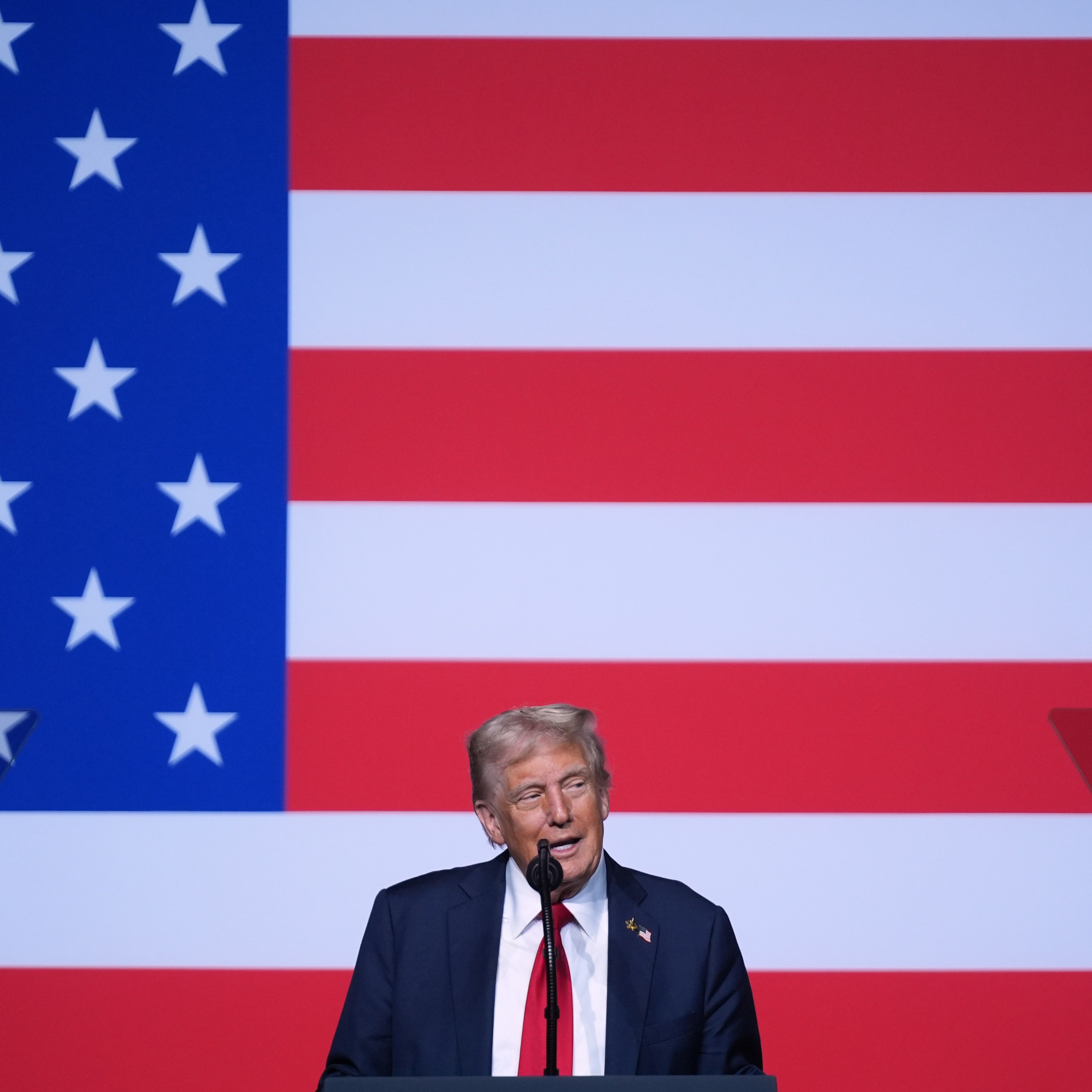
Front Burner
U.S. politics! Government shutdown, military pep talk
00:27:28
<p>The U.S. government has shut down after Republicans and Democrats failed to pass a spending bill before the end of Tuesday. Government services will grind to a halt and hundreds of thousands of federal employees face unpaid leave. How long is it expected to last, and could it have been avoided? </p><p><br></p><p>Plus, President Donald Trump and Defence Secretary Pete Hegseth held a rare gathering of the country’s top military leaders, detailing their new vision for the US military. </p><p><br></p><p>We break it all down with Alex Shephard, senior editor at The New Republic. </p><p><br></p><p>We'd love to hear from you! Complete our <a href="http://www.cbc.ca/FrontBurnerSurvey" rel="noopener noreferrer" target="_blank">listener survey here</a>.</p><p><br></p><p>For transcripts of Front Burner, please visit: <a href="https://www.cbc.ca/radio/frontburner/transcripts" rel="noopener noreferrer" target="_blank">https://www.cbc.ca/radio/frontburner/transcripts<...
Loading summary
Transcript84 lines
- [00:00]
Alex Shepard
And now a next level moment from ATT Business. Say you've sent out a gigantic shipment of pillows and they need to be there in time for International Sleep day. You've got AT and T5G so you're fully confident, but the vendor isn't responding and International Sleep Day is tomorrow. Luckily, AT&T 5G lets you deal with any issues with ease, so the pillows will get delivered and everyone can sleep soundly, especially you. ATT 5G requires a compatible plan and device coverage not available everywhere. Learn more@att.com 5G Network.
- [00:32]
CBC Narrator/Announcer
This is a CBC podcast.
- [00:34]
Jamie Poisson
Hey everyone, Jamie here. I just wanted to give a shout out to some of the people who've been sharing their thoughts on the show. Thanks so much to Aaron who wrote us a very nice note about our recent interview with Bryan Stevenson about the MAGA War on American History. Whether you're a regular listener or a brand new one, we'd love to hear from you about how you think that we're doing the kinds of stories you want to hear more of or anything that just really stood out to you. Or let us know@frontburnercbc ca and whatever you're listening to us on right now, don't forget to click that follow button. Okay, here is today's episode. Okay, so we have got a US Politics wrap for you today. We'll deal with the US Government shutdown that started Wednesday grinding a ton of government services to a halt. And Trump and his so called Secretary of War, Pete Hegseth, gathered the most powerful collection of military generals in the world for a sort of pep talk in Virginia. Alex Shepard, senior editor of the New Republic, is going to go through all of this with me today. There's lots to cover, so let's get right into it. Alex. Hey.
- [01:57]
Alex Shepard
Hey. It's good to be back.
- [01:59]
Jamie Poisson
It's always great to talk to you. So by the time people listen to this, barring some unlikely deal, it will be day two of this shutdown. You and I are speaking around 2pm Eastern Time Wednesday. In a really practical sense, what does it mean to shut down the government? How long could this last?
- [02:17]
Alex Shepard
It basically means that, you know, the essential functions of the government can proceed. So that, you know, usually means this sort of basic executive branch utility. The president has broad discretion over what they can fund. But in short, it means that a lot of stuff doesn't happen. It doesn't get funded anymore. The military probably will not be paid on time. Usually they get back pay after the shutdown. They stay on active duty. But it means that sort of large chunks of the federal government are sent home. Today, about 750,000 federal workers were furloughed. So that could be anybody who works, you know, on kind of it or sort of tech preparedness at the Department of Health and Human Services. It could be your local park ranger.
- [03:02]
Jamie Poisson
So this happened essentially because the Democrats voted down a Republican bill to keep funding the government.
- [03:09]
Republican Politician
We need to deal with this health care crisis now, not later. But the Republican bill fails to do that. I urge my Republican colleagues instead to join with us, work in good faith to keep the government open, keep costs down.
- [03:23]
Alex Shepard
The Democrats far left base said jump. And Democrat leaders said how high.
- [03:30]
Jamie Poisson
The Democrats are saying this was because the Republicans were refusing to negotiate with them over health care tax credits. The Republicans, people like Vice President J.D. vance, are saying this was about giving illegal immigrants free health care.
- [03:42]
CBC Narrator/Announcer
If you're an American citizen, you've been to a hospital in the last few years, you probably noticed that wait times are especially large.
- [03:48]
Trump Administration Supporter
And.
- [03:49]
CBC Narrator/Announcer
And very often somebody who's there in the emergency room waiting is an illegal alien, very often a person who can't even speak English. Why do those people get health care benefits at hospitals paid for by American citizens? The answer is a decision made by the Biden administration that the Trump administration, working with congressional Republicans undid. We turned off that money spigot to health care funding for illegal aliens. The Democrats, in their legislative texts, want to turn it back on. That's one.
- [04:15]
Jamie Poisson
And just. Could you fact check all of this for me?
- [04:18]
Alex Shepard
Yeah. So, I mean, basically what happened is that the Republicans control both branches of Congress and the presidency, but they have narrow majorities in both the House and the Senate. So they need Democratic votes in the Senate to pass any continuing resolution to keep the federal government open. And, you know, they basically passed a continuing resolution to keep the government funded the next couple of months.
- [04:42]
Trump Administration Supporter
And.
- [04:42]
Alex Shepard
And that budget, right, followed the priorities. That continuing resolution, excuse me, followed the priorities that were passed in the one big beautiful bill act that was passed earlier this year. So that had, you know, cuts to Obamacare subsidies and Medicare and Medicaid as well as a host of other things, huge increases in funding for immigration enforcement. They didn't give Democrats any concessions on this. They just said, look, you want to keep the government open, so you have to vote for this bill. And Democrats said, well, we would like something for it. In this case, what they asked for was an extension of Affordable Care act or Obamacare subsidies that were set to expire at the end of the year. They asked for a reinstatement of some of the Medicare and Medicaid cuts that were in the one big beautiful bill Act. And they asked for a pledge, binding sort of pledge, that the executive branch would honor the appropriations that Congress grants it, which is something that they have not, notably not done so far. That is, that's their messaging, too. For the most part, the messaging is revolt around Obamacare. Trump basically just said, no. He said, this is ridiculous. It's too much. And the Republican messaging around it, as Vance said, was that this bill is going to fund health care for undocumented immigrants, among other things. That's just not tr.
- [06:12]
Jamie Poisson
Now, I remember back in March when they voted to keep the government going, there was all this infighting among the Democrats about whether or not they should have voted to shut it down. What changed this time around?
- [06:27]
Alex Shepard
So there's a few things. I think. One is just that I think that Chuck Schumer, the Democratic leader in particular, really misread the mood of the country in March. I think he said, you know, it's not really time for a shutdown. If we were going to pull the plug on the government effectively, then we would look bad. It's, you know, we're talking about mid March at this point. So the Trump administration had not yet had 100 days of a second term. I think that they were worried that doing that then would make the party look obstinate and like this sort of party of no coming right after an election where voters had really rejected what they were kind of selling in part because one thing you would hear again and again on the trail is like, I don't know what Democrats are for. So I think they were very worried about that then. You know, I think the other thing was that Schumer was. And Democrats were really worried that if they shut down the government, then it would just create this snowballing effect. You have to remember in mid March, we were in the middle of all the Doge cuts, right? So then they were just like, you know, running a sith through the federal government. And there was a real worry that a shutdown then would just kind of take those cuts and turn them up to 11. For lack of a better term, the.
- [07:37]
Republican Politician
Shutdown would have been 10 times worse than the CR. Why? Because under a shutdown, the executive branch, in this case, Donald Trump, Musk, Elon Musk, Doge would have complete power once the government shut down of what could be open and what couldn't. You know, they get to determine what is essential, and they could just decimate the whole federal government, and that's what they wanted to do.
- [08:02]
Alex Shepard
That was a sound thinking. But what shifted now is I think, one, the public mood has really shifted. Two, and I think this is a really big thing is that the mood of the Democratic base hasn't really shifted. But Schumer is much more attuned to it. The Democratic leader that was in March.
- [08:18]
Republican Politician
Before they had done these horrible things to health care, before they had introduced these rescissions which would allow them to ignore the budget process when I was.
- [08:27]
Alex Shepard
So I think that there's a sense that, you know, the voters in the party want, that, want Democrats to take a stand against this administration and they haven't been seeing it in a bunch of areas and they're very, very mad about that. But also there's a sense that the public opinion on this administration shifted around April. You know, Trump has been basically, you know, 1112 points underwater with the general public since the late spring. And that this is a time when Democrats can take a stand against this administration with minimal risk to the midterm, their prospects in the midterm elections.
- [09:00]
Jamie Poisson
I know you just said you think it's minimal risk, but like what, what is the risk?
- [09:04]
Alex Shepard
Yeah, so I mean, I think the risk is, is maybe being undersold to some extent. Government shutdowns are unpopular. People like the government to work the way that they, that it's supposed to work. Even, even if when you ask them if it's working, they usually say it's not. And if you are the party that's blamed for government shutdown, you know, you tend to take a pretty big hit. We've seen that again and again since the sort of first wave of, you know, Gingrich led shutdowns in the 90s.
- [09:31]
CBC Narrator/Announcer
Because Congress to pass the straightforward legislation necessary to keep the government running without imposing sharp hikes in Medicare premiums and deep cuts in education and the environment.
- [09:45]
Alex Shepard
To particularly the sort of Republican Tea Party shutdowns of the 2010s.
- [09:50]
Trump Administration Supporter
You've all heard me say this going.
- [09:52]
Alex Shepard
Back over the last two or three years. Our goal here wasn't to shut down the government. Our goal here was to bring fairness to the American people under Obamacare. You know, the party that's deemed responsible for the shutdown usually takes, it takes a pretty big hit in the polls. And Democrats right now, their long term prognosis in terms of winning back, you know, at least one chamber of Congress is still pretty good. But that obscures the fact that this party has really hit in the deer in terms of its overall popularity. People really don't like the Democrats and that is driven by sort of reliable Democratic voters. So Democrats are mad at their ed party leaders like Schumer and they want them to take a stand here now too. So I think that the calculus is pretty complicated because you want to please your kind of die hard voters that have been, you know, frankly like pretty pissed off for a long time without harming your long term chances.
- [10:51]
Trump Administration Supporter
Foreign.
- [10:57]
Jamie Poisson
Hi, I'm Madupak and Ola from TED Business and I'm here to talk about the Financial Times. Every day the world bombards you with endless headlines and noise. What matters most, facts and context. That's where the Financial Times comes in. With clarity, depth and truly independent reporting, the FT helps you cut through the noise and see what's real and why it matters. Stay informed with the trusted source. Leaders around the world rely on visit FT.comSourceFT to read more and save 40% on a digital FT subscription. What kind of person takes on the law? Can they ever really know what they're getting into?
- [11:42]
Trump Administration Supporter
A really tough looking guy came up to us and said, are you part of this gay case?
- [11:47]
CBC Narrator/Announcer
My family started getting debt threats.
- [11:49]
Alex Shepard
I wasn't able to go outside alone anymore.
- [11:53]
Jamie Poisson
I'm Faen Johnson, host of See youe in Court, a new podcast about the cases that changed Canada and the ordinary people who made history. This is David and Goliath. We have here find and follow See you in court. Wherever you get your podcasts, talk to me a bit about what this means for the Trump administration. Do you think that they wanted this to happen?
- [12:16]
Alex Shepard
So when you talk to people in the Trump administration, both publicly and privately, they always say yes. You know, they say, bring it on, we've got a plan.
- [12:25]
Trump Administration Supporter
You all know Russell Vote. He's become very popular recently because he can trim the budget to a level that you couldn't do any other way.
- [12:33]
Alex Shepard
So Russ, about the head of the Office of Management and Budget, the sort of architect of Project 2025, has said again and again that he's, you know, a student of government shutdowns and he knows how to use them to inflict kind of maximum damage on the federal government infrastructure that he has pledged to destroy.
- [12:53]
CBC Narrator/Announcer
How else are you going to get moderns to vote for spending cuts if they are not up against the fact that they need to pass these things.
- [13:01]
Alex Shepard
To get out of a shutdown themselves?
- [13:02]
CBC Narrator/Announcer
So let it be said, there are all manner of authorities to be able to keep this administration's policy agenda moving forward, and that includes reducing the size and scope of the federal government. And we will be looking for opportunities to do that.
- [13:16]
Alex Shepard
And I think that there is a lot of confidence there. I think Trump, you know, met with Democratic leaders earlier this week and just, you know, by all accounts, was infuriated that they would even ask for anything.
- [13:28]
Trump Administration Supporter
We can do things during the shutdown that are irreversible, that are bad for them and irreversible by them, like cutting vast numbers of people out, cutting things that they like, cutting programs that they like.
- [13:39]
Alex Shepard
He even floated the idea of cutting.
- [13:41]
Jamie Poisson
Benefits without saying which ones.
- [13:44]
Trump Administration Supporter
We can do things medically and other ways, including benefits.
- [13:49]
Alex Shepard
And, you know, I think that they're generally feeling fairly confident, but they probably shouldn't be. I think voters. Most of the early polling suggests that voters, I think, rightly blame the Trump administration and Republicans for shutting down the government. And I think that they sort of understand they've bought the Democratic message, which is that their asks to keep the government open are actually quite reasonable, and that it's Trump that's sort of refusing to do the thing that, you know, the American federal system is designed to do, which is to have compromise, to. To get things like, you know, the continued functioning of the federal government. The Democratic asks right there, they're sort of sweeping. But really, when you talk to Democrats, it's clear that they would cave if they were just given Affordable Care act subsidies. So, like, that's a fairly standard ask. It's not enormous. And if Trump wanted to, he could get on the phone right now and in two hours, he would have enough votes to go along with that. I think the fact that he is refusing to do that is sort of the central point of this shutdown. But it's also what I think means that it could last a very long time and that you have an off ramp that Trump is refusing. But while he's refusing to do it, he's putting out, like, these, you know, racist videos with Hakeem Jeffries and a sombrero.
- [15:05]
Republican Politician
Not even black people want to vote for us anymore. Even Latinos hate us. So we need new voters. And if we give all these illegal aliens free health care, we might be able to get them on our side so they can vote for us. They can't even speak English.
- [15:20]
Alex Shepard
Democratic leaders are getting madder and madder.
- [15:22]
Republican Politician
And Mr. President, the next time you have something to say about me, don't cop out through a racist and fake AI video when I'm back in the Oval Office. Say it to my face.
- [15:42]
Alex Shepard
They're just digging In And I think at the same time, I think, you know, Trump and voter are looking at this like, well, we can just do this forever and we don't care. You know, every sign right now is just pointing to this being, you know, a very, very, very long shutdown.
- [15:57]
Jamie Poisson
Can you tell me more about this guy, Russ Vaught, and these statements that he's made about, you know, inflicting maximum damage? Like, what is he talking about there?
- [16:07]
Alex Shepard
Yeah, so, I mean, this is why Schumer ultimately, I think blinked back in March is that Rusvat is somebody who has. He's a long time kind of Heritage foundation discip, you know, was the person who essentially wrote Project 2025. He's a conservative activist. He believes that the federal government should be shrunk so that it's way too big right now that the existing federal bureaucracy is full of liberals who will not enact conservative priorities. He successfully sort of sold Donald Trump, who, you know, I think was largely skeptical of the conservative movement, and, and his victory in 2016 was in part a rejection of that movement. But he sold him on these priorities in part by saying, like, your first term was a failure because the government bureaucrats that are in place are going to stymie you at every turn. And so I will get rid of those people. And he, I think, was pretty frustrated by the Doge assault because it did not have the sort of precision of what he intended. And I think he was worried that it wouldn't last. So they've been sort of threatening to unleash the dogs of war in the event of a shutdown. And you saw this already today. I think that this is a sort of sign of how things are going to play out. That vote announced that he was cutting, I think it's $18 billion in allocated funding to New York and New Jersey to essentially fund transit project.
- [17:50]
Jamie Poisson
Okay, I want to pivot with you a bit here and talk about this. I don't even know what this was. Unusual gathering of military leaders. We saw this week. Trump's defense secretary, or so called Secretary of War, former Fox News host Pete Hegseth, had summoned all of these commanders and generals and admirals from around the world to Quantico, Virginia. And I know there were all of these rumors, right, about what, what could happen there. Would he make them swear loyalty to the president, not the Constitution? Would a bunch of them get fired? Would he reveal some new strategy? Would they declare war on Venezuela? And just what actually ended up happening at this gathering? He gave a TED Talk, none of the above.
- [18:36]
Alex Shepard
Yeah, none of the above. Yeah, he did a. He cosplayed the opening scene of the movie Patton.
- [18:43]
Trump Administration Supporter
Americans love a winner and will not tolerate a loser. Americans play to win all the time. I wouldn't give a hoot in hell for a man who lost and laughed.
- [18:55]
CBC Narrator/Announcer
Should our enemies choose foolishly to challenge us, they will be crushed by the violence, precision and ferocity of the War Department.
- [19:07]
Alex Shepard
It's, you know, when you were listening to people speculate about what this is going to be, it was always pretty hysterical. But, you know, I think what you saw was, you know, something that really neatly and neatly encapsulated Pete Hegseth's time at the Department of Defense. And it was one in which he was promising large scale change, much of it that is opposed by top military brass. So he's insisting, for instance, that, you know, he wants to bring back things like hazing. Right. He kept talking about sort of male standards of fitness. The idea essentially being that the, you know, US Military has become feminized.
- [19:48]
CBC Narrator/Announcer
No more division distraction or gender delusions. But when it comes to any job that requires physical power to perform in combat, those physical standards must be high and gender neutral. If women can make it, excellent. If not, it is what it is. If that means no women qualify for some combat jobs, so be it.
- [20:09]
Alex Shepard
That it is, you know, spending too much time catering to, you know, diversity, equity inclusion programs and feminism and transgenderism.
- [20:17]
CBC Narrator/Announcer
No more identity months DEI offices. Dudes in dresses, they were told females and males are the same thing or that males who think they're females, totally.
- [20:30]
Alex Shepard
Normal and not enough time, you know, building the war fighters of the future.
- [20:35]
CBC Narrator/Announcer
It all starts with physical fitness and appearance. If the Secretary of War can do regular hard pt, so can every member of our joint force. Frankly, it's tiring to look out at combat formations or really any formation and see fat troops. Likewise, it's completely unacceptable to see fat generals and admirals in the halls of the Pentagon and leading commands around the country and the world. It's a bad look talk.
- [21:02]
Alex Shepard
But, you know, it was a talk that I think had much, much more in common with the kind of stuff you'd see on Fox News, which is, frankly, not really relevant to the current Department of Defense or, or the larger, you know, mission of the American military overseas. And. And not a lot of stuff that you hear when you talk to people who are actually responsible for, say, America's counterterrorism strategy. So I think that part of it was a sign of Hexit's weakness, right? That he's really trying to show that he's in charge of a Pentagon. That I think is really to say it's skeptical of him is, I think probably over generous. I think in general, I think he's seen as kind of a clown by a lot of people. But I think the other part of this, right, is that like Trump followed him up and gave this speech. It was arguably even more sort of raspy, rambling speech that was even more bizarre and out of, out of, out of the ordinary.
- [21:57]
Trump Administration Supporter
I call it the N word. There are two N words and you can't use either of them. And Canada called me a couple of weeks ago. They want to be part of it. To which I said, well, why don't you just join our country? You become 51, become the 51st state and you get it for free. I hope you all agree. If anybody disagrees, could I please have your hand? Who disappears at raising cane is no good. Just raise your hand. I don't see any hands raised.
- [22:24]
Jamie Poisson
All right.
- [22:24]
Trump Administration Supporter
Actually, I love my signature. I really do. Everyone loves my signature.
- [22:29]
Alex Shepard
But it was clear that Trump loved that speech. So I think that, you know, Hegseth, like anyone else with a high level position in this administration, understands that you can actually kind of piss off the 600 or so Generals that you're talking to as long as the commander in chief likes what you're doing. And that does seem to be the case.
- [22:50]
Jamie Poisson
Two things I wanted to pull out from both of their speeches. I did hear Hegseth talk about how.
- [22:56]
CBC Narrator/Announcer
Quote, we unleash overwhelming and punishing violence on the enemy. We also don't fight with stupid rules of engagement. We untie the hands of our war fighters to intimidate, demoralize, hunt and kill the enemies of our country.
- [23:12]
Jamie Poisson
I'm assuming he's talking about international law there. That was a bit alarming. And then also Trump kind of in between that, you know, incoherent, all the incoherent, rambling stuff and all of his predictable gripes about the wokeness of the military and how much it sucked under Biden. He did talk about dangerous cities as training ground under invasion from within.
- [23:37]
Trump Administration Supporter
No different than a foreign enemy, but more difficult in many ways because they don't wear uniforms. At least when they're wearing a uniform, you can take them out. These people don't have uniforms. But we are under invasion from within. We're stopping it very quickly.
- [23:53]
Jamie Poisson
And of course, in recent weeks, he has ordered National Guard soldiers to la, Washington, Chicago and Portland, according to him, to assist with immigration efforts and combat crime. And so was this an attempt to try to get the military's top brass on board with using them for internal purposes, like on. On American soil?
- [24:13]
Alex Shepard
Yeah, I think that unquestionably, yes. I think there's still a lot of skepticism about that in the military. And I think that, you know, Hegste has been very open for many years about his belief that the military should be used domestically, that many of the country's greatest enemies are within. And, you know, I think that was one of the more troubling aspects of that. I think, you know, the counterpoint there is just that I think Trump saying that he thinks that the military should be used, you know, against American citizens, it's like a straight up sort of Mussolini ish quote. I think it shouldn't be. Shouldn't be excused away. But, you know, in practice, right, these deployments have been rather small. Like, I think the idea of what Trump and Hexith said both sort of called to mind, right, like having Blackhawk helicopters, you know, flying through Portland, or having Army Rangers, like, sort of going door to door. But in practice, what we're seeing are these relatively small, relatively ineffectual deployments of military. And I think, you know, you saw in LA and in D.C. that the National Guard has been stretched pretty thin just by these two deployments. And that's not to excuse anybody. I think I've been in D.C. during the National Guard deployment, and I think it's. It is. The footprint is much larger than you would think. And they're doing things like, you know, traffic checkpoints, things that I've, you know, seen in war zones before, but not in American cities. I think the larger question is still what they can actually accomplish there. Now, I think on the question of international law, I think that's very alarming. And you're already seeing it now. You saw it in Trump's first term as well, and you're seeing it certainly with these strikes on Venezuelan fishing ships that may or may not be smuggling fentanyl or whatever they're saying there. But, you know, this is an administration that thinks that essentially that any international court has no jurisdiction over it, that it can't, you know, enforce any of these laws. So they just don't care about them at all. And I think this is an extension of Trump's sort of larger claim. Right? There's. There's always been this. This sort of ridiculous notion that Trump is like a dove. But, you know, he's always said that the US Failed in Iraq and Afghanistan because it didn't use enough force. And I think that especially as this administration kind of slowly blunders its way into yet another regime change war, this time in Venezuela, that should be very, very alarming.
- [26:33]
Jamie Poisson
How did the people in the room react? All these kind of four star generals and very important military officials?
- [26:40]
Alex Shepard
Yeah, it's. If, if you have not, if your listeners have not watched these clips, they're very interesting to watch, especially if you're used to seeing Trump talking to, you know, let's say between 8 and 20,000 of his most ardent fans. They've reacted in with almost completely stony silence. So there are all of these kind of Jeb Bush esque, like, please clap moments.
- [27:03]
Trump Administration Supporter
I've never walked into a room so silent before. This is very. Don't laugh, don't laugh. You're not allowed to do that. You know what, just have a good time. And if you want to applaud, you applaud. And if you want to do anything you want, you can do anything you want. And if you don't like what I'm saying, you can leave the room. Of course, there goes your rank. There goes your future.
- [27:24]
Alex Shepard
There are lots of lines in Hexad speech in particular that are designed for a kind of pep rally, which I think is what he sort of thought of this as. And, you know, he'll say these kind of ridiculous things and then you'll just hear, you know, a few, maybe scattered claps and some coughing to our enemies. F A F O.
- [27:49]
CBC Narrator/Announcer
If necessary, our troops can translate that for you.
- [27:52]
Alex Shepard
And that's it. And with Trump, too, he's used to, I think, speaking in this way where people are kind of wrapped and are in an almost, you know, ecstatic state. And, you know, he commented multiple times about how quiet the room was. But I mean, military discipline and I think the, the sense of the military as a branch that's sort of outside of politics, you know, especially, you know, when you talk to people inside the military, certainly when you talk to retired military officials, it's a really important thing. And I think what we're seeing with Trump and Hegseth is a very concentrated and concerted attempt to break that, but one that is being greeted with, at best, skepticism and at most, outright derision and hostility.
- [28:37]
Jamie Poisson
Okay, Alex, thank you so much as always. Great to chat with you.
- [28:41]
Alex Shepard
Thank you so much.
- [28:50]
Jamie Poisson
All right, that's all for today. I'm Jamie Poisson. Thanks so much for listening. Talk to you tomorrow.
- [29:06]
Alex Shepard
For more CBC Podcasts, go to CBC CA Podcasts.