← Front Burner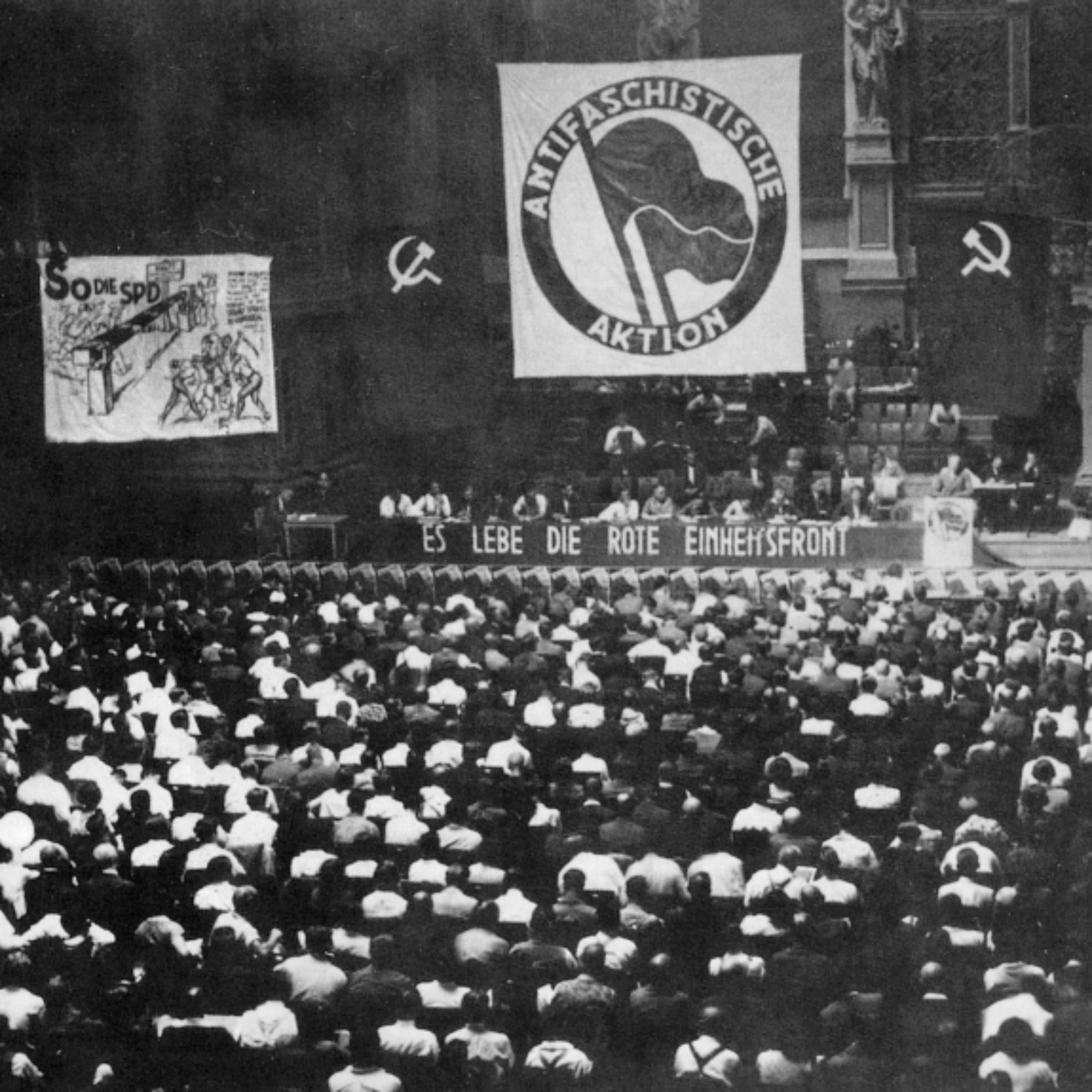
Front Burner
What exactly is Antifa?
00:33:24
<p>The term ‘Antifa’ derives from the German word for Antifascist — and the constellation of resistance movements largely created as a response to Benito Mussolini and Adolf Hitler. Today, Antifa describes a decentralized anti-fascist movement with local groups and unaffiliated activists all over the world. </p><p><br></p><p>Many became aware of Antifascist organizing following Antifa’s intervention at the white supremacist ‘Unite The Right’ rally in Charlottesville, Virginia, in 2017. For the last decade, Antifa has come to symbolize progressive protest and movement building – engaging in doxxing,, property destruction, and street-level physical confrontations. </p><p><br></p><p>In late September of this year, U.S. President Donald Trump officially designated Antifa a domestic terror organization. </p><p><br></p><p>Mark Bray is an academic, scholar of European history and radicalism, and the author of several books including ‘ANTIFA — the anti fascist handbook...
Loading summary
Transcript67 lines
- [00:00]
A
Hey, I'm Paige desorbo and I'm always thinking about underwear.
- [00:03]
B
I'm Hannah Berner and I'm also thinking about underwear, but I prefer full coverage.
- [00:08]
A
I like to call them my granny panties. Actually, I never think about underwear. That's the magic of Tommy John. Same.
- [00:15]
B
They're so light and so comfy and.
- [00:16]
A
If it's not comfortable, I'm not wearing it. And the bras? Soft, supportive and actually breathable.
- [00:22]
B
Yes. Lord knows the girls need to breathe. Also, I need my PJs to breathe and be buttery, soft and stretchy enough for my dramatic tossing and turning at night.
- [00:30]
A
That's why I live in my Tommy John pajamas. Plus they're so cute because they fit perfectly. Put yourself on to Tommy John. Upgrade your drawer with Tommy John. Save 25 for a limited time at tommyjohn.comfort c site for details.
- [00:48]
B
This is a CBC podcast hey everyone, it's Jamie.
- [00:53]
A
I just wanted to take a moment to shout out some of the people who have been writing in with what they think about the show. We got a really thoughtful note from Tracy recently about what they hope to hear more of on the podcast, and that is from journalists or experts on a subject, not politicians. We really appreciate this feedback and like Tracy, you can reach the show anytime at FrontBurnerCBC CA to tell us about the kinds of stories that you want us to cover and by who, and make sure that you're following us on your podcasting app of choice. It's the best way to make sure that you catch every episode. All right, here is today's episode. You may have heard of Antifa before, though you may not know exactly what it is. Maybe you heard about them when they confronted white supremacists in Charlottesville in 2017.
- [01:45]
B
On the streets of Charlottesville today, the hate boiling over white supremacists and countered protesters fighting with fists and clubs or.
- [01:54]
A
For their protests In Portland back in.
- [01:56]
C
2020, the memory of George Floyd is being dishonored by rioters, looters and anarchists. The violence and vandalism is being led by Antifa.
- [02:08]
A
The Trump administration has recently sanctioned the deployment of federal forces into the city of Portland for the second time in five years because, as Trump says, it is, quote, under siege from attack by antifa and other domestic terrorists. This is following a decision late last month to officially designate Antifa a domestic terror organization. The word antifa derives from the German word for anti fascist and finds its roots in the resistance movements to Mussolini and Hitler in the 1930s. Today, Antifa is a decentralized antifascist movement with local groups and unaffiliated activists all over the world. The move to now designate ANTIFA as a terror organization comes with all kinds of implications, and critics say that it recalls authoritarian crackdowns through history, both in the US And Canada and abroad. Joining us today is Mark Bray, an academic and author of several books, including Antifa the Anti Fascist Handbook. He's a scholar of European history and radicalism, and he has spent years studying and tracking the rise of anti fascist movements from the 1930s to today. Mark Kai, thank you so much for coming onto frontbrner.
- [03:32]
B
It's a pleasure to be here.
- [03:33]
A
ANTIFA is generally a decentralized movement and kind of amorphous. At least it seems that way from the outside. How would you describe the movement or group to people that may not be familiar with it?
- [03:47]
B
Yeah, that's right. There's an assumption on the part of a lot of right wingers that any kind of political entity has to be this kind of hierarchical, homogenous organization with leaderships and a headquarters and so forth. I couldn't be farther for the from the truth in this case. Antifa is a kind of politics. It's a kind of movement. It's sort of something that you do and maybe you call yourself that or you don't in that sense. I kind of compare it to, for example, feminism. There are feminist groups, but feminism itself is not a group. There are antifa groups, but Antifa itself is not a group. And just to kind of address something that you mentioned in the introduction, which is a great introduction, there are plenty of radicals from plenty of different traditions that engage in different forms of direct action and unconventional political forms of resistance. Most of them are not part of antifa groups. And most of the like Black Lives Matter protests and so forth were people from other traditions, other kinds of political backgrounds. Part of the problem now is Trump is trying to lump everyone who maybe will have a protest in the streets or will do anything outside of the liberal playbook of voting as the evil antifa. And it's not accurate.
- [04:59]
A
Politics, both conservative and liberal tend to operate within a framework of elections, debate, and faith in institutions. Right? The idea that fascism can be defeated democratically, but antifascist logic rejects that, arguing those very systems often enable fascism's rise. Right. Mussolini and Hitler, after all, came to power through democracy. So within that logic, how effective do anti fascists believe governments or institutions really can be in fighting fascism? Who can be relied on?
- [05:31]
B
Well, that's that question is the Key to understanding the historical genesis of militant anti fascism. So after World War II in Europe, debates emerged among the left. How do we stop another Nazi party or another fascist party from coming to power? And, and the, the predominant position among socialist and communist political parties in Europe was you simply make it illegal. You use the state to make it illegal for the far right to reclaim its political presence. You get the tradition of militant anti fascism in its most kind of clarified since moving into the latter part of the 20th century when a lot of these far right and Nazi and fascist groups start regrouping and they simply change the symbols they use. They don't use the swastik anymore, they use like a Celtic cross or other symbols, they change the name of their party, they, they try to gradually become a little more family friendly. Although of course there is also the, the neo Nazi skinhead phenomenon. And militant anti fascism emerges by saying, no, we can't simply count on the state, we can't count on the police, we can't count on the courts, and we can't count on the supposed free market of ideas, of rational discourse on its own to stop the far right. We don't depend on the cops or the courts to do the work of opposing white supremacy. That means that when fascists come to our city to attack people, we are going to put our bodies between fascists and the people they want to attack. That doesn't mean that they don't advocate for making political arguments. But we can see historically that you can't just hope that reasonable people will find the appeals of fascism unappealing because quite a few people supported the historical fascist regimes. And we're seeing in the United States today that quite a few people, although polls show not a majority, but quite a few people support what Trump is doing. And so the genesis of the anti fascist argument is that you stop them from below, stop them in communities using a wide variety of strategies and tactics, but that you don't assume that fascism is going to fail. Instead you actually assume that unless we do something, it may succeed. And unfortunately, I feel like that's happening in the US right now.
- [07:47]
A
Can you take me through some of those strategies and tactics?
- [07:50]
B
Yeah, sure. Right. So the anti fascists I interviewed and I interviewed for my book Antifa, published in 2017, I interviewed more than 60 anti fascists from 17 different countries, including the US and Canada. And the way that they explained their strategic outlook was it's often much more effective and safer to try and stop, for example, a Nazi event by contacting the venue owner, encouraging Them to cancel the event, organizing a public demonstration to stop it, or some of the historical examples of fascists trying to sell their newspapers and showing up and creating such a large protest that their voice is kind of drowned out, deplatforming them by, for example, if there's an event scheduled in a park, the antifascists show up two hours earlier with thousands of people and make it so they can't have their event.
- [08:41]
A
Claims of dissent. On the campus of the University of California, Berkeley, around 1500 students assembled to protest the visit of Milo Yiannopoulos, the far right editor of the conservative news outlet Breitbart. The demonstration descended into violence as masked individuals smashed windows and clashed with police, forcing the cancellation of Yiannopoulos speech to the student body.
- [09:06]
B
Also in the US in recent years, doxxing has been a successful strategy. But the thing with doxxing is that it's really only successful to the degree that society at large rejects the politics of the person being doxxed. And so in that sense, I've heard from some anti fascists that they don't feel like it's as successful in the US today because the kind of far right politics have become so predominant. Homeland Security says ICE agents, including in Portland, are getting docs. Secretary Kristi Noem says two groups in Portland have been publishing names, pictures and addresses of ICE officers on the Web. Others have allegedly been posting flyers in the officers neighborhoods now pledged to prosecute those who dox federal agents. That's a wide range of tactics. But they also argue, given the historical legacy of fascism being an inherently violent, not just empirically, but in its essence, glamorizing and promoting violence, politics. And given the legacy of the Holocaust and authoritarian regimes and more recent examples of whenever there's a far right event, the likelihood of an attack on a marginalized community increases, that physical confrontation ought to be one of the tools in the toolbox. But according to those I interviewed, really the kind of last resort when those other efforts fail.
- [10:43]
A
I want to ask you about Portland specifically. Portland has become, I think, kind of shorthand for antifa and a lot of the political imagination, a kind of testing ground for what both the right and left project onto anti fascism. But this is also a city with a long history of white supremacist organizing.
- [11:00]
B
That's right.
- [11:01]
A
Anarchist resistance. Deep tensions between activists and law enforcement. Right?
- [11:05]
B
Yes.
- [11:05]
A
And now Trump has ordered the National Guard into Portland, painting it as a symbol of disorder.
- [11:11]
C
Portland is burning to the ground. It's insurrectionists all over the place. It's Antifa. And yet the politicians who are petrified look, the politicians are afraid for their lives. That's the only reason that they say, like, there's nothing happening.
- [11:27]
A
Just tell me more about this city and how it has become synonymous with antifa in this way.
- [11:33]
B
Well, I mean, I think a big part of it is that the oldest currently existing group in the US to use the term antifa to describe themselves is Rose City Antifa in Portland, Oregon. They've been one of the better organized, more successful antifa groups and also, relatively speaking, a bit open on certain occasions to speaking with the media. And that's given them a bit more of a higher profile than some other groups.
- [11:59]
A
You're here in sweatshirts and masks. Why do you wear masks? Why do you cover your faces? Primarily it's for our own safety. The far right and the state have a history of targeting anti fascists.
- [12:15]
B
Certainly Portland and Oregon as a whole has a long history of white supremacist politics and violence. From that, this is a city where emotions are particularly raw. Two men were killed on the city's metro system, coming to the aid of two women, one in a hijab, who were being verbally assaulted. The alleged killer is a far right supporter. It also has, at least in, in recent years, a legacy of being a very radical city with a relatively, and I emphasize relatively robust anarchist movement. I say relatively because, I mean, still on American terms, it's tidy. And so we've seen some, some major protests. We've seen protests there against ice. We've seen Black Lives Matter protests. I think part of Trump. What Trump is trying to do, though, is conflate those anti ICE protests and those Black Lives Matter protests with antifa without there being evidence that that's the case again, because there's a political incentive to homogenize all this. So coming back to Portland, Trump has talked about Portland being a city under siege, as a war zone, radicals burning the city down. That just isn't happening. And I've seen some journalists speculate online that it's possible that some of his aides are basically showing him AI videos of the supposed antifa burning down the city. And I, I don't know of any evidence to that effect, but I wouldn't be shocked if, if there were, there was some grain of truth to that.
- [13:40]
C
And I get a call from the liberal governor, sir, please don't come in. We don't need you. I said, well, unless they're playing false tapes, this looked like World War II. Your place is burning down the other.
- [13:53]
A
Big moment that I think a lot of people will think about when they hear the word antifa is the white supremacist rally in Charlottesville in 2017. This is where we saw antifascist counter protesters descend on the campus of the University of Virginia and meet hundreds of white supremacists head on. Today, the hate boiling over.
- [14:12]
B
White supremacists and counter diplomatic protesters fighting with fists and clubs. Confederate flags on full display, the governor declaring a state of emergency.
- [14:23]
A
That confrontation led to street level clashes and violence and eventually culminated in the murder of a woman, Heather Heyer, who was killed by one of the white supremacists present. The American activist Cornel west, as well as other peaceful protesters present that day credited the presence of Antifa with having saved their lives, that they would have likely been injured or worse if not for their intervention. Can you talk to me a little bit more about Antifa's presence at the Charlottesville Unite the Right rally and what, what you saw in that?
- [14:51]
B
Right. So, I mean, that was an interesting moment in American politics for a variety of reasons. Part of what was that there was an effort evident in the title of the rally, which was Unite the Right to create an independent political space for the far right even outside of Trump and Trumpism, and establish a kind of militant street presence for the far right. After hundreds of white supremacists, some giving Nazi salutes, held a torch lit rally yesterday at the University of Virginia to protest against a decision to remove the statue of a Confederate Civil War general. The fact is to show people like.
- [15:29]
C
An overwhelming force that we support keeping.
- [15:32]
B
The, these statues, that we're against their removal. I mean they're, they're literally pulling up.
- [15:36]
A
All our culture from the roots.
- [15:37]
B
They're not pulling up anybody else's culture. In response to that, various different antifa groups or like minded activists showed up to counter protest them. And you know, we've all seen the images of the confrontations that occurred, including the tragic murder of Heather Heyer. Part of the argument made by militant antifascists historically is you don't let the far right normalize themselves in society either through their discourse or through their organizing or through their public presence, that if there is this large gathering that is basically promoting the great replacement theory, which for listeners who are unfamiliar with it is basically this explicitly Nazi conspiracy theory that had existed on the farthest reaches of Nazi Internet world for several decades that is now being promoted directly by Donald Trump, which says that Jews are orchestrating a conspiracy to destroy the white race by promoting immigration and interracial marriage, that the people that were marching there in Charlottesville were chanting Jews will not replace us, which is a direct reference to that conspiracy theory and trying to really demonize anyone that was not a straight white person. And so the antifascist argument, their strategic outlook is we just don't let that become normalized, that we show up and oppose it. And that's what happened.
- [17:10]
A
One of the really interesting components of Trump's Antifa terror designation, if we can move to that now, is just how vague and broad the languages it talks, not just about Antifa, but, quote, antifa aligned actors.
- [17:25]
B
President wrote on social media last night that he is, quote, designating Antifa a sick, dangerous radical left disaster as a major terrorist organization. He also says he will investigate those who fund the group.
- [17:38]
A
Critics have warned that because Antifa has no central structure, there's a danger here that these orders will be used by law enforcement agencies to crack down on a broad spectrum of left wing activism and frame it as a national security problem. Were you surprised by Trump's terror designation? What do you think the implications of all of this are?
- [17:59]
B
Well, initially I was not too surprised because it was not the first time that he or other Republicans had called for, quote, unquote, ANTIFA to be designated as a terrorist organization. Trump famously made the same kind of appeal during 2020 during the Black Lives Matter protests when he argued that the entirety of what was perhaps the most important popular social upheaval the US had seen in decades was the exclusive product of these handful of really small antifa groups, which was, of course, ludicrous.
- [18:30]
C
We support the right of peaceful protesters and we hear their pleas, but what we are now seeing on the streets of our cities has nothing to do with justice or with peace. The memory of George Floyd is being dishonored by rioters, looters and anarchists. The violence and vandalism is being led by Antifa and other radical left wing groups.
- [19:01]
B
So he called for it back then, but didn't follow it up. So initially this time when he said that, I thought maybe it'd be more of the same. But then he issued the executive order, which, despite having a lot of, like, strong sounding language, has no legal mechanism. There is no way to designate domestic entities in the US to be terrorist organizations, only foreign entities. But although it doesn't have legal weight, I think it would be short sighted to think that it doesn't matter because as you suggest, it's certainly an effort to try and demonize the left, demonized those who protest or resist the administration in any way. And it was actually not in the initial executive order, but in a kind of memo from the Department of Homeland Security four days later that they introduced the phrase antifa aligned. And so a term that was clearly chosen because it is vague and broad, because it is poorly misunderstood, was rhetorically expanded very quickly to not only cover antifa or those similar, but antifa aligned, which of course they're trying to stretch very broadly because they're not just trying to target radicals, they're also trying to target liberal nonprofit organizations and NGOs. They're claiming that George Soros, who of course has been accused of being behind everything for years, are arguing that George Soros is somehow financing these groups.
- [20:23]
C
But Soros is the name that I hear. I hear a lot of different names. I hear names of some pretty rich people that are radical left people. If they are funding these things, they're going to have some problems because they're agitators and they're anarchists.
- [20:36]
B
These are anarchists, which is ridiculous. And for what it's worth, is another manifestation of that great replacement theory notion, which is a modern version of the older anti Semitic trope of Jews trying to destroy society by having big money behind everything. Right? Which has always been ridiculous. So, you know, that's the framework in which it's happening. And it seems crystal clear to me that the, the end game here is to make it so that resistance is equated with terrorism.
- [21:08]
A
Many on the right now frame antifa as the real fascists. Right. I'm sure you've heard this. The true threat to freedom and liberty. And what do you make of that?
- [21:18]
B
So since I published my book in 2017, there's been an effort to push back to say that because anti fascists sometimes will deplatform a fascist speaker, because they will sometimes defend themselves with, with their bodies, that they are the real fascists. Lamentably, I think that this has somewhat been enabled by liberal discourse which equates, which sort of promotes to the horseshoe theory, right? That, that the. The quote, unquote, extremes meet. That anyone who's outside of the center of gravity politically, whether they're anarchists or ISIS or whatever, is ultimately a version of the same thing, which is really not borne out by any kind of historical or political scholarship. Fascists and anti fascists disagree about almost everything. Fascists are ultra nationalists. Anti fascists are internationalists. Fascists are misogynists. Anti fascist are feminists. You could run down the list. They disagree about almost anything. The only, like sliver of overlap is that they are both not the center of the political spectrum. They're both illiberal movements who do not have faith in the liberal playbook for politics to address what they consider to be the problems in society. That's the extent of it. And so to equate two political movements or tendencies simply because they sometimes happen to do the same thing, such as, for example, interrupting a speaker that they oppose, is to assess an action without any point of reference towards why the action is being done, who it's being done to, what the politics are behind it, and the context that's happening. And believe me, as a history professor, I can see that that is not a way to analyze anything. Men need a store that has the right thing for their thing, like a Kenneth Cole suit made with Choflex fabric to keep them cool at their cousin in law's third wedding in the middle of July. Whatever the thing, Men's Wearhouse has the clothes for it. Love the way you look. Men's Wearhouse. Hello, I'm Jess Melton, host of the podcast Backstage at the Vinyl Cafe. Join us every Friday for funny, fictional.
- [23:41]
A
Feel good family stories about Dave, his.
- [23:44]
B
Wife Morley, and their kids Sam and.
- [23:47]
A
Stephanie, and for behind the scenes stories.
- [23:49]
B
About what it's like to live life out on the road, on a tour bus, living out of a suitcase, traveling across Canada. New episodes every Friday. Subscribe for free wherever you get your podcast.
- [24:05]
A
I want to put a critique around free speech to you, which I'm sure you've heard, right, that you know, if anti fascists believe, or some anti fascists believe, I know it's not a monopoly that you need to shut down. The right of the fascist to speak to be heard, that is, of course, in opposition to the concept of free speech, an important liberal value. And so, you know, how might someone in the movement, if you could just tell me more about how someone in the movement might respond to the critique, that once you start restricting free speech, you enter a slippery slope.
- [24:37]
B
Well, there have been several different shades of opinion that I've encountered in interviewing anti fascists about this. One is to point out that the protection of free speech applies to the Constitution. Antifascists are not the government. They're not appealing to the government to change speech laws. They actually oppose that. And so it doesn't apply. But what I point out in the book is that actually speech is limited in so many different ways already, in ways that most of us would sympathized with, around pornography, around copyright laws. There are innumerable ways in which the rights that we have as individuals are mitigated by our role in society. Right. That already exists. And it's also true that historically we can see what fascism results in. So that the other argument that anti fascists put forward is that you have to understand how political movements grow, right? So fascism doesn't Simply go from 0 to 100 right away. It has to establish itself as a kind of family friendly, community based part of the political discourse. So if you look at, you know, Italy or Germany, what were initially very small groups grew by selling newspapers, in the case of Nazi Germany, right, issuing radio broadcasts, expanding their party. It has to establish itself in society, in the discourse, in the public sphere. And so if you want to stop that from happening, you need to employ a variety of different means to stop that. And so, you know, thinking about it, for example, from the point of view of a university where I work, sure, I encourage all of my students to express their views however they see fit. Doesn't matter what their politics are. But if that crosses the line to dehumanizing a classmate or into saying conspiracy theories about how Jews are trying to destroy the white race or making these erroneous pseudoscientific arguments about like for example, the intelligence of black people, that those are arguments that meaningfully threaten the actual substance of free speech. And so to shut down someone or an organization rather, that's basically trying to incite violence against marginalized groups, ultimately, they argue that's really in the interest of a meaningful, robust sense of free speech, not just kind of a narrow liberal, mechanistic interpretation of what it is. So that's where they come from.
- [26:58]
A
Yeah. Just on your point on how it can spread, how fascism can spread so quickly, I was interested to read in your book that in 1919, Mussolini's initial fascist nucleus was only 100 men, and two years later it was 250,000. Or when Hitler attended his first meeting of the German Workers Party before he turned it into the Nazi Party, it had just 54 members. Could we do violence now? So this is another critique that I am sure you have heard. You'll often hear conservative influencers talk about being targeted by antifa or being menaced by them in some ways. But a more broad critique is that when you meet this in the street, when you justify violence, that it's escalatory, that violence begets more violence, that it normalizes violence. How might an anti fascist respond to that?
- [27:47]
B
So let's look at the history, right? In the 20s and 30s, the leadership of the main left wing Parties in Italy and Germany were calling for no violence. They were calling for pursuing their politics through the ballot box. They were arguing for union activity. And famously, they did not take the threat of fascism in Italy or Nazism in Germany seriously until it was well too late and those regimes had consolidated themselves in power. So I think that when we look at World War II, when we look at resistance and concentration camps, I think most of us can agree that the use of violence in those circumstances was legitimate. What the antifascists argue, based on the interviews I've done with them, is when does the threat become grave enough for society to fight back? Reasonable people will disagree about that. But the argument, especially after World War II, that antifascists have made historically, is you don't let far right groups grow enough so that they could potentially become those threats, right? So you treat every group of 54 people as if they could be the nucleus of a new Nazi regime. That does not mean that the most effective way to oppose them is necessarily violence. But antifascists argue that basically you treat them as such and you try to nip the threat in the bud before it grows. So in that sense, this politics is a kind of a preventative anti fascism. And so an interesting part of the conversation is certainly in the U.S. i think we've, the situation has moved beyond that because the kind of politics that they espouse has ended up in the White House. But this is the post war theory, right? The post war theory is you oppose them before they grow big and you make it impossible logistically for them to normalize themselves in society and spread their message. We know, we'll never know, right? There was no reason for the left in Germany or Italy to treat fascism and Nazism as as much of a threat as we now know it was. They didn't know at the time. But you can't help but Wonder if in 1922 the German left knew what fascism would become, they would have treated it much differently. Maybe with success, maybe not. But we'll never know.
- [30:07]
A
On America today. I mean, if we just look at what we're seeing in the streets, where we see people on a pathway to citizenship, citizens, non citizens, are being snatched off the street by masked agents of the state. American cities are being invaded and occupied by federal forces. The President is categorically using the courts to target his political and personal adversaries. The President has also talked about the use of lethal force on peaceful demonstrators. You know, I think he's talked about shooting them, right? Shooting them in the legs. Before and now Antifa has been designated a terror movement. And what do they see? Again, I know it's not a monolithic group, but what do they see as their role in this moment? You think? What is the anti fascist prescription for this moment?
- [30:56]
B
Well, I can't speak for any individual or group specifically, but from the point of view of a history professor of anti fascism, I think it's a very interesting and possibly somewhat unprecedented moment. So before we were talking about the post war militant anti fascist strategy being one that aims to target small and medium sized far right groups to try and prevent the potential spread of their ideas into society and into the halls of power. That was in my book in 2017. I spoke of the anti fascist movement at that time as this kind of preventative anti fascist movement. Now I think insofar as the efforts by the far right to establish their own independent street presence were shut down in 2017, 2018 and 2019, Antifa served that purpose well. But essentially it seems like a lot of what the far right did was they folded themselves into MAGA and into Trumpism. And so here we are with Trump in the White House more explicitly fascist than he was even last time. And so at this point, the kind of preventative anti fascism that antifa groups focus on, we're a bit beyond that point. Which doesn't mean that those groups cannot or will not serve an important purpose either in terms of continuing their monitoring of far right groups or providing a kind of role in protests or even promoting their kind of strategic outlook around the need to counter protest and so forth. So we're not in this kind of preventative anti fascism stage. We're also not, and we have a historical blueprint for how to do that. We're not also not in the stage that we have the other historical blueprint for in terms of anti fascism, which is warfare. Right? We know what happened with the Spanish Civil War, we know what happened with World War II. I, I hope more than anything that we don't end up in an analogous situation again. And so I think we need to write a new playbook that has to involve as many people as possible, resisting in whatever way they see fit, but building a kind of mass popular anti fascist movement to stop this march towards fascism.
- [33:07]
A
Mark, just finally, before we go, I think relevant to this conversation is the fact that you are currently the subject of a doxing campaign and it has forced you to teach your classes online out of fear for your safety. You've been targeted, I believe, by members of Turning Point usa, the late Charlie Kirk's political organization, as well as Fox News and other conservative influencers that are accusing you of being a financier of antifa, which of course you deny. How have you been dealing with that? What has it been like for you to be the target of that kind of effort?
- [33:41]
B
Well, when my book came out in 2017, I was harassed and received quite a few threats back then as well. So unfortunately, it's not entirely new territory. Nevertheless, it is very disturbing. It has caused me to be concerned for my physical safety and that of my family. But I'm heartened by the fact that it is currently sparking a kind of national and to some extent international conversation about academic freedom and resistance to an increasingly authoritarian regime. And so to the degree to which that that can kind of spark that conversation and encourage people to action, then I hope that that's the result, that this will happen.
- [34:23]
A
Okay. Mark Bray, thank you very much for this.
- [34:26]
B
Appreciate it.
- [34:36]
A
All right. That is all for today. I'm Jamie Poisson. Thanks so much for listening. Talk to you tomorrow.
- [34:52]
B
For more CBC Podcasts, go to CBC CA Podcasts.