← Front Burner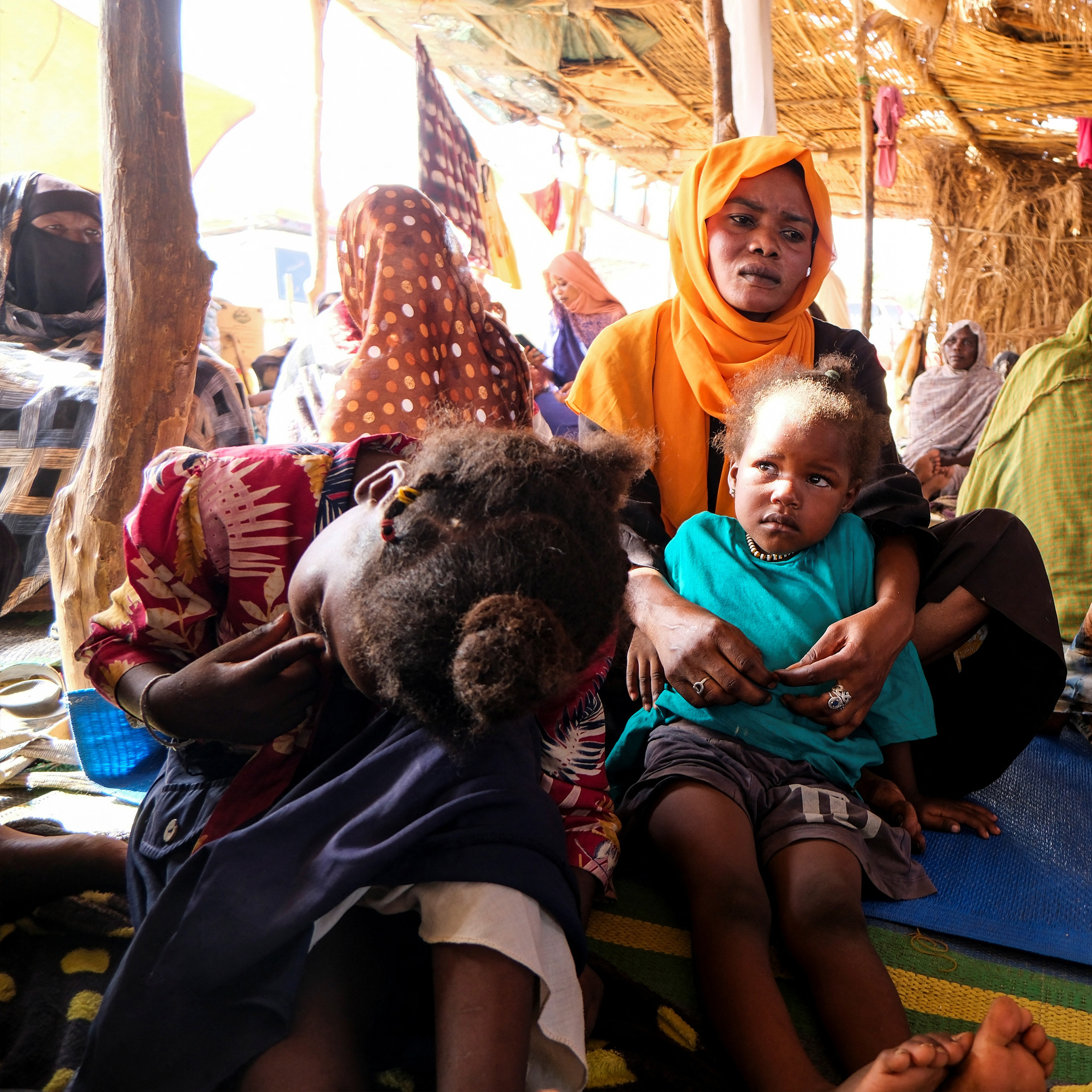
Front Burner
What’s fueling the war in Sudan?
00:26:28
<p>It’s been two and a half years since a civil war broke out in Sudan after a brutal struggle for power between its army and a powerful paramilitary group - the Rapid Support Forces, or RSF. The UN has called it the world’s largest humanitarian catastrophe. Over 150,000 people have been killed, and over 12-million displaced.</p><p><br></p><p>Last week, the war saw a grim turning point when the northern city of El Fasher came under control of the RSF, which now controls all urban centres in Darfur. For over a year hundreds of thousands of people, many displaced and vulnerable, have been sheltering under siege in El Fasher with little to no access to food or medicine.</p><p><br></p><p>Dallia Abdelmoniem is a Sudanese political analyst. She’s here to help us understand what’s been happening in El Fasher, the unrelenting war in Sudan more broadly, and the forces - including foreign powers - behind it. </p><p><br></p><p>For transcripts of Front Burner, please visit: <a ...
Loading summary
Transcript49 lines
- [00:00]
A
Who was Elon Musk before he was so loved and so hated. He saved free speech. He created so many different great things. Before the billions, before the rockets, before the never ending headlines. I'm Jacob Silverman and my new podcast explores the prequel to the Elon Musk era. Let me tell you what you don't know about the world's most notorious billionaire. Understood. The Making of Musk. Available now wherever you get your podcasts. This is a CBC podcast.
- [00:39]
B
Hi, I'm Elaine Chow, in for Jamie Poisson. It's been two and a half years since a civil war broke out in Sudan after a brutal struggle for power between its army and a powerful paramilitary group, the Rapid Support Forces, or RSF. The UN has called it the world's largest humanitarian catastrophe. Over 150,000 people have been killed and over 12 million displaced. Last week, the war saw a grim turning point when the northern city of El Fahshr came under control of the rsf, which now rules over all major cities in Darfur. For over a year, hundreds of thousands of people live, many displaced and vulnerable, have been sheltering under siege in El Fahshur, with little to no access to food or medicine. In just the first three days after the RSF took over, there were reports of over 1500 people killed. International Criminal Court prosecutors said on Monday that the atrocities committed by the RSF may constitute war crimes and crimes against humanity. The world's leading authority on food crises has declared famine in El Fahshr, one of two areas in Sudan to be given that designation. Dalia Abdelmunaim is a Sudanese political analyst. She's here to help us understand what's been happening in Al Fasher. The unrelenting war in Sudan more broadly and the forces, including foreign powers behind it. Hi, Dalia.
- [02:27]
C
Hi.
- [02:27]
B
Before we talk about what's been happening on the ground in Al Fashr, I'm hoping that you could tell us just a bit more about yourself. I know that we're reaching you in Cairo, but Sudan is your home.
- [02:40]
C
Yes. I mean, I'm a born and raised hartomite from the capital. I moved back to Sudan in 2013, where I ran my own small baking business. And then the war broke out on April 15, and I was forced to flee. Smoke billowed over Khartoum's skyline on Sunday as the sound of artillery fire rings out. Aerial bombardment that marks a weekend of bloodshed in the fifth month of war between Sudan's army and paramilitary fighters. Our house was in the epicenter of the first stages of fighting and so our house got hit by missile, and so it rendered it completely unsafe for us to continue living there. And so it took us around two weeks, but we were lucky enough and fortunate enough to be able to leave the country. And we've set up base here in Cairo now. But my immediate family is scattered. I have my brother living in Rwanda, I have my sister living elsewhere. And so we've lost that base. That was our connection that brought us all together. And I think God knows when I will be able to go back. But at this moment in time, my situation is similar to that of so many others lucky just like me, and others who are not so fortunate, who are still in Sudan, you know, at this place and trying to find refuge and safety wherever they can.
- [04:15]
B
Dalia, I've been looking at analysis of satellite imagery of what Al Fasher looks like on the ground right now. And this is work from the Yale Humanitarian Research Lab. And even from space, it appears to show images of blood stained ground and evidence of human bodies. And we've seen similar corresponding reports from aid groups as well. And can you tell me about what you've been hearing from people close to the ground?
- [04:45]
C
Well, there's been a communication blackout because they've shut down all mobile, so it's very hard to get information. So these satellite imagery is actually one of the very few resources that we are able to get our hands on to see exactly what's happening on the ground. And a very frightening report from the exact same source, Yale humanitarian labor, a few days ago, was that there was no movement of people, which rendered the which part of the question, what's happening? What is going on? There's still around 170,000 people trapped inside Al Fashir and no one knows their fate. Are they alive? Have they been killed? Are they in hiding? Which I find very, I don't think is actually plausible, simply because the Aras Said is hell bent on turning Al Fashir if they haven't turned it already into a killing field. And like you said, you know, the fact that satellite imagery can pick up blood stains on the ground can just give us an inkling of how bad the atrocities that have been committed on the people of Al Fashir. Well, let's remember, they're not combatants, they're civilians. You're talking about the elderly, women, children. Shelling killed my daughter, injured my other daughter's eye and paralyzed my son. I hit by shelling. My body is full of wounds.
- [06:10]
B
My head was on the ground and.
- [06:11]
C
I could see to my right two.
- [06:13]
B
Women My neighbors lying dead, blood flowing from their heads. Then the RSF got into their vehicles and started running us over.
- [06:20]
C
We came running, they were chasing us, firing rockets over our heads. They took the men out and lined them up and they shot them in front of us. They lined them up and shot them in the street and left them.
- [06:33]
B
And I understand that RSF fighters themselves have been uploading videos onto social media and have you seen any of those?
- [06:42]
C
I've seen plenty. I mean, they view social media as their personal, you know, television channel, so to speak. The violence is unforgiving and brutal. Video verified by Reuters shows bodies in ditches after mass killings.
- [06:59]
A
Another verified video shows a man on.
- [07:01]
C
The ground shot mid conversation.
- [07:05]
A
A fighter shows off his work. We've burned them, he says. We've burned them. The paramilitary Rapid Support Forces turned an Al Fasher convoy trying to escape into a killing field, a ditch into a mass grave. The UN and international humanitarian groups accused the RSF of entering Al Fasher's Saudi maternity hospital and killing everyone inside.
- [07:30]
C
They boast about their killings. They run live streams of what, what their next agenda is. They've released videos where one of the generals on the ground is telling his troops, kill everyone, leave no one alive. And it's chilling to see it because these videos have, they've been uploading these videos and posting them since the war started. It's not something new. Us Sudanese, we've been seeing them for the past two and a half years and it's only gotten worse now simply because when it comes to Al Fashir, when it comes to the Darfur region as well, there's an element of racism and ethnic superiority that is behind all these killings and atrocities being committed. And unfortunately it's the non Arab tribes and ethnic groups that are being targeted by the RSF. And it's a continuation of what they did 20 years ago in the first Darfur war.
- [08:30]
A
The rebels descend from government backed Janjaweed militias that in the 2000s brutally crushed an uprising and killed hundreds of thousands of non Arabs. Then too, the US labeled their actions genocide.
- [08:44]
C
But unlike then, we may not have had the videos or social media to, you know, pinpoint exactly what's going on now. We do. I mean, I saw one video of a father who called his son to bid him farewell before he was gunned down, before he was executed. I mean, what do you say to a child like that, a 14 year old boy, how can you explain to him or you know, make him understand, or the mother who was, you know, trying to shield her Children, including an infant. And the RSF were mocking her. And then they were executed, the whole family, mother and kids. It's just, there's no words to describe how horrible, how, how much of a nightmare it is for us Sudanese to see this and at the same time not be able to do much. I mean, I do all these interviews and podcasts and so on just to hopefully shed a light or if I can change one person to actually get up and do something, you know, push their, you know, push for change or be more aware that I'm happy. But that's not enough.
- [10:10]
B
The UN has said that more than 60,000 people have fled Al Fashr in just the two days following the RSF's takeover. And you touched on this a little bit, but what do we know about where they've fled and what they're dealing with?
- [10:26]
C
Well, they're fleeing towards the town of Al Tawila, which is on the western west of Al Fasher. And that town has already taken in more than 650,000 displaced people. Now, at the same time, let's not forget that Al Fashir a year ago had 1.5 million civilians, most of them displaced, who managed to flee from the displacement council were attacked by the RSF a few months ago. And so, and there was an MSF report saying that they received, I think most of the kids, most of the children that they received at Al Tawila were all malnourished. So because this Al Fajr has been besieged for more than 500 days. So it's crazy. Almost 25 million people are facing acute hunger in Sudan. According to the World Food Program, it's the largest hunger crisis in recent history, fueled by conflict. This is man made.
- [11:26]
A
Ikrem Abdel Ahmed's daughter and son in law were both killed. And so she is now raising her two month old grandson with almost no food. For two weeks, she's fed him only moldy grain and rehydration salts.
- [11:42]
C
We had to flee because of the.
- [11:44]
B
Fighting and ended up here in Tawila.
- [11:46]
C
We have nothing to eat.
- [11:48]
B
It's so hard on us. We did many things.
- [11:50]
C
And even those who manage to reach A Tawila, they face either attacks, they face either being held, kidnapped and held for ransom, and they face being killed also trying to Flee.
- [12:05]
B
Have any NGOs or aid convoys been able to reach the city?
- [12:13]
C
Last report I read, they said they still, they haven't been, they haven't been given assurances that they will not, their convoys will not be attacked. Don't forget There were ICRC workers, the International Red Cross workers who were killed by the rsf. So there's no guarantee that you being an NGO or even an international ngo, that the protection will be offered to you and the RSF and SAF as well. You know, in the past two years, they have not kept their word when it comes to, you know, allowing for the safe passage of aid convoys to reach those who are in need. In fact, aid has been weaponized by both sides in this war, and it's come to the forefront, especially now in al fashion, because of the dire situation there. And right now the control is in the hands of the rsf and they're not allowing aid to get through.
- [13:16]
A
Hello, it's Ray Winstone. I'm here to tell you about my podcast on BBC Radio 4, History's Toughest Heroes. I've got stories about the pioneers, the rebels, the outcasts who define tough. And that was the first time that anybody ever ran a car up that fast with no tires on. It almost feels like your eyeballs are going to come out of your head. Tough enough for you? Subscribe to History's Toughest Heroes wherever you get your podcast.
- [13:47]
B
Dalia before we talk a bit more about how this week's developments changed the dynamic of this war, I'm hoping you can remind us of what's been happening since the civil war broke out in April 2023. As I mentioned in the introduction, that's when Sudan's military and the RSF turned against each other and started fighting. They had previously worked together to overthrow the government of President Omar Al Bashir, who's been charged of genocide, war crimes, and crimes against humanity by the International criminal court.
- [14:19]
C
After 30 years in power, President Omar Al Bashir has been forced out of power by the country's military. The army has dissolved the government and declared a state of emergency.
- [14:28]
B
Protests leading to his apparent downfall today.
- [14:31]
C
Began in December over the price of bread. Al Bashir came to power in a bloodless military coup in 1989, overthrowing a democratically elected government. Two civil wars between the north and south south cost the lives of one and a half million people, and the continuing conflict in the western region of Darfur killed more than 200,000 people and forced 2 million others to flee their homes.
- [15:00]
B
And why did these two groups turn on each other? And tell me a bit more about what led to this power struggle.
- [15:07]
C
I know by normal definition of in political science, this is a civil war, but there are so many other factors involved in this war that I don't Think there's a phrase to actually explain or describe it? Yeah, it's just. It's a mess. But what happened was in 2019, we, the people, went out in popular, you know, resistance and in the protest against the government of Omar Al Bashir, who's been the dictator and his regime has been ruling Sudan for more than 30 years. And we managed, we succeeded in throwing him out of power. And in place came a civilian transitional government. Two years later, in 2021, both the leader of the RSF, Mohammed Dagalo, also known as Hemiti, and the head of the Sudanese armed forces, Abdel Fattah Burhan, instigated a coup against the civilian government.
- [16:05]
B
A military coup in October threw the country's transition to democracy into disarray.
- [16:11]
C
And the reinstatement of the military and civilian government a month later failed to ease anger at the army's power grab. It was an unlikely. How do you say it? You know, agreement between both. It was like they were bedfellows because they thought it would help them both gain back the power that was taken from them two years ago. But like all relationships, you know, it came to a bitter end simply because there was discussions and negotiations as to how we can go back to having a civilian government. And so those negotiations fell apart the minute the first bullet was, you know, was fired on April 15. And so from being. From being brothers in arms, they became bitter enemies immediately. And as a result of that, this is where we are today, where it's. They're both fighting for power, they're both fighting for control, and no one has or no entity within the international community has shown any initiative to actually step in and somehow bring an end to this war. You know, it keeps getting worse by the day. There's no time. And I can say, oh, it's getting. It's getting. You know, things are improving, they're not. So we're at the stage now where there is no actual movement to somehow bring an end to this war, or, like I say, just find the ceasefire simply because the backers of both the army and the RSF are not being held to account by the international community. And so this sense of impunity, making both sides feel that they can win this war outright militarily, but they're not, and they can't. It's just unfeasible simply because Sudan is such a large country made up of so many different groups and tribes, and each group and tribe has its own allegiance and has its own leader and demand. So even if, let's say, they defeat one particular, you know, ally of the RSF, 10 others will pop up. That's how it is. And same thing applies to the army, to saf.
- [18:37]
B
You know, you were pointing out earlier that to call it a civil war doesn't really capture it. I've also seen it described as a proxy war. You know. You know, back in March, Sudan took the United Arab Emirates to the International Court of Justice. They were arguing that they were, quote, complicit in genocide for arming the rsf. And the UAE has repeatedly denied involvement in the war. But now there is pressure again from the Sudanese government, as well as politicians, activists, NGOs from around the world for them to stop supplying weapons to the group. And tell me about why the UAE is involved here. You know, why pour resources into a civil war in Sudan?
- [19:22]
C
Well, the UAE can deny as much as it can, but there is evidence. There is. There has been documentation from the likes of The United Nations, NGOs, human rights groups and even media, you know, showing and proving that the UAE is sending in arms to the rsf. The reason why the UAE has built itself on the platform that they're anti Islamist, anti political Islam, hence their role in the war in Yemen and their role in the war in Libya. And for those two wars, they actually hired the RSF to be their foot soldiers on the ground because the UAE doesn't have an army, or maybe they don't even have the soldiers to fight a war for them. But they do have deep pockets and they do have very strong political, economic and security ties with the likes of the United States, United Kingdom, Israel, you know, you name it, they have reach out there. And so they you. At the same time, Sudan is one of the richest countries when it comes to natural resources. You're talking minerals, you're talking gold, you're talking agricultural land, you're talking the River Nile as a source of irrigation. You know, you're talking the eastern side of Sudan, which is on the Red Sea, which is a major trade route. So all of those reasons play into the whole how the UAE is trying to extend its reach, extend its not control and manipulation of the region. And Africa is ripe for that. And it's not just Sudan. If you look at the interest of where UAE has invested, quote, unquote, you'll see that it's actually quite frightening. It's like a new form of a scramble for Africa, but this time under the auspices of the United Arab Emirates. And at the same time, this is also. I'm trying to simplify it during the 30 years of Omar al Bashir. Of course, the Sudan was sanctioned by the United States. And so the United Arab Emirates opened up as an option for, you know, in regards to banking, in regards to business and so on. So. So the Sudanese economy was very reliant on the uae, and that's what's happening now, because all our gold is being smuggled via the uae, where it's being sold as Emirati gold. But Emirates does not have any gold mines. Sudan does. And so the UAE is building its economy off of our backs, on our expense and us to the knees. We haven't seen anything because nothing trickles down to the people or to the country. It stays in the uae.
- [22:08]
B
There have been other foreign entities accused of being involved in the war as well. Who is on the other side of.
- [22:17]
C
This proxy war when it comes to the Sudanese army? You have the likes of Egypt, Saudi, Qatar, Turkey, and Iran. And so those countries have been the backers of the Suez army simply because they see it as it's a national institute. It is the national army. But the support of these countries for SAF pales in comparison when you compare it to what the UAE has done for the rsf.
- [22:58]
B
Dalia, a US Envoy told the Associated Press that they're talking to both sides to try and reach a humanitarian truce. But the UAE has strong ties to the US which has been bolstered by the current Trump administration this past year with the promise of more investments. How much influence do you think Western powers like the US have if they were to put pressure on the UAE right now? And what more do you think the world could be doing, the international community could be doing to end the fighting?
- [23:34]
C
Oh, unfortunately, I think at this moment in time, it's only Washington that can actually apply any kind of pressure on the uae. But will Washington do that? My guess is as good as yours. I don't think so, simply because what's of interest in Sudan to the usa if you put Sudan side by side to what the UAE gives or offers the United States? If I was an American president, I know where I would, you know, which side I would go for. But. And so you have to go back to the humanitarian side, to the humanitarian issue. Are you okay with seeing hundreds of thousands being killed and slaughtered? And it seems what's happened the past week has actually shaken the international community simply because they purposely turned a blind eye to what was happening. Because we in civic society in Sudan and in the activists in Sudan since day one, we have been warning about the catastrophe that would befall Therefore, if the RSF is given free reign to run amok and do as they please. And that's what's been happening. And it's not nice to say, we told you so, but we did tell them so, and no one paid attention to us. And now, you know, there's been a lot in international news so that what's happening in al fashion has taken from center stage. And so now there's a. You know, there's a growing cold of boycotting Emirati goods, of more action being done. I'm seeing my social media feeds are all just, Sudan, Sudan, Sudan. And there's, like, explanations of what's happening, giving background to. In context to the conflict. So that plays a part. It does play a part. Because more media, more attention builds up pressure. More pressure demands action be taken. Yeah, demands action be taken. Because you can hold your legislators, your. Your political leaders to account. You know, you're in Canada. There was just a report recently that there was a Canadian company that was providing arms or, you know, or I think cars, trucks to the rsf. You can hold that company accountable. How can you do that? Same thing with the United Kingdom. The United Kingdom. There was a Guardian newspaper report that the British government sold weapons to the uae, who then in turn provided these weapons to the rsf. All of these small things, when you add them up, they do build like a. It's like a snowball. It starts small and then it builds big, big, big. But what needs to be done is that accountability. You have to hold the perpetrators, and you have to hold their backers to account. You have to ensure that. There's been an arms embargo in Darfur since the 2000s. Why is that not implemented? How can you allow arms to be smuggled in from the western side of Sudan so freely, so easily, and not hold anyone accountable for breaking such an embargo? This is the United Nations Security Council embargo. It's not just any whimsical organization deciding no arms will be sold in Darfur. So all these things are. I'm seeing there is some effect, there is some outcry, and I'm hoping this will be built on and it will grow even bigger and something will be done.
- [26:57]
B
Dalia, I appreciate your time today and your analysis. Thank you so much.
- [27:02]
C
Thank you for having me.
- [27:12]
B
That's all for today. I'm Elaine Chao in for Jamie Poisson. Thanks for listening. And Jamie will be back tomorrow.
- [27:21]
C
Foreign.
- [27:27]
A
For more CBC podcasts, go to CBC CA Podcasts.