← Front Burner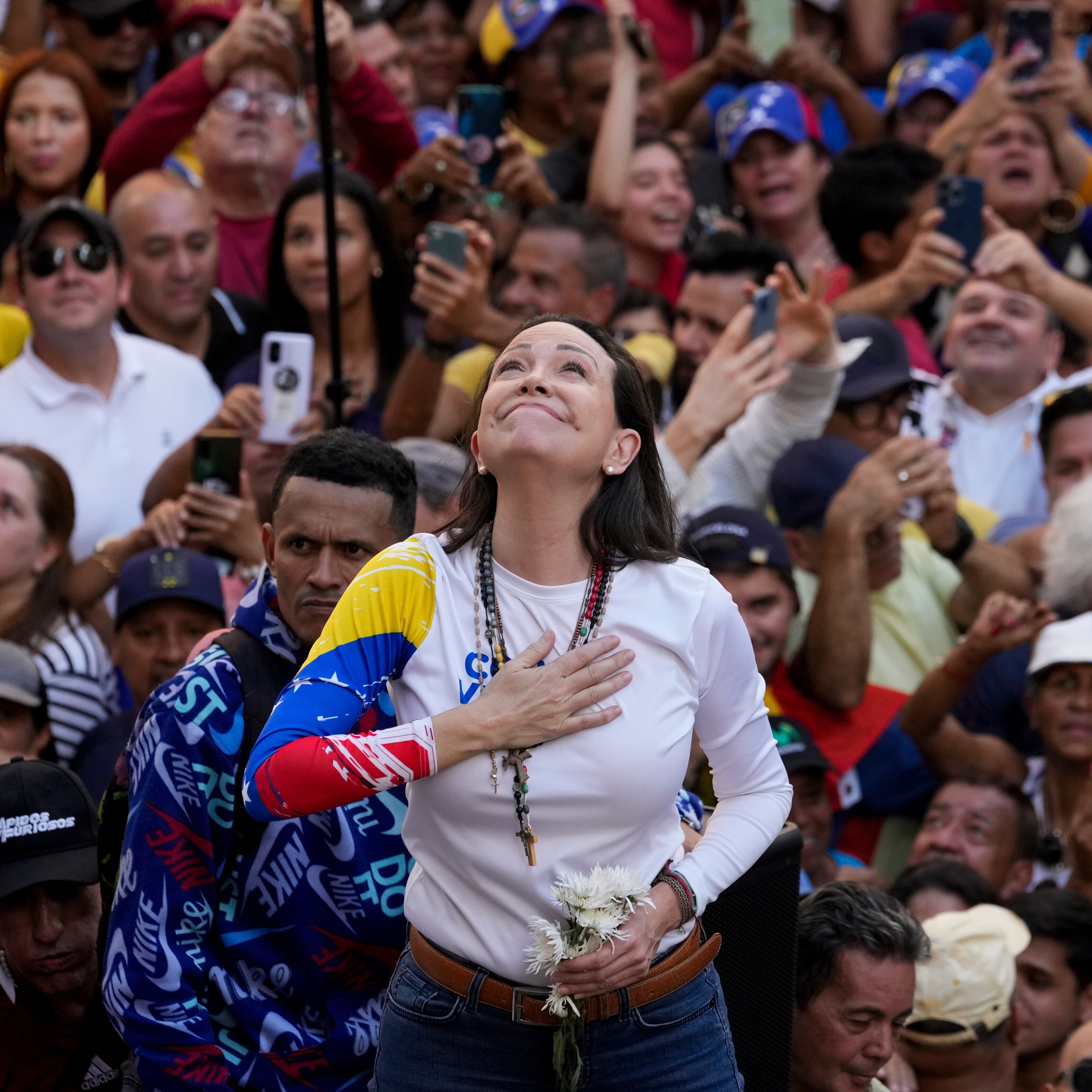
Front Burner
Who gets to win the Nobel Peace Prize?
00:26:44
<p>This year, the Nobel Peace Prize was awarded to Venezuelan opposition leader, María Corina Machado.</p><p><br></p><p>In the announcement last week, the chairman of the Norwegian Nobel Committee said Machado had earned the prize for her “struggle to achieve a just and peaceful transition from dictatorship to democracy". The award comes at a time when the U.S. has taken an increasingly belligerent stance against Venezuela’s president Nicolás Maduro.</p><p><br></p><p>So today we’re talking about Machado, the legacy of the Nobel Peace Prize, its controversial winners, who wins it and who doesn’t.</p><p><br></p><p>Jay Nordlinger, the author of Peace They Say: A History of the Nobel Peace Prize, and a writer with the Next Move, a publication of the Renew Democracy Initiative, joins the show.</p><p><br></p><p>We'd love to hear from you! Complete our listener survey <a href="https://insightscanada.qualtrics.com/jfe/form/SV_bfIcbmcQYPwjUrk?Podcast=Front%20Burner&Prize=Yes" rel="...
Loading summary
Transcript55 lines
- [00:01]
A
Hi, I'm Adam Grant, host of the podcast Work Life. Did you know Paylocity offers one platform for HR finance and it that means innovative solutions like on demand payment which offers employees access to wages prior to payday, flexible time tracking features which enable staff to clock in through their mobile device. Numerous other cutting edge integrations are available to all your teams in one single place. Learn more about how Paylocity can help streamline work and bring teams together and@paylocity.com 1.
- [00:34]
B
This is a CBC podcast. Hey everybody, it is shout out time. Charles wrote us about yesterday's episode where I spoke to the president of the CBC. He says, quote, when defending CBC's production of entertainment, Marie Philippe Bouchard answered as if it was the CBC's duty to provide employment for this sector, which is an unfortunately weak position to take. I did also notice that argument and so did the episode's producer, actually, Charles and to pull back the curtain for a second, when I do interviews like this, especially when you have limited time, you have to make these split second calls. Am I going to pick up on every moment and follow up which could run out the clock or do I move on and make sure that I have time left for what unexpected response I might get later on a different topic? It is always a really tough call, but I gotta say it's so nice to know that we've got such close listeners to the show and the best way to make sure that you are one of them is to hit the follow button on whatever app you are using to listen to us now. We would really, really appreciate it. All right, here's the show. I want to read you a quote about this year's Nobel Peace Prize winner, Venezuelan opposition leader Maria Corina Machado. It's from the Nobel chairman who said that she earned it for her quote, struggle to achieve a just and peaceful transition from dictatorship to democracy. The prize was awarded last week and obviously not given in a vacuum. The US has taken an increasingly belligerent stance against Venezuela's president, Nicolas Maduro. So today we're going to be talking about Machado, but also the legacy of the Nobel Peace Prize itself, its controversial winners, who gets it, who doesn't, and theories about why Jay Nordlinger is here. He wrote the book Peace, they say, a history of the Nobel Peace Prize. Jay also writes for the Next Move, a publication of the Renew Democracy initiative. Jay, hi. Thank you so much for coming onto Front Burner.
- [02:50]
A
Well, thank you. Appreciate it.
- [02:52]
B
Let's start with Maria Carina Machado. This year's Venezuelan Laureate. What can you tell us about her?
- [02:58]
A
Well, she's a very brave woman. She lives in hiding. There is a price on her head. I'm not sure it's a price, but certainly they would like to see her gone, they being the Venezuelan dictatorship. She has become the leader of the Venezuelan Democratic opposition movement. It has had several leaders, but this movement has coalesced around her. So I think the Norwegian Nobel Committee has awarded her personally and awarded this movement or effort.
- [03:29]
B
Certainly that depiction that you just made of her, a pro democracy hero, is one that we've heard a lot. But the other one that has emerged recently is this other depiction of her as an American proxy, someone that has supported sanction regimes in Venezuela and generally supports the American position in the country. She's also waxed poetic about leaders like Donald Trump. So what do you make of those two depictions of her?
- [03:55]
A
You know, I'm not sure she's waxed poetic about Trump, has she? She appreciates the support of the US administration, that's for sure.
- [04:04]
B
I know she dedicated this prize to him. I dedicated this prize to the people of Venezuela and to President Trump because I think he deserves it. He's the main supporter of this fight against this narco terrorist cartel. And also because we've seen in these last months impressive results in terms of conflicts that were stopped or solved.
- [04:33]
A
I think that was prudent. I think that was tactical. I think that was an act of diplomacy. She needs US backing, yes, democracies, many of them, back this democracy movement in Venezuela, as well they should from my point of view. The dictatorship has backing too, from fellow dictatorships. Russia, China, Iran, Cuba, Nicaragua. That's quite a lineup. And these little guys in hiding and so on need all the support they can get. So it's quite unequal. But yes, movements such as this thirst for well wishers and sympathizers and backers, they always want help. To me, it's natural. Machado is a democrat with a small D and she wants the support of fellow democrats.
- [05:24]
C
The person who actually got the Nobel Prize called today, called me and said, I'm accepting this in honor of you because you really deserved it. A very nice thing to do. I didn't, I didn't say, then give it to me, though I think she might have. She was very nice and I've been, you know, I've been helping her along the way. They need a lot of help in Venezuela. It's a basic disaster.
- [05:48]
B
So her win comes at a time that the Trump administration has been blowing up boats near Venezuela?
- [05:56]
A
Yeah.
- [05:56]
B
They have said that they are full of narco traffickers, but have not provided evidence of that. Trump has repeatedly labeled Venezuelan President Nicolas Maduro of being anarcho himself. And it was revealed this week in the New York Times that Trump has approved covert CIA operations inside Venezuela. And can you situate her win in this current moment for me?
- [06:16]
A
Well, Venezuela is in the news and was in the news before the announcement of the Nobel Peace Prize. It could be Venezuela's moment or another one of them. And the world is messy, Certainly the Trump administration is very, very messy. But it's important to remember that the Nobel Peace Prize is usually forgiven, is given for specific work, and it has been done in this case that the specific work that this woman and her fellows, her allies, are doing in Venezuela. And, yes, the world is imperfect. I'm sorry for an observation so elementary, but it occurs to me to say there are very few Nobel Peace decisions that are uncontroversial. Even that to Mother Teresa, even that to Albert Schweitzer, these great humane people, even that to Dennis Mukwege, the doctor in the Congo. So I'm trying to think of a Peace Prize that has been completely uncontroversial. It's pretty hard to name one, honestly.
- [07:20]
B
Yeah. One of the criticisms of the prize is that it often rewards opposition figures from countries that the west already disapproves of. Russia, Belarus, Iran, Iran, now Venezuela. But that they rarely award activists challenging Western democracies themselves or those pushing back against Western powers. Do you think that that pattern exists? Do you think that that is a fair criticism?
- [07:48]
A
Yes. I'm not sure I'd classify it as a criticism, but, yes, the Norwegian Nobel Committee would be more disposed to the opponents of tyrannies than to democratic governments. Liu Xiaobo, for example, in China, who received the award in absentia, he was a political prisoner, and he died still a political prisoner. So, yes, this would be the committee's natural bias, if you will. Democracies are shot through with problems, heaven knows, including the one I live in here in the United States. But tyrannies, police states, totalitarian dictatorships are a different story.
- [08:41]
B
Donald Trump has repeatedly expressed a desire to be awarded the Nobel Prize.
- [08:47]
A
Has he ever.
- [08:48]
B
It's really. It's quite something.
- [08:50]
A
There's never been so brazen a campaign, ever so open and brazen a campaign for the Nobel Peace Prize. And one thing I say about Trump is that sometimes he's almost touchingly transparent. And his sheer coveting of the Nobel Peace Prize he has let hang out.
- [09:06]
C
So what they're trying to do with the Epstein hoax is get people to talk about that instead of speaking about the tremendous success, like ending seven wars, you know? But I stopped seven wars, and three of those wars were going on for more than 30 years. If it were somebody else, they would have gotten five Nobel Prizes. Prizes. I never even got a mention. And, you know, it's an amazing thing. I don't say this out of ego, but I was nominated for the Nobel Peace Prize.
- [09:34]
B
Why do you think he wants it so badly? What does it represent for him? He's already the most powerful person on the planet. He is the leader of the largest military and largest economy in the world. Why does he want this prize?
- [09:49]
A
Bear with me a second. This might sound a little weird. Donald Trump is a man of the 20th century. I am a man of the 20th century. In the 20th century, being on the COVID of Time magazine was a really big deal, a huge deal. You would really mate it if you're on the COVID of Time magazine, at least in a positive way. In the current media environment of the 2000s, like 19 people read time magazine. No offense to Time magazine, but it's still a big deal in the president's mind. So is the Nobel Peace Prize because it has always meant glory. You know, being crowned almost as a secular saint. That still holds true. And Trump wants it because I think vainglory demands it.
- [10:35]
B
I'm curious to see how you answer this question. You know, it feels to me, also relevant to this desire to win might also be the fact that Barack Obama won it before him.
- [10:45]
C
The Nobel Peace Prize for 2009 is to be awarded to President Barack Obama for his extraordinary efforts to strengthen international diplomacy and cooperation between peoples. The committee has attached special importance to Obama's vision of and work for a world without nuclear weapons.
- [11:10]
B
How do you think Obama's win plays in Trump's mind? Do you think Obama made good on the original promise of his Nobel Peace Prize? Because, of course, this is a president who himself was wrapped up in the history of war and global conflict as well.
- [11:28]
A
Well, I am not Donald Trump's shrink, but it seems to me that his real detestation is of other Republicans. Republicans from the former Republican Party, such as Mitt Romney and John McCain. I don't know if he's all that riled up about Obama, frankly. I mean, he has mocked the Nobel Peace Prize to Obama. Many people have, including some Democrats at the time.
- [11:55]
C
They gave one to Obama immediately upon his ascent to the presidency, and he had no idea why he got it. And you know what? That was the only thing I agreed with him on.
- [12:04]
A
But I don't think Obama looms large and occupies much space in Trump's mind. Other Republicans do.
- [12:12]
B
Oh, that's interesting. Yeah. And then what about Obama himself? Do you think he made good?
- [12:17]
A
I. I don't know what the Norwegian Nobel Committee would say. Probably not. Politicians always disappoint. I could say that from my perspective, Obama gave a very good Nobel lecture in Oslo, and he talked about the indispensability of the US Military to the peace of the world. Yet the world must remember that it was not simply international institutions, not just treaties and declarations, that brought stability to a post World War II world. Whatever mistakes we have made, the plain.
- [12:49]
C
Fact is the United States of America has helped underwrite global security for more.
- [12:55]
A
Than six decades with the blood of our citizens and the strength of our arms. That was a pretty rare Nobel lecture. Another one like it was that of George C. Marshall in the early 1950s, who was given the Nobel Peace Prize for his Marshall Plan, as everyone but him called it. He called it the European Recovery Program, which was its formal title. And he gave a similar speech.
- [13:29]
B
What are the origins of the Nobel Peace Prize?
- [13:31]
A
Well, there was this fellow, Alfred Nobel, a brilliant man, an industrious man, an inventor, a scientist, an entrepreneur, a Swede. I admire him a great deal. He was one of the major figures of his day. And he was an idealist and also a realist. He was a man of parts and a man hard to. Well, hard to pin down, really. And he amassed a vast fortune by dint of his hard work and talent. He was never married, didn't have children. That was a great sadness in his life. He had nephews and nieces and so on whom he took care of in his will. But he bequeathed his fortune on these prizes, and it made worldwide news. Now, it's perfectly common for people to leave great deals of money to public causes. It wasn't then. And so he had these prizes in science for his fellow scientists, and he cared a great deal about writing and literature. So he established his literature prize. And it wasn't for just any literature. He stipulated that the prize was to go for writing, quote, in an ideal direction. And then there was this peculiar prize for peace. The four other awards are determined in Stockholm, and the Peace Prize is determined in Oslo. And some peace campaigners, especially a woman named Bertha von Suttner, prevailed on him to donate a prize to peace for efforts toward peacemaking, for the solving of conflicts through negotiation Diplomacy, mediation and so on, rather than violence.
- [15:12]
B
How does the committee responsible for the Nobel Peace Prize decide on a winner? Like, what are the driving criteria here? What are some of the mechanics behind the scenes? Has it changed a lot since its inception?
- [15:24]
A
Well, certainly the committee's definition of peace, or concept of peace, of peace, has broadened quite a bit. Too much so for some tastes. But there are five of these guys and women. They're all Norwegian. They're all elected by the Norwegian legislature, which is called the Storting. They serve six year terms. They receive nominations and make nominations themselves, and then they deliberate and their choice is announced usually on the second Friday of October. So pretty much the sky's the limit for these guys. Starting in the 1960s, they gave human rights awards, so to speak, or freedom awards, like the most recent one to Maria Corinna Machado. They've given it to environmentalists. They gave it to a micro lender, a micro banker, Muhammad Yunus in Bangladesh. They gave it to a great American agronomist, Norman Borlaug, for feeding the starving across the world. So what is peace? This is a question of which the committee has long had to wrestle. And you can't satisfy everyone with your answer.
- [16:34]
B
Trump has the desire to join American presidents like Obama, as we've discussed, but also Theodore Roosevelt, Jimmy Carter, Woodrow Wilson, who I guess was a controversial recipient based on his record of racism and white supremacy. Can you walk me through these wins and what this award has meant to the legacies of these leaders?
- [16:55]
A
Well, starting with Wilson, please remind me if I forget one. I don't think his award was controversial because he was given the Nobel Peace Prize for sort of an obvious and natural reason. He was the moving force behind the League of Nations. And so that fit perfectly with the criterion, Alfred Nobel's will of 1895. The first criterion, and the most important, is fraternity between nations. And then there's the holding of peace congresses and essentially disarmament or the reduction of armies. And so, yeah, Wilson was the primary founder of the League of Nations. So he was what you might call a natural Nobel laureate. And so was T.R. theodore Roosevelt in 1906. That was controversial because Roosevelt was. He was seen as a belligerent figure, not a pacific figure. But he won primarily, not exclusively, but primarily for his mediation in the Russo Japanese War, which resulted in the portsmouth treaty of 1905. Also because he gave the new international court at the Hague something to do, a dispute between the United States and Mexico to solve. Who else do we have? Carter right now? Let Me tell you this. Nobel Prizes are not supposed to be lifetime achievement awards. Sometimes they are in practice, but according to the will, according to the testator Alfred Nobel, they are to be given for the best or most work done during the preceding year. But Carter won the Nobel Peace Prize essentially for a post presidential lifetime of good works. And Obama, obviously the Norwegian Nobel Committee had its press release and so on, giving its reasons for awarding Obama. But I heard a theory from several people in Norway and I kind of believe it. Let me try it out on you. It might be hard to imagine if this were moved, but Barack Obama was a rock star. He was like the Elvis of the political world. He was a big deal on the international stage. And it might be that these five Norwegians said, what can we do to bring him to our frozen capital up here? What would get Barack Obama to Oslo? And the answer was to give him the Nobel Peace Prize.
- [19:13]
B
Use him to make the Nobel Peace Prize more powerful. It goes both ways, I guess, right?
- [19:19]
A
Right.
- [19:36]
B
If you're listening to this, you're ready. Ready to join the industrial intelligence generation. A generation defined not by age, but by a shared mindset to connect teams, accelerate efficiency and drive innovation, using the power of Aviva software to reshape industries, turning real time insights into real world growth. Discover our stories@industrialintelligence.com join Generation I. Hi, I'm Mike Figgis.
- [20:08]
A
I wrote and directed movies like Leaving Las Vegas and Timecode. And recently I was on the set of Francis Ford Coppola's infamous passion project Megalopolis, making a Fly on the Wall documentary. In Unfiltered, the Mike Figgis podcast, I'll share stories of watching a mad genius at work get unfiltered. The Mike Figures podcast. Wherever you get podcasts.
- [20:37]
B
One of the prize's most controversial winners was also an American. The former US Secretary of State and institution really of American foreign policy, Henry Kissinger. He was Central to the U.S. secret bombing campaigns in Cambodia and Laos, was central to the American war effort in Vietnam, helped to create the conditions for the overthrow of Chile's democratically elected president, which ushered in an era of dictatorship and oppression in the country. And he was involved in invasions and massacres in places like East Timor, Argentina and Bangladesh. This is someone who his critics pretty popularly refer to him as a war criminal in our culture today. But also he was a trusted advisor to virtually every US President over the last half century or so. He certainly has his defenders. What do you make of Kissinger's Peace Prize win today? Both the reaction to it and the legacy of it.
- [21:32]
A
Well, first on your list of offenses, there's a lot to say in favor of Kissinger. We won't go into that now, but allow me to state that rather than leave it unanswered. The Nobel Peace Prize of 1973, the most controversial peace prize ever awarded. It was split between Kissinger and the North Vietnamese envoy Le Ducteau, and it was for the Paris peace Agreement of 1973 which established or was supposed to establish a ceasefire, a truce in the Vietnam War. Kissinger was the National Security Advisor at the time. Le Dak to represented his government. They won it in tandem. Now, of course, this peace agreement was shot to hell by the North Vietnamese. Saigon fell in April 1975 and Kissinger tried to return his Nobel Peace Prize. And he was informed by the committee, the Nobel Peace Prize is not returnable. It's given for work already accomplished. Thank you very much. So there's a lot more to say about that prize and I have a lot more about it in my book, but that's a nutshell.
- [22:38]
B
In just the last few years we've seen leaders involved with some of the worst campaigns of violence in our time handed the Peace Prize. I'm thinking of Aung San SUU Kyi, then a democracy activist who won the award in 91 and years later, as Myanmar's de facto leader, she would enable the mass killing of the country's Rohingya minority. In 2019, Ethiopian Prime Minister Abiy Ahmed won the award for ending a 20 year stalemate following war with bordering Eritrea. And one year later, the Ethiopian Prime Minister and the President of Eritrea would lead a military campaign believed to have killed between 6 to 800,000 civilians in just two years in Ethiopian province of Tigray. What do these kind of winners do reputationally to the prize as an institution?
- [23:28]
A
I think they heard it. But it has to be explained. Aung San SUU Kyi was a heroine, a great woman, incredibly brave woman who put her life on the line. And I think she was a thoroughly meritorious winner of that Nobel Peace Prize. She was under house arrest. Later in power, she proved a disaster because of the compromise she made with the junta. In effect, a disaster. So that was embarrassing. It seemed wise at the time, I suppose, to give the Ethiopian leader the prize for the resolution of this conflict of so many years. I think 20 years. And then of course, great bloodshed to follow. It's a very risky business to award a Peace Prize for work already done. You know, I think of a. And there's no mark on his record. But I think of the great American, Ralph Bunch, the US diplomat, later UN diplomat, who led the mediation between Israel and the Arab states in the 1940s. He won the Peace Prize, I believe, for 1950. That was all shot to hell. But as the committee told Kissinger in 1975, you know, we didn't return Bunch's award. We appreciated his efforts, and the same here. But yes, yes, if one could only have hindsight. That is correct.
- [25:04]
B
And we've been talking about this prize that's been given out since 1901. This is a period that has seen multiple global wars, apartheid regimes in South Africa and the United States during this time, major conflicts in every corner of the world. And what does the study of the prize over time stand to teach us about the 20th century, you think?
- [25:25]
A
I loved doing my book. And one of the reasons was it gave you a neat survey of the whole 20th century. And now we're a quarter into the 21st, and you see the evolution of the world. On one hand, if you forgive this sort of platitude. On one hand, things change, they evolve, they develop, and we see this. On the other hand, forgive me if I contradict myself. Nothing changes. You know, the same old hubris and false hopes and dash dreams and bursts of triumph and idealism and so on. The human scene is at one, at the same time, I think, interesting and chaotic. And also, you know, the expression, it was ever thus. And the older I get, the more I see it. I'm not sure I like to hear it so much when I was young, but I get it better now.
- [26:17]
B
The democratic idea is in a difficult moment today. We have had expert after expert come onto this program to talk to us about the rise of authoritarianism and fascism and the closing window of democracy. Given the historical moment, does the moral weight or import of the Peace Prize take on a new meaning right now?
- [26:41]
A
Yeah, the Nobel Peace Prize carries weight, especially in what we used to call developing countries in the other countries. Does the prize carry weight? Some, I would think. It certainly helps to have the prize. If you get the prize, it's a very handy tool with which to promote whatever it is you're wanting to promote. And people listen. It gives you a platform, a megaphone. So, yes, it all comes back to this question, what is peace? And to some people, the achievement of democracy or push toward democracy is also a push toward peace.
- [27:19]
B
Okay. I think that's a great place to leave it. Jay, thank you so much for this.
- [27:23]
A
Likewise. Thanks so much.
- [27:35]
B
All right, that is all for today. Front Burner was produced this week by Joytha Shangupta, Matthew Amha, Matt Muse, Lauren Donnelly, cecilia Armstrong, Sam McNulty, Dave Modi, and MacKenzie Cameron. Our YouTube producer is John Lee. Music is by Joseph Shabazin. Our senior producer is Elaine Chow. Our executive producer is Nick McCabe. Lokos. I'm Jamie Poisson. Thanks so much for listening to Front Burner. Talk to you all next week.
- [28:13]
A
For more CBC Podcasts, go to CBC CA Podcasts.