← Front Burner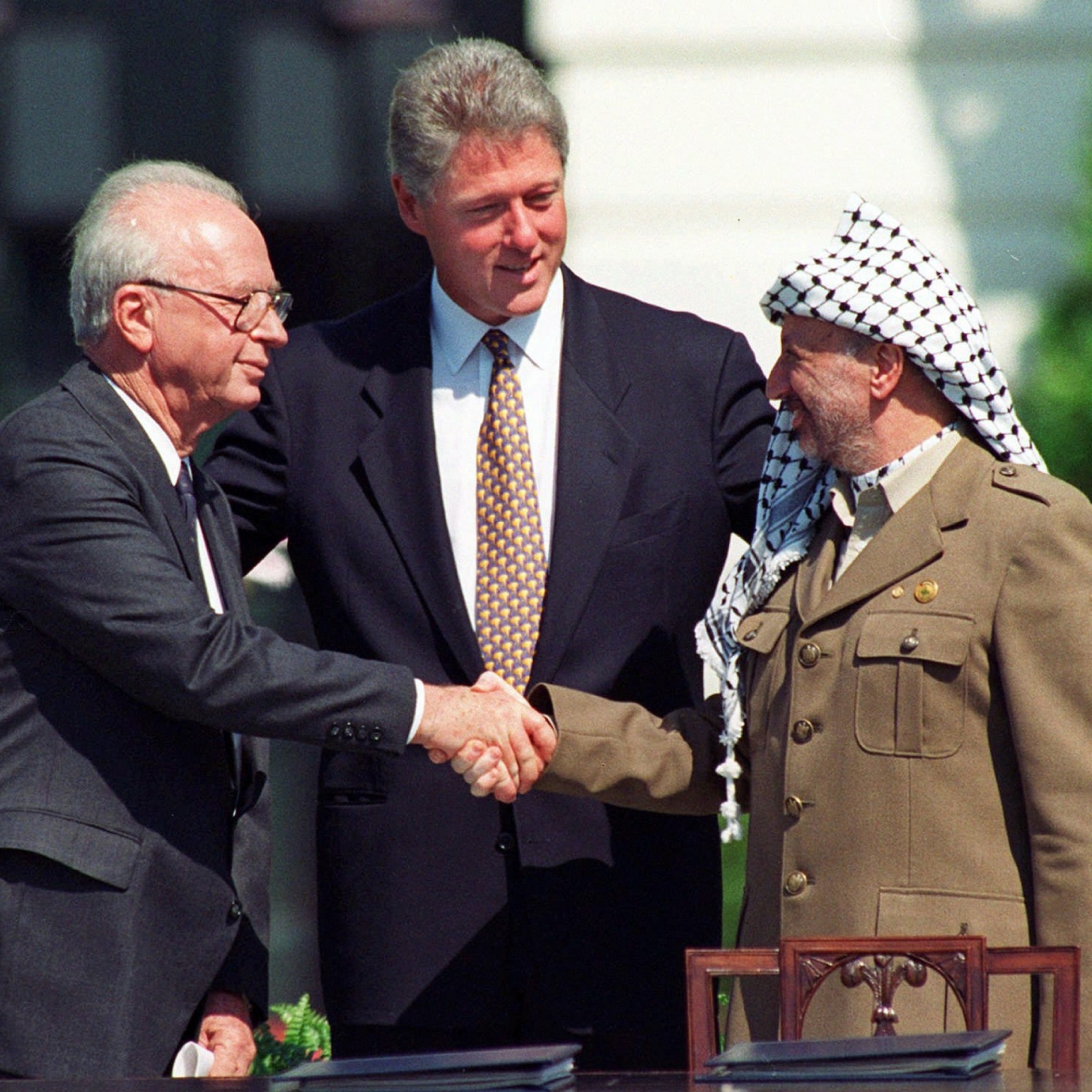
Front Burner
Will recognition lead to a Palestinian state?
00:25:47
<p>Last week, Canada officially recognized Palestinian statehood. </p><p>In explaining this decision, Prime Minister Mark Carney released a statement which read, "Canada recognises the State of Palestine and offers our partnership in building the promise of a peaceful future for both the State of Palestine and the State of Israel."</p><p><br></p><p>Just over a week later, U.S. President Donald Trump and Israeli Prime Minister Benjamin Netanyahu unveiled an alternative way forward: a 20-point plan they say would end the war in Gaza, but falls well short of creating a pathway for the creation of a Palestinian state. </p><p><br></p><p>Today, we're talking about the creation of a Palestinian state, as well as the promise, failure, and uncertain future of the two-state solution. </p><p><br></p><p>Our guest is Noura Erakat, an academic, human rights lawyer, author, and Palestinian-American activist. </p><p><br></p><p>For transcripts of Front Burner, please visit: <a h...
Loading summary
Transcript47 lines
- [00:00]
Blue Apron Advertiser
You open the fridge, there's nothing there. So what's it gonna be? Greasy pizza? Sad Drive thru burgers? Dish by Blue Apron is for nights like that. These are the pre made meals of your dreams. At least 20 grams of protein. No artificial flavors or colors. No chopping, no cleanup. No guilt. Keep the flavor. Ditch the subscription. Get 20% off your first two orders with code APRON20. Terms and conditions apply. Visit blueapron.com terms for more.
- [00:32]
CBC Announcer
This is a CBC podcast.
- [00:34]
Jamie Poisson
Hey everybody, it's Jamie. Before we start the show, I wanted to do something that we probably should have started years ago, and that is shout out some of the amazing people who listen to the show. This week. We got a beautiful email from Jameela about the episode that we did on autism and Tylenol. Jameela, the note was just so touching. Thank you so much for it. If you're new to the show or you don't follow us yet, please do. Just click that follow button and let us know how you think that we're doing. What you like, what you want to hear more of? Frontburnercbc CA okay, here is today's episode. I want to start the show today by reading a part of a statement released by Prime Minister Mark Carney. Here goes. Canada recognizes the state of Palestine and offers our partnership in building the promise of a peaceful future for both the state of Palestine and the State of Israel.
- [01:32]
Interviewer
Canada recognizing a future state of Palestine, that's new.
- [01:36]
Jamie Poisson
But the path towards it, often called the two state solution, is not. It's been this country's long standing position. Well, about a week and a half later, US President Donald Trump and Israeli Prime Minister Benjamin Netanyahu had their own declaration to make a plan they say Hamas would need to agree to in order to end the war. It contained only the faintest suggestion that one day maybe Palestinians would see statehood.
- [02:05]
Interviewer
Today we're going to talk about the.
- [02:06]
Jamie Poisson
Potential of Palestinian statehood and the conditions past and present to reach that goal. A goal that Israel remains very much opposed to.
- [02:15]
Host or Commentator
You know what message the leaders who recognize the Palestinian state this week sent to the Palestinians. It's a very clear message. Murdering Jews pays off. Israel will not allow you to shove a terror state down our throats.
- [02:32]
Jamie Poisson
My guest today is Noora Erekat, an academic, human rights lawyer, author and Palestinian American activist. I spoke to Noora last week before Israel and the US Released their Gaza plan.
- [02:55]
Host or Commentator
Foreign.
- [03:00]
Interviewer
It is really great to have you on the show. Thank you so much for making the time.
- [03:04]
Noora Erekat
Hey Jamie, thanks for having me.
- [03:05]
Interviewer
So as I mentioned Canada, the uk, Australia and France have now officially recognized Palestinian statehood. This is something that we've known was going to happen for some time now. But they have made clear that recognition will rely on a number of conditions being met. Among them, that any future Palestinian state would have to demilitarize that Hamas must play no part in the formation of a future government. And given the history between Israel and the Palestinians, what do you make of those conditions?
- [03:34]
Noora Erekat
So let me start by saying that these states are basically coming late to the party. Palestine has already been recognized by the General assembly, by a majority of states in 2012, which has given it the status to be able to accede to human rights and international treaties. That's given it the status to be able to participate at the United nations and to file petitions before the International Criminal Court. So what we're getting right now out of this state recognition, basically they're the late ones to the game. After some 150 states have already recognized Palestine might be more deflection than it is positive. And I would say in many ways is even less than symbolism because they're actually creating conditions that are making it worse for Palestinians. Indicated very overtly in what you share with us, the conditions that are placed are all placed on Palestine. After nearly two years of genocide, after nearly eight decades of settler colonial expansion, after almost six decades of prolonged military occupation, after the declaration and finding of apartheid, these states continue to single out Palestinians as the problem, rather than identifying these systems of oppression as the problem. And so far from getting what we need in this moment, which is accountability for war crimes, crimes against humanity, accountability for genocide, the prosecution of alleged war criminals, reparations to Palestinians, instead we get an articulation of what is to be done with the Palestinians further to make sure to either contain them or to remove them from being a problem.
- [05:18]
Jamie Poisson
I think that your answer to this.
- [05:19]
Interviewer
Is going to be no. But I just want to ask you straight, do you see the recognitions as carrying anything positive for the Palestinians?
- [05:27]
Noora Erekat
Well, let me surprise you and say yes. And I do think that the positive here is that for the first time, we're seeing a coalition of European states consolidate their efforts in order to confront the United States. The United States is, you know, this is its single most policy in order to provide Israel with unequivocal military, diplomatic and financial support in order to enable it to expand its settler colonial project without any international afference or being subject to any international norms, and has paved the way now as a partner in Israel's genocidal campaign to continue to provide it the arms necessary to do so, as well as the COVID through the form of six Security Council vetoes, in order to impede and end an end to the genocide. And so here we see a pivot from that in order, even however slightly right, at least, to challenge the United States. And the positive of that is to further isolate the US And Israel, which now stand alone.
- [06:32]
Interviewer
Canada has said that a future Palestine should be led by the Palestinian Authority following elections in 2026. And just I wanted to ask you about the PA specifically for a moment here. Why do they have such a complicated reputation among Palestinians? Are they looked at as a legitimate force by enough Palestinian people today?
- [06:53]
Noora Erekat
What these conditions that are being imposed are telling Palestinians is that you cannot determine your own leadership. That is what there's. You cannot vote and determine who you want to lead you. They're also saying that your country cannot be militarized. What does that mean? It's not about having a standing military as much as it means that we are going to be our Palestinian airspace, its territorial waters, it's, you know, fake boundaries, whatever have you. It's another way to continue occupation. Now, you want to get into the details of the pa. So the people need to understand that the Palestinian Authority was in a state which was a creation of the oslo Accords from 1993. And they basically, preceding that, the Palestinians were governed by the Palestinian Liberation Organization, which is a coalition of all its political parties, of which Hamas was never a coalition member. The PA is a total invention of the Oslo Accords that basically set up an administrative authority to be able to oversee the incremental, the supposed incremental transfer of Palestinian territory, which is under Israeli occupation, to Palestinian Authority, but which we've seen now in the present, Israel never transferred anything. They kept it all. And now the pa, which is supposed to be this administrative authority responsible for, like, picking up garbage, you know, delivering mail, administrating, you know, has ballooned to supplant the role of the Palestinian Liberation Organization, which represents Palestinians worldwide. And it's done so without electoral legitimacy.
- [08:34]
Interviewer or Co-host
Right?
- [08:35]
Noora Erekat
It doesn't have any electoral legitimacy to do so. And it's done so in a way that it is. It has been not only corrupt, but they have turned their arms that they've been provided by the United States against Palestinians. They have basically become a subcontractor of the Israeli state to protect the illegal settlements, to protect the presence, the illegal presence of settlers against Palestinians, leaving the Palestinians now not only dominated by Israel and an apartheid regime, but also dominated by a Palestinian police authority that has imprisoned them, tortured them to death their own Palestinians that has actually handed over Palestinians who are wanted by Israel to Israel. Essentially, they are not accountable to Palestinians. They have become a police state that is beholden to the whim of Israel in the United States. So, yes, Palestinians are also very antsy that not only are we not getting the, you know, the justice that we deserve in the, you know, in this genocide, ending it and then accountability for it and then our liberation, but on top of that, the only thing that's being proposed is to subject us to a police state governed by the Palestinian Authority, which has already been part of our oppression.
- [10:09]
Interviewer
You know, one of the main things I wanted to try and do with you today is, is to really try to understand the roots of the two state solution and its enduring appeal. And I know that much came before this. But a major milestone in the negotiation timeline is the Oslo Accord signed on the White House lawn. This is where we saw the first mutual recognition between Israel and the Palestinians that the other had a legitimate claim to a nation. And where we really saw the mainstreaming of the two state paradigm that continues to dominate discourse today. Oslo divided the west bank into zones as a temporary solution. But 30 years later, the map largely remains, even as settlements have expanded. How do you see Oslo's role and legacy in shaping the framework of a Palestinian state today?
- [10:57]
Noora Erekat
I think it's really important for folks to understand a few things about Oslo. Number one, the Oslo Accords or the Declaration of Principles which were signed in 1993 were basically an agreement to agree over the autonomy of Palestinians. It never, nowhere in the documents does it ever mention a Palestinian state or promise a Palestinian state. It promises autonomy, which is a form of derivative sovereignty that, you know, I think in Canada you would, you know, you understand NATO native reservations. Well, the native reservations are not sovereign. They have autonomy within the Canadian sovereign right. And that is what Oslo set out to do to provide Palestinians with some sort of autonomy over these non contiguous areas of land that never amounted to sovereignty. That is what the document promised to do. That is what the document has delivered and the agreement has delivered. And let's be clear, when people talk about a two state solution, even when they talk about it now, they're really only talking about a Palestinian state because Israel has been recognized as a state by the United nations since 1948. And in 93, the Palestinian Liberation Organization also recognized Israel as a state in exchange. Israel never recognized Palestine. They only recognize the plo. They recognize that the Palestinians are a Juridical people with the right to self determination, but never recognized the state. If you read through these documents, that they're a trap, they're a sovereignty trap that basically tells Palestinians that in exchange for being good natives that they will get certain privileges, incremental privileges in return that never amount to their liberation. How do they do that? How does the document do that? The most fundamental way that the document does this is by leaving out the five most significant issues which they are termed permanent status issues are refugees, Palestinian refugees, Jerusalem, water, settlements and borders. These are the fundamental issues that would shape the outcome of a Palestinian state, which was never meant to be. And yet they're described as final status issues without a timeline of when to even get to these final status issues. Using that ambiguity deliberately, Israel has continued to increase its settlements. It's now increased it by 200% in the west bank, has continued to take Palestinian land as we've seen across area C, as well as the building of the apartheid wall, which is taking 13% of the west bank, which has used this in order to basically say that refugees are completely off the table and has no international responsibility for it, which has used this in order to continue to take the large portions of water, leaving Palestinian farmers without access to water for irrigation, even access to underwater wells underneath their land, has used this in order to control the borders. But the siege of Gaza has been the control of Palestinian borders and their ability to travel in and out. It's done so under the veneer both of saying that it has no partner for peace, even as it's expanded its settler colonial encroachment, and at the same time saying that these are all security measures. But what is lost in this is that Palestinians are left absolutely beholden to Israeli whims. And in fact, as Palestinians have tried to reach to international law mechanisms to hold Israel to account, they've been accused of being of undermining peace. They have been accused every time they've gone to the ICJ of engaging in lawfare or you know, what they call international, you know, legal warfare. And so here you have the only nuclear power in the Middle east, the eighth most significant weapons exporter to the world, Israel, negotiating with a stateless people that don't have an airport and whose, you know, so called president can't travel without Israeli permission, right. And the only oversight to it is global superpower which provides unequivocal support to Israel. The two state solution or whatever. The illusion of creating a Palestinian state has basically become a talking point to deflect responsibility under international law and to pivot to politics. And so any calls now for a Palestinian state, frankly, are disingenuous because what we need is not more recognition of the state. What we need is to stem Israeli theft of Palestinian lands. What we need is protection of Palestinians from Israeli settler and state violence. What we need is international support in order to isolate an apartheid regime that is hell bent that the only solution for Palestinians, as articulated by bezaleel Smotrich in 2017, is that Palestinians can stay basically, you know, as supplicants. And that's the outcome that we're having today.
- [16:15]
CBC Announcer
It's okay not to be perfect with finances. Experian is your big financial friend and here to help. Did you know you can get matched with credit cards on the app? Some cards are labeled no ding decline, which means if you're not approved, they won't hurt your credit scores. Download the Experian app for free today. Applying for no ding decline cards won't hurt your credit scores if you aren't initially approved. Initial approval will result in a hard inquiry which may impact your credit scores.
- [16:42]
Phelan Johnson
Experian what kind of person takes on the law? Can they ever really know what they're getting into?
- [16:49]
Guest on See You in Court Podcast
A really tough looking guy came up to us and said, are you part of this gay case? My family started getting death threats. I wasn't able to go outside alone anymore.
- [17:00]
Phelan Johnson
I'm Phelan Johnson, host of See you in Court, a new podcast about the cases that changed Canada and the ordinary people who made history.
- [17:07]
Noora Erekat
This is David and Goliath.
- [17:09]
Phelan Johnson
We have here find and follow see you in Court. Wherever you get your podcasts.
- [17:17]
Interviewer
I want to talk to you about the settlements in particular. A wide range of policymakers, diplomats and politicians have argued that the most pressing issue here in many ways is the presence of those 700,000 settlers currently living in settlements scattered across land considered Palestinian by international law. Decades ago, the US Affirmed these settlements as illegal, but there's been a softening of the language around that over time. Obama referred to the settlement as, quote, not constructive to peace. Trump's current ambassador to Israel, Mike Huckabee, says there is no such thing as a settlement altogether. Quote, there is no such thing as a West Bank. There's no such thing as a settlement. Their communities, their neighborhoods, their cities. In their statement about recognizing a Palestinian state, the Canadian government talks about, quote, accelerated settlement building across the west bank and East Jerusalem, while settler violence against Palestinians has soared. And just if you could talk specifically about how prohibitive these settlements have been to Palestinian Statehood and why they have been able to continue.
- [18:21]
Noora Erekat
A lot of times we say settlements and audience members don't understand what that means.
- [18:25]
Interviewer or Co-host
Right.
- [18:26]
Noora Erekat
Essentially what it means is that either vigilantes backed by the state, protected by state violence, will take Palestinian land, build an outpost, kick the Palestinians off, and then build their own homes that continue to expand, that are exclusive, exclusive for Jewish Israelis. And would be Israelis. What do I mean by would be Israelis? Meaning that somebody in your neighborhood in Canada who converts to Judaism.
- [18:57]
Interviewer or Co-host
Right.
- [18:58]
Noora Erekat
Will now have the right to go live on those lands that require the permanent removal of Palestinians, the theft of their land and the use of violence against them and their families to achieve that. And that violence includes raids in the middle of the night. That violence includes deliberately terrorizing Palestinians so that they never resist. That violence includes military trials where children under the age of 18 are tried in a language they can't understand without a translator and without their parents and without adequate legal representation in what results in a 99% conviction rate. So settlement on its own doesn't capture the range, the structural violence, the material violence that Palestinians endure in, you know, expanding basically a colony, a settler colony, and the same settlements that are in the west bank that people can recognize are illegal. They are bemoaning them. Those are the settlements that Israel wants to build again in the Gaza Strip, which is a violation obviously of the acquisition of territory by force, which is a violation of the transfer of civilian population into territory that you occupy. But we should also understand that for Palestinians, most of whom are refugees, their original homes in what is today Israel were also settled in the same way. They were stolen in Haifa, in Lydia, in Ramla, in the Nazareth.
- [20:36]
Interviewer or Co-host
Right.
- [20:36]
Noora Erekat
Right now in what, you know, they call the Negev. This is Naqab, you know, in Jerusalem, in Al Uts. This is the idea here is that we say settlements, but I want to emphasize that it's a process that focuses on the constant, constant dispossession of Palestinians of their land, removal of them through killing or through forced population transfer, ethnic cleansing and the containment of the rest of them into reservations, you know, or autonomy holdings. And under the complicity of the international community which has refused to take issue with this, and under specifically US support for Israel and the Oslo framework, and now the complicity of the pa, Israel has been able to expand its it's settlements across the west bank today. You know, go to Bethlehem. Bethlehem is a Palestinian city. Today. My friends tell me that the cities around Bethlehem are being cut off from it. They are all being separated from one another so that Palestinians can't travel, so that Palestinians can't move, so that they are circumscribed further by these colonial settlements and the military infrastructure required to protect those settlers and the settlements. And we are not getting out of this trap. What happens to the Palestinians here? What happens is when the international community does nothing for them, they decide to defend themselves. And when they decide to defend themselves, whether they're, you know, targeting civilians, which is illegal, ipso facto illegal, or they're targeting military infrastructure, which they have the right to do under international law. Israel labels all of it as terrorism. And Palestinians are securitized. And now not only are they subject to, you know, the abandonment of the international community in order to, you know, suffer at the hands of, you know, this oppressive regime, now they're also being punished for doing the one thing that all humans would do, which is to try to survive.
- [23:02]
Interviewer
We have talked about the challenges with a two state solution, but I want to talk to you now about the one state solution. There is another vision for a single state that would be shared by both the Palestinians and Israelis, right? One where both people would coexist as equals under the law. But as much as the two state solution remains improbable, this idea of a single state feels, well, even harder to see. To consolidate 15 million Palestinians worldwide and 10 million Israelis into a single nation state. To welcome back nearly 6 million Palestinian refugees and allow for refugees to settle, to live together as equals in a nation where Jewish people would constitute a significant minority. That would be an enormous undertaking. On top of that, you would have to reconcile return repatriation, property rights, restitution. Is the prospect of a single state even more of a symbol or, or is this a feasible option that you think could ever come to pass?
- [24:05]
Noora Erekat
You know, Jamie, I just, let's just be clear. There is no way through but through. And at this point, because Israel has become drunk with impunity and it's led by, you know, non contested, like a far right, you know, religious zealot regime, it's. Anything moving forward is going to be extremely difficult and there is no way through, but through. People often think that the one state solution is, you know, more difficult than the two state solution. But why?
- [24:35]
Interviewer
Yeah, well, why? I mean, it just really seems like it. I don't, I, I would love to hear why you think not.
- [24:41]
Noora Erekat
I don't, I don't think not. Because I think the two state solution, you, the problem that we have is the problem of, of, you know, this, this entitlement, this Entitlement that this land that's inhabited by Palestinians, a land on which they constituted 90% of the people in the aftermath of the First World War and the establishment of the Palestine Mandate that wanted to see it transition to independence, where they were denied the right to self determination, has basically been marked as belonging to another nation that's not there but that lives abroad.
- [25:17]
Interviewer or Co-host
Right.
- [25:17]
Noora Erekat
That basically at any point in time, somebody not yet born, yet with no ties to this land, who decides to convert to Judaism, can have more rights than a Palestinian grandma who has been there and pre existed the establishment of the state of Israel. And so if we do not confront this entitlement, anything is difficult. Anything is difficult. When you look at how hard is it right now to remove settlers from the West bank, they're ready to take up. The settlers aren't necessarily beholden to the Israeli state and they're ready to take up arms against the Israeli soldiers. It's going to be incredibly hard. The one state solution, which is a future that says, look, there is no supremacy, there is no racial supremacy, there is no entitlement. We believe in a world where people belong to the land and the land does not belong to them. And so here I just want to emphasize that any future to forge is going to be so hard that partition as being easier is a fiction as being easier because the land has been eaten up. And so if we know that both ways forward are incredibly hard, then why wouldn't we push for the optimal future that we want for the rest of the world?
- [26:46]
Interviewer
Nora, thank you so much for this. I really appreciate it. Thank you, thank you, thank you for having me.
- [26:59]
Jamie Poisson
All right, that is all for today. I'm Jamie Poisson. Thank you so much for listening.
- [27:03]
Interviewer
Talk to you tomorrow.
- [27:15]
CBC Announcer
For more CBC Podcasts, go to CBC CA Podcasts.