← Full Body Chills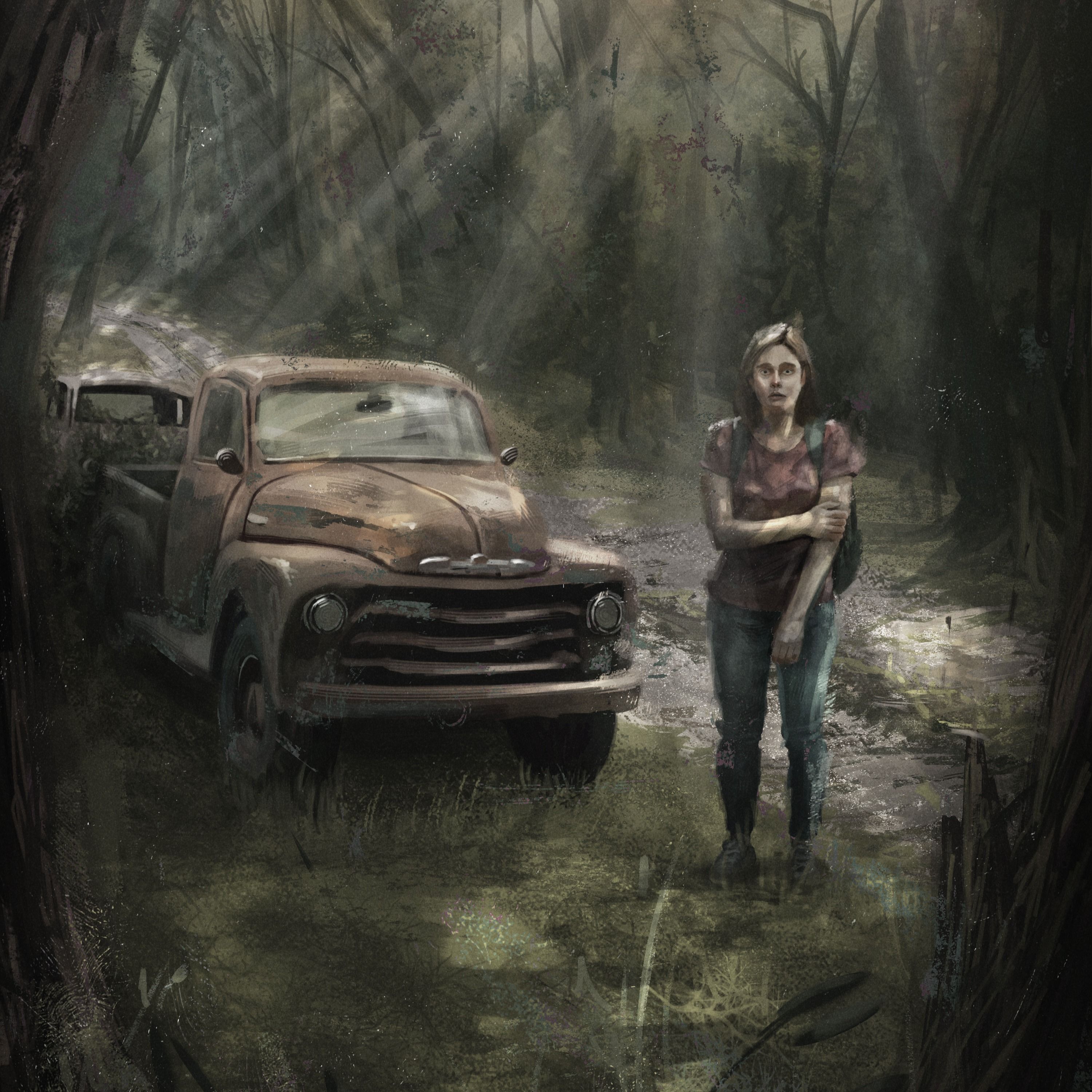
Full Body Chills
Over the Hill and Through the Woods
00:31:06
A story about the places one will go when love outlives a life.
Loading summary
Transcript19 lines
- [00:01]
Yvette Gentile
Every mystery has an answer, but some have way more than one possibility. I'm Yvette Gentile. And I'm her sister Racha Pecorero. Every week on our podcast so Supernatural, we invite you to explore the unknown and to consider the many theories behind each unsolved mystery. We'll guide you as you question the world you think you know through investigations into spine chilling hauntings, unexplainable encounters, strange disappearances, and so much more. So if you're ready to be haunted by stories of the unsolved and of the unknown, listen if you dare to so Supernatural every Friday, wherever you get your podcasts.
- [00:51]
Vitamin Water Announcer
New Vitamin Water zero Sugar Pineapple Passion Fruit is packed with vitamins just like the amount of peas we packed in that sentence, it's packed like your tote bag, the one you stole from your ex, or your overpriced apostudio apartment, or extra rushed rush hour traffic packed like your calendar, triple booked at five, of course. Grab a vitamin Water. Did we mention it's packed with vitamins?
- [01:21]
Yvette Gentile
You'll float too. From the director of it comes a horrifying new story set in 1960s Derry, Maine that explores the origins of Pennywise the Clown. Get ready to go back to where it all began. The new HBO original series, welcome to Derry premieres October 26th at 9pm on HBO. MA hi listeners. I have a story I want to tell you.
- [02:01]
Narrator/Storyteller
There was this doctor over at St.
- [02:03]
Mary (Main Character)
Augury's who would kill his patients.
- [02:05]
Brock (Deceased Husband)
Oh yes, it was madness.
- [02:08]
Mary (Main Character)
Aren't you afraid the light take might get you? I'm sorry I didn't listen to you.
- [02:14]
Brock (Deceased Husband)
That adrenaline.
- [02:16]
Mary (Main Character)
I want more of it.
- [02:17]
Narrator/Storyteller
I snapped. Totally lost it.
- [02:20]
Mary (Main Character)
He had no idea what was on those tapes. It was like a song. So gather around.
- [02:31]
Yvette Gentile
And listen.
- [02:35]
Mary (Main Character)
Close. My beaten down Ford slid off the side of the road. A web work of tree branches and great green fronds overtook the world, obscuring the sky, obscuring the ground, obscuring everything in a shade of slime green that made me sick. Maybe that's why it felt like I was jammed in the middle of a spinach smoothie, just waiting for unseen blades to chew my legs into a digestible sludge. I parked the car directly behind Brock's vehicle, and even more beaten down wreckage of deflating wheels and cracked windows and passenger doors held together with duct tape and loose screws. Firefighting didn't exactly pay the bills. It only made the news. I didn't get out yet. Instead, my eyes were performing their own version of Jumping Jacks first to Brock's car, second to the great green forest, then back again to the abandoned vehicle. Car. Forest, junker, green, green like swamp water. Back and forth my eyes jumped until my head began to ache, until the seconds and minutes and hours of the daylight became more important than ever. I didn't want to be in these woods after the lights were turned off. Fighting through pricker bushes and reaching vines for what felt like the hundredth time since leaving home some two hours before, I felt for Brock's letter, crumpled into the center cup holder. By now the note looked like it had survived a natural disaster. Lines like a leftover earthquake cut through the center of Brock's handwriting. Not that it really mattered anymore. I had memorized the message by the time I left our house and drove out to these distant woods. Mary, it's taken a while, but I'm finally writing back after all those tears.
- [05:29]
Brock (Deceased Husband)
You left on my doorstep. I never meant to leave you like that. But I'm back, Mary. I'm here, and I think I can glue back the pieces. We can do it together, Mary. We can be together. But I need you to trust me. I need you to meet me, and I need you to bring some things. I'll attach the directions to the bottom of this letter. But first I need you to grab.
- [06:11]
Mary (Main Character)
My eyes glazed over the rest of Brock's letter. The pure, unfiltered insanity was never lost on me. Even if I could forget what he was asking for, even if I wanted to pretend like our rendezvous wasn't in the middle of some great green jungle, how could I just brush aside Brock's own handwriting? Was it really him writing? Was it really him watching as I left all those tears on his doorstep? As I cried and cried on top of his grave? Brock's note crumpled in my hand before falling back down. You don't need proof to go searching for your husband, your dead husband. Just how you don't need proof to know that you still loved them. I'm coming, I thought, pushing open my car door and stepping out into the foreign oxygen. I'm coming, and damn it if I'm not scared. But Brock, if you're out there, I'll bring you home. It was crazy, I know it. But even crazier was the thought of doing nothing. Now that I was separated from the safety of my car, the forest leaned closer. I expected this stretch of unmanned land to ripple with the sounds of meeting birds, restless cicadas, the steady drone thrown from a congregation of dragonflies zipping from plant to plant. None of these sounds existed. A silent hush held sway over the trees. Something sinister lived on the other side of that great green fence, something hungry and silent and awaiting fresh meat. Brok was out there. The abandoned car in front of mine doubled down on this point. Somehow Brok was back from the land of the dead and the damned, and his junker towed with him. I thought back to when they lowered his casket. I never saw his body or what became of it after the fire, just like how I never saw what became of his rusted truck. I did a lap around the car, which had been sold after the funeral some years prior. All of the doors were locked, their handles warm from a sun which cared little for living or dead things. Poking my face up to the driver's side window, I spied a number of empty soda bottles and and napkins tossed on the floor. On both seats the upholstery was ripped to ribbons. Grayish fuzz bubbled out in many spots. The empty soda bottles looked as if they had grown gray beards. The steering wheel and gear stick were both covered in thick cobwebs. A meaty layer of dust stuck to the dash. I pulled my head away from this tomb with four spinning wheels. My sight set back on the forest only a dozen or so yards from where I stood. I took a few steps before I stopped, looking back at both cars one final time. Safety and only a stone's throw away waved at me from the roadside. I turned back around a minute later. The great green forest sucked me inside with a silent slurp. Brock's letter directed me once I entered the woods, to walk a distance of a few football fields. Yet in which direction did he mean? And how long was a football field? Now that I was here, I realized I should have dug up more research. But all I had on me was a cell phone without service and a bag of tools with the ingredients Brock had requested. Just what did I hope to accomplish out here anyway? Was I this desperate to believe a dead heart could somehow breathe? I tried finding a path or any semblance of human construction, but nothing looked concrete. Nothing, not a fallen tree nor trampled path gave any sort of direction. I was feeling more and more like a fool following a fool's errand. I searched straight ahead. Bush fronds ate at my ankles. Twigs crunched and munched under my feet. In every direction the trees bayed me forward with twisted wooden limbs. An unseen wind licked my face as if tasting fear for the first time. I'm coming, I thought, surprised at how calm my inner voice sounded even while fear squeezed my throat. I'm coming, Brock. And I'm going to find you. The forest sucked me deeper inside. I walked for what felt like at least an hour. Though my phone argued, only 15 minutes had passed since I lost sight of the road. I paused at the base of a hill, feeling my heart kick and riot in its chamber of muscle. Sweat fell in a puddle at my feet, and my breath snarled like a jungle cat's. Then a flash of silver caught my attention. I bent down, rubbing away dirt clumps from the face of something smooth. Suddenly the metal artifact shone a dull blue. And then I saw the two of us. In the picture, Brock and I were at a county fair, standing before hay bales stacked like a skyscraper. I punched the six digit passcode. The phone gurgled and warned that another errant password would be grounds for the penalty box. Trying to steady my hands, I retyped Brock's pin. It had been over three years since entering the numbers, though I somehow remembered the right combination on my second attempt. This time the screen melted. A red 2% symbol brooded at the top like a storm cloud. I clicked the messenger app, but there was nothing. Not even a single text toggling back to the home screen. My fingers hit the photos app. The red battery icon clapped to 1%. I'm not sure what I expected to uncover, if anything at all. My brain, like my heart, slammed at its box of fibrous muscle, leaving very little space for coherent thought. There wasn't time to sit and ponder why or how Brock's phone had joined the party. There just wasn't time to think. My trio of galloping organs, the brain and heart and fingertips, punched at the phone's gallery. Then at the last photo, snapped and saved to this failing piece of tech. I couldn't make sense of it. Not because the picture was blurry, nor due to poor lighting, nor the wild grip handling the camera. I couldn't make sense of it because rational thought wouldn't hold up in court. The photo showed my beaten down Ford saddled behind Brock's own junker. A great green forest hugged the frame, and there I was, standing on the edge of the road, staring into the lens. Me. As if I were center stage in a play I didn't know the lines to. Like a wrathful God, the 1% battery snapped to zero. The image of me by the roadside, a picture captured no more than half an hour ago, cut to black. I dropped the phone. This forest, these trees, this world of shadows and dim light. None of it seemed Natural darkness acted as a curtain. My iPhone swore the time to be a handful of minutes past noon. Yet this woodland promised a dark age. I began to think the stretch of green forest was green, not due to chlorophyll and science, but aged skin and fermented caskets that whatever walked amongst these woods walked without lungs or an oxygen mask. For the first time, I actively considered turning around. Just forget about Brok and his Lich love letter. I didn't leave, though. Instead, I adjusted the backpack slung on my shoulders and began the hike up over the hill.
- [16:07]
Yvette Gentile
Why?
- [16:09]
Mary (Main Character)
Because I think we hunt for answers even when we know the truth can kill. Because even if it kills a part of you, the best part of you, that's just being human. The hilltop blossomed nearer and nearer. Fear groped at my body. Sticky sweat trailed down the nape of my neck like an unseen tongue. I crested the slope, arriving at the cabin. In his note, Brock didn't describe the cabin, only where to find it. This was it. No bigger than a double wide trailer, the single story hovel leaned suspiciously to its left. Its weight groaned against gravity, and you had to wonder if one mighty push of wind would shatter the home into sticks and stones and broken bones. Unlike the rest of the forest, this patch of hill was barren of any tree or bushy fern. Perhaps the owner of the leaning house feared even a single shadow might crush his home. A trail of oddly shaped footprints led straight for the front door. It stood open, expectant. I considered calling out for Brok, then fought the urge. Something about the footprints caught my tongue. The footprints were more pointed and flat, almost hoof, like unreality. Never felt greater than when standing outside that cabin. Behind the door, I thought I felt eyes greedily ravage my entire body. Silence throbbed. I approached the home where a fat wooden door hung open. I didn't bother hiding my footsteps. Dirt crunched like a chewing mouth. Grass snapped under my feet. A numbness usually found at the bottom of a beer stein stole over me. I didn't care what happened any longer. I only wanted to reach the end of this woodland scavenger hunt and hope that the treasure left for me was still my husband. I took one step into the open doorway. Immediately I swung back around, choking down air. An inhuman stench festered from within the cabin. Holding my breath, I attempted a second dive. It felt as if even my eyeballs could smell the decay. I walked down a hallway barren of any furniture. Wood the color of the trees outside framed the walls, framed the ceiling, framed the floor. Dark stained wood and the smell of rotting carrion that's what held this cabin together. The hallway fed into a wide living area. There was a single cot stuffed in one corner and a swath of mismatched tables clustered the room. A number of faded and cracked windows let in the sun, though I almost wish they hadn't. A collection of stiff dried animals sat glazed on each of the of the tables. A raccoon missing its golden eyes. A brown bear with most of its fur hacked off, A male deer without any of its skin, and a female doe without a snout to sniff oncoming danger. Dozens of bird species missing a beak, missing a wing, missing a heartbeat. A pot bellied pig, its hoofs sticking straight into the air, stiff and lifeless, its plump belly dissected open to showcase a mass of intestines and oozing organs. There were more woodland carcasses stacked against the walls. Gobs of yellowing teeth stuck to the floor floor like peanut shells, and the air in this room made a slaughterhouse seem sterile, and Brok lay on the single cot stuffed in one corner. He stared at me with rodent eyes, bright gold things like leprechaun coins. A black snout careened from his face. Jagged, mismatching teeth leered from a mouth wrinkled with bits of animal fur. His skin was a dull, leathery shade, with green slashes of yarn tying each piece together. Rock? Rock, is that you? I said the words without any control or feeling on my lips. I couldn't believe it was really him. Hi, Brock. Alive and kicking cemetery gravel from out his shoes. I moved toward Brock, intending to embrace the man who had once upon a time dedicated his life to fighting fires. Heroes deserved their flowers, not just on their gravestone. And even if he was half beast, he was still half Brock. That had to mean something, right? I moved closer, and as I did, he began to change. It looked as if wires breathed under his animal skin. Long elastic tubes raised across Brok's face. More elongated strands blossomed on his hands and wrists. Something alive, something shaped like electrical lines, crawled beneath his skin. Pain must have fizzled through his reconfigured body. He ricocheted against the cotton, thrashing and beating his hands on all parts of his borrowed skin. His nails dug like mad into the meaty underbelly of a forearm. He scratched harder, one nail slicing a slit through the hide. A host of red coated worms fell from the open wound and onto the cot. More wriggled from the bleeding hole in Brok's forearm. The room was alive with the sound of slippery skin and pooling purple blood. Brok's eyes jumped to mine, then to the backpack hanging from my side like a forgotten gun in the midst of a shooting gallery. He opened his mouth, perhaps to shout and demand its contents. Instead, an army of beetles and pestilence flooded his tongue. A girthy crawler latched onto his lower lip, dangling like a piercing. He continued to vomit insects from a throat clogged with wings, his nose an oozing black honeycomb. You know that feeling when time slows and slows and nearly stops? When it seems like the world is suspended in a pink sticky solution? A cough syrup slowness. That's how it was, flinging the backpack onto the ground. Sticky time made it nearly impossible impossible to unzip the bag. Cough syrup slowness held my hand as it plunged into the open sack, then pulled back out slowly, so damn slowly, to unfurl an AED machine ready to kickstart a lifeless heart. Nervously, I shuffled forward, but Brock hammered his feet fist, then coughed another cloud of gnats toward the foul, upturned pig. Standing this close, you could see a delicate surgery had taken place. Where its heart should have sat now lay an empty nest of frizzled muscle. The organ lay next to a number of pinkish stained surgical tools. Without thinking, I reached for the heart, my hands growing slimy, purple and wet. The Brock thing on the cot became quiet, though a host of insects and blood soaked worms huddled around his body suckled at the exposed bits of his leathery skin. There was a smell to the place like a summer meat market. I held the heart in my hands, feeling how it was still warm. Then those golden eyes of his swiveled from the pulpy mass to the tools at my side. With a grimace that showed all of his broken fangs, Brok gestured, sneering, toward the surgical tray. Suddenly the cabin had converted into a transplant center, and I was asked to play the role of honorary surgeon. I paused and purple glue dribbled between my fingers. None of this was natural. Of course not. So what the hell was I doing? You aren't really him, I whispered, more to myself than the thing swarming with infection. Brock. My Brok wasn't afraid to die. I. I can't help you. I'm sorry. I can't. I dropped the heart. Its hands tried feebly to reach while tearing at its midsection, as if hoping it could stitch some of its humanity back inside. Those wasted arms of his wobbled two or three times before twitching. Limping and falling down. I stepped away from the bed, away from this room spoiled in death, away from those sun sour eyes still shining and bright. I continued backpedaling even as the dirt outside crunched beneath my feet and as the air no longer tasted of leprosy. It felt like I walked backwards all the way down the hill through the great green forest. Back, back, back, until I finally bumped against the back of my beaten down car. It wasn't until I was speeding a mile down the road that I stopped looking back and started looking forward. It's been over a month now. No other mail addressed from dead men has shown up in my post box. Thankfully, I've asked the postman to stop leaving any pamphlets from grocery stores, especially for sales on meat. Bacon just doesn't taste the same Anymore I thought all of this was over and put to rest. But then I stumbled onto your website today. I read about the miraculous letter you received from a wife who's been dead for the better part of 10 years. I read about your GoFundMe page and how you're hoping to gather enough money to make the journey halfway across the world to a forest I once visited too. A great green forest with a cabin tucked deep in its belly like a cancerous tumor. And I know I can't convince you to drop this fantasy. I know what lengths a broken heart will go to in order to regrow to recover. Even if you believed half my story, I don't think it would dissuade you. Because the dead speak in a language we can't resist. Because even a wife that is half human is better than a wife that is fully green with tree algae. At least that's what we tell ourselves at night when the bed pillow next to us grows cold with loneliness. But there's no hope hiding inside those woods. Only the sharp smell of death. That's what I need you to believe. All the animal hides and pig organs in the world won't bring back the one you love most. You can't skin and sew a mangled heart back from the grave. But you won't believe me. I know this because I'm alive and living, and only the dead speak in words we understand. Only the dead whisper stories we care for. Why do you think funeral services claim such an awesome turnout? We're drawn to the siren song of the dead and damned. So I'll wait here in my busted down Ford. Each morning if I have to. I'll sit in front of this great green forest anticipating your arrival, praying I can convince you in person what I'm failing to do online. Stay away from here. Please leave a dead silent heart alone. For God's sake, be human. Please. Full Body Chills is an Audio Chuck production. This episode was written by Joshua Bates and read by Jenna Pinchbeck. This story was modified slightly for audio retelling, but you can find the original in full on our website. I think Chuck would approve.
- [32:54]
Narrator/Storyteller
The 2026 Chevy Equinox is more than an SUV. It's your Sunday tailgate and your parking lot snack bar, your lucky jersey, your chairs and your big cooler fit perfectly in your even bigger cargo space. And when it's go time, your 11.3-inch diagonal touchscreen's got the playbook, the playlist, and the tech to stay a step ahead. It's more than an suv. It's your Equinox Chevrolet. Together, let's drive.
- [33:22]
State Farm Announcer
Insurance may all seem the same on the surface, but having insurance isn't the same as having State Farm. It's like getting a granola bar with a candle in it. When you wanted a three layer birthday cake, you wouldn't settle for just any dessert on your birthday. So don't settle for just any insurance. When it comes to getting the help you need, State Farm is the real deal. Like a good neighbor, State Farm is there.