
Podcast
Game Changers Silicon Valley
Hosted by Jim Connor · EN
We tell the stories about the innovators of today who will be the Game Changers of Tomorrow. Our guests come from a wide range of backgrounds, including scientists, engineers, researchers, entrepreneurs, investors and educators.
10episodes
Episodes
Newest firstAll episodes

Taking Tuition Off the Table
Feb 2500:23:45Tap to summarizeFor generations, higher education has been described as the great equalizer. But for many families, the cost of tuition has quietly turned that promise into a barrier. What happens when a university stops debating access and simply takes tuition off the table? And more importantly, what has to change in the educational ecosystem to make that kind of promise actually work—not just to enroll students, but to help them persist, succeed, and graduate? In this episode of Game Changers Silicon Valley, Jack Miner, Vice Provost for Enrollment Management at the University of Cincinnati joins me, to explore the Bearcat Affordability Grant—an ambitious effort to remove cost as the deciding factor in whether students from the community can attend UC. But this conversation goes deeper than free tuition. It looks at how universities must rethink retention, student support, co-op pathways, and early academic success if access is going to translate into real outcomes. This is a candid discussion about what it takes to redesign opportunity at scale—and why simply opening the door isn't enough. If you care about the future of higher education, and social mobility, this episode offers a clear-eyed look at what change actually requires.
Transcribe →
The New Rules for Graduates in the AI Economy
Feb 2300:16:43Tap to summarizeCollege is no longer just about earning a degree—it's about proving you're employable in a world shaped by AI. In this episode of Game Changers Silicon Valley, Jim Connor speaks with Dr. Marianne Lewis, Ph.D., Dean of the Lindner College of Business at the University of Cincinnati, about the challenges facing universities on the following: Training students to use AI models to conduct analysis and design strategies. Training students to think creatively about how to apply AI to address specific problems. How to articulate their strategy in designing an AI collaboration. As AI reshapes business, expectations for new graduates are changing fast. This conversation explores how business schools are rethinking education—and what today's students need to succeed in their first job and beyond.
Transcribe →
Why So Many Kids Still Can't Read!
Feb 1600:18:42Tap to summarizeDespite extraordinary advances in technology—and even the rise of artificial intelligence—too many students are still not learning to read at grade level proficiency. Weak early literacy doesn't just affect test scores; it shapes a student's entire academic future and limits opportunity long before careers even begin. In this episode of Game Changers Silicon Valley, Jim Connor sits down with Dr. Laura Saylor, Ph.D., Dean of the School of Education at Mount St. Joseph University, to explore the Science of Reading—an evidence-based approach that's changing how teachers are trained and how reading is taught. They discuss why reading is not a natural skill, how policy and research are driving real change, and why a new generation of teachers is giving reason for optimism. This is a conversation about what's broken in literacy education, what's finally changing, and what it will take to make sure every child gets a real chance to learn to read—and succeed.
Transcribe →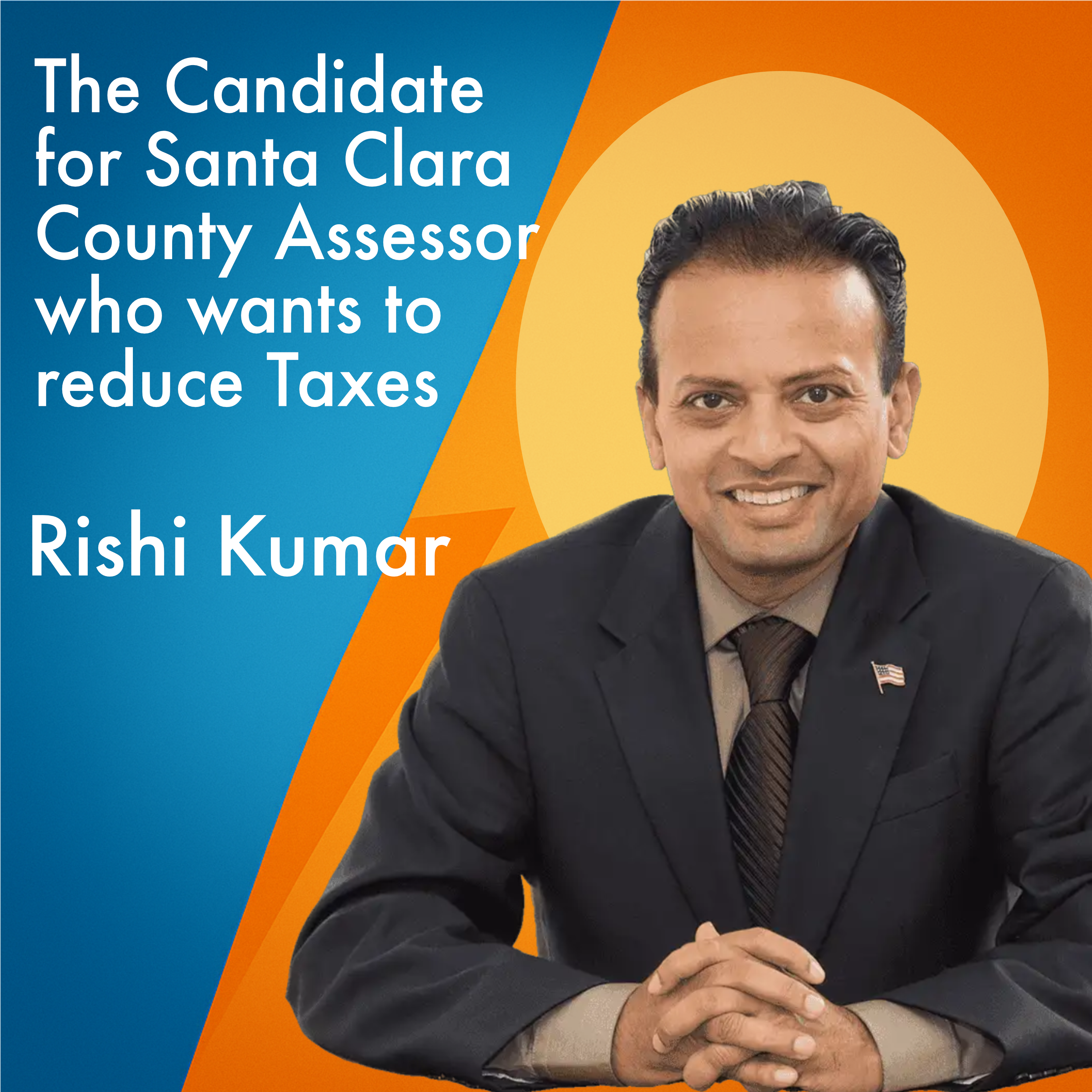
When Does a Tax Assessor Candidate Oppose a Tax Increase?
Oct 2700:21:30Tap to summarizeEvery election cycle, there's one race that flies under the radar. In Santa Clara County, CA, we have an election that affects every homeowner, every taxpayer, and every senior ... that race is for County Assessor. This election has a special twist that one candidate, Rishi Kumar, who has taken a strong position against a sales tax increase referred to as Measure A. Join us to learn why a candidate of County Assessor is agains an increase in taxes.
Transcribe →
Disruption Isn't Random
Oct 1300:22:19Tap to summarizeDisruption isn't random — it follows patterns that can be seen, interpreted, and even anticipated. Yet most companies only recognize those signals after the market has already shifted. The organizations that thrive are the ones that develop the discipline to study weak signals — small but telling changes that reveal how markets or industries are about to evolve. These signals may come from unexpected places: a change in consumer behavior, a breakthrough in technology, or an overlooked data trend that quietly rewrites what's possible. Aaron Bradley and his team at the University of Cincinnati are helping companies move beyond reaction toward strategic foresight. Through innovative tools and collaborative methods, their program enables teams to explore how single events — or converging forces — can reshape entire industries. Rather than waiting for disruption to arrive, these teams define four primary outcomes, simulate each one, analyze its ripple effects, and identify new pathways for adaptation and growth. It's a shift from managing slow, evolutionary change to anticipating potential disruption. In this episode, we discuss how companies are tracking the signals of pending disruption to define the future rather than defend the past.
Transcribe →
The Edge in Education!
Oct 30, 202400:14:52Tap to summarizeVirginia Cheung brings to the table not just policy ideas but personal stories that underscore the urgency of investing in the first five years of a child's life. With California spending billions on education and still falling behind, she asks a provocative question: Are we missing the most crucial years of a child's development? Cheung delves deep into the connection between a child's early environment and their long-term academic success. She argues that when children are exposed to stable family routines and communication tools—whether through language, art, or even sign language—it plants the seeds for lifelong success. Her stance on early literacy and behavior intervention emphasizing that a child's trajectory is often set long before kindergarten even begins.
Transcribe →
The Crisis at Big City School Districts
Sep 24, 202400:22:12Tap to summarizeI just sat down with Ann Hsu, a bold and fearless candidate for the San Francisco School Board, and let me tell you – this interview is unlike anything you've seen before. Ann doesn't mince words about the deep-rooted dysfunction plaguing our school district. From exposing how political ambitions have hijacked our children's education to sharing her no-nonsense strategies for restoring fiscal sanity and accountability, Ann delivers a candid, unfiltered take on the mess our public schools have allowed to become the norm. What makes Ann's journey even more compelling is her personal story as an immigrant. She experienced firsthand the transformative power of public education in America, and now she's on a mission to ensure that every student in San Francisco has the same opportunities. Her decision to start a nonprofit school after stepping down from the board underscores her relentless commitment to education. While others are content with the status quo, Ann is living proof of what it means to take action when the system fails. San Francisco voters face a pivotal decision this November. Do they want more of the same political maneuvering, or are they ready for a leader who brings a business-savvy, no-nonsense approach to turning this district around? Ann Hsu isn't just another candidate – she's a game-changer who won't stop until public education in San Francisco serves the people it's meant to serve.
Transcribe →
Financial Meltdown at the San Francisco Unified School District
Sep 19, 202400:23:58Tap to summarizeThe San Francisco school district is in the middle of a financial reckoning, forced to reconcile a significant drop in student enrollment with years of delayed responses to the growing operational costs. This isn't just a San Francisco problem—it's a glaring example of the challenges facing large school districts nationwide. Today's conversation centers on the hard truth: there simply aren't enough students to support the district's bloated infrastructure, and drastic measures are needed to avoid insolvency. In this episode, we dive into the heart of the matter with Supryia Ray, a candidate for the San Francisco School Board and a passionate advocate for real reform. The voters' response has been clear—they want a board made up of citizens who will make the tough calls to rebalance the budget, build a professional and capable teaching corps, and, most importantly, prioritize the needs of the students. This is a conversation not just about San Francisco, but about the future of public education across the nation.
Transcribe →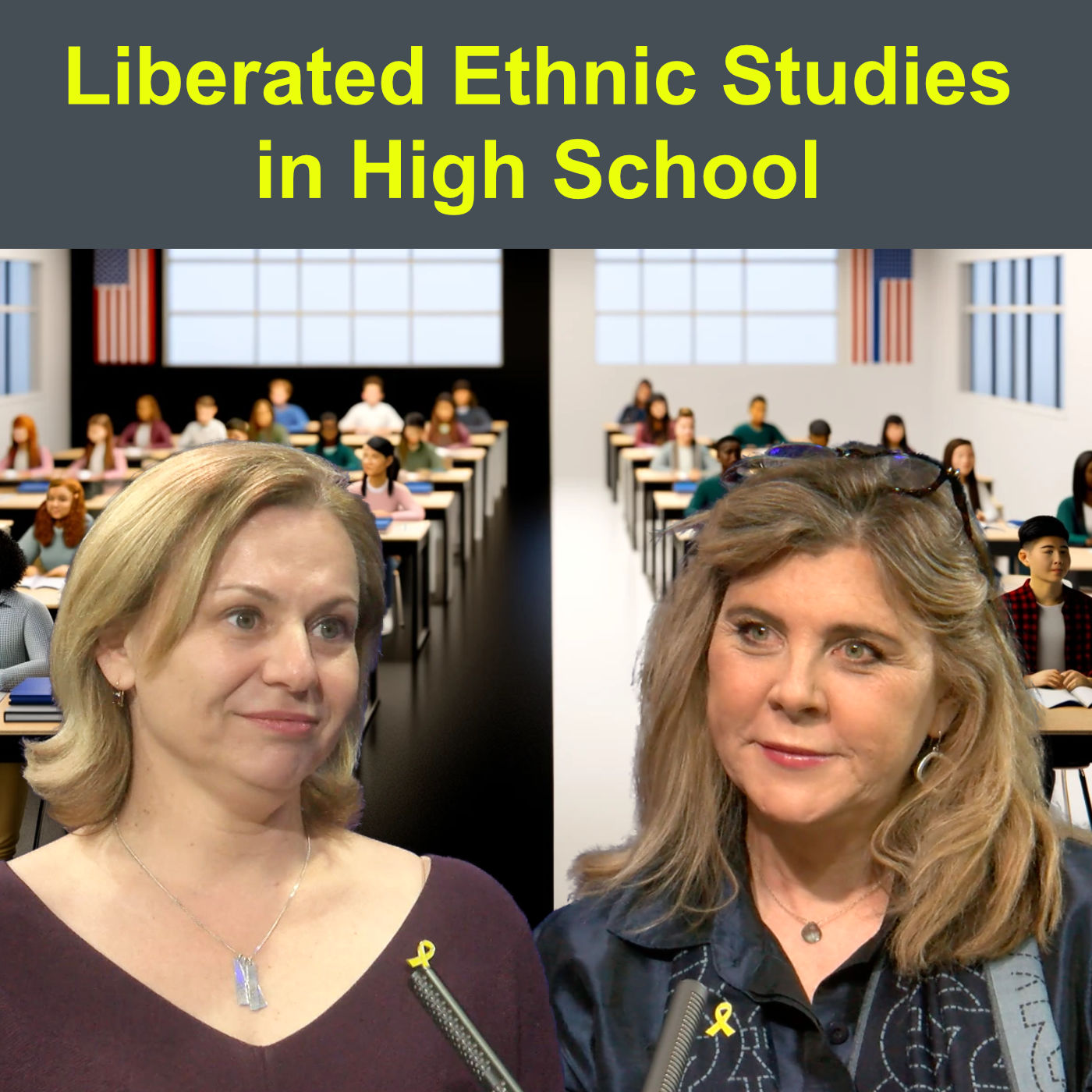
From Honor Rolls to Racial Roles: California's Educational Transformation
Apr 22, 202400:26:17Tap to summarizeCalifornia, once renowned for its high-performing public schools, is experiencing significant changes that raise concerns about the future of academic excellence. Notably, many high schools have eliminated honors and Advanced Placement classes, while some middle schools have stopped teaching Algebra in the 8th grade. A new state law mandates that all high school students must complete an ethnic studies course to graduate, aimed at enhancing cultural awareness and respect among diverse populations. However, the lack of a standardized curriculum has allowed for the introduction of "Liberated Ethnic Studies," which starkly categorizes students into groups of "oppressors" and "oppressed," based on race, creating a divisive and antagonistic classroom environment. My guests Diana Bloom and Christine Linnenbach, who bring their personal and professional experiences to the forefront of a pressing debate over the state's educational policies, including the controversial implementation of "Liberated Ethnic Studies" courses. Diana discusses the direct impact of these educational changes on her high school student, highlighting the embedded antagonism and the challenges it poses to the school community. Christine draws alarming parallels between the narratives pushed by "Liberated Ethnic Studies" and the racial doctrines of 1930s Germany, underscoring the dangers of such divisive educational frameworks. Their insights shed light on the growing discontent among parents and educators who are concerned with how these ideological teachings are influencing young minds and the broader social fabric.
Transcribe →
The Oppressor Class
Apr 9, 202400:25:03Tap to summarizeEli Steele's documentary, "Killing America," emerges from a profound silence into a loud, defining statement about the currents sweeping through American education. Born deaf, Steele transcends the boundaries of sound to explore the ideological framework shaping the narratives within schools across the nation. Through his lens, Steele investigates the dilution of meritocracy, the ascent of indoctrination, and the looming shadow of censorship, crafting a narrative that questions whether we are on the verge of educational decay or the brink of an academic renaissance. "Killing America" is not merely a film; it's an exploration into the origins of a divisive educational shift that categorizes students not by their achievements but by their racial identities. This shift from a focus on academic excellence to a binary of oppressors and oppressed has its roots in complex historical and social dynamics.
Transcribe →