← Get Sleepy: Sleep meditation and stories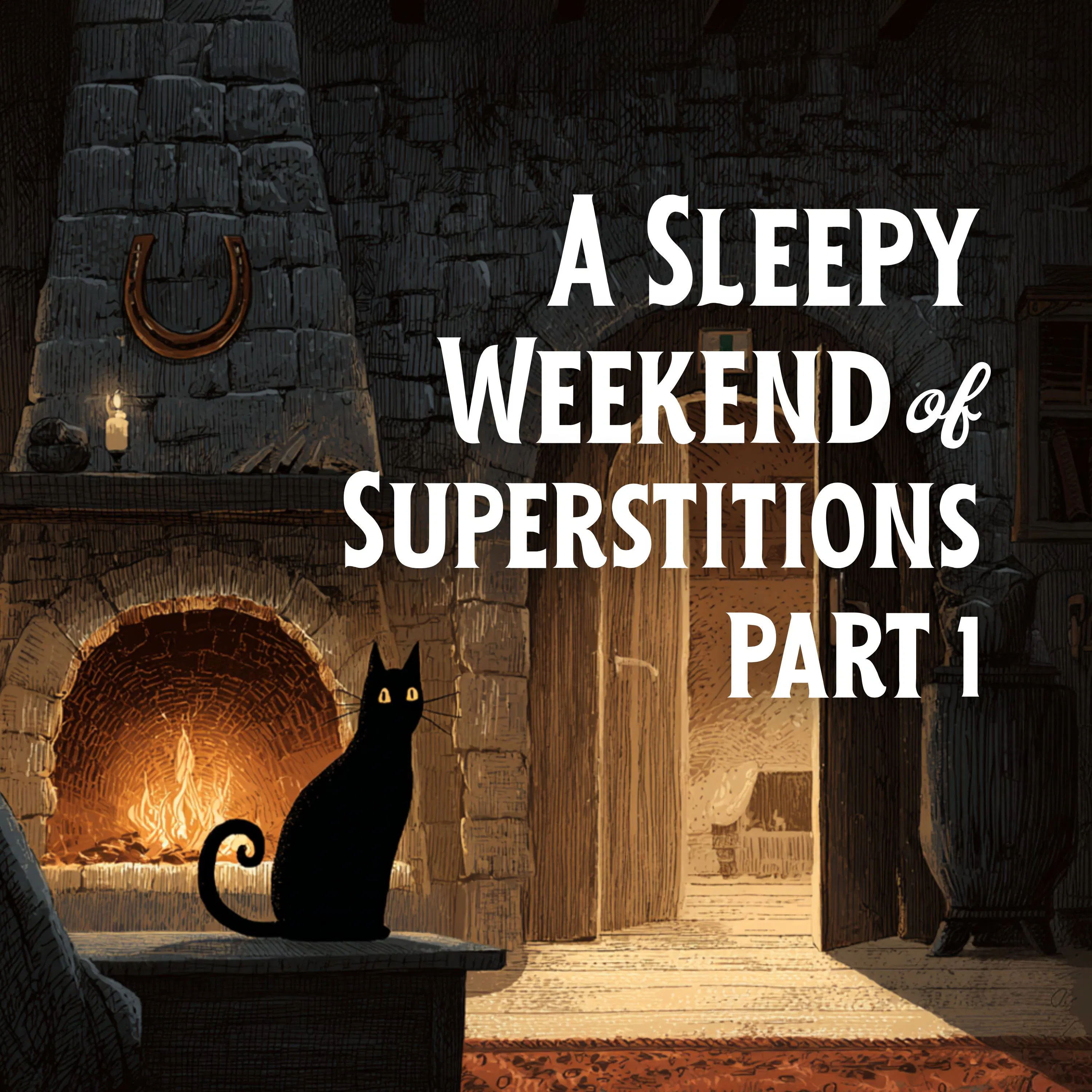
Loading summary
Transcript3 lines
- [00:01]
A
Get Sleepy is a production of Slumber Studios and is made possible thanks to the generous support of our sponsors and Premium members. If you'd like to listen ad free and access weekly bonus episodes, extra long stories and our entire back catalogue, you can try out Premium free for seven days by following the link in the episode notes. Now a quick word from our sponsors. This episode is sponsored by BetterHelp. It will be International Women's Day this month, a moment to celebrate women's strength and progress. We, along with the folks at BetterHelp, want to take a moment to remind women how much they matter and that therapy offers a space for them to take care of themselves in the way they deserve. I really am blessed to have so many incredible women in my life that inspire me every day and make me a better man. And I want to live in a world that empowers true equality and care for women everywhere. Part of that is ensuring women have a safe and accessible space to get the emotional support they need. With BetterHelp, all you need to do is fill in a short questionnaire to help identify your needs and preferences and they'll match you with a therapist. If you aren't happy with your match, you can switch to a different therapist at any time from their tailored recommendations. Your emotional well being matters. Find support and feel lighter in therapy. Sign up and get 10% off@betterhelp.com getsleepy that's betterhelp.com get sleepy. Welcome to Get Sleepy where we listen, we relax and we get sleepy. As always, I'm your host Thomas. Tonight, in the first episode of a two part Story will enjoy a relaxing stay at a unique hotel. The staff here are superstition experts from horseshoes to wishbones. They know all about the origins of some of the world's most interesting beliefs and they're looking forward to sharing their knowledge with you. You can hear part two of this story befittingly set in Ireland tomorrow night on what is St. Patrick's Day. It was all written by Chase and will be read by Chloe. So my friends, let's prepare for a good night's rest by inviting our bodies and minds to slow down, releasing the energies of the day and welcoming peace and relaxation. To do this, ensure you're lying in a comfortable position, preferably one that allows you to breathe deeply and fully. And with your eyes closed. Just try to picture yourself as you are right now. See yourself lying here on the bed, comfortable still and restful. And with each breath in, imagine that your body fills with the soft and peaceful energies of calm. You may even want to assign a certain color to this calmness, perhaps a soft blue, green or yellow, whatever feels right for you. And as you release the breath, exhaling fully, imagine that your body releases all of its stress and disruptive energies, of which you may again like to assign a color. Breathing in gently, the body welcomes the color and essence of calm. Breathing out fully, the body expels the color of stress or burden. Watch and notice in your imagination as your body empties itself of stress, tension, disruptive thoughts and sensations, And see how, bit by bit, with each round of breath, it gradually fills with calmness and tranquility. Allow yourself to be patient with this, taking time to relax and making space for the process to happen, that transition from busy wakefulness into deep, satisfying rest. Whenever you feel that you are ready, you can allow the breath to return to its natural rhythm and invite your mind to focus on our story, which will be soothingly read by Chloe. So just follow the sound of her voice as we travel to a beautiful castle in Ireland. This is where our story begins.
- [07:40]
B
As you slowly awaken from your slumber, you remember where you are. You have just arrived in Ireland for a weekend of rest and research and you're staying in a very special hotel, a castle in the countryside. The owner of the castle and the staff who work here are known for being very knowledgeable about an unusual subject matter. Superstitions. Apparently, within the castle walls, there's even a library filled with books about superstitious beliefs. There's nowhere else in the world quite like it. You're excited to learn more and to find answers to some of the questions that have been on your mind. For instance, why do we cross our fingers for good luck? And why are people superstitious and about black cats? Soon you hope to find out. The morning sun is seeping through your window, sending beams of light through your room which mingle with the glow of the fire. You're grateful for the fireplace, which crackles from across the room. The cosy warmth is just what you want when staying in an old castle like this one, and it gives you the pleasant feeling of being back in time. You watch the flames flicker and dance over the firewood as you yawn and stretch your arms above your head. The four poster bed is so comfortable that you consider sleeping a bit longer. But you had a wonderful night's sleep and have woken up well rested, so you decide to get up. To your surprise, curled up on the foot of your bed, is a black cat. You wonder how it got in. The cat begins to lick its paws as you get out of bed and pad over to the wardrobe. Once you are dressed for the day, you stand by the fire enjoying the warmth. Adjust. At that moment there's a knock at the door. You open it and see a woman you met only briefly last night when you were checking in. You remember that her name is Celia and that you were struck by her warm personality. Working at the hotel, she must meet hundreds of different people and yet there's something so genuine about her friendliness you feel as if you already know her. With a cheery Good morning, Celia explains that she's come to bring you breakfast. You invite her in and she sets the tray on the table. Everything looks and smells delicious. It's a traditional Irish breakfast accompanied by a glass of freshly squeezed orange juice and a steaming pot of tea. As you sit to eat, Celia walks over to the windows and pushes the heavy floor length curtains all the way open, revealing a cloudy day outside. She chuckles as she notices the black cat still curled up on the bed. His name is Felix, she says, and somehow he manages to slip into every room, but none of the guests seemed to mind, perhaps because he brings good luck. You tell Celia that you've heard the opposite, that black cats are meant to be bad luck. Celia smiles and says that she knows all about that particular superstition. If you're interested, she can tell you more. You're happy to have some company while you eat your breakfast, and of course you're keen to learn more. That's why you're here, after all. Celia scoops up Felix and sits in the armchair near the fire with the sleepy cat curled up in her lap. As she strokes his fur, she begins to tell you what she knows. Although it's a very old superstition, black cats haven't always been considered bad luck. In ancient times, some cultures revered cats. The creatures were domesticated In Egypt about 4,000 years ago, cats were considered sacred animals and often associated with the goddess Bastet. They were also beloved family pet. Archaeologists have even found cat cemeteries. Celia explains that the ancient Egyptians placed great importance on the afterlife. The deceased were often carefully mummified, while tombs were filled with helpful objects and written spells to help them navigate the world that came next. The same care was given to cats. They did everything they could to ensure that their beloved pets would be with them in the afterlife. On Celia's lap, Felix opens an eye. It's as if he's listening and quietly approving. Celia looks down at him with a smile and continues it's possible, she says, that the Egyptians were the first to believe that cats have nine lives. The number nine was sacred in ancient Egypt, so maybe this led to the association between the number and cats. Remarkable survival skills. Humans have long been fascinated by their ability to cheat death, how they can land on their feet even after a fall from a great height. Whether cats have nine lives or seven, as they say in some countries, they're certainly resilient. This likely explains how cats gained a positive, almost magical reputation. In addition, cats were seen as protectors of the household. They drove away the rats, which carried disease, and posed a threat to food supplies. No wonder cats came to be seen as a good omen. Now, says Celia, you're probably wondering, what about black cats, specifically? Once upon a time, black cats were considered lucky, too. There's a famous story about King Charles I, who reigned over Great Britain and Ireland in the early 17th century. It's said that King Charles had a beloved black cat who he believed brought him luck. Upon the cat's passing, the king lamented that his luck had run out, and indeed, the very next day he was arrested and tried for high treason. Celia admits that this story is more likely myth than historical fact. But it's interesting, she says, as it shows that black cats were sometimes thought to be lucky. The opposite belief, the superstition that black cats brought bad luck seems to have originated in Europe in the Middle Ages. This was when cats were thought to be the familiars or companions of witches. Celia glances down at Felix again, almost as if to reassure him that she doesn't believe in such a ridiculous notion. She goes on to tell you a story, story that likely contributed to the superstition. It's an old tale from Lincolnshire, England. One moonless night, a father and son came across a small creature that frightened them. When it darted across their path, the pair hurled stones at the poor thing, says Celia, shaking her head. Then they watched a black cat scamper out and limp its way into the home of a woman suspected of being a witch. The very next day, the father and son ran into that woman on the street, and they noticed that her injuries matched those of the black cat from the night before. From that moment on, all the black cats in Lincolnshire were suspected of being witches in disguise. And not only there, there were similar stories about black cats and witches all over Europe, which were passed down through generations. Thus the somewhat vague but persistent belief that black cats were bad luck spread across the world. But, says Celia, as she lovingly strokes Felix here at the castle, we believe that all cats are lucky creatures in Scotland, she adds, a black cat turning up on the doorstep is thought to be a sign of prosperity. And that seems to have been the case here, too. Ever since Felix arrived, they've had more bookings at the hotel. With that, Celia gently sets the cat down on the carpet. If you like, she says, come to the event that's taking place in the parlour this evening. It's an opportunity to learn more about superstitions. For now, though, she'll leave you to finish off your tea. As you head out of the room a little later, Felix trotting at your heels, you reflect on Celia's invitation. It sounds like the perfect way to spend the evening. Passing through the stone corridors of the castle, you find yourself thinking about superstitions and everything that Celia just told you. It's remarkable, you think that people are still superstitious about black cats to this day. Ancient beliefs come up in everyday conversations and even influence people's behaviour. Walking down the hall, you pass by a row of arched doorways, stopping a few times to peer inside. All the doors are open, revealing lavishly furnished bedrooms. There must be other people staying at the castle, but so far you have yet to run into a another guest. There is one detail that stands out to you. On each door is a horseshoe, and the placement seems intentional. Intrigued, you make a mental note to bring it up with your hosts and continue on down the hall. After leaving the castle, you spend a peaceful day exploring the surrounding countryside, a sweeping expanse of green fields and farmland. But as the clouds darken, you decide to head back before it starts to rain. You arrive at the castle just in time. Moments after stepping inside, the first drops begin to fall, and within minutes, the drizzle has turned into a downpour. You are lucky to miss it. Perhaps Celia was right about Felix bringing good luck. Later that day, after a delicious dinner, you make your way to the parlour. It's a large room, but the dim glow of the candlelight makes it feel smaller. Antique chairs and tables have been positioned around the fireplace, creating a cosy space within the room. It seems that while you were out today, some other guests arrived. A few people are gathered near the fire, including an elderly couple, a pair of friends and a young man who seems to be a solo traveler like yourself. Some people are sipping drinks while others are talking quietly among themselves. They look relaxed and happy to be here. You make yourself comfortable in a plush armchair. From where you're sitting, you can hear the crackle of the fire mixed with the soft patter of rain. It's lighter now, but shows no signs of stopping. You're so glad to be indoors in this warm, welcoming room. Like the other guests, you feel relaxed and content, but there's also a slight buzz of anticipation in the air. All of you are waiting for the event to begin. Just as you are glancing around the room, admiring the old furniture, you hear footsteps. A tall, bearded man makes his way towards the fireplace and stands facing the group. He introduces himself as Liam, the owner of the hotel. The castle has been in his family for generations. Liam is softly spoken and his voice has a lilting, almost musical quality. He explains that many things have been passed down through his family, not just the castle itself and the various heirlooms, but also stories, stories and superstitions One of Liam's ancestors was a passionate collector of supernatural stories. In particular, he was fascinated by superstitions and their origins, the history behind these peculiar beliefs. As well as acquiring an impressive collection of books, he liked to share his knowledge with his children. He would tell them stories of black cats, mirrors, magpies, and all the other superstitions that many people still believe today. Tonight, Liam will be taking inspiration from his great, great grandfather and sharing the origins of some common superstitions. For instance, says Liam, you've probably noticed all the horseshoes. He points to a metal horseshoe on the wall, glinting in the light of the fire. You hadn't noticed this one until now, but you remember spotting the horseshoes on the bedroom doors and wondering about the story behind them. The horseshoe, Liam continues, is one of the best known good luck charms. There's some debate about the exact origin of the superstition, but we know that in Europe the use of horseshoes was widespread by around the 10th century, and by this time they were already considered lucky. Early horseshoes were made of iron, a material that was believed to have magical powers. Apparently, it could ward off evil spirits so people could protect their homes by hanging an iron horseshoe on their door. Traditionally, seven nails were used to keep it in place. A seven was a lucky number. There's also an interesting legend about an English saint who lived in the 10th century. The story goes that Saint Dunstan, who was originally a black saint, once protected himself from the devil after a confrontation. The devil agreed that he would never enter a house with a horseshoe on the door. So the horseshoe likely became lucky for a number of reasons. Beliefs about iron and the number seven and the influence of folk tales. Also, says Liam, let's not forget the blacksmiths who made the horseshoes in the first Place blacksmiths used to be regarded as powerful, somewhat mystical figures because of their ability to work with metal. As you look at the horseshoe on the wall, you find yourself reflecting on this. Being able to manipulate metal is something people now take for granted. But in the past, it must have seemed truly magical. Now, says Liam, one more thing before we move on. As you can see, this horseshoe, like all the others in the castle, is pointing upwards. That's to keep the luck safely contained and to prevent it from running out. But in some parts of the world, horseshoes are positioned the other way, pointing down. This allows the luck to flow outwards so it can be shared with others. How interesting. You think the same symbol of luck, but interpreted in the opposite way. Liam now turns his attention to something on the nearby table. At first you can't see what it is, but then he picks it up and shows it to the audience. Some of you, says Liam, may have had the chicken this evening. And here's the leftover, the wishbone. He twirls the small white bone between his fingers, then goes on to explain. The scientific name is the furcula. It's the V shaped bone formed by the fusion of a bird's clavicles. However, says Liam, it's commonly known as the wishbone because of ancient superstition. Some think that it all began with the Etruscans, an ancient civilization that lived in Italy before the Romans. The Etruscans were known for their divination practices involving birds. By studying the flight and behavior of birds, they thought they could glimpse the future. It's said that one unusual ritual involved a hen. A circle would be traced on the ground and divided up into different parts, representing the letters of the Etruscan Alphabet. Grains were then placed in each part. Then the Etruscans would place their sacred hen in the centre of that circle. Wherever she pecked at the grain, that was the sequence of letters to interpret. A bit like a living Ouija board, says Liam with a smile. Even after the bird's death, it was believed to retain its special powers. People would hold onto the furcula and stroke the bone while making a wish. At least that's how the story goes. The ancient Romans inherited a lot of their beliefs and practices from the Etruscans, including bird divination. And perhaps it was here that the wishbone superstition began. It's thought that after a chicken had been eaten, Romans would take the furcula and pull it apart. Whoever got the larger piece would have their wish granted. Of course, says Liam, we can't say for sure that the Romans were the first, but it's certainly possible, given that they had rituals involving birds and bones. At some point, the wishbone superstition made its way to England, where the bone was called A Merry Thought. And later the pilgrims brought the superstition with them to the United States. The wishbone came to be associated with the turkey and Thanksgiving celebrations. Holding up the bone, Liam looks at the audience. Who would like to break it with him. An elderly lady sitting near the front volunteers. She takes the other end of the bone and pulls until it snaps, leaving her with the larger piece. As you join in with the applause, you wonder what the lady's wish was. But of course, as the superstition goes, if you tell someone your wish, it won't come true. She'd best keep it to herself. When the applause dies down, you become aware of the rain once again. It continues to fall outside, and it seems to be getting heavier. A few other people in the audience seem to notice too, as they turn their heads towards the window. Yes, says Liam, still raining at this time of year. You should always carry an umbrella. Having one with you is a good way to ensure it won't ra. But if you leave your umbrella behind, you're guaranteed to get wet. It's always the way. Liam picks up a large black umbrella that's leaning against the wall, then turns to face the audience. Should I open it? He asks. A few people shake their heads. That brings us to another common superstition, says Liam, that opening an umbrella indoors is bad luck. It's so deeply ingrained in society that nearly all of us avoid doing it. And if some someone happens to open an umbrella indoors, we may feel a twinge of unease. But why? Some believe that this superstition may have originated in ancient Egypt from artworks. We know that people of high status status, such as priests and royalty, used parasols for protection from the sun. One theory is that opening a parasol indoors away from the sun may have angered the Egyptian God Ra. Another theory is that there's a connection with the sky goddess Newt. The Egyptians believed that this goddess formed the heavens with her body. She arched over the earth, touching it with only her fingertips and toes, so her body resembled the shape of a parasol. So perhaps opening a parasol indoors was considered an insult to newt. It's amazing to think that there might be a connection between our superstition about umbrellas and the religious beliefs of the ancient Egyptians. However, says Liam, these theories are really just speculation. The true origin of the superstition is probably much more recent and more practical. Umbrellas didn't become widespread in Europe until the late 18th century. Before then, using an umbrella was considered a somewhat eccentric habit, especially for men, but the accessory gradually became popular, particularly after the invention of steel framed, collapsible umbrellas. These umbrellas were large and rather unwieldy. Their metal spokes could be hazardous, especially in a confined space. So to avoid harming people or damaging furniture, it was best to keep umbrellas closed while indoors. This, says Liam, is probably how the superstition developed from danger to bad luck. Like many of our beliefs and habits, it can be traced back to practical concerns. Far from being irrational, some superstitions make a surprising amount of sense. With that, Liam ends his talk. He thanks you all for listening, wishing everyone a pleasant evening and a restful night. After a round of applause, the other guests begin to get up, chatting happily among themselves as they wander out the room. It's still raining outside. You can hear the gentle pitter patter on the windows. You imagine that everyone will be staying in tonight. Soon you'll make your way up to to your room. You're looking forward to an early night in that comfortable bed, But you'll stay here for just a little longer, basking in the warmth of the fire and reflecting on everything you've learned so far. As your mind drifts, you wonder what tomorrow holds in store. Perhaps you'll visit the library and learn about some more superstitions. Leaning back in the armchair, you close your eyes and smile. You feel so lucky to be here and can't wait to see what the future brings.
- [43:57]
A
It. Sam. It. Sam.