← Get Sleepy: Sleep meditation and stories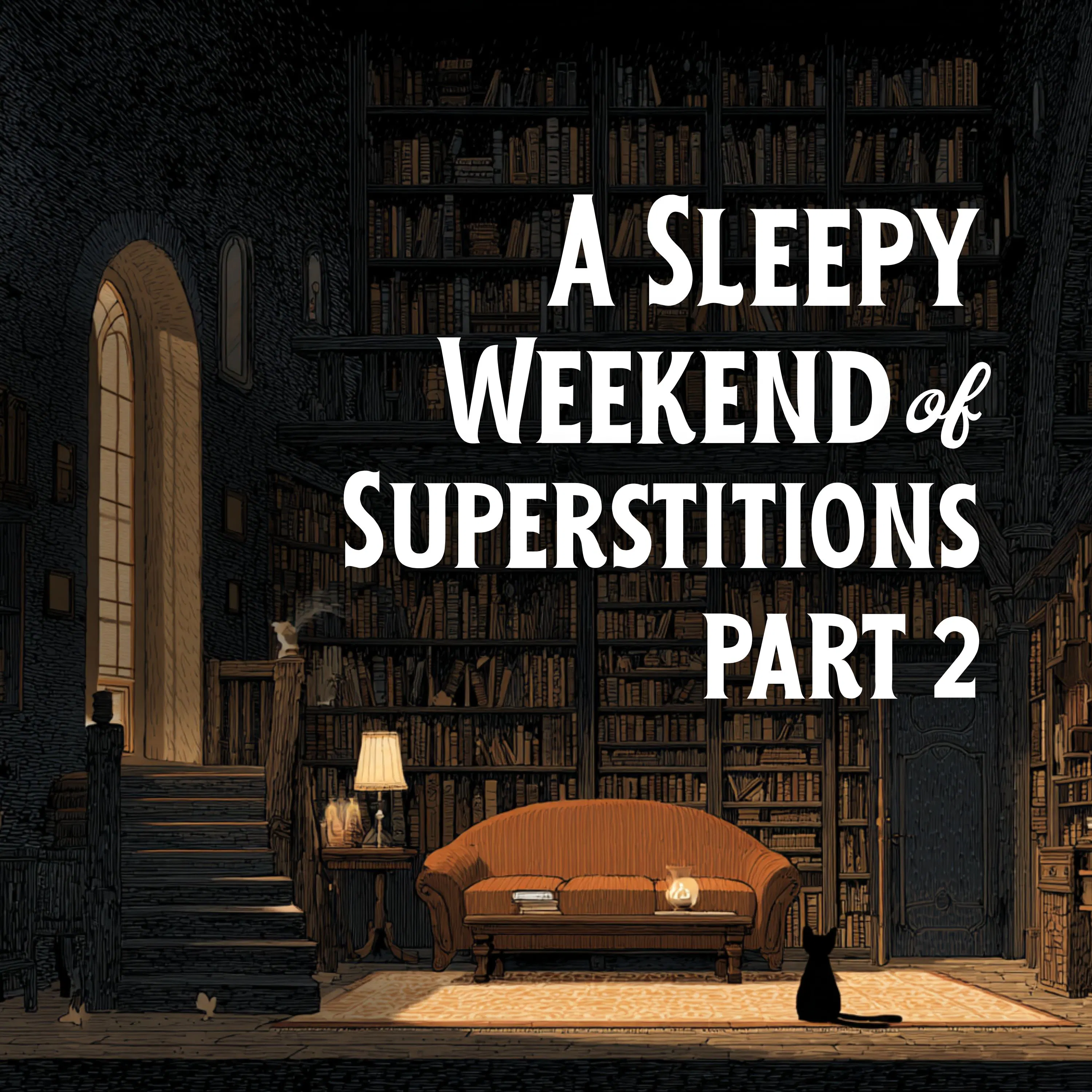
Loading summary
Transcript8 lines
- [00:01]
Thomas
Get Sleepy is a production of Slumber Studios and is made possible thanks to the generous support of our sponsors and Premium members. If you'd like to listen ad free and access weekly bonus episodes, extra long stories and our entire back catalogue, you can try out Premium free for seven days by following the link in the episode notes. Now a quick word from our sponsors thank you to Shopify for sponsoring this show There can be so many questions, concerns and doubts when you're starting something new. It seems like your to do list keeps growing every day with new tasks and unexpected blockers. So finding the right tool that not only helps you out but simplifies everything can be such a game changer. And for millions of businesses both brand new and well established, that tool is Shopify. With hundreds of ready to use templates, Shopify helps you build a beautiful online store that matches your brand's style, attracts the right customers, and gives you the head start you need to turn your ideas into a successful business. Shopify is packed with amazing tools to help you at every single step of the journey so you'll never feel clueless with any element of running your business. Start your business today with the industry's best business partner, Shopify. Sign up for your $1 per month trial at shopify.com getsleepy go to shopify.com getsleepy that's shopify.com getsleep
- [01:50]
Narrator
so good, so good, so good.
- [01:52]
Sponsor/Advertisement Voice
Spring styles are at Nordstrom Rack stores now and they're up to 60% off. Stock up and save on Rag and Bone, Madewell, Vince, All Saints, and more of your favorites.
- [02:02]
Narrator
How did I not know Rack has Adidas? Why do we rack for the hottest deal?
- [02:06]
Sponsor/Advertisement Voice
Just so many good brands? Join the Norty Club to unlock exclusive discounts. Shop new arrivals first and more. Plus, buy online and pick up at your favorite Rack store for free. Great brands, great prices. That's why you rack.
- [02:22]
Thomas
Welcome to Get Sleepy, where we listen, we relax, and we get sleepy. I'm your host Thomas. Thanks for joining us here on St. Paddy's Day for this special bonus episode. Following up last night's story written by Chase and read by Chloe in Part one, we went to a relaxing and unique castle hotel where the staff are experts in superstitions and they were more than willing to share some of that knowledge with you. Tonight, you'll continue your stay at this special hotel. It's a rainy afternoon, perfect for spending some time in the library and learning more about the origins of common superstitions. You'll discover why the number 13 is considered unlucky. Why we say bless you when someone sneezes, and so much more. But first, let's take a moment to prepare for our story by winding down for the night. Now you're lying in bed. You can accept the opportunity to rest. Your body will instinctively recognize that this is a place for relaxation, so give in to that comfort and enjoy the support your mattress and pillow give to your tired musc. And hopefully, if you're used to listening, to get sleepy at bedtime. This will also have become a trigger for your mind to quieten and to let go of any and all distractions. So allow your breathing to gently flow slowly in through the nose and softly back out through the mouth. You are safe, cozy and supported, and you can just listen along to Chloe's soothing voice and the bedtime story she's about to tell. Now picture yourself back in the hotel, a cosy old castle in the Irish countryside. You've just wandered down to the reception area, and this is where our story begins.
- [06:22]
Narrator
As you stand by the window in the hotel reception, you watch the rain fall. It's another grey day and it's been raining steadily ever since you woke up. You don't mind, though. It's nice to have an excuse used to spend a relaxing day indoors. And the sound of the rain is so soothing. The gentle pitter patter seems to follow you wherever you go. You've spent a lazy morning resting in your room before venturing out to explore parts of the castle. But you haven't yet found the library, and you'd like to take a look. It's said to have an impressive collection of books about superstitions, so you've come to the reception area to ask for directions. Standing behind the desk is Celia, the friendly member of staff who brought you breakfast yesterday and told you all about the black cat superstition. Once she's finished talking to another guest, you approach the desk and ask Celia about the library. The castle is huge and you haven't been able to find it. Celia says that she'd be happy to take you there herself. Her shift is over now, and as a matter of fact, she was just thinking of going to the library. She'd like to know more about superstitions too. Soon she'll be helping out with the events like the one you went to last night. She wants to be able to share her knowledge with the hotel guests. But first she needs to do some more research. Perhaps you can learn together, you happily agree. After all, this is exactly why you've come here to Learn all about the history of superstitions. Celia leads you through the long halls of the castle. Some you've explored already, while others are new to you. This place is a labyrinth, and you're glad to have Celia to guide you. As you walk, you admire the tapestries hung on the walls at random intervals. Each tapestry is intricately woven, a blend of green and blue, with symbols you aren't sure you have ever seen before. You point one out to Celia. She follows your gaze to a massive emerald green tapestry that hangs on the wall, emblazoned with what looks to be interlocking gold circles. It's interesting, she says, that after all these discussions about superstitions and luck, you've noticed this particular tapestry. Celia explains that this triangular symbol of overlapping shapes is the triquetra, an example of a Celtic knot. Some believe that traditionally it was a symbol of oneness or interconnectedness. There are those who wear it as a talisman, representing protection or spiritual growth. It could even be a kind of good luck charm. On the other hand, says Celia, perhaps the triquetra is simply a pretty design. You stand there for a moment, reflecting on your own interpretation of the golden symbol with its three interlaced shapes. Then the two of you walk on. You follow Celia up a short flight of steps and through a set of heavy wooden doors, entering a room so big you can't see where it ends. This might be the largest library you have ever been in. The walls have floor to ceiling shelves, all crammed with books. And on the far wall are a few stained glass windows. On a sunny day, you think the light in here must be incredible. But the rain creates a different atmosphere, a hushed, cozy feeling. Looking around the library, you spot a tall rolling ladder, the kind used to reach the books on higher shelves. In the middle of the vast space are several overstuffed chairs and cushy sofas, with a few coffee tables within reach. And to your right is an enormous fireplace with a roaring fire. You wonder when it was last tended to, as other than Celia, you haven't encountered any staff today. The thought fades away as you follow Celia deeper into the room. Once you reach the middle, you turn around in a circle, gazing all around you at the endless sea of books. There must be thousands in here, you think, and you find yourself at a loss for words. Celia says she can't remember exactly where the books on Superstitions are. She'll have a look at the shelves on the left. Meanwhile, you wander towards the right hand side. Stopping in front of a shelf, you run Your fingers over the worn leather spines, breathing in that wonderful old book smell. A woodsy scent with a hint of vanilla. It makes you feel calm and safe, almost as if you were in a sanctuary. With so many books, you have no idea how you'll find the ones about superstitions. As you skim over the titles, you hear a low rumble of thunder. Outside, the rain seems to be getting heavier. You're grateful to be indoors, and now you know you can really take your time. As you won't be going out anytime soon, you can spend a leisurely afternoon in the library. Just then, Celia calls to you from across the room. She's found the superstition section. You move towards her, curious to see the books yourself. In her hand, Celia holds a small leather bound volume whose cream colored pages are wrinkled and aged by time. The title is barely legible, so she must have a keen eye. Celia suggests that you sit together by the fire. If you like, she'll read some of the book to you. It will be good practice for her own superstition talks. Soon she'll be doing presentations for the hotel guests, just like the one you attended last night. You take a seat on the opposite sofa near the fireplace. Outside, there's another peal of thunder. The perfect weather to curl up by the fire. You think you're also looking forward to being read to. There's something so comforting about this river ritual. A bit like being a child again. Easing back into the cushions, you get comfortable. Celia carefully turns the pages of the book, then pauses as something catches her interest. Tree tag, she says with a smile. That brings back some memories. Then she begins to read from the book. In the children's game known as Treetag, the players touch the base of a tree for safety. This game has its roots in ancient superstition. At one time, trees were believed to be the home of benevolent spirits. So touching one was a way to call upon its spirit, helping to ward off evil. This belief was prevalent in Celtic folklore and there are similar traditions in cultures across Europe. But in the English speaking world, the game of tree tag and the expressions touch wood and knock on wood can most likely be traced back to pagan folklore. The source of protection is not the wood itself, but rather the spirits dwelling within. How interesting. You think even as children we take part in superstitious rituals without even knowing it. These beliefs are so deeply ingrained. Then something else comes to mind. The number 13. For as long as you can remember, you've known 13 to be an unlucky number. But you've never known exactly why you mention this to Celia, who looks thoughtful. It's true, she says. It seems that all of us are at least a little superstitious about the number 13. In fact, in the castle stables, the 13th stall is missing. The numbers go straight from 12 to 14. Also, she remembers once reading about a survey. Apparently, out of all the bad luck superstar, the belief about 13 is the one that makes people most uneasy today. Celia is also curious to learn more. She turns the pages until she finds the chapter and begins to read. The superstition of unlucky 13 is is an influential one. Many airlines skip the 13th row of seats on planes, while some airports skip the 13th gate. Worldwide, a good number of hospitals and hotels OMIT room number 13. And in the US many apartment buildings go straight from the 12th to the 14th floor. This last fact seems a bit ironic, says Celia. On the back of a US dollar bill, there's an incomplete pyramid with 13 levels. The bald eagle clutches an olive branch with 13 leaves and berries in one claw and 13 arrows in the other. And above the eagle's head are 13 stars. The design of the dollar bill is commemorative, a reference to the country's original 13 colonies. So, says Celia, it seems people are selective about when to be superstitious. There are times when 13 is considered unlucky, while in other contexts it has positive associations. And sometimes it's just a number. Having said that, there are those who take the superstition seriously. According to the book, there's even a word for the fear of the number 13 triskei decophobia. You're intrigued to learn the exact origins of this superstition. So Celia reads on. There's a centuries old belief that it's unlucky for 13 people to sit at a table. This may provide a clue to the origins of 13 being an unlucky number in general. At the Last Supper, where Jesus ate with his disciples, there were 13 people at the table. At some point, a popular belief emerged that Judas, the disciple who betrayed Jesus, was the 13th person at the table. In fact, the Bible doesn't specify the seating arrangement at the Last Supper, but the belief spread nonetheless, and given the powerful influence of Christianity in the west, we can see how this may have helped to create the superstition about the number 13. Another possible influence is a Norse myth, a tale about Loki, the trickster God. Loki was said to have crashed a divine dinner party, becoming the 13th uninvited guest. His presence led to chaos as he tricked one of Odin's sons into shooting another God with an arrow. However, the number 13 may have been introduced to the myth later, perhaps influenced by Christianity or other popular beliefs. We may never know the exact origins of the superstition, but interestingly, 13 is a significant number in many different cultures around the world. So perhaps the belief is rooted in something more universal the calendar. Traditionally, many cultures have used a lunar solar calendar. There are slightly more than 12 lunations or lunar months in a solar year, which means There are 12 true months. Sometimes a 13th month might be added to the calendar to stay aligned with the solar cycle. This may explain why the number 13 came to be seen as strange or even ominous in comparison to the regularity of 12. So says Celia, looking up from the book. To sum up, beliefs about the number 13 can be found all over the world and may have ancient origins. The widespread superstition about the number being unlucky is often traced back to the story of the Last Supper or Norse mythology, but it may be a much more recent belief, at least in terms of popular culture. You sit in silence for a moment, letting all this information sink in. Then a question comes to mind. What About Friday the 13th? Celia explains that in Christian tradition, Friday has often been considered a sad or solemn day because it was the day of the week that Jesus died. So if Friday was a day of misfortune and 13 was unlucky, it made sense that the two together should be particular, particularly inauspicious. Celia turns back to the book to find more information. Once again, she continues, there's no clear evidence for the exact origins of the superstition. Some think it may have begun with the arrest of the Knights Templar, a Catholic military order. They were arrested on a Friday the 13th in the year 1307 on the orders of King Philip IV of France. However, it seems that this date wasn't generally considered to be unlucky before the 19th century. Superstitious Victorians may have been the ones to put the two together. Unlucky Friday and unlucky 13 a day when it was best to lay low. Then in 1907, a novel called Friday the Thirteenth was published. It was a financial thriller about a broker creating panic on Wall street on Friday the 13th. The book may have contributed to the growth of the superstition. And then Cecilia There would have been other references in the media, creating a snowball effect. The more people are exposed to a belief, the more likely it is that they'll be influenced by it. And exposure works the other way too, Celia points out. If something is less familiar, people tend to feel less comfortable with It. In daily Life, the number 13 is less common than 12, for instance, which appears on clocks and calendars. Maybe that makes it easier for us to associate 13 with negative things, even if we don't actually fear the number. Just as you're reflecting on this, you feel your nose itch and let out a sneeze. Bless you, says Celia. Her response is so quick and so instinctive that you both smile. Celia already knows the story behind this tradition, so there's no need to look it up. In the book, she tells you that in some ancient cultures, people believed that the soul or life force resided in the head, so sneezing was thought to expel the person's life force. However, there were mixed beliefs. While some thought that sneezing was dangerous, others believed it to be healthy, or at least natural. For example, the ancient Greek physician Hippocrates recognized that it was a natural function, helping to clear the head and get rid of irritants. The ancient Romans would sometimes respond to a sneeze with expressions of goodwill, such as jupiter preserve you or Good health to you. And later, says Celia, the Christian expression God bless you became common. It's thought to have originated in the 6th century during a plague outbreak in Europe. The pope at the time, Gregory the Great, encouraged people to pray for the sick and perhaps also to say God bless you after someone sneezed. Either way, Celia continues, the expression caught on. But these days, saying bless you is mainly just habit or etiquette rather than real superstition. There are a few moments of comfortable silence while Celia speaks, skims the pages. The thunder has stopped, but the rain continues to fall, and every so often you catch a flash of lightning out the corner of your eye. Through the stained glass window, the fire is still going strong, and you feel a little drowsy from the warmth. Later, perhaps you'll take a nap. But for now, you're enjoying learning all about these different superstitions. Here's another one, says Celia, looking up from the book, crossing your fingers for luck, or in the hopes that a wish will come true. For many of us, this feels like a natural gesture, something we do without thinking and without questioning why. Celia tells you that this gesture is thought to have originated in Western Europe centuries ago, possibly even before Christianity. The tradition of crossing fingers used to involve two people. They would intersect their index fingers when making a wish. This gesture may have come from pagan beliefs about the shape of the cross, a symbol of perfect unity. The cross might have been associated with magical powers, such as the ability to ward off evil. Perhaps Benevolent spirits even lived in the cross itself at the point of intersection. So to make a wish, one person would place their index finger over the other person's finger, forming the shape of a cross. Over time, the gesture changed to its current form with just one person crossing their fingers. It became more widespread with the rise of Christianity in Europe. As crossed fingers came to represent the cross, it was a useful way for Christians to identify each other during times of persecution. A bit like a secret handshake. By around the 16th century, the gesture had evolved. Crossing one's fingers was a superstitious way to be protected from evil or ill health. And today, the gesture has lost its religious connotations and become a general symbol of good luck. As Celia looks up from the book, her eyes light up. She's just remembered something. A while back, there was a scientific study study about the effect of crossing fingers. Apparently, making this gesture can reduce pain. It's thought to have something to do with perception. By crossing our fingers, we might be able to trick our brains into feeling less painful. Beliefs and gestures can be surprisingly powerful. As you're pondering this, Celia glances at her watch and says that it's almost time to go. But before she leaves, there's something she wants to show you. From her pocket, she takes out a small silver coin. It glints in the firelight, and when you take a closer look, you can make out the image of a pig and her piglets. This is an Irish halfpenny, Celia tells you. It's her personal good luck charm. Throughout the world, there are many beliefs about coins and luck, including that famous rhyme, find a penny, pick it up, and all day long you'll have good luck. Celia explained explains that many years ago, she spotted the half penny on the pavement. She picked it up and put it in her pocket, and indeed, the rest of the day was a lucky one. She's kept the coin ever since, and she likes to to think that in some way it still brings her luck. There's also another reason why she's decided to hold onto it. The coin reminds Celia of her hometown, Dublin, where there's a famous old bridge known as the Ha' Penny Bridge. It crosses over the River Liffey, and once upon a time, pedestrians had to pay a toll to use it. The fee was a half penny, hence the name Ha' Penny Bridge. These days, says Celia, people can cross the the bridge for free, and half pennies are no longer used in Ireland, so coins like these are rare. She rubs the half penny between her fingers, then slips it back into her pocket. It's nice to have these reminders of the past, Cecilia. And we all have our own good luck charms. Perhaps you have one too. Now, she'd best be going. But you're welcome to stay in the library for as long as you like and to look at any of the books. And you won't be alone, celia says with a smile. Someone has arrived to keep you company. You follow her gaze and spot Felix the black cat curled up on the rug near the fireplace. The castles very own lucky charm has come to join you. You thank Celia for everything she's shared with you and say goodbye for now. Then you sink back into the sofa, letting out a deep sigh of relaxation. You've learned so much today and it's given you a lot to think about. Like how beliefs and superstitions evolve over time while keeping something of the original. They're like invisible threads connecting past and present. You wonder how these traditions will change in the future, if hundreds of years from now people will will still be crossing their fingers. As your mind wanders, you feel yourself getting sleepy. The warmth of the fire, the sound of the rain, and Celia's stories have worked their magic. Then you look at the cat, fast asleep and snoring softly. Perhaps it's time for you to take a nap too. You make yourself comfortable on the sofa and close your eyes. You can already feel yourself starting to drift off. After all these stories of luck. You feel safe and protected, And you know you're about to enjoy the most wonderful sleep.
- [42:36]
Thomas
It. It. It. Sam. Sa. It. Sa. It. Sam. It. Sa. It. It. It. It.