← Get Sleepy: Sleep meditation and stories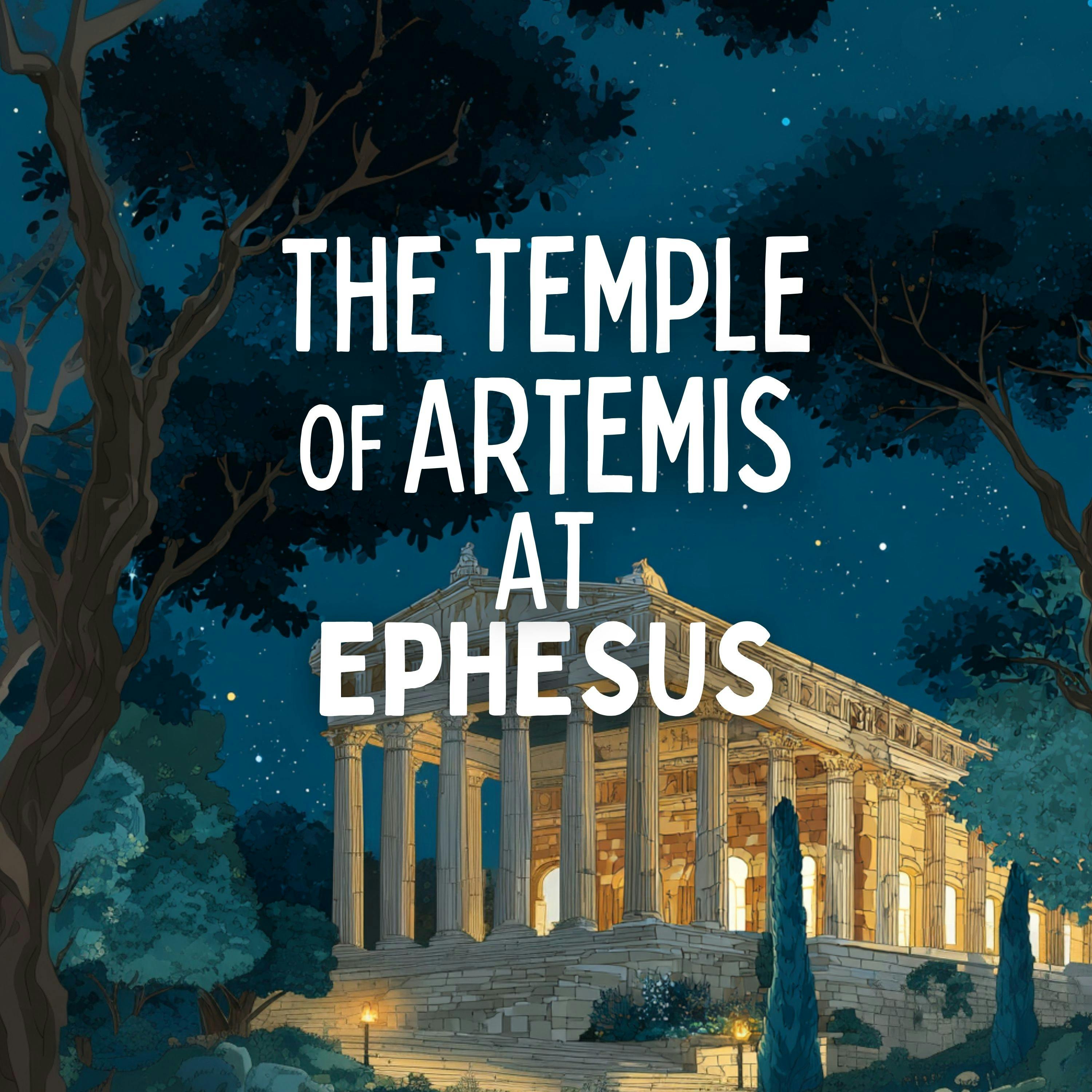
Loading summary
Transcript1 lines
- [00:01]
A
Get Sleepy is a production of Slumber Studios and is made possible thanks to the generous support of our sponsors and Premium members. If you'd like to listen ad free and access weekly bonus episodes, extra long stories and our entire back catalogue, you can try out premium free for seven days by following the link in the episode notes. Now a quick word from our sponsors before tonight's episode. I'd like to thank our amazing long term partner Shopify. Shopify is the all in one commerce platform behind millions of businesses around the world. From household names like Mattel and Gymshark to brands just getting started. They've been supporting this show for a number of years and I know that many of our listeners have realized their dreams of starting a business with Shopify by their side. Shopify's got you covered from the get go with beautiful ready to go templates to match your brand's style and AI tools to help with everyday tasks like enhancing product images or generating discount codes. Shopify helps you find your customers with easy to run email and social media campaigns and their award winning customer support is always there if and when you need it. Like so many others using Shopify around the world, now is your time to turn those dreams into reality and give them the best shot at success with Shopify. Sign up for your $1 per month trial and start selling today at shopify.com getsleepy go to shopify.com getsleepy shopify.com getsleepy for your $1 per month trial. Good evening and welcome to Get Sleepy where we listen, we relax and we get sleepy. My name's Thomas and I'm your host. Thanks so much for joining me as we conclude our captivating series Exploring the Seven Wonders of the Ancient World. It has been a joy to record all of these imaginative stories for you and I want to say a big thank you to Joe Steer for writing them. Don't worry if you've missed any of the other episodes, you can listen to this one now and return to the others at any time. Tonight we're heading to a place called Ephesus, an ancient city in what is today Turkea. We'll travel back in time to the first century BCE when the former Greek colony was in its classical Roman period. There we'll explore the Temple of Artemis, also known as the Temple of Diana. Before we get to our story, a quick reminder that you can enjoy listening to Get Sleepy completely ad free by becoming a Get Sleepy Premium member. Along with ad free listening, our Premium members can enjoy the entire catalogue of stories plus every single. Thursday we release a brand new Premium exclusive episode. Tomorrow night Nikki is back to read us one of her self written meditations where we'll embark on a journey to a magical place that exists solely for your rest and relaxation. For more information and to sign up to Get Sleepy Premium, go to getSleepy.com support and don't forget, you can also gift a subscription to GetSleepy Premium. With the festive season upon us, it's the perfect way to show loved ones and friends how much you care. You'll find the option to gift a subscription at that same link getsleepy.com support. Let's take a moment to relax and prepare for sleep. Close your eyes if you haven't already and get nice and cozy in bed. Adjust the pillows and blankets to your liking. This is a time for you to be comfortable, so let go of the day and allow yourself to rest. Next, take a deep soothing breath, inhaling through your nose and letting it out through the mouth. One more time, in through the nose and out through the mouth. As you continue to breathe slowly and gently, see if you can bring your attention to the here and now. To do so, notice how your body feels as it rests on your bed. Sense the points of contact between you and your mattress and enjoy the comforting feeling of your duvet or blanket cocooning you in this place of safety and peace. Then imagine for a moment that you are able to observe yourself resting in bed right now. Notice how you look from this observational perspective. Calm, cozy, peaceful, Deeply relaxed perhaps. Don't worry if you still need some time to get there and if a few adjustments to your position or your pillows and covers are needed, you can take whatever time you need to settle down. Give yourself thanks for taking the time to be present. You deserve this moment of respite for just being yourself each and every day. That is enough and you are enough. Now let's turn our minds to ancient times and make our way to Ephesus. This is where our story begins. Above you is a gorgeous blue sky, sapphire near the horizon and powder blue elsewhere. It's a clear day without a single cloud. The sun is an orb of golden yellow. You can feel the warmth of summer on your skin as you stand paused in a stone courtyard. The sunshine soaks through the fabric of your outfit. It wraps around you like a lovely warm shawl. You are dressed in the fashions of ancient Rome, a loose fitting garment that's soft and comfortable. The material is thin and ivory in color and it wafts in the breeze like a ship's sail. Your feet are tucked into tan leather sandals laced together with chocolate coloured thread. As footwear goes, the sandals are well made and stylish. They are as snug as slippers and very secure. You can feel the breeze flowing between your toes, beneath the soles of your feet and around the arches. You might imagine yourself barefoot if it weren't for the cushioning of the shoes. The air is ripe with the fragrances of fruit trees. Pomegranate, perhaps with fig trees or mulberry. The scents are a mix of sweet and spicy. Here in this coastal city, the salty sea air drifts over from the shoreline. The Ionian Sea is uniquely calming. It soothes the mind and invigorates the senses. You close your eyes and inhale deeply. There are few things as pleasant as a cool morning breeze, especially when you can also feel the warmth of sunshine on your skin. You're awash in feelings of blissful relaxation as you take in the sights ahead of you. In the courtyard, You stand before an enormous building, a stunning Greek temple surrounded by columns. The building is topped with a triangular gabled roof with figures sculpted across its pediment. The Temple of Artemis is positioned atop a hill accessible via steps that lead up from the courtyard. Its surface of white marble gleams bright in the sunlight, looking all the more pristine against the green lawns surrounding you. You've travelled back in time nearly 3,000 years to the ancient city of Ephesus. You're on the western shores of what will later become Turkey, where the Ionian Sea laps against the Peninsula in 25 BCE when your visit takes place. Ephesus already has a rich and storied past. The city has flourished under many different rulers as a colony of Greece, Egypt and now Rome. Ephesus is located in the region of Anatolia, sometimes referred to as Asia Minor. The Roman emperor Augustus named it the capital of the region when he came to power two years ago as the successor of to the famed Julius Caesar. It's thought that people have lived in what later became Ephesus from as far back as 6000 BCE. The city itself was founded sometime around the 10th century BCE. As the Greeks migrated across the European continent. There are different tales of how the city came to be, including one about a mythical prince. It's said that Androcles was forced to leave his homeland after his father, the king, passed away. He sought the advice of the oracle at Delphi and asked the seer where he should build his new city. The oracle told the prince, a fish and boar will show you the way he wasn't sure what she meant until he travelled eastwards to this very spot. One night, the prince was dining on grilled fish, sitting with his men by the warm campfire. A bush caught fire and a boar jumped out. And Androcles knew that he'd found the site of his city. Another legend has it that the city was founded by the race of female warriors known as the Amazons. They came to Ephesus when they were in hiding from Hercules, the renowned hero and demigod. Some believe that it was the Amazon warriors who built the first version of the temple that stands before you. They dedicated it to the goddess Artemis, a deity who held particular significance for them. Artemis was the goddess of the hunt and archery, as well as nature, wildlife, healing and childbirth. In many ways, she embodied the spirit of the Amazons, their strength and independence and their sense of freedom. This earlier version of the temple was destroyed sometime around 700 BCE. It was hidden beneath six metres of silt, sand and mud. When the area flooded, work began on a brand new temple under a Cretan architect named Cisiphron. It would pass hands many times over, taking more than a century to reach completion. It was finished around the year 440 BCE and was a grander version of the previous temple. It was bigger and taller, with more decorative sculpting. And it was the first temple in history to be made entirely of white marble. As a thriving Greek colony, which it was for some time, Ephesus was a hub of trade and culture. People travelled from Greece and beyond to see the temple of Artemis, the city's star attraction. This version of the temple would stand for some time, until 356Bce when it was destroyed by a fire. It's said that it was burnt down by a man named Herostratus, in the hopes that his name would live on through history. If the story is true, then Herostratus was correct. He achieved the notoriety he so desperately sought. The term Herostratic fame will be used millennia later to describe notoriety gained through crime or misdeeds. But not everyone agrees with this version of events. Aristotle, for instance, claimed it was burnt down by lightning. Some claim that Herostratus was actually framed by officials who secretly wished to rebuild the temple. The building's destruction coincided with the birth of Alexander the Great, who would later conquer much of Asia. It's said that Artemis wasn't there to defend her temple because she was overseeing his birth. In fact, it was in the third century BCE when Alexander the Great offered to pay for its rebuilding. The Ephesians declined with expert diplomacy, saying that it would be improper for one God to build a temple to another. It was the Ephesians themselves who would build it anew. By the time you visit in 25 BCE, this third version of the temple has been standing for generations. This is the building that you see before you, larger and more magnificent than those that came before it. It's the epitome of all that the Greeks are known for. Style, elegance, beauty, sophistication. In fact, the building on the hill ahead is what most people would imagine when picturing a Greek temple. The design is what's known as a peripteros, a common style of temple in ancient Greece and now Rome. This style of temple includes an outer portico or porchway surrounding the building. The perimeter is lined with columns around the walls of an inner chamber known as the cell. These white marble columns glow bright in the sunshine on all four sides of the massive temple. More are visible in a second inner row at the other side of a ceremonial passageway. It's said that there are a total of 127 columns, including the double colonnade around the inner building. Each is 15 metres tall and they are sculpted with an array of intricate designs. Looking now at the side of the building, you see colours moving behind the first row. They are the togas and tunics of men and women who wander slowly through the passageway. Much of Roman culture has been absorbed from ancient Greece and there are many similarities between the two civilizations. The Romans, like the Greeks, appreciate fine architecture. Many Roman buildings are inspired by Greek designs. Similarly, the Romans are devoutly religious. People's lives revolve around the gods and goddesses. They visit the temple to pay homage to the goddess Artemis, bringing gifts to lay at the foot of her statue. You see one lady, now in a lovely blue tunic. She's walking across the courtyard with with flowers in her hand. The bright yellow blooms are the colour of sunlight and their stems are light green. Keen to explore the interior of the building, you set off walking, following the same path of the lady. Your footsteps echo across the stone courtyard. Birds warble all around. Some fly above you, while others swoop down towards the lawns where trees and bushes have been planted in neat rows. You recognize the plumage of one bat, a white throated kingfisher hopping in the grass. It is chocolate brown with white feathers at its throat and its wings, back and tail are the most gorgeous shade of turquoise. The colours of its feathers are vivid in the sunlight, like the leaves of the pointed cypress trees nearby. Cypress trees have long since been considered Sacred. They're associated with Artemis and Diana, her Roman equivalent. The scent of the trees is fresh and aromatic, similar to that of fir or pine. You breathe in the fragrance while looking out into the distance where the rugged mountains rise far above the temple. There's something about the temple that provokes admiration, and it isn't just its size or its pretty location. Perhaps it's the knowledge of what it might have taken to build it, the efforts of so many over years and decades. The foundations of the temple are made of wood and compact charcoal and covered with a layer of animal skins. Soft foundations have proven more resistant, less likely to fall in the event of an earthquake. Marble has been cut from quarries throughout the region and transported to the site on carts pulled by oxen. Measurements had to be precise to ensure stability. Sculpted carvings needed to be no less than flawless. The Temple of Artemis as you see it now is one of the most impressive feats in the history of engineering. It is enormous, nearly 140 metres long and 70 meters wide. With the roof above the columns, it's 18 metres tall. If it were a modern building, it might be four storeys high. The lady in blue looks tiny by comparison as she walks up the steps towards the entrance. Her demeanor is that of someone performing a ritual. Her steps are relaxed, yet careful and deliberate. Your own movements, you realize, are a lot like hers. You're relaxed and mindful. As you approach the staircase, You pause at the base and gaze up at the temple, paying particular attention to the area around the top. A triangular roof is tiled in terracotta, and there's a decorative pediment top and centre. The figures of Greek deities have been carved and painted. They jut out lifelike across the pediment. Gods and goddesses appear striking in their tunics, especially against a backdrop of silver. Many wear fabric of rippling blue, some dark like the ocean, others light like the sky. Today, one goddess wears a tunic of creamy orange. Another wears a cloak of imperial purple. Beneath the pediment, above the tops of the pillars, is a large type of decoration known as a frieze. Here, the figures have been left unpainted, while the stone behind them is striking turquoise. The figures on the frieze look like Amazons, the warrior women of Greek mythology. They are as elegant in dress as any Greek woman, but some carry swords or bows and arrows. The images were carved by a man named Scopas, a renowned Greek sculptor with many works to his name. The turquoise blue background behind the figures has also been used lower down in details on the columns. It's the backdrop to images. Around the base of each pillar and also at the top, beneath scroll shaped mouldings, Figures have been painted in an array of colours, like those on the pediment, but a good deal smaller. They're bordered by bands of gold and silver at either side of ridges in the marble. The same metallic strips rim the large stone planters at the top of the stairway and also at the base. Sculpted cherubs fly against a turquoise background below blooming red rose bushes. You take in the fragrance of sweet, luscious roses as you begin strolling up towards the entrance. Their intoxicating fragrance follows you up the stairs, alongside the pattering of your footsteps. The lady you had been following is now quite far ahead of you. The back of her dress is barely visible between pillars. It's a blur of sea blue inside the inner temple. Surrounded by the glow of yellow gold firelight, The building seems to grow taller and wider as you ascend the stairs. The sunlight on your face is replaced by shadow. And it's cooler near the entrance. There's a stillness here that's uniquely soothing. A quiet reverence seems to hang in the air. It's by no means silent, but the atmosphere is like that of a museum or library. Ordinary sounds are elevated against the quiet, from the chirping of the birds to the delicate fluttering of the breeze. There's music too, coming from inside the temple. It sounds a little like a flute, yet slightly deeper. Though the sounds are distant, the notes are moving and persistent. You feel the music deep in your belly. It flows out of the temple's inner chamber alongside the smell of burning incense. The aroma of cinnamon is comforting and distinctive. It's spicy, yet sweet, both light and heady. The scents are stronger at the top of the staircase, where a thin column of smoke spills out between the pillars. But it's gone from sight almost as soon as it appears dispersed in the air outside the temple. You walk between columns on the outer row, gazing in awe at the sculpted detail. Decorations have been carved, polished and painted with expert precision and attention to detail. It's hard to imagine the effort and skill that would have been required to make even a single column, let alone what was needed to produce rows of so many, made to match their neighbours in such an exact way. Another row of columns rises up behind the first, the same as the others, but dimmer to the eye. You reach out a hand and place it on the marble. You feel the cornice of the stone even before you touch it. You trace your finger along the moldings. Those sculpted figures at the base of the column. It's a pleasant sensation on this warm summer's morning. The touch of cool stone against your skin. This shaded area is lit beautifully by fire pits, the source of the light that you noticed from the steps. Flames dance around the mounds of charcoal within large bronze bowls raised to waist height on stands. The flames cast a sheen of gold across the walls, making the cool, dark stone appear cozy and warm. It highlights the silhouette of your shadow in places walking beside you. As you wander across the passage, The light of the fire flickers on the columns in places. It lights up the details of the figures and makes the colors of their attire stand out even more. You walk towards the doorway that leads into the cellar, the inner chamber at the center of the temple. It's a yellow gold rectangle cut out of the walls. A room that radiates inviting firelight. The cellar is part corridor and part royal hallway. It's as opulent as a palace, but as peaceful as a church. The sound of crackling fire echoes across the walls. It pops and fizzles beneath. The sound of the. Fire pits are lined up in rows against the walls between marble columns at both sides of the room. The ridges on the columns have been beautifully decorated, alternating gold and silver. They stand on a stunning mosaic floor where geometric patterns border images of the gods. You gaze at the marble as you begin walking, step by step, down to the center of the room. It's here that you finally see where the music is emanating from. There is a man playing an aulose. The aulose is best described as a double reed flute. It's a V shaped instrument blown at the mouth. The musician holds both sides of the V, moving his fingers across the surface and filling the room with that unique sound. The notes are mellow and graceful like a flute, but they're deep and penetrating, almost like the sound of bagpipes. They produce a melody that is rich and otherworldly. Notes endure long after they've been played. Again. You feel the music deep inside you. It vibrates through your body, up from the floor. Your footsteps are matched to the tune's slow tempo and to the gentle rhythm of your own natural breathing. You stroll towards an altar where incense is burning, sending a thin cloud of smoke rolling through the temple. Waves of sweet cinnamon waft gently towards you, filling the air. The sweet, smoky fragrance adds to the ambience, especially when combined with the music of the aulos. And the fire pits continue to shine bright, making the columns of silver and gold glitter mesmerizingly. You're joined in the cellar by a dozen or so people. Though the room is so peaceful that you might as well be alone. The men and women seemed to tiptoe across the mosaic floor, wearing thoughtful expressions of prayer and contemplation. One of those people is the lady you saw earlier. You walk behind her once again down the length of the chamber, past the stone altar and the musician. No expense has been spared in the creation of the temple. No tiny detail has been overlooked. The most famous sculptors used the finest materials to make the marble reliefs that you see behind the pillars. On one side, you see a figure who must be Nyx. The goddess of nighttime has been carved and painted. She flies across the stars in a golden chariot, a quadriga with four majestic horses. On the other side, Artemis is just as magnificent, goddess of the hunt, wildlife and childbirth. She's poised and graceful with her bow and arrow before the crescent moon, with a deer as her companion. The deity's eyes seem to meet your gaze, and for a moment you wonder if she's more than just stone. You feel as though the goddess is welcoming you to her temple. A sense of safety and protection washes over you. But the feeling you get now looking at the relief pales in comparison to what comes next. Soon you find yourself gazing up at a giant statue, the goddess Artemis herself, standing against the back wall of the temple. This giant statue that towers above you is unlike any you've seen before. Its surface is wood instead of marble, and the design looks closer to something that would be found in ancient Egypt rather than Greece. Every inch of the statue is covered in tiny details, whether etched, carved, bejewelled or painted. Artemis dress is shaped like a sarcophagus, and on her head stands a towering headdress. She looks every bit like the goddess of the wild, with carvings of animals across the fabric of her clothes. There are griffins on her headdress, lions at her forearms and bulls, bees and sphinxes all across her skirt. Eggs or beehives protrude out across her chest above tiny gilt mouldings of crabs. The neckline of the deity is dripping with jewellery, rubies, sapphires, emeralds and more. Her dark blue gemstone eyes shine in the firelight, and the whites of her eyes are inlaid with muted ivory. This type of statue is unique to the region. It's a distinctly Ephesian version of the goddess. Its beauty and stature seem to command respect. The craftsmanship alone provokes feelings of awe. Contours and etchings glow in the firelight. Gemstones sparkle in every color of the rainbow. Gifts and offerings are laid out around its base, signs of devotion to Artemis. People have traveled from far flung places in order to make a pilgrimage to the goddess. At Ephesus, You see decorative goblets and containers full of olives, vats of golden barley, and jugs of fine wine. There are mounds of gold coins bearing the face of Augustus. And etched wooden boxes adorned with jewels, Oils and perfumes have been laid out for the goddess, as if she might reach down and dab them on her skin. One is a liquid that smells sweet like roses. Another looks like an ointment and is flecked with lavender. The scent of the lotion invigorates the senses. It's sweet like the roses, but wonderfully herby. Flowers are also scattered around the statue in gorgeous ceramic bowls, pots and vases. You've lost sight of the lady you were following earlier, but you recognize her flowers at the foot of the statue, the bright yellow crocuses are impossible to miss. Their sweet, fragrant petals are as dazzling as the sunlight outside. You take in the fragrance breath by breath, allowing the myriad sense to envelop you completely. You surrender to the magic of the goddess and the temple, feeling more and more as if you're dreaming with each passing min. You stand here for some time, meditating on the statue, having a silent conversation with the deity before you. Time is forgotten, as are your surroundings. People come and go beside you without you paying any notice. Everyone but the lady in blue, who returns to the statue for one final prayer. Your legs are heavy as you follow her out along the length of the chamber and down the steps at the entrance. Outside the temple, daylight has faded and the sun is hidden behind a smattering of clouds. It's only late morning, but it looks closer to evening with a blissful warmth. Now, in the peak of summer. You walk across the courtyard and onto the lawn, noting how your footsteps are muted on the grass. You settle in a spot in the middle of the lawn, with a view of the temple and the mountains behind it. It's incredible to think of what this building has endured in each of its forms across the millennia. This final version will stand for six centuries, surviving countless wars and takeovers in the region. Even after the temple is set alight by Germanic invaders in the third century ce, people will still travel from far and wide to worship the goddess in the partial ruins. This will continue until the 5th century, when Ephesus becomes Christian and the temple is closed. Its legacy will endure long after its closure, thanks in part to Antipater of Sidon. He wrote about the temple many a century before your visit and listed it as the greatest of the seven ancient wonders. The words of his poem come to you now as you lean back and relax on the grass. When I saw the house of Artemis that mounted to the clouds, those other marvels lost their brilliancy. Apart from Mount Olympus the sun never looked on aught so grand. And with that you shut your eyes and lay back on the lawn. The soft grass moulds around your body. You bask in the sunlight, feeling warm and cozy. You breathe in the piney scent of the cypress trees. You can still hear the sound of the musician in the temple. The aulos plays on in a deep, gentle drone. The sound is punctuated by the singing and warbling of birds and by the rise and fall of your own natural breath. These sensations sweep across you like the waves of an ocean. You inhale and exhale in a steady, looping rhythm until you doze off into a dreamless slumber. Sam.