
Podcast
Giant Ideas
Hosted by Giant Ventures · EN
Giant Ideas invites leading minds from tech, business, politics and beyond to explore the giant ideas that use technology as a force for good. Giant Ventures, founded by Cameron McLain and Tommy Stadlen, backs purpose-driven founders solving the world’s most pressing environmental and social challenges.
27episodes
Episodes
Newest firstAll episodes

CNN Host, Fareed Zakaria: Is the Post-War World Order Collapsing?
2w ago00:24:18Tap to summarizeToday, we're joined by Fareed Zakaria, host of CNN's flagship foreign affairs show and author of The Post-American World. Cameron McLain and Tommy Stadlen talk to Fareed about what the world could look like in 2040: why he believes the American-led order built in 1945 is dissolving, why he argues liberal democracy's issues are cultural rather than economic, and why he still thinks a coalition of the US, Europe, Japan, Korea, Singapore and India could keep a rules-based order alive.Building a purpose driven company? Read more about Giant Ventures at www.Giant.vc.Music credits: Bubble King written and produced by Cameron McLain and Stevan Cablayan aka Vector_XING.Please note: The content of this podcast is for informational and entertainment purposes only. It should not be considered financial, legal, or investment advice. Always consult a licensed professional before making any investment decisions.
Transcribe →
"We Hire For Default Optimism": Deel Co-founder & CEO, Alex Bouaziz on Arsenal, His Father, and Video Games
3w ago00:16:09Tap to summarizeToday, we're back with Alex Bouaziz, co-founder and CEO of Deel, to talk about his life lessons.Alex Bouaziz is the co-founder and CEO of Deel, the global payroll and HR platform he's grown from zero to a $17 billion business in just a few years. Tommy Stadlen talks to Alex about the mindset behind building Deel, from why he calls himself a "wartime CEO" to how a chance encounter on Reddit led to his first hire. Alex opens up about running the business alongside his father, why he thinks his generation's gaming habits made remote-first culture feel normal rather than crazy, and the moment of seeing Deel's logo on Arsenal shirts around London.Building a purpose driven company? Read more about Giant Ventures at www.Giant.vc.Music credits: Bubble King written and produced by Cameron McLain and Stevan Cablayan aka Vector_XING.Please note: The content of this podcast is for informational and entertainment purposes only. It should not be considered financial, legal, or investment advice. Always consult a licensed professional before making any investment decisions.
Transcribe →
Deel Speed: From $1M to $100M in Less Than 2 Years - Deel Co-founder, Alex Bouaziz
4w ago00:35:20Tap to summarizeToday, we're joined by Alex Bouaziz, co-founder and CEO of Deel, the global HR and payroll platform now serving companies across 150+ countries with more than $1 billion in annual revenue.Tommy Stadlen talks to Alex about how Deel became the fastest startup to reach $100M in recurring revenue: and why that record came down to one thing: following customers. Alex explains why Deel launched with contractors when everyone else went after employees, how they carried the intensity of Y Combinator all the way to a billion-dollar business, and why their M&A strategy (13 acquisitions in six years) has been one of their most underrated growth levers.He speaks about:The YC "time chamber" mindset they still run the company onWhy speed of execution matters - and why comfort in any department is a warning signWhy hiring A players is less about finding them, and more about NOT lowering the bar when you're desperate to hireWhat most people miss about the Deel M&A strategy (and how they keep founders motivated years after acquisition)The case for brand marketing at the enterprise stage, and what Arsenal taught him about communityWhy being a remote company selling to remote companies is an unfair advantageAnd lots more!Building a purpose driven company? Read more about Giant Ventures at www.Giant.vc.Music credits: Bubble King written and produced by Cameron McLain and Stevan Cablayan aka Vector_XING.Please note: The content of this podcast is for informational and entertainment purposes only. It should not be considered financial, legal, or investment advice. Always consult a licensed professional before making any investment decisions.
Transcribe →
Cityblock Co-Founder, Toyin Ajayi: What Happens When You Treat Healthcare as a Right, Not a Transaction?
Jun 2500:42:28Tap to summarizeToday, we're joined by Toyin Ajayi, co-founder and CEO of Cityblock Health and a former doctor who trained in the NHS before taking on the US healthcare.Toyin built Cityblock to serve people on Medicaid. The company is now around $1.5bn in annual revenue, with 150,000 members across 11 states. Tommy Stadlen talks to her about her giant idea, value-based care: why she thinks paying doctors for procedures instead of real outcomes is the root of America's healthcare crisis, why the patients who need care most are the least likely to walk into a clinic, and why she believes AI poured onto the wrong business model will do real damage.She speaks about:Why "value-based care" is the worst brand for one of the biggest ideas in healthcareThe first Cityblock patient, an elderly, partially blind man living in a Brooklyn basementWhy fee-for-service ends up paying more for the amputation than for keeping someone safe at homeThe ~140 million Americans on Medicaid and Medicare, and the market everyone missedHow AI is pushing the marginal cost of a patient interaction close to zeroWhy most healthcare AI dollars are making the system more expensive, not betterGrowing up in Nairobi during the AIDS epidemic, and the UN moment that outraged her and still drives herNHS vs US healthcare - and the one-line answer to which she'd choose...Building a purpose driven company? Read more about Giant Ventures at www.Giant.vc.Music credits: Bubble King written and produced by Cameron McLain and Stevan Cablayan aka Vector_XING.Please note: The content of this podcast is for informational and entertainment purposes only. It should not be considered financial, legal, or investment advice. Always consult a licensed professional before making any investment decisions.
Transcribe →
iPod & iPhone Inventor, Tony Fadell: Why Saying No Was Steve Jobs' Biggest Skill
Jun 1800:22:13Tap to summarizeToday, we're joined by Tony Fadell, the inventor of the iPod and co-inventor of the iPhone. Tony is the founder of Nest (the smart thermostat acquired by Google) and the New York Times best-selling author of Build: An Unorthodox Guide to Making Things Worth Making.In this second episode, Tommy Stadlen talks to Tony about his years working alongside Steve Jobs and what he's learned about building a career, why he thinks saying "no" is the most underrated skill in product, and why giving credit away is the thing most leaders get wrong.He speaks about:what Steve Jobs was truly great at, and the one thing he was bad atthe two types of assholes, and how to tell ego from missionwhy giving credit to your team is the most joyful part of leadinghustling his way into General Magic with seven months of letters and cold callschasing heroes instead of brands early in your careerwhy the best mentors (like Bill Campbell) know people, not techthe General Magic crash at 25 that taught him to stay groundedBuilding a purpose driven company? Read more about Giant Ventures at www.Giant.vc.Music credits: Bubble King written and produced by Cameron McLain and Stevan Cablayan aka Vector_XING.Please note: The content of this podcast is for informational and entertainment purposes only. It should not be considered financial, legal, or investment advice. Always consult a licensed professional before making any investment decisions.
Transcribe →
"We Had to Kill the Ipod To Save Apple" - iPod & iPhone Inventor, Tony Fadell
Jun 1100:37:16Tap to summarizeToday, we're joined by Tony Fadell, inventor of the iPod, co-inventor of the iPhone, and founder of Nest, acquired by Google. He's also the New York Times bestselling author of Build: An Unorthodox Guide to Making Things Worth Making, and has invested in over 100 companies working across AI, surgery, textiles, and drug discovery.Tommy Stadlen talks to Tony about why Apple was so close to collapse when it bet on the iPod, why no single AI device will replace the smartphone, and the two-year internal standoff with Steve Jobs that a Wall Street Journal reviewer ended without knowing...He also speaks about:Why Apple had less than 1% market share and $500M in debt when they gambled on the iPod"Stay beginner": why great product teams design as if they've never seen the product before"Virus of doubt": the Nest approach to making people notice what they'd stopped seeingWhy the iPhone was really three devices you already owned, merged into oneGeneral Magic: building the iPhone concept 15 years too early (and what that tells you about timing)Why companies (and people) only change when they're close to dyingWhy no single AI device will replace your phone...Building a purpose driven company? Read more about Giant Ventures at www.Giant.vc.Music credits: Bubble King written and produced by Cameron McLain and Stevan Cablayan aka Vector_XING.Please note: The content of this podcast is for informational and entertainment purposes only. It should not be considered financial, legal, or investment advice. Always consult a licensed professional before making any investment decisions.
Transcribe →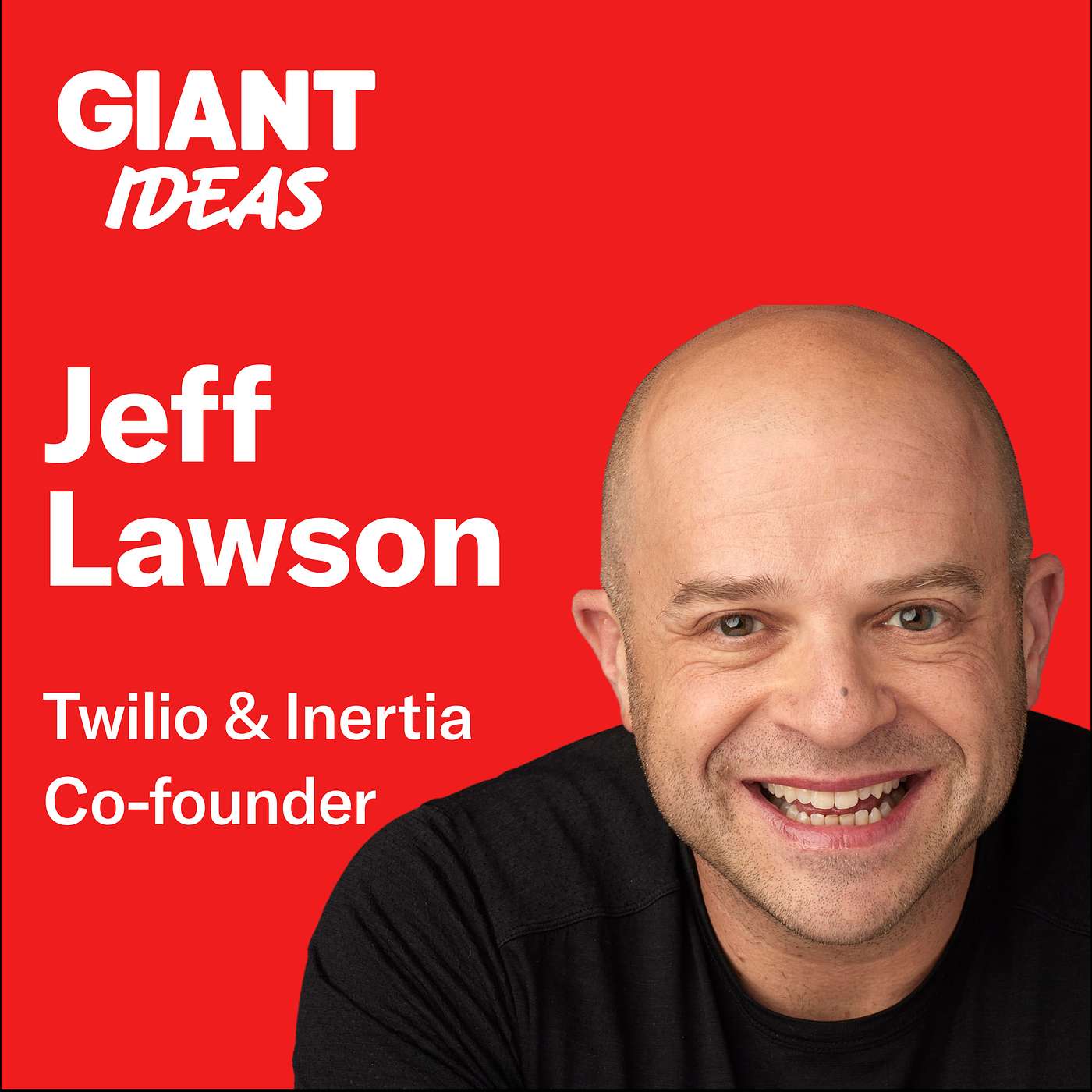
Twilio & Inertia Co-founder, Jeff Lawson: Is Nuclear Fusion The Holy Grail of Energy?
Jun 400:43:32Tap to summarizeToday, we're joined by Jeff Lawson - co-founder of Twilio and now founder of Inertia, a fusion energy company commercialising the Lawrence Livermore fusion breakthrough (the first experiment to produce more energy from fusion than it consumed.)Cameron McLain talks to Jeff about why he thinks the barriers to fusion are manufacturing problems, not physics problems, what a 10-15 year timeline to grid energy actually looks like, and why he thinks SaaS is heading for a structural reckoning.He speaks about:Why the Lawrence Livermore breakthrough proved the physics works.Why the two commercial barriers are cost problems, not technical problems. For almost 100 years, fusion was '3 decades away' because nobody knew if it could work. But now it can work, the question is commercialisation.Why fusion and solar will win together. In 50 years, Jeff expects the grid to run on two sources: solar-plus-battery and fusion. How to make Agile work in hardware (and why the Gantt chart is a lie!)Why SaaS has an innovator's dilemma in the AI age.Why infrastructure companies win when the world is building.Why storytelling runs through everything: fundraising, hiring, selling.Building a purpose driven company? Read more about Giant Ventures at www.Giant.vc.Music credits: Bubble King written and produced by Cameron McLain and Stevan Cablayan aka Vector_XING.Please note: The content of this podcast is for informational and entertainment purposes only. It should not be considered financial, legal, or investment advice. Always consult a licensed professional before making any investment decisions.
Transcribe →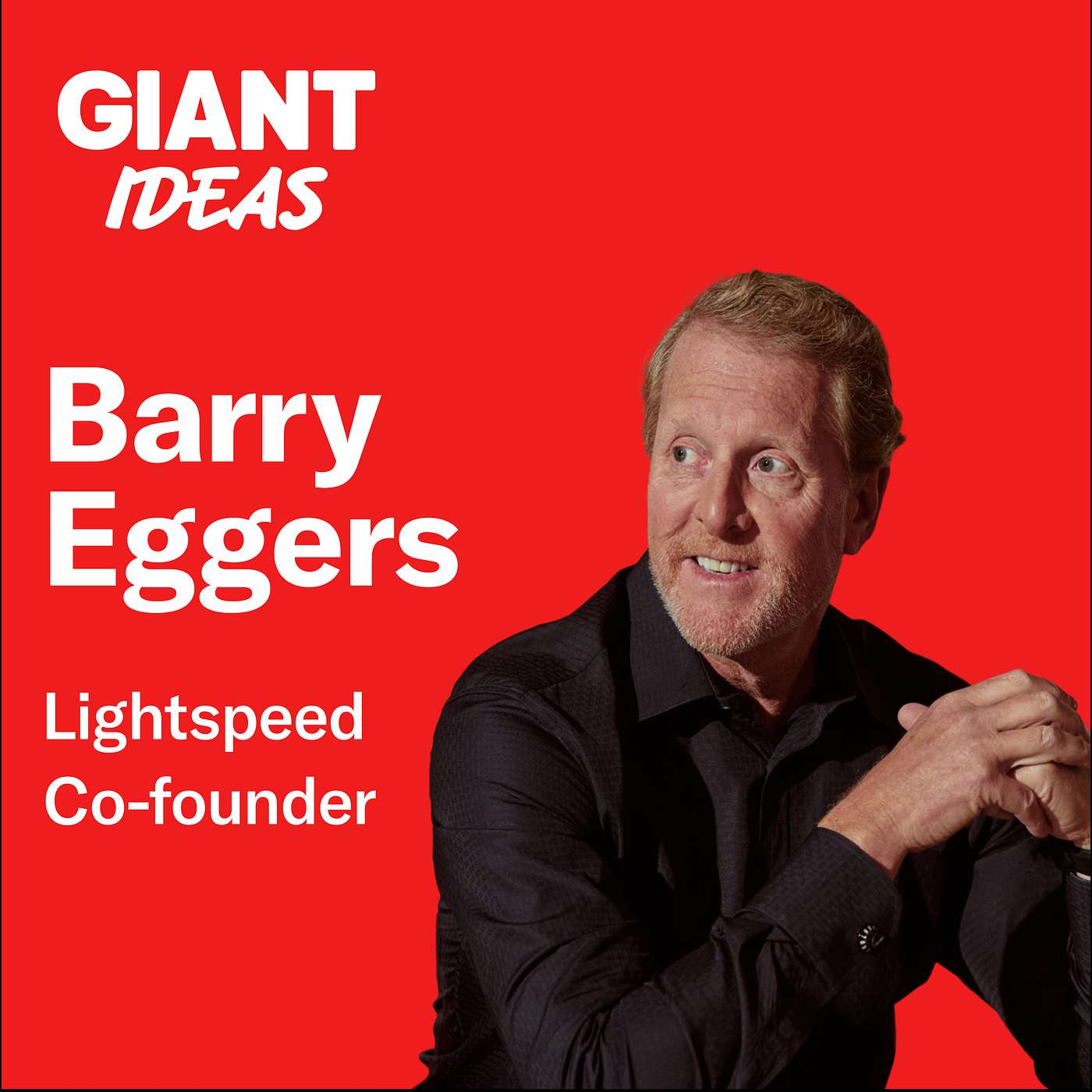
Lightspeed Co-founder Barry Eggers: Are Billion-Dollar Seed Rounds the New Normal?
May 2800:47:35Tap to summarizePlease note: The content of this podcast is for informational and entertainment purposes only. It should not be considered financial, legal, or investment advice. Always consult a licensed professional before making any investment decisions.In this episode, Cameron McLain sits down with Barry Eggers, co‑founder of Lightspeed Venture Partners (≈$40B AUM), to decode what’s really happening in today’s venture market. From trillion‑dollar IPOs and billion‑dollar seed rounds to AI, robotics, and space, Barry explains why he thinks this moment isn’t just another bubble... Barry shares how Lightspeed grew from a $475M first fund to a global platform, why the real edge in venture is being early and decisive, and why he believes intelligence is becoming commoditised while EQ and judgment become the ultimate differentiators, and why family matters most.Key Insights:Venture has split in two: a small slice of traditional early‑stage builders and a massive pool of quasi‑public investors.Billion‑dollar seed rounds can make sense when you’re backing teams going after markets that can compound to the trillion‑dollar scale.AI is making intelligence abundant, shifting value to founders and investors with superior EQ, judgment, and speed of decision‑making.The real error in venture is missing generational companies because of price.Lightspeed's secrets to success, and why family and life experiences matter most.Building a purpose driven company? Read more about Giant Ventures at www.Giant.vc.Music credits: Bubble King written and produced by Cameron McLain and Stevan Cablayan aka Vector_XING.Please note: The content of this podcast is for informational and entertainment purposes only. It should not be considered financial, legal, or investment advice. Always consult a licensed professional before making any investment decisions.
Transcribe →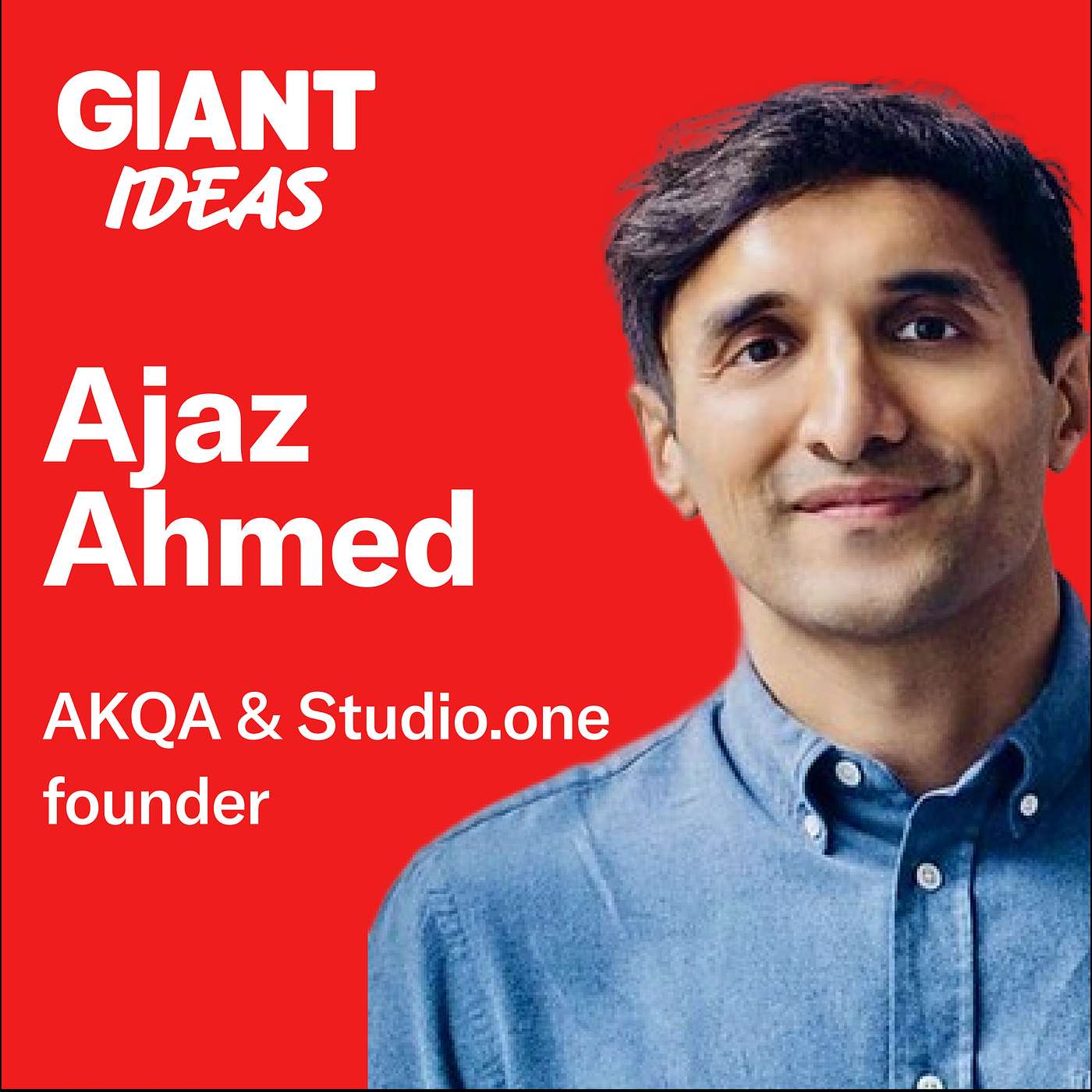
Drama Is Conflict, Brand Is Character: Lessons from Nike, Airbnb and Apple with AKQA & Studio.one's Ajaz Ahmed
May 2100:38:17Tap to summarizeOn this episode of Giant Ideas, Tommy sits down with Ajaz Ahmed, founder of AKQA and now Studio.One, to decode what truly iconic brands have in common — from Nike, Apple and Disney to Gymshark, and how founders can learn from them.Ajaz argues that “great brands are great storytellers” with a clear desire to right a wrong in the world. He shares lessons from two decades with Nike, why authenticity and category focus still win, and how founders racing from zero to billions can build brands that feel both familiar and radically new.Plus, more on his new project Studio.One: an antidote to “multi‑mediocrity” with ownership for everyone, and work that earns its place in culture.Building a purpose driven company? Read more about Giant Ventures at www.Giant.vc.Music credits: Bubble King written and produced by Cameron McLain and Stevan Cablayan aka Vector_XING.Please note: The content of this podcast is for informational and entertainment purposes only. It should not be considered financial, legal, or investment advice. Always consult a licensed professional before making any investment decisions.
Transcribe →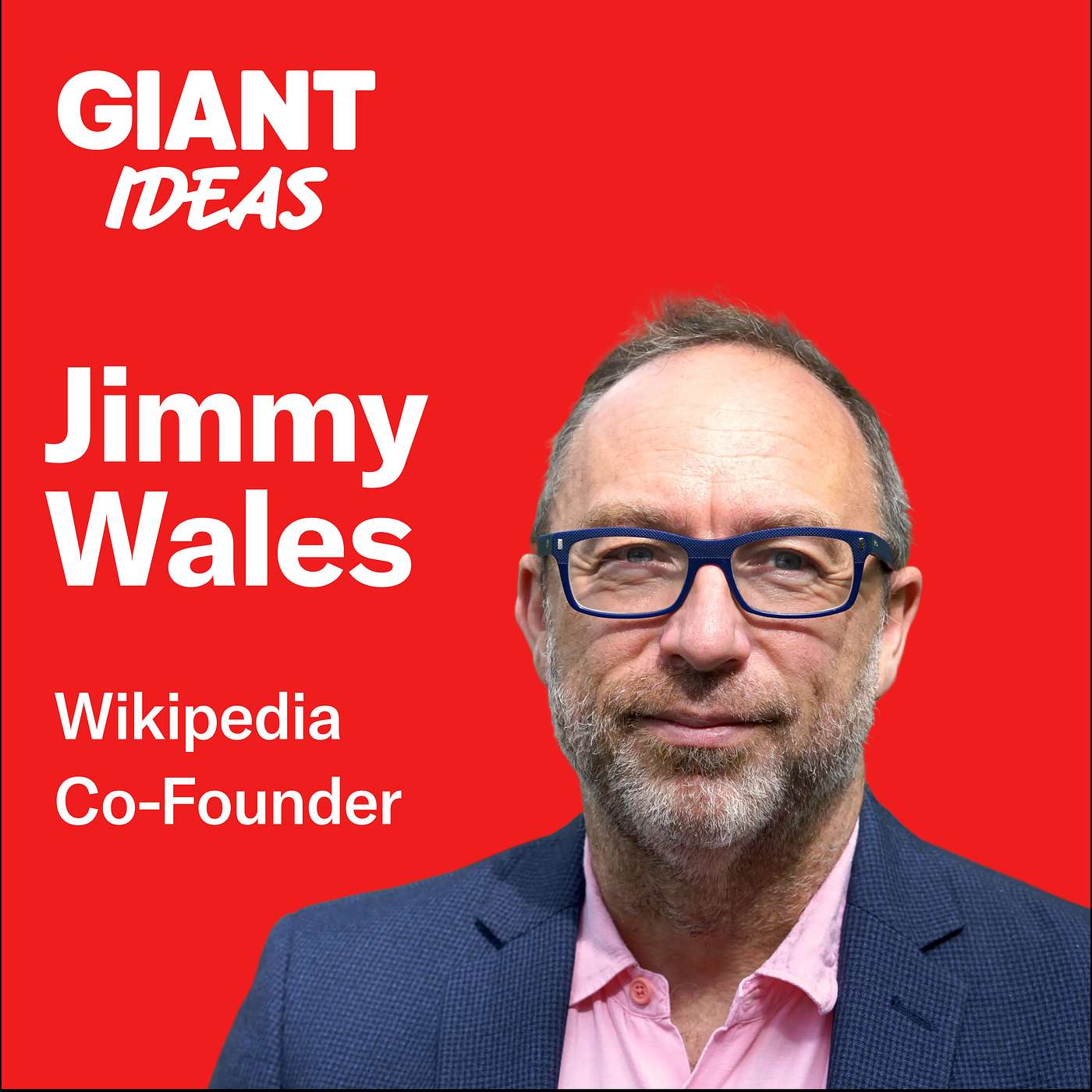
“I’m a Pathological Optimist” - Wikipedia Founder Jimmy Wales' Life Lessons
May 1400:18:01Tap to summarizeIn this episode of Giant Ideas, Jimmy Wales, founder of Wikipedia, discusses how trust, purpose, and community design shaped one of the world’s most used websites. He reflects on three photographs that define his life, Wikipedia’s core purpose and why transparency, clear purpose, and walking the walk are central to trust.He also shares the trust framework of building trust, and why execution matters more than idea secrecy, and the real‑world costs of living in mistrust.----------------------------------------------------------------------------------------------------------------Building a purpose driven company? Read more about Giant Ventures at www.Giant.vcMusic credits: Bubble King written and produced by Cameron McLain and Stevan Cablayan aka Vector_XING.Please note: The content of this podcast is for informational and entertainment purposes only. It should not be considered financial, legal, or investment advice. Always consult a licensed professional before making any investment decisions.Building a purpose driven company? Read more about Giant Ventures at www.Giant.vc.Music credits: Bubble King written and produced by Cameron McLain and Stevan Cablayan aka Vector_XING.Please note: The content of this podcast is for informational and entertainment purposes only. It should not be considered financial, legal, or investment advice. Always consult a licensed professional before making any investment decisions.
Transcribe →